
There is something almost dizzyingly humbling about the pace of cosmic discovery right now. In the span of just the past couple of years, humanity has gone from cautious speculation to genuine, peer-reviewed evidence that reshapes what we think we know about life, the universe, and our place within it. It’s not hyperbole to say we are living through a golden age of space science.
From ancient Martian rocks carrying chemical whispers of possible life, to a universe whose mysterious driving force may be quietly changing beneath our feet, the headlines read more like science fiction than textbook fact. What you’re about to read isn’t just exciting news. It’s a fundamental rewriting of the human story. So let’s dive in.
The Perseverance Rover’s Stunning Martian Biosignature Discovery
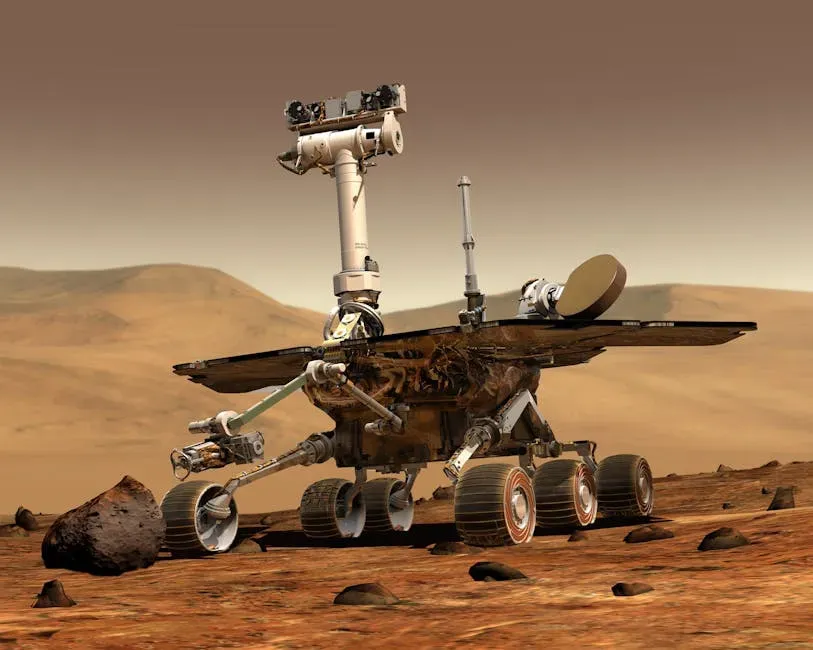
Honestly, if you haven’t been following the Perseverance story, you’ve been missing something remarkable. In September 2025, after a rigorous, yearlong peer-review process, the journal Nature published validated results showing that Perseverance’s “Sapphire Canyon” sample from a rock nicknamed “Cheyava Falls” contains potential biosignatures – clues that suggest past life may have been present, but that require more data or further study before any conclusions can be drawn. That’s as close as science has ever come to saying the words “life on Mars” out loud.
Even if Cheyava Falls wasn’t marked by life, it was still the first single place on Mars to show signs of once hosting all three of life’s main ingredients: liquid water, organic molecules, and an energy source. Billions of years ago, this rock could have met all the conditions life needs to thrive. Think of it like finding a campfire ring, food scraps, and sleeping bags in a forest – you haven’t seen the campers yet, but every sign points to someone having been there.
Scientists found organic carbon, sulfur, phosphorus, and oxidized iron in the rock. Various markings suggested microbes might have once converted those materials into energy. High-resolution images showed “leopard spots” – lighter specks surrounded by dark rings – containing the signatures of the minerals vivianite and greigite. On Earth, vivianite is often found near decaying organic matter and in sediments, while some forms of microbial life can produce greigite.
Yet there is only so much more scientists can do to get to the bottom of Cheyava Falls with Perseverance alone. Though the rover can run experiments and make major discoveries on its own, it is limited by the tools it can carry. The world now waits, breathlessly, for a Mars Sample Return mission that could bring these precious rocks home and deliver a definitive answer.
Dark Energy Is Changing – and It Could Rewrite the Fate of the Universe
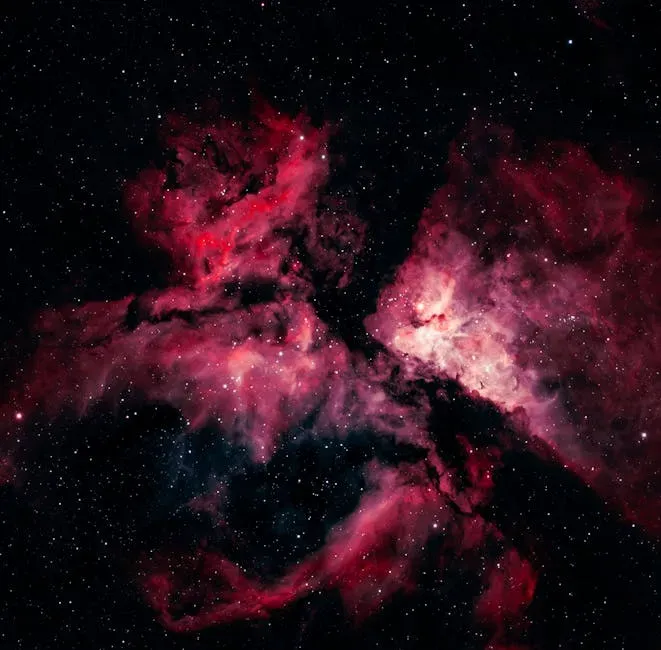
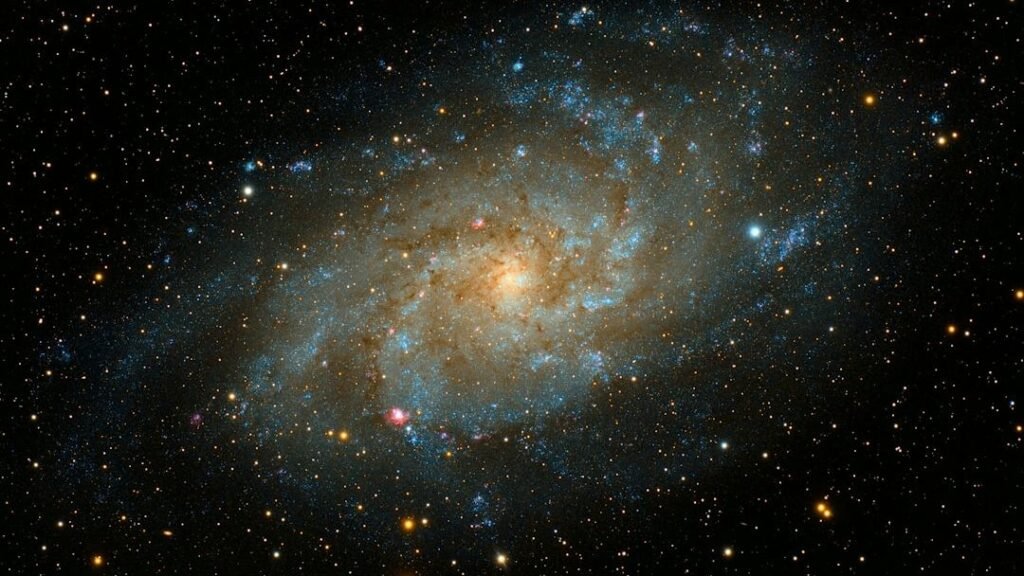
Here’s the thing about dark energy: scientists thought they had it figured out. It was supposed to be a constant, an unchanging background force invisibly pushing the universe to expand faster and faster. Then DESI came along and quietly pulled the rug out. New results from the Dark Energy Spectroscopic Instrument (DESI) collaboration use the largest 3D map of our universe ever made to track dark energy’s influence over the past 11 billion years, and researchers see hints that dark energy, widely thought to be a cosmological constant, might be evolving over time in unexpected ways.
Researchers began to notice when they combined their observations with other measurements of light across the universe – such as exploding stars, the gravity-warped light of distant galaxies, and the light leftover from the dawn of the universe, called the cosmic microwave background – that the DESI data shows that dark energy’s impact could be weakening over time. That is not a small thing. If this continues, then eventually dark energy will not be the dominant force in the universe. The universe’s expansion could stop accelerating and go at a constant rate, or in some models could even stop and collapse back. Of course, these futures are very remote and will take billions and billions of years to happen.
DESI is one of the most extensive surveys of the cosmos ever conducted. The state-of-the-art instrument, which can capture light from 5,000 galaxies simultaneously, is now in its fourth of five years surveying the sky, with plans to measure roughly 50 million galaxies and quasars. The new analysis uses data from the first three years of observations and includes nearly 15 million of the best measured galaxies and quasars – a dataset more than double what was used in DESI’s first analysis, which also hinted at an evolving dark energy.
It’s hard to say for sure how this all resolves, but the scientific community is crackling with energy (no pun intended). One professor of astronomy contributing to the DESI analysis described the discovery of dark energy nearly 30 years ago as “the biggest surprise” of his scientific lifetime. These new measurements, he noted, offer the strongest evidence so far that dark energy evolves – which would be “another mind-blowing change to our understanding of how the universe works.”
The James Webb Space Telescope Rewrites the Early Universe
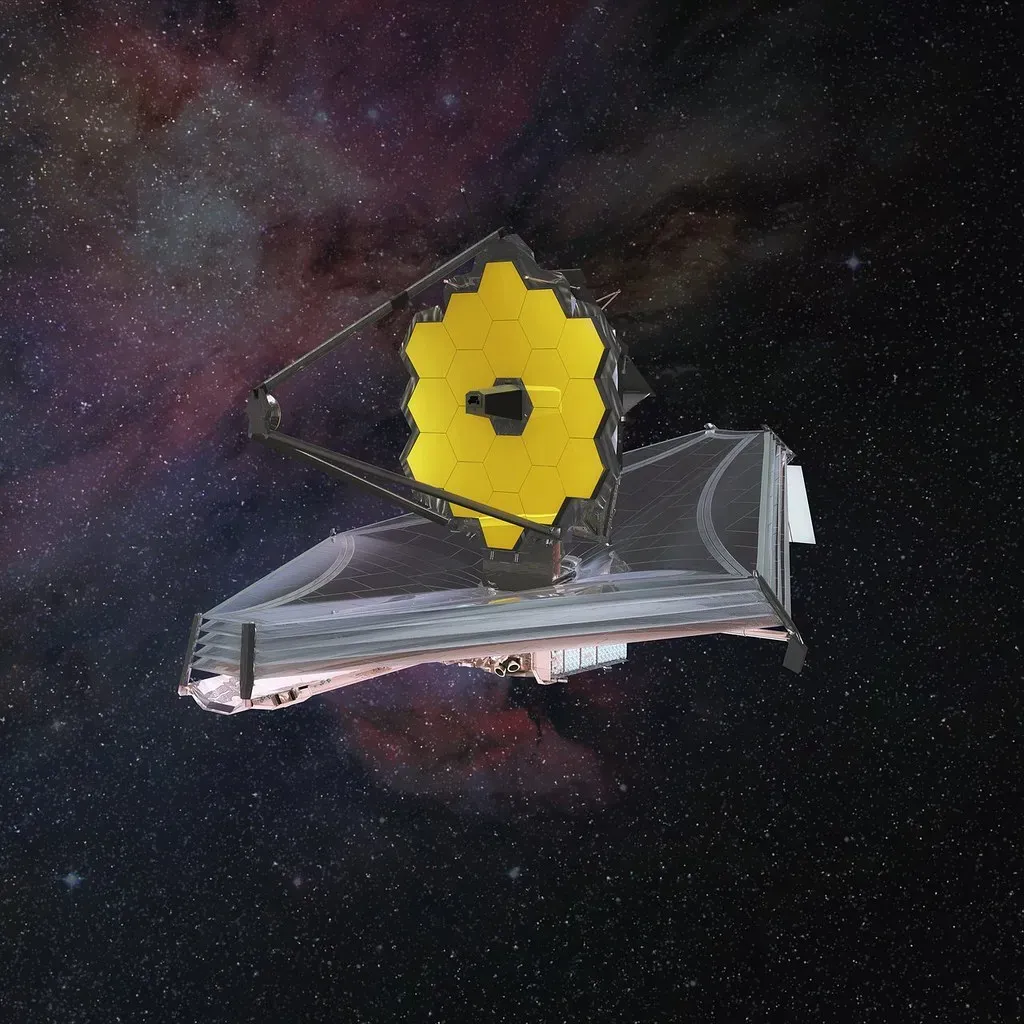
If you want to understand just how transformative the James Webb Space Telescope has become, consider this: it keeps finding things that, according to our best models of the universe, simply shouldn’t exist yet. Researchers using Webb have confirmed an actively growing supermassive black hole within a galaxy just 570 million years after the Big Bang. Part of a class of small, very distant galaxies that have mystified astronomers, this object represents a vital piece of a puzzle that challenges existing theories about the formation of galaxies and black holes in the early universe.
The galaxy JADES-GS-z13-1, which existed when the universe was just 330 million years old, is the earliest galaxy ever seen beginning to clear the cosmic fog and end the era known as the Dark Ages. Think of it like watching the universe turn on the lights for the very first time. The aptly named “little red dots” detected in some of JWST’s early images have been challenging to explain. Initially, researchers suspected they were very early galaxies, but they were so small it would mean they were inexplicably compact. As of now, the leading theory is that these little red dots are a new classification of object: a black hole star. Black hole stars are thought to be active black holes surrounded by hot, dense gas, with the black hole itself warming the gas enough that it glows.
The largest recorded collision between two black holes with masses more than 100 times that of the Sun is now challenging physics theories. It’s probably not possible for collapsing stars to form the two black holes involved in the clash, which resulted in a black hole of about 225 solar masses. It remains unclear how each formed, but it’s possible that black holes repeatedly merged until they reached that size, or that a smaller black hole fed on the gas surrounding a much larger counterpart.
James Webb Space Telescope, now in its third year of operation, continued to transform our understanding of the universe at an almost disorienting pace. Every image it sends back seems to chip away at what we thought we knew, replacing certainty with something far more thrilling: genuine mystery at the edge of human knowledge.
The Vera C. Rubin Observatory – A Machine Built to Shock the World
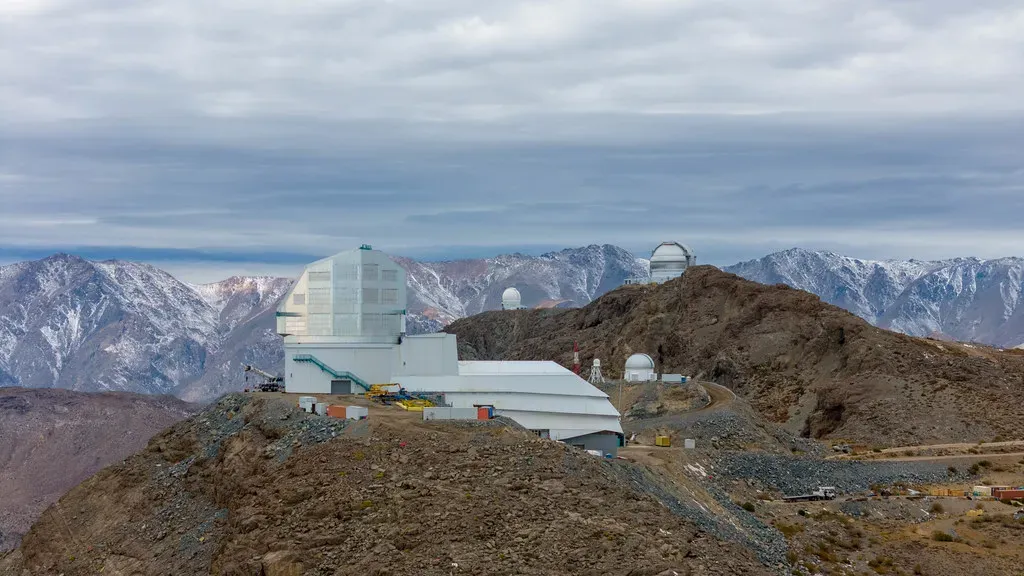
Some scientific tools are built to answer specific questions. The Vera C. Rubin Observatory seems to have been built to ask entirely new ones. Instead of zooming in on objects of interest, as most other telescopes do, the Vera C. Rubin Observatory will relentlessly sweep across the heavens, recording the whole sky in unprecedented detail every three days for ten years. The bounty will be millions of alerts every night: indications that an object has moved, changed, or suddenly appeared.
In one year alone, Rubin will gather more optical data than all other telescopes in history, and it will slowly build up the most detailed 3D map of the cosmos ever assembled, open to everyone via an online portal. Harvesting starlight so voraciously required groundbreaking technology, including a complex optical system capable of producing distortion-free images over an enormous field of view – the size of 45 full Moons – and a car-size camera that can spit out a 3200-megapixel image in seconds. Let that sink in. A single image. 3,200 megapixels. In seconds.
The ground-based Vera C. Rubin Observatory, although officially beginning operations in 2025, will ramp up its panoramic observations of the heavens in 2026 to discover enormous numbers of new asteroids, comets, supernovae and other transient celestial phenomena. It’s not just a telescope. It’s a time machine of sorts, one that will let us watch the universe evolve in near real-time across a decade of sky surveys.
With all that data, the Rubin Observatory may deliver a tsunami of unprecedented astronomical discoveries. I think that might actually be underselling it. When you map the entire visible sky every few days for ten years, you stop being a passive observer. You become, in a very real sense, a watcher of the cosmos itself.
A Rogue Black Hole, an Interstellar Comet, and the Universe’s Expanding Weirdness
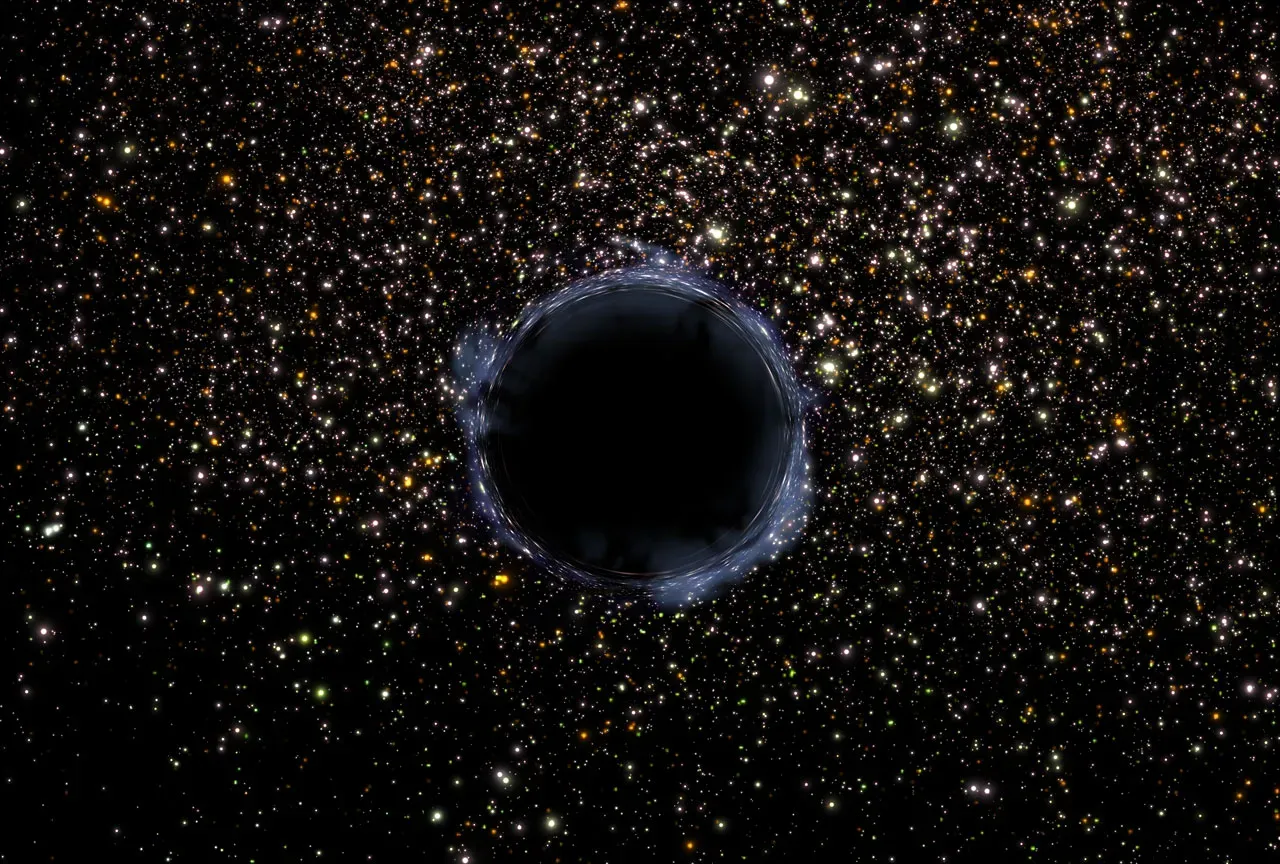
You might expect the universe to be predictable by now. We’ve been studying it for centuries. Yet 2025 and early 2026 seem determined to prove us wrong at every turn. In 2025, researchers discovered a new candidate for a wandering black hole in a dwarf galaxy named MaNGA 12772-12704, around 230 million lightyears from the Sun. The black hole isn’t in the galaxy’s center, but roughly 3,000 lightyears from it. A rogue black hole, kicked out of its own galaxy’s core, still actively feeding. That’s the kind of thing that makes you question what “normal” even means out there.
This black hole is emitting huge radio jets, showing it’s still actively accreting material despite having been kicked out of its usual home. Discoveries like this are super exciting as it means scientists now get to figure out how the black hole got there and where it might go next. Meanwhile, the cosmos delivered another jaw-dropper. The highlight from the second half of 2025 was undoubtedly Comet 3I/ATLAS, which is only the third interstellar object ever discovered cruising through our solar system. Astronomers will continue tracking it into 2026 in the hope of learning more about its composition.
Astronomers have also produced the most detailed map yet of dark matter, revealing the invisible framework that shaped the universe long before stars and galaxies formed. Dark matter, the invisible scaffolding holding everything together, remains one of science’s most tantalizing puzzles. Nearly everything in the universe is made of mysterious dark matter and dark energy, yet we can’t see either of them directly. Scientists are developing detectors so sensitive they can spot particle interactions that might occur only once in years.
Research released in early 2026 suggests Jupiter’s icy moons may have been seeded with the chemical ingredients for life from the very beginning. An international team of scientists modeled how complex organic molecules – essential building blocks – may have been present since these moons first formed. Every corner of the solar system, it turns out, is a potential cradle. The universe keeps expanding not just physically, but in terms of how many places within it life might be possible.
Conclusion: We Are Standing at the Edge of a New Understanding
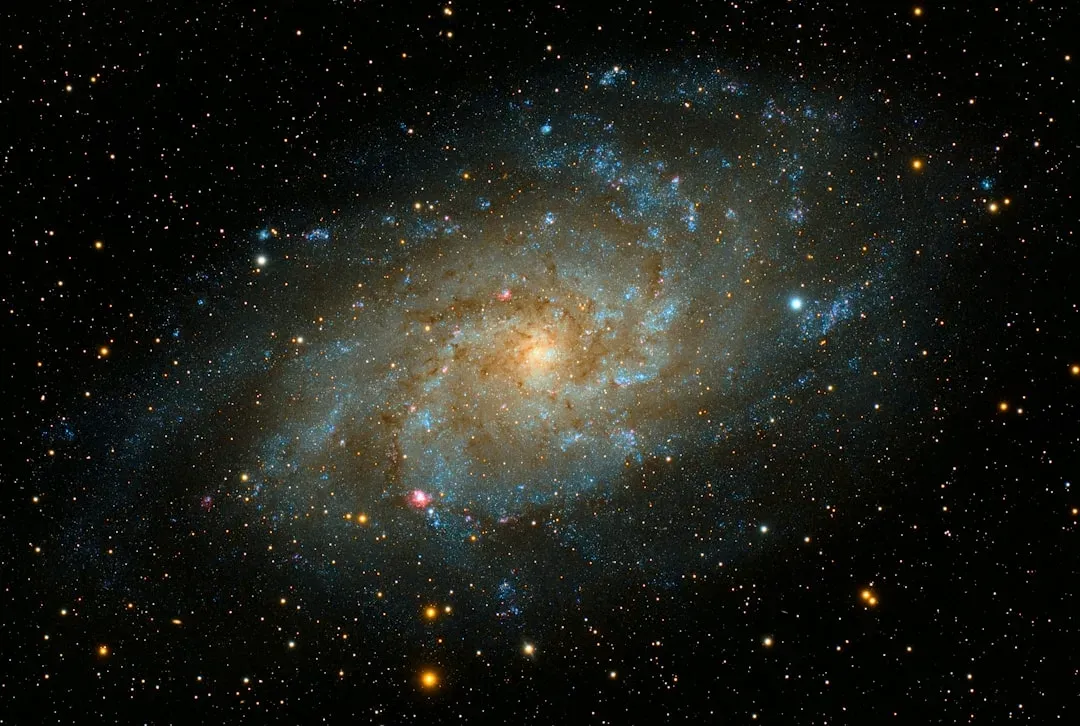
What ties all five of these breakthroughs together is something quietly profound. Each one chips away at the idea that humanity occupies a special, singular, well-understood place in a predictable cosmos. Mars may have once harbored life. Dark energy may not be constant. The early universe produced structures our best theories struggle to explain. A machine in Chile is about to drown us in revelations. Rogue black holes wander the darkness, and interstellar visitors swing through our cosmic neighborhood uninvited.
We are not standing at the center of the universe. We are standing at the edge of understanding it. And honestly, that’s a far more exciting place to be. The next decade of discovery – driven by JWST, Rubin, DESI, Perseverance, and the missions still to come – may look back on this moment as the turning point when humanity finally began to grasp the true scale and strangeness of the cosmos it calls home.
What surprises you most about these discoveries? Which one makes you rethink everything? Drop your thoughts in the comments – the conversation is just getting started.