When we imagine life elsewhere in the universe, most of us picture a world bathed in warm starlight, oceans glittering, chemistry humming along nicely. It’s a comforting image. The reality, though, might be far more hostile than we’d like to believe.
New research is turning that hopeful picture on its head, and the culprit is the most common type of star in the galaxy. Red dwarfs seem like promising candidates for hosting habitable planets. They’re abundant, long-lived, and many have rocky worlds in their so-called “goldilocks zones.” So let’s dive in and unpack why scientists are now seriously questioning whether these stars are friends or foes to life as we know it.
The Most Common Stars in the Galaxy Might Be the Most Problematic
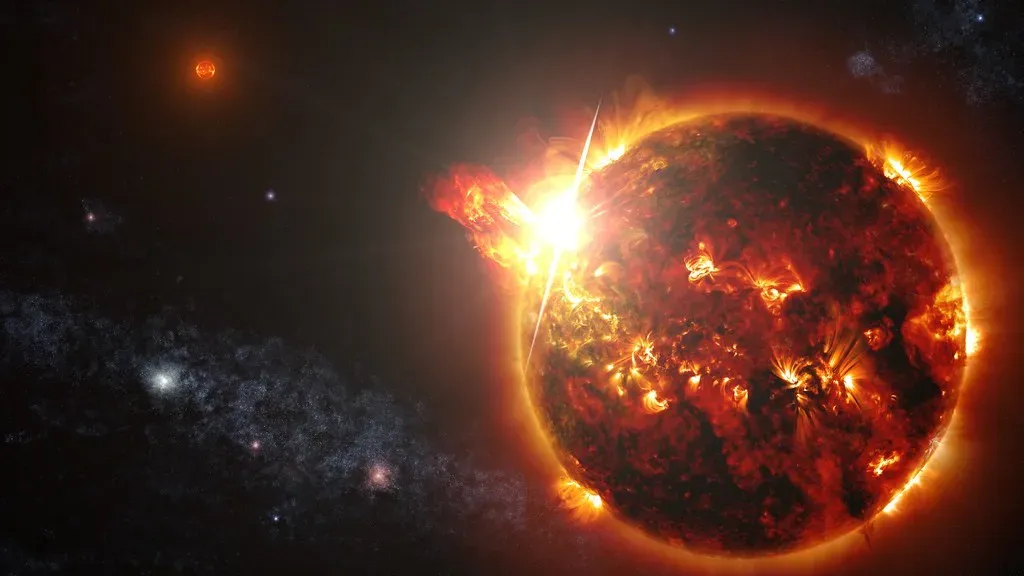
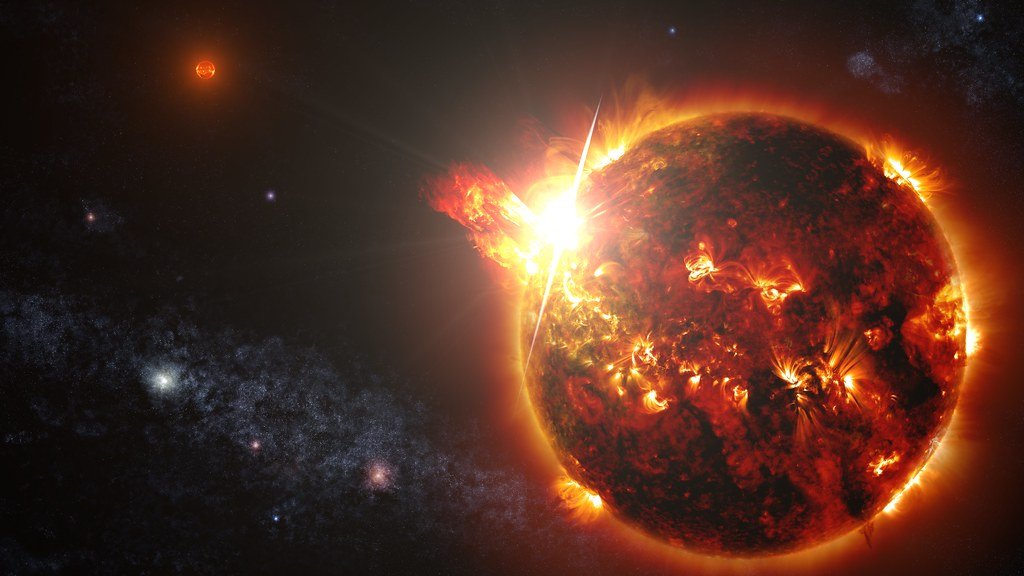
Here’s the thing about red dwarf stars, also known as M-dwarf stars: they make up roughly about three quarters of all the stars in the Milky Way. That means if life is going to exist somewhere out there, statistically speaking, it probably lives around one of these dim, cool stars. That’s been an exciting thought for astronomers for decades.
The problem is that red dwarfs are not exactly gentle neighbors. They’re known for being magnetically hyperactive, especially when young, blasting out powerful flares and high-energy radiation that could strip away planetary atmospheres over time. Recent research adds yet another layer to this growing list of concerns, one that strikes right at the chemistry of life itself.
Phosphorus: The Forgotten Ingredient for Life
Most people think about water or oxygen when they imagine the ingredients for life. Honestly, that’s understandable. Water is iconic. Oxygen feels essential. But phosphorus? That one tends to get overlooked, and that’s a mistake.
Phosphorus is one of the six elements considered absolutely critical for life as we know it. It forms the backbone of DNA and RNA, and it plays a central role in ATP, which is essentially the energy currency of every living cell on Earth. Without phosphorus, life as we understand it simply cannot get started. It’s not a supporting character in the story of biology. It’s a lead actor.
What the New Research Actually Found
Scientists studying red dwarf stars discovered something quietly alarming: these stars appear to be dramatically depleted in phosphorus compared to stars like our own Sun. The research points to a fundamental difference in stellar chemistry that has enormous implications for any planets orbiting these stars. If the star doesn’t have much phosphorus to begin with, the rocky worlds it forms likely won’t either.
This matters because planets inherit much of their chemical makeup from the material in the protoplanetary disk that surrounds their host star during formation. Think of it like baking bread with flour that’s missing a key ingredient. You might end up with something that looks like bread, but it’s not going to behave or nourish the way it should. A planet starved of phosphorus at birth faces a steep uphill battle toward biological complexity.
How Stars and Planets Share Their Chemistry
The relationship between a star’s composition and its planets’ composition is tighter than most people realize. Stars and planets form from the same cloud of gas and dust, which means they share a kind of chemical ancestry. If you want to know what a planet might be made of, studying its host star is one of the most powerful tools astronomers have.
For phosphorus specifically, researchers found that many red dwarf stars contain only a small fraction of the phosphorus levels seen in solar-type stars. This isn’t a minor statistical blip. It’s a consistent, measurable difference that suggests rocky planets around these stars could be genuinely and severely phosphorus-poor. In planetary science terms, that’s a huge deal.
The Habitable Zone Problem Just Got More Complicated
For years, the habitable zone concept gave astronomers a neat framework: find a planet at the right distance from its star, where liquid water could theoretically exist, and you’ve got a candidate for life. Red dwarfs have plenty of planets sitting in these zones. The exoplanet TRAPPIST-1 system, for example, has multiple Earth-sized worlds in potentially habitable orbits and has generated enormous scientific excitement.
This new phosphorus research complicates that excitement significantly. A planet can sit perfectly in the habitable zone, have liquid water, and still be fundamentally unable to support life if the raw chemical ingredients aren’t there. It’s a sobering reminder that “habitable” is a more complex label than it sounds, involving not just distance and temperature but deep planetary chemistry. The goalposts, it seems, keep moving.
Does This Rule Out Life Around Red Dwarfs Entirely?
Let’s be real: this research doesn’t slam the door completely on the idea of life around red dwarfs. Science rarely works in such clean absolutes. There could be geological processes on some planets that concentrate phosphorus over time, or delivery mechanisms like asteroid impacts that bring additional material to a planet’s surface. It’s hard to say for sure, but a phosphorus-poor starting point is still a serious handicap.
What this research does do is sharpen our thinking about which stars deserve the most attention in the search for life. It suggests that solar-type stars, despite being far less common than red dwarfs, might provide a much more chemically hospitable environment for biology to emerge. That’s a significant reframing of priorities. The universe, as always, refuses to make things simple for us.
What This Means for the Search for Extraterrestrial Life
The implications here ripple far beyond academic debate. Space agencies and research institutions are currently planning and operating missions specifically designed to search for biosignatures on exoplanets, many of which orbit red dwarf stars. The James Webb Space Telescope has already begun probing the atmospheres of planets in systems like TRAPPIST-1. This new chemical context matters enormously for interpreting what those missions find.
If phosphorus scarcity is a real and widespread constraint around red dwarfs, it means the search for life may need to refocus toward sun-like stars, even though their habitable zone planets are harder to detect and study. It also raises fascinating questions about whether life, if it exists around red dwarfs, could operate on entirely different biochemical principles. That possibility alone is worth staying curious about. One thing is certain though: the universe keeps humbling us every single time we think we’ve figured out where to look.
A Universe of Surprises We’re Only Beginning to Understand
It’s almost poetic, isn’t it? The most abundant stars in the galaxy, the ones that seemed like our best statistical bet for finding alien life, might be the very stars least capable of providing what life needs to begin. That kind of cosmic irony is almost too perfect.
What this research really underscores is that the search for life is not just about finding the right temperature or the right distance from a star. It’s about chemistry, history, geology, and dozens of variables we’re still learning to measure. We’re at an early stage in a very long investigation. The question of whether life can emerge around phosphorus-starved worlds may eventually reshape everything we think we know about biology’s reach across the cosmos.
Does it surprise you that the most common stars in the galaxy might be the least likely to host life? What do you think about it? Tell us in the comments.