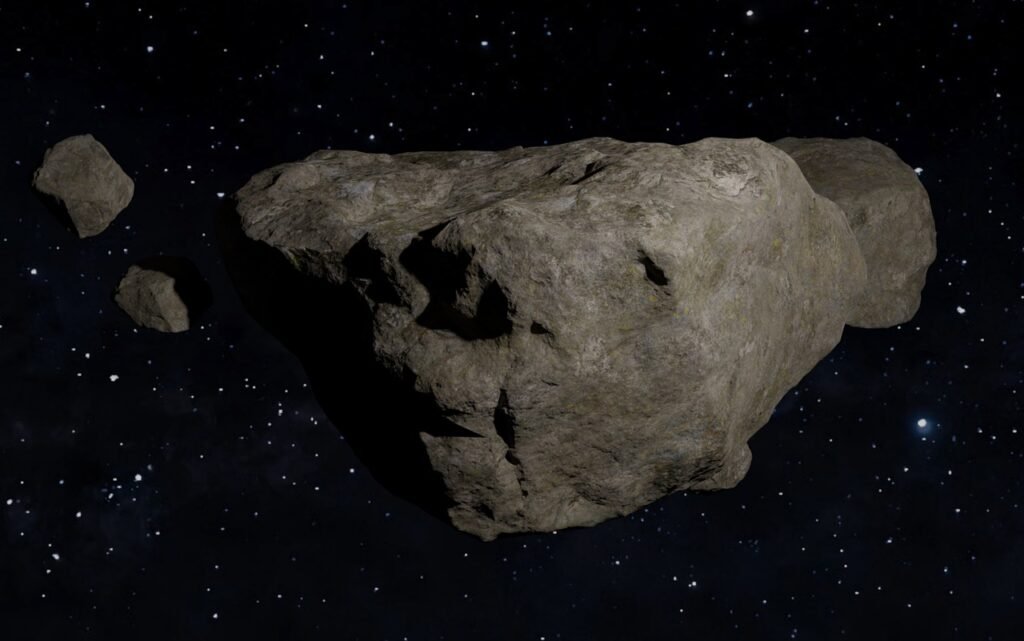
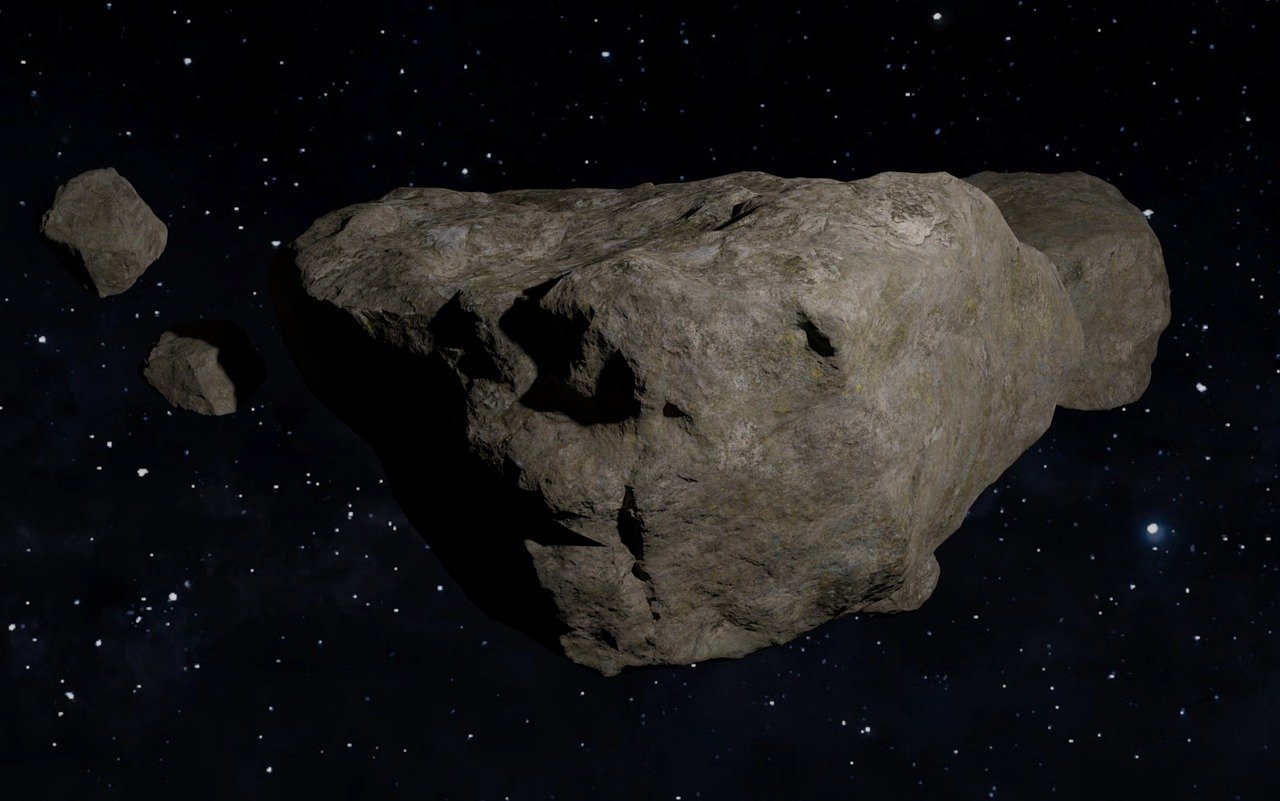
Fan-Shaped Streaks Spark Discovery (Image Credits: Pixabay)
New findings from NASA’s DART mission show binary asteroids like Didymos and Dimorphos quietly exchange rocks and dust through low-speed impacts, marking the first direct visual evidence of such activity.[1][2]
Fan-Shaped Streaks Spark Discovery
Astronomers spotted faint, ray-like patterns wrapping around Dimorphos just seconds before the DART spacecraft struck the moonlet in 2022. These streaks, initially hidden by boulder shadows and lighting in raw images, emerged clearly after advanced processing removed artifacts.[1]
Lead researcher Jessica Sunshine, a University of Maryland professor, recalled the moment of realization. “At first, we thought something was wrong with the camera, and then we thought it could’ve been something wrong with our image processing,” she said. “But after we cleaned things up, we realized the patterns we were seeing were very consistent with low velocity impacts, like throwing ‘cosmic snowballs.'”[2] The features centered on Dimorphos’ equator, matching models of material flung from its parent asteroid Didymos. Tony Farnham, a UMD research scientist, noted how refining 3D models made the streaks sharper, confirming their reality. This breakthrough appeared in The Planetary Science Journal on March 6, 2026.
YORP Effect Fuels the Transfers
Sunlight drives the process through the Yarkovsky-O’Keefe-Radzievskii-Paddak, or YORP, effect, which speeds up the spin of small asteroids like Didymos. Loose surface material ejects as clumps of rocks and dust, dubbed “cosmic snowballs,” traveling at just 30.7 centimeters per second – slower than a typical walk.[1]
These particles drift to Dimorphos, where boulders scatter them into fan-shaped deposits rather than craters. Sunshine explained, “Instead of even spreading, these slow-moving impacts would create a deposit rather than a crater.” The exchanges reshape both bodies gradually over millions of years. About 15 percent of near-Earth asteroids feature such small moons, suggesting widespread activity.[3]
Lab Tests and Simulations Validate Findings
University of Maryland researchers recreated the impacts in lab experiments, dropping marbles into sand sprinkled with painted gravel to mimic boulders. High-speed cameras captured ray-like patterns identical to those on Dimorphos. Computer models from Lawrence Livermore National Laboratory tested both compact rocks and loose dust, yielding similar results.
- Raw DART images hid streaks due to shadows.
- Processing revealed equatorial fans from Didymos material.
- Impacts at 30.7 cm/s produce deposits, not craters.
- Patterns wrap around the moon, unseen before.
- Features likely extend to Dimorphos’ unstruck side.
These confirmations ruled out imaging errors and solidified the material-transfer theory.
Broader Impact on Asteroid Research
The discovery proves binary systems operate as dynamic environments, challenging prior views of static rubble piles. Dimorphos likely formed from Didymos debris, and ongoing trades influence their evolution. Enhanced models will refine planetary defense strategies against near-Earth threats.
The European Space Agency’s Hera mission, due at the system in December 2026, could spot surviving streaks or new ones from DART-displaced boulders. Sunshine emphasized the advance: “We now know that they’re far more dynamic than previously believed, which will help us improve our models and our planetary defense measures.”[2]
Key Takeaways
- First visual proof of YORP-driven material exchange in binaries.
- 15% of near-Earth asteroids may host such active moons.
- Slow “snowballs” reshape surfaces without craters.
These insights from DART transform our grasp of asteroid behavior, underscoring the subtle forces at work in the solar system. What do you think about these cosmic exchanges? Tell us in the comments.