
There is a strange and deeply unsettling idea living at the heart of modern physics. It says that the universe, at its most fundamental level, does not fully exist until something observes it. Not metaphorically. Literally. Particles hover in a fog of pure possibility, taking no definite form until the act of measurement pins them down. If you find that disturbing, you are in good company. Some of the greatest minds in science history lost sleep over it too.
This is not science fiction. This is quantum mechanics, a theory so precise and so experimentally confirmed that it forms the backbone of nearly every modern technology you use. Yet for all its success, it forces us to ask questions that don’t have easy answers. What is reality? Does it exist without a witness? And if observation shapes the universe, what does that make you? Let’s dive in.
The Observer Effect: When Looking Changes Everything
Here is the thing that stops most people cold when they first hear it. One of the most bizarre premises of quantum theory states that by the very act of watching, the observer affects the observed reality. That sounds like philosophy. It isn’t. It is a measurable, reproducible, experimental fact.
In physics, the observer effect is the disturbance of a system by the act of observation, often the result of utilizing instruments that, by necessity, alter the state of what they measure in some manner. Think about that for a moment. You cannot look at something in the quantum world without changing it. The very tools you use to measure a particle reach in and rearrange it.
This effect was even found to be dependent on the “amount” of observation: when the observer’s capacity to detect electrons increased, the interference weakened; when observation slackened, the interference increased. In other words, the more intently you watch, the more the quantum world snaps into ordinary, classical behavior. It’s almost as if nature is shy.
In the quantum world, you cannot be a passive bystander. The very act of measuring a system fundamentally changes its behavior. This is known as the observer effect. It’s not a side effect or an inconvenience. It is a fundamental feature of how reality works at the smallest scales.
The Double-Slit Experiment: The Strangest Thing You Will Ever Learn
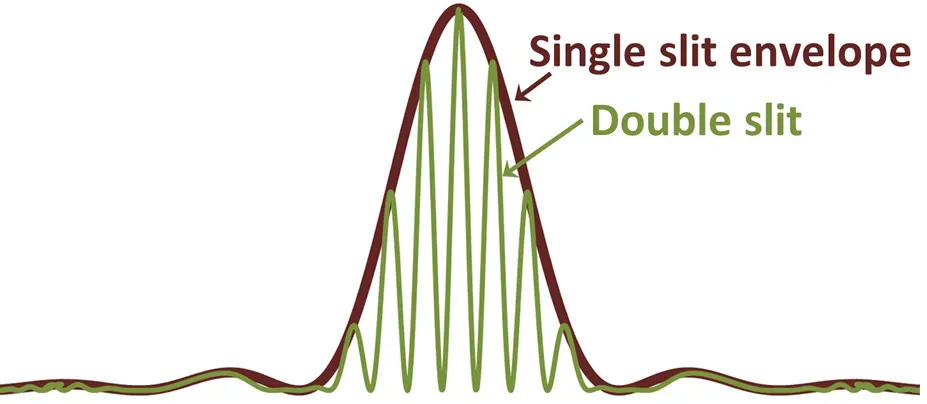
Honestly, I think the double-slit experiment is the single most mind-bending demonstration in all of science. It is one of the most famous experiments in physics, demonstrating with unparalleled strangeness that little particles of matter have something of a wave about them, and suggesting that the very act of observing a particle has a dramatic effect on its behavior.
In the experiment, particles exhibit both particle-like and wave-like behavior: the former if their path is observed, and the latter if only their final position is measured. When their motion is unobserved, light photons behave as waves, simultaneously passing through both slits and joining to form an interference pattern. However, when the path of the photons is observed from beginning to end, they behave as discrete particles, passing through one slit or the other, without creating an interference pattern.
Any attempt to measure which slit the particle “actually” passes through destroys the interference pattern and produces the classically expected result. This measurement by an observer effectively removes the wave aspect from the particle. It’s as though the electron knows it is being watched and decides to behave itself accordingly. Sounds crazy. The data says otherwise.
This phenomenon is often described as the collapse of the wave function. Essentially, measurement forces a quantum system to abandon its superposition of states and snap into one state or the other. Think of it like a coin spinning in the air. While spinning, it is neither heads nor tails. The moment you catch it, reality makes its choice.
Superposition and Wave Function Collapse: Reality Living Between States
In quantum mechanics, the observer effect and wave function collapse are among the most fascinating phenomena that challenge our understanding of reality. When particles exist in a state of superposition, existing in multiple states simultaneously, they behave unpredictably. The moment observation or measurement occurs, the wave function collapses into a definite state.
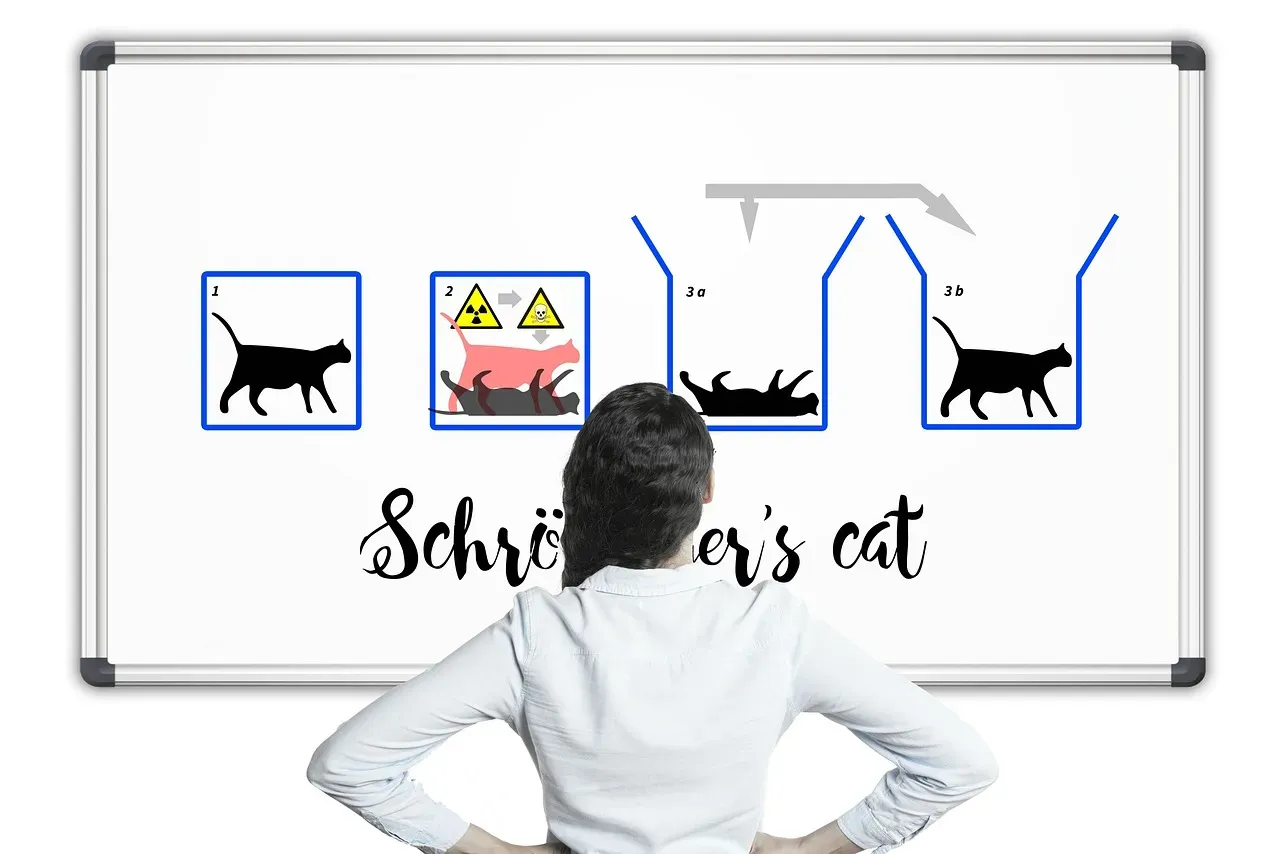
Think of superposition less like a coin that is stuck between two faces and more like a symphony that exists as every possible note at once. Particles can exist in multiple states simultaneously, thanks to a bizarre yet fascinating phenomenon called superposition. Schrödinger’s famous cat in the box thought experiment is an often-used illustration. The cat can be either dead or alive, or both, until observed. The act of observation collapses the superposition, resulting in the cat ending up either alive or dead.
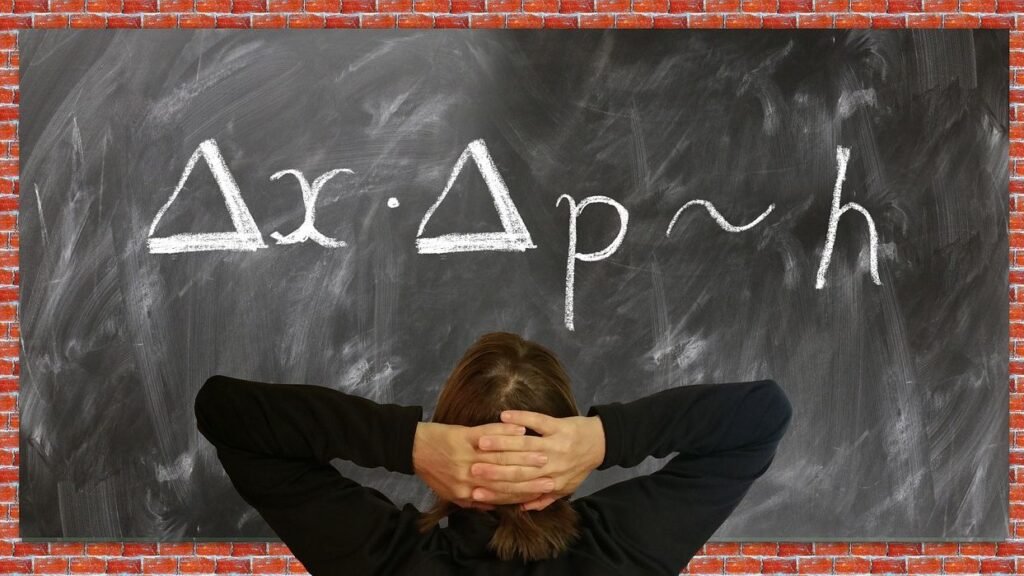
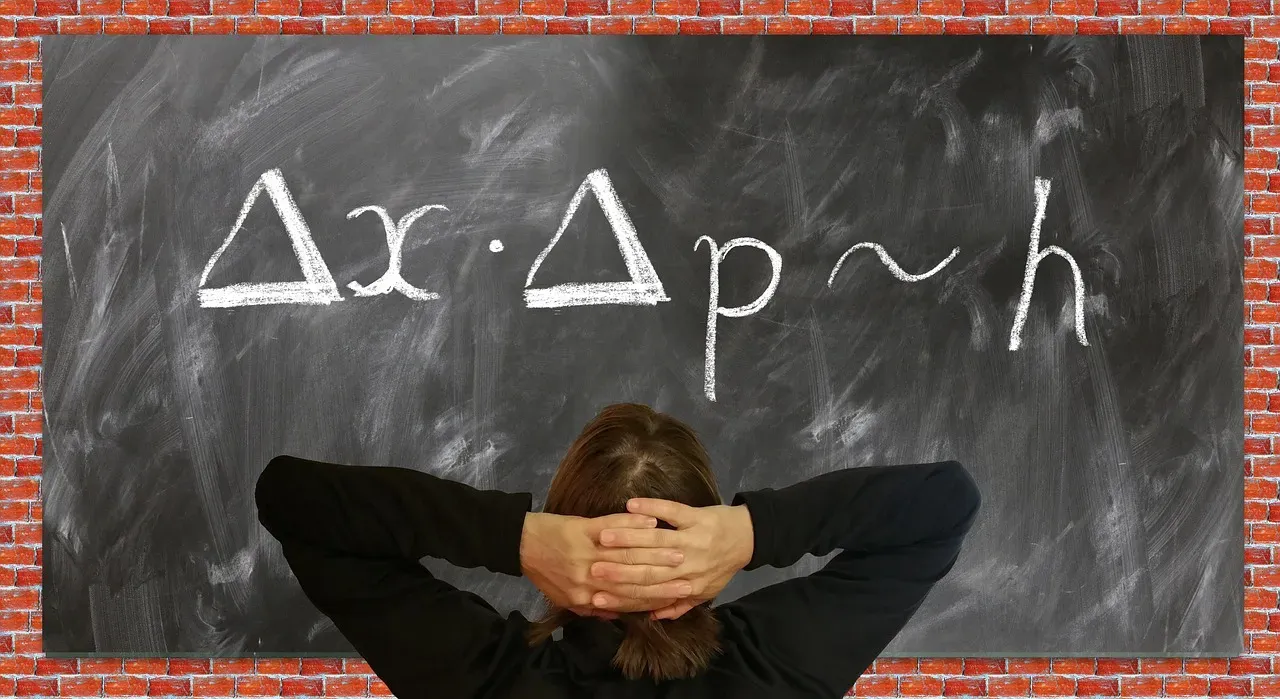
One of the bedrock tenets of quantum physics is the uncertainty principle, formulated by Werner Heisenberg in the 1920s. It says that certain pairs of quantum properties, such as position and momentum, always maintain a careful balance. The more precisely you specify one, the less certain you are about the other. This principle locks some quantum properties into a rigid trade-off reminiscent of a seesaw.
Heisenberg’s Uncertainty Principle effectively ended the deterministic interpretation for the wave function. In the quantum world, everything was fuzzy, and it was impossible to predict exactly the time evolution of the electron, be it particle or wave. Let’s be real. This is not a limitation of our instruments. It is a limit baked into the universe itself.
Wheeler’s Delayed Choice: Can the Present Decide the Past?
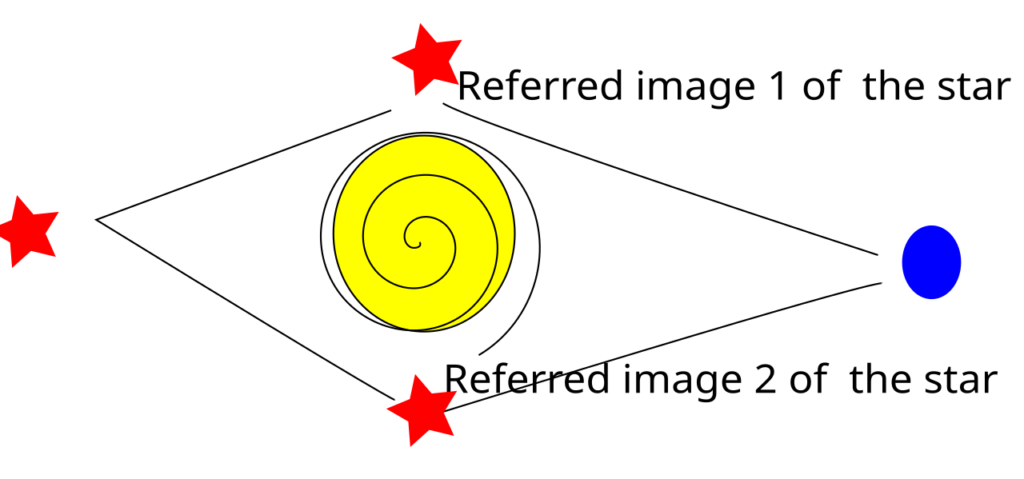
If the double-slit experiment shook you, this next idea might send you over the edge entirely. A photon can act like a bulletlike particle or rippling wave depending on how experimenters decide to measure it. In the late 1970s, famed theoretician John Archibald Wheeler realized that experimenters could even delay the choice until the photon had made its way almost completely through an apparatus, thus proving that the photon’s behavior is not predetermined.
This strange assertion suggests that a decision in the present determines an event in the past: whether the photon split like a wave or took one path like a particle. Quantum theory avoids the issue by assuming that, until measured, the photon remains both a particle and a wave. Your choice of measurement, made after the fact, retroactively determines what the photon was doing moments earlier. I know it sounds crazy, but this has been experimentally confirmed.
The results of both experiments show that a particle’s wave or particle nature is most likely undefined until a measurement is made. There is no hidden backstory. There is no secret trajectory the particle was “really” following. The past, at the quantum level, seems to solidify only when the present chooses to look back at it.
Delayed-choice experiments could help probe the boundary between relativity and quantum theory. Even though, strictly speaking, the effect does not violate causality, it still raises a tension by suggesting that a measurement in the present shapes what can be inferred about the past. The universe, it turns out, does not write its history in ink until someone decides to read it.
Quantum Entanglement: Spooky Action Across the Universe
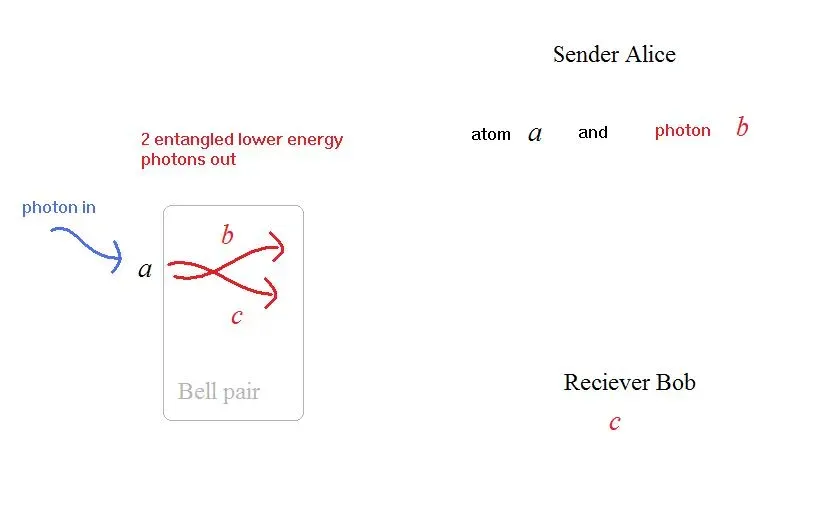
There is another concept that must be mentioned alongside the observer effect, and it is perhaps even more astonishing. Quantum entanglement occurs when the quantum states of two or more particles become strongly correlated. This means the state of one particle can instantaneously influence the state of the other, regardless of distance. Einstein famously called this “spooky action at a distance,” and he hated it.
The Bell tests rely on the ability to entangle two atoms in such a way that their quantum properties are intrinsically linked. When those properties are measured after entanglement, they are always correlated no matter how far apart the atoms are. Imagine two magical dice, separated by millions of miles. You roll yours and it lands on six. Instantly, impossibly, your partner’s die lands on six too. Every single time.
An entangled system is one whose quantum state cannot be factored as a product of states of its local constituents. They are not individual particles but an inseparable whole. When entanglement is present, one constituent cannot be fully described without considering the other. This is not just poetic. It is mathematics. It is also the engine behind some of the most powerful technologies being developed right now.
In quantum mechanics, the observer and the observed exist in a relational dynamic. Consciousness does not passively perceive reality; it actively participates in its formation. The observer’s engagement with the observed phenomenon creates a feedback loop where observation shapes reality, and reality, in turn, shapes the observer’s perception. Whether consciousness plays a formal role remains debated, but the relationship between observer and observed is undeniably intimate.
Does Consciousness Actually Collapse the Wave Function?

This is arguably the most controversial question in all of quantum physics, and it sits right at the boundary of science and philosophy. Does consciousness actually cause wave function collapse, or is it simply a measurement effect? The debate has raged since the earliest days of quantum theory and shows no sign of cooling down.
The results of the double-slit experiment have been interpreted by some to suggest that a conscious mind can directly affect reality. However, the need for the observer to be conscious is not supported by scientific research, and has been pointed out as a misconception rooted in a poor understanding of the quantum wave function and the quantum measurement process. The “observer” in physics is any measuring device, not necessarily a mind.
Modern physics and quantum mechanics emphasize quantum decoherence theory, which explains wave function collapse without requiring consciousness. The Copenhagen interpretation suggests measurement causes collapse, but quantum decoherence proposes that environmental interactions alone explain the appearance of collapse. So the jury is still out, though the mainstream scientific view leans away from requiring a conscious observer.
Still, the philosophical tension is real. In quantum mechanics, the act of observation appears to play a role in determining the outcome of events, leading to the question: is reality objective and independent of us, or is it shaped by our perceptions and interactions? This question has led to various philosophical interpretations, ranging from idealism to more materialistic views that seek to reconcile quantum mechanics with an independent reality. It is a question that physics alone cannot fully answer.
From Theory to Technology: Observation Powers the Future

Here is where the quantum realm stops being purely philosophical and starts becoming very, very practical. The observer effect has practical applications in quantum cryptography, quantum sensing, and quantum control systems, where it plays a role in the development of secure communication, precision measurement, and quantum technology. The strangeness of quantum observation is not just a puzzle. It is a tool.
Using entanglement and the fact that measurement disturbs quantum systems, we can create cryptographic keys that are provably secure. In quantum key distribution, entangled photons are shared between parties, and any eavesdropping causes a measurable disturbance, alerting users. Banks, governments, and tech companies are experimenting with quantum encryption to protect sensitive data.
The quantum computing industry has reached an inflection point in 2025, transitioning from theoretical promise to tangible commercial reality. What was once confined to research laboratories has evolved into a sector attracting billions in investment, government support, and corporate partnerships. This transformation reflects fundamental breakthroughs in hardware, software, error correction, and the emergence of practical applications demonstrating real-world quantum advantage.
Classical computers process information as bits, while quantum computers use qubits that can exist in superposition, representing 0, 1, or both simultaneously. Combined with entanglement, this allows quantum computers to explore vast numbers of solutions in parallel. For specific problem types like optimization, molecular simulation, and cryptography, this offers exponential speedups over classical approaches. The observer effect, once a philosophical curiosity, is now a commercial frontier.
Conclusion: You Are Already Part of the Experiment
The quantum realm forces you to reconsider something most people take for granted: the idea that the universe exists in a fully formed, definite state, just waiting to be discovered. The observer effect challenges the classical view of reality as something that exists independently of observation. In quantum mechanics, the act of observation appears to play a role in determining the outcome of events. You are not a passive spectator. At the most fundamental level of nature, your act of looking is part of the experiment.
Think about that the next time you glance at the night sky. Every photon that lands on your retina, every particle that your instruments measure, every bit of information you extract from the universe, changes something, however imperceptibly. Even today, scientists struggle to interpret what quantum theory implies about nature. Central to the confusion is how the act of measurement pins down the indeterminate behavior of atoms. The mystery is alive, ongoing, and deeply human.
What we can say with confidence is that quantum mechanics has never been proven wrong in over a century of testing. It has earned its keep not only by predicting experimental outcomes with immaculate precision, but also by enabling technologies such as lasers, transistors, and atomic clocks. The universe is stranger than we imagined, and somehow, more intimate too.
Here is a thought worth sitting with: if observation shapes reality at the quantum level, what does that say about how you choose to engage with the world around you? Does that change anything for you? Share your thoughts in the comments.