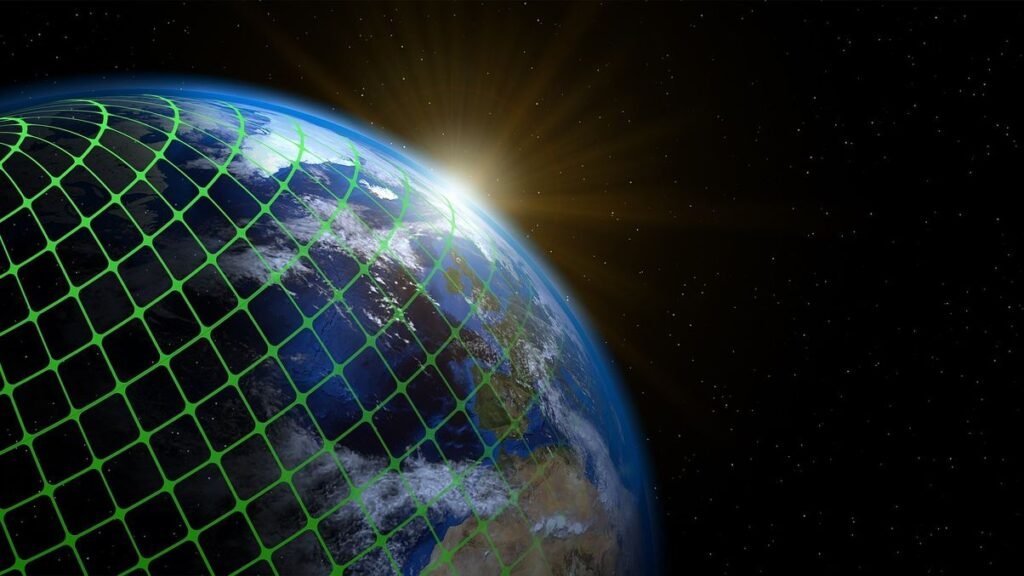

What if everything you think you know about time is wrong? Not slightly wrong. Completely, fundamentally, inside-out wrong. The clock on your wall, the sensation of yesterday melting into today, the very idea that the future hasn’t happened yet – all of it could be an elaborate trick your perception plays on you. Honestly, that’s one of the most unsettling things physics has ever suggested, and yet here we are in 2026, still wrestling with theories that refuse to let our comfortable assumptions rest.
From ancient philosophy to cutting-edge quantum research, brilliant minds have been poking holes in reality for centuries. The deeper they dig, the stranger it gets. So let’s dive in – because some of these ideas will genuinely rewire the way you see existence itself.
1. The Block Universe: All of Time Exists Right Now
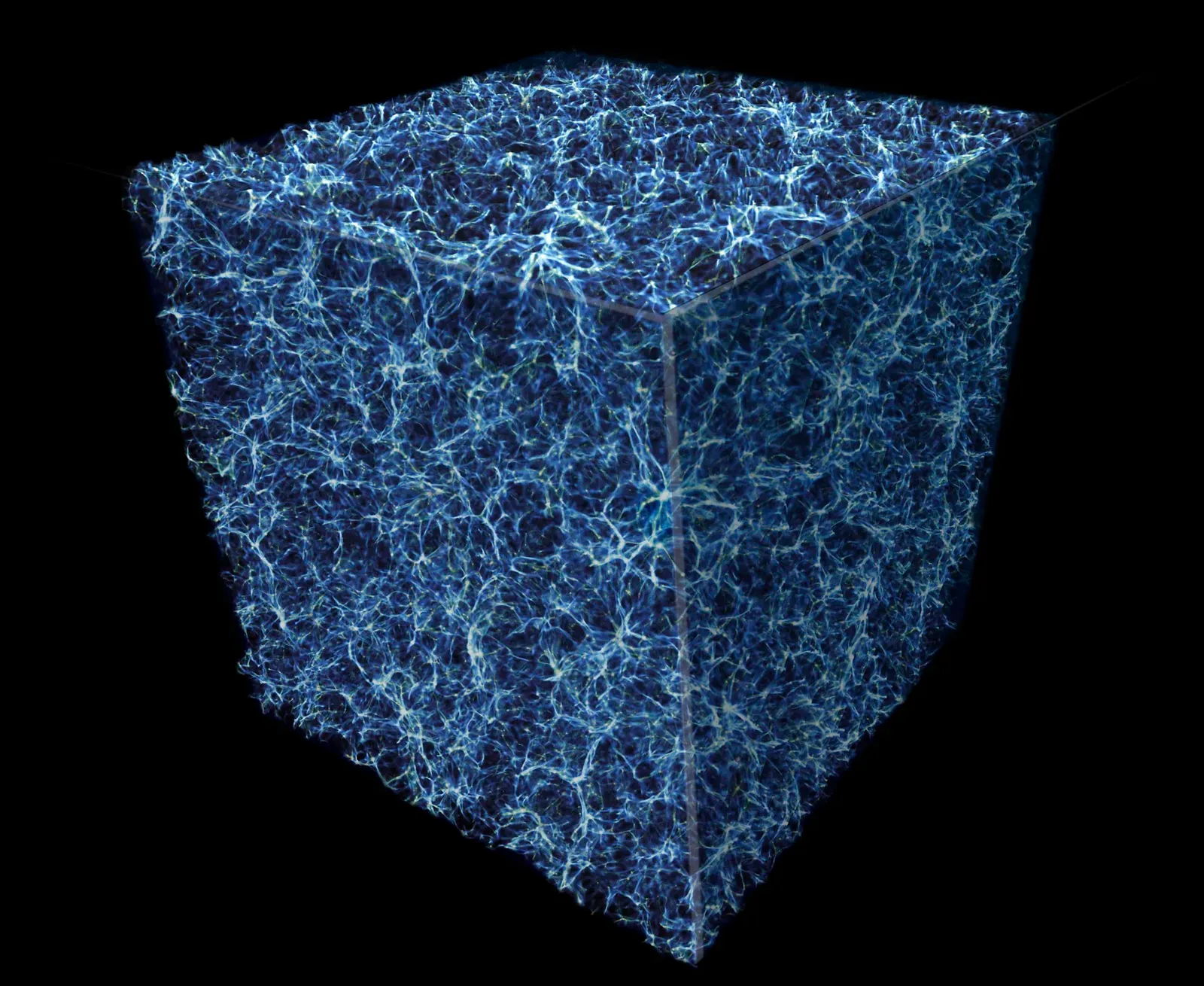
Here’s the thing – you probably feel like the past is gone and the future hasn’t arrived yet. That feeling is deeply human. It is also, according to the Block Universe theory, completely misleading. The block universe theory, or eternalism, suggests that time is a four-dimensional block where past, present, and future events all coexist simultaneously. Think of it like a loaf of bread: every single slice is already there, whether you’ve cut to it yet or not.
In this view, called the block universe, there is no basis for singling out a present time that separates the past from the future, because all times coexist with equal status – with profound implications for how we experience existing in the present moment. That means the moment you were born, the day you will die, and every embarrassing thing you’ve ever done are all equally, permanently real. In the block universe, nothing truly “happens.” Instead, everything just “is.” Change itself becomes a matter of perspective, not a physical fact.
2. Relativity of Simultaneity: Your “Now” Is Not My “Now”
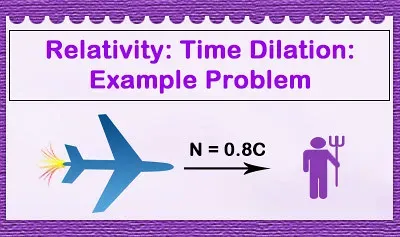
Imagine two people watching the same event from different vantage points at different speeds. You’d expect them to agree on the timing. Surprisingly, they don’t. Modern physics, particularly the mind-bending implications of relativity, presents an astonishing possibility: that what we think of as “now” is not universal. Simultaneity – the idea that events happen at the same time for all observers – is nothing more than an illusion, a consequence of our perspective and the speed at which objects are moving.
To an outside observer, time seems to slow down for a moving object, a phenomenon known as time dilation. It sounds like science fiction, but it’s been verified with real atomic clocks on real airplanes. We don’t merely move through space; we move through time in a way that stretches and compresses events across a four-dimensional spacetime continuum. Your “now” and mine might be slices from completely different sections of that cosmic loaf. Let that sink in for a second.
3. The Many-Worlds Interpretation: Every Decision Spawns a New Universe
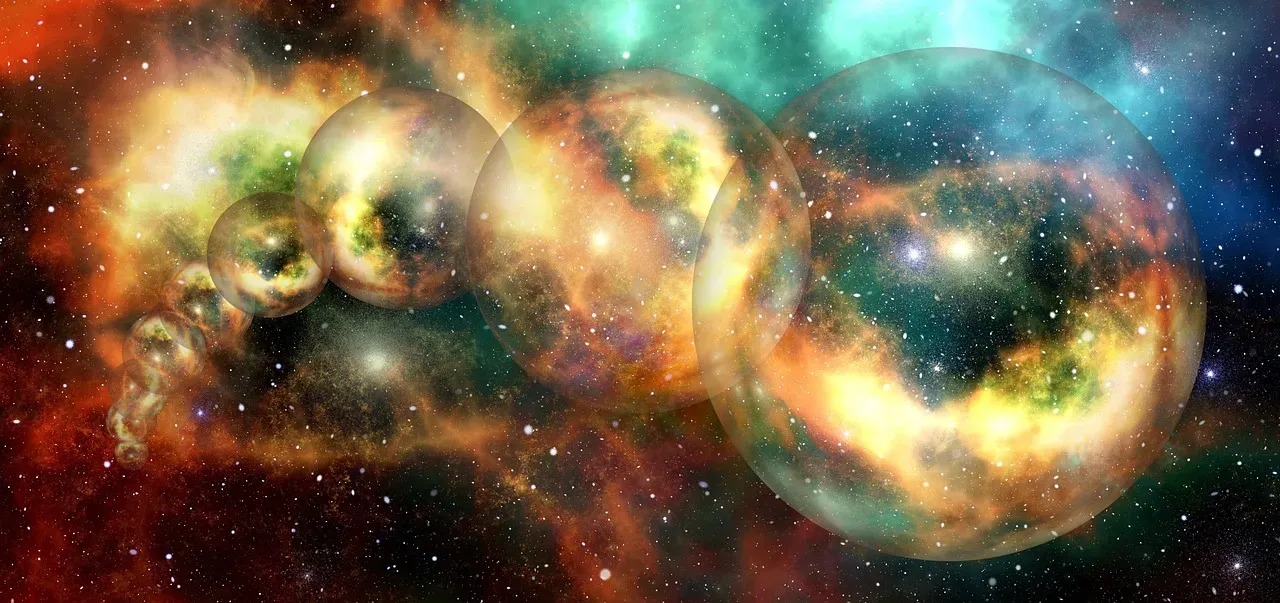
Every time you make a decision – coffee or tea, left turn or right – what if both outcomes actually happen, just in separate realities? That’s essentially the beating heart of the Many-Worlds Interpretation. The Many-Worlds Interpretation of quantum mechanics holds that there are many worlds which exist in parallel at the same space and time as our own. The existence of the other worlds makes it possible to remove randomness and action at a distance from quantum theory and thus from all physics.
In the many-worlds interpretation, the universal wavefunction evolves without collapse. Interactions lead to decoherence, producing dynamically independent components of the wavefunction that correspond to different macroscopic outcomes. These components are sometimes called “worlds,” though they are emergent, approximate, and not fundamental entities. So there is arguably a version of you right now reading this article who got distracted and never finished it. Somewhere, another version of you is living out the road not taken. I find that both thrilling and quietly terrifying.
4. The Simulation Hypothesis: Reality as a Constructed Program
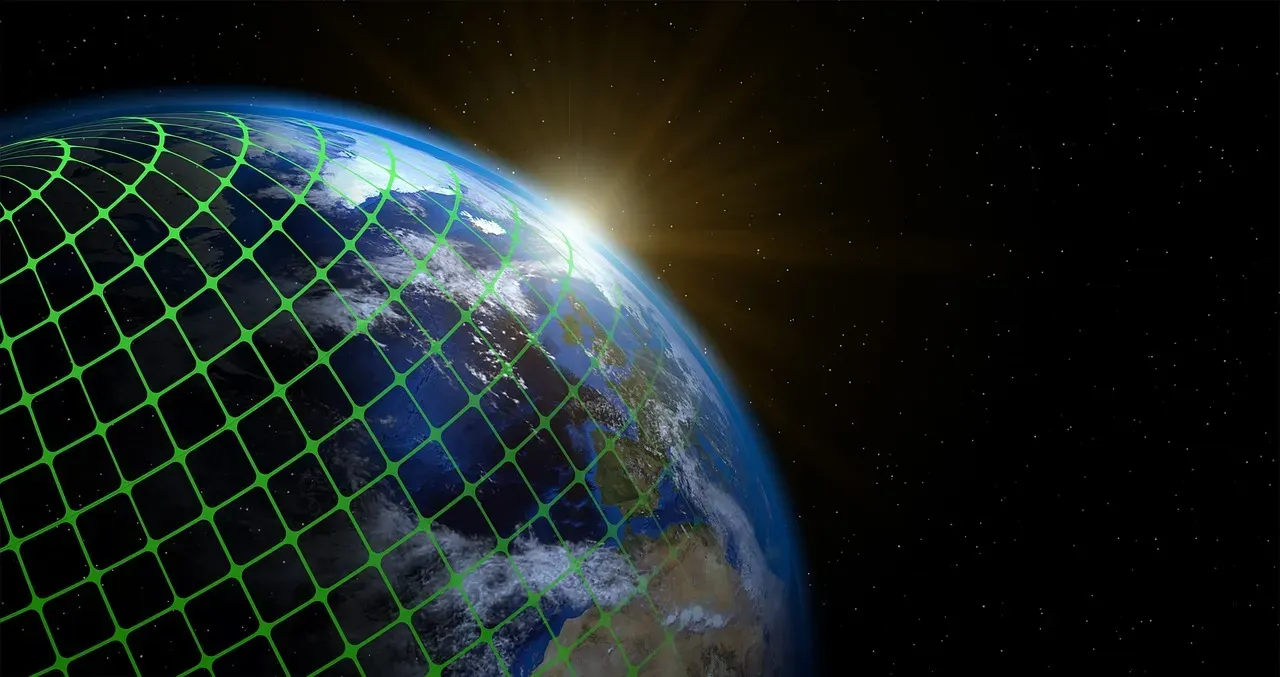
This one tends to make people either laugh or lose sleep. What if the universe isn’t “real” in the way we assume – but instead a kind of extraordinarily advanced computational process? This is the core of the Simulation Hypothesis, first proposed by philosopher Nick Bostrom. The idea is that if advanced civilizations can create hyper-realistic simulations, then the odds are we might be living in one. Think of it as the ultimate video game, except no one handed you a controller.
Quantum mechanics adds another layer of mystery with its unpredictable nature and the bizarre behavior of particles at a subatomic level. According to a 2018 Pew Research survey, roughly half of technology experts believed in the possibility of our reality being a simulation. The pixelated nature of quantum measurements – where particles only “decide” their properties when observed – is the kind of thing a clever programmer might build into a simulated world to save processing power. It sounds crazy. It’s hard to say for sure, but the math doesn’t entirely rule it out.
5. Retrocausality: The Future Might Be Shaping Your Past
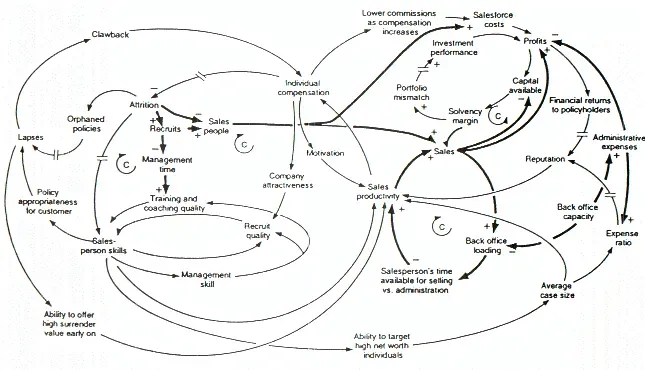
Cause always comes before effect. That’s one of those rules we treat as unbreakable. Retrocausality dares to ask: what if it isn’t? Retrocausality, or backwards causation, is a concept of cause and effect in which an effect precedes its cause in time, so a later event affects an earlier one. In quantum physics, the distinction between cause and effect is not made at the most fundamental level, and so time-symmetric systems can be viewed as causal or retrocausal.
If confirmed, retrocausality would mean that the flow of causality is not always one-way, but rather can be bidirectional. This challenges traditional notions of free will and determinism. Retrocausality also raises questions about the nature of time itself. Retrocausality is the mind-bending idea that events in the future could influence those in the past, directly challenging our conventional understanding of time and causality. It’s like discovering that the chicken not only preceded the egg, but was also, somehow, caused by it.
6. Loop Quantum Gravity: Time Is Made of Tiny Indivisible Pieces
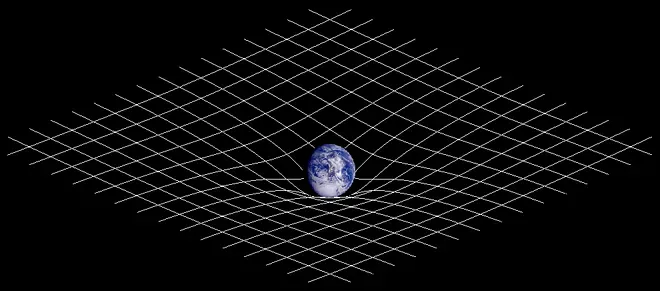
Most of us picture time as smooth and continuous – like a river flowing without interruption. Loop Quantum Gravity tears that picture apart. Among the leading candidates for quantum gravity is Loop Quantum Gravity, a theory that radically reimagines spacetime not as a smooth sheet but as a network of tiny loops. Zoom in far enough, and the seamless fabric of reality dissolves into something more like a mosaic.
The implication is staggering. If time is fundamentally granular, it has a smallest possible unit, a kind of “pixel” of temporal existence. Some approaches to quantum gravity indicate that spacetime is not fundamental. When one reaches the Planck scale – roughly 10 to the power of negative 35 meters – there might not be space and time as we know them. It’s a bit like zooming into a digital photograph: the crisp image breaks down into individual squares with no detail between them. Reality, at its deepest level, might work the same way.
7. The Holographic Principle: Three-Dimensional Reality Is an Illusion
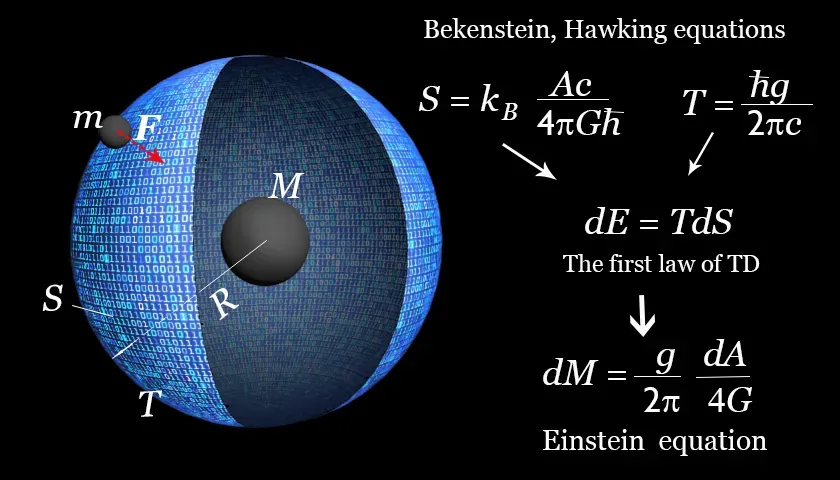
You experience the world in three dimensions. But what if that depth is just a very convincing projection, and the real information exists on a flat, two-dimensional surface somewhere at the edge of your observable universe? The holographic principle is a property of string theories and a supposed property of quantum gravity that states that the description of a volume of space can be thought of as encoded on a lower-dimensional boundary to the region. It was first proposed by Gerard ‘t Hooft in 1993 and given a precise string-theoretic interpretation by Leonard Susskind.
Think of a hologram on your credit card – a flat surface that appears to contain three-dimensional depth. The holographic principle suggests the entire universe might work on that same principle, just at an incomprehensibly larger scale. Since any change in quantum state requires time to flow, all objects and their quantum information state stay imprinted on the event horizon. Bekenstein concluded that the black hole entropy is directly proportional to the area of the event horizon. In other words, your three-dimensional life might literally be the projection of a cosmic flat-screen you’ll never get to touch.
8. Consciousness as the Foundation of Reality: Mind Before Matter
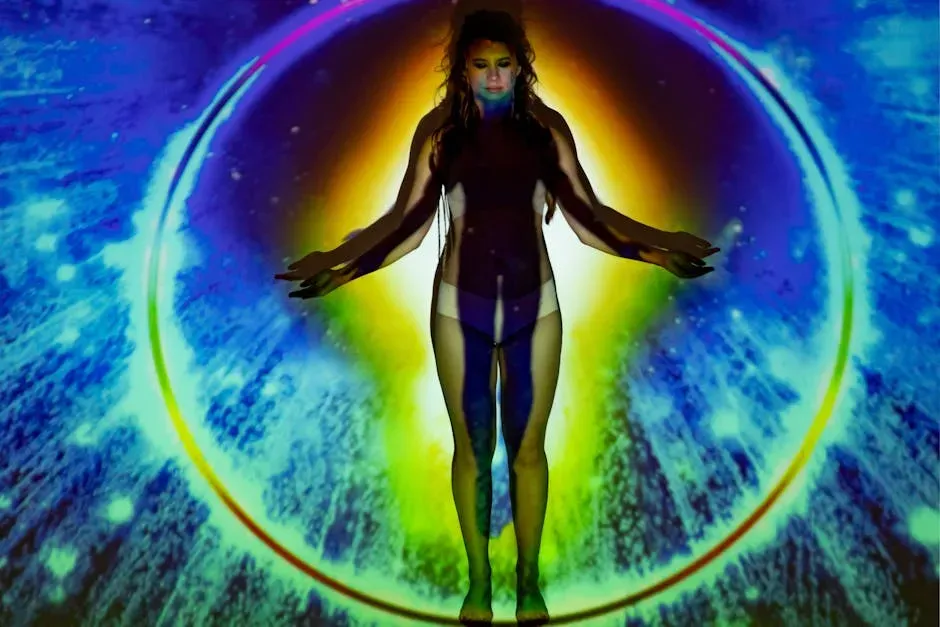
Here’s a theory that science is only just beginning to take seriously again. What if consciousness isn’t something that emerges from matter – but is actually the thing that gives rise to matter, space, and time in the first place? Consciousness is fundamental; only thereafter do time, space, and matter arise. This is the starting point for a new theoretical model of the nature of reality, presented by Maria Strømme, Professor of Materials Science at Uppsala University, published in AIP Advances.
The article presents a framework in which consciousness is not viewed as a byproduct of brain activity, but as a fundamental field underlying everything we experience – matter, space, time, and life itself. This flips the entire scientific script. Instead of brains producing awareness, awareness might be producing everything, including brains. A new theoretical model proposes that consciousness is the foundational field from which time, space, and matter emerge, rather than a byproduct of brain activity. Whether you believe it or not, it’s a question that increasingly refuses to be dismissed.
9. Eternalism Versus Presentism: Is Only “Now” Real?

Philosophy and physics have been wrestling with this one for over a century. Presentism says only the present moment exists; the past is gone and the future doesn’t exist yet. Eternalism disagrees, and disagrees loudly. In the philosophy of space and time, eternalism is an ontological view according to which all existence in time is equally real. Some forms of eternalism give time a similar ontology to that of space, as a dimension, with different times being as real as different places, and future events “already there” in the same sense other places are already there.
Presentism aligns with our intuitive experience but conflicts with modern physics. The block universe is supported by relativity but challenged by quantum mechanics. Quantum mechanics introduces genuine unpredictability, suggesting the future isn’t fixed after all – which is exactly what presentism would argue. In “Time Reborn,” Lee Smolin argues that time is physically fundamental, in contrast to Einstein’s view that time is an illusion. Smolin hypothesizes that the laws of physics are not fixed, but rather evolve over time via a form of cosmological natural selection. Two brilliant frameworks, both with serious evidence. Only one can be right – and we’re still not sure which.
10. The Multiverse: Infinite Universes, Each with Their Own Time
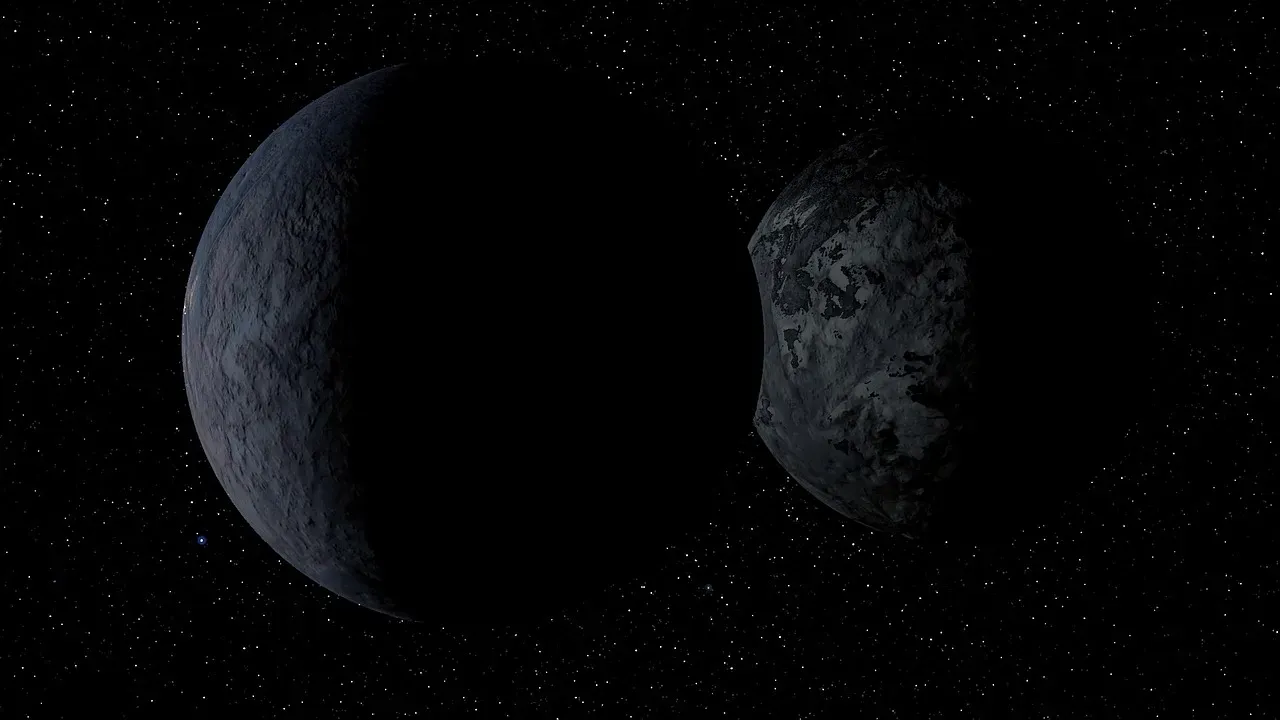
The universe you inhabit might just be one tiny bubble in a vast, frothing cosmic ocean of other universes – each with its own physical laws, its own version of time, maybe even its own version of you. The idea that our universe is just one of many – a small bubble in a vast cosmic foam – emerges naturally from several physical theories. Inflationary cosmology, which describes the exponential expansion of the early universe, predicts that different regions of space could inflate into separate universes, each with its own physical laws.
String theory, with its vast landscape of possible solutions, also suggests a multiverse of varied spacetimes. The Many-Worlds Interpretation of quantum mechanics proposes that every quantum decision splits the universe into parallel realities. Physicists like Max Tegmark have categorized these into four types, ranging from slight variations of our universe to completely different realms with unique laws of physics. It’s the kind of theory that makes your head spin if you think about it too long – and perhaps the most humbling of them all, because it suggests our entire cosmos might be the equivalent of a single grain of sand on an infinite beach.
Conclusion
Let’s be real – none of these theories are bedtime reading if you want a quiet mind. Together, they paint a picture of reality that is stranger, richer, and far more slippery than your daily experience would ever suggest. Time might be an illusion. Your choices might be splitting the universe. The future might already exist, and consciousness might be running the whole show from behind the scenes.
What’s remarkable is that these aren’t fringe ideas scribbled in notebooks by eccentrics. They are serious, peer-debated frameworks that physicists and philosophers bring to some of the world’s most prestigious academic journals. The deeper humanity probes , the more we seem to discover that the universe is not only stranger than we imagined – it may be stranger than we are currently capable of imagining.
Perhaps the most important takeaway is simply this: the confident, ticking clock on your wall is one of the universe’s greatest magic tricks. Which of these ten theories surprised you the most? Tell us in the comments – we’d genuinely love to know.