
You touch a table. You feel the weight of the ground beneath your feet. You watch stars burn millions of light-years away and you think – this is real, this is solid, this is everything. Now imagine being told that none of it might be quite what you think. Not in a philosophical, hand-wavy sense, but in a deeply rigorous, mathematically grounded scientific sense.
The idea that the universe could be a kind of hologram has moved from the fringes of theoretical physics to one of the most seriously debated concepts in modern science. It is strange, it is uncomfortable, and honestly, it is one of the most thrilling rabbit holes you can fall into. Let’s dive in.
What Exactly Is the Holographic Universe Theory?
One of the weirdest theories in cosmology is the holographic principle – the idea that our universe is a three-dimensional image projected off a two-dimensional surface. Think about the hologram sticker on your credit card. It’s flat, two-dimensional, yet it creates the convincing illusion of depth. A hologram is a flat image that appears three-dimensional when viewed from different angles, with the illusion of depth created through the interference of light waves, encoding three-dimensional information on a two-dimensional surface.
Now scale that up to the entire cosmos. Imagine that the entire universe – stars, planets, humans, thoughts, and all – is a similar illusion. What if everything you perceive as 3D actually originates from encoded information on a distant 2D surface? The theory, which has been around since the 1990s and is now a mainstream scientific hypothesis, holds that the universe and everything in it is a three-dimensional projection from a two-dimensional plane. That is the holographic principle in its simplest form. Wild? Absolutely. But you have not even gotten to the interesting part yet.
Where Did This Idea Actually Come From?

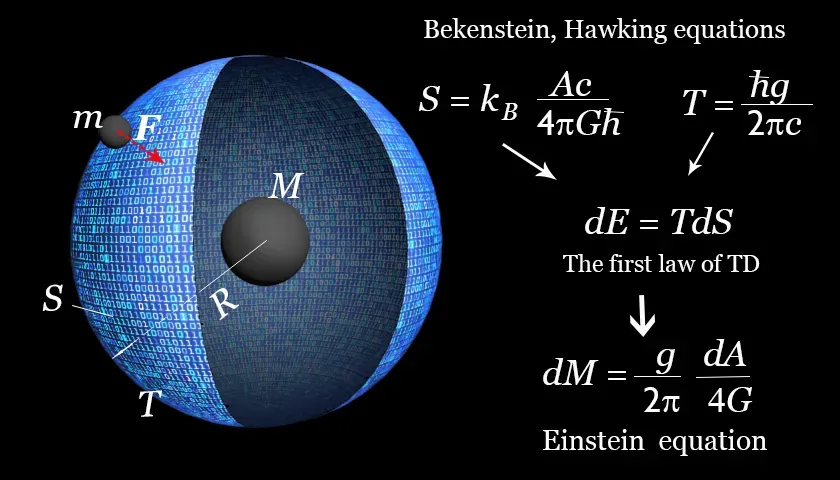
This strange idea was born from a very serious scientific dilemma: the black hole information paradox. Here is the thing – when matter falls into a black hole, does all the information about it vanish forever? That would break fundamental laws of physics. The holographic principle presents a potential solution by suggesting that the information pulled into a black hole is not lost. Instead, it remains encoded on the event horizon.
The holographic principle is a property of quantum gravity theories which resolves the black hole information paradox within string theory. It was first proposed by Gerard ‘t Hooft and was given a precise string-theory interpretation by Leonard Susskind. A major motivation for the principle came from research on black hole thermodynamics. Scientists noticed that the maximum amount of entropy inside black holes seemed to be dependent on the surface area of the event horizons rather than the volume. This led to the idea that perhaps this relationship applies to all regions of space, not just black holes.
The Maldacena Conjecture – The Equation That Changed Everything
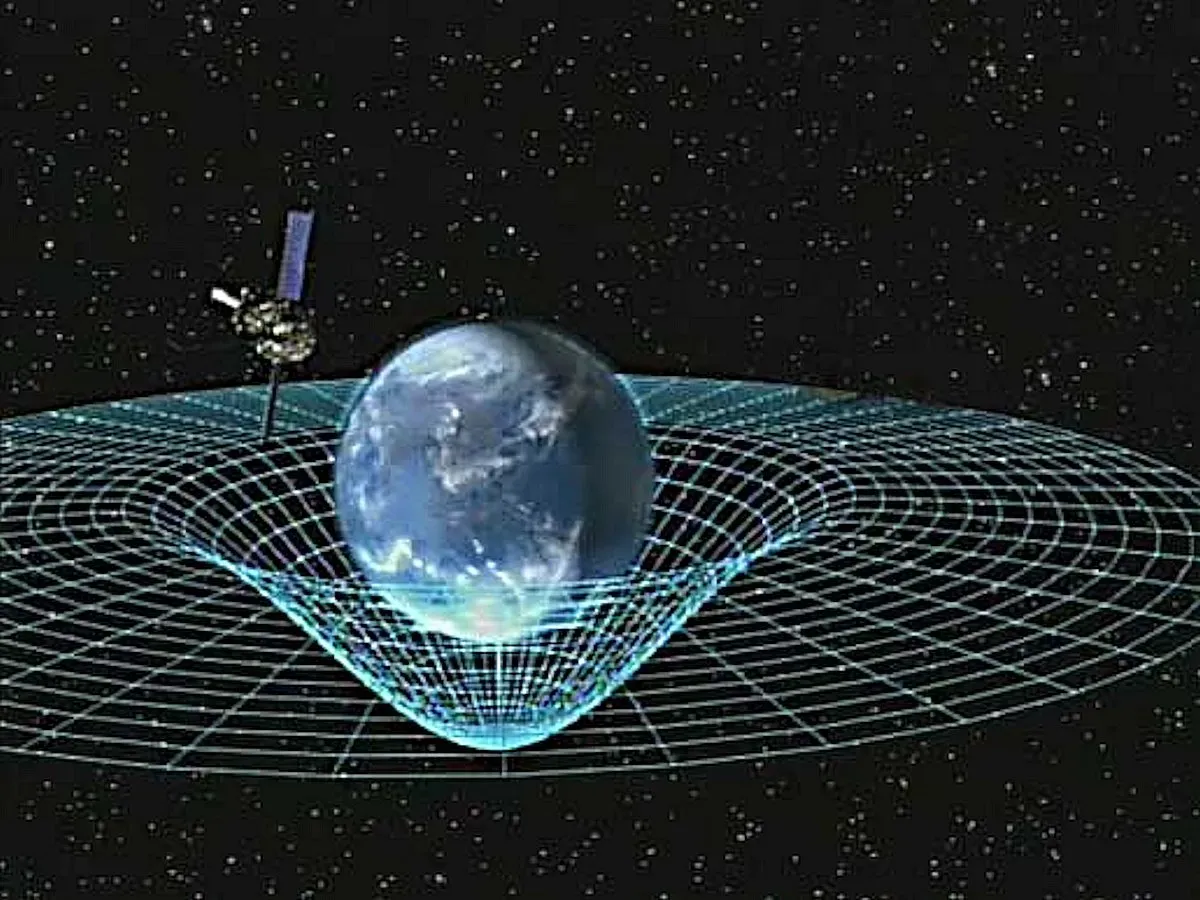
In 1997, a physicist named Juan Maldacena published something that sent shockwaves through theoretical physics. The idea, put forth by Juan Maldacena of the Institute for Advanced Study in Princeton, N.J., suggested something profound: that our universe could be a hologram. Much like a 3D hologram emerges from the information encoded on a 2D surface, our universe’s 4D spacetime could be a holographic projection of a lower-dimensional reality.
It states that a universe with gravity inside (an anti-de Sitter space) is mathematically equivalent to a universe without gravity on its boundary (a conformal field theory). In simple terms: a three-dimensional world with gravity equals a two-dimensional world without it. Imagine you are watching a 3D movie and then realizing the entire cinematic experience you are having actually lives entirely on that flat screen in front of you. The duality represents a major advance in understanding of string theory and quantum gravity, because it provides a non-perturbative formulation of string theory with certain boundary conditions and is the most successful realization of the holographic principle.
What Does the Evidence Actually Look Like?
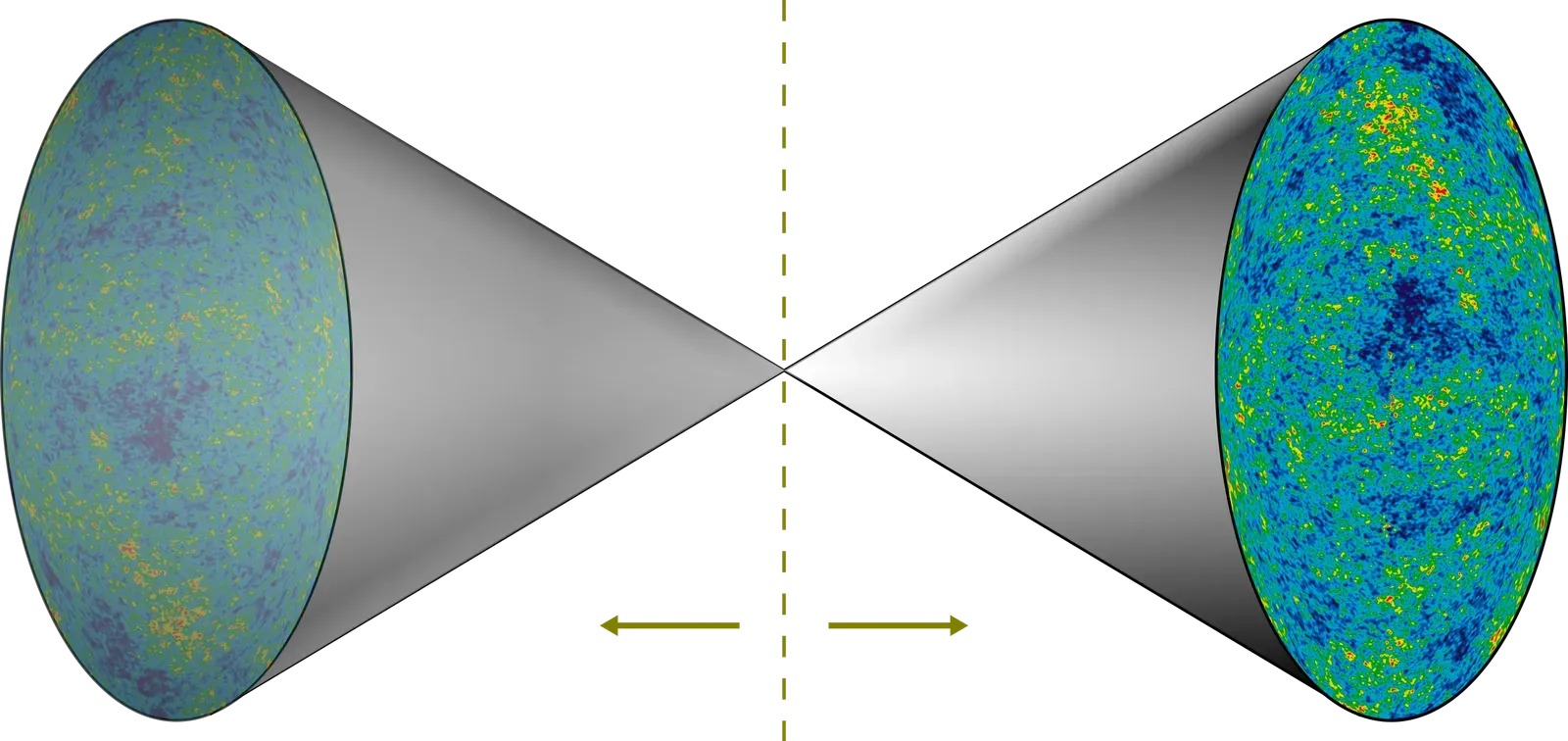
A UK, Canadian and Italian study provided what researchers believe is the first observational evidence that our universe could be a vast and complex hologram. Theoretical physicists and astrophysicists, investigating irregularities in the cosmic microwave background, found there is substantial evidence supporting a holographic explanation of the universe – in fact, as much as there is for the traditional explanation using the theory of cosmic inflation. That is a big deal. It is not proof, but it is a serious signal.
Some intriguing hints have emerged, such as patterns observed in the cosmic microwave background – the faint afterglow of the Big Bang that permeates the universe. Studies of the CMB have revealed slight fluctuations that seem consistent with a universe where information might be encoded on a 2D surface. On top of that, a new mathematical test of the holographic principle has been developed as recently as 2025 to advance understanding of quantum gravity, aiming to reconcile quantum mechanics and general relativity. The search for hard evidence is very much alive.
The Biggest Problem – Our Universe Doesn’t Quite Fit the Model
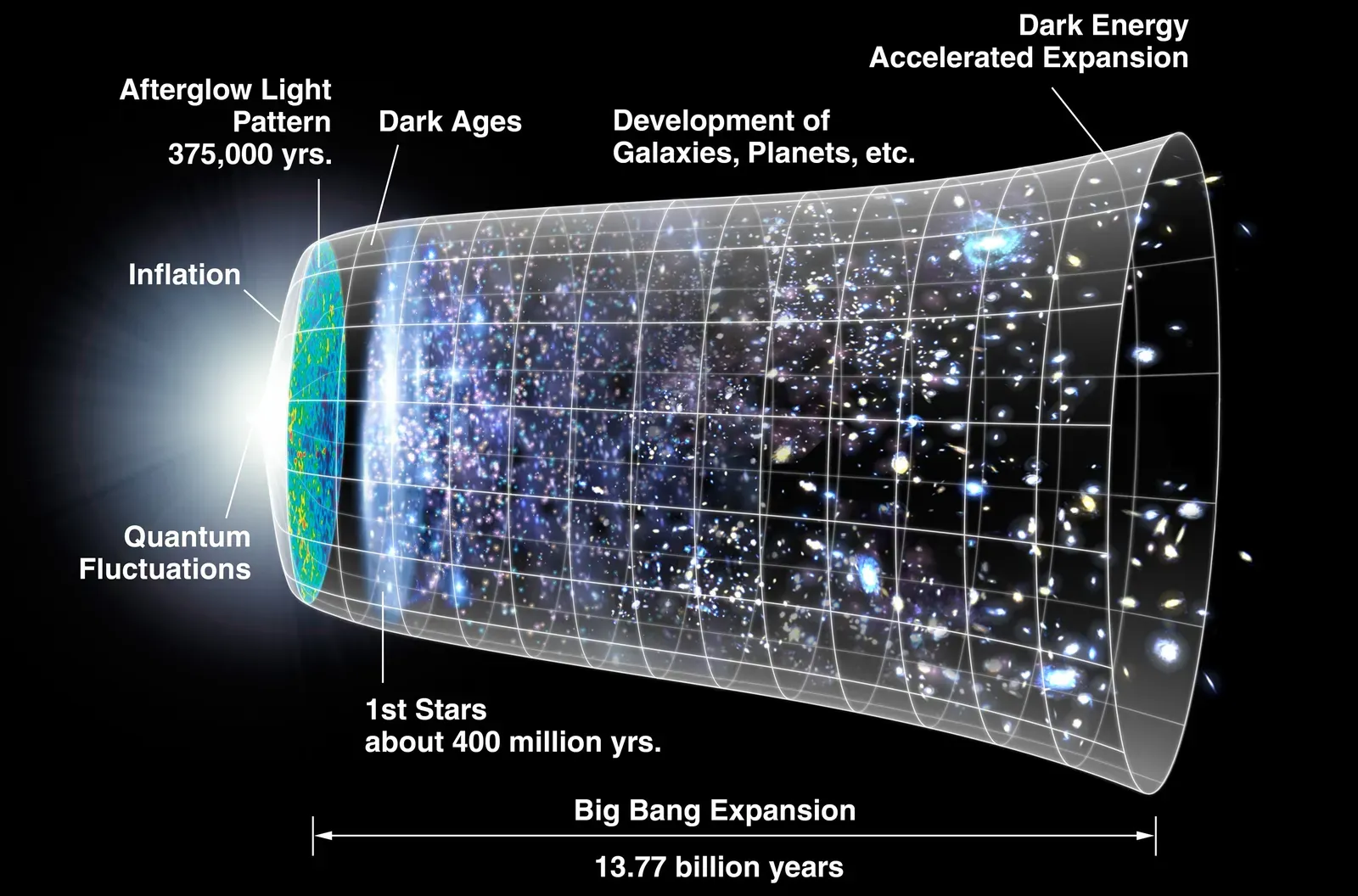
Here is where things get genuinely tricky and where, honestly, even the most enthusiastic supporters of the theory have to take a breath. Our universe is not an anti-de Sitter space – it is expanding, with a positive cosmological constant. The AdS/CFT duality does not apply directly. It is a bit like discovering an incredible key but finding out it only opens a door that is slightly different from yours. Close – but not quite.
Despite its intriguing nature, the holographic universe theory faces skepticism from many in the scientific community. One reason is that, while mathematically compelling, the holographic principle often feels speculative and abstract, lacking the direct experimental evidence that typically underpins established scientific theories. Critics argue that without concrete proof, it remains more of a theoretical curiosity than a validated description of our universe. Still, physicists, including Maldacena himself, are working on ways to extend the holographic idea to universes like ours. The door is far from closed.
What Would It Mean for Reality If This Theory Is True?
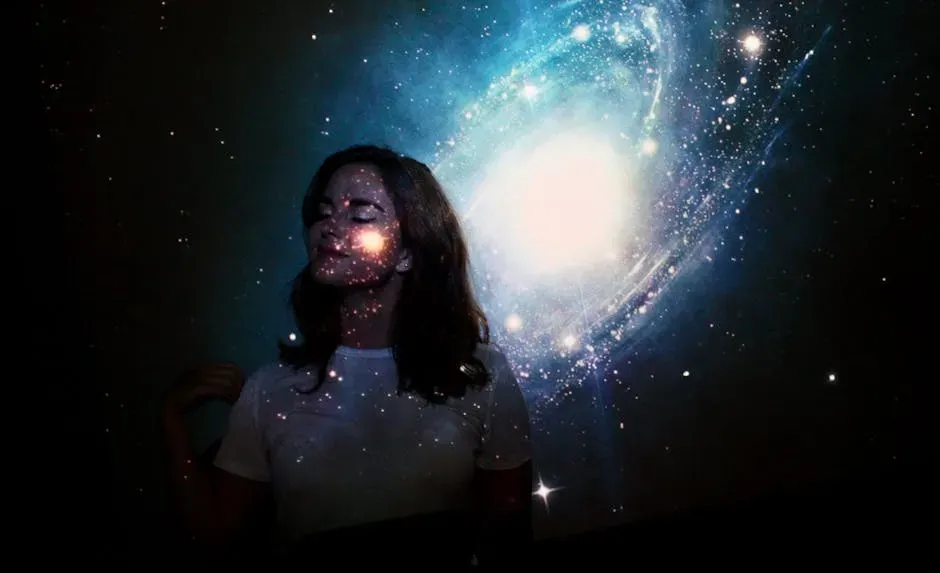
If the holographic theory is correct, it would flip our understanding of reality. The idea of depth or inside might not be fundamental. Space itself could be an illusion, an emergent property derived from information stored elsewhere. Think about that for a moment. Every mountain you have climbed, every ocean you have looked at – potentially just a stunning, incredibly convincing projection from a distant cosmic screen.
The theory is anchored on a holistic entangled state that is fundamental, with all dynamical properties of our universe – including the very notion of time itself – arising as emergent descriptions of that state. Even time could be something that emerges from something deeper. If the holographic principle turns out to be correct, it could change how scientists understand the universe, from its origin to its future. It could reshape the way physicists think about the Big Bang, the existence of black holes, and the shape of the cosmos. It may also improve the development of technologies like quantum computing or techniques used in material sciences. The implications are, to put it mildly, enormous.
Conclusion
The holographic universe theory is not a fringe idea cooked up in someone’s garage. It is a legitimate, fiercely discussed framework sitting at the very heart of modern theoretical physics. You may never look at a flat photograph the same way again, knowing that it might be a more accurate metaphor for reality than your own sense of depth perception.
We are still far from a definitive answer. The idea of the holographic principle, although at first it might seem like a completely random idea, actually helps us to solve some of the thorniest puzzles that arise when you try to combine quantum mechanics and general relativity. That alone makes it worth taking seriously. The universe has always been stranger than it looks – and maybe, just maybe, it is stranger than you can possibly imagine. So, what do you think: does it change anything for you, knowing that the depth and solidity of everything around you might just be a magnificent projection? Tell us in the comments.