
There is something profoundly humbling about the idea that the universe left behind clues about its own creation, whispering across billions of years for us to finally hear. We are not just stargazers anymore. We are cosmic archaeologists, and the tools at our disposal in 2026 are more powerful than anything humanity has ever had before.
From ancient light frozen into microwave radiation to sound waves literally imprinted on the structure of galaxies, the universe’s birth is written everywhere, if you know how to read it. Buckle up, because what science has uncovered about those first unimaginable moments will change how you look at the night sky forever. Let’s dive in.
The Big Bang: More Than Just a Theory
Here’s the thing most people misunderstand about the Big Bang. It is not a guess. The Big Bang Theory continues to hold its place as the most supported model of our cosmic origin, and that’s not due to tradition but to the amount and consistency of the evidence. Its predictions have been confirmed in multiple areas: the CMB, the expansion of the universe, the abundance of elements, and the physics observed in particle accelerators.
Still, it is worth noting that not all the mystery has been solved. The birth of the universe continues to be one of science’s greatest puzzles. The Big Bang theory remains the prevailing explanation, yet many questions persist, especially about what might have occurred before that explosive beginning. Think of it like finding the world’s most detailed recipe, but realizing the first three lines have been torn out.
The Cosmic Microwave Background: A Snapshot of Infant Light
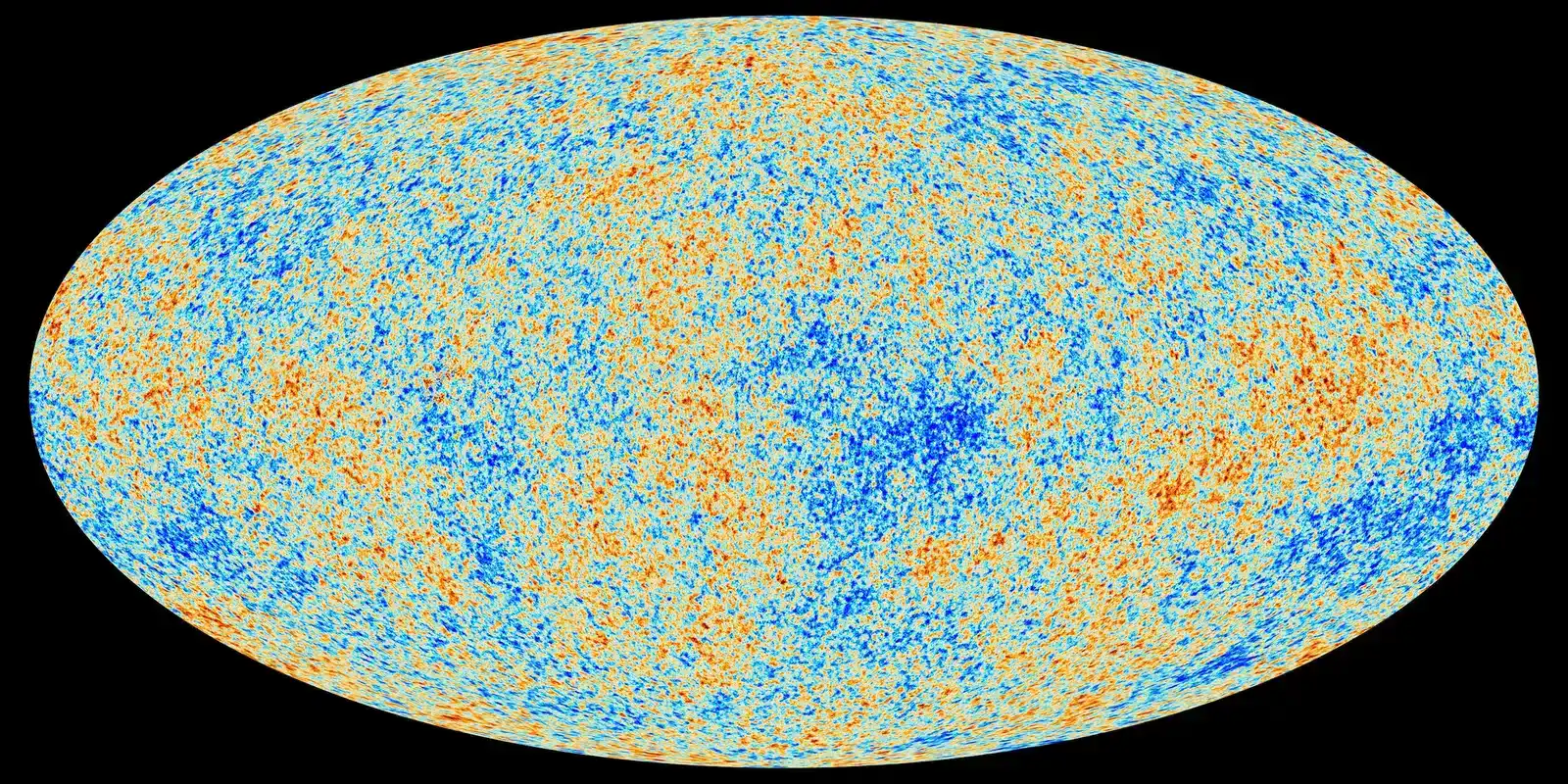
One of the strongest pieces of evidence for the Big Bang Theory is the detection of cosmic microwave background radiation (CMB). This faint glow, found everywhere in the universe, is considered a leftover imprint from the universe’s earliest moments. Imagine if a single photograph taken a fraction of a second after your birth still existed today. That is essentially what the CMB is.
Discovered in 1965, the CMB is essentially a fossil of the first light released after the Big Bang, about 380,000 years after the universe began expanding. Its uniformity across the sky provides a clear sign that the early universe was hot and dense before cooling down and expanding over billions of years. What makes this even more remarkable is how it was found. When Penzias and Wilson reduced their data, they found a low, steady, mysterious noise that persisted in their receiver. This residual noise was 100 times more intense than they had expected, was evenly spread over the sky, and was present day and night. They were certain that the radiation they detected did not come from the Earth, the Sun, or our galaxy.
Baby Pictures of the Cosmos: The Atacama Telescope’s Historic Images
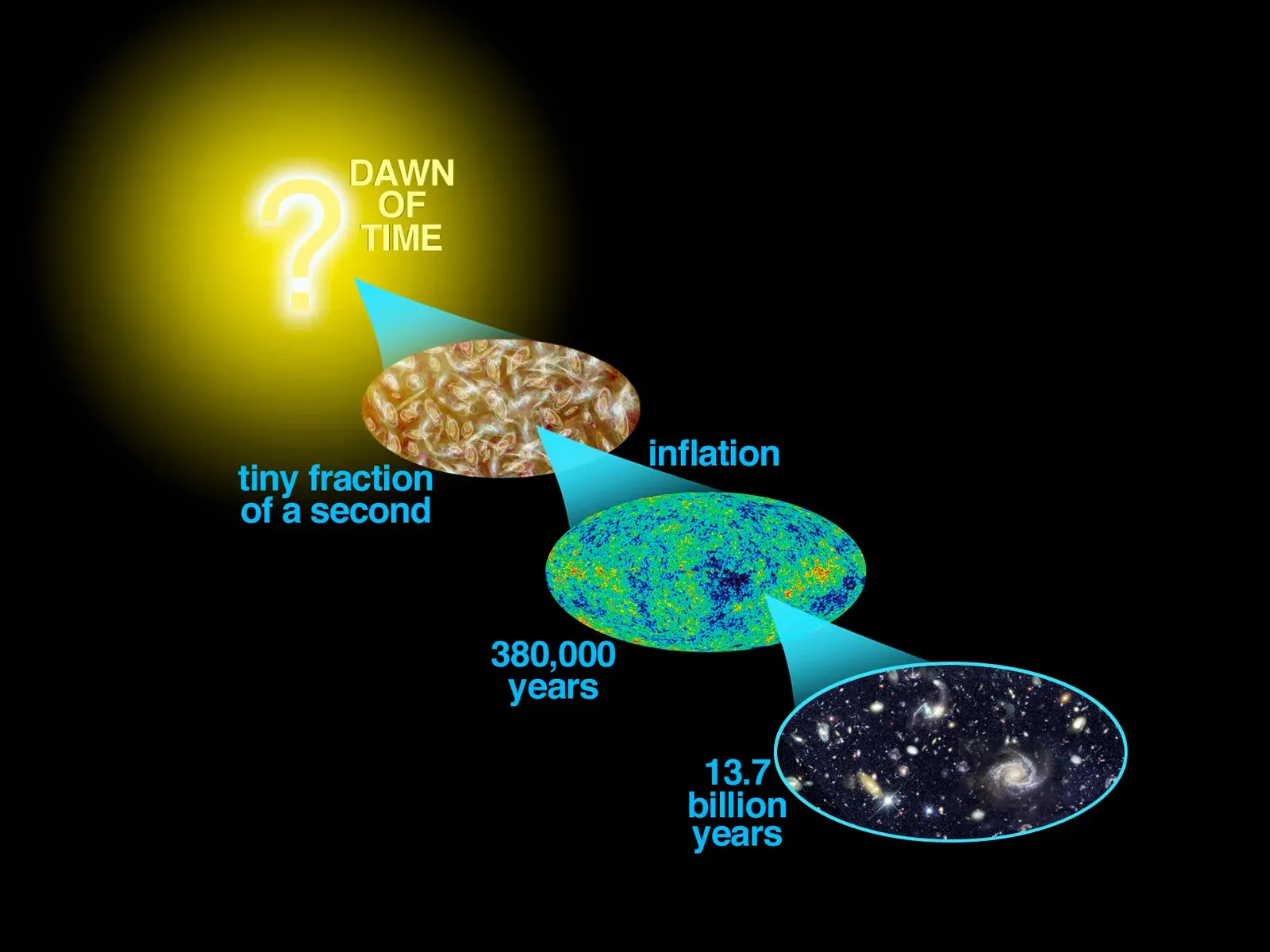
I honestly think this is one of the most stunning scientific achievements of the past decade. Research by the Atacama Cosmology Telescope (ACT) collaboration has produced the clearest images yet of the universe’s infancy, the earliest cosmic time yet accessible to humans. Measuring light that traveled for more than 13 billion years to reach a telescope high in the Chilean Andes, the new images reveal the universe when it was about 380,000 years old, the equivalent of hours-old baby pictures of a now middle-aged cosmos.
The new images of the early universe, which show both the intensity and polarization of the earliest light with unprecedented clarity, reveal the formation of ancient, consolidating clouds of hydrogen and helium that later developed into the first galaxies and stars. Even more impressively, the polarization image reveals the detailed movement of the hydrogen and helium gas in the cosmic infancy. It is a bit like being able to see not just where ancient rivers once flowed, but how fast the water was moving at the time.
Baryon Acoustic Oscillations: The Sound Waves That Built the Universe
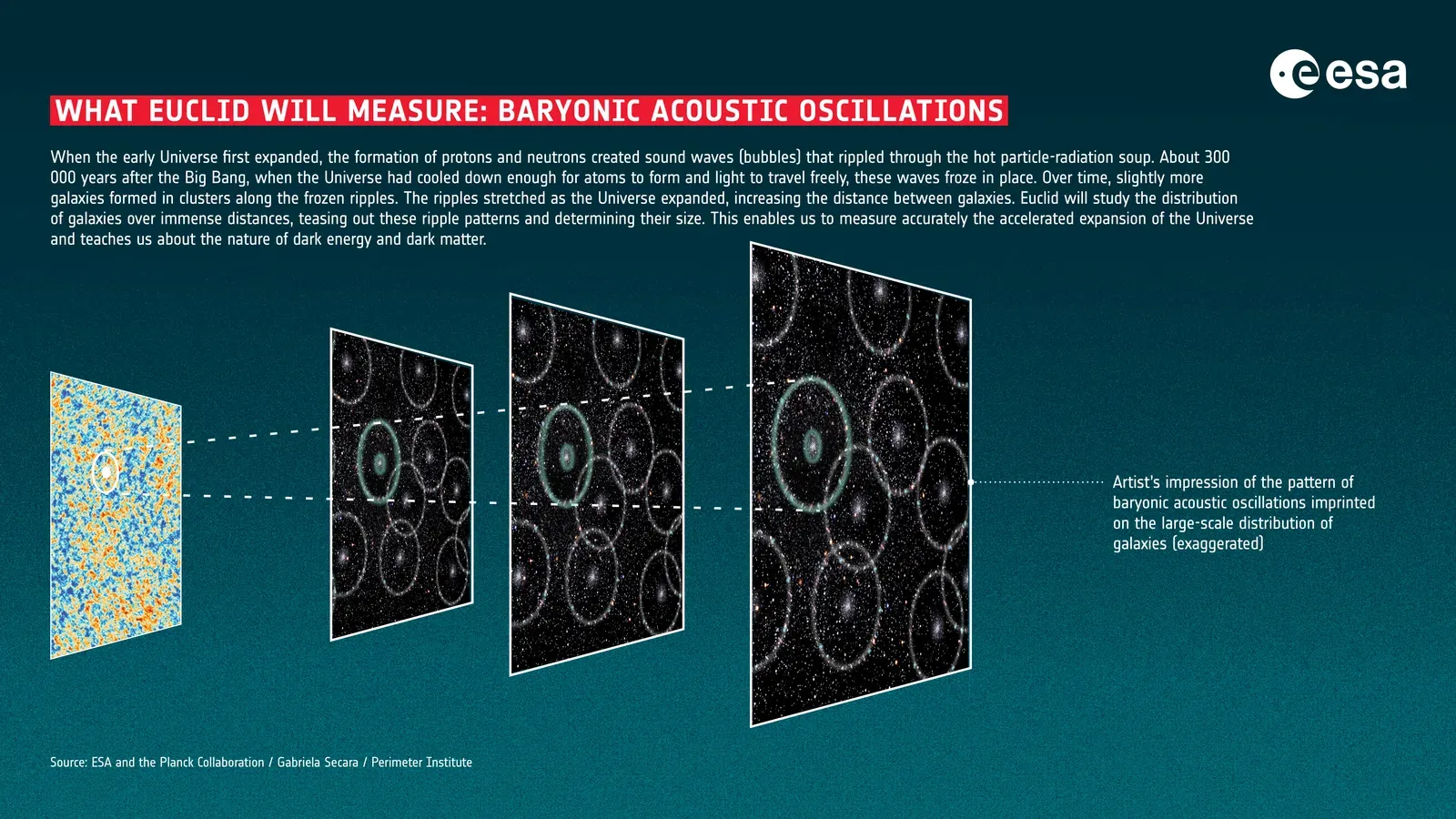
This is where cosmology starts sounding like science fiction. Cosmologists have ways of “hearing” the sound of the universe. Through sound waves reconstructed mathematically from density fluctuations in the primordial plasma that followed the Big Bang, they can tell an interesting story about the universe’s earliest days. These were not just any sounds. They were enormous pressure waves rolling through a hot cosmic sea.
In the beginning, the cosmos was filled with a hot, dense fluid called plasma. Tiny variations in density excited sound waves that rippled through the fluid. When the universe was about 400,000 years old, the waves froze where they were. Slightly more galaxies formed along the ripples. These frozen ripples stretched as the universe expanded, increasing the distance between galaxies. Today, we can literally measure the distance between galaxy clusters to detect that ancient rhythm. It is the most improbable fossil you can imagine, and it is real.
Gravitational Waves: Did Ripples in Space-Time Create Everything?
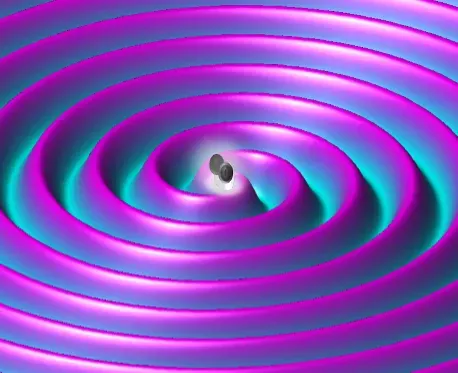
A groundbreaking idea is challenging the long-standing inflation model. A team of scientists has proposed a groundbreaking new theory on the Universe’s origins, offering a fresh, radical take on the Big Bang’s early moments. Unlike the widely accepted inflationary model, which involves speculative assumptions, the new model starts with the established concept of De Sitter space, aligning with dark energy observations. The scientists believe gravitational waves, ripples in space-time, were the key to seeding the formation of galaxies and cosmic structure.
It’s hard to say for sure if this will replace the inflation model entirely, but the elegance of the idea is undeniable. This is science at its best: clear predictions that future observations, such as measurements of gravitational waves and cosmic structure, can confirm or reject. These new results suggest that we may not need speculative elements to explain the cosmos, but only a deep understanding of gravity and quantum physics. If the model is confirmed, it could mark a new chapter in the way we think about the birth of the Universe.
The Cosmic Dark Ages: What Hydrogen Whispers from the Void
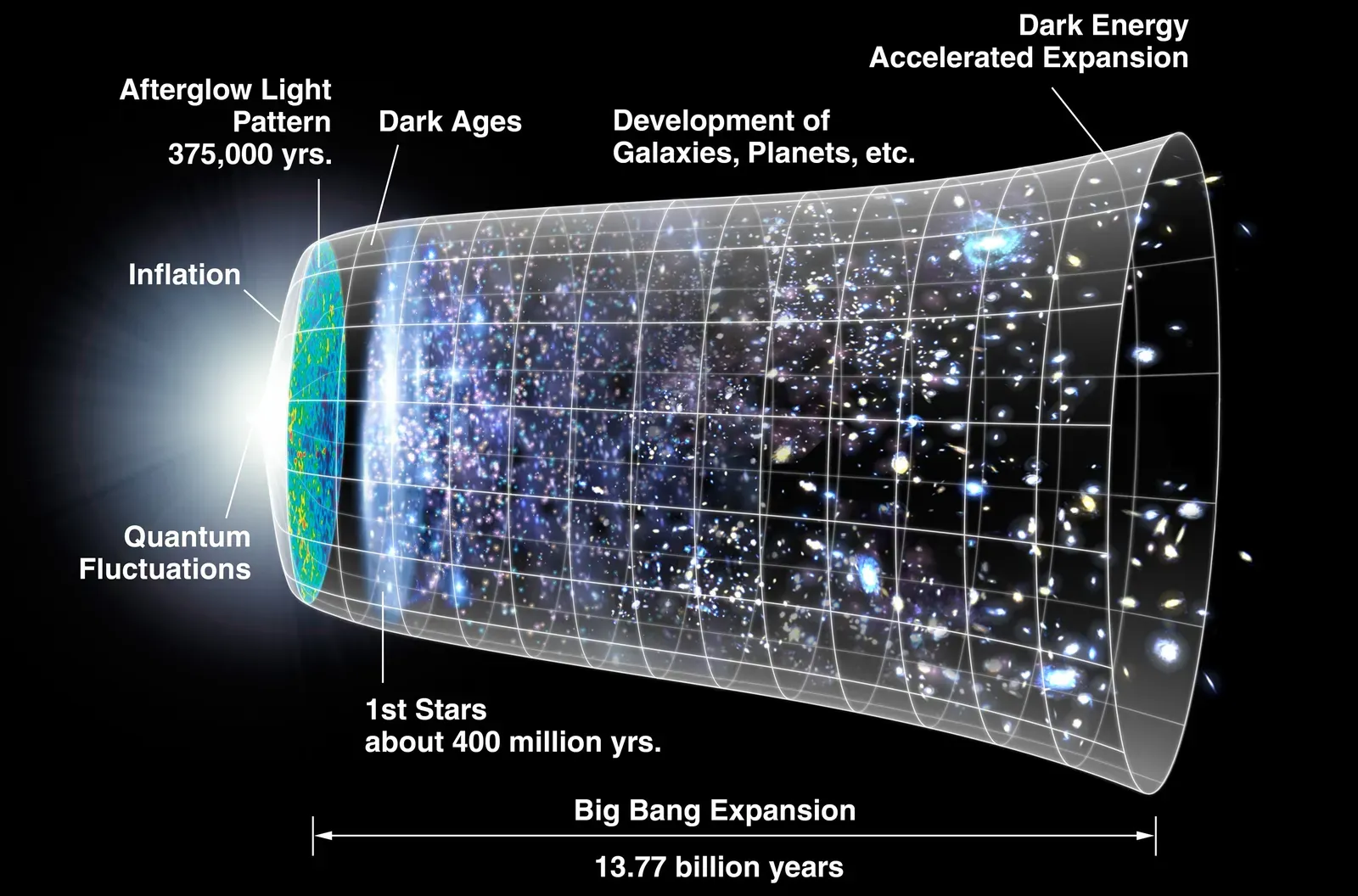
After the Big Bang, the Universe entered a long, dark period before the first stars formed. During this era, hydrogen emitted a faint radio signal that still echoes today. This era is one of the least understood chapters in cosmic history. Picture a universe with no starlight whatsoever, just an ocean of cooling hydrogen drifting in total darkness for hundreds of millions of years.
Although the Universe was dark during this time, it was not completely silent. Scientists believe hydrogen atoms emitted very faint radio waves with a wavelength of 21 cm. These signals are thought to preserve valuable information about the earliest stages of cosmic history. The challenge is that these signals from this ancient era are blocked by Earth’s atmosphere, and studying them requires instruments in space, especially on the moon, where the lack of an atmosphere and human-made interference provides ideal conditions. A lunar telescope listening for the universe’s own infant whisper. That idea genuinely blows my mind.
James Webb and the Galaxies That Should Not Exist
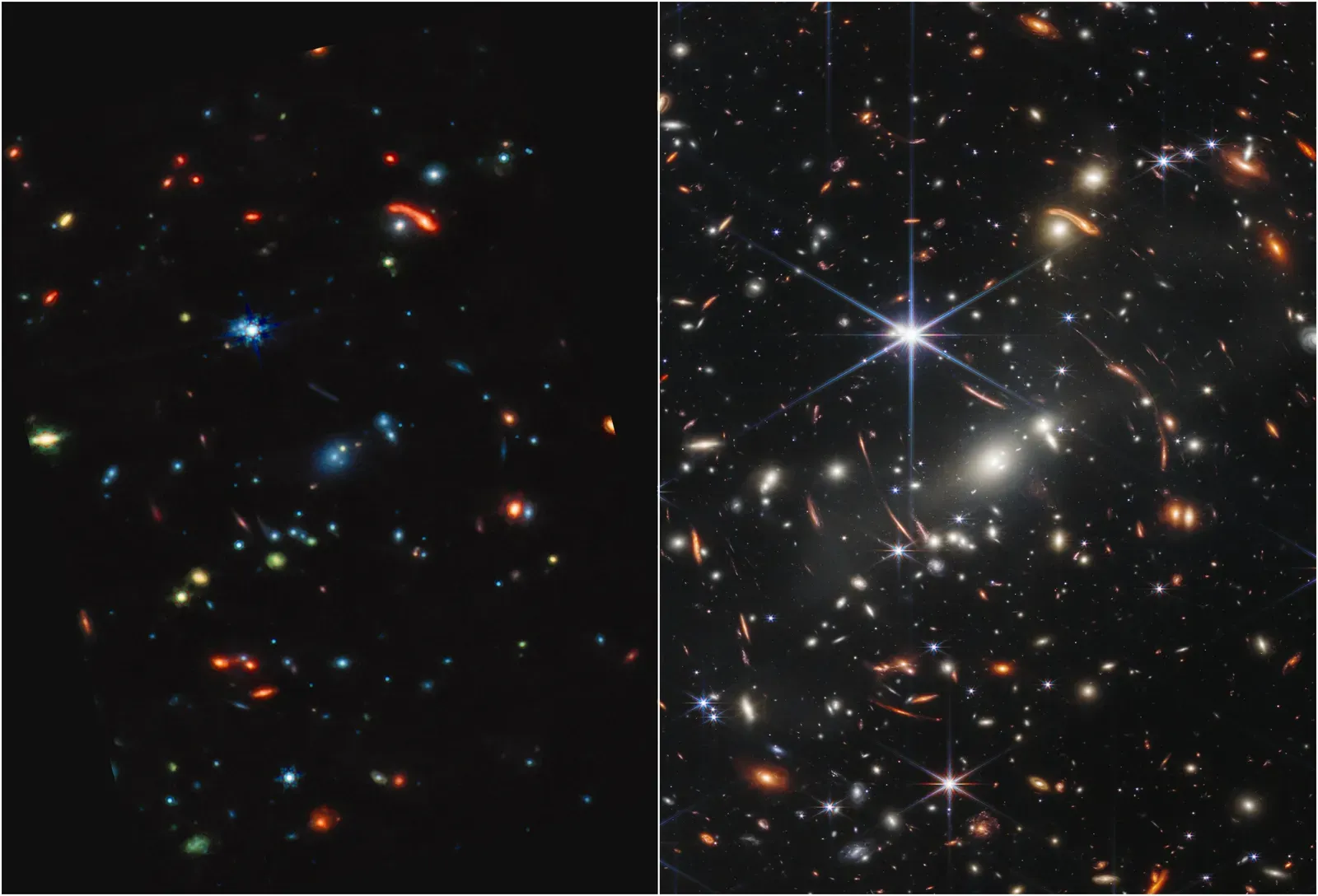
If you thought science had the early universe figured out, the James Webb Space Telescope had other plans. NASA’s James Webb Space Telescope has confirmed a bright galaxy that existed 280 million years after the Big Bang. The newly confirmed galaxy, MoM-z14, holds intriguing clues to the universe’s historical timeline and just how different a place the early universe was than astronomers expected.
MoM-z14 is one of a growing group of surprisingly bright galaxies in the early universe, roughly a hundred times more than theoretical studies predicted before the launch of Webb. “There is a growing chasm between theory and observation related to the early universe, which presents compelling questions to be explored going forward.” In other words, the universe’s first chapters are still being rewritten. Astronomers at Texas A&M University have also discovered a rare, tightly packed collision of galaxies in the early universe, suggesting that galaxies were interacting and shaping their surroundings far earlier than scientists had predicted. Each new Webb image is not just a photograph. It is a correction to a story we thought we already knew.
Conclusion: The Universe Is Still Telling Its Own Story
We live in a remarkable moment. The echoes of creation are no longer just philosophical poetry. They are measurable, mappable, and deeply revealing. From the faint glow of the CMB to frozen acoustic waves encoded in how galaxies cluster, the universe’s earliest moments left fingerprints everywhere around us.
What strikes me most is that every new instrument we build reveals a universe more complex, more surprising, and frankly more magnificent than the last model suggested. New observations, like those from the James Webb Space Telescope, continue to refine, not replace, our understanding of how the universe evolved. The story of creation is still being written, one cosmic echo at a time.
Perhaps the most astonishing thing is not what we have discovered, but how much of the universe is still quietly waiting to be heard. What would you guess is still hidden in those cosmic whispers?