Imagine a place where sunlight never reaches, where pressure would crush a submarine in seconds, and where life glows in the dark like a living galaxy. That world exists right here on Earth, thousands of meters beneath the oceans we think we know. Down there, creatures have twisted, stretched, and reshaped themselves to survive in conditions that feel more like science fiction than biology.
I still remember the first time I watched real deep-sea footage from a research submersible. It didn’t feel like I was looking at animals from our planet at all; it felt like a glitch in reality. The more we explore, the stranger it gets, and what we’ve found so far is likely only a tiny fraction of what’s actually down there. Let’s dive into 11 deep-sea creatures so bizarre they make aliens seem almost ordinary.
1. Anglerfish – The Nightmarish Lantern-Holder
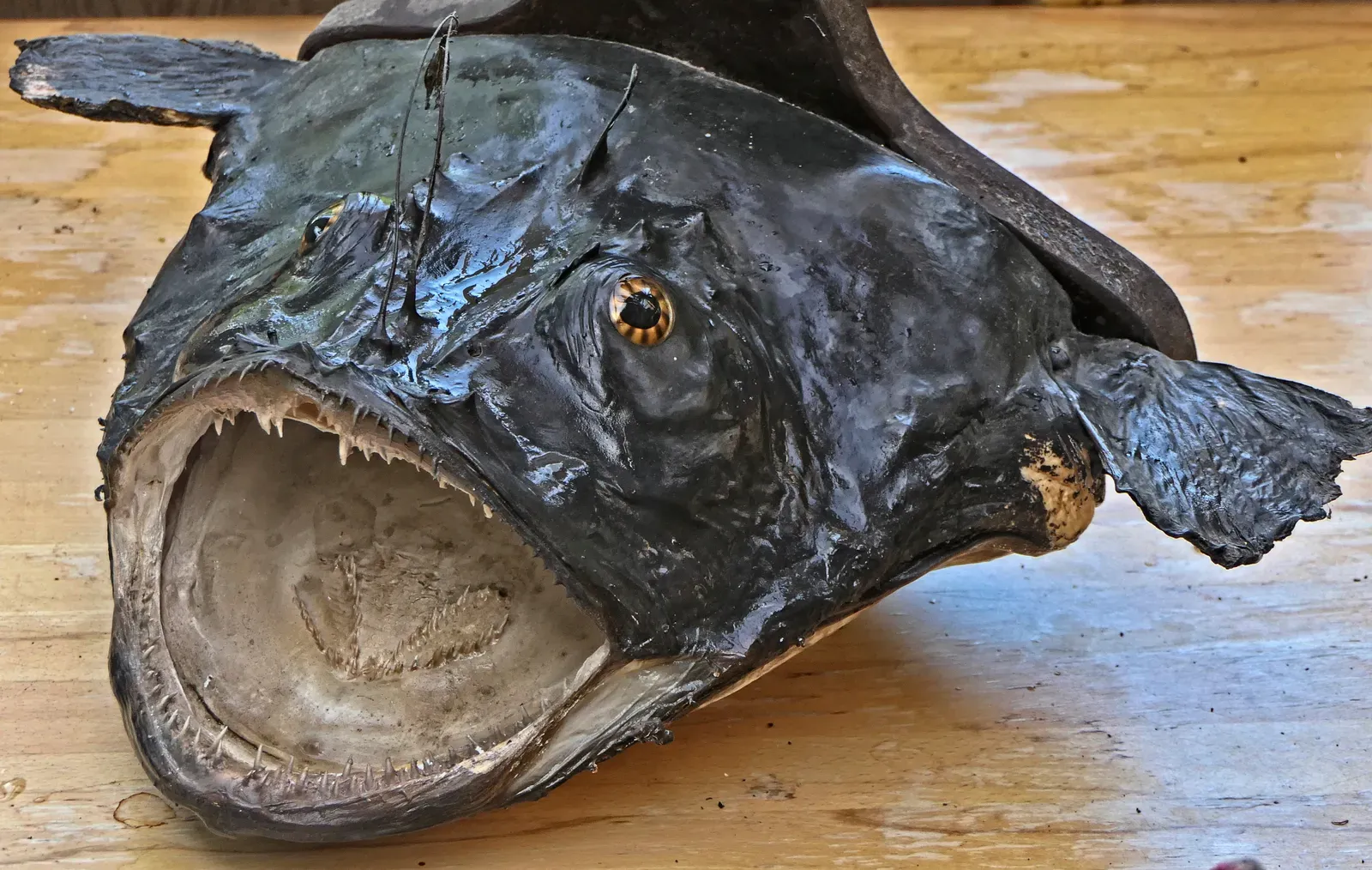
In the black void of the deep sea, the anglerfish looks like a living jump scare. Its massive head, needle-like teeth, and eerie glowing lure hanging over its mouth give it the vibe of a monster designed by someone who hates sleep. The light at the end of that fleshy “fishing rod” is produced by bioluminescent bacteria, which live inside the lure and emit light in exchange for a safe home and nutrients.
Prey in the deep is scarce, so the anglerfish doesn’t waste energy chasing anything; it makes food come to it. Small fish and squid, curious or confused by the only “light” around, drift close enough and are swallowed whole in a fraction of a second. Some anglerfish have jaws so flexible and stomachs so stretchy they can swallow prey nearly as large as themselves. It’s less “hunt” and more “ambush with built-in horror lighting.”
2. Vampire Squid – The Cloaked Creature of the Oxygen Desert
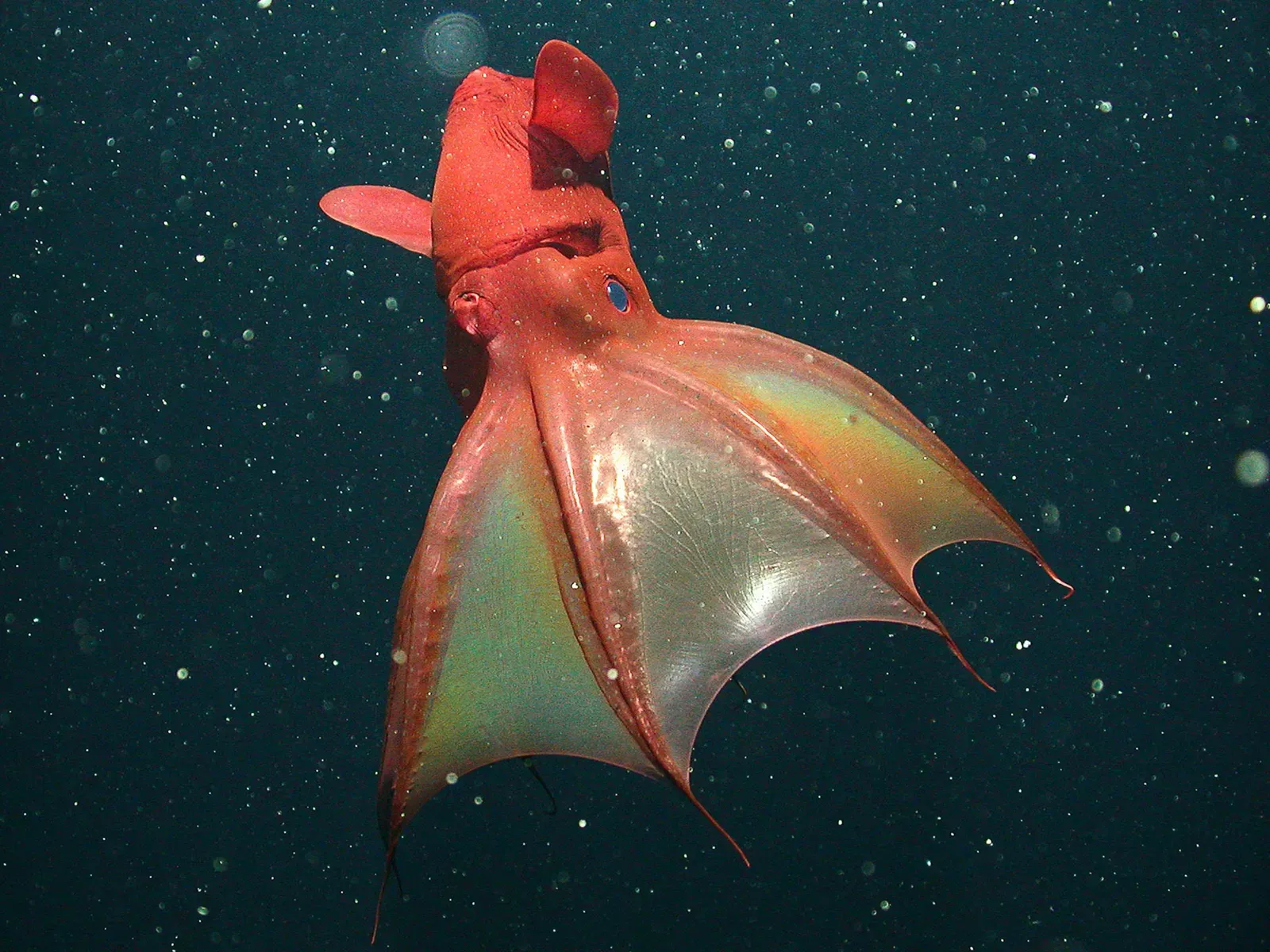
Despite its dramatic name, the vampire squid is not a bloodsucker and not even a true squid in the classic sense. It lives in deep, low-oxygen waters where many other animals can’t survive, in a sort of underwater “dead zone” that’s very much alive for this species. Its dark, velvety body and webbed arms give it a cloak-like appearance that looks almost theatrical, as if it’s wearing a cape in permanent night.
When threatened, it can invert that webbing and wrap its arms over itself, exposing rows of spiky-looking structures that make it seem much more dangerous than it really is. Instead of ink, it releases glowing mucus filled with tiny blue lights, like a sparkling smoke bomb in slow motion. Rather than chasing prey, it collects drifting “marine snow” – bits of organic debris – using sticky filaments. It’s a gothic, glowing trash collector thriving where oxygen would doom most other creatures.
3. Gulper Eel – The Living Balloon with a Tail
![3. Gulper Eel – The Living Balloon with a Tail ([1], CC BY 3.0)](https://nvmwebsites-budwg5g9avh3epea.z03.azurefd.net/dws/5e14cad9110ac3571a055ccafd36eb92.webp)
The gulper eel looks like someone took a normal eel, erased its face, and replaced it with an oversized black balloon. Its mouth is absurdly huge compared to its skinny, whip-like body, allowing it to swallow prey that would be completely impossible for most similar-sized animals. In the deep sea, where meals can be incredibly rare, that oversized mouth is basically a survival cheat code: if it fits in, it’s dinner.
Instead of sharp teeth designed to cut or tear, the gulper eel’s teeth are relatively small, more like a mesh to keep struggling prey from escaping once trapped inside. Some species have glowing organs at the tip of their tail, thought to lure in curious animals toward their gaping mouths. When it opens wide, the head can inflate like a parachute, giving it a bizarre silhouette, as if a fish had somehow blended with a hot air balloon. It looks so strange that even scientists admit it seems more like a hallucination than a typical predator.
4. Giant Isopod – The Deep-Sea Armored Tank
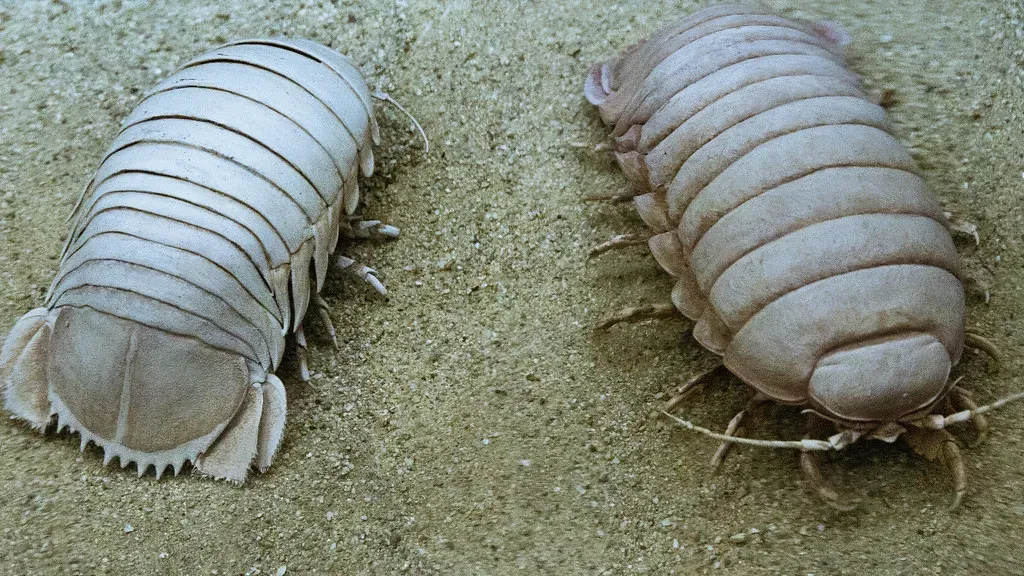
If you’ve ever seen a pill bug or roly-poly on land, imagine it super-sized into something the length of a household cat. That’s more or less what a giant isopod is: a deep-sea crustacean with a segmented, armored shell and too many legs for comfort. It roams the cold, dark seafloor like a slow, patient scavenger, picking apart dead whales, fish, and anything else that drifts down from the sunlit world above.
Food can be so rare that giant isopods have been known to gorge themselves when they finally find a meal, then survive for months afterwards with practically no food at all. Their appearance is unsettling because it’s eerily familiar and alien at the same time, like an everyday bug put through a “nightmare filter.” They embody one of the deep ocean’s core rules: be tough, be patient, and be ready to eat anything when opportunity finally shows up.
5. Goblin Shark – The Living Fossil with a Spring-Loaded Jaw
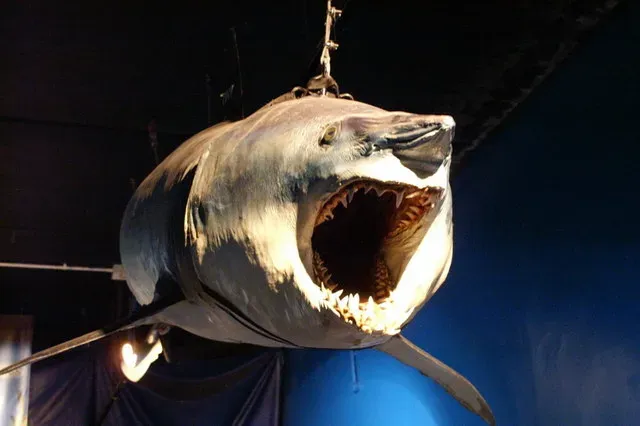
The goblin shark looks like someone tried to draw a shark from memory after a bad dream. It has a long, flattened snout and pale, almost ghostly skin that makes it seem half-finished. What really launches it into “this can’t be real” territory is its jaw: when it strikes, the jaws shoot forward out of the skull like a spring-loaded trap, then snap back in, all in one fluid motion.
This shark is often called a living fossil because its lineage dates back tens of millions of years, with very little change in its basic design for an extremely long time. It spends its life in the deep, where the light is faint or entirely gone, using sensitive organs in its snout to detect the weak electric fields of nearby prey. Watching slow-motion footage of a goblin shark attack is like watching an alien weapon deploy. It doesn’t chase with speed like a great white; it relies on surprise, weird anatomy, and a detachable-looking jaw that feels straight out of a monster movie.
6. Barreleye Fish – The Transparent-Headed Stargazer
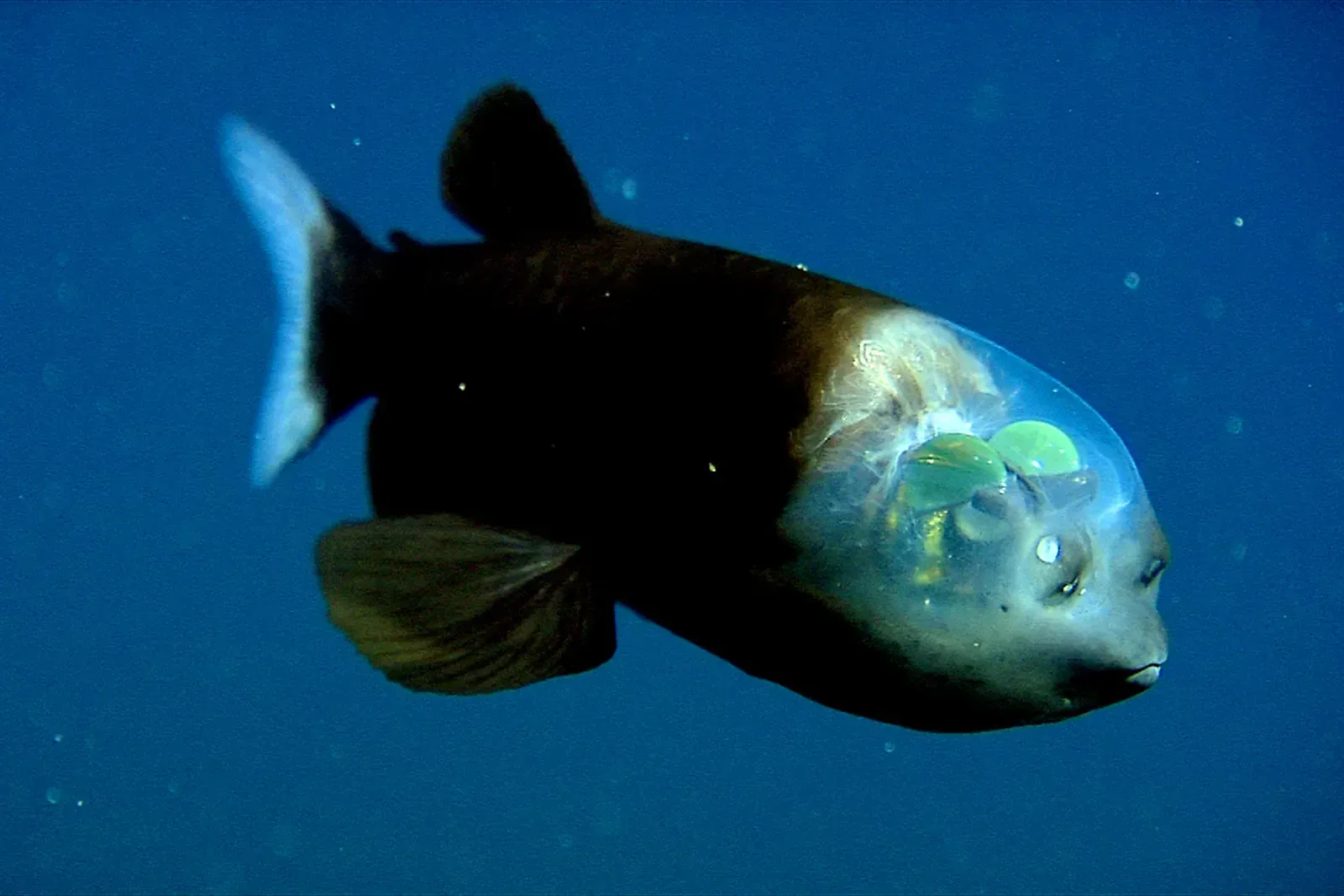
The barreleye fish is one of those creatures that makes you do a double take, then a triple. Its most shocking feature is its transparent, fluid-filled head, through which you can actually see its internal organs and eyes. Those eyes look like bright green tubes pointed upward, allowing the fish to stare straight through its own skull at the faint glow of prey silhouettes above.
For years, researchers were puzzled by how this fish could see where it was going if its eyes only pointed up. More detailed observations showed that those tubular eyes can actually rotate inside the transparent dome, shifting from upward to forward when needed. That clear head probably helps gather more light and protects its sensitive eyes from stinging cells or debris. It’s like someone skipped the step of “cover this brain and gear with a proper skull” and just left the casing see-through on purpose.
7. Dumbo Octopus – The Surprisingly Cute Deep-Sea Drifter
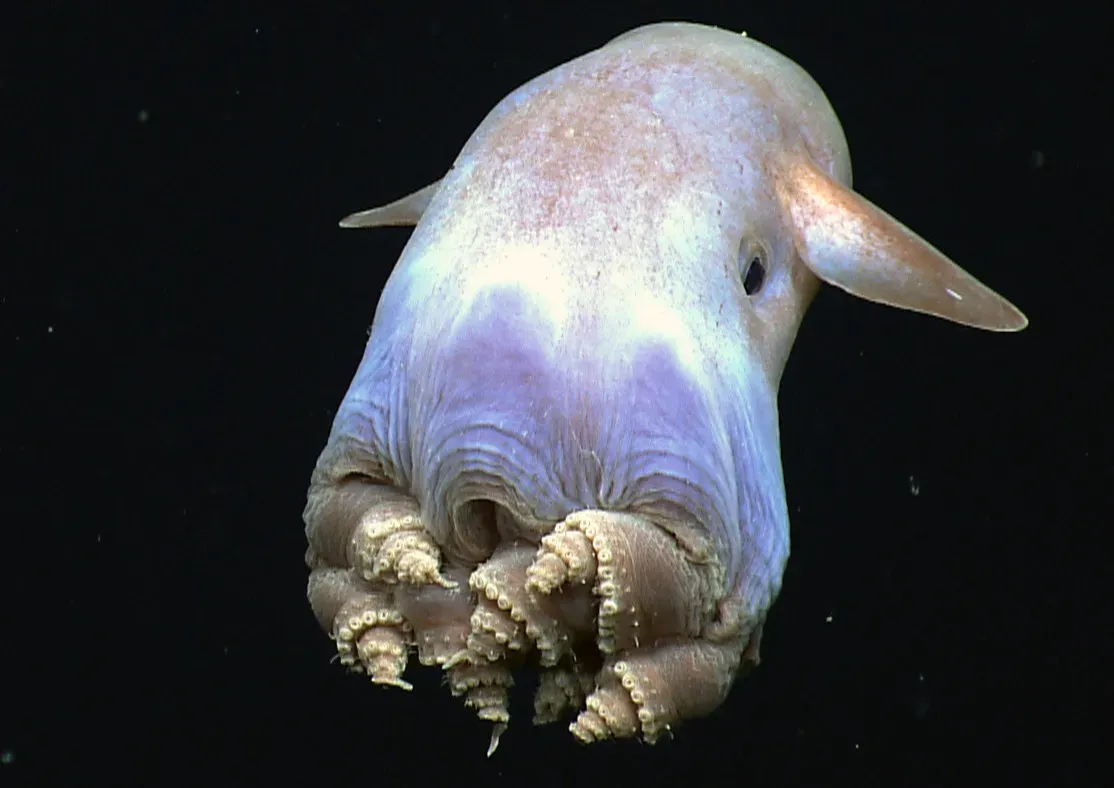
Not all deep-sea creatures are nightmare fuel; some look strangely adorable, and the dumbo octopus is the prime example. Named after the cartoon elephant because of its ear-like fins, it “flies” through the water by gently flapping those fins like wings. Unlike many of its relatives, it doesn’t use jet propulsion as its main form of movement, which makes it look calm, slow, and oddly serene in the endless dark.
These octopuses live deeper than most of their cousins, sometimes at depths where the pressure is thousands of times higher than at the surface. They don’t have the dramatic ink defense that shallow-water octopuses use; it wouldn’t be very practical in such a still, pitch-black environment. Instead, they tend to rely on a soft body, quiet movement, and maybe a bit of luck to avoid becoming someone else’s meal. Watching one drift by is like seeing a tiny, ghostly parachute gently exploring the abyss.
8. Fangtooth – The Tiny Fish with Oversized Terror Teeth
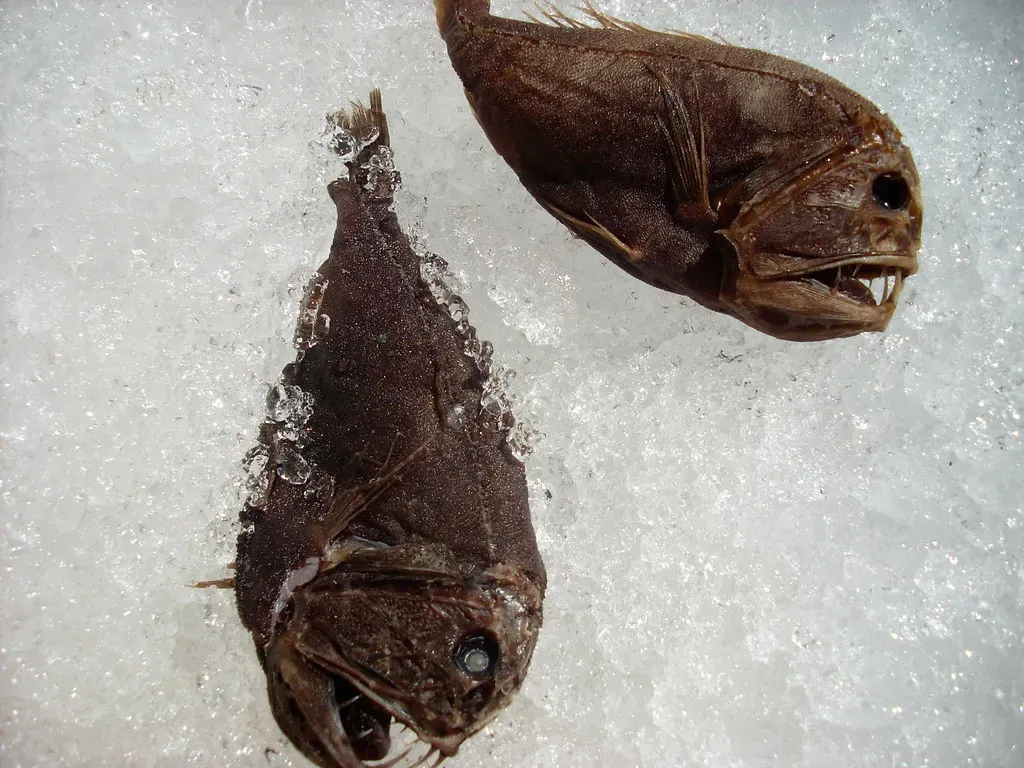
If the deep sea had a “don’t judge by size” award, the fangtooth would probably win. It’s not very big, but its teeth are so enormous compared to its body that they actually need special sockets in the braincase so the mouth can close. Its head looks like a clenched fist filled with needles, and its eyes are relatively small, suggesting it relies more on touch and smell than sight in the near-total darkness.
Fangtooths are among the deepest-living fish that still actively hunt, not just scavenge, powering through water that’s near freezing. Their skin is rough and dark, almost like sandpaper, helping them vanish into the black around them. Despite their terrifying appearance, they’re just highly specialized survivors in an unforgiving world where missing one meal can be a serious problem. They show how evolution sometimes decides that, yes, teeth can absolutely be too much – and then keeps going anyway.
9. Frilled Shark – The Eel-Shaped Relic from Prehistory
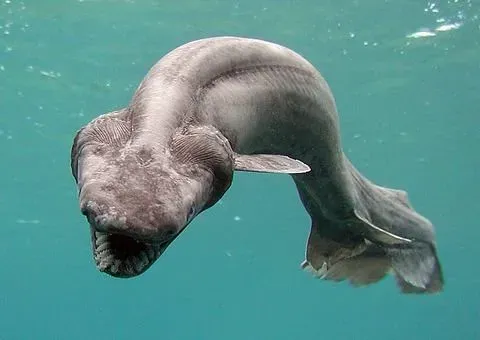
The frilled shark looks like it swam straight out of a prehistoric painting and forgot to go extinct. Its long, eel-like body and fringed, or “frilled,” gill slits give it a strange, almost dragon-like appearance. Instead of the rigid, triangular shark teeth we’re used to seeing, it has rows upon rows of tiny, curved teeth that angle backward, perfect for snagging and swallowing slippery prey like squid.
This shark often hangs out in deep, cold waters, cruising slowly instead of racing around like some of its more famous relatives. When it does attack, it can suddenly lunge and swallow prey whole, using those backward-pointing teeth like a conveyor belt that only goes one direction. Its slow lifestyle and ancient features have led many scientists to classify it as another living fossil. It’s like watching a relic from a forgotten era silently loop through the darkness.
10. Dragonfish – The Bioluminescent Predator with Invisible Light
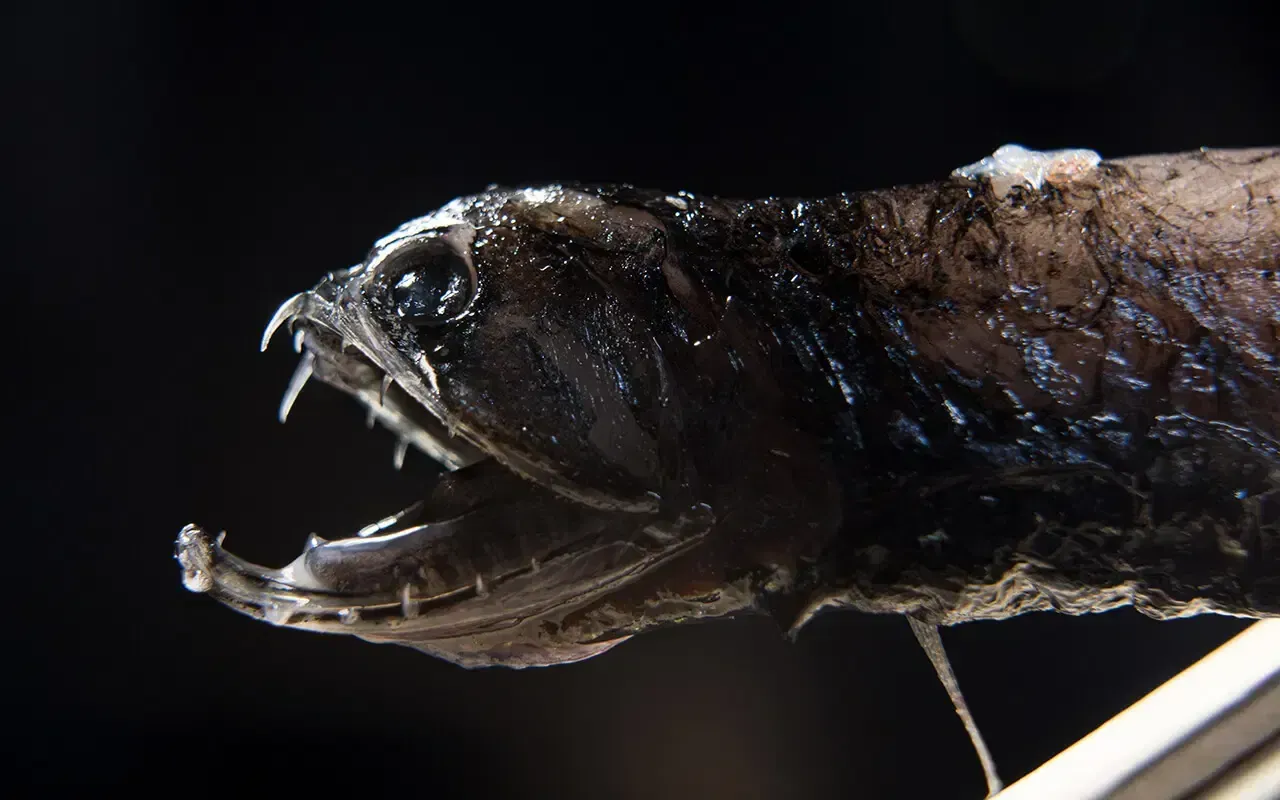
The deep-sea dragonfish doesn’t just glow; it wields light like a weapon. Its long, slender body is dotted with light-producing organs that it uses both to attract prey and to communicate. Many dragonfish species also have a lure dangling from a filament under their chin, which they can wiggle like a glowing worm right in front of their jaws, playing the same deadly game as the anglerfish but with a sleeker design.
One of the most astonishing things about some dragonfish is their ability to produce and see red light in a world that is basically all blue. Most deep-sea animals can’t detect red light at all, so when a dragonfish shines a faint red beam, it’s like turning on a private spotlight that only it can see. That gives it a massive advantage in hunting without alerting its victims. Combined with huge, sharp teeth and a body built for stealth, it’s as close to a stealth fighter jet as a fish can get.
11. Yeti Crab – The Furry-Armed Farmer of the Deep
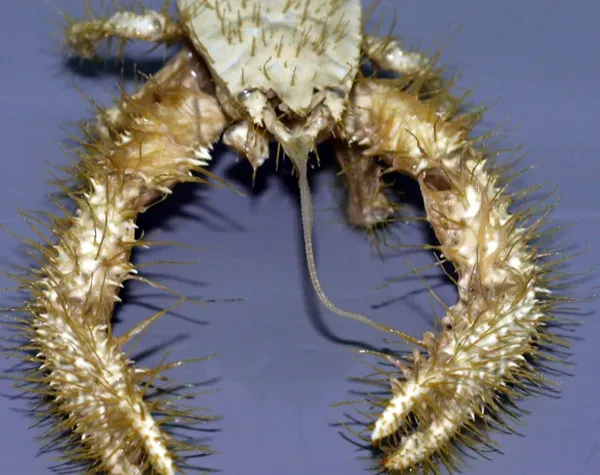
The yeti crab looks like nature couldn’t decide between making a crab or a mythological monster and somehow chose both. Discovered near hydrothermal vents, it has long, pale claws covered in what look like silky hairs. Those “hairs” are actually filaments that host bacteria, turning its arms into living gardens. The crab waves its claws in the warm, mineral-rich vent water to feed those bacteria, then scrapes them off and eats them.
Living near hydrothermal vents is like setting up house next to an underwater volcano: dangerous but full of energy. Very little sunlight reaches these depths, so the whole ecosystem runs on chemical energy instead of photosynthesis. The yeti crab has evolved to take direct advantage of that by essentially farming microbes on its own body, a behavior that feels almost industrial in its cleverness. It’s hard not to see it as a tiny, ghostly farmer tending invisible crops in the flickering glow of the vents.
A Alien World Beneath Our Feet
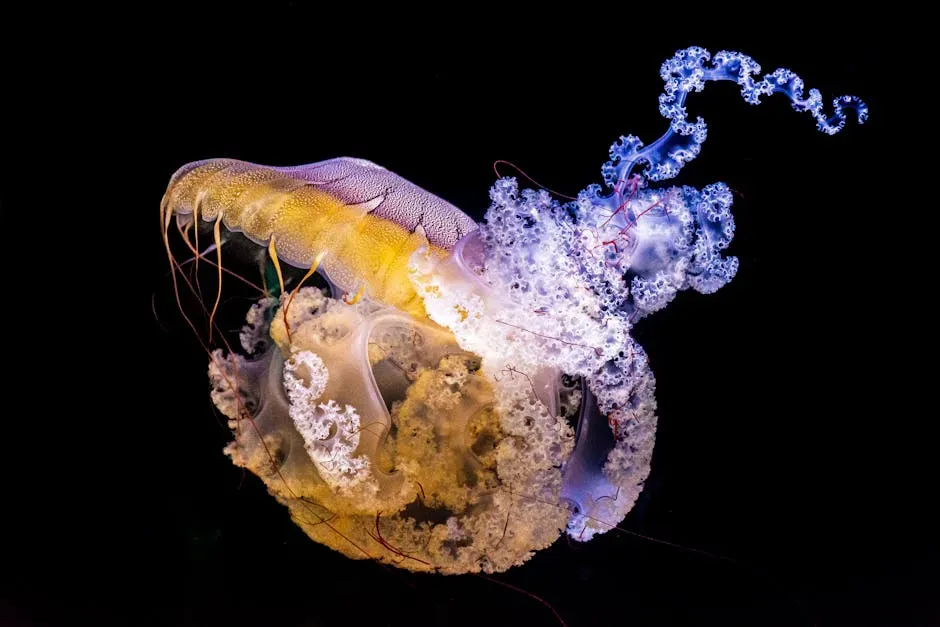
The strangest part about all these deep-sea creatures is not that they exist, but that they’re ours. They’re not visitors from another planet; they evolved right here, shaped by darkness, pressure, and scarcity into forms that feel like the wildest science fiction. Every time a research sub or remotely operated vehicle drops into the abyss, we add a few more impossible-seeming creatures to the list, and we still know far less than we don’t know.
The deep ocean is basically Earth’s own built-in alien world, hiding in plain sight under a skin of waves. It humbles us, reminds us how limited our everyday experience is, and proves that life will twist itself into almost any shape to survive. As technology improves and exploration goes deeper, it’s hard not to wonder what even stranger beings are still waiting in the dark, completely unseen. Which of these deep-sea creatures surprised you the most?