There’s something almost poetic about the idea that the answers to questions about alien worlds might be buried right here beneath our feet. Scientists have long gazed outward, pointing telescopes at distant stars and cataloguing planets that orbit them. Yet some of the most powerful clues about what those worlds are really like might come from looking inward – at Earth’s own geological and atmospheric past.
It turns out our planet is more than just home. It’s a time capsule, a living laboratory, and possibly the best reference point we have for understanding life-bearing planets elsewhere in the universe. What researchers are now piecing together is genuinely exciting, and a little humbling. Let’s dive in.
Earth as a Planetary Benchmark
Here’s the thing – when astronomers search for habitable exoplanets, they tend to use Earth as the gold standard. That makes sense on the surface, but it raises an obvious question: which version of Earth are we comparing to? Our planet has looked wildly different across its four-plus billion year history, swinging from a frozen snowball to a steamy greenhouse and back again.
Researchers are now arguing that treating Earth as a single, static reference point is a mistake. Instead, studying Earth through time, almost like flipping through a photo album of its past selves, gives scientists a much richer toolkit for identifying what a truly habitable world might look like. It’s a shift in thinking that could change how we classify exoplanet candidates entirely.
The Problem With Searching for “Earth-Like” Worlds
The phrase “Earth-like planet” gets thrown around constantly in space news, but honestly, it’s a bit misleading. When we say Earth-like, we usually mean a rocky planet roughly our size sitting in the so-called habitable zone of its star. That’s a reasonable starting point, but it barely scratches the surface of what makes a planet actually capable of supporting life.
Temperature, atmospheric composition, the presence of liquid water, tectonic activity – all of these factors shift dramatically depending on what stage of planetary development a world is in. A planet that looks Earth-like from a distance might be in the middle of a runaway greenhouse phase, or still cooling from a heavy bombardment period. Without understanding Earth’s own stages of evolution, we risk comparing apples to ancient volcanic rocks.
Reading Earth’s Ancient Atmosphere Like a Storybook
One of the most fascinating angles in this research involves reconstructing what Earth’s atmosphere looked like billions of years ago. Scientists use proxies – things like ancient rock chemistry, ice cores, and isotopic signatures locked in minerals – to essentially reverse-engineer the air our ancestors breathed, or didn’t breathe, in Earth’s earliest chapters.
Early Earth had almost no free oxygen for the first roughly two billion years of its existence. That’s a staggering thought. Life was already present, thriving even, in an atmosphere that would be toxic to most organisms alive today. This tells us something profound: a planet that lacks oxygen in its atmosphere isn’t necessarily lifeless. That completely reshuffles the deck when we think about what biosignatures to look for on distant worlds.
Snowball Earth and What Extreme Climate Events Reveal
Around 700 million years ago, Earth may have frozen almost entirely, with glaciers extending down to the tropics. Scientists call this “Snowball Earth,” and I think it’s one of the most dramatic episodes in our planet’s biography. The planet somehow escaped, thanks largely to volcanic CO2 building up and triggering a thaw. Life survived. That resilience is astonishing.
For exoplanet research, episodes like Snowball Earth are enormously instructive. They show that a planet can appear dead or inhospitable from the outside while life clings on underneath ice sheets or deep in the ocean. If we were observing Earth from a distant star during one of these frozen periods, we might write it off entirely. That’s a sobering reminder of how easy it is to miss life when we don’t know what to look for.
Atmospheric Fingerprints and the Tools to Detect Them
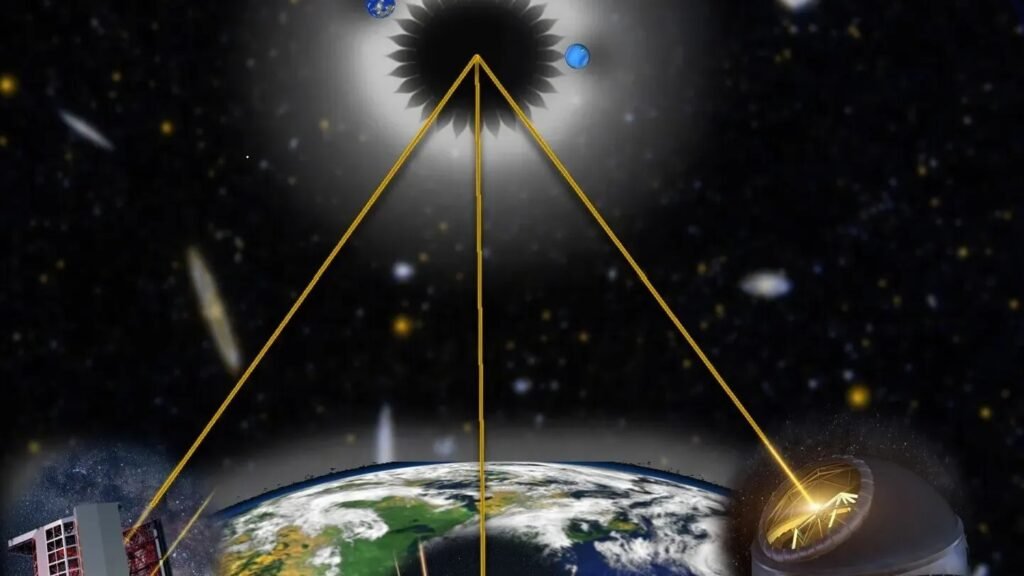
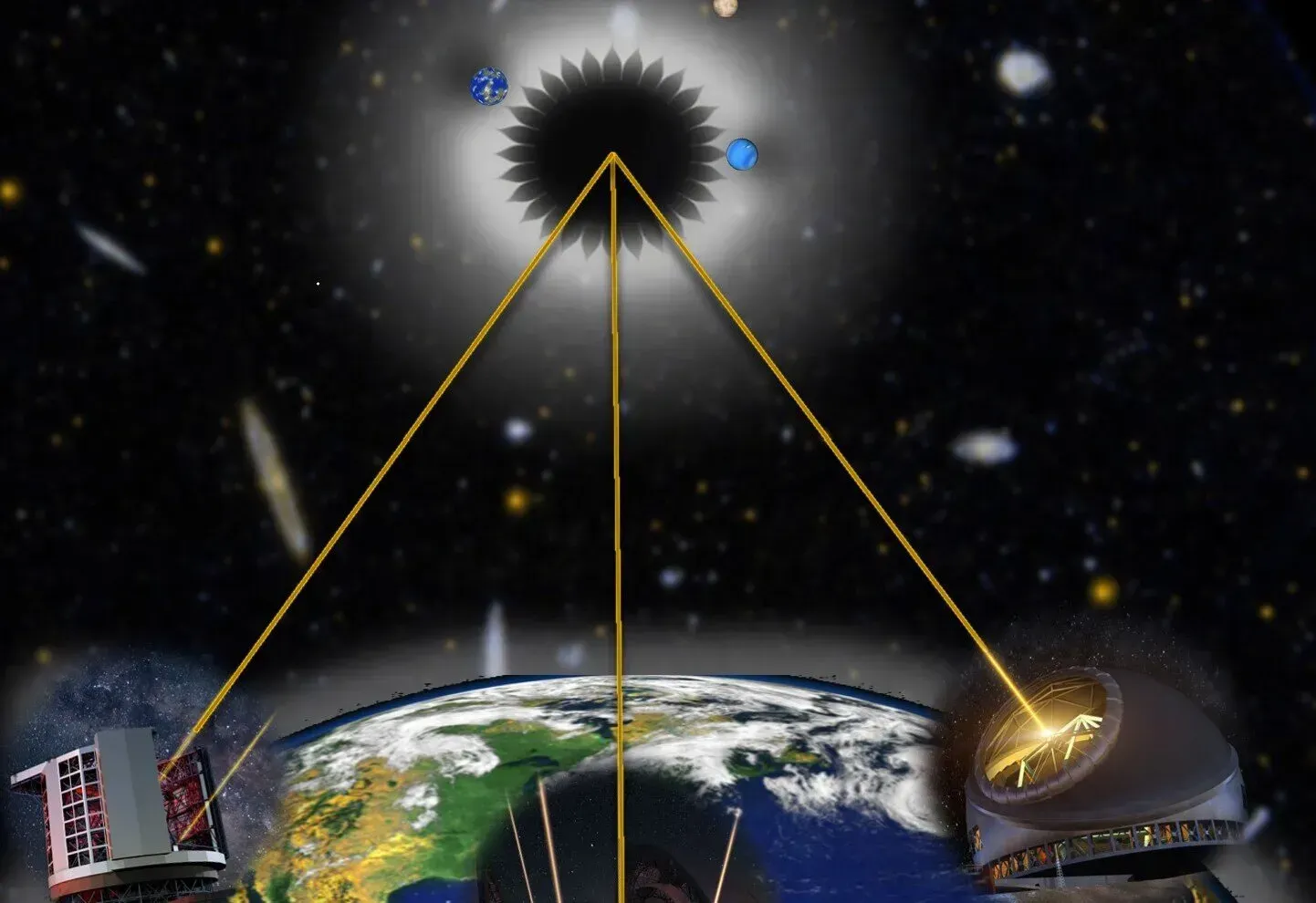
Modern telescopes, particularly the James Webb Space Telescope, are now capable of analyzing the atmospheres of exoplanets through a technique called transmission spectroscopy. When a planet passes in front of its star, starlight filters through the planet’s atmosphere and leaves chemical fingerprints. Scientists can detect gases like carbon dioxide, methane, water vapor, and potentially oxygen.
The challenge, though, is interpretation. Methane could mean biology. It could also mean geology. Oxygen can be produced abiotically under certain conditions. This is exactly where Earth’s historical record becomes invaluable. By cataloguing what chemical combinations appeared on Earth at what times, and correlating them with what life was doing, researchers build a kind of decoder ring for reading exoplanet atmospheres more accurately.
Tectonic Activity as a Hidden Variable
Plate tectonics might sound like a dry geology topic, but it’s actually one of the most underrated ingredients in Earth’s recipe for life. The movement of tectonic plates helps regulate carbon dioxide levels over millions of years, acting like a planetary thermostat. Without it, carbon might accumulate catastrophically or deplete entirely, sending surface temperatures spiraling in either direction.
Not every rocky planet has plate tectonics. Venus, for instance, appears to lack it despite being similar to Earth in size and mass. Researchers are increasingly factoring tectonic-like activity into their models for habitability, and Earth’s long geological record gives them real data to work with rather than pure theory. It’s one more reason why understanding our own planet’s interior history is directly tied to understanding life’s chances on other worlds.
A New Framework for Exoplanet Habitability
What’s emerging from all of this is a more nuanced, dynamic framework for thinking about habitability. Rather than asking simply “is this planet in the habitable zone?”, scientists are starting to ask questions like “what phase of planetary evolution is this world in?” and “do its atmospheric signals match any point in Earth’s own timeline?”
This approach treats Earth not as a fixed ideal but as a spectrum of possibilities, each phase of our planet’s past representing a different kind of potentially habitable world. It opens the door to classifying far more exoplanets as candidates worthy of study. It also raises an uncomfortable but thrilling possibility: life in forms and environments we haven’t even thought to look for might already be sitting in our data, waiting to be recognized.
Final Thoughts: Our Planet, The Universe’s Rosetta Stone
It’s remarkable, when you step back and think about it, that Earth itself might be the most important scientific instrument we have for understanding the cosmos. Not a telescope, not a spacecraft, but our own world and its long, messy, chaotic history.
The implications of this research go far beyond astronomy. They touch on how we define life, how we think about planetary futures, and what it means for a world to be “alive” at all. Using Earth’s past as a guide to the universe’s present feels like exactly the kind of creative, cross-disciplinary thinking science needs more of right now. What do you think – could the key to finding life on other planets have been under our feet all along? Drop your thoughts in the comments.