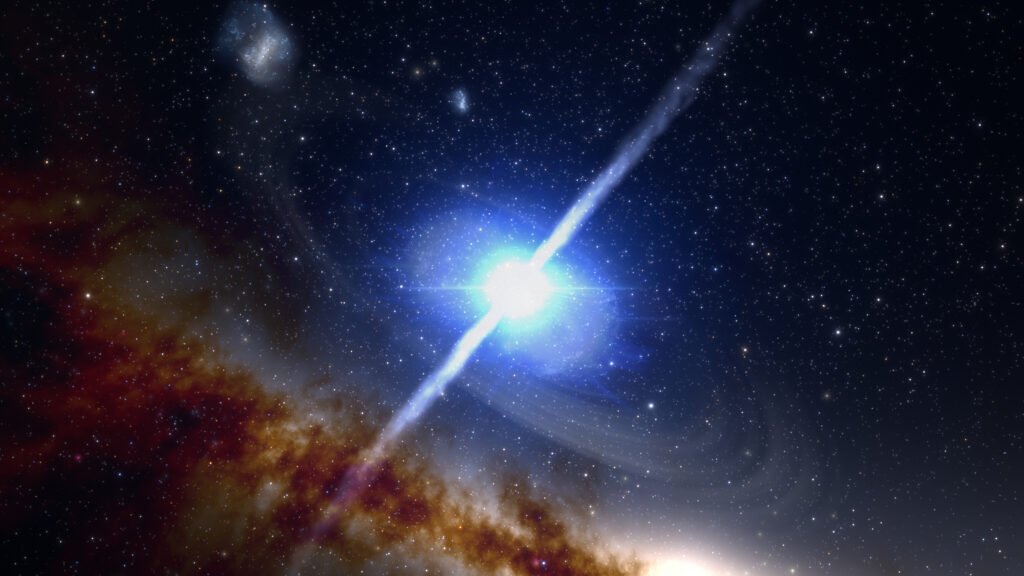
There are objects out in the cosmos so extreme that just thinking about them makes your brain do a little backflip. Neutron stars are among the strangest things that exist – crushed stellar cores so dense that a single teaspoon of their material would weigh billions of tons on Earth. Scientists have long studied them, but a recent breakthrough is now pushing our understanding of these objects into genuinely uncharted territory.
Researchers are now using neutron stars to sharpen our measurements of gravitational tides – subtle but powerful distortions caused by gravity that stretch and squeeze matter across cosmic distances. The implications go far beyond the stars themselves. Let’s dive in.
What Makes Neutron Stars So Scientifically Irresistible
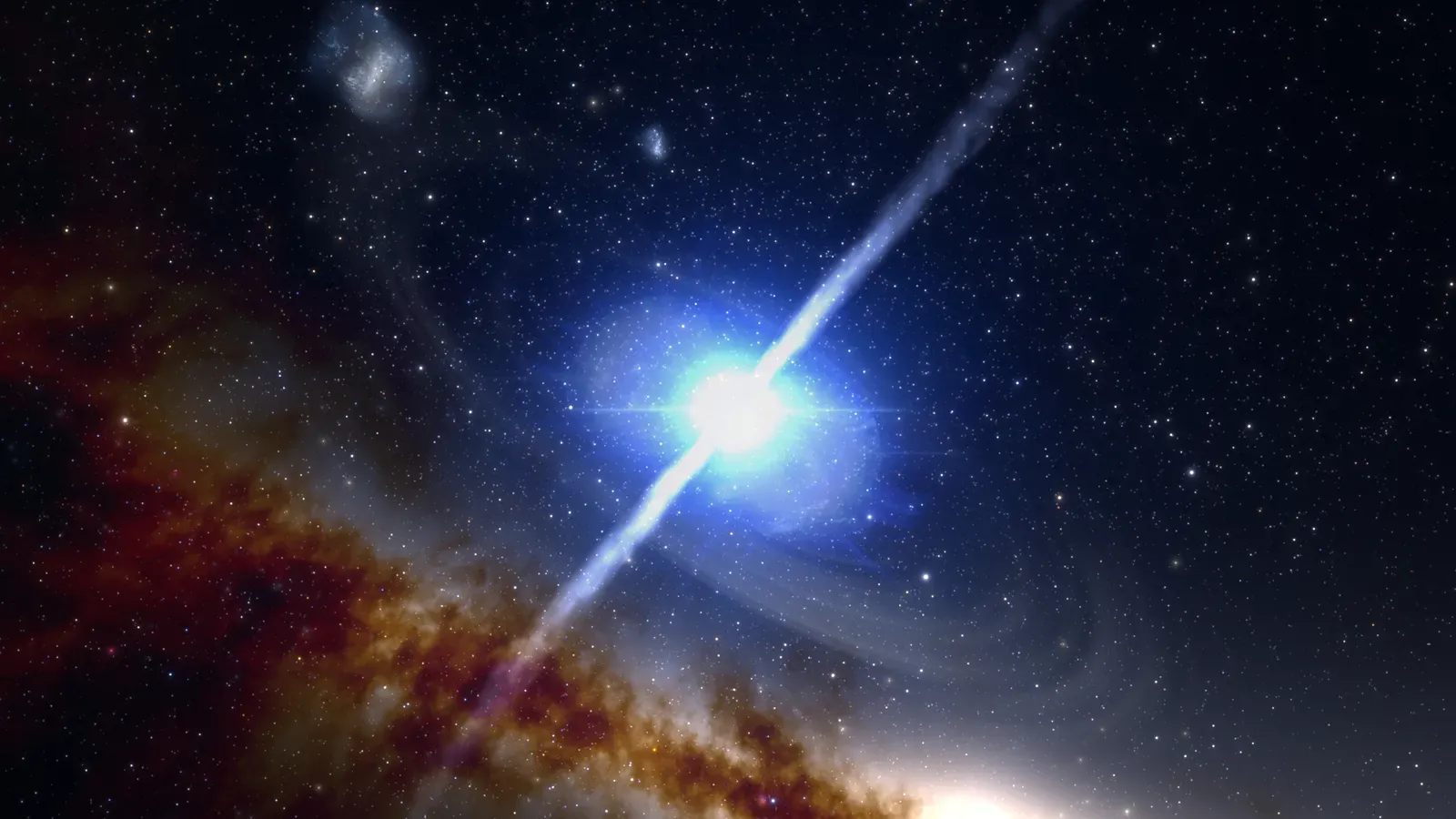
Let’s be real – neutron stars have always been the rockstars of astrophysics. They’re born from catastrophic supernova explosions, left behind when massive stars collapse under their own gravity. What remains is an object roughly the size of a city but containing more mass than our entire Sun.
What makes them especially valuable for physicists is their extreme nature. The conditions inside a neutron star simply cannot be recreated in any laboratory on Earth. That means every observation of a neutron star is essentially a free experiment conducted by the universe itself, giving researchers data they couldn’t obtain any other way.
The Role of Gravitational Tides in Deep Space Physics
Gravitational tides are not just the thing that pulls ocean water up beaches here on Earth. In space, tidal forces operate at mind-bending scales, distorting the shapes of entire stars and warping the fabric of spacetime around them. When two neutron stars orbit each other closely, the gravitational pull from one stretches and deforms the other in measurable ways.
This deformation is called “tidal deformability,” and it turns out it carries a surprising amount of information. How easily a neutron star gets stretched depends directly on what it’s made of – specifically, the behavior of matter at densities so extreme that our standard physics models start to crack under pressure. Measuring tidal deformability, then, is essentially a way of peeking inside an object we can never physically reach.
How Gravitational Wave Detectors Changed Everything
Before gravitational wave observatories like LIGO and Virgo came along, studying neutron star interiors was almost entirely theoretical. Honestly, physicists were working with educated guesses more than hard data. The first detection of a neutron star merger in 2017, known as GW170817, changed the game almost overnight.
That single event gave scientists their first real measurement of tidal deformability from a neutron star binary. It was, by any measure, a historic moment. Since then, detector sensitivity has improved substantially, and the catalog of neutron star merger detections has grown – each one adding a new data point to a puzzle that researchers have been trying to piece together for decades.
The New Research and What It Actually Found
Here’s the thing about the latest work – it’s not just more of the same. Researchers have developed new methods for extracting tidal information from gravitational wave signals with greater precision than before. By refining the models used to interpret merger data, the team has sharpened the constraints on something called the neutron star equation of state.
The equation of state is essentially the rulebook describing how matter behaves inside a neutron star. Think of it like trying to figure out what a mysterious recipe produces just by tasting the final dish. With sharper tidal measurements, scientists can now rule out certain theoretical models of dense matter that were previously considered plausible, narrowing the field considerably. It’s painstaking work, but each constraint brings physicists closer to a definitive answer about what these stars are actually made of.
Why the Equation of State Is Such a Big Deal
The neutron star equation of state has been one of the most stubborn open questions in nuclear physics and astrophysics for a very long time. At the densities found inside neutron stars, matter may exist in states that simply have no equivalent anywhere else – possibly including exotic forms like quark matter, where the basic building blocks of protons and neutrons come apart entirely.
Getting the equation of state right has consequences that ripple outward into other fields. It affects our understanding of nuclear forces at a fundamental level. It also has implications for how heavy elements like gold and platinum are created in the universe – a process thought to occur largely during neutron star mergers. So while it might sound like a narrow technical question, the stakes are actually enormous.
Tidal Measurements as a Window Into Dense Matter
I think what’s genuinely exciting here is how elegant the method is. Rather than sending a probe into a neutron star – which is obviously not an option – scientists are essentially using gravitational waves as a kind of cosmic ultrasound. The way a neutron star rings and distorts during a merger encodes information about its internal structure.
The sharper the tidal measurements become, the clearer that internal picture gets. It’s hard to say for sure exactly when a definitive equation of state will be established, but researchers are optimistic that with next-generation detectors like the Einstein Telescope and Cosmic Explorer on the horizon, the resolution of this long-standing mystery may arrive within the next decade or so. The universe, it seems, is slowly giving up its secrets.
What Comes Next for Neutron Star Research
The future of this field looks remarkably exciting, and the pace of discovery is accelerating. Upcoming gravitational wave detectors will be significantly more sensitive than current instruments, capable of detecting fainter and more distant merger events. More events mean more data, and more data means tighter constraints on the physics of dense matter.
Alongside gravitational wave observations, X-ray telescopes like NASA’s NICER mission are independently measuring neutron star radii with growing precision – and the two approaches are beginning to converge on consistent answers. Combining gravitational wave tidal measurements with radius estimates from X-ray timing is a bit like triangulating a location using two separate compasses. When they agree, confidence in the result jumps dramatically. The collaboration between different observational techniques is arguably the most powerful tool astrophysics has right now.
A Quiet Revolution Playing Out Across the Cosmos
There’s something quietly profound about what’s happening in this corner of astrophysics. Scientists are using dying stars, violent collisions, and ripples in spacetime to answer fundamental questions about matter that experiments here on Earth simply cannot address. It’s one of those rare moments in science where multiple cutting-edge technologies are converging on the same deep question at once.
The discovery that neutron star tidal measurements can sharpen our grip on dense matter physics is not flashy news in the way a planetary discovery might be. It won’t trend on social media. Still, in terms of what it means for our understanding of how the universe works at the most fundamental level, it might be one of the more significant steps forward in modern astrophysics. Sometimes the biggest revelations arrive quietly, buried in gravitational wave data that only a handful of people on the planet know how to read.
Neutron stars have always been extreme. Now they’re also becoming incredibly precise scientific instruments in their own right – which, when you think about it, is extraordinary. What do you think the inside of a neutron star is actually made of? Drop your thoughts in the comments.