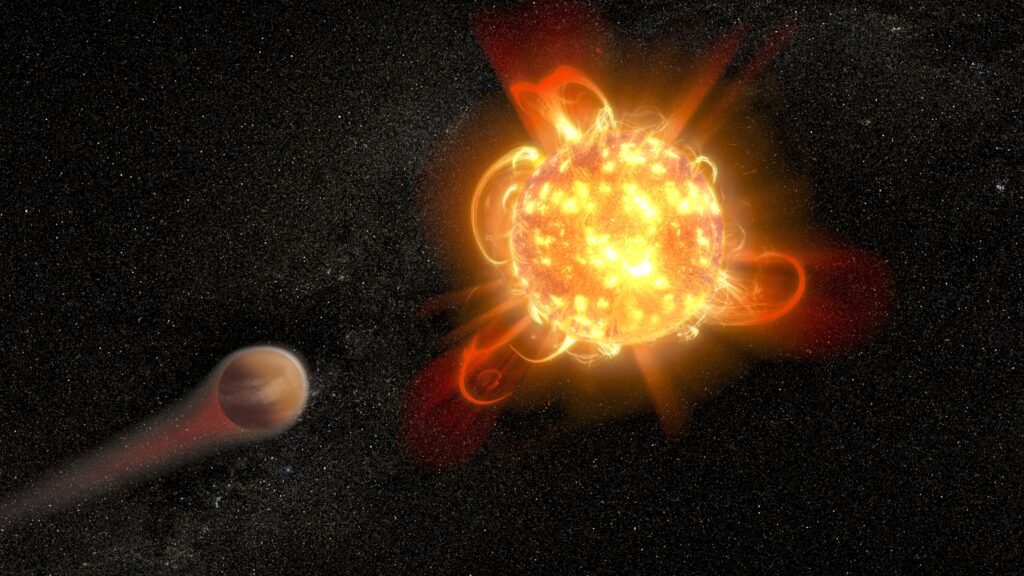
Every time you look up at the sky on a calm, clear day, it’s easy to forget that the Sun above you is anything but peaceful. It is, in fact, a roiling, magnetically furious star that regularly launches colossal clouds of charged plasma into space at millions of kilometers per hour. These explosions are not just dramatic space weather events. They may be one of the most powerful forces shaping whether life can emerge, evolve, or survive anywhere in the universe.
Here’s the thing that makes this idea genuinely mind-bending: solar eruptions are not simply threats. They are, in many ways, cosmic architects. The same violent outbursts that could strip a planet bare could also be the precise trigger that kickstarts the chemistry of life. You are about to discover just how extraordinary that paradox really is. Let’s dive in.
What Solar Eruptions Actually Are – and Why They’re So Powerful
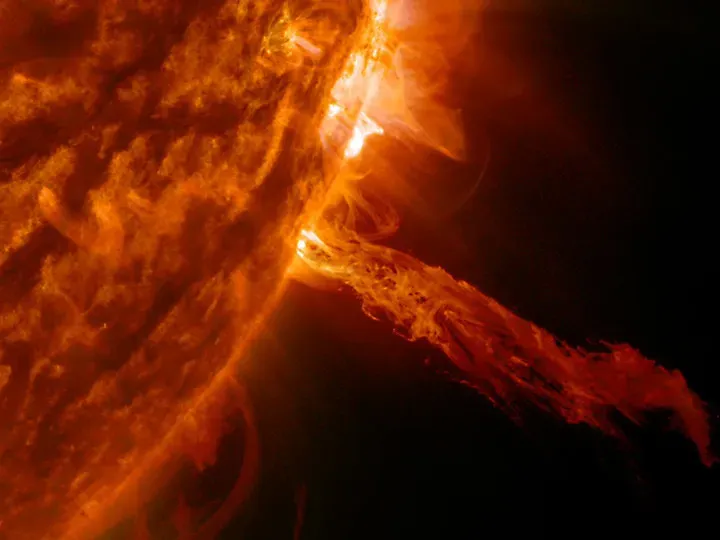
If you’ve ever wondered what exactly happens when the Sun “erupts,” picture a colossal magnetic snapping event. Although we rarely notice it from Earth, the Sun is continuously hurling enormous clouds of charged plasma into space, and these events, known as coronal mass ejections (CMEs), often occur alongside sudden bursts of light called solar flares. Think of it like a rubber band wound too tight – eventually, the tension snaps and energy blasts outward in every direction.
Electrically conductive plasma churns and flows beneath the Sun’s surface, forming powerful bundles of magnetic fields. When sunspots collide, it stresses those magnetic bundles until they snap, leading to solar flares and eruptions. With energies a thousand times greater than an average solar flare, stellar superflares can strip away atmospheres and endanger life on planetary surfaces. That scale of raw energy is almost impossible to wrap your head around – it dwarfs anything humans have ever created.
The Young Sun Was Far More Violent Than You Might Expect
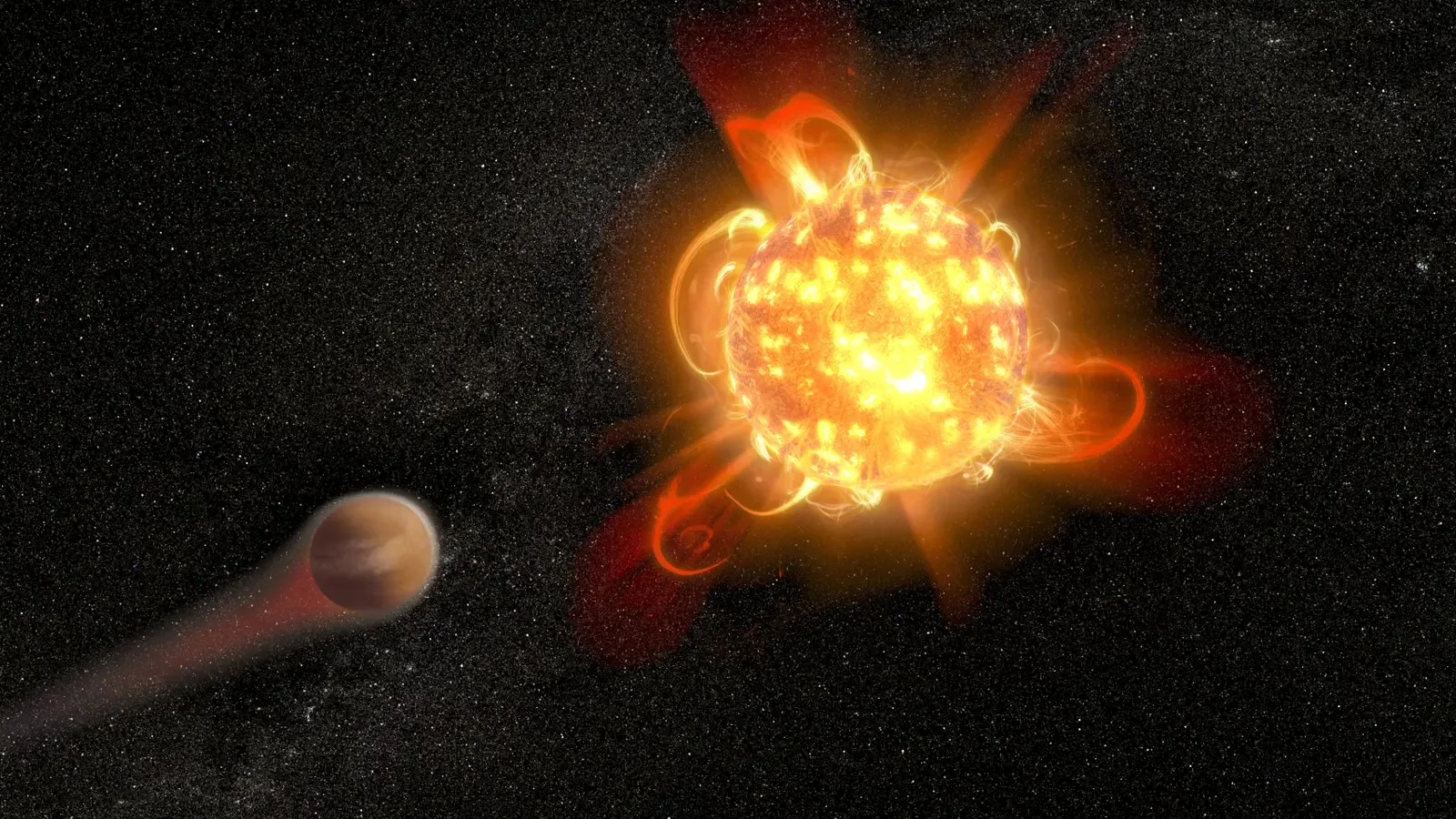
Astronomers observed a massive, multi-temperature plasma eruption from a young Sun-like star, revealing how early solar explosions could shape planets – and these fierce events may have influenced the atmosphere and life-forming chemistry of the early Earth. The young Sun, you see, was a very different beast compared to the relatively stable star we know today. It was angrier, more active, and far more explosive.
While stronger magnetic fields from the young Sun weakened the flux of galactic cosmic rays into the Earth’s atmosphere, the solar magnetic activity fueled the production of frequent and energetic superflares, with energy up to a thousand times greater than in flares observed in the current Sun. The early Sun emitted far more radiation in the ultraviolet and X-ray regimes than it currently does, meaning different photochemical reactions may have dominated early Earth’s atmosphere, with implications for global atmospheric chemistry and the formation of important compounds that could lead to the origin of life. It is a strange and humbling thought – that life may owe its origins, at least partly, to a star in a bad mood.
Solar Eruptions as the Spark Plug for Life’s Chemistry
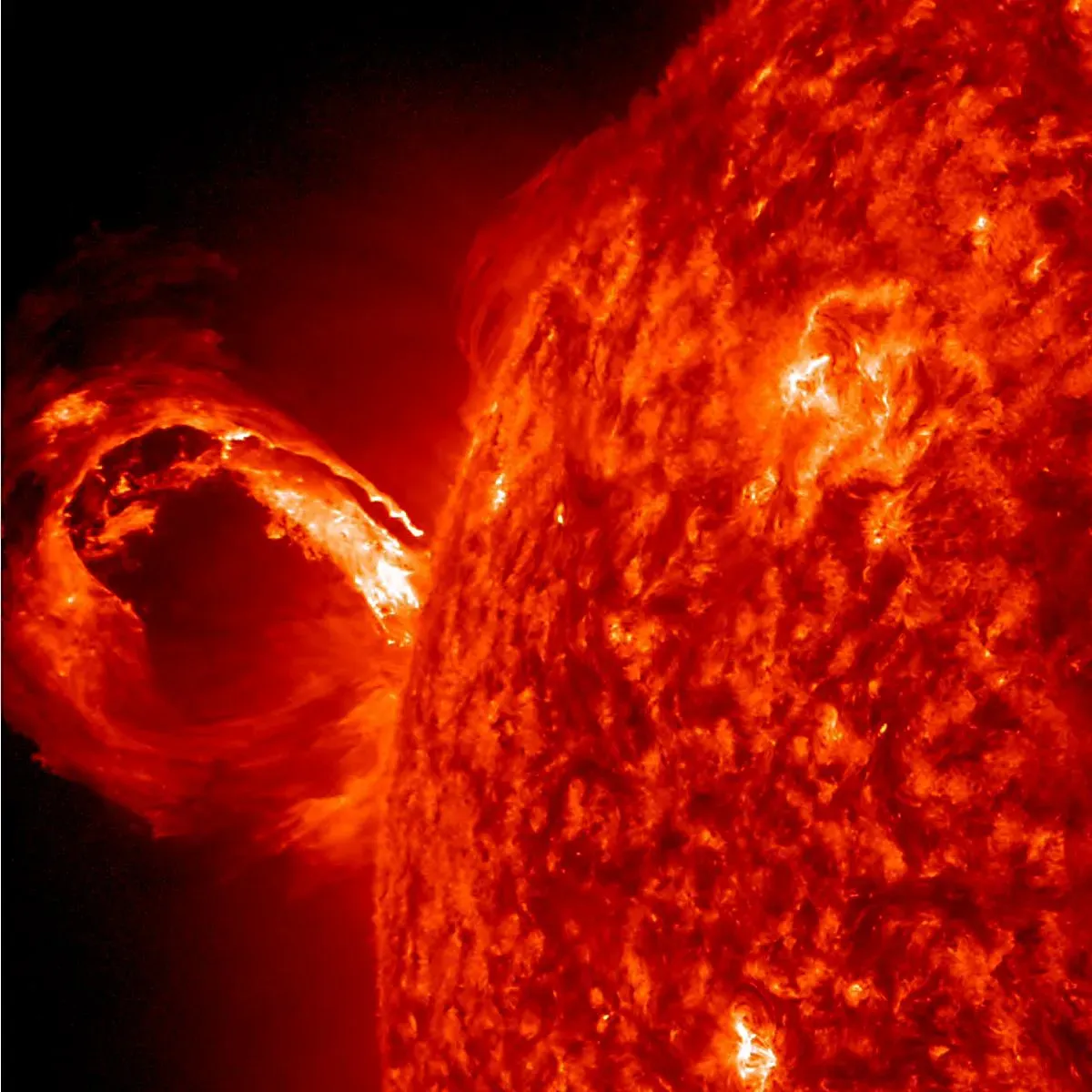
Honestly, one of the most surprising findings in modern astrobiology is that solar eruptions may have helped create the very building blocks of life. Research shows that nitrogen fixation in the early terrestrial atmosphere can be explained by frequent and powerful coronal mass ejection events from the young Sun, so-called superflares. Nitrogen fixation is crucial because nitrogen, while abundant in the atmosphere, is extremely chemically stubborn – it does not react easily without a powerful energy source to break its bonds.
An energy level of 10 eV is required for nitrogen fixation, and this is the first step in achieving the reactive chemistry required to produce HCN, the major precursor molecule of prebiotic chemistry. Research specifically examines the contributions of solar energetic particles associated with superflares from the young Sun to the formation of amino acids and carboxylic acids in weakly reduced gas mixtures representing the early Earth’s atmosphere. In short, the solar explosions that bombarded early Earth were not just hazards – they were a chemistry lab running at planetary scale.
How Space Weather Shapes Entire Planetary Atmospheres
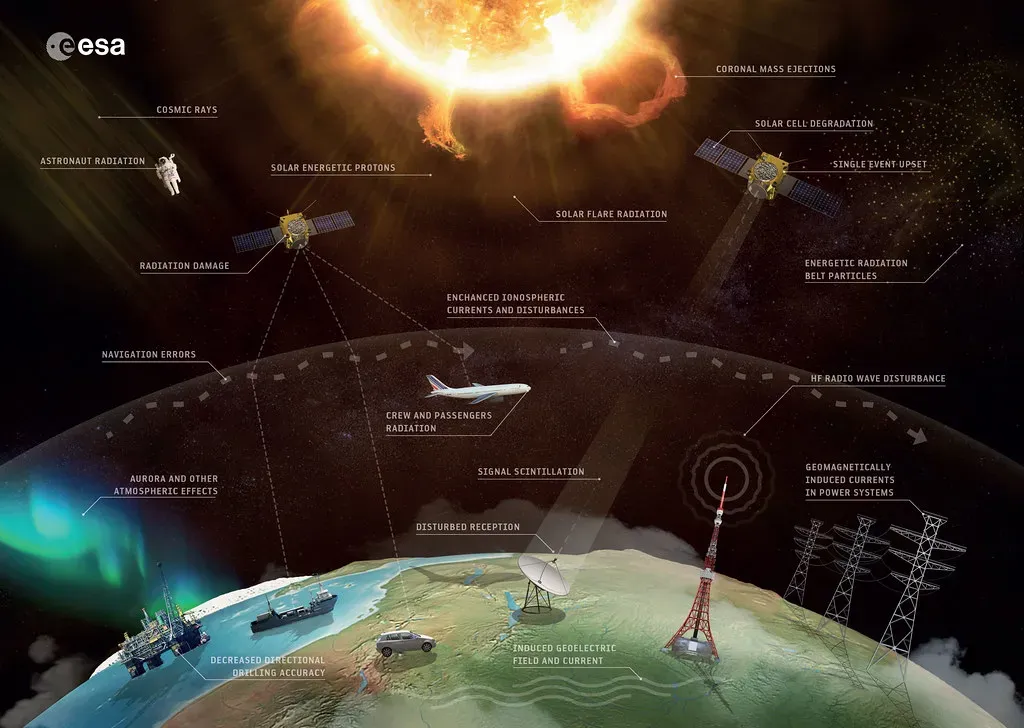
Solar flares, stellar wind, and coronal mass ejections have different effects on different types of planets. Earth is largely protected from these effects by its magnetosphere. However, over long periods, space weather can have powerful effects on how an exoplanet’s atmosphere develops. If you imagine a planet’s atmosphere as a kind of biological life-support suit, solar weather determines how long that suit holds together before being torn apart.
Stellar eruptive events, such as flares and coronal mass ejections, can affect planetary habitability by disturbing the stability of their atmospheres – and in extreme cases, strong stellar flares and CMEs can trigger atmospheric escape and may strip away the atmosphere completely. Extreme events such as stellar superflares may play a role in atmospheric mass loss and create conditions unsuitable for life, while slower, long-term evolutions of the activity of Sun-like stars over millennia to billions of years result in variations in stellar wind properties, radiation flux, cosmic ray flux, and frequency of magnetic storms. Over geological timescales, this is the difference between a thriving biosphere and a dead, barren rock.
The Magnetic Shield Problem: Why Not Every Planet Gets Lucky
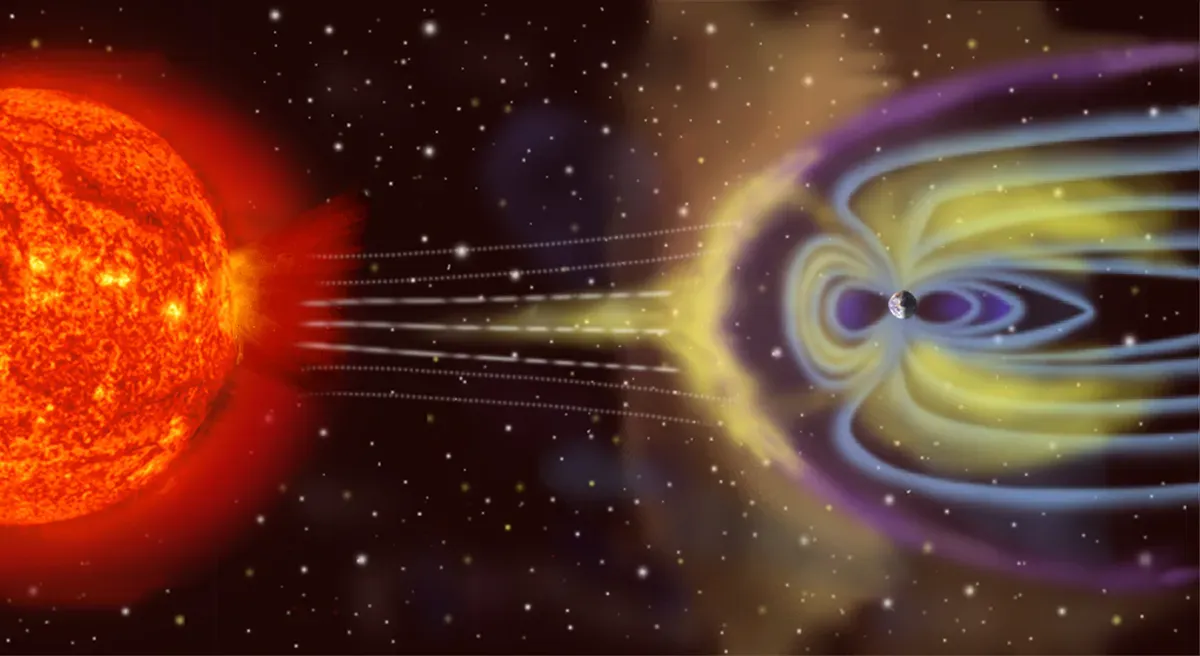
Here is where things get really sobering. Unlike Mercury, Venus, and Mars, Earth is surrounded by an immense magnetic field called the magnetosphere, generated by powerful, dynamic forces at the center of our world – and this magnetosphere shields us from erosion of our atmosphere by the solar wind, from coronal mass ejections, and from cosmic rays from deep space. Earth basically won the planetary lottery in this regard.
Generated deep inside Earth’s molten outer core, this magnetic shield deflects charged solar wind particles that would otherwise erode the atmosphere and damage life. Without it, Earth would resemble Mars – dry, exposed, and largely lifeless. Studies found that when solar wind pressure increased at both Earth and Mars, the increase in the rate of loss of Martian oxygen was ten times that of Earth’s increase. That tenfold difference, accumulated over billions of years, is almost certainly why Mars became a desert and Earth became a garden.
Red Dwarf Stars and the Terrifying Odds Against Exoplanet Life
Red dwarfs are known for their powerful stellar flaring, which could render nearby planets uninhabitable. However, even relatively quiescent stars like our Sun create space weather. Here’s why that matters so much: the vast majority of stars in the Milky Way are red dwarfs, meaning most potentially habitable planets orbit these hyperactive, flare-prone suns. That is a sobering statistic for anyone hoping the galaxy is teeming with life.
The high speed of certain stellar CME bursts – around 2,400 km/s – would be atypical for our own Sun, with only about one in every twenty solar CMEs reaching that level. However, M-dwarfs like the studied star could emit CMEs of this type as often as once a day. According to researchers, this has implications for extraterrestrial life, as most of the known planets in the Milky Way are thought to orbit stars of this type, and such bursts could be powerful enough to strip their atmospheres. It’s hard to say for sure what that means for our search for life out there, but it certainly complicates the picture enormously.
What This Means for the Future Search for Life Beyond Earth
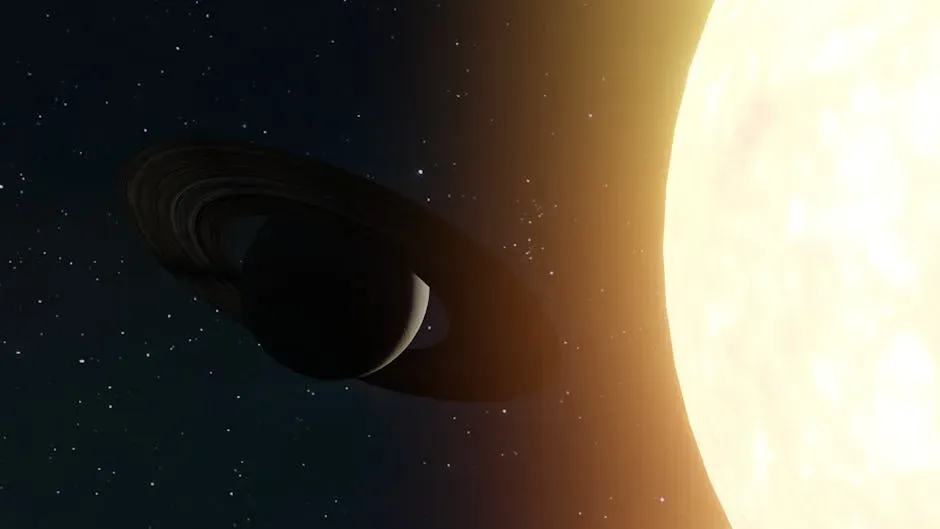
Scientists are increasingly recognizing that you cannot evaluate whether a planet hosts life simply by checking if it sits in a “habitable zone” where liquid water could exist. We tend to think of habitability in terms of individual planets and their potential to host life. But it is exoplanet-star relationships that generate habitability, not individual planets on their own. The relationship between a world and its star is as intimate and defining as any other factor in determining whether life has a chance.
Research results have implications for upcoming missions that will directly image exoplanets, because these missions may be able to probe the “astrophysically-influenced weather systems on habitable zone planets.” These missions include the proposed Habitable Worlds Observatory and the Large Interferometer for Exoplanets. This deepens our understanding of how solar activity may have created the environmental conditions necessary for life to appear on early Earth, and possibly on other planets as well. We are, in a very real sense, using our own Sun as a template for understanding life across the cosmos.
Conclusion
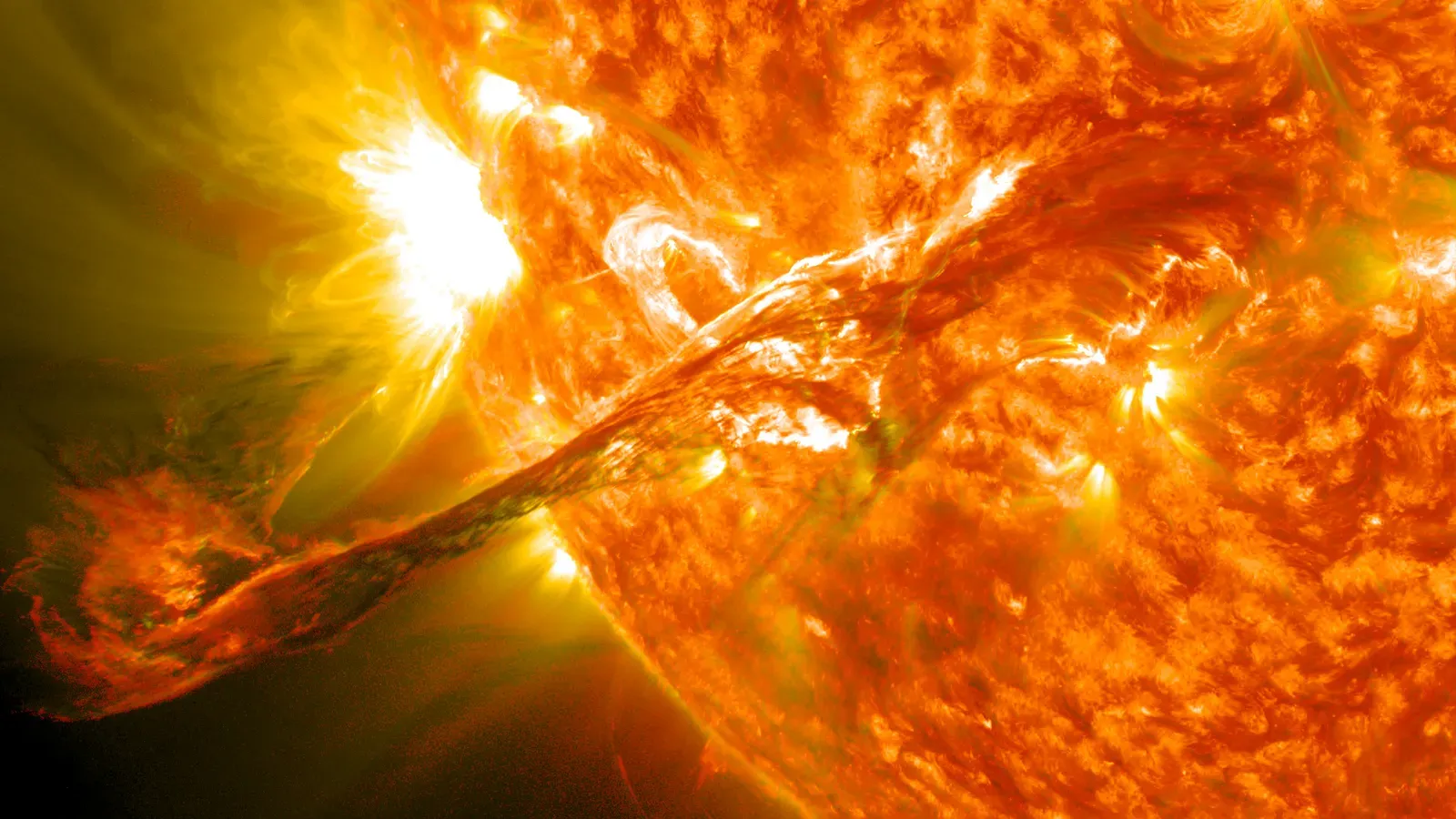
Also available on NASA’s Image and Video Library as GSFC_20171208_Archive_e001662, CC BY 2.0)
The relationship between a star’s eruptions and the evolution of life on its surrounding planets is one of the most profound and underappreciated frontiers in modern science. What you’ve seen here is not a simple story of destruction. It is a story of balance – between violence and creation, between stripping a world bare and seeding it with chemistry complex enough to produce life.
The Sun’s outbursts shaped our oceans, our atmosphere, our very molecules. They gave early Earth the energetic nudge it needed to begin building the precursors of biology. On other worlds, the same forces may be unfolding right now, or have already played out in ways we can only guess at. The truly staggering implication is this: the next time you see a news headline about a solar storm, remember that somewhere across the galaxy, a similar storm could be either ending a world’s chances of life – or beginning them. What do you think is happening out there? Tell us in the comments.