
Space is not the quiet, serene backdrop you might imagine when you look up at a clear night sky. It is wild. It is violent. It is full of things that keep the world’s best physicists awake at night, scribbling equations on whiteboards and muttering things like “that simply should not be possible.” And honestly? That is exactly what makes it so endlessly fascinating.
We think of science as a body of settled answers, a neat textbook full of solved problems. Yet the cosmos refuses to cooperate. Every time our telescopes get sharper and our detectors grow more sensitive, the universe hands us a new mystery to chew on. From invisible forces shaping entire galaxies to millisecond flashes of energy that defy easy explanation, the list of cosmic “we have no idea” moments is longer than most people realize. Buckle up, because what follows will make you question everything you thought you knew about the universe we call home. Let’s dive in.
1. Dark Matter: The Universe’s Most Wanted Invisible Substance
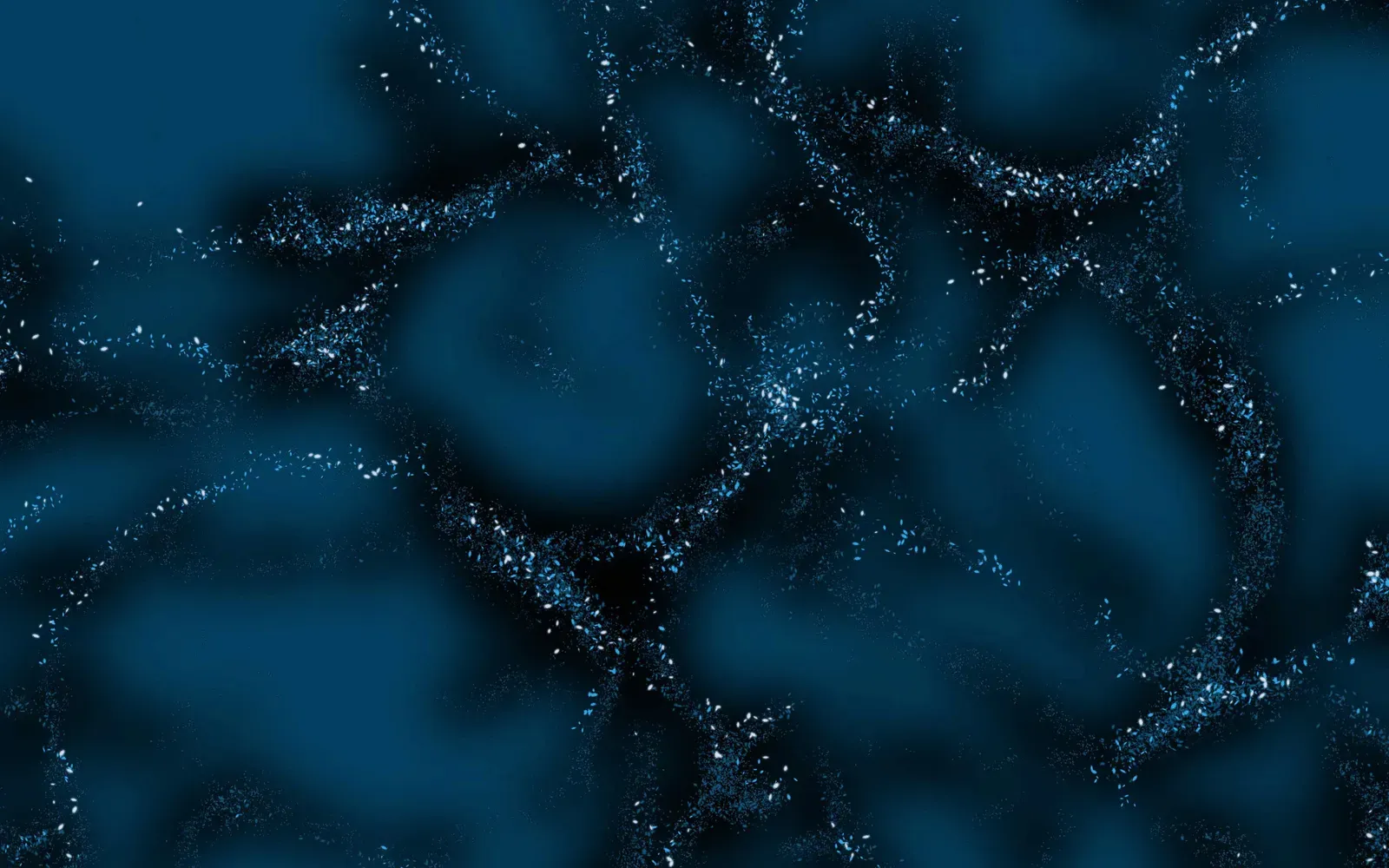
Here is a number that should stop you in your tracks. Roughly 95% of the cosmos is made up of dark matter and dark energy, leaving just 5% as the familiar matter we can see around us. Think about that for a second. Every planet, every star, every galaxy you have ever seen or heard about makes up only a tiny sliver of what actually exists. The rest? A complete mystery wrapped in darkness.
Despite making up most of the matter in the universe, dark matter has never been directly detected and its fundamental nature remains unknown. Instead, astronomers look for evidence of dark matter through indirect signs of how it might behave in space, including unexplained signals observed near the centre of our galaxy. Scientists have spent decades constructing increasingly sensitive detectors, and yet dark matter remains stubbornly elusive. Dark matter, one of the universe’s greatest mysteries, may have been born blazing hot instead of cold and sluggish as scientists long believed, with new research showing that dark matter particles could have been moving near the speed of light shortly after the Big Bang, only to cool down later and still help form galaxies.
2. Dark Energy: The Force Tearing the Universe Apart
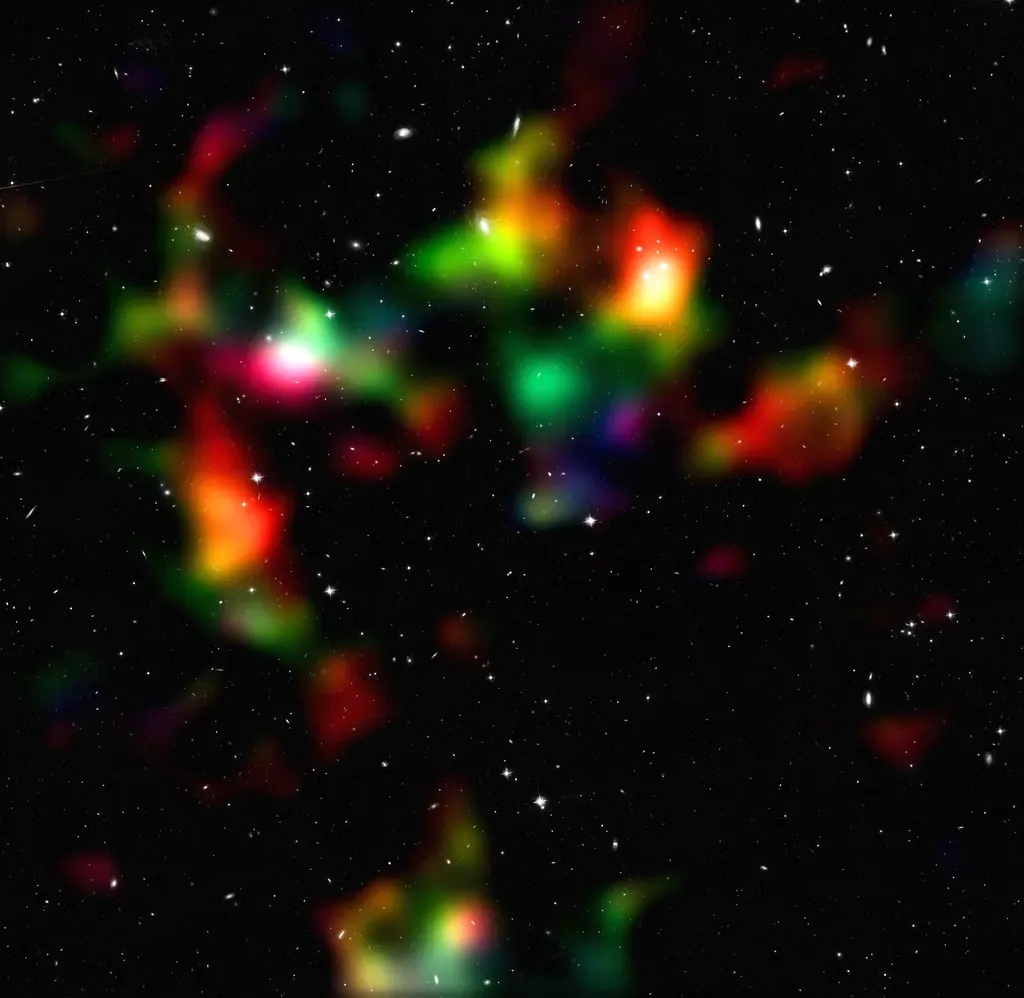
If dark matter is confusing, dark energy is downright unsettling. Dark energy is the name we give the mysterious influence driving the accelerated expansion of the universe, and what these substances are and how they work remain some of the major challenges facing modern astronomers. Imagine blowing up a balloon and, instead of your breath slowing down, it keeps accelerating with every passing second. That is essentially what is happening to the cosmos right now, and nobody knows why.
Dark matter pulls galaxies together, while dark energy pushes them apart. Astronomers measure the expansion of the universe using the explosions of white dwarfs, called type Ia supernovas, which led to the discovery of dark energy in 1998. Researchers at MIT have even proposed that a fleeting form of this energy, active only in the universe’s earliest moments, may have shaped the number of galaxies we observe today. Early dark energy is a hypothetical phenomenon that may have made only a brief appearance, influencing the expansion of the universe in its first moments before disappearing entirely. The sheer audacity of that idea is breathtaking.
3. The Hubble Tension: When the Universe Disagrees with Itself
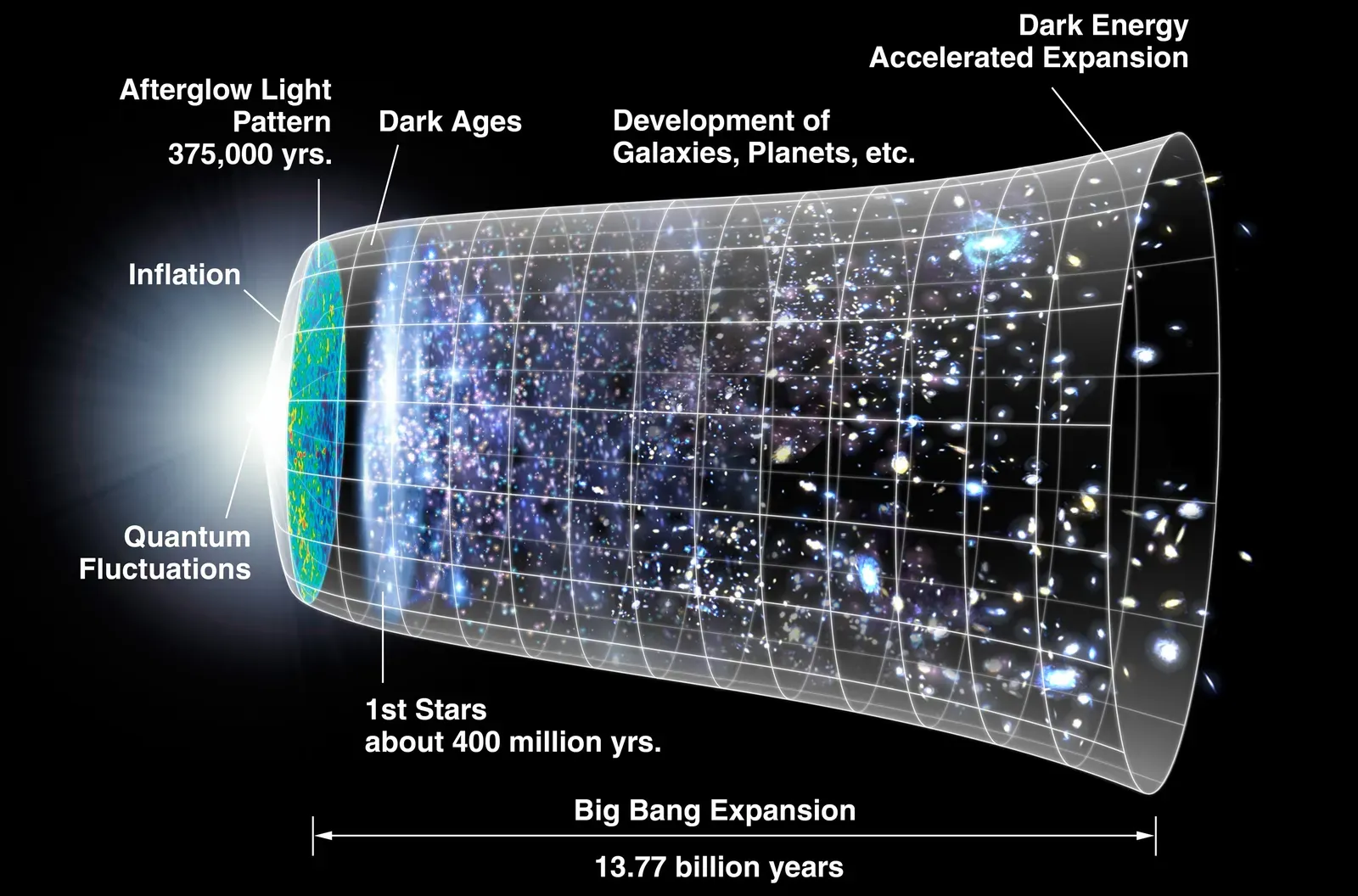
You would think that measuring how fast the universe is expanding would yield the same answer no matter how you do it. You would be wrong. Different methods of measuring the expansion rate give different results, leading to questions about what we know about the universe. The Hubble tension refers to the mismatch in measurements of the Hubble constant, where observations from the early universe, such as cosmic microwave background radiation, show one value, while measurements of nearby galaxies suggest a higher rate.
This is not a minor rounding error. It is a genuine, persistent clash between two rock-solid measurement methods, and it suggests something profound about our understanding of physics. Astronomers have long known the universe is expanding, but exactly how fast remains one of the biggest mysteries in cosmology, with different techniques for measuring the Hubble constant stubbornly disagreeing. Researchers at the University of Illinois Urbana-Champaign recently unveiled an entirely new approach using gravitational waves to weigh in on this debate. As detectors become more sensitive, this method could deliver even sharper measurements, potentially helping scientists close the gap behind the Hubble tension.
4. Fast Radio Bursts: Millisecond Screams from the Cosmos
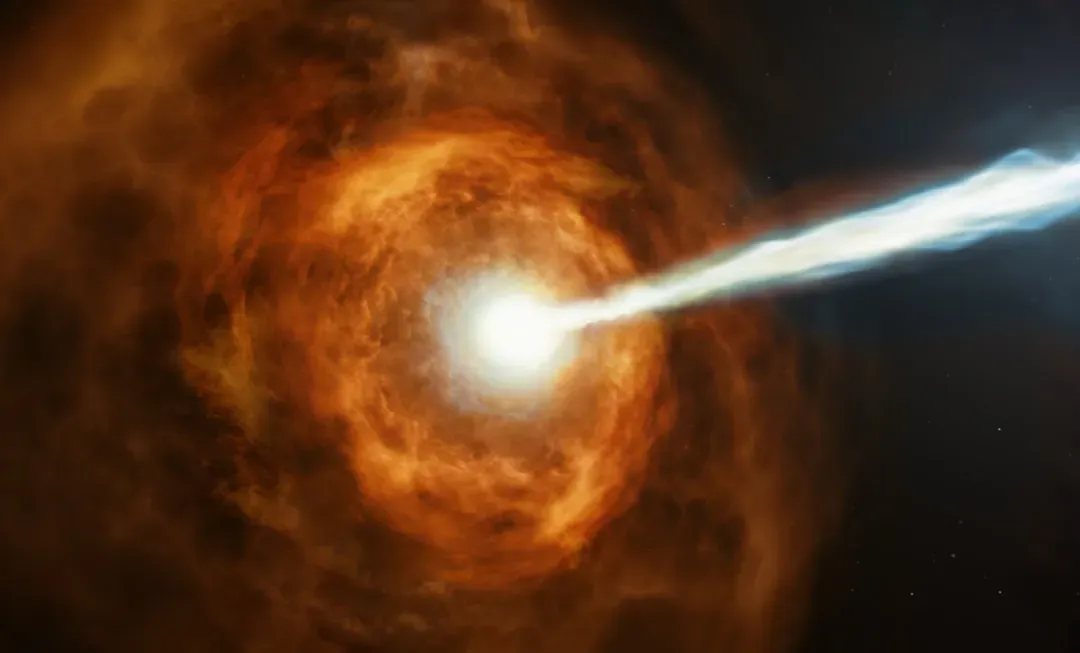
Imagine a flash of radio energy so powerful it outshines the Sun’s entire daily output, lasting only a fraction of a second and originating from a galaxy billions of light-years away. That is a Fast Radio Burst, and they are one of the most baffling discoveries in modern astrophysics. These millisecond blasts of radio energy pack more punch than our Sun produces in several days, yet they vanish almost as quickly as they appear. First discovered in 2007, hundreds of these extragalactic signals have been detected, with some repeating in mysterious patterns while others fire just once.
Scientists have linked some bursts to highly magnetized neutron stars called magnetars, but this explanation does not cover all cases, and the sheer diversity of these cosmic flash bombs, from their varying host environments to their different repetition patterns, suggests multiple unknown mechanisms at work. What is even more tantalizing is that researchers are now using FRBs as cosmic probes. Fast Radio Bursts present an exciting avenue for studying the universe’s expansion and addressing the Hubble tension, as by applying systematic analysis to localized FRBs, researchers can test cosmological models and glean insights into cosmic behavior.
5. The Black Hole Information Paradox: Does the Universe Forget?
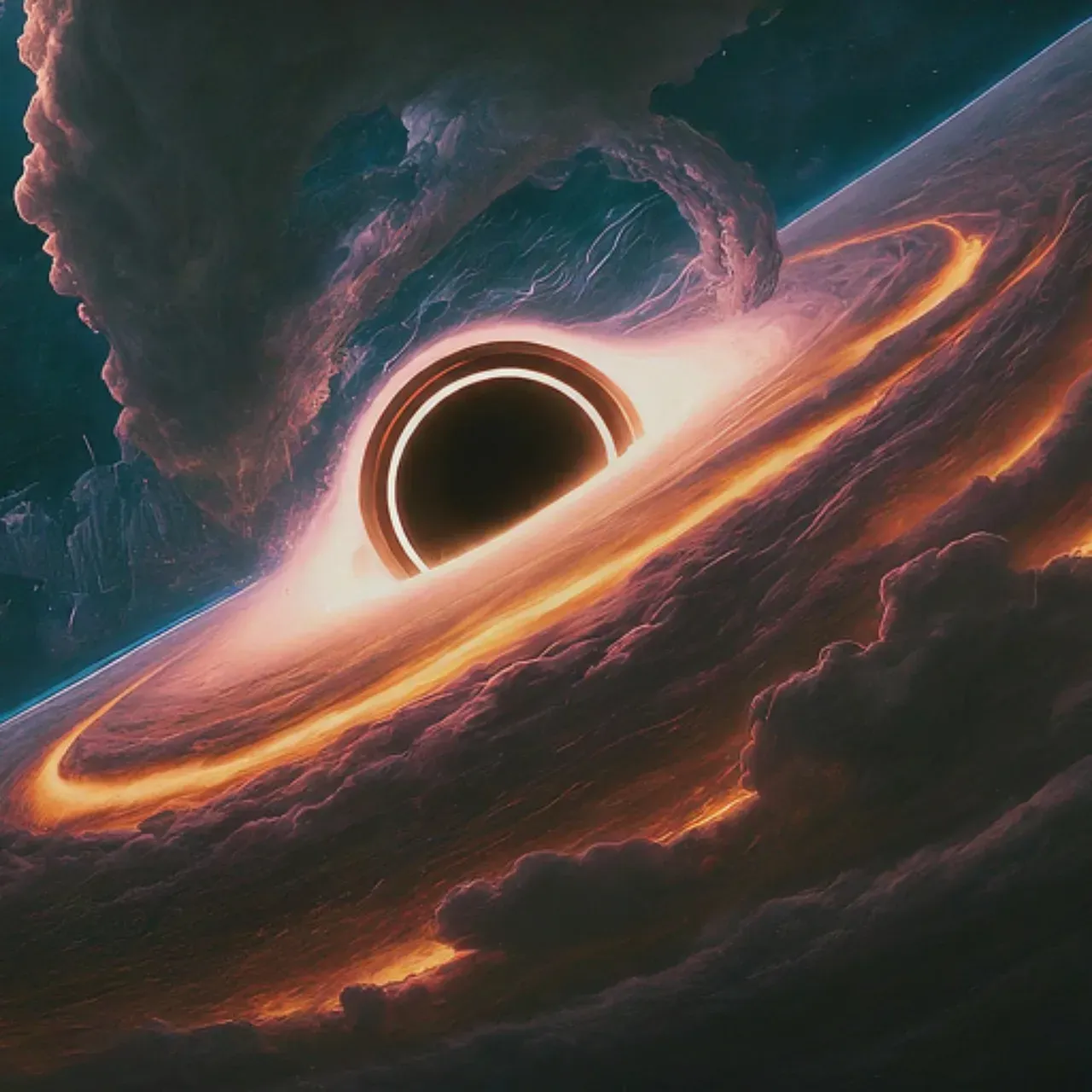
This one is personal for theoretical physicists. The black hole information paradox is not just a quirky curiosity. It is a direct, irreconcilable clash between two pillars of modern physics. If information truly disappears when matter falls into a black hole, it would violate quantum mechanics, which forbids the destruction of information, and this puzzle has driven theorists to propose extraordinary frameworks to reconcile the two. Think of it like this: if you burn a book, the information is technically still in the ash and smoke, just scrambled. A black hole, apparently, does not even leave ash.
In the 1970s, Stephen Hawking introduced a key twist: black holes should emit faint radiation, now called Hawking radiation, due to quantum effects at their boundaries. This insight deepened the paradox rather than resolving it. More recently, researchers applying loop quantum gravity have offered new hope. The long-standing information paradox, concerning the fate of information falling into black holes, continues to challenge our understanding of fundamental physics, and recent research explores two distinct solutions to the equations of loop quantum gravity, demonstrating that covariance-respecting black holes do not evaporate uniformly, exhibiting markedly different late-time behaviours. Still, no one has cracked it completely.
6. Gravitational Waves: Ripples That Rewrote Physics
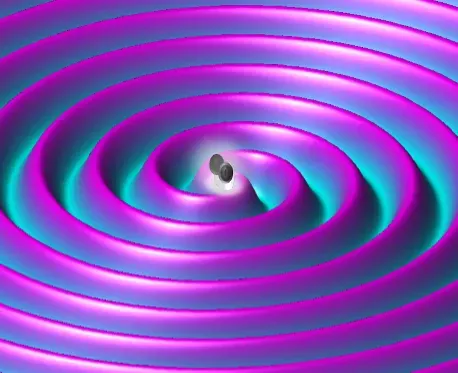
When two black holes collide somewhere in the distant universe, the collision does not just release light or heat. It sends actual ripples through the fabric of spacetime itself. These distortions in spacetime carry information about the universe’s most violent events, traveling unimpeded through matter that would block any form of light. Since their first detection in 2015, these ripples from merging black holes and neutron stars have opened an entirely new window for studying the cosmos.
What makes gravitational waves so extraordinary is not just their existence but what they reveal. The black hole information paradox has puzzled physicists for decades, and new research shows how quantum connections in spacetime itself may resolve the paradox and in the process leave behind a subtle signature in gravitational waves. Beyond that, as recently as early 2026, scientists developed a bold new framework using gravitational wave background hum from merging black holes in distant galaxies to measure the age and composition of the universe. A group of astrophysicists introduced a new way to calculate the Hubble constant using gravitational waves, and their approach improves the precision of earlier gravitational wave based techniques.
7. Tabby’s Star: The Most Mysteriously Dimming Star in the Sky
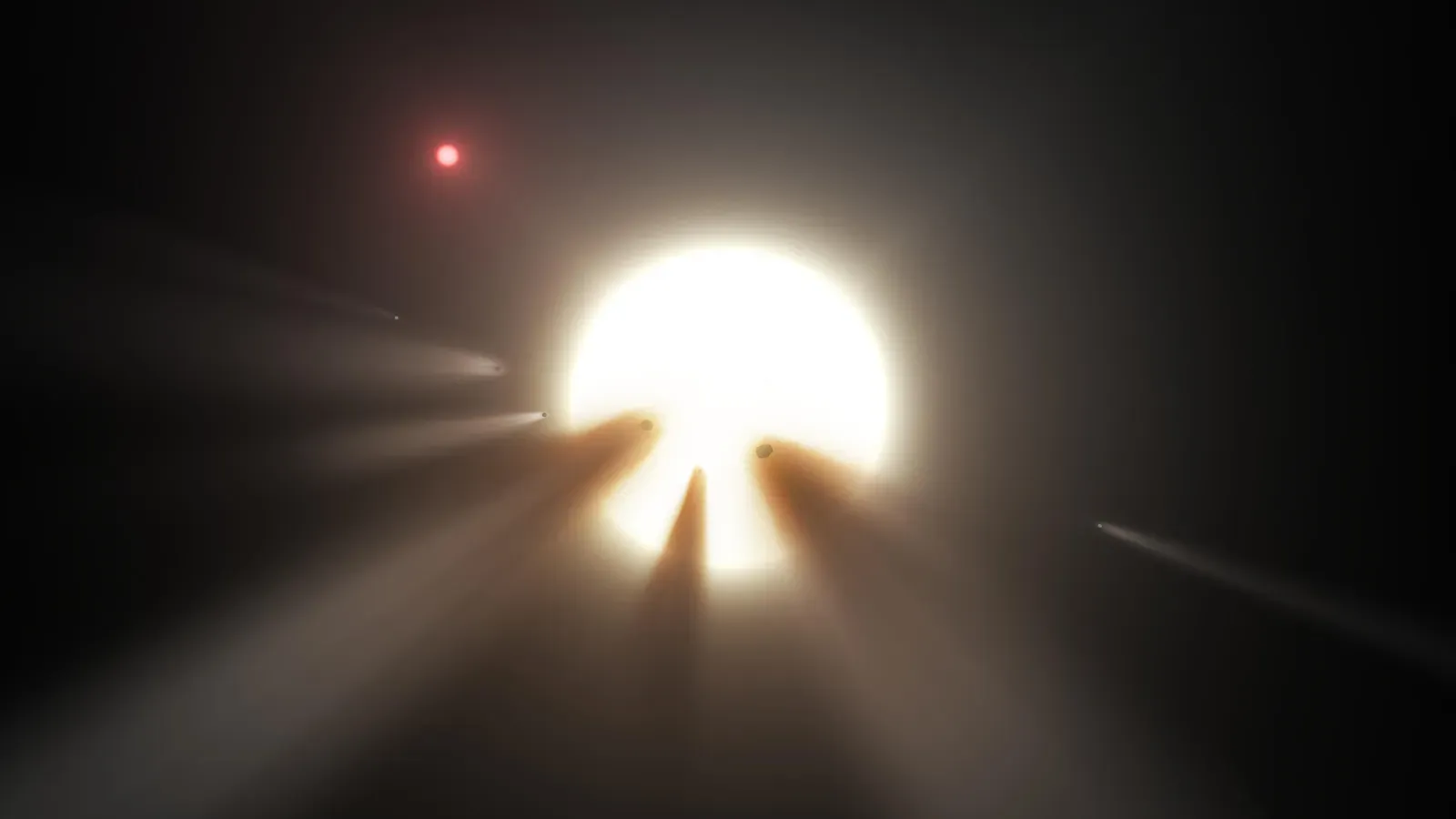
Most stars dim a tiny, predictable amount when a planet passes in front of them. Tabby’s Star does not play by those rules. Located 1,470 light-years away in the constellation Cygnus, this F-type star exhibits the most bizarre behavior astronomers have ever recorded. Unlike typical planetary transits that block less than 1% of starlight, Tabby’s Star dims by up to 22% in completely unpredictable patterns, and some evidence suggests the star has been gradually dimming over the past century.
A 22% dip in brightness is not a planet. It is not a comet. It is not anything we have a clean, proven explanation for. While scientists favor explanations involving circumstellar dust from colliding asteroids or disrupted moons, no single theory fully accounts for these dramatic, irregular light variations. The ongoing unpredictability of this star is genuinely humbling. It is a reminder that even something as familiar as a star can behave in ways that completely stump modern science, and I think that is equal parts terrifying and wonderful.
8. Supermassive Black Holes in Spiral Galaxies: Breaking the Rules of Galaxy Evolution
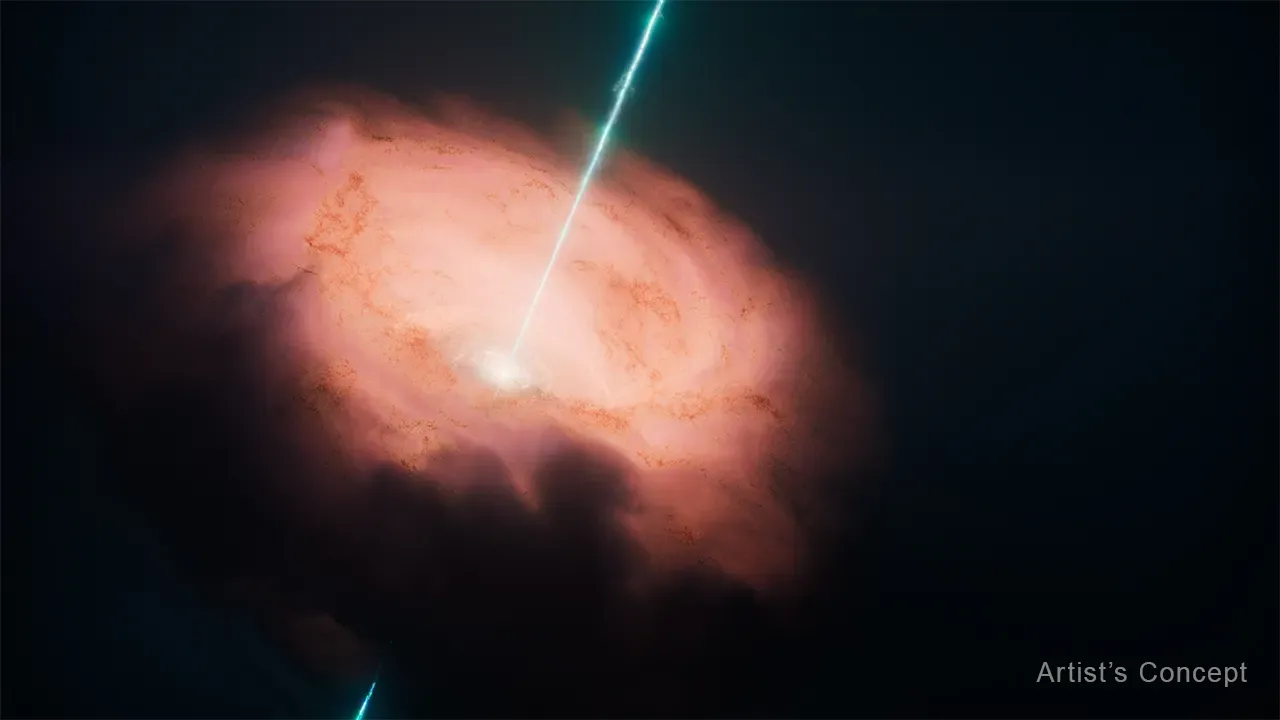
For a long time, astronomers believed that only certain kinds of galaxies, specifically elliptical ones, could host the most violently energetic black holes. Then a spiral galaxy shattered that assumption entirely. A terrifying glimpse at one potential fate of our Milky Way galaxy has come to light thanks to the discovery of a cosmic anomaly, where an international team of astronomers found that a massive spiral galaxy almost 1 billion light-years away harbors a supermassive black hole billions of times the sun’s mass, powering colossal radio jets stretching 6 million light-years across, which upends conventional wisdom because such powerful jets are almost exclusively found in elliptical galaxies, not spirals.
What makes this discovery genuinely eerie is the implication for our own cosmic address. It also means the Milky Way could potentially create similar energetic jets in the future, with the cosmic rays, gamma rays and X-rays they produce wreaking havoc in our solar system because of increased radiation and the potential to cause a mass extinction on Earth. Yet somehow, against all odds, the galaxy has retained its tranquil nature with well-defined spiral arms, a luminous nuclear bar, and an undisturbed stellar ring, all while hosting one of the most extreme black holes ever observed in such a setting. How does something survive such a violent interior? Nobody truly knows.
9. Black Holes as Potential Beginnings: The White Hole Theory
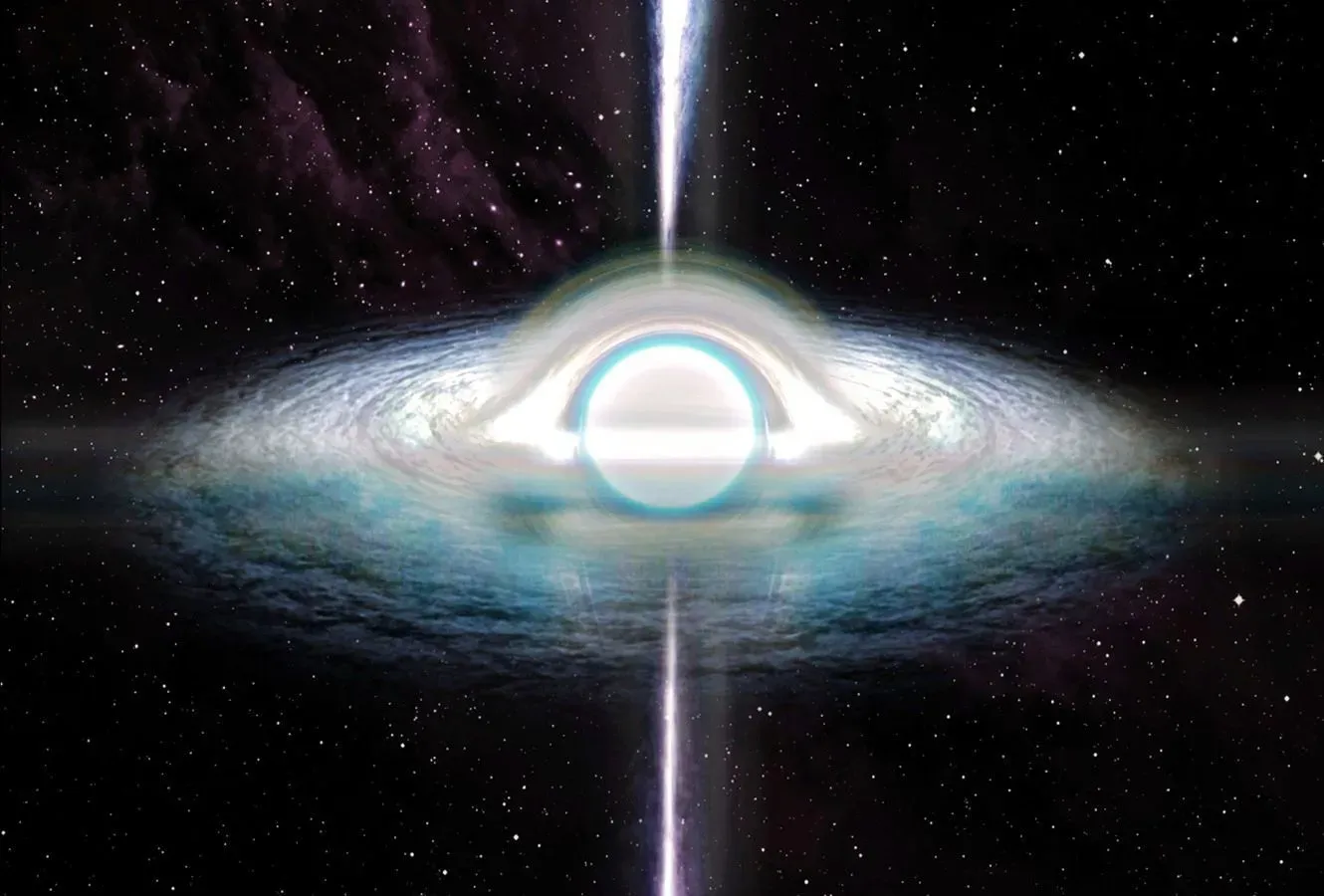
For decades, black holes have been seen as cosmic dead ends. Matter falls in, and that is that. The story ends at the singularity. New research suggests black holes may transition into “white holes,” ejecting matter and potentially even time back into the universe, defying our current understanding of these cosmic giants. It is like the universe has a cosmic drain, and somewhere on the other side, something pours back out.
A study by the University of Sheffield proposes a revolutionary link between time and dark energy, suggesting that the mysterious force driving the universe’s expansion may be used to measure time, and our understanding of black holes, time, and the mysterious dark energy that dominates the universe could be revolutionized. In a universe this strange, calling something impossible feels increasingly risky. The theory that what we perceive as a singularity is actually a beginning suggests the existence of something even more enigmatic on the other side of a white hole. What lies on that other side? Honestly, it is hard to say for sure, but the thought alone is enough to make your head spin.
10. James Webb’s “Little Red Dots”: Early Galaxies That Should Not Exist
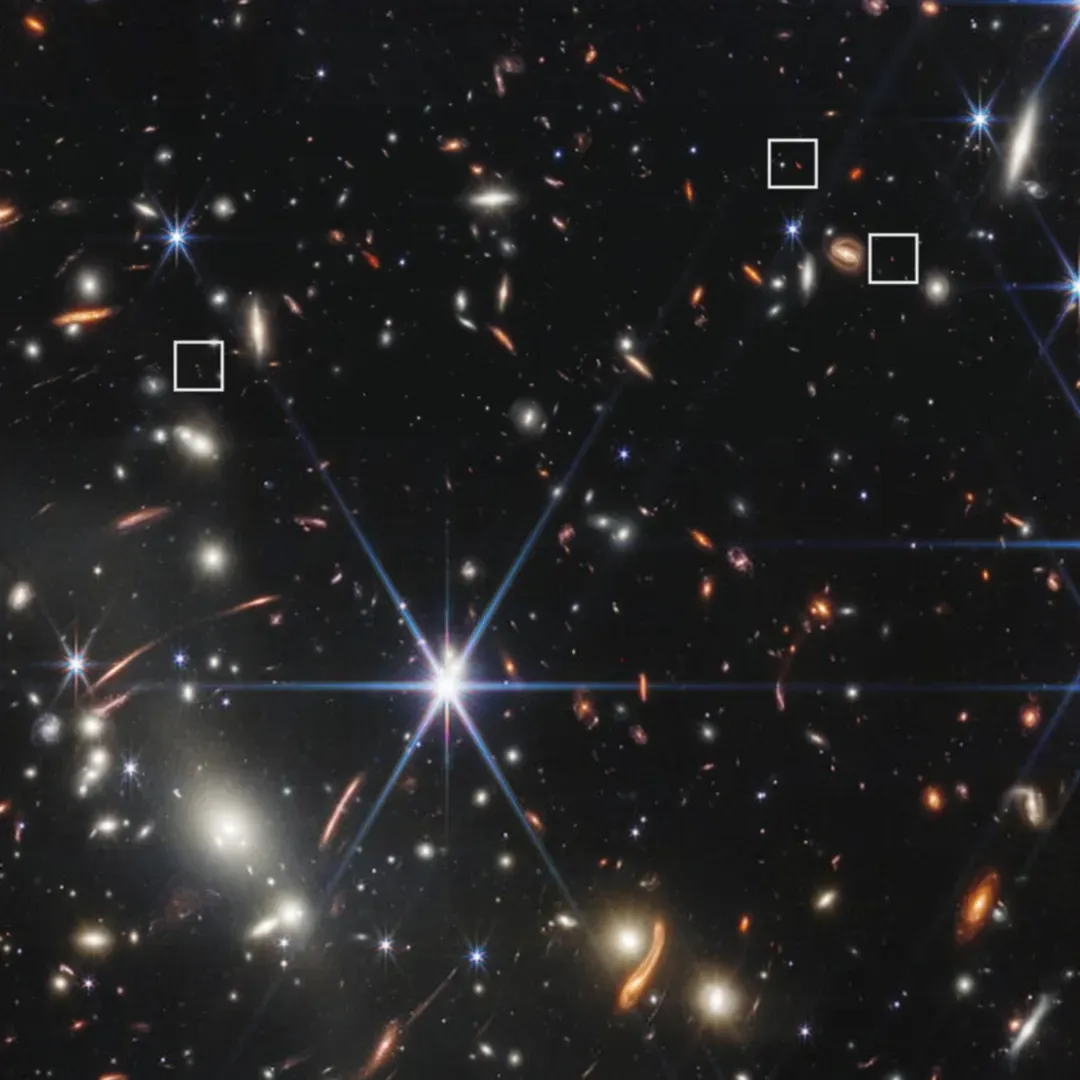
When the James Webb Space Telescope began its deep surveys of the early universe, astronomers were expecting to find a relatively quiet, sparsely populated cosmos. What they found instead was a crowded mystery. When the James Webb Space Telescope began taking deep images of the cosmos in 2022, it quickly started finding “little red dots” in the background, and astronomers did not know what they were. At first they thought the dots could be dwarf galaxies or dense star clusters in the very early universe, but they were so luminous that the standard model could not explain them.
Part of a class of small, very distant galaxies that have mystified astronomers, these objects represent a vital piece of a puzzle that challenges existing theories about the formation of galaxies and black holes in the early universe, with the discovery connecting early black holes with the luminous quasars we observe today. The deeper Webb stares into the past, the more it seems like the universe was building its largest structures far earlier than any model predicted. These findings mark a golden age in astronomy where every observation challenges established models of the evolution of galaxies and planets. Let’s be real: every answer Webb provides seems to generate three new questions.
Conclusion: The Universe Keeps Winning
There is something both humbling and thrilling about sitting with all of this. The universe continues to surprise us with phenomena that challenge our understanding of physics and astronomy, and despite years of advanced technology and scientific research, some cosmic mysteries remain stubbornly unsolved. That is not a failure of science. It is science at its most alive, most honest, and most exciting.
Every one of these ten phenomena represents a doorway we have not fully opened yet. Dark matter detectors are getting sharper. Gravitational wave observatories are expanding. Webb is peering deeper into time with every new observation. The tools are improving, the questions are crystallizing, and the answers, when they finally come, will likely reshape everything we think we know about existence itself.
The universe does not owe us simple explanations. It never has. What it does offer, over and over again, is the breathtaking invitation to keep looking. So here is something to sit with: if we only understand roughly 5% of what the universe is truly made of, what else might be out there that we have not even imagined yet? What do you think? Share your thoughts in the comments below.