Most of what you think you know about your brain is probably outdated. Neuroscience has sprinted ahead in the last couple of decades, quietly rewriting the rules about memory, emotions, intelligence, and even who we can become at any age. The really wild part isn’t just how complex the brain is, but how surprisingly changeable and trainable it turns out to be.
Once you realize your brain isn’t a fixed machine but more like a living, rewiring city, it’s hard to look at your habits, relationships, and decisions the same way. The discoveries below aren’t just interesting trivia; they can genuinely change how you treat yourself, how you react to others, and how you design your life. Let’s dive into some of the most mind-bending insights scientists have uncovered and what they might mean for your everyday thinking.
Your Brain Never Stops Changing (Even as an Adult)
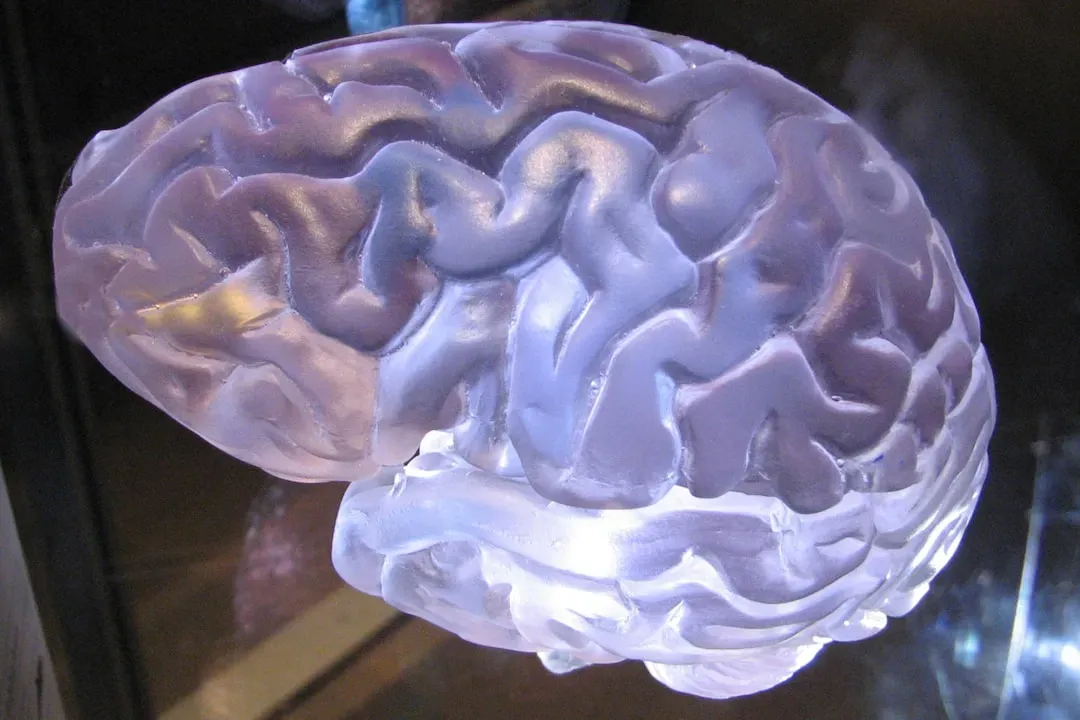
For a long time, people were told that the brain “set” in early adulthood and just slowly declined from there. That’s not what modern neuroscience shows. Your brain is constantly reshaping itself through a process called neuroplasticity: forming new connections, strengthening some pathways, pruning others. Every time you practice a skill, think a certain thought, or repeat a habit, you’re literally changing the structure and wiring of your brain.
This means your personality traits, emotional reactions, and even some mental blocks are more flexible than they might feel from the inside. Practices like learning a new language, playing an instrument, or even therapy can leave measurable changes on brain scans. I remember trying to learn the guitar in my thirties and thinking I’d “missed the window.” The science says that window never fully closes, it just takes more deliberate effort as we age. Your daily choices are not just what you do, they are what your brain becomes.
Your Memories Are Less Like Recordings and More Like Stories

Most people secretly believe their memory is a kind of mental camera, faithfully recording life and filing it away somewhere in the back of the mind. Research paints a very different picture. When you recall something, you don’t play back a recording, you rebuild a story. The brain pieces together fragments of sensory details, emotions, and prior beliefs, and then stitches them into what feels like a continuous memory. That means every time you remember something, you’re not just retrieving it, you’re subtly editing it.
This explains why eyewitness accounts can be so unreliable, and why siblings can have dramatically different recollections of the same childhood event. Your memories are shaped not only by what happened, but by what you expected, what you feared, and what you believe now. The flip side is empowering: by reframing past events and changing the narrative you tell yourself, you can shift the emotional weight those memories carry. Your past isn’t as fixed as you might think; your brain is still negotiating it with you in the present.
Your Brain Runs Mostly on Autopilot
Conscious thought feels like it’s in charge, but a huge portion of your daily life is driven by unconscious processes humming beneath awareness. Neuroscientists have found that the brain often starts preparing actions or decisions before you become aware of having made a choice. Your habits, biases, and snap judgments are powered by neural shortcuts that evolved to save energy and time. These shortcuts are not evil; they’re survival tools, but they can badly misfire in a modern world.
This automatic mode runs your routines: how you drive home without thinking, how you react when someone raises their voice, how you reach for your phone when you’re bored. The scary part is realizing how much of your life can pass in this default mode. The hopeful part is that with awareness and repetition, you can reprogram a lot of it. Noticing the moment you’re about to snap at someone or doom-scroll for an hour is like catching a glimpse behind the curtain. Each time you choose differently, you’re teaching your autopilot a new route.
Thoughts and Emotions Literally Shape Your Physical Brain
“Mind over matter” always sounded like a vague slogan, but there’s a very concrete sense in which your thinking changes physical matter inside your skull. Long-term stress, for example, can shrink and alter parts of the brain involved in memory and emotional regulation, while also strengthening circuits related to fear and reactivity. On the other hand, practices like mindfulness, cognitive therapy, and compassion training have been linked to structural and functional brain changes associated with better mood and attention.
In brain imaging studies, people who regularly meditate tend to show stronger connectivity in regions involved in focus and self-awareness. People who repeatedly engage in negative self-talk reinforce circuits that make those thoughts feel more automatic and believable. It’s like walking a path through grass: tread it often enough and it becomes a dirt road, then a paved highway. Realizing this can be a jolt: every mental habit you indulge is a construction project in your brain. The question becomes not “Is this thought true?” but “Do I want to build more of this?”
Your Brain Treats Social Pain Like Physical Pain

Being rejected, ignored, or humiliated doesn’t just “hurt” metaphorically. Brain imaging studies show that social pain activates some of the same regions that light up during physical pain, especially in areas related to distress. Your nervous system reacts to being excluded from a group in a way that is surprisingly similar to being physically injured. From an evolutionary perspective, this makes sense: for most of human history, being cut off from your tribe was a serious survival threat.
This overlap helps explain why a harsh comment, a breakup, or public embarrassment can feel almost physically unbearable. It’s also why telling someone to just “shake it off” often doesn’t work; their body is responding as if to a wound. Knowing this can change how you treat both yourself and others. You might be more careful with your words, and more gentle with your own reactions. Emotional pain is not weakness or drama; in many ways, your brain is logging it in the same category as being burned or cut.
Your Brain Is Wired to Predict the Future, Not Just Perceive the Present

The classic idea is that you take in information from your senses and then your brain interprets it. Newer research suggests the process is almost flipped: your brain is constantly predicting what will happen next and using your senses to correct those predictions. It’s less like a camera and more like a weather forecast system, always guessing and updating. You don’t just see the world; you mostly see your brain’s best guess about the world, adjusted slightly by incoming data.
This predictive style operates at every level, from anticipating the feel of the next stair step to expecting how a friend will react to your message. When predictions are accurate, everything feels smooth and obvious. When they’re wrong, you feel surprise, confusion, or even threat. This is why changing your beliefs can change your actual experience of reality: you’re altering the predictions the brain uses as its starting point. In a real sense, your expectations are the lens through which your brain paints the world.
Your Gut and Your Brain Are in Constant Conversation

<p“The gut feeling” isn’t just a poetic phrase. Your digestive system has its own dense network of neurons, often called the enteric nervous system, and communicates continuously with your brain via the gut-brain axis. Signals travel back and forth through nerves and chemical messengers, including those related to mood and stress. A large share of the body’s serotonin, a key player in mood regulation, is produced in the gut, not the head.
Research in the last decade has increasingly linked gut microbes to mental states like anxiety, depression, and even how we respond to stress. People sometimes notice that when their diet is chaotic or they are constantly inflamed, their mood is more fragile and their thinking feels foggier. It’s not just in their imagination; their brain is listening to their gut’s distress signals. This doesn’t mean food is a cure-all, but it does mean that what you eat, how stressed you are, and how your digestion is functioning are all tangled up with how your mind feels.
Sleep Is When Your Brain Does Its Deep Cleaning and Editing

Many people still treat sleep like extra time they can negotiate with, something to cut when life gets busy. In reality, your brain uses sleep to perform critical maintenance that it simply can’t do well when you are awake. During deep sleep, a kind of cleansing system in the brain becomes more active, helping to clear out metabolic waste products that build up during the day. Chronic lack of sleep doesn’t just make you tired and cranky; over time, it can impair memory, decision-making, and emotional control.
Sleep is also when your brain consolidates memories and makes new connections, like a night editor rearranging the pages of a book. Skills you practice during the day can actually improve after a good night’s rest without additional training. Dreams likely play some role in emotional processing, helping you work through social conflicts and fears in a symbolic, off-line environment. Skipping sleep is like telling your brain it’s not allowed to clean, organize, or file anything away. You may still be functioning, but the mental clutter grows louder and harder to ignore.
Stress and Anxiety Can Sharpen or Sabotage Your Thinking

Stress has a bad reputation, but not all stress is harmful. Short bursts of challenge can sharpen focus, improve reaction times, and fuel motivation. Your brain is built to handle temporary spikes in stress hormones, especially when there is a clear beginning and end to the challenge. The trouble starts when stress becomes chronic, when your nervous system never really gets the message that the danger is over. In that state, the same chemicals that once helped you perform start to erode your ability to think clearly.
Long-term high stress can shrink key brain areas involved in memory and planning, while strengthening circuits tied to habit and fear. This is why it becomes harder to think flexibly or be creative when you feel constantly under siege. Anxiety can lock your attention onto imagined catastrophes, leaving little mental room for problem-solving or enjoying the present moment. One practical shift is to reframe certain sensations – like a racing heart before a presentation – as preparation rather than doom. You’re not broken for feeling stress; your brain is just doing its job a bit too enthusiastically.
Your Brain Is Far More Energy-Hungry Than You Realize

The brain makes up only a small fraction of your body weight, but it consumes a surprisingly large share of your energy. Even when you’re sitting still, your brain is burning through resources to maintain all its background activity: regulating your body, processing information, predicting, daydreaming. This constant energy demand is one reason your brain relies so heavily on shortcuts and habits. Thinking deeply, making decisions, and exercising self-control all cost extra fuel.
When you feel mentally exhausted after a day of decisions and problem-solving, that’s not just a mood, it’s a reflection of real metabolic effort. Decision fatigue is the phenomenon where, after making many choices, your brain starts defaulting to easier options or avoiding choices altogether. This helps explain why it’s so tough to rely on pure willpower day after day. Structuring your environment – fewer temptations, clearer routines – lightens the cognitive load. You’re not weak for struggling late in the day; your brain is simply trying to conserve resources.
You Can Act Your Way Into a Different Mindset

We usually assume that thoughts and feelings come first and actions follow. But the relationship between brain and behavior runs both ways. Acting in a certain way can nudge your brain toward the corresponding emotional state. Moving your body, standing differently, speaking more kindly, or engaging in a task you have been avoiding can all send new feedback to your brain. It then updates its sense of what kind of situation you are in and how you must be feeling about it.
This is why behavioral therapies often focus on small, concrete actions rather than just talking about problems. If you wait to feel motivated before doing anything, you can be stuck for a very long time. But if you take one small step – opening the document, going for a ten-minute walk, texting a friend – the brain registers new evidence about who you are and what is possible. In that sense, action becomes a lever that can slowly pry your mindset loose from old patterns. The brain pays close attention not just to what you think, but to what you repeatedly do.
Your Brain Is Not a Prison, It’s a Work in Progress

What all these discoveries point to is a simple but radical idea: your brain is not a fixed identity you’re stuck with, it’s an evolving system shaped by experience, habits, relationships, and choices. Its quirks and limitations are real, but so is its capacity for growth and repair. You will never have complete control over everything your brain does, yet you have far more influence than most of us were ever taught. Awareness is not magic, but it is a powerful starting point.
When you understand that memories are stories, that social pain is real pain, that sleep is non-negotiable maintenance, and that actions can reshape mindset, everyday life starts to look different. You may treat your attention more carefully, your stress more strategically, and your self-talk with more skepticism. The point is not to hack your brain into perfection, but to work with it more wisely, like learning how to drive a complex vehicle instead of just being dragged behind it. Knowing all this now, what is one small way you might start using your brain differently today?