
Deep beneath your feet, far beyond the deepest mine or ocean trench, there’s a restless, churning world you’ll never see – but feel every single day. The Earth’s core is not a silent, frozen metal ball; it’s more like a wild, hidden engine, roaring away in the dark, quietly rewriting the surface of our planet over millions of years.
We tend to think of continents as stable and mountains as permanent, but from the core’s point of view, they’re more like temporary wrinkles on a slowly moving skin. Once you realize that earthquakes, volcanoes, drifting continents, and even the protective magnetic field around you are all tied back to this unreachable realm, the ground under your feet suddenly feels a lot less simple – and a lot more alive.
The Fiery Heart You’ll Never See: What the Core Actually Is
It’s easy to imagine the Earth’s core as some cartoonish molten ball of lava, but the reality is more strange and extreme than that. The core is split into two main parts: a solid inner core and a liquid outer core, both made mostly of iron with some nickel and lighter elements mixed in. The inner core, about the size of the Moon, is under such insane pressure that it stays solid even though it’s hotter than the surface of the Sun. Surrounding it, the outer core is a swirling ocean of liquid metal, hundreds of kilometers deep, constantly moving and convecting.
Temperatures there can reach several thousand degrees Celsius, and the crushing pressure would flatten anything we know into something unrecognizable. No drill will ever reach it; we only know what it’s like down there by listening to how seismic waves from earthquakes move through the planet, and by recreating tiny slices of core-like conditions in high-pressure lab experiments. It’s a bit like trying to understand the center of a storm by watching the ripples it sends through the clouds. Still, the deeper scientists look – through seismology, mineral physics, and computer simulations – the clearer it becomes that the core isn’t static. It’s changing, complex, and anything but quiet.
How a Churning Metal Ocean Powers Earth’s Magnetic Shield
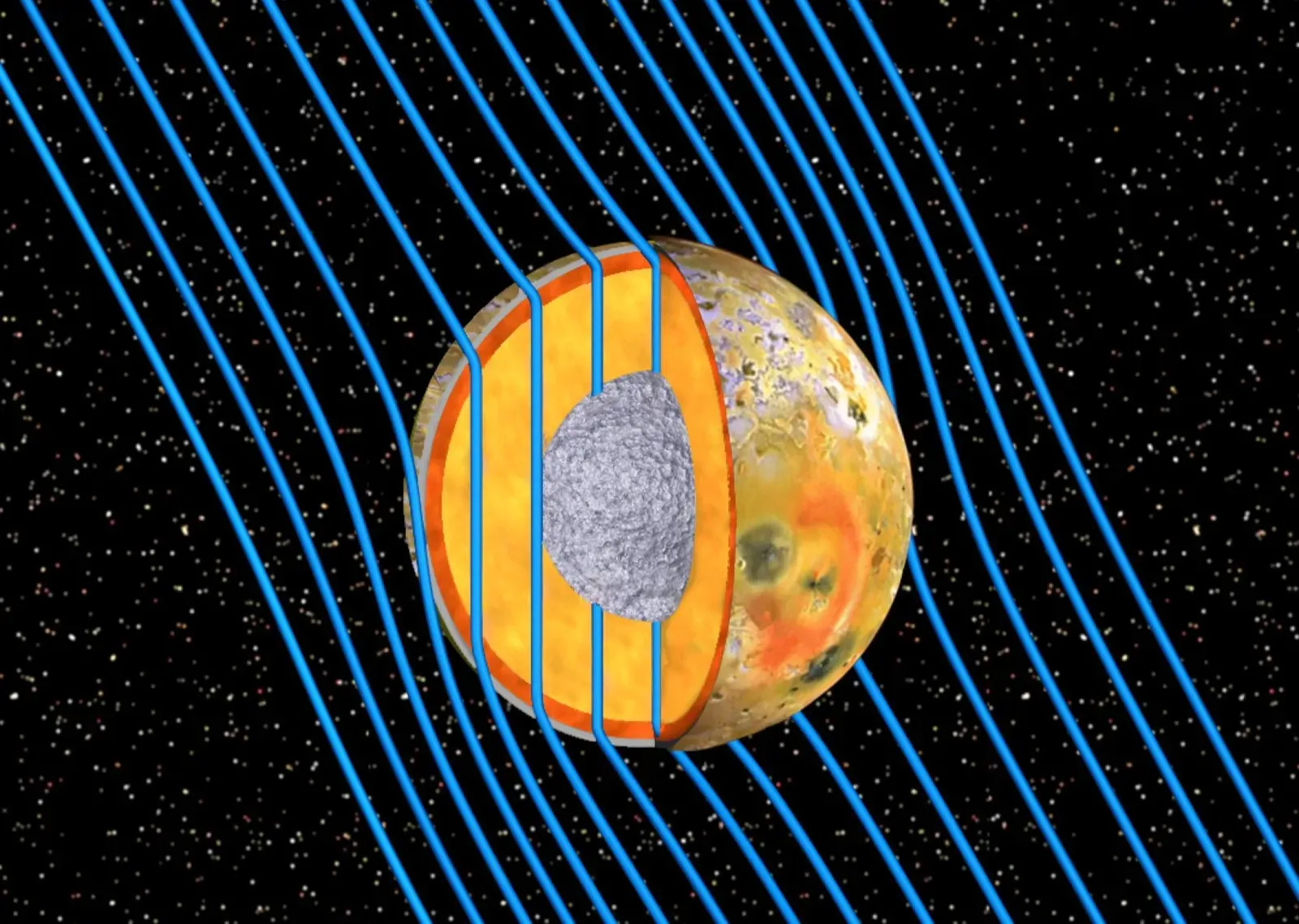
One of the most mind-blowing things about the outer core is that its moving liquid metal literally generates the Earth’s magnetic field. As that metallic ocean convects – hot material rising, cooler material sinking – and the planet rotates, electric currents are produced in the molten iron. Those currents create a giant magnetic field that stretches far into space, forming a protective bubble that deflects much of the charged particles streaming from the Sun. Without that invisible shield, our atmosphere would be stripped away over time, and life at the surface would be constantly blasted by intense radiation.
But that field is not a perfect, steady bar magnet gliding calmly through space. Satellite measurements over the last few decades have revealed that the magnetic field is lopsided, full of weak patches, shifting zones, and slow drifts. The magnetic north pole, for example, has been racing from Canada toward Siberia much faster than it used to, and regions like the South Atlantic Anomaly show notably weaker field strength. All of this traces back to how the molten iron in the outer core is flowing and swirling right now. Tiny changes in that inner metal ocean ripple outward into very real effects for satellites, power grids, navigation systems, and even animals that use the magnetic field to migrate.
The Inner Core: A Solid Sphere That Might Be Spinning Differently
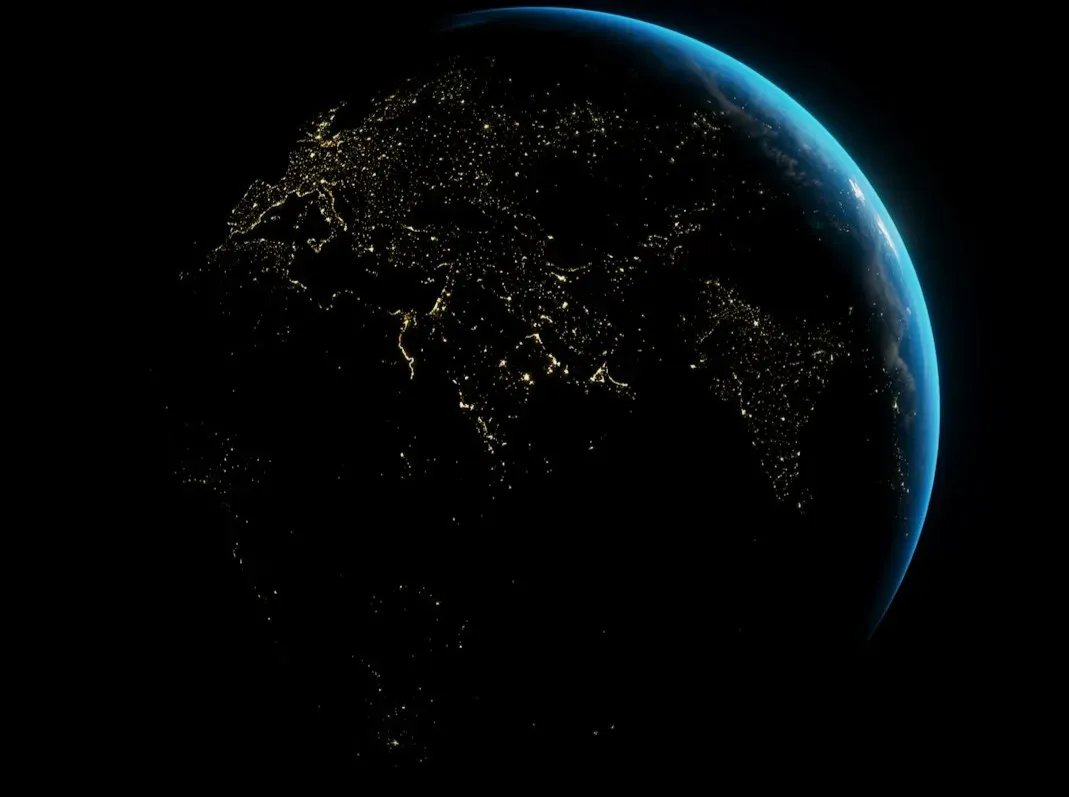
Buried inside the liquid outer core sits the solid inner core, and it may be doing something surprisingly independent: rotating at a slightly different rate than the rest of the planet. Studies of seismic waves passing through the inner core suggest that, over years and decades, the inner core might speed up, slow down, or even lag slightly, almost like a heavy gear loosely coupled to the outer shell of the Earth. Not all scientists agree on the details, and measurements are incredibly hard, but the idea that a solid metal sphere deep inside us could be behaving like a semi-independent rotor is hard to ignore.
Beyond its potential twisting and turning, the inner core also seems to have a complex structure. Some research points to different regions with slightly different crystal orientations and even hints of an “inner-inner core” with its own distinct properties. This suggests that the inner core has not always been the same and is still evolving as it slowly grows over time. As the Earth cools, more of the outer core freezes onto the inner core, releasing heat and light elements into the outer core, which in turn helps keep the geodynamo – the magnetic field engine – running. In a weird way, the inner core is like a slow-burning fuel source for the planet’s magnetic life support system.
When the Core Flips the Planet’s Magnetic Poles
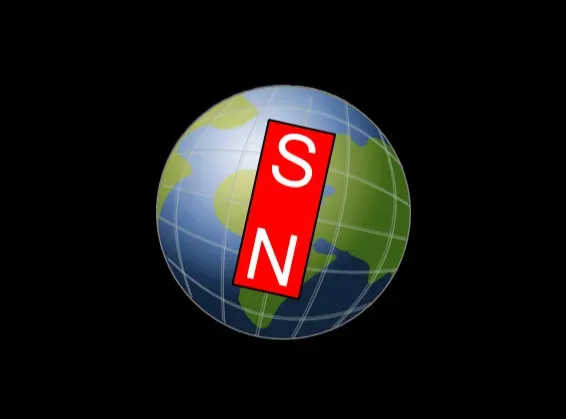
The core doesn’t just maintain the magnetic field; over long stretches of time, it also flips it. Geological records locked into volcanic rocks and ocean-floor sediments show that the Earth’s magnetic poles have reversed many times, so that what we’d call “north” today has been “south” in the past. These reversals don’t happen on any tidy schedule, but they do show up repeatedly over millions of years. They’re thought to arise when the underlying flow in the outer core becomes complex or unstable enough that the global magnetic structure reorganizes itself into the opposite orientation.
During a reversal, the magnetic field weakens and becomes patchy before re-establishing itself, pointing the other way. That doesn’t mean instant global chaos, but it could mean increased radiation reaching low Earth orbit, more stress on satellites and communication systems, and more frequent auroras appearing at unusual latitudes. The current field has been slowly weakening over the last couple of centuries, which some people like to link to an impending flip. Scientists are cautious about that; the field has waxed and waned many times without fully flipping. Still, the fact that the deep core can, over time, rewire the entire planetary magnetic system is a reminder that the ground rules we take for granted are not eternally fixed.
The Core’s Heat: The Hidden Driver of Plate Tectonics and Volcanoes
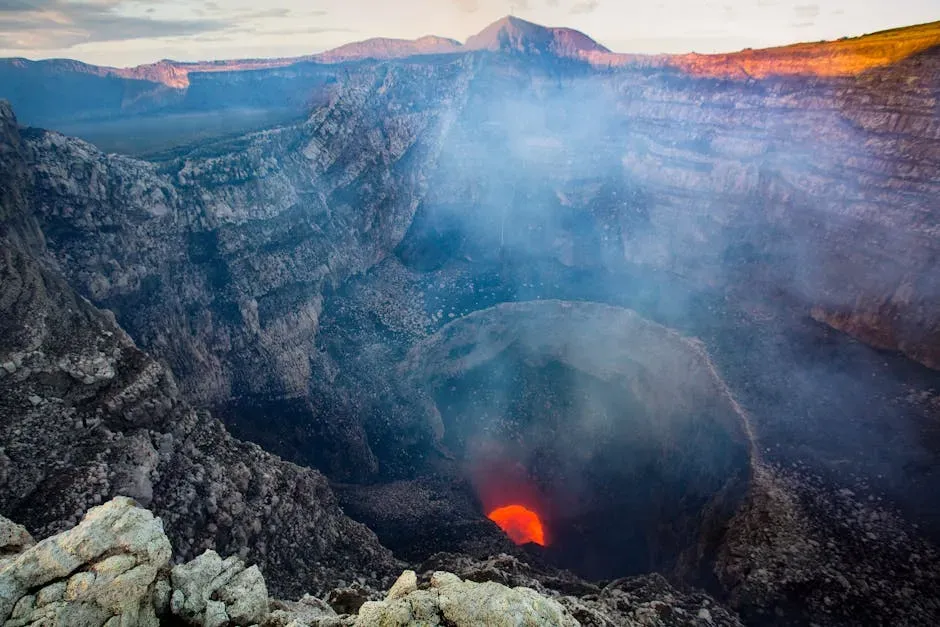
Most people think of plate tectonics in terms of colliding continents and drifting oceans, but the true power source behind all that movement lives much deeper. Heat from the Earth’s interior – much of it coming from the core and lower mantle – rises upward, setting the solid-but-slowly-flowing mantle into motion. That mantle convection gently drags and shoves the rigid tectonic plates at the surface, causing them to spread apart at mid-ocean ridges, dive under one another at subduction zones, and grind past in dramatic fault zones. Without that deep heat, the plates would eventually lock up, and our planet’s crust would become geologically quiet and stagnant.
The core’s heat also helps fuel plumes of hot rock that punch their way upward through the mantle, sometimes reaching the surface as hotspot volcanoes. Places like Hawaii or Iceland are thought to be fed by such rising columns of unusually warm mantle material, tied ultimately to processes happening near the base of the mantle, right above the core. Every time lava erupts, new crust forms, or mountain belts rise up where plates collide, you’re looking at the end result of energy that began its journey thousands of kilometers below, from a place no human will ever personally visit. The continents you see on a world map are, in a sense, just the cooled scum floating on a deep internal cauldron.
The Core-Mantle Boundary: A Strange and Turbulent Frontier
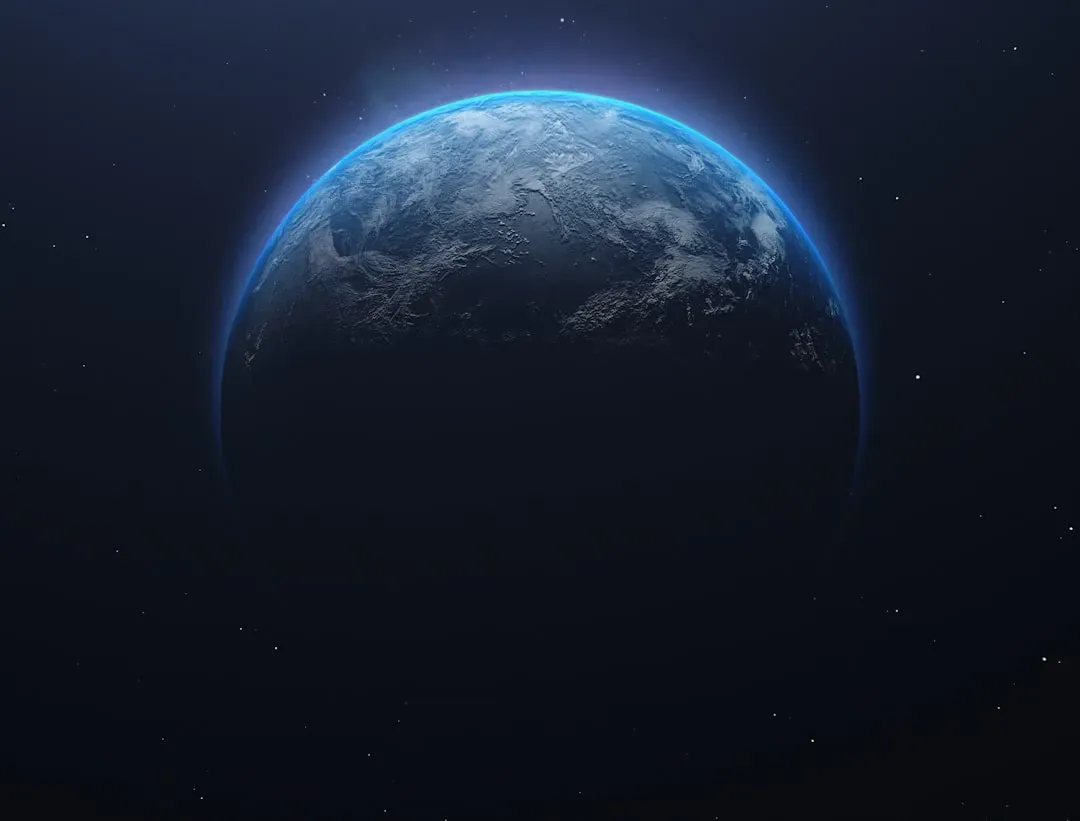
Between the molten outer core and the overlying mantle lies one of the most mysterious regions in the entire planet: the core-mantle boundary. Seismic studies show odd, ultra-slow zones there, patches where seismic waves crawl along more sluggishly than expected. These areas may be massive piles of dense, chemically distinct rock, perhaps fragments of ancient ocean crust or residues left behind from early, violent stages in Earth’s formation. They could be shaping how mantle plumes start, where they rise, and why some volcanic regions are more intense or persistent than others.
There are also hints that the interaction between the core and this region of the lower mantle might influence the magnetic field itself. Variations in heat flow across the core-mantle boundary can change how the outer core convects, and therefore how the magnetic field evolves over time. You could picture it as a complex dance between a fiery metal ocean and a sluggish but powerful rock mantle, with both layers pushing and tugging on each other slowly. The frontier between them is not just a passive boundary; it’s an active zone where deep Earth chemistry, energy transfer, and large-scale flows intersect to shape surface geology in ways we’re only beginning to piece together.
How the Core Has Helped Make Earth Habitable
It’s easy to forget that the features we rely on for life – liquid water, a stable climate over deep time, and a thick atmosphere – are all indirectly supported by what happens at the core. The magnetic field, born in the outer core, shields the atmosphere from being eroded by the solar wind, something scientists suspect happened to Mars once its internal dynamo faded. Meanwhile, tectonics, powered by interior heat, helps regulate carbon dioxide over millions of years by cycling it into and out of the mantle, which in turn stabilizes global temperatures compared with a totally dead world. Without that deep circulation, Earth could swing into permanent snowball states or runaway greenhouse conditions far more easily.
On top of that, the same processes that formed and differentiated the core early in Earth’s history helped concentrate useful elements in the crust. Many of the metals we mine – including iron, nickel, and some precious metals – owe their current distribution to the way heavier and lighter elements separated when the planet was still largely molten. In a way, our technology, our climate stability, and even the simple fact that we can stand here under a breathable sky are all tied back to that hidden, dynamic heart. The core has been quietly working in the background for billions of years, giving this planet the long-term stability and complexity that life needs to not just appear, but thrive.
Peering Into the Deep: What We Still Don’t Know
For all the headlines about new discoveries, the core remains one of the most mysterious places in the solar system. Scientists are still debating details like how fast the inner core rotates, whether it speeds up and slows down over decades, exactly which elements are mixed into the molten outer core, and how the inner core first began to crystallize. There’s also active research into whether the inner core might be younger than the rest of the planet by billions of years, which would mean the geodynamo hasn’t always worked the same way. Each new seismic dataset or lab experiment tweaks the picture slightly, sometimes confirming older ideas, sometimes forcing a rethink.
Tools are improving, though. Seismic networks are getting denser, supercomputers are running more realistic models of core flows and magnetic fields, and high-pressure experiments are pushing closer to true core conditions. Even with that progress, studying the core will always be a bit like listening to a conversation through several thick walls – there will be uncertainty, competing interpretations, and surprises. But that’s part of what makes it so compelling. Knowing that the most powerful forces shaping our world are coming from a place we’ll never directly see has a strange, almost humbling beauty to it.
Living on a Planet With a Restless Heart
When you zoom out and connect all the dots – from auroras dancing in the sky to continents drifting and mountains rising – it becomes clear that the Earth’s core is not just a distant curiosity. It’s the restless heart of the planet, pumping heat and magnetic power outward, constantly nudging the surface into new shapes and new configurations. The magnetic field that guides birds and protects your phone’s GPS, the volcano that builds a new island, the fault that stores strain for a future earthquake – all of them carry the core’s fingerprint.
We often treat the ground as something solid and final, but in reality we live on a thin, fragile skin wrapped around a deep, dynamic engine that never truly sleeps. The more we learn about that hidden world, the more our planet feels less like a static rock and more like a living system with layers of intertwined motion and feedback. Next time you feel a tremor underfoot, watch a timelapse of drifting continents, or see an image of Earth’s shimmering magnetic field, it’s worth remembering: all of that begins far below, in a dark, molten realm we’ll never visit but can never escape.