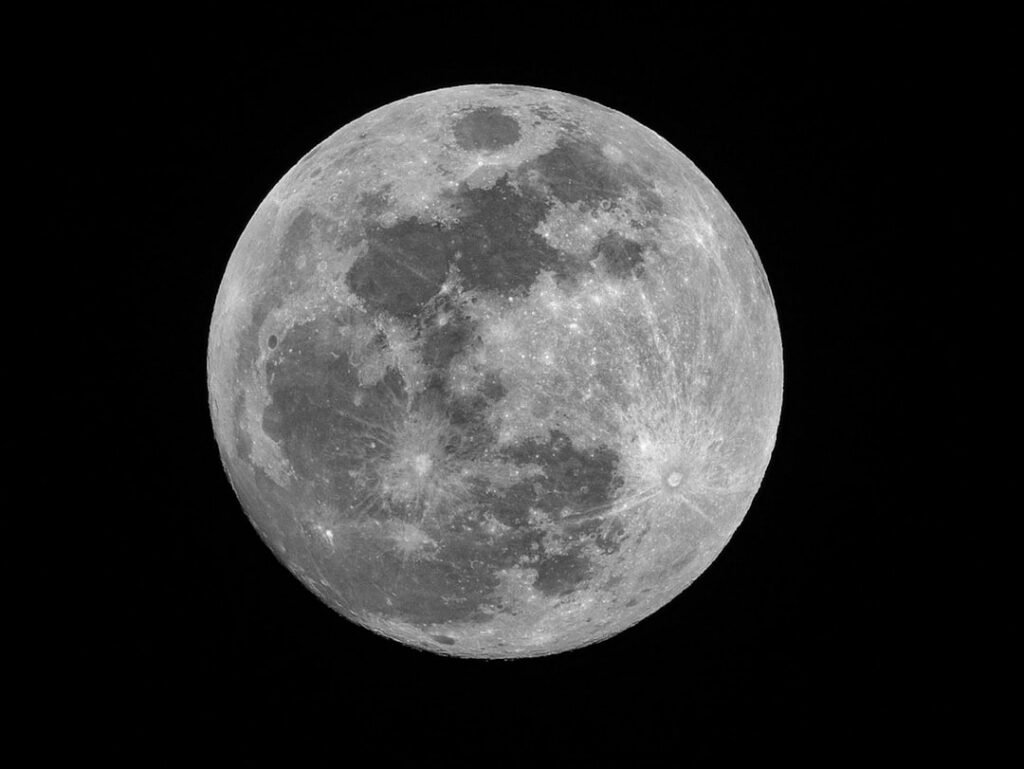
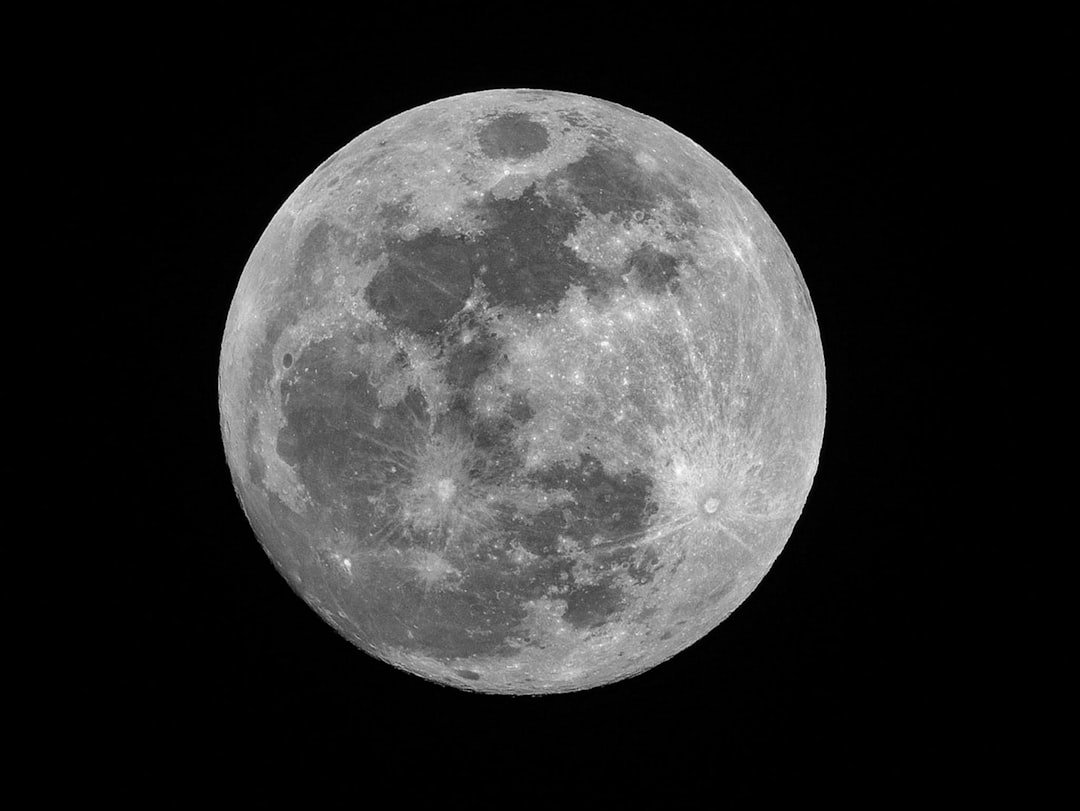
Decades-Old Puzzle of Lunar Duality (Image Credits: Unsplash)
Tokyo – A massive collision billions of years ago reshaped the Moon’s interior and surface, creating the stark divide between its Earth-facing near side and the rugged far side.
Decades-Old Puzzle of Lunar Duality
Observers first noted the Moon’s contrasting hemispheres in 1959 when the Soviet Luna 3 probe imaged the far side. The near side, perpetually turned toward Earth, features vast dark plains known as maria, formed by ancient lava flows that outline the “man in the Moon.” These basaltic expanses cover about 31 percent of the near side.[1][2]
In stark contrast, the far side boasts a thicker crust, fewer maria, and a heavily cratered terrain that gives it a mountainous, battered appearance. Scientists attributed the differences initially to tidal locking with Earth, but deeper analysis pointed to internal factors like crustal thickness and volcanic history. The far side’s crust averages 50 kilometers thick, compared to just 30 kilometers on the near side. This asymmetry persisted as one of the solar system’s enduring riddles until recent sample returns offered fresh clues.
The South Pole-Aitken Basin: Scar of a Giant Strike
Stretching nearly 2,500 kilometers across the far side, the South Pole-Aitken basin stands as the Moon’s largest and oldest impact feature, dating back about 4.3 billion years. Formed by an asteroid strike of extraordinary force, the basin excavated material from depths up to 120 kilometers, exposing the lunar mantle.[2][3]
Researchers now link this cataclysm directly to the Moon’s dual nature. The impact generated extreme heat exceeding 2,800 Kelvin, vaporizing portions of the mantle and altering its chemical makeup. This event thinned the far-side crust locally while triggering widespread convection that redistributed materials across the Moon.
Breakthrough Insights from Far-Side Samples
China’s Chang’e-6 mission, which landed in the basin in June 2024, delivered the first samples from the lunar far side. Analysis of these low-titanium basalts revealed elevated levels of heavy isotopes, including iron-56 and potassium-41, compared to near-side rocks from Apollo and Chang’e-5 missions.[1][3]
These signatures indicated significant volatile loss on the far side. Potassium isotope ratios (δ41K from 0 to 0.09‰) exceeded near-side values by about 0.16‰, pointing to evaporation where lighter isotopes escaped more readily. Iron isotopes followed suit, though partly influenced by later melting processes. Such precision measurements became feasible only with modern techniques unavailable during the Apollo era.
| Feature | Near Side | Far Side |
|---|---|---|
| Crust Thickness | ~30 km | ~50 km |
| Maria Coverage | High (31%) | Low |
| δ41K (avg) | -0.13‰ | 0.038‰ |
| Volcanism | Abundant | Suppressed |
How Volatility Shaped Lunar Evolution
The SPA impact depleted the far-side mantle of moderately volatile elements like potassium, hindering magma production and limiting volcanism. Meanwhile, convection plumes carried heat-producing KREEP materials – rich in potassium, rare earths, phosphorus – to the near side, fueling prolonged eruptions there.[2][4]
This process solidified the dichotomy: the near side’s thinner crust allowed easier magma ascent, while the far side remained cold and inert. Earlier theories invoked tidal heating or uneven magma ocean cooling, but isotopic evidence now elevates impacts as prime architects of planetary asymmetry.
- Near side: Dark maria dominate, thanks to KREEP-fueled heat.
- Far side: Thick crust and craters prevail post-volatile loss.
- SPA basin: Epicenter of change, 4.3 billion years old.
- Chang’e-6: Provided pivotal far-side basalts for isotope study.
- Implications: Giant impacts reshape worlds profoundly.
Key Takeaways
- The SPA impact vaporized mantle volatiles, curbing far-side volcanism.
- Heavy isotopes in samples confirm evaporation’s role.
- Near-side enrichment drove the familiar maria patterns.
This revelation reframes the Moon’s history, highlighting how singular events sculpt celestial bodies over eons. As missions probe deeper, the story of our nearest neighbor grows richer – what secrets will the next samples reveal? Share your thoughts in the comments.