Imagine a place on our own planet darker than any cave, colder than a walk-in freezer, and crushed under a weight that would obliterate most machines ever built. You’d be forgiven for assuming nothing lives there. Honestly, for most of human history, that’s exactly what scientists believed too. The ocean’s deepest trenches seemed, by every logical measure, completely inhospitable.
Yet the story playing out beneath miles of seawater is one of the most jaw-dropping chapters in the history of life on Earth. With each new descent, with every submersible that dares to go deeper, we’re discovering organisms so extraordinary they barely seem real. Let’s dive in.
Welcome to the Hadal Zone: Earth’s Most Extreme Address
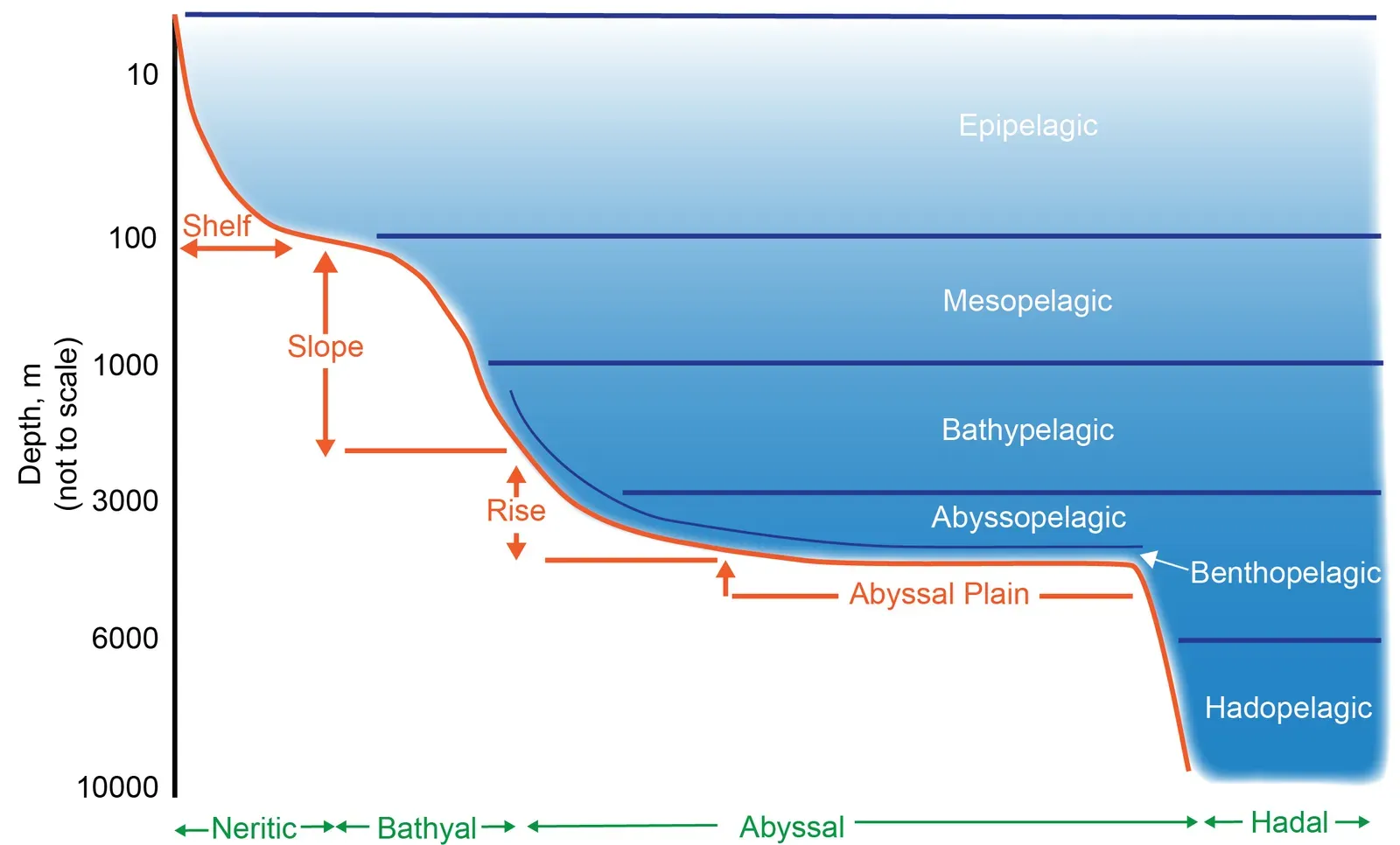
The hadal zone is the deepest region of the ocean, lying within oceanic trenches and ranging from around 6 to 11 kilometers below sea level. It exists in long, narrow, topographic V-shaped depressions scattered across the ocean floor. You could stack more than a dozen Empire State Buildings end to end and still not reach the bottom of the deepest points.
The term “hadal” was first proposed in 1956 by Anton Frederik Bruun to describe the parts of the ocean deeper than 6,000 meters, and the name itself refers to Hades, the ancient Greek god of the underworld. Fitting, really, considering how otherworldly this environment turns out to be. The total area occupied by the 46 individual hadal habitats worldwide is less than a quarter of one percent of the world’s seafloor, yet trenches account for over 40 percent of the ocean’s entire depth range.
The Mariana Trench: Deeper Than a Mountain Is Tall
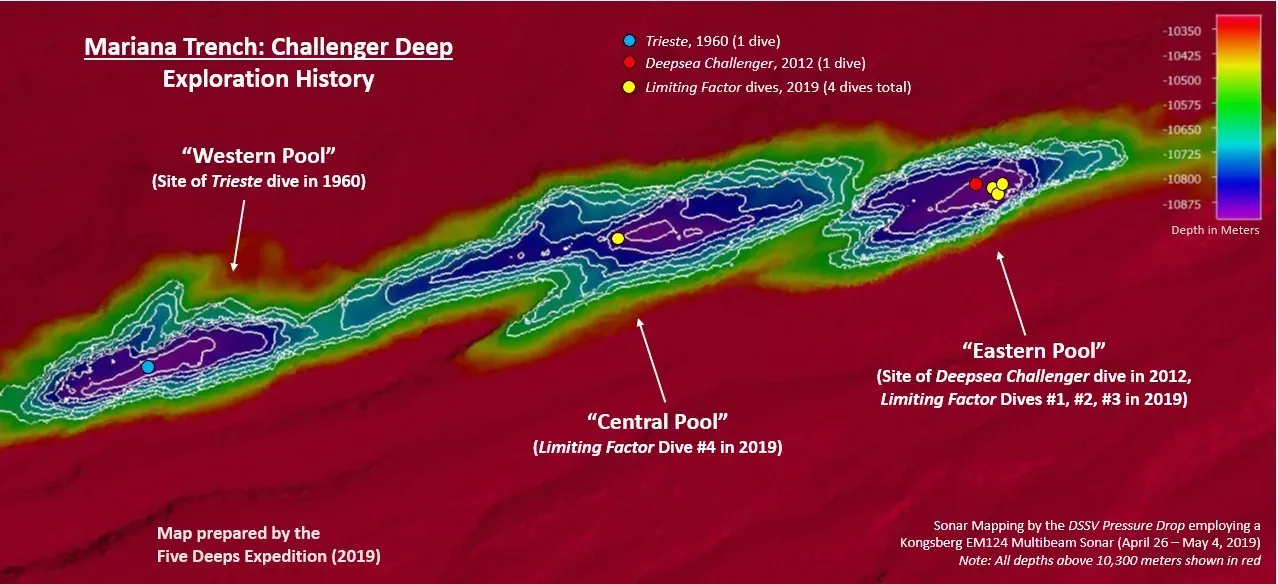
The deepest point of the Mariana Trench, known as Challenger Deep, reaches a depth of 10,984 meters. This oceanic trench was created by a dramatic geological process called subduction, where one massive slab of Earth’s crust slid under a smaller one, forcing the seafloor to plunge downward. Think of it like sliding a piece of paper under a thick book, only the paper is an entire tectonic plate and the result is the most extreme canyon in existence.
The Mariana Trench is so deep that if you placed our planet’s tallest mountain inside it upside down, it would still be entirely submerged. The water pressure at the bottom of the trench is a crushing eight tons per square inch, more than a thousand times the atmospheric pressure at sea level. Yet as you’re about to discover, something is very much alive down there.
Over 7,000 New Species Found in a Single Expedition
A Chinese deep-sea expedition to the Mariana Trench uncovered an astonishing array of life forms thriving at depths once thought nearly inhospitable. The submersible Fendouzhe, which can carry three researchers to nearly 11,000 meters below sea level, collected hundreds of biological samples from the world’s deepest oceanic trench between August and November 2021, with three new papers published in Cell revealing details of this unexplored realm.
One study alone uncovered more than 7,000 microbial species from the Mariana Trench, with nearly 90 percent of them entirely new to science. Let that sink in for a moment. Nearly 90 percent. Some microbes have small, highly specialized genomes optimized for the scarcity of light and nutrients, while others boast larger, more flexible genomes for coping with change. Many also possess genes that break down hard-to-digest compounds, such as carbon monoxide, which is key to surviving in a realm with limited food sources.
The Snailfish: A Delicate-Looking Record Breaker
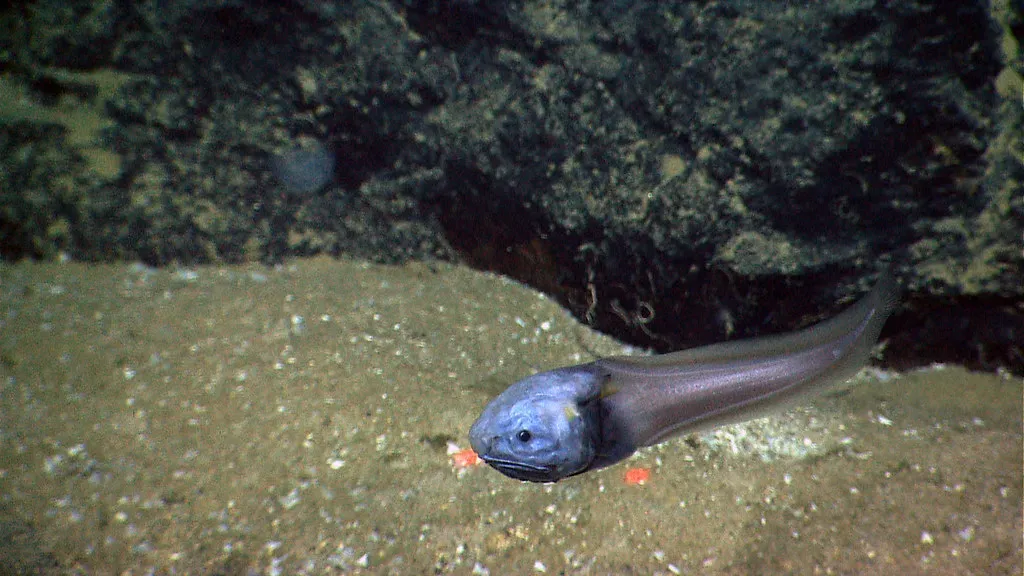
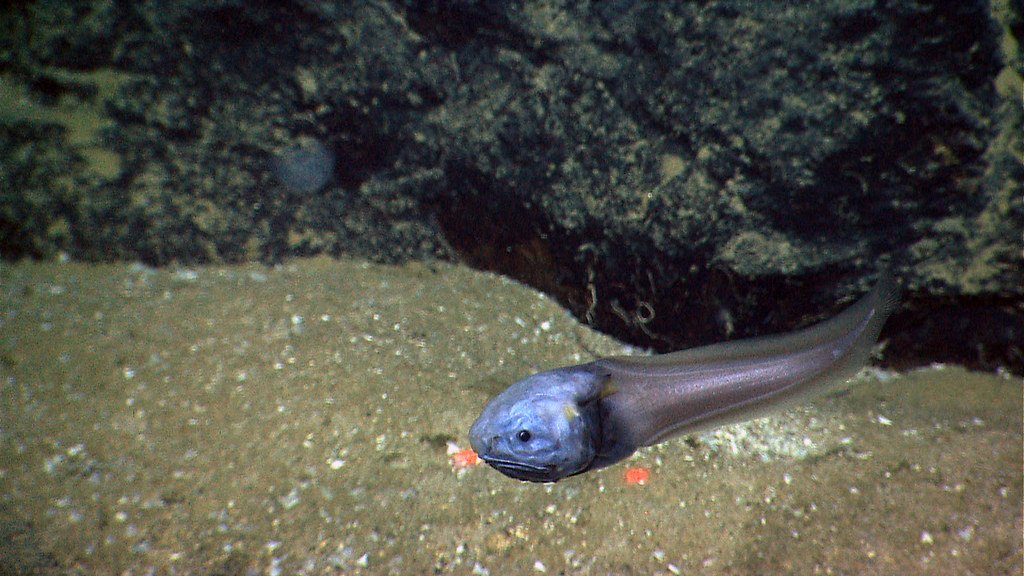
Hadal snailfish are the ocean’s deepest-living vertebrates, able to survive at depths greater than 8,000 meters. Although we often think of deep-sea environments as harsh, the fishes that live in the hadal zone look surprisingly fragile, with transparent pinkish or white skin and soft, scaleless bodies. There is something almost poetic about the fact that the planet’s most extreme fish looks like something you might find in a shallow tide pool.
These fish are adapted to the trench environment from their genomes all the way to the whole organism, with proteins that function best at high pressure, a strong second set of jaws in the back of the throat for feeding on hadal crustacean amphipods, and potentially faster lifespans to live in the high-disturbance environment of these subduction zones. One new fish was filmed at a record depth of 8,143 meters and stunned scientists because in other trenches there is only one fish species at this depth, a snailfish, but this fish is really different from any other deep-sea fish that scientists have ever seen.
Giant Amphipods and the Mystery of Deep-Sea Gigantism
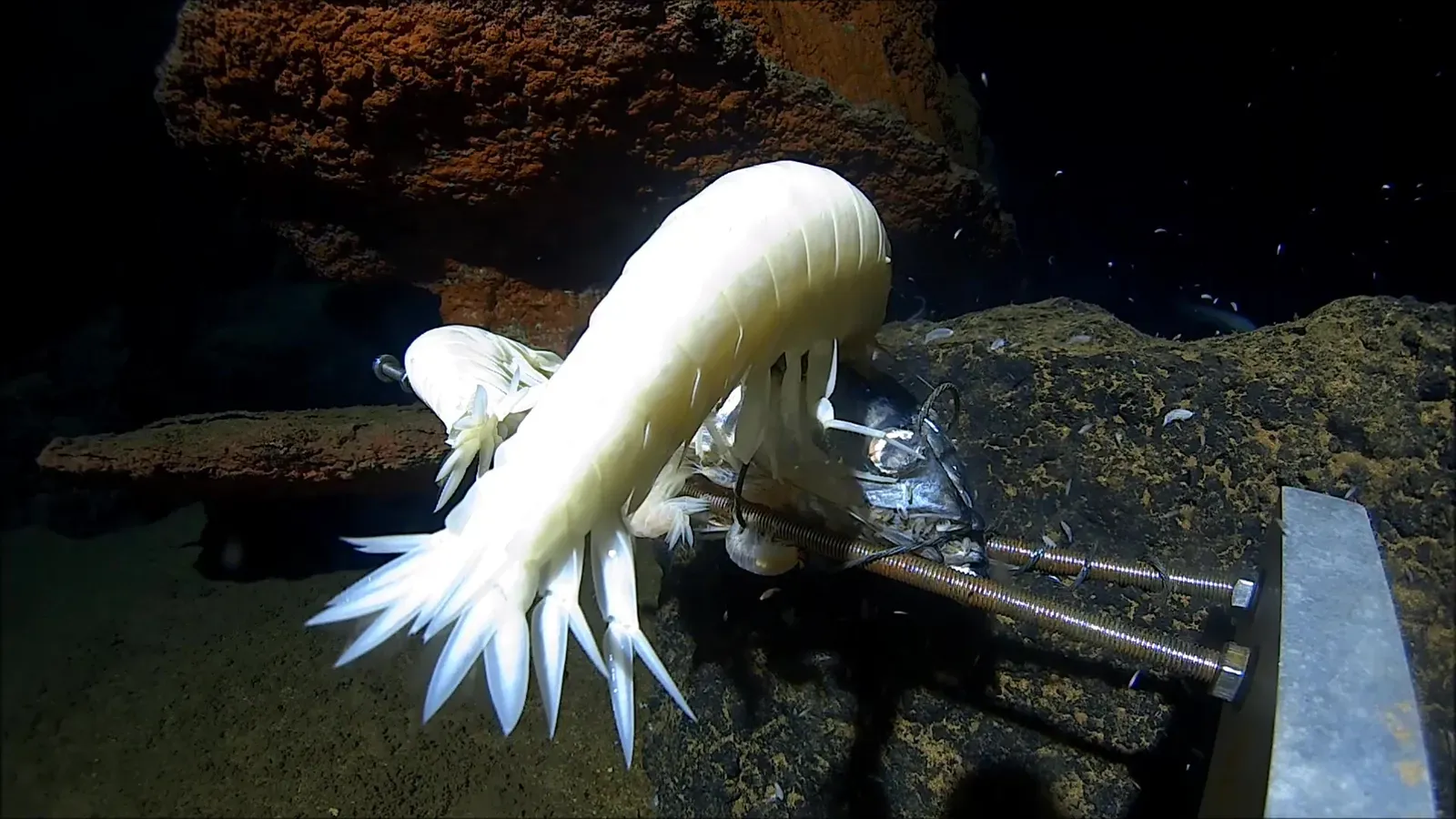
Amphipods are crustaceans related to shrimp. Near the surface, they stay small, often growing to just a few centimeters. When found in the trench, however, some exceed 30 centimeters, and these giant bug-like creatures look like oversized, armored insects as they crawl and swim through the darkness. It’s honestly a bit unsettling to imagine shrimp the size of a small shoe wandering around in the abyss.
One of the most remarkable creatures found in the hadal zone is Alicella gigantea, a species of amphipod that can grow up to 34 centimeters in length. It has been suggested that with reduced temperature and increased hydrostatic pressure, there should be an increase in cell size and lifespan, which might be an explanation for the gigantism of these deep-sea creatures. Scientists are still piecing together the full genetic picture behind this dramatic size difference.
Life Without Sunlight: The World of Chemosynthesis
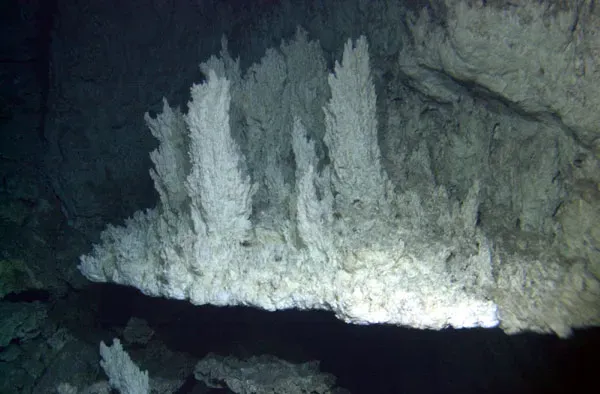
Almost all life on Earth is supported by light from the sun. Yet in the total darkness at the bottom of the world, these creatures live off of chemicals such as methane seeping through cracks in the seafloor, a process called chemosynthesis. It’s essentially a parallel food chain, running on geology rather than sunlight, and it rewrites what we thought we knew about the rules of life.
Animal communities including thousands of tubeworms and bivalves have been observed at depths up to 9,533 meters in the Mariana Trench, marking the deepest and most extensive chemosynthesis-based ecosystems known. This discovery reveals that methane-producing microbes are creating a local source of organic molecules that larger organisms such as clams can use for food and energy. In other words, the deep trench floor is not a dead zone. It is its own, self-sustaining world.
Bioluminescence, Bizarre Bodies, and Other Unearthly Traits
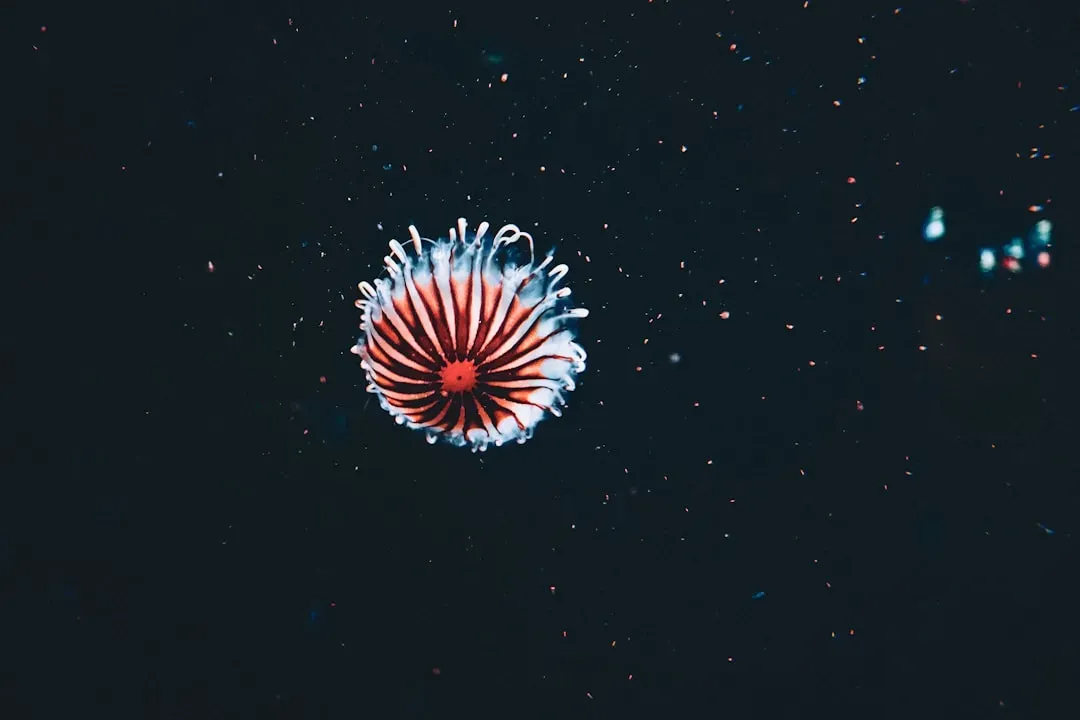
Many hadal zone animals use bioluminescence for communication and hunting, while other adaptations include specialized enzymes that allow organisms to withstand high pressure. The Dumbo octopus, for instance, has a gelatinous body uniquely suited to the crushing pressure of the deep sea, living close to the seafloor at extreme depths of 9,800 to 13,000 feet. This pressure is actually essential for its survival, and a sudden change in depth could prove fatal.
In the New Britain Trench, a jellyfish was repeatedly spotted at 8.2 kilometers down, featuring small tentacles, a whitish color, and an undulating swimming style that may make it the deep sea’s answer to moon jellyfish, which are typically found close to the surface in coastal areas. In 2024, scientists using deep-sea submersibles discovered dozens of new species in the Mariana Trench and other remote ocean depths, including new species of bioluminescent fish, giant amoeba-like organisms, and bacteria that thrive under extreme pressure and darkness. Each descent returns something new and astonishing.
Human Pollution Has Already Reached the Deepest Point on Earth
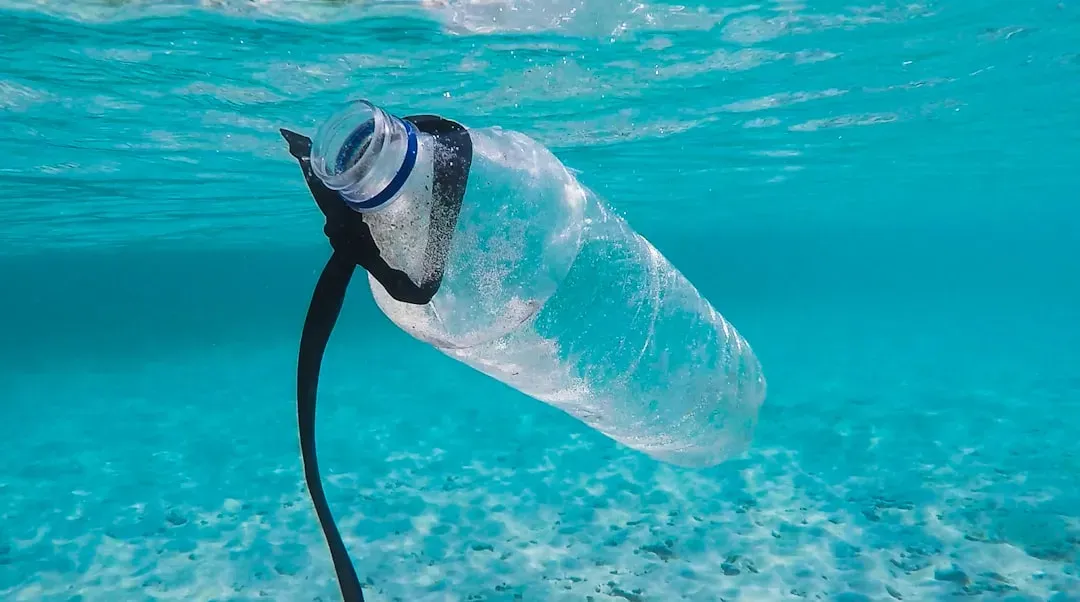
Human pollution has reached the most hostile environment on the planet, where water pressure exceeds 1,000 times that at sea level, temperatures hover just above freezing, and it is always pitch dark. Scientists believe plastic sinks very slowly to such depths, or is carried there by strong ocean currents. Here’s the thing: if our trash can reach the bottom of the Mariana Trench, it says a lot about how far our environmental footprint extends.
Once plastic settles on the ocean floor or in a trench, it can remain there for centuries due to the absence of sunlight and low oxygen levels. There is also too little biological activity for the plastic to break down. Most disturbing of all, the Mariana Trench, once believed to be completely isolated from humans on Earth’s surface, is now part of their environmental footprint. Ocean scientists warn that mining the little-explored seafloor, one of the last wild zones on the planet, could decimate fragile ecosystems that are not yet well understood.
What These Discoveries Mean for Science and the Future
![What These Discoveries Mean for Science and the Future ([1] - All images/media copyright NASA, unless otherwise noted., Public domain)](https://nvmwebsites-budwg5g9avh3epea.z03.azurefd.net/dws/f0e1213edc900f688a48b1044340d25d.webp)
Studying these mysterious species could yield new medications to fight infections, inflammation, or even cancer. They show how creatures adapt to extreme environments, which could be useful for engineering pressure-resistant or radiation-resistant proteins for space exploration. The deep ocean, it turns out, is not just a curiosity. It may hold the keys to medical breakthroughs we haven’t even imagined yet.
Exploring the hadal zone will also advance knowledge that can be used when exploring oceans beyond Earth, such as those on the moons of Jupiter and Saturn. The MEER project plans to study other trenches worldwide, with roughly 80 percent of the global hadal zone still unexplored. Researchers suggest these remote areas could hide clues about the origins of life, as well as even more extraordinary life forms adapted to severe conditions. The bottom of the ocean, in other words, may tell us something profound not just about Earth, but about life in the universe.
Conclusion: The Deepest Secrets Are Still Being Unlocked
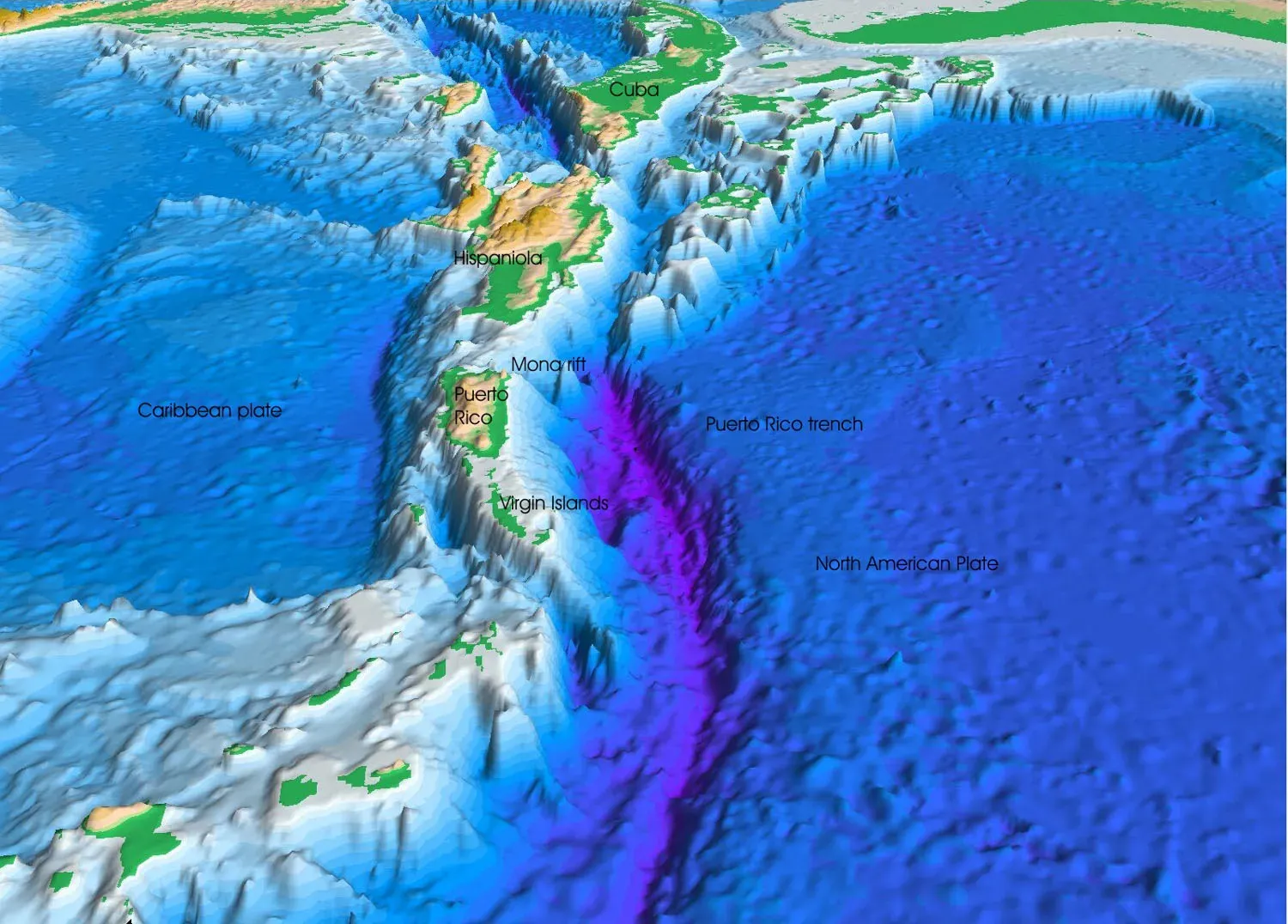
Originally from en.wikipedia; description page is/was here., Public domain)
We tend to think of exploration as something that happened in the past, when navigators crossed unmapped seas. Yet the most alien landscape on our planet sits just a few miles below the ocean’s surface, and we’ve barely scratched it. Every dive, every sample jar, every frame of submersible footage reveals creatures that didn’t exist in our scientific records just years ago.
The trenches are not empty. They are teeming, strange, and stubbornly alive, running on chemistry instead of sunlight, shaped by pressures that would crush steel, and filled with organisms that have quietly evolved for millions of years without us even knowing they were there. Honestly, that humbles me every time I think about it.
The real question isn’t just what else lives down there. It’s what those discoveries will teach us about survival, adaptation, and the sheer tenacity of life. What would you have guessed was living six miles below the ocean surface?