
You walk through your day surrounded by sounds you barely register. The tap of keys under your fingers. Rain against the window. Your own heartbeat. These sounds feel effortless, almost invisible, like background wallpaper to everything else going on. Yet beneath each one lies a world of physics, biology, and acoustic engineering so layered it can take scientists years to fully untangle.
Honestly, I think most people never stop to question the sounds they hear. We’re wired to take them for granted. Sound is present in our everyday lives in such diverse ways that we often take it for granted. That’s exactly what makes this worth exploring. From hidden frequency battles to the neurological chaos of a single keyboard click, the sounds around you are quietly extraordinary. Be surprised by what you’re about to find out.
1. The Sound of Rain: A Whole Orchestra Hiding in Plain Sight

You probably think of rain as one sound. A steady, soothing patter. In reality, what you’re hearing is a chaotic mix of dozens of different acoustic events happening simultaneously, each governed by the size and speed of individual droplets. It’s more like an orchestra tuning up than a single note.
For most raindrops, the sound produced by the bubbles trapped during impact is actually louder than the impact itself. Raindrops of different sizes produce genuinely different sounds. Small raindrops are remarkably loud because they generate bubbles with every splash, producing sounds between 13 and 25 kHz. Medium raindrops, by contrast, do not generate bubbles and are surprisingly quiet.
What that means for you is that a drizzle and a downpour aren’t simply the same sound turned up in volume – they are acoustically completely different events. Heavy rain can increase underwater noise levels by up to 35 decibels across a broad range of frequencies. Scientists have even developed underwater rain gauges that use these distinct acoustic fingerprints to identify rainfall rates and droplet sizes far out at sea, where traditional measurement tools simply don’t work.
2. Thunder: Not One Bang, But a Rolling Chain of Shockwaves

When you hear thunder, you might imagine a single explosive clap somewhere in the clouds. The truth is far more dramatic. Thunder is the result of a simultaneous chain of pressure events stretched across the entire length of a lightning bolt, which can be several miles long. Every inch of that bolt is doing its own acoustic work.
The immense heat released by lightning superheats the air around it. As a result, air molecules vibrate vigorously and expand suddenly, sending a shockwave through the air. The low rolling rumble you hear after the initial crack isn’t an echo. It’s the sound from different sections of the lightning bolt arriving at your ears at slightly different times, because each section is a different distance away from you.
Think of it like watching fireworks. You see the burst and then hear the bang a moment later. Thunder works on that same delay principle, only stretched across a jagged line of superheated plasma above your head rather than a single point in the sky. That low, drawn-out groan you hear is actually the full acoustic length of the bolt being delivered to your ears one piece at a time. Wild, right?
3. Your Own Heartbeat: A Sound Your Body Deliberately Hides

Your heartbeat is a sound that begins before you are born into this world and continues until your last breath. Yet under normal circumstances, you can’t hear it at all. Your body actively suppresses your awareness of it, partly through the mechanics of your inner ear and partly through how your brain filters repetitive rhythmic signals out of conscious attention.
Here’s the thing though – put someone in a completely silent room and that suppression breaks down fast. One room, scientifically designed to block out roughly all background sounds, has never seen a visitor stay longer than 45 minutes. They tend to go mad when all they can hear is their own heartbeat, their own stomach gurgling, even the blood pumping through their veins.
Your heartbeat also tells doctors enormous amounts of information. The earliest medical practitioners relied on auscultation, directly listening to the sounds of the body such as the heartbeat, to assess health. Electrical signals cause the muscles of the heart to contract, and it is this contraction that makes the heartbeat audible. What sounds like a simple “lub-dub” to your untrained ear is actually a rich, layered signal full of diagnostic information.
4. The Crackling of Fire: Chaos Theory in Acoustic Form

There are few sounds as instantly comforting as the crackle of a wood fire. It’s deeply satisfying in a way that’s hard to explain. It turns out there’s actual science behind why it sounds so unpredictable, and that randomness is a core feature of how fire produces sound at all.
When wood burns, pockets of moisture and gases trapped inside cell structures rapidly heat and expand, then burst outward. Each crack is essentially a miniature explosion – a sudden release of pressure that sends a pulse of compressed air radiating outward as a sound wave. Sound is a vibration that travels through an elastic medium, such as air, in the form of mechanical waves. These waves are created when an object vibrates, causing fluctuations in the pressure of the surrounding medium. No two pockets of wood are identical, and no two cracks are the same.
Researchers have also discovered that low-frequency sound waves can actually extinguish small flames. At a frequency range of around 30 to 60 Hz, pressure waves can separate fuel from oxygen. This was demonstrated by George Mason University researchers in 2015, showing that low-frequency waves can snuff out small flames by disturbing combustion. The very medium fire creates sound through can, under the right conditions, be used to destroy it.
5. The Sound of Your Voice: A Fingerprint No Two People Share

You use your voice every single day without giving its mechanics a second thought. Yet what comes out of your mouth when you speak is one of the most acoustically complex sounds produced in nature. Your vocal tract is essentially a living musical instrument shaped by dozens of moving parts at once, and no two human vocal tracts are exactly the same shape.
Your brain is remarkably adept at decoding these complex waveforms. You can distinguish voices in a crowd, identify instruments in an orchestra, and recognize familiar sounds within milliseconds. This is possible because of your brain’s ability to analyze waveforms and extract harmonic structure, a feat that continues to challenge even the most advanced speech recognition technologies.
There are historically six experimentally separable ways in which sound waves are analyzed: pitch, duration, loudness, timbre, sonic texture and spatial location. Your voice contains all six of these simultaneously when you speak a single word. The reason your voice sounds strange when you hear it played back on a recording is that you normally hear it partly through bone conduction inside your skull, which adds bass frequencies your microphone doesn’t capture.
6. Keyboard Typing: The Click That Feeds Your Brain

If you’ve ever found yourself oddly satisfied by the click of a good mechanical keyboard, you’re not imagining things. That sound is doing something real to your brain, and the relationship between your fingers, the keys, and your cognitive performance is genuinely surprising once you start pulling at the thread.
The reduced cognitive load from audio feedback is measurable. Studies show improved performance on complex tasks when typing with audio feedback. The freed cognitive resources allow for better task performance, improving both speed and accuracy. It’s a bit like having a co-pilot. When the click tells your brain a key was successfully pressed, your brain doesn’t have to dedicate mental energy to confirming the action itself, freeing it up for the actual content you’re creating.
Flow states are characterized by specific neural patterns. During flow, brain waves synchronize across regions, creating a state of deep focus where time seems to disappear. The acoustic feedback from typing can act as a rhythmic anchor that helps trigger and maintain that flow state. So next time someone tells you to stop typing so loudly, you have a scientifically defensible argument for keeping at it.
7. Wind: An Invisible Instrument with No Fixed Shape

Wind doesn’t make sound on its own. It’s silent until it hits something. The howl outside your window, the whistle through a gap in the door frame, the low moan around a building corner – each of those is wind finding edges, gaps, and surfaces to interact with. In that sense, the wind treats the entire built environment like a massive instrument it can play at any moment.
Sound is a vibration that travels through an elastic medium in the form of mechanical waves. These waves are created when an object vibrates, causing fluctuations in the pressure of the surrounding medium. These fluctuations then travel through the medium until they reach your ears, where they are perceived as sound. Wind generates this pressure fluctuation by creating turbulence at the edges of objects. Different shapes produce different vortex patterns, which means different pitches and tones.
It’s hard to say for sure exactly why some wind sounds feel eerie while others feel calm, but the frequency plays a major role. Very low-frequency wind sounds, below the threshold of human hearing, are classed as infrasound. Researchers are actively studying how low-frequency infrasound affects animals and may even signal natural disasters like earthquakes or volcanic eruptions. Some people report feelings of unease in windy environments even before they consciously register the sound itself.
8. The Tick of a Clock: Rhythm That Rewires Your Perception of Time
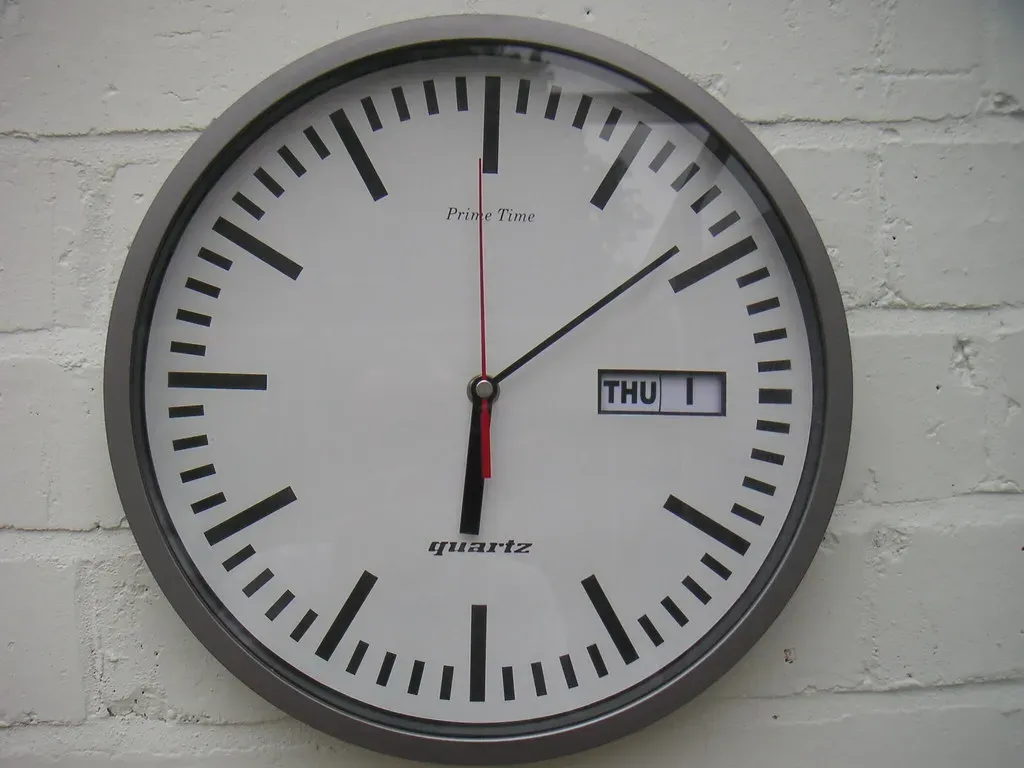
A ticking clock is perhaps the most metronomic sound in daily life – perfectly regular, endlessly repeated. Yet the way your brain processes it is anything but simple. You don’t hear a clock tick at the same rate all the time. Your perception of its rhythm changes based on your emotional state, your level of focus, and even whether you’re anxious about a deadline.
Many studies have been conducted to identify the relationship between acoustics and cognition, known as psychoacoustics, in which what you hear is a combination of perception and biological factors. The information intercepted by the passage of sound waves through the ear is understood and interpreted through the brain, emphasizing the connection between the mind and acoustics. That ticking clock isn’t just a neutral metronome. Your brain is actively re-interpreting it based on what else is going on upstairs.
Psychological changes have been seen as brain waves slow down or speed up as a result of varying auditory stimuli, which can in turn affect the way you think, feel, or even behave. A clock ticking when you’re relaxed sounds different from the same clock ticking when you’re running late for something important. The sound hasn’t changed. You have. That’s genuinely fascinating when you think about it.
9. Chewing: The Most Underestimated Acoustic Event in Your Day

Let’s be real – most people would list chewing as one of the least interesting sounds imaginable. Yet your jaw, teeth, saliva, and food are generating a surprisingly complex acoustic performance with every bite. Depending on the food’s texture, moisture content, and density, the sounds produced span a wide range of frequencies, all of which your brain analyzes in real time to judge whether the food is fresh, safe, and palatably textured.
Texture and sound are so deeply linked in your eating experience that researchers have demonstrated you can be tricked into thinking food is crunchier or staler simply by amplifying or reducing the sound of eating through headphones. How you perceive sound, like many things associated with human psychology, is a strange and murky world that is not completely understood by scientists. You often swear that certain sounds, which can be scientifically demonstrated to be the same volume as others, are louder. It plays on each person’s unique cocktail of perception and psychology.
There’s also the neurological dimension. For an estimated 5 to 20 percent of people, sounds like chewing or breathing are much more than just noise. These individuals experience what is known as misophonia, a real neurological response where ordinary sounds like chewing can trigger intense emotional and physiological reactions completely disproportionate to the situation. The sound of someone eating lunch is, for some brains, genuinely overwhelming.
10. Silence: The Sound That Isn’t, and Why Your Brain Invents One Anyway

Here’s the one that tends to genuinely surprise people. Silence isn’t the absence of experience. It’s something your brain actively constructs and fills. Sounds bombard you from every direction in the modern world. It doesn’t matter whether you’re in your home, your office, or sitting in traffic. Even when you’re enjoying serenity deep in nature, sound is all around you. True silence, the kind you’d experience in a professionally designed anechoic chamber, is something most human beings find deeply uncomfortable.
Anechoic chambers reveal that total silence amplifies our internal sounds like heartbeat and breathing, proving that the brain craves ambient noise for comfort. When external sound disappears, your nervous system doesn’t simply go quiet along with it. Instead, it amplifies its own internal signals to fill the gap, which is why people in totally silent environments quickly begin hearing their own pulse, their own breathing, and even the faint hiss of their own nervous system firing.
Acoustic characteristics explain approximately 4% of the fluctuation in mean heart rate throughout the day. Specifically, increases in ambient sound pressure intensity are significantly related to increases in mean heart rate. Increases in ambient sound quality, that is, more favorable signal-to-noise ratios, are associated with decreases in mean heart rate. What this means for you is that the sounds you choose to surround yourself with, or avoid, are subtly shaping your body’s stress response all day long, even when you don’t realize it’s happening.
Conclusion: You’ve Been Living in a Sound Universe You Never Knew Existed
Every single sound covered here is something you’ve encountered today. Rain. Your heartbeat. Someone chewing nearby. The clock on the wall. None of them are simple. Not even close. Beneath each familiar sound lies an entire architecture of physics, biology, and neuroscience that most of us never stop long enough to appreciate.
The more you understand how sound actually works, the stranger and more beautiful the ordinary world becomes. The science of sound is a fascinating and multifaceted field that touches nearly every aspect of your life. From the physics of sound waves to the art of music, sound shapes your world in profound and often unnoticed ways. You’re not just passively hearing these sounds. Your brain is decoding, filtering, distorting, and emotionally responding to all of them simultaneously.
So the next time you hear rain hit a window or a fire crackle in a hearth, take just a moment to consider the extraordinary complexity hiding inside that ordinary moment. What’s the most surprising sound on this list for you? Drop your thoughts in the comments – genuinely curious what caught you off guard.