
Nature has always been the world’s most creative engineer. Long before comic books invented Iron Man or Spider-Man, the animal kingdom had already quietly perfected abilities so extraordinary that they make our greatest human achievements look almost humble. You might think you know your wildlife, but the creatures on this list are genuinely in a different league.
Some of these animals are tiny enough to fit on the tip of your finger. Others lurk in rivers or shallow ocean floors. What they all share is an ability that science is still scrambling to fully understand. Honestly, prepare to feel a little outclassed. Let’s dive in.
1. The Tardigrade: Nature’s Indestructible Micro-Bear
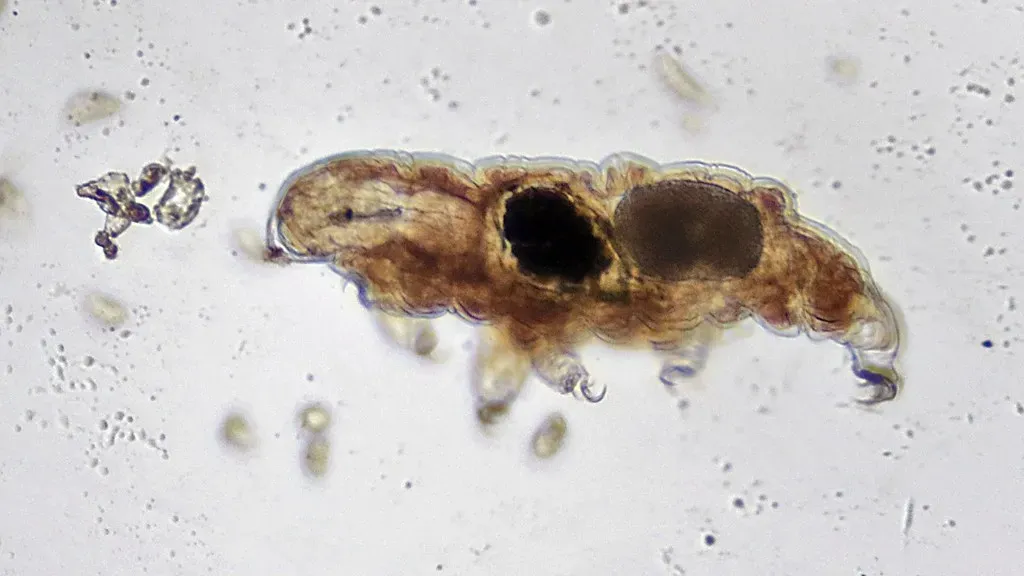
Let’s be real. If you had to bet on which creature would survive the end of the world, a bear? A crocodile? No. Your safest bet is an eight-legged microscopic animal barely half a millimeter long. Tardigrades are microscopic eight-legged animals that have been to outer space and would likely survive the apocalypse. That’s not a metaphor. That’s literal scientific fact.
Tardigrades can live in a wide variety of environments because they enter an almost death-like state called cryptobiosis. To enter cryptobiosis, a tardigrade squeezes out more than 95% of the water from its body, retracts its head and legs, and curls into a dried-out tun. Think of it as the ultimate survival shutdown. Like a computer completely powering off rather than just sleeping, except it can wake back up decades later.
In terms of radiation, tardigrades can survive doses of X-rays a thousand times higher than the lethal dose for humans. Their resistance to enormous pressures has also been tested for several hours, and they survive being crushed by a weight equivalent to a 60,000-story building. Still think you’re tough?
When researchers exposed tardigrades to the vacuum of space, cosmic radiation, and temperature extremes aboard the European Space Agency’s FOTON-M3 mission, many survived and even reproduced afterward. That’s not just surviving space, it’s thriving in an environment more hostile than anywhere on Earth. Scientists are now studying their unique proteins to help protect human cells from radiation damage and even explore new methods of organ preservation.
2. The Axolotl: The Master of Regeneration
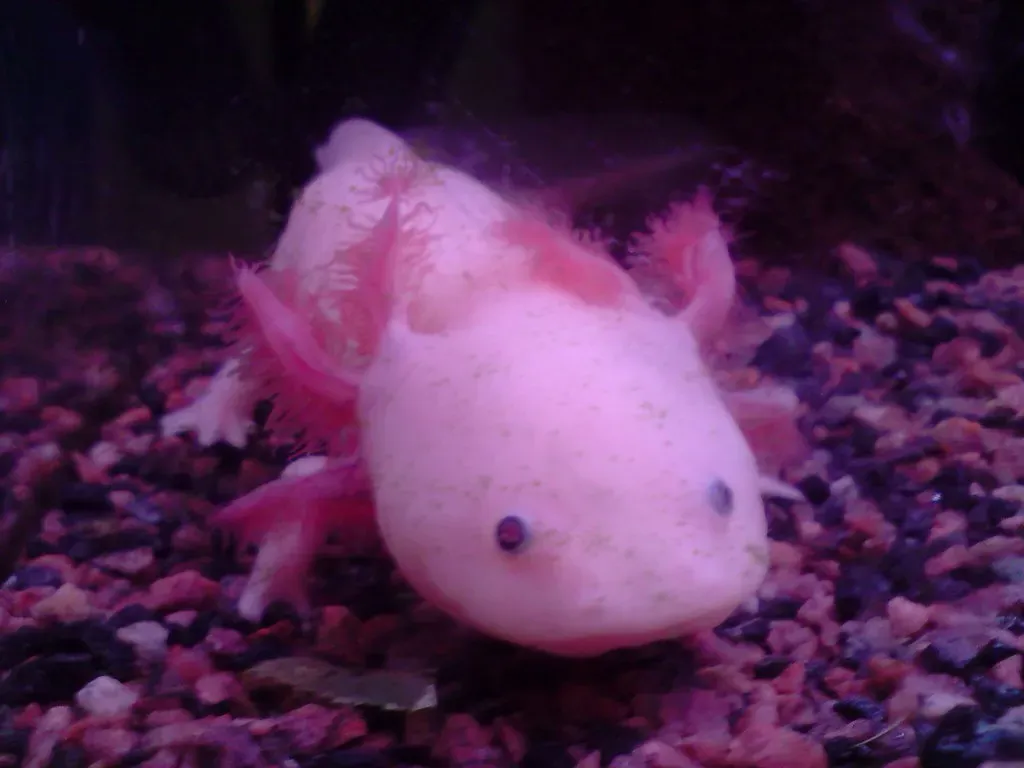
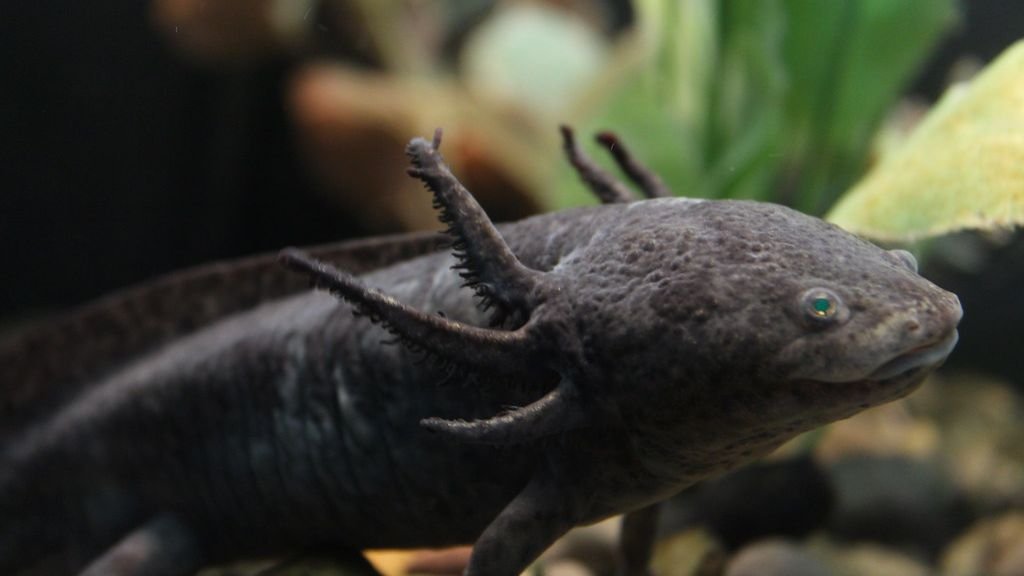
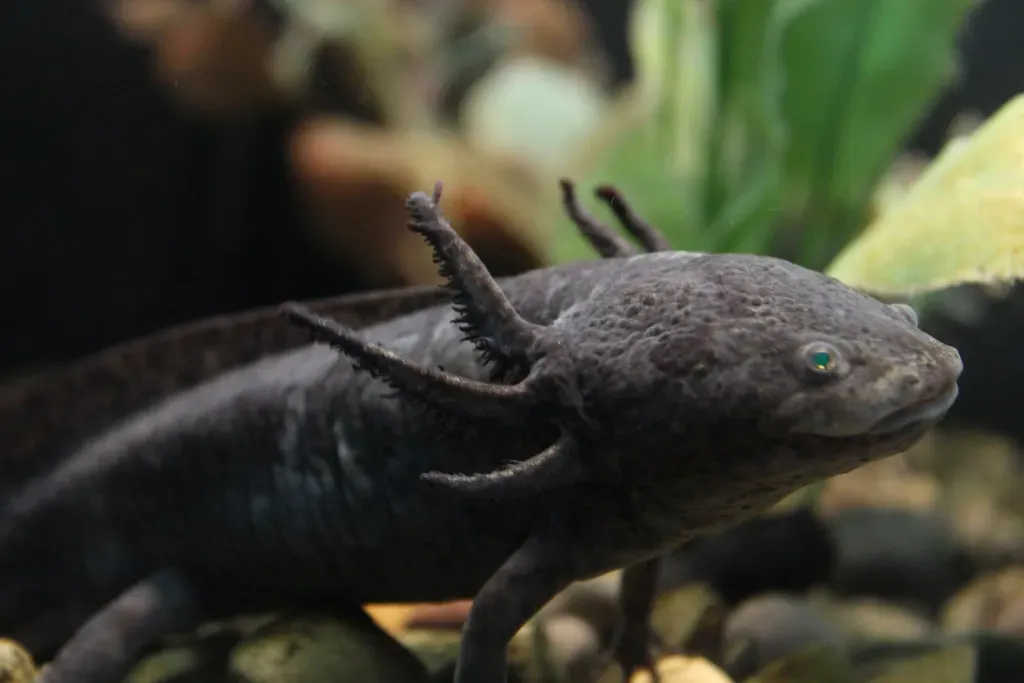
You’ve heard of healing. You’ve probably never experienced anything quite like what the axolotl pulls off on a regular Tuesday afternoon. These adorable salamanders, found in the canals of Mexico City, have the remarkable ability to regrow limbs, tails, and even parts of their heart and brain. Scientists are still trying to understand the secrets behind this incredible feat, but it holds great promise for future medical advancements.
When the axolotl loses a leg or tail, the wound doesn’t scar. Instead, cells at the site revert to a stem-like state, forming a blastema, a miniature limb-making factory that reconstructs bones, muscles, nerves, and skin with flawless precision. Within a few weeks, a fully functional limb re-emerges, complete with digits and joints. No scar. No rough patch. Just a perfect, brand-new limb.
Scientists have observed axolotls regenerating up to five times on the same limb without losing fidelity. That’s like repeatedly tearing apart the same Lego structure and rebuilding it perfectly every single time. It sounds impossible, yet there it is.
Humans carry a similar genetic toolkit, but their regulation and activity are vastly different. While axolotls can reactivate these genes for full regeneration throughout their lives, humans likely express them only during embryonic development. In other words, you used to have this power. You just forgot how to use it.
3. The Mantis Shrimp: The Ocean’s Deadliest Puncher with Superhuman Vision
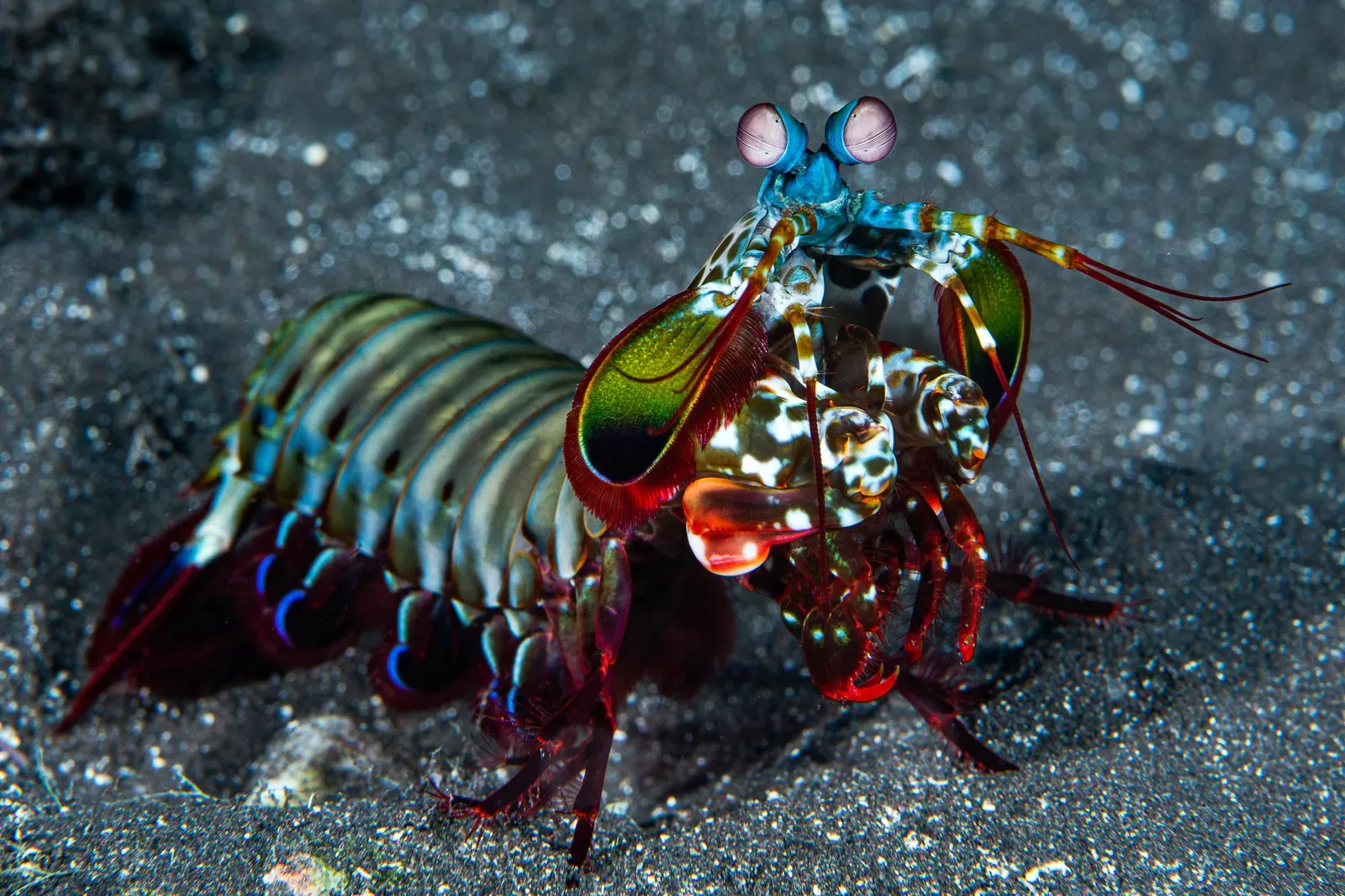
I think the mantis shrimp might be the single most absurdly overpowered creature on Earth. It doesn’t just have one superpower. It has two, and both of them belong in a Marvel film. The mantis shrimp’s superpower lies in its punch’s sheer speed and force, the fastest strike in the animal kingdom. Its spring-loaded club can accelerate underwater at over 10,000 times the force of gravity and reach speeds of 23 meters per second. At impact, it delivers a blow exceeding 1,500 newtons, powerful enough to crack open crab shells or shatter aquarium glass.
The strike is so rapid it causes cavitation bubbles, pockets of vapor that collapse with a flash of light and a second shockwave, doubling the damage. So even if the punch itself somehow missed, the resulting shockwave still hits. This animal does not miss.
Then there are the eyes. Mantis shrimp are thought to have the most complex eyes in the animal kingdom and the most complex front-end for any visual system ever discovered. You process color through three types of photoreceptors. You think that’s enough? Well.
Mantis shrimps see the world through 12 channels of color, while humans can process three channels of color. They can also discern UV light and polarized light, aspects of light humans cannot perceive with the naked eye. Researchers are already studying the mantis shrimp’s eye structure to develop cameras capable of detecting cancerous tissue that is invisible to ordinary human vision.
4. The Tardigrade’s Ocean Counterpart: The Pistol Shrimp and Its Sun-Hot Weapon
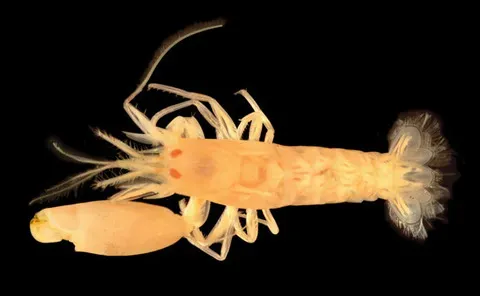
Here’s the thing. The ocean seems to specialize in tiny creatures with wildly disproportionate power. The pistol shrimp is barely a few centimeters long, yet it carries what scientists call one of the most extreme weapons in the natural world. Pistol shrimps are known for their astonishing ability to produce shockwaves underwater. They deploy this skill to defend their mates and homes from potential threats. The sudden release of water between their claws creates a vortex-like motion, which generates powerful shockwaves that can repel or injure intruders.
What actually happens during that snap is almost unbelievable. The water squirts at a speed of roughly 60 mph, fast enough to cause cavitation. It produces a bubble that quickly collapses due to the surrounding water pressure, squashing the gaseous water vapor inside. That collapse generates a temperature spike that rivals the surface of the sun, if only for a tiny fraction of a second.
This causes a remarkable increase in pressure and an extraordinary increase in temperature. In fact, the bubble reaches some 4,700 degrees Celsius, just under the Sun’s estimated surface temperature. A shrimp smaller than your thumb is momentarily generating temperatures comparable to a star. Let that sink in.
The pistol shrimp makes use of a shockwave that emanates from the collapsing bubble, like a reusable, handheld stun grenade. It’s reusable. It stuns or kills prey instantly. Some species even partner with goby fish in a remarkable symbiotic arrangement, where the goby acts as a lookout in exchange for shelter inside the shrimp’s burrow.
5. The Electric Eel: A Living Battery That Can Light Up a City Block
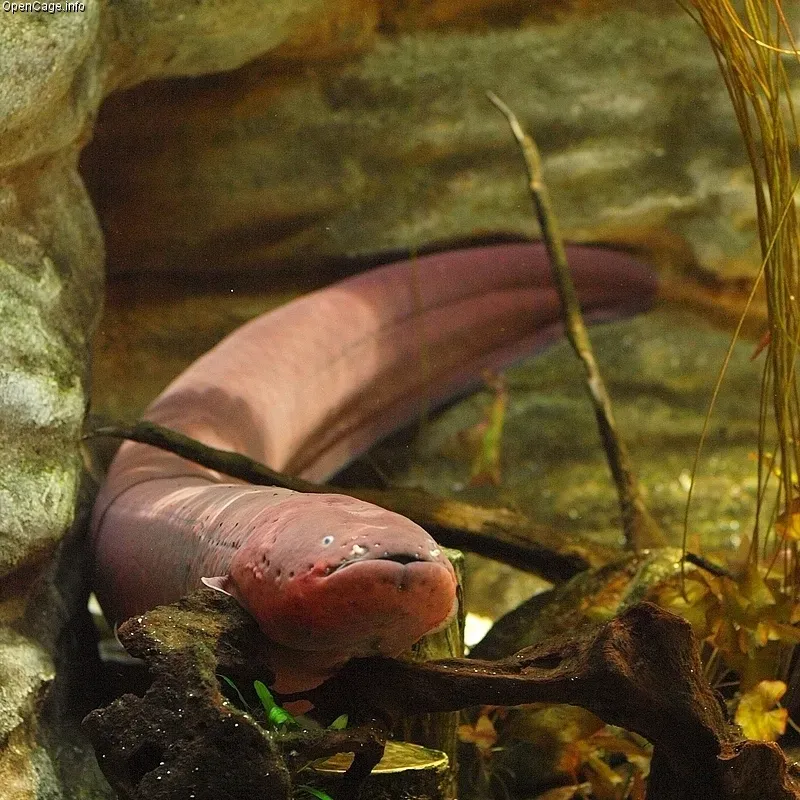
Somewhere in the rivers of the Amazon Basin, a creature slides through muddy water carrying enough electrical power to stun a horse. Electric eels are neotropical freshwater fish from South America, known for their ability to stun their prey by generating electricity and delivering shocks at up to 860 volts. That’s roughly eight times the voltage of a standard wall socket. Not from a power plant. From a fish.
When an electric eel identifies prey, its brain sends a nerve signal to the electric organ. The nerve cells release the neurotransmitter acetylcholine to trigger an electric organ discharge. This opens ion channels, allowing sodium to flow into the electrocytes, reversing the polarity momentarily. By causing a sudden difference in electric potential, it generates an electric current in a manner similar to a battery. Evolution essentially invented the battery millions of years before Alessandro Volta got around to it.
Electric eels use high voltage to track and control prey, as well as to exhaust prey by causing involuntary fatigue through remote activation of prey muscles. Their most astonishing behavior is the leaping attack, during which eels emerge from the water to directly electrify a threat. They actually leap out of the water to shock threats. This is not science fiction. This is a real river fish.
In 2008, scientists designed artificial cells that could replicate the electrical behavior of electric eel electrocytes. These artificial electrocytes would use a calculated selection of conductors at a nanoscopic scale, using ion transport with greater output power density. Scientists suggest such artificial electrocytes could be developed as a power source for medical implants such as retinal prostheses and other microscopic devices. The eel is literally powering the future of medicine.
6. The Naked Mole Rat: Immune to Cancer and Practically Defying Age
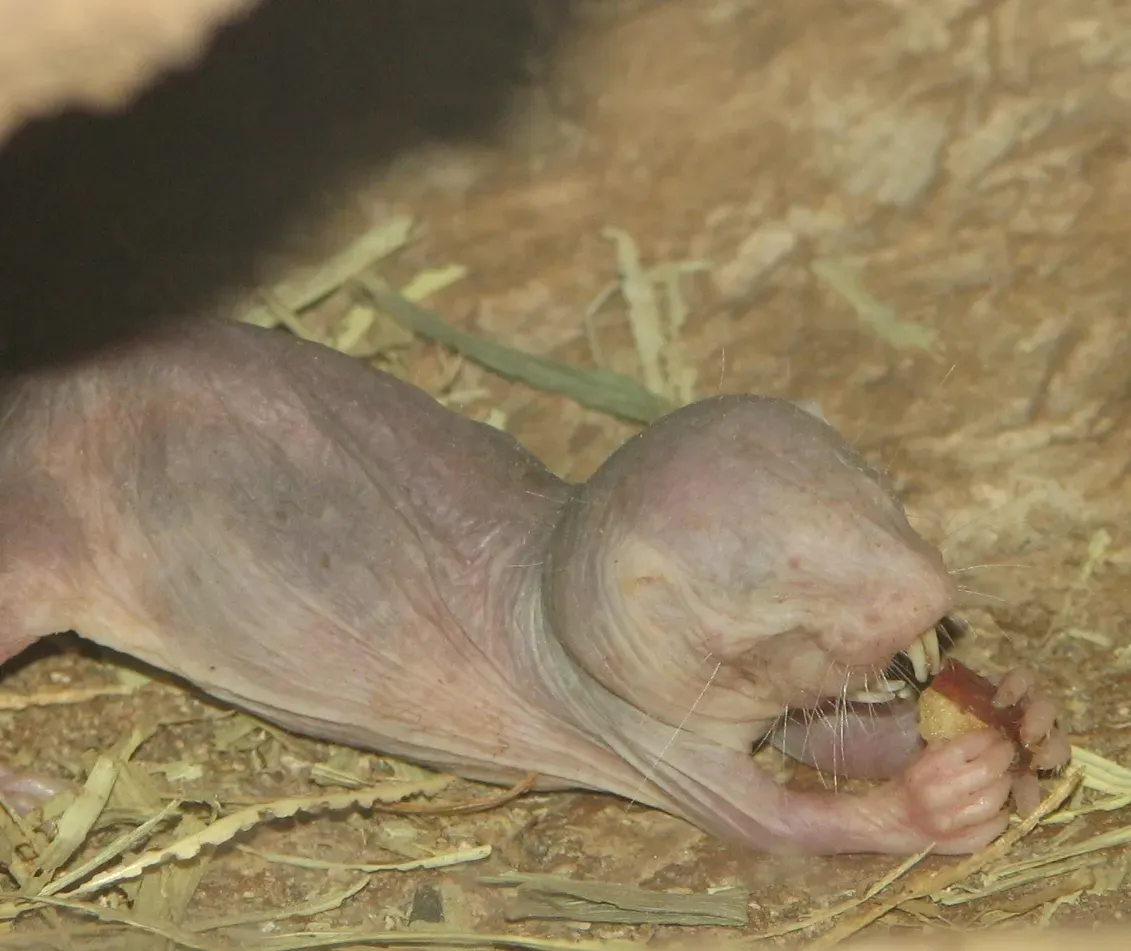
You might look at a naked mole rat and see a wrinkled, somewhat unsettling little creature. Scientists look at one and see a biological miracle. The naked mole rat’s superpower is its ability to survive without oxygen, a trait unheard of in mammals. Native to East Africa’s low-oxygen underground tunnels, this wrinkled rodent can endure up to 18 minutes without any oxygen by switching its metabolism from glucose to fructose-driven glycolysis, a process more commonly found in plants. This allows vital organs like the brain and heart to function even when air runs out. Plants do something similar. A mammal doing it is extraordinary.
Naked mole rats live for over 30 years, roughly ten times longer than similar-sized rodents, and show an extraordinary resistance to cancer. Scientists attribute this to their tissues being rich in high-molecular-mass hyaluronan, a sugar-like molecule that prevents uncontrolled cell growth. For context, a mouse of comparable size lives about two to three years and frequently develops tumors. The naked mole rat laughs in the face of both aging and cancer.
Naked mole-rats’ exceptional resistance to cancer is thanks to unique conditions in their bodies that stop cancer cells multiplying, according to new research. Researchers are actively investigating whether those same molecular conditions could be replicated or triggered in human cells.
Together, these traits make the naked mole rat a biological anomaly, a mammal that thrives where oxygen is scarce, cancer is rare, and age seems to slow down. If you could bottle what makes this creature tick and apply it to humans, you’d be looking at one of the most revolutionary medical breakthroughs in history.
7. The Mimic Octopus: The World’s Greatest Shapeshifter and Actor
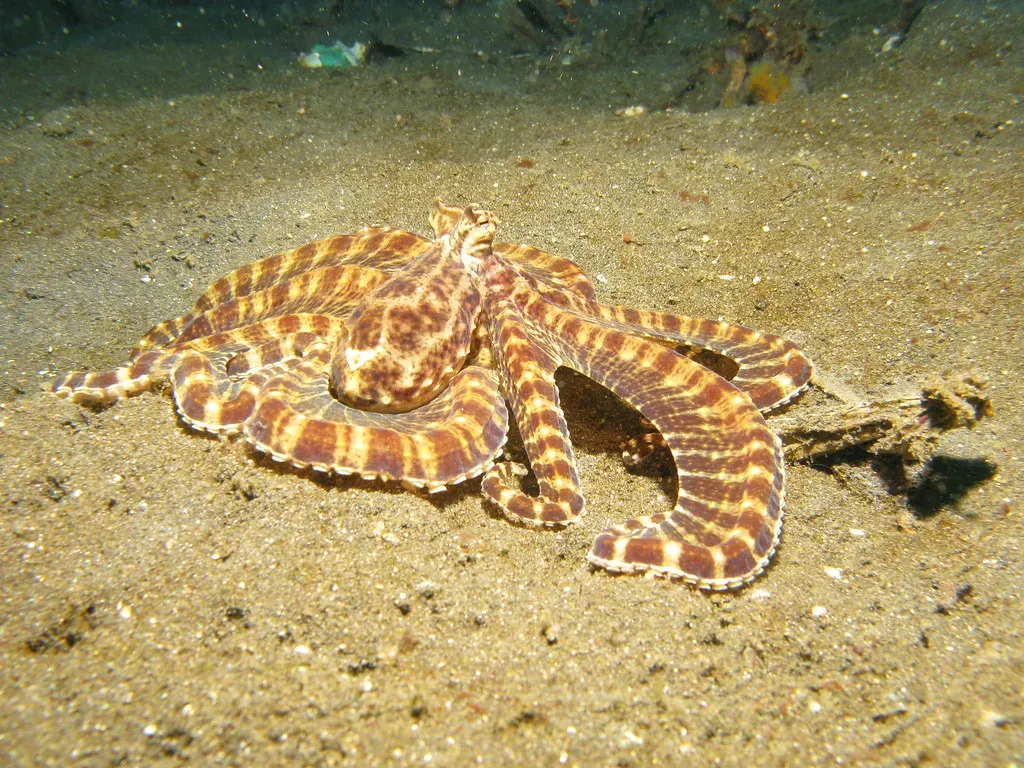
Most animals try to blend in with their surroundings. The mimic octopus takes an entirely different approach. It decides to simply become a completely different animal whenever it feels like it. The mimic octopus isn’t just good at blending in, it’s also a good actor. On open sand flats with nowhere to hide, it reshapes its body and choreographs movements to impersonate venomous locals like lionfish, sea snakes, and flatfish, discouraging predators that might otherwise attack.
The trick relies on ultra-fast control of chromatophores for color and pattern, papillae for texture, and posture to sculpt convincing silhouettes, sometimes switching characters mid-scene. Divers first documented this behavior in Indonesia, noting the octopus goes out searching for food in full view. Think about that. It actively goes hunting out in the open, because it can switch disguises on the fly faster than any predator can react.
This isn’t just camouflage in the traditional sense. Blending into a background is one thing, like hiding behind a curtain. Actively imitating the body shape, color pattern, and movement style of a completely different venomous species is something far more sophisticated. It’s essentially live-action method acting from an animal with no rigid skeleton and a brain distributed throughout its arms.
The study of these remarkable abilities has profound implications for science and technology. Biomimicry, the design of materials and structures modeled on biological entities, has looked to such creatures to develop advanced adaptive materials and optical technologies. The octopus’s skin alone has inspired an entirely new field of research into flexible, color-shifting materials for everything from military camouflage to medical devices.
Conclusion: Nature Was Always Ahead of Us
Honestly, spending time with these seven animals puts human ingenuity into a fascinating kind of perspective. We spend billions developing regenerative medicine while the axolotl regrowing a perfect limb for the fifth time doesn’t even break a sweat. We race to build weapons while a shrimp smaller than your thumb generates temperatures near those of the sun. We struggle to understand cancer while a wrinkled little rodent in East Africa seems to have solved it already.
Studying them is more than fascination. It offers insight into biology’s limits, pathways to innovation, and a deeper respect for biodiversity. As humans face global change and environmental stress, protecting these remarkable creatures and their habitats means preserving not just species, but biological superpowers refined by evolution. Each one is a living library of solutions that took millions of years to perfect.
The most humbling thought? It’s estimated that between 8 and 10 million animal species exist on Earth, and only about 1.5 million have been cataloged. That means the creatures on this list might not even be the most incredible ones out there. Which of these seven left you the most speechless? Tell us in the comments below.