A Meticulous Year of Observations (Image Credits: Unsplash)
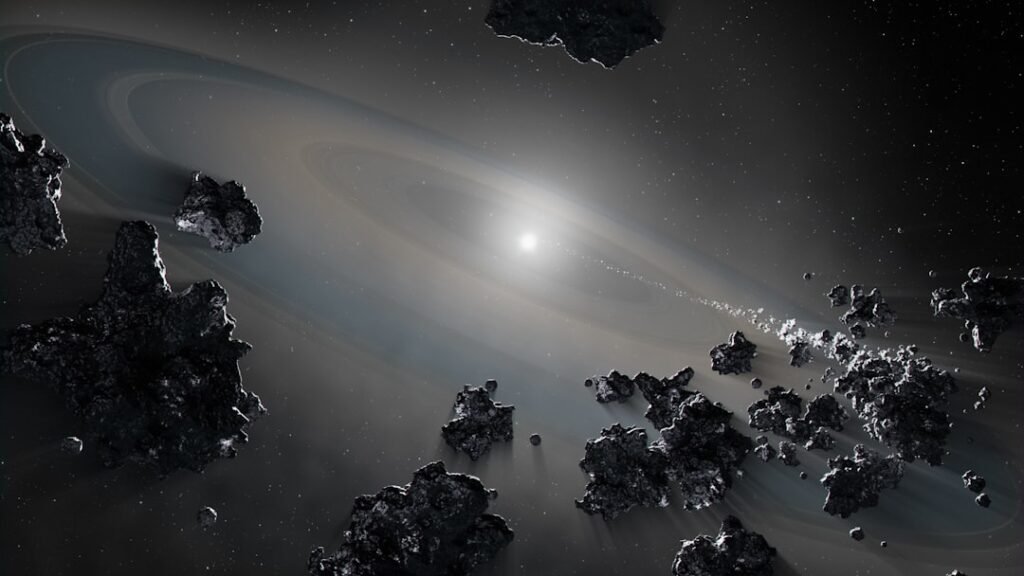
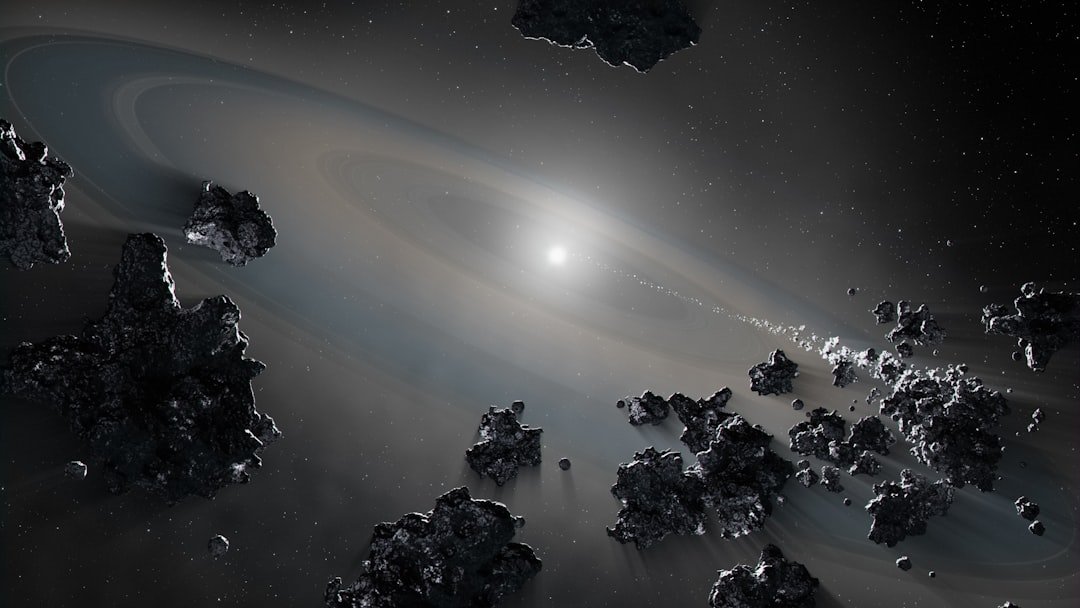
Nanjing, China – An international team of astronomers completed a year-long campaign that classified 80 near-Earth asteroids, providing fresh data on their compositions, evolutionary paths, and potential risks to Earth.[1][2]
A Meticulous Year of Observations
Researchers from the Purple Mountain Observatory of the Chinese Academy of Sciences spearheaded the effort from October 2023 to October 2024. They gathered data using the Johnson-Cousins BVRI photometric system on two key telescopes.[3]
The Yaoan High Precision Telescope in China and the 1.88-meter telescope at Egypt’s Kottamia Astronomical Observatory captured images of dozens of these elusive objects. After careful calibration and reduction, the team derived color indices for 84 asteroids and secured taxonomic classifications for 80. This approach targeted small, faint near-Earth asteroids, which prove challenging due to their brief visibility windows post-discovery.[1]
Taxonomic Diversity Emerges
Nearly half of the classified asteroids, 46.3 percent, fell into the S-complex category, characterized by stony, silicate-rich surfaces. The C-complex, known for darker, carbon-rich materials, accounted for 26.3 percent, while 15 percent belonged to the metallic X-complex and 6 percent to the reddish D-complex.[2]
A handful registered as rare A-type or V-type bodies. The breakdown highlights a broad mix mirroring main-belt asteroids but with notable shifts in smaller sizes.
- S-complex: 37 asteroids (46.3%)
- C-complex: 21 asteroids (26.3%)
- X-complex: 12 asteroids (15.0%)
- D-complex: 5 asteroids (6.0%)
- A-type: 1 asteroid
- V-type: 4 asteroids
Patterns in Size and Orbits
Smaller asteroids, those with absolute magnitudes greater than 17.0 or roughly sub-kilometer diameters, showed higher proportions of C- and X-complex types – nearly double those in larger bodies. X-complex objects clustered prominently at sub-kilometer scales, unlike the more even spread of C- and S-complex across sizes.[3]
Orbital analysis added depth. Asteroids with Jovian Tisserand parameters below 3.1 featured dominant C- and D-complex members, pointing to possible cometary roots. One standout, asteroid 385268, displayed spectral traits akin to Jupiter-family comets and dynamical links to the Themis family in the main belt via Jupiter’s 2:1 resonance.[1]
These findings suggest varied delivery mechanisms, collisional histories, and surface alterations shape the near-Earth population.
Hazards and Defense Considerations
The sample included 13 potentially hazardous asteroids, whose paths bring them perilously close to Earth. Five belonged to the porous C-complex and five to the sturdier S-complex – an even split that diverges from prior emphases on S-types.[2]
| Complex | Potentially Hazardous Asteroids |
|---|---|
| C-complex | 5 |
| S-complex | 5 |
| Others | 3 |
C-complex bodies, being structurally weaker, complicate kinetic impact strategies central to planetary defense. Such targets may respond less predictably to deflection efforts, urging refined mission designs.
Key Takeaways
- S-complex dominates overall, but C/X rise among smaller asteroids.
- Low Tisserand values link some to dormant comets.
- Balanced C/S split in hazards demands diverse defense approaches.
Future Horizons
The survey, detailed in Earth and Planetary Physics, expands secure classifications for faint objects and constrains models of Solar System dynamics.[3] Researchers aim to probe fainter targets and integrate infrared data for precise sizes, albedos, and mineralogy. These steps will further illuminate how asteroids migrate from distant reservoirs to threaten or inform our cosmic neighborhood.
This work underscores the dual role of near-Earth asteroids as scientific windows and vigilance priorities. What do you think about these findings and their defense implications? Tell us in the comments.