
Imagine standing in a concert hall while an orchestra performs, yet you can hear only a tiny fraction of the instruments playing. The violins reach you clearly, but the percussion, the cellos, the horns – all muffled or entirely silent to your ears. That is, more or less, where humanity stands right now in its understanding of the cosmos. The universe is playing an entire symphony around you, and your instruments are only beginning to pick up the other sections of the orchestra.
What you can see, touch, and measure makes up a startlingly small portion of everything that exists. The rest – forces, matter, energies – operates in the background, shaping galaxies, bending space, and determining the fate of everything. The hunt to detect these hidden players is the most thrilling scientific pursuit of our age, and the discoveries coming in right now are extraordinary. So let’s dive in.
The Invisible Scaffolding: Dark Matter and What It Holds Together
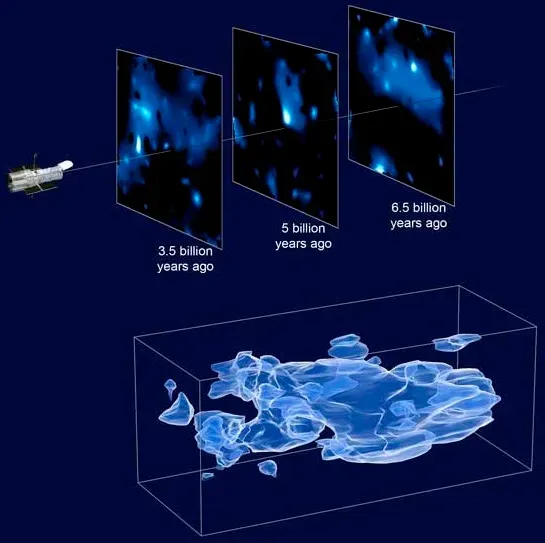
Here’s something that should stop you cold: the matter you can see in every star, planet, galaxy, and nebula – all of it combined – accounts for a tiny fraction of the universe’s total mass. Dark matter makes up most of the mass found in galaxies and galaxy clusters, playing a major role in shaping their structure across vast cosmic distances, while dark energy refers to the force behind the universe’s accelerating expansion. Put simply, dark matter acts like cosmic glue, while dark energy drives space itself to expand faster and faster. You live inside a structure held together by something you cannot see, touch, or directly detect.
Dark matter may be invisible, but scientists are getting closer to understanding whether it follows the same rules as everything we can see. By comparing how galaxies move through cosmic gravity wells to the depth of those wells, researchers found that dark matter appears to behave much like ordinary matter, obeying familiar physical laws. Still, a nagging possibility lingers at the edge of every experiment. The possibility of a hidden fifth force lingers, one that must be very weak to have evaded detection so far. The scaffolding holding your universe together may be governed by rules we haven’t fully written yet.
Closing In on the Ghost: The Race to Detect Dark Matter Particles
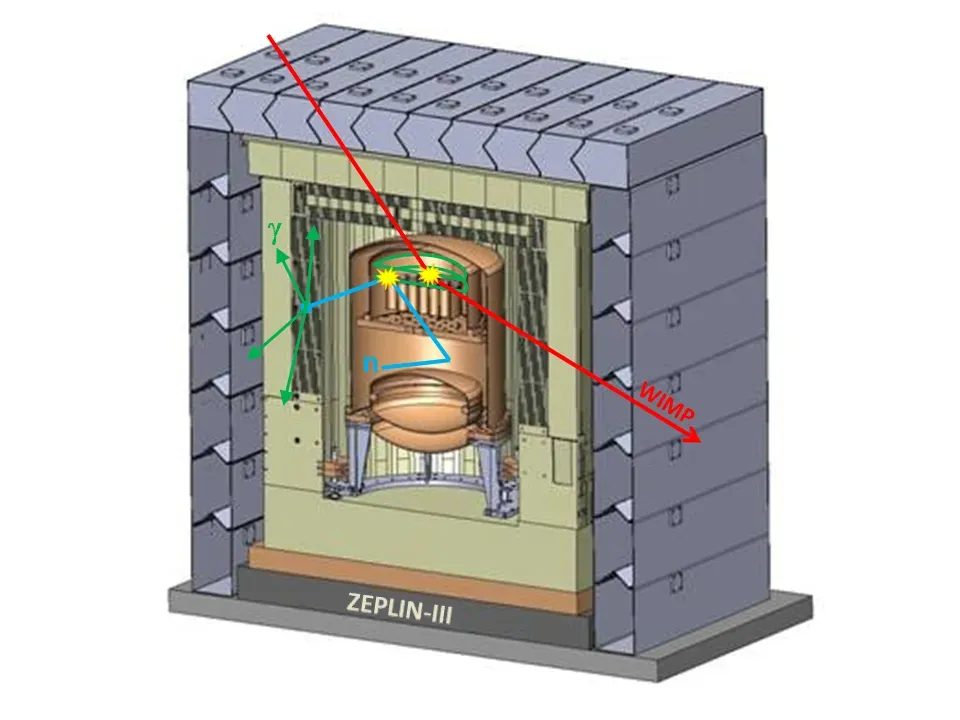
Nearly everything in the universe is made of mysterious dark matter and dark energy, yet we can’t see either of them directly. Scientists are developing detectors so sensitive they can spot particle interactions that might occur once in years. Think about that for a moment. You are building a machine to catch something that might tap on your detector once in a decade. It is a little like setting a mousetrap and waiting ten years for the mouse.
WIMPs, or Weakly Interacting Massive Particles, are considered one of the most promising possibilities for dark matter. These hypothetical particles would interact through gravity and the weak nuclear force, which explains why they are so difficult to detect. If WIMPs exist, they could account for the universe’s missing mass. Experiments such as SuperCDMS are using detectors cooled to nearly absolute zero to chase these particles. A WIMP could pass through Earth without leaving any sign at all, meaning researchers may need years of data to identify even a single event. The patience required for this science is genuinely humbling.
Gravitational Waves: The Universe’s New Messenger Service
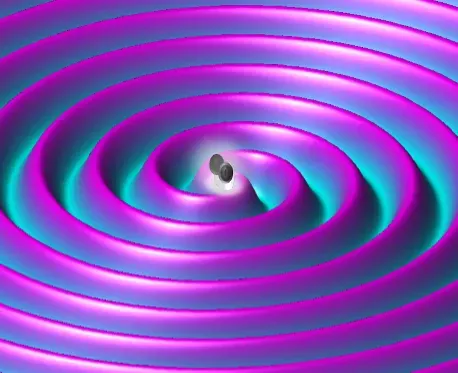
Gravitational waves are arguably the most profound detection breakthrough in modern science. They are ripples in the fabric of spacetime itself, produced when massive objects collide. Since August 2025, the gravitational wave community has reached remarkable milestones, including recording the 200th gravitational wave detection in March 2025 and detecting the most massive black hole merger to date, at 225 solar masses, in July 2025. You are living through the era when humanity first learned to hear the vibrations of spacetime. That is extraordinary by any measure.
Now, researchers are using these ripples to chase even deeper mysteries. Scientists at the University of Amsterdam have developed a new way to use gravitational waves from black holes to uncover the presence of dark matter and learn more about its behavior. Their approach relies on a detailed theoretical model grounded in Einstein’s theory of general relativity. This model carefully describes how a black hole interacts with material in its immediate environment, including dark matter that cannot be seen directly. Gravitational waves, in other words, are becoming a kind of cosmic X-ray, letting you see through the universe’s darkest curtains.
Ghost Particles and the Mystery of Why You Exist
Neutrinos are particles so shy they barely acknowledge the rest of the universe. Neutrinos are among the most puzzling particles known to science and are often called “ghost particles” because they so rarely interact with matter. Trillions pass through each person every second without leaving any mark. That’s trillions passing through you right now, as you read this. No knock, no signal, no hello. Just silence.
Yet these ghostly particles may hold the answer to one of the deepest questions in all of science: why you exist at all. In a rare global collaboration, scientists from Japan and the United States joined forces to explore one of the universe’s deepest mysteries – why anything exists at all. By combining years of data from two massive neutrino experiments, researchers took a big step toward understanding how these invisible “ghost particles” might have tipped the cosmic balance in favor of matter over antimatter. Such differences could hold the key to understanding why matter prevailed over antimatter after the Big Bang. Honestly, the fact that a particle this shy might explain your very existence is one of the most mind-bending things in all of physics.
Dark Energy: The Force That Is Tearing Everything Apart
If dark matter is the glue holding your universe together, dark energy is the force recklessly pulling everything apart. Dark energy, the mysterious force that drives the expansion of the universe to go faster and faster, was long thought to be a constant force, exerting the same outward influence over cosmic history. In 2024, data from the Dark Energy Spectroscopic Instrument, or DESI, suggested that instead, dark energy could change over time. A changing dark energy would be a genuinely seismic revelation, one that could rewrite the rulebooks of cosmology.
Some researchers are going further still, proposing that dark energy might not even exist in the way we think. A bold new theory suggests that dark matter and dark energy might not exist at all – instead, their apparent effects could stem from the universe’s fundamental forces slowly weakening over time. New research challenges the established view, suggesting these mysterious components might not exist at all. Instead, the effects we attribute to them could arise naturally if the fundamental forces of the universe slowly weaken as it grows older. It is a little like learning that the walls of the building you live in aren’t walls at all – just shadows cast by something else entirely. The implications are staggering.
The Hubble Tension: When the Universe Disagrees With Itself
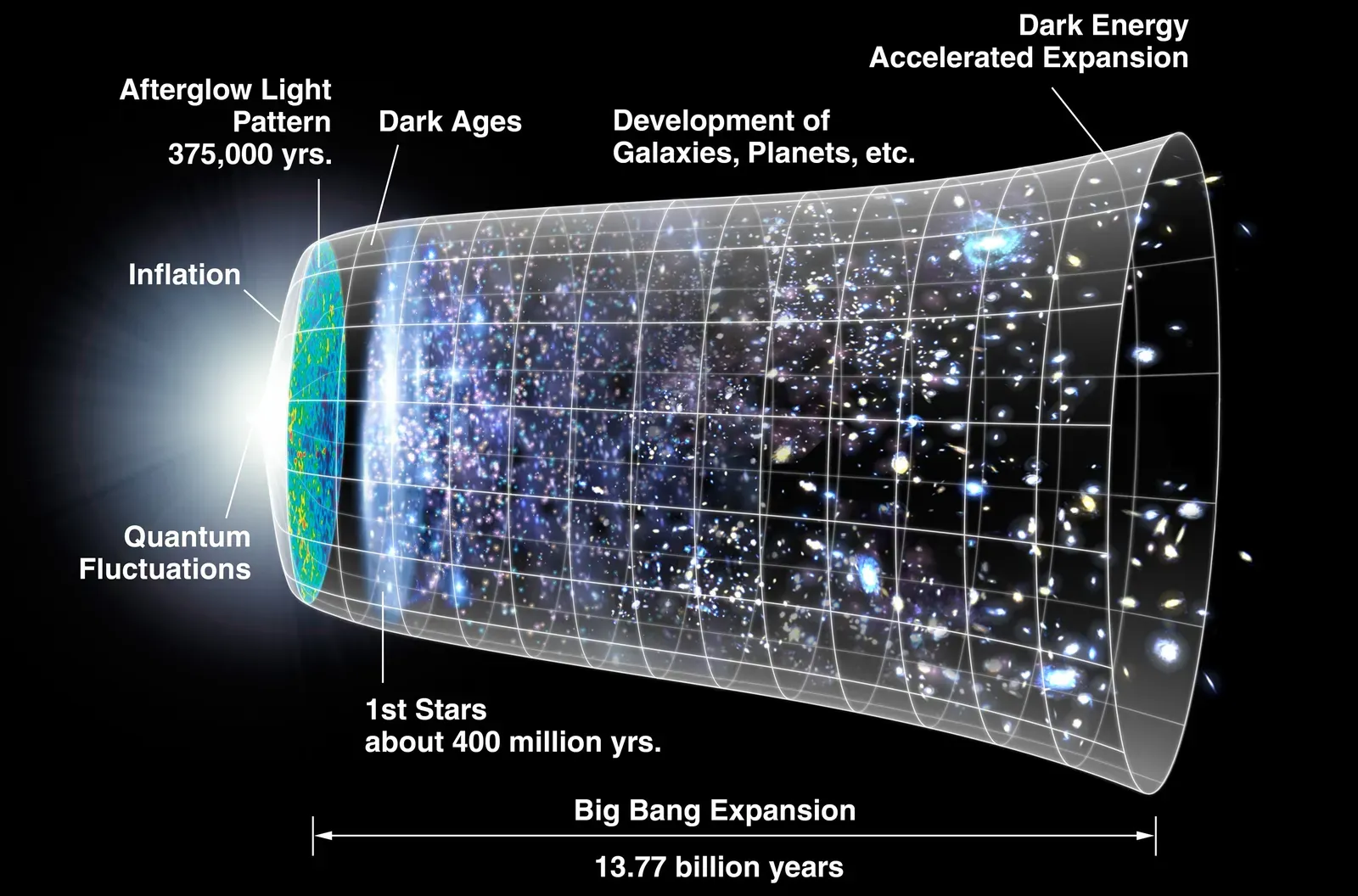
You might think scientists would agree on something as fundamental as how fast the universe is expanding. Think again. Astronomers have long known the universe is expanding – but exactly how fast remains one of the biggest mysteries in cosmology. Different techniques for measuring the Hubble constant stubbornly disagree, creating the so-called “Hubble tension.” The universe, it seems, is telling different stories to different observers. That kind of cosmic inconsistency keeps physicists awake at night.
When scientists analyze the cosmic microwave background to estimate the Hubble constant, they obtain a lower value of 67 km/s/Mpc. This mismatch between 73 km/s/Mpc and 67 km/s/Mpc is called the Hubble tension. If the tension persists, it could signal that scientists need to revise their understanding of the early universe. Proposed explanations include early dark energy, interactions between dark matter and neutrinos, or changes in how dark energy behaves over time. One especially intriguing idea comes from researchers who propose that primordial magnetic fields present in the early universe could have accelerated recombination, altering the cosmic microwave background and affecting measurements of the Hubble constant. It’s a mystery that is genuinely rewriting the textbooks.
The Next Generation of Cosmic Listening: Quantum Sensors and Space Detectors

The tools you use to listen to the universe are evolving at a breathtaking pace. Scientists are no longer satisfied with ground-based experiments alone. The SQUIRE mission aims to detect exotic spin-dependent interactions using quantum sensors deployed in space, where speed and environmental conditions vastly improve sensitivity. Orbiting sensors tap into Earth’s enormous natural polarized spin source and benefit from low-noise periodic signal modulation. You are essentially turning the entire planet into a detector, and then going further, using orbiting platforms to amplify the results.
The high-speed motion of orbiting sensors increases the coupling between axion halos and nucleon spins, producing a tenfold sensitivity improvement compared with Earth-based dark matter searches. Meanwhile, on the gravitational wave frontier, upcoming space missions, including the European Space Agency’s LISA space antenna scheduled for launch in 2035, are expected to observe gravitational wave signals for very long periods. Some events may be tracked for months or even years, covering hundreds of thousands to millions of individual orbits. When scientists can model these signals with high precision, the resulting data act like detailed “cosmic fingerprints” that reveal how matter is arranged near massive black holes. The next decade of cosmic detection promises to be unlike anything that has come before.
Conclusion
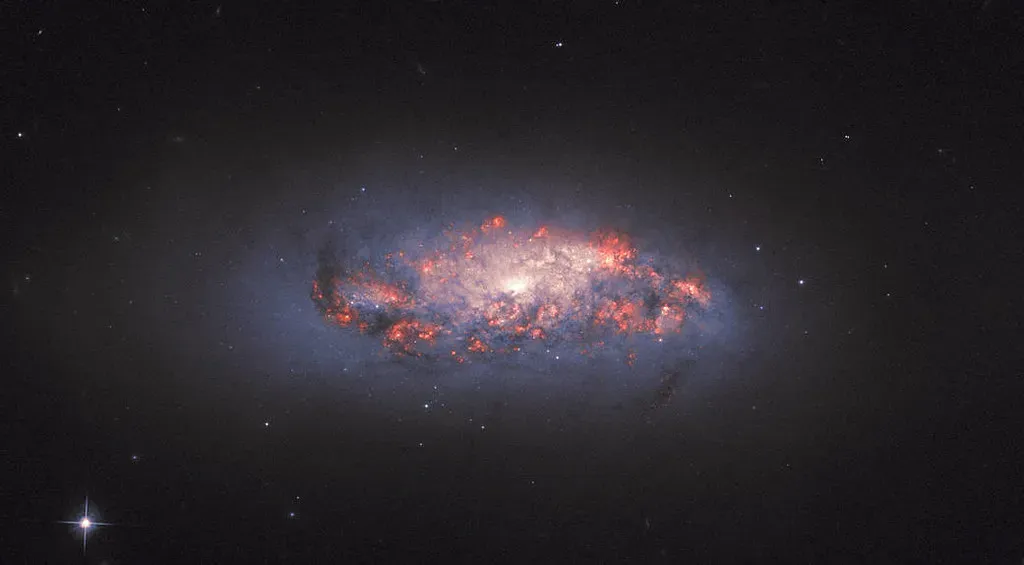
The universe is not a quiet, passive backdrop to human life. It is a roaring, churning, invisible symphony of forces that mold galaxies, dictate the existence of matter, and determine the ultimate fate of space and time. You are standing at a genuinely extraordinary moment in history, the point at which your instruments are finally becoming sensitive enough to hear the full orchestra play.
From dark matter’s ghostly grip on galaxies, to gravitational waves rippling across spacetime, to ghost particles that hold the secret of your very existence, to a universe expanding at a speed even it seems undecided about, every discovery pulls back one more curtain on a stage far grander than anyone imagined. The hidden forces are not so hidden anymore. They are whispering, and science is finally learning to listen.
What do you think the universe will reveal next? Drop your thoughts in the comments below.