Few places on Earth have fired up the human imagination quite like a patch of ocean roughly the size of Texas. You’ve probably heard the stories: planes vanishing into thin air, ships sailing into oblivion, rescue crews disappearing while searching for the already missing. It almost sounds like the plot of a blockbuster thriller, except people genuinely believe it.
The reality, though, is far more layered than any ghost story. Between hard science, human error, geography, and decades of sensationalized journalism, the Bermuda Triangle sits at a crossroads of truth and mythology. So let’s dive in – because the full picture is more fascinating than any conspiracy theory could ever be.
Where Exactly Is the Bermuda Triangle and Why Does It Even Have a Name?
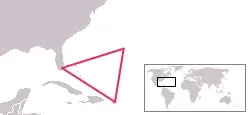
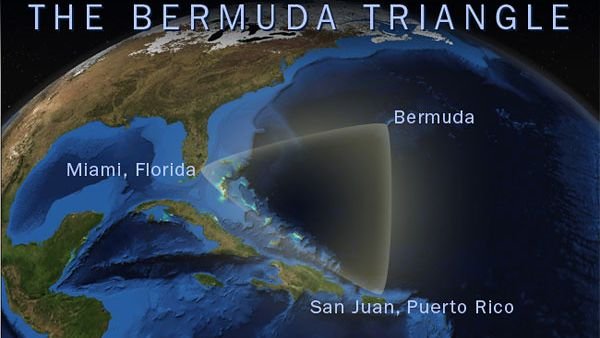
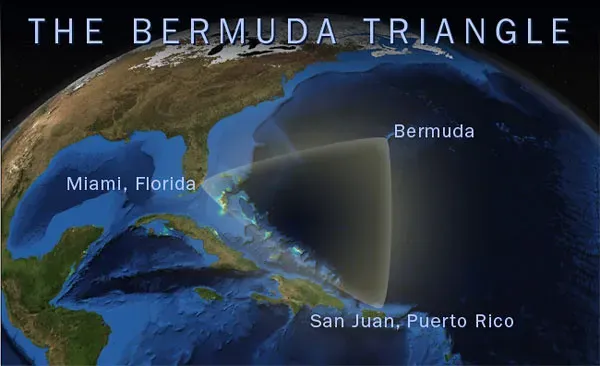
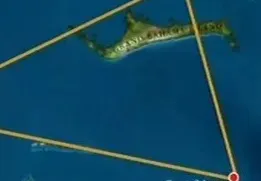
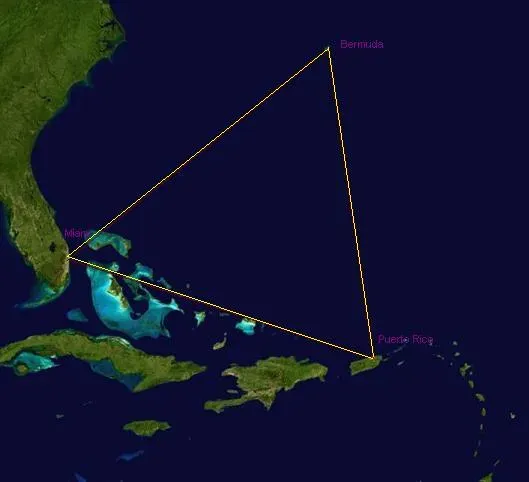
Let’s start with the basics, because there’s already something surprising right here. The Bermuda Triangle is a section of the North Atlantic Ocean where more than 50 ships and 20 airplanes are said to have mysteriously disappeared, with boundaries reaching approximately from the Atlantic coast of Florida to Bermuda, and down to the islands known as the Greater Antilles. You might assume this is an official designation on nautical charts. Honestly, it isn’t.
The Bermuda Triangle does not appear on any world maps, and the U.S. Board on Geographic Names does not recognize it as an official region of the Atlantic Ocean. The term was coined in a 1964 article from the American pulp magazine Argosy, authored by Vincent Gaddis, who illuminated a pattern of disappearing ships and planes in the area – with no explanations offered – and the aura of mystery took hold. Think about that for a second. The entire legend was essentially born from a magazine feature that raised questions and left them hanging, right there on the page.
The Most Chilling Disappearances That Built the Legend
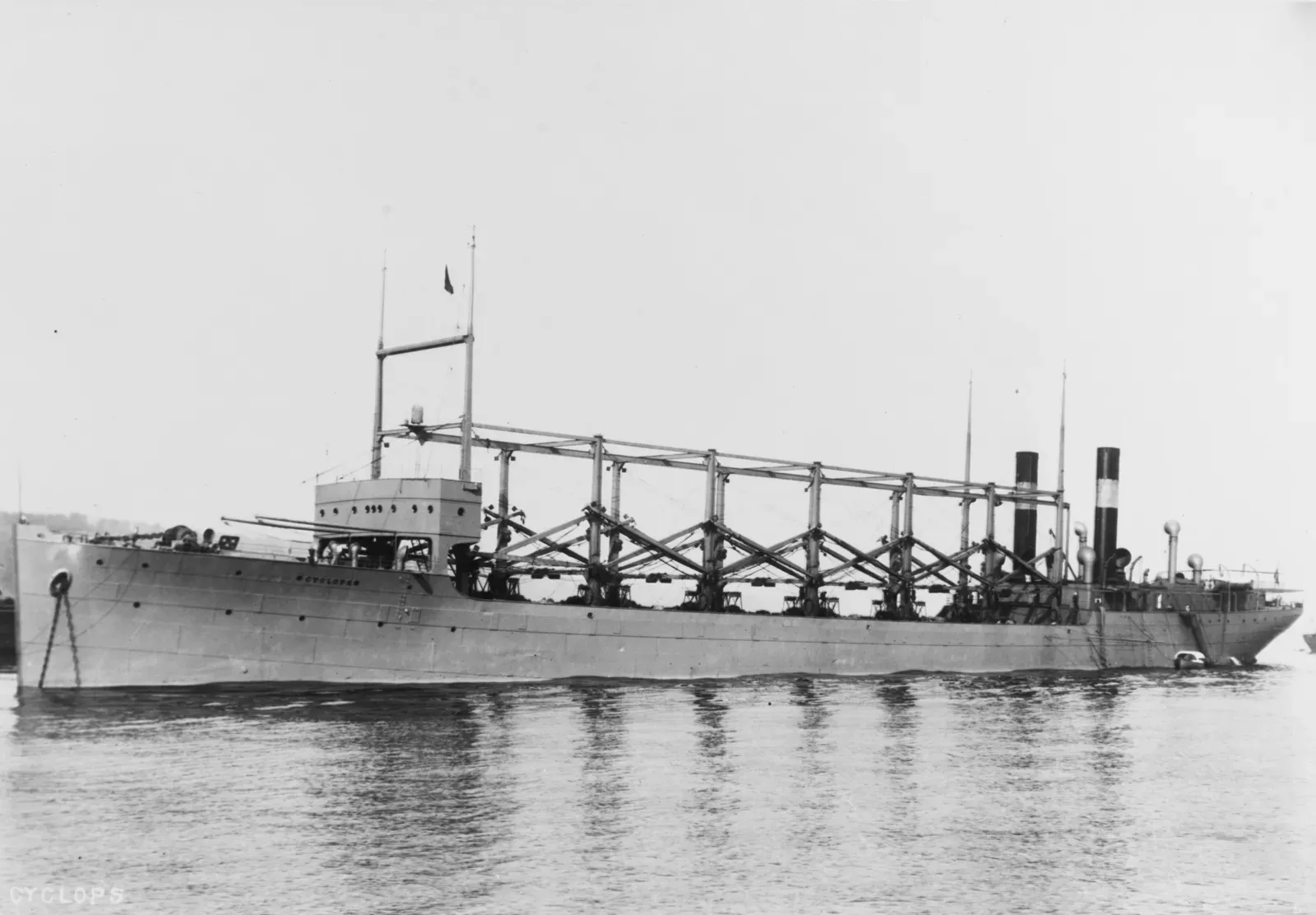
Now here’s where it genuinely gets eerie. In 1918, the USS Cyclops, a Navy supply ship with 306 crew members on board, disappeared in the Bermuda Triangle – with no explanation given and no wreckage ever found. The USS Cyclops was never recovered, nor were any of the 309 crew members, and the official Navy record described the disappearance as “one of the most baffling mysteries in the annals of the Navy.” That one is tough to shake.
The most infamous flight to disappear in the Bermuda Triangle is Flight 19. On December 5, 1945, five US Navy Avenger torpedo-bombers took off from Fort Lauderdale Naval Air Station for a routine training mission that was only supposed to cover 120 miles and take three hours. When the planes were realized to be missing, the PBM Mariner rescue aircraft was sent out to look for them – and it too vanished, with 13 airmen on board. A rescue mission disappearing while searching for the missing. You genuinely cannot make this stuff up.
The Wild Theories – From Atlantis to Alien Portals
Here’s the thing: when science leaves a gap, the human imagination runs wild. Theories about the cause of the disappearances range from the scientifically plausible, like methane gas pockets or rogue waves, to the fantastic, involving alien spacecraft or the lost city of Atlantis. In 1974, Charles Berlitz wrote a best-selling book claiming that the lost city of Atlantis was somehow responsible for the disappearances, catapulting the mystery of the Bermuda Triangle into the public consciousness. It sold millions. Millions.
UFO enthusiasts argue that the Triangle is a “Star Gate” that extraterrestrials use for intergalactic travel, and many believed that in 1945, Flight 19 may have been swept into this UFO portal. Others claimed the Triangle is the site of a space-time warp that sucks objects into a parallel universe. It’s hard not to be at least a little entertained by these ideas, even if your rational side is rolling its eyes. The fact that these theories still circulate in 2026 says everything about our deep, very human hunger for mystery.
What Science Actually Says: Rogue Waves, Magnetic Fields, and Methane
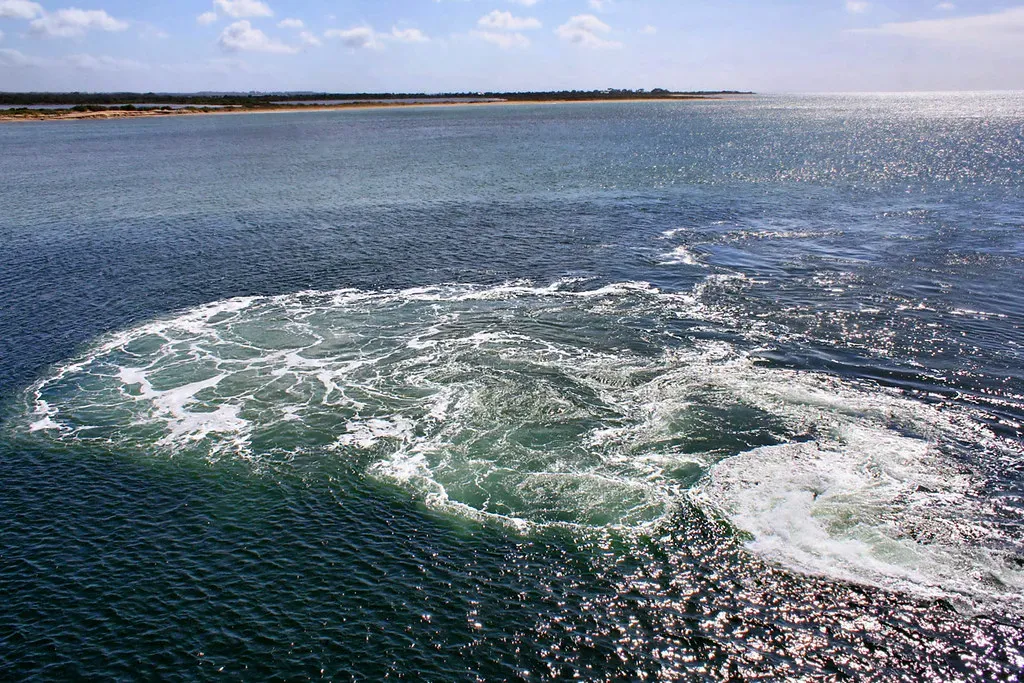
Let’s pivot to the stuff that actually holds up under scrutiny. One popular theory is that the missing vessels were felled by so-called “rogue waves,” which are massive waves that can reach heights of up to 100 feet and would theoretically be powerful enough to destroy all evidence of a ship or an airplane – and the Bermuda Triangle is located in an area where storms from multiple directions can converge, making rogue waves more likely to occur. That’s a genuinely terrifying natural possibility, even if it remains unproven specifically to the Triangle.
One of the strangest natural explanations involves bubbles of methane released from the seafloor capsizing ships. However, studies by the U.S. Geological Survey record no significant methane releases in the past 15,000 years. Some theories have suggested that the agonic line, the point where magnetic and true north are perfectly aligned, passes through the Bermuda Triangle, which could explain cases where pilots and captains claimed their compasses stopped working. However, early 18th-century scientists discovered the agonic line shifts each year, and while it did once pass through the Bermuda Triangle, it now passes through the Gulf of Mexico instead. So even the compass theory has largely sailed off course.
Debunking the Myth: How Writers Manufactured the Mystery
This is where the story gets almost more shocking than the mystery itself. Larry Kusche, author of “The Bermuda Triangle Mystery: Solved” in 1975, argued that many claims of Gaddis and subsequent writers were exaggerated, dubious, or unverifiable, and his research revealed a number of inaccuracies and inconsistencies between published accounts and statements from eyewitnesses and participants. Ships that were said to have disappeared in calm weather actually sank during storms; tales of missing vessels often ignored the fact that the wreckage was later found miles away; and some incidents never occurred at all or happened far outside the Bermuda Triangle. The whole thing reads like a slow-motion fact-check collapse.
The legend of the Bermuda Triangle is, in essence, a manufactured mystery perpetuated by writers who either purposely or unknowingly made use of misconceptions, faulty reasoning, and sensationalism. In 2013, the World Wildlife Fund conducted an exhaustive study of maritime shipping lanes and determined that the Bermuda Triangle is not one of the world’s ten most dangerous bodies of water for shipping. Think about that. The most “dangerous” stretch of ocean in popular culture didn’t even crack the top ten in a real-world risk assessment.
The Real Culprit: Human Nature, Heavy Traffic, and the Ocean Itself
Australian scientist Karl Kruszelnicki busted the myth about the high number of disappearances by stating the most common yet simple scientific fact: the Bermuda Triangle’s so-called unsolved mysteries are likely due to human error and bad weather, due to the region’s close proximity to the equator. The Bermuda Triangle is subject to frequent tropical storms and hurricanes, and the Gulf Stream, a strong ocean current known to cause sharp changes in local weather, passes directly through it. Put an inexperienced navigator in those waters before modern GPS, and you have a recipe for disaster that needs no supernatural explanation.
The true explanation for the Bermuda Triangle may ultimately reside not in the ocean but in our minds. Our minds are often biased toward bizarre or otherwise memorable events, and have trouble accurately accounting for statistical discrepancies – we’re far more likely to remember a ship that disappears with no explanation than something more ordinary like a ship sinking in a hurricane. The frenzy surrounding the Bermuda Triangle has subsided in recent years, perhaps because modern technology allows us to track ocean and air traffic with far greater precision. In other words, the mystery shrank the moment we got better at watching.
Conclusion: The Triangle Still Holds Its Grip – And Maybe That’s Okay
After all the science, the debunking, and the statistical reality checks, one thing remains undeniably true: the Bermuda Triangle still captures people’s attention in a way that few places on Earth do. The Bermuda Triangle is not, scientifically speaking, unique in its number of disappearances and shipwrecks, and the most likely explanation for its fame is an exceptional case of storytelling combined with a constant human interest in the mysterious or unexplained – because the stories latched onto the psyche of the public, just as much of folklore does.
There’s something almost poetic about that. We live in an age of satellites and real-time tracking, and yet this triangle of ocean water still makes people lean in closer. The U.S. Navy and U.S. Coast Guard contend that there are no supernatural explanations for disasters at sea, with their experience suggesting that the combined forces of nature and human fallibility outdo even the most incredible science fiction. Perhaps that’s the most profound lesson of all: nature, at its rawest, is already stranger than anything we could invent.
The ocean doesn’t need mythology to be terrifying. It just needs to be the ocean. So here’s the question worth sitting with: if the Bermuda Triangle turned out to be completely ordinary all along, why does a part of you still hope it isn’t? Tell us your thoughts in the comments below.