
Every morning, you step outside and feel the warmth on your skin without giving it a second thought. That golden, steady light feels eternal, permanent, almost comforting. Yet here is something that might quietly unsettle you: the very star you take for granted is running on a cosmic clock, and when it reaches certain stages in its life, the consequences for every living thing on this planet will be absolutely irreversible.
The story of the Sun is not just an astronomy lesson. It is, in the most literal sense, the story of your own existence and the timeline of all life that has ever walked, swum, or crawled on this world. So let’s dive in.
Born from Chaos: How Your Sun Came to Life
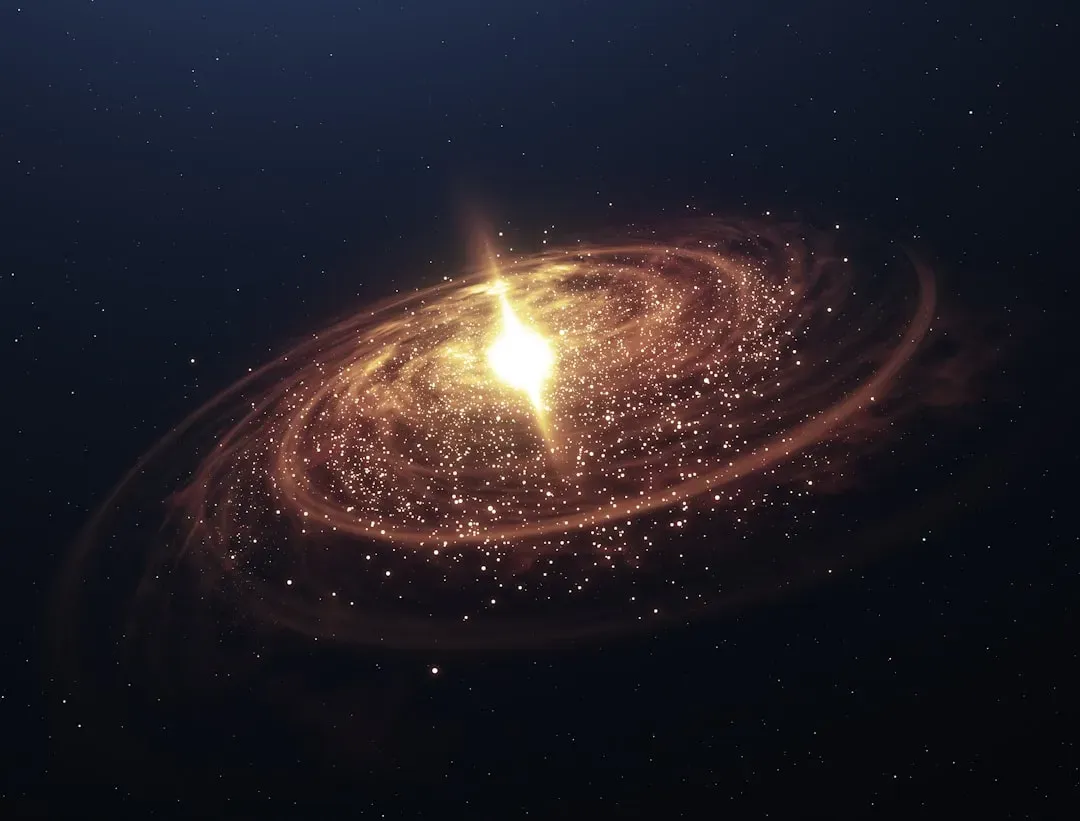
You might imagine the Sun has always been there, steady and unchanging, but it had a very dramatic and turbulent beginning. About 4.57 billion years ago, a giant cloud of molecular gas and dust experienced gravitational collapse at its center, where something like a passing star or a shockwave from a supernova triggered the process that eventually gave birth to our Sun. That means your Sun was literally forged by the death of another star. Think about that for a moment.
Most of the material in that primordial cloud ended up in one ball at the center of a flat disc. For roughly 100,000 years, that ball was squeezed tighter and tighter, with temperatures rising until it was hot enough to ignite nuclear fusion in its core. That ignition was the birth cry of the star you now call your Sun. The remaining material that didn’t collapse into the center eventually formed the planets, moons, asteroids, and all the other pieces of our solar system.
The Main Sequence: Your Sun in Its Prime
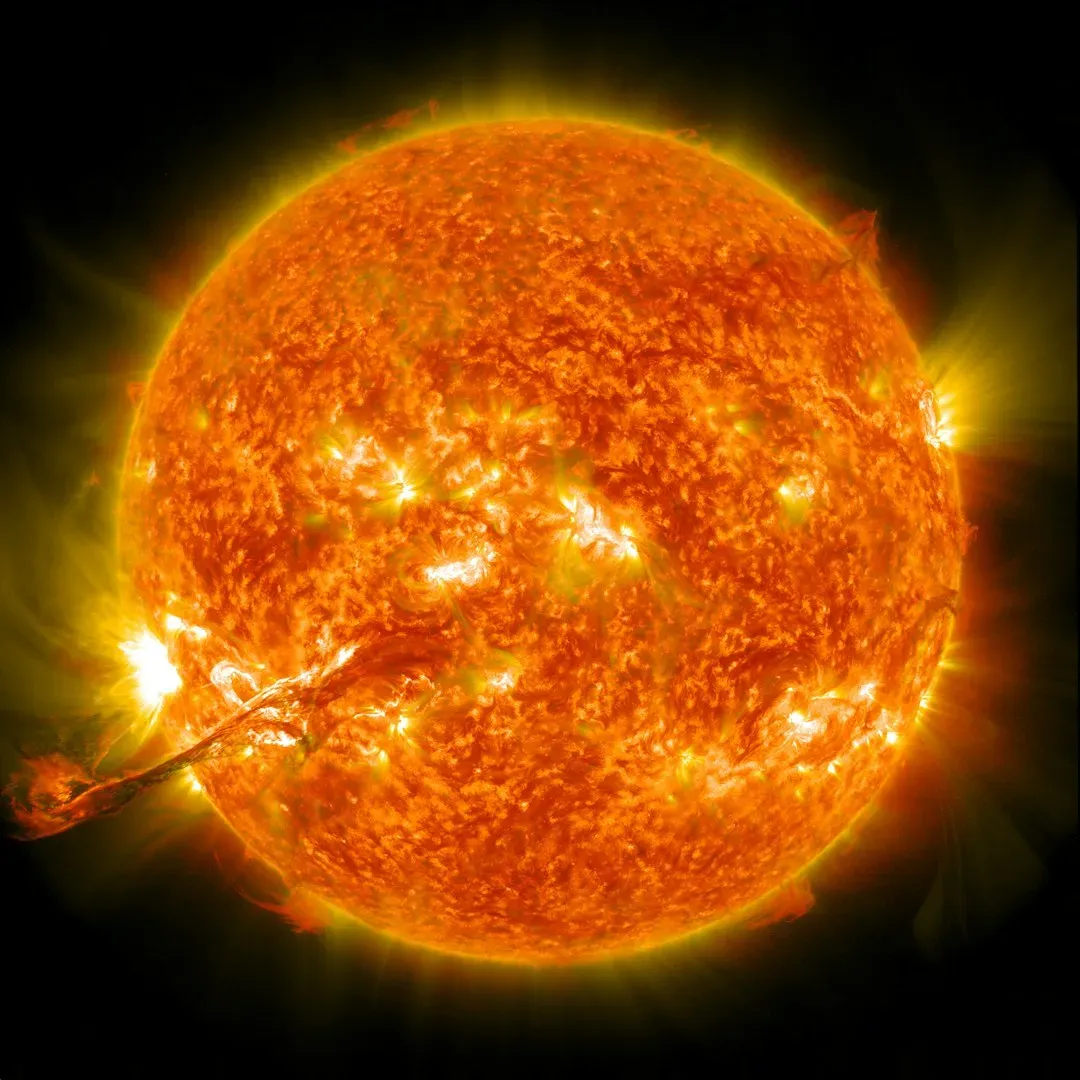
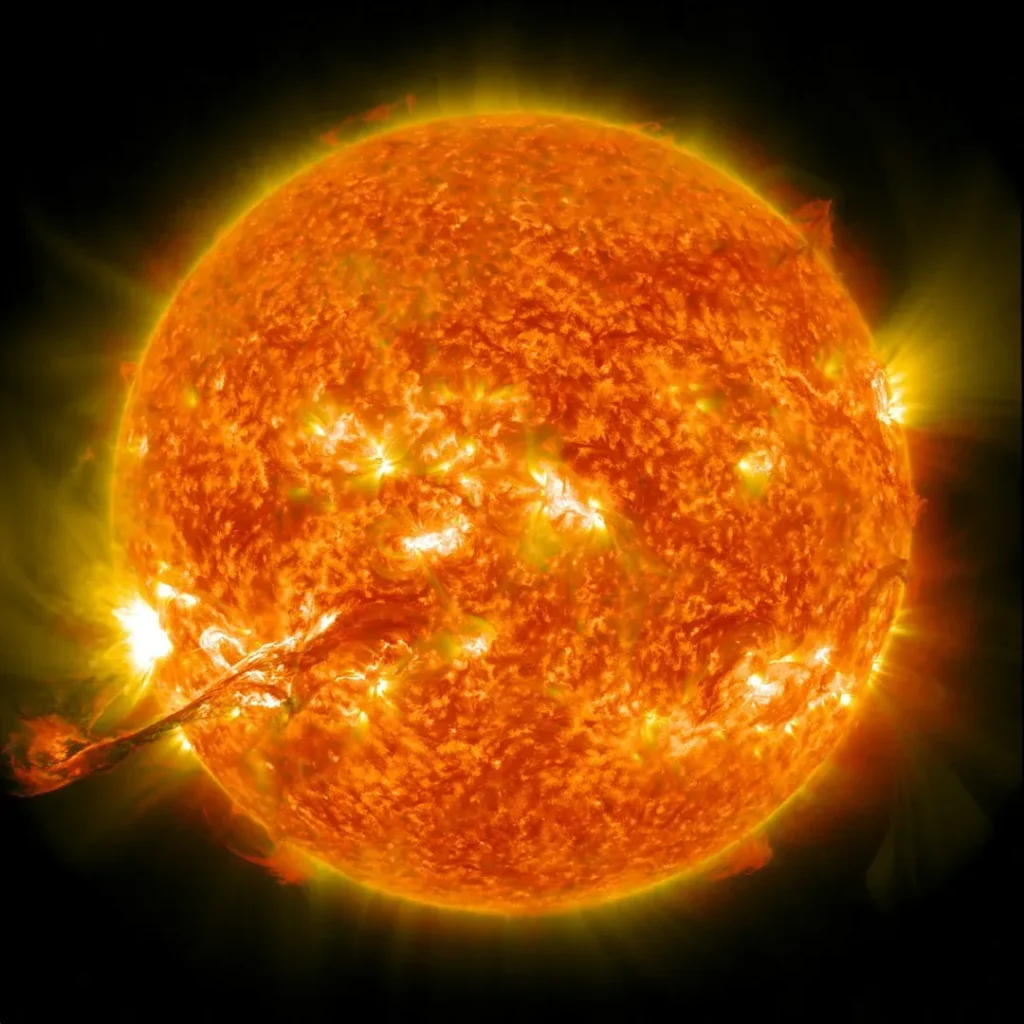
Right now, the Sun you look up at every day is in what scientists call the “main sequence” phase of its life. Since its formation, the Sun has been in this main sequence stage, where nuclear fusion in its core causes it to emit energy and light. This phase will last for another roughly 4.5 to 5.5 billion years, at which point it will deplete its supply of hydrogen and helium and go through some serious changes. So, in cosmic terms, your Sun is roughly middle-aged.
When the Sun first became a main sequence star, it radiated only about seventy percent of its current luminosity. That luminosity has increased in a nearly linear fashion to the present, rising by roughly one percent every 110 million years. In three billion years, the Sun is expected to be about one-third more luminous than it is today. It’s a slow, almost invisible creep of change. For a sense of scale, over one million Earths could fit inside the Sun as it currently exists. Even in its “ordinary” phase, this thing is staggeringly immense.
The First Warning: Oceans Begin to Disappear
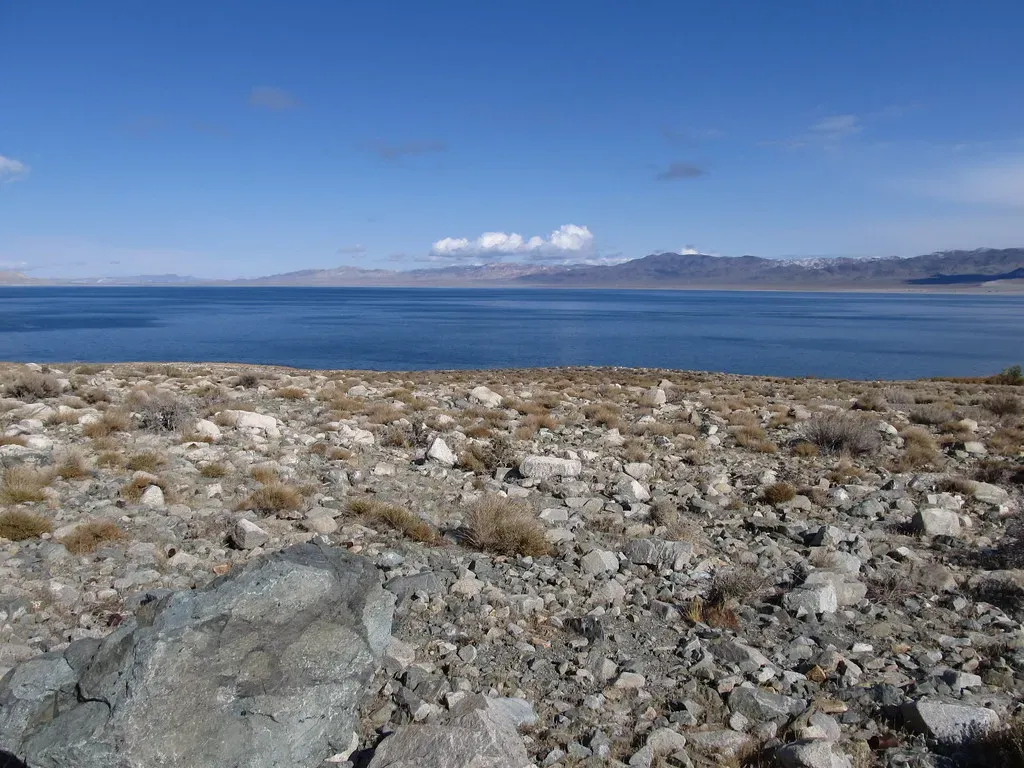
Here is where the story starts to get truly unsettling, and honestly, it is the part most people don’t hear enough about. You probably imagine Earth becoming uninhabitable only when the Sun explodes or swells enormously, but the real threat to all complex life arrives far sooner. As solar brightness slowly increases, temperatures on Earth will eventually rise enough to destabilize entire climate systems. In roughly a billion years or more, a runaway greenhouse effect could eliminate oceans and make the surface completely unfit for complex organisms.
An increase of the Sun’s luminosity by just ten percent over its current level doesn’t sound like much, but this change will be sufficient to shift the location of the habitable zone around the star. The habitable zone is defined as the range of distances from a star where liquid water can be stable on a planet’s surface. Once Earth drifts outside that zone, the oceans begin their one-way journey into space. As the atmosphere saturates with water vapor, the water held in the highest parts of the atmosphere will be bombarded by high-energy light from the Sun, splitting apart molecules and allowing water to escape as hydrogen and oxygen, eventually bleeding the Earth dry.
A Planet Transformed: Earth Becomes the Next Venus
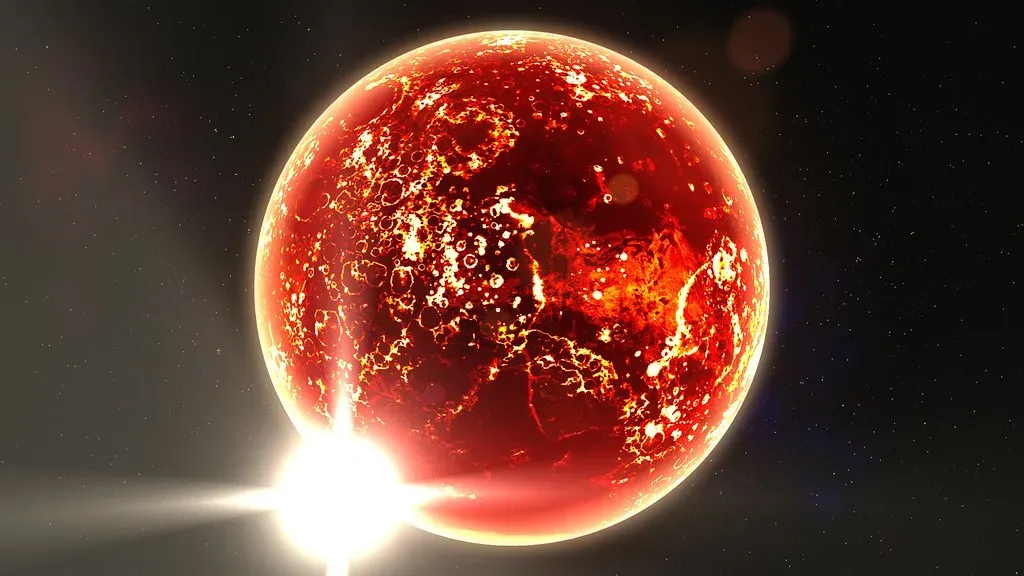
In about 3.5 billion years, the Sun will be roughly forty percent brighter than it is today, which will cause the oceans to boil, the ice caps to permanently melt, and all water vapor in the atmosphere to be lost to space. Under these conditions, life as you know it will be unable to survive anywhere on the surface, and planet Earth will be fully transformed into another hot, dry world, just like Venus. Venus, by the way, is not a comforting comparison. It is a hellscape of crushing pressure and acid clouds.
Going even further ahead, in approximately three to four billion years, a runaway greenhouse scenario could unfold depending on how much water remains: with water vapor dominating the lower atmosphere and solar irradiance further increased, surface temperatures might soar high enough to melt the crust, a fate reminiscent of the infernal environment on Venus. Let’s be real. By this stage, calling Earth “Earth” would be almost poetic fiction. Simple microbes might persist longer in protected environments, but large plants and animals would likely disappear. In terms of habitability, the limiting factor is not the Sun’s final death, but these earlier stages of the solar lifecycle that raise energy output. The window for a life-friendly Earth closes well before the star reaches its last phase.
The Red Giant Awakening: Your Sun Swells to Monstrous Size
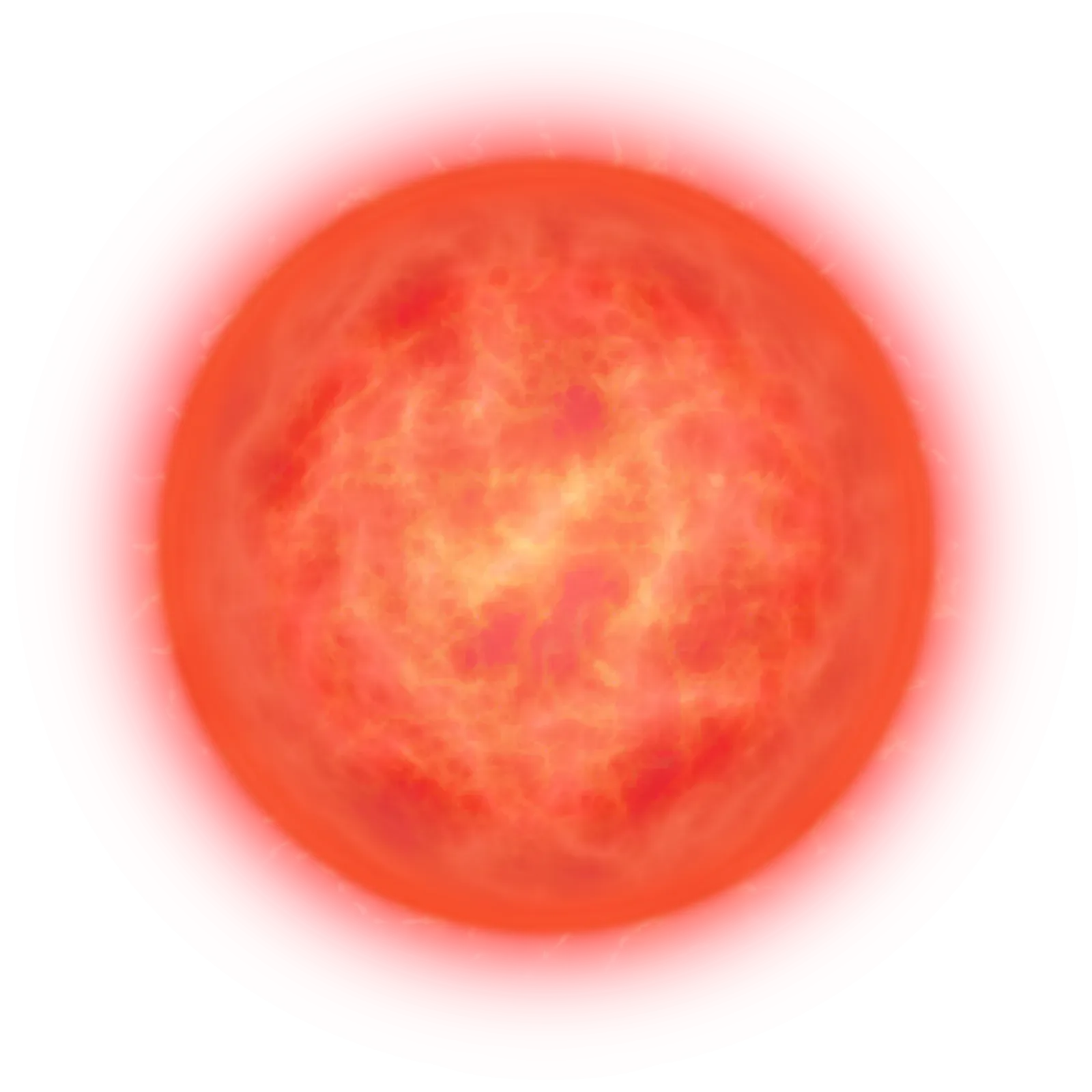
In about 5.4 billion years, the Sun will enter what is known as the red giant phase of its evolution. This will begin once all hydrogen is exhausted in the core and the inert helium ash that has built up there becomes unstable and collapses under its own weight. This will cause the core to heat up and get denser, causing the Sun to grow enormously in size. Think of it like a pressure cooker finally losing its lid. The whole thing expands in a way that is almost impossible to visualize.
When the Sun finally stops expanding, it will be in its red giant phase, where it will remain for approximately 100 million years. Scientists estimate that when the Sun reaches its red giant state, it will be over 200 times its current size, essentially consuming Mercury, Venus, and Earth. The end of the red giant phase is typically the most violent time in a star’s life. The bloated, dying star throws out material from its outer layers in intense, episodic bursts. Nothing gentle about it at all.
Will Earth Be Swallowed? Scientists Still Disagree
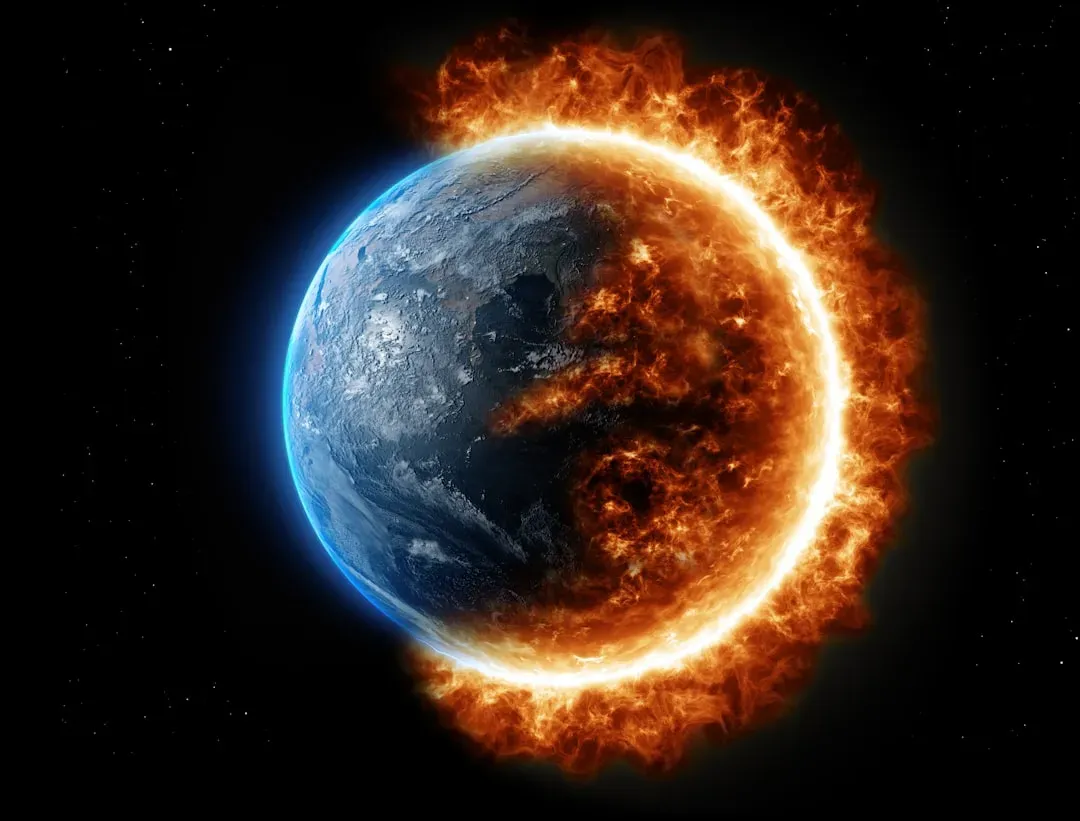
Here is a fascinating scientific debate that doesn’t get nearly enough attention. Although scientists agree on the Sun’s future in general, they disagree about what will happen to Earth specifically. Since 1924, when British mathematician James Jeans first considered Earth’s fate during the Sun’s red giant phase, scientists have reached oscillating conclusions. In some scenarios, the planet escapes vaporization; in the latest analyses, however, it does not.
The answer is not straightforward because although the Sun will expand beyond Earth’s orbit, it will lose mass along the way. As a result, Earth should drift outward as the gravitational pull lessens over time. At its maximum radius, the Sun will have lost about one third of its mass compared to its current heft. In this way, Earth could theoretically escape solar envelopment. Yet calculations assuming the Sun’s yearly mass loss remains small suggest Earth will move outward by only a negligible amount, and at that point the Sun will balloon up in only a million years to 1.2 times the current Earth-Sun distance, thus vaporizing Earth. Either way, there’s no happy ending for this planet.
The Planetary Nebula: A Stunning and Ghostly Farewell
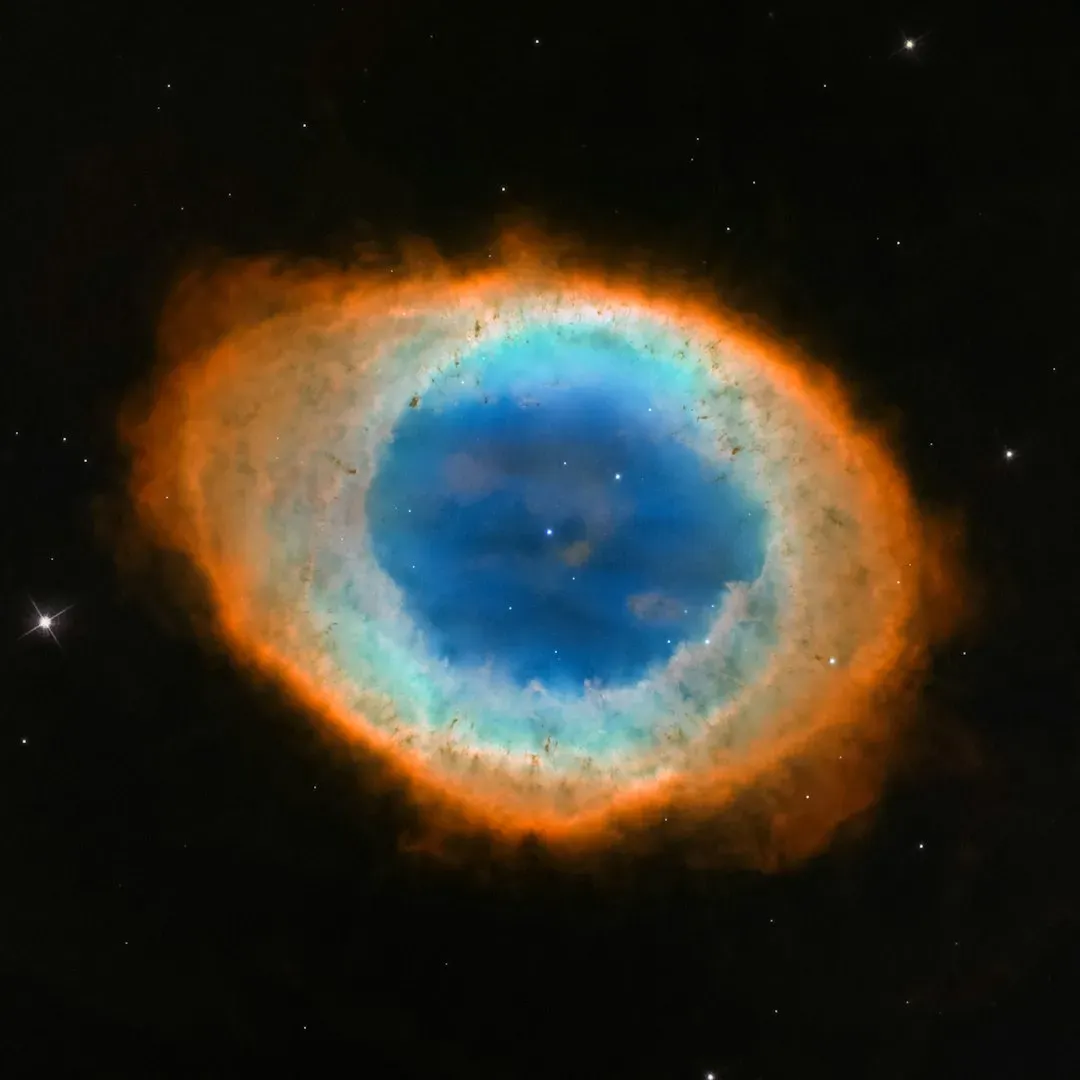
Once the red giant phase concludes, something almost breathtakingly beautiful happens amid all the destruction. Low-mass stars like the Sun turn into planetary nebulae towards the end of their red giant phase. At that point, the star becomes highly unstable and starts to pulsate. This produces strong stellar winds that throw off the outer layers of the star. Those outer layers drift away, leaving a small, hot, bright core behind, called a white dwarf.
The newborn white dwarf is incredibly hot, so it bathes the space around it in ultraviolet light and X-rays. Some of this radiation is intercepted by the gas the star released when it died. That gas responds by fluorescing with a rainbow of colors, creating what we call a planetary nebula. These are relatively short-lived phenomena, lasting perhaps only a few tens of millennia compared to the considerably longer phases of stellar evolution. Like a final firework display fired into the dark, the Sun will go out in spectacular, glowing color.
The White Dwarf and the Long, Cold Silence
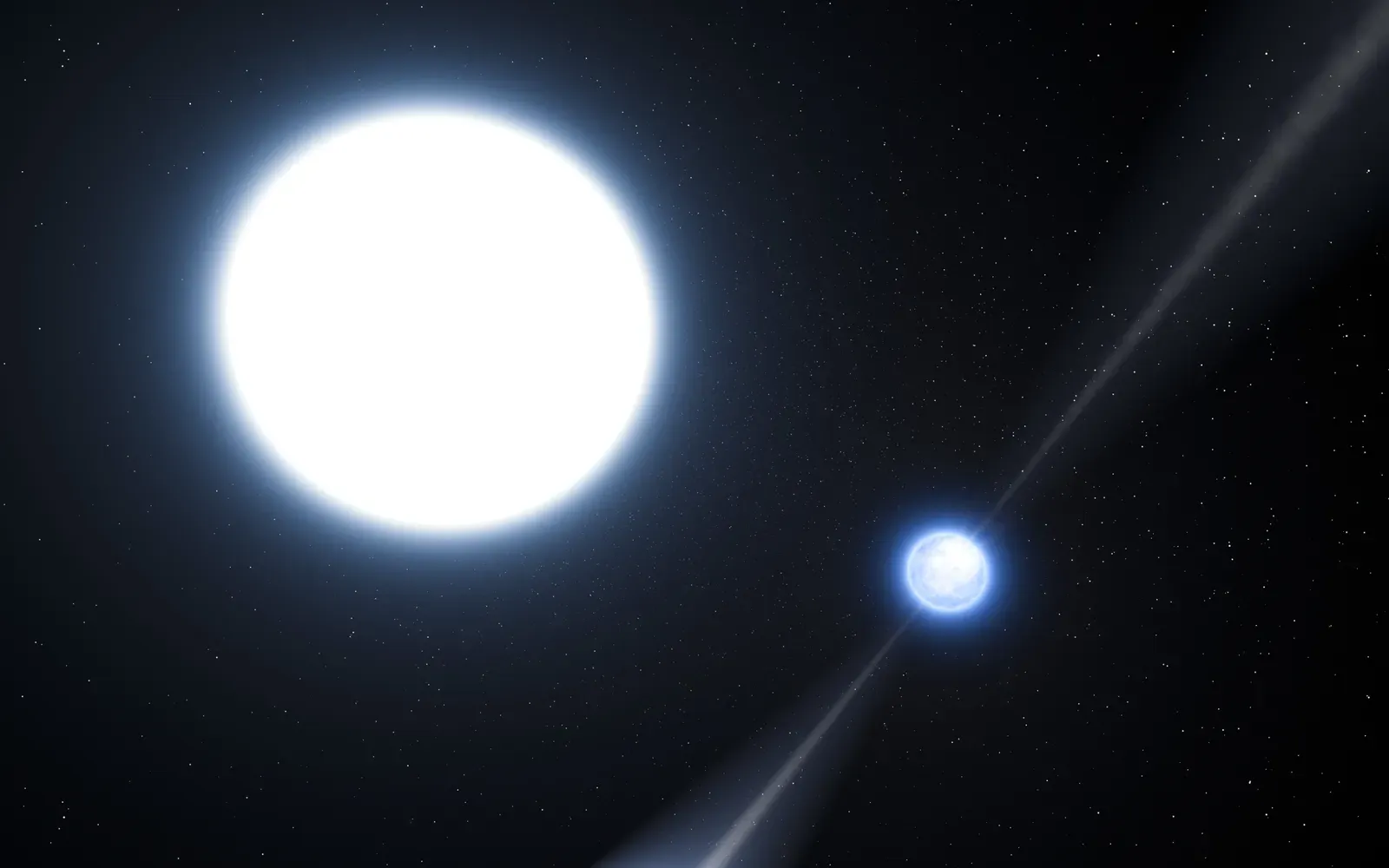
After all that drama, the Sun’s final form is surprisingly quiet. After spending about a billion years as a red giant, our own Sun will become a white dwarf, packing most of its initial mass into a sphere roughly the size of Earth. Imagine cramming something with the mass of the entire Sun into a ball no larger than our planet. A white dwarf packs mass comparable to the Sun’s into a volume that is typically about one millionth of the Sun’s, making the average density of matter in a white dwarf roughly one million times greater than the average density of the Sun.
The white dwarf will have a long, quiet future ahead of it. As trapped heat slowly trickles out, it cools and dims over immense timescales. Eventually it will become an inert lump of carbon and oxygen floating invisibly in space, what astronomers call a black dwarf. Interestingly, the universe isn’t actually old enough for any black dwarfs to have formed yet. The white dwarfs born from the earliest generations of stars are still cooling off, even 14 billion years later. The silence at the end of the Sun’s life will be extraordinary.
Conclusion: A Cosmic Perspective on Everything You Know
So, you now know the full arc: a chaotic birth from a dying star’s shockwave, roughly ten billion years of steady, life-giving warmth, a slow and lethal brightening that will strip away Earth’s oceans long before the red giant phase, a monstrous expansion that swallows the inner solar system, a ghostly farewell of color, and finally a cold, silent carbon remnant drifting through a quiet galaxy.
Honestly, the most striking thing about all of this is not the dramatic end, but the middle chapter you are living in right now. You happen to exist in the brief, golden window of the Sun’s life when conditions on Earth are just right for complex life to thrive. That window is not infinite. From an astrophysical standpoint, Earth’s habitability has a definite, though very distant, expiry date. The watery, life-bearing biosphere we take for granted is ephemeral on the scale of cosmic time.
The Sun doesn’t care about borders, politics, or the daily noise of human life. It just burns, steadily and inevitably, on its own ancient schedule. The real question is not when the Sun will change. It’s what you choose to do with the extraordinary sliver of cosmic time you’ve been given. What would you do differently if you truly felt the weight of that perspective?