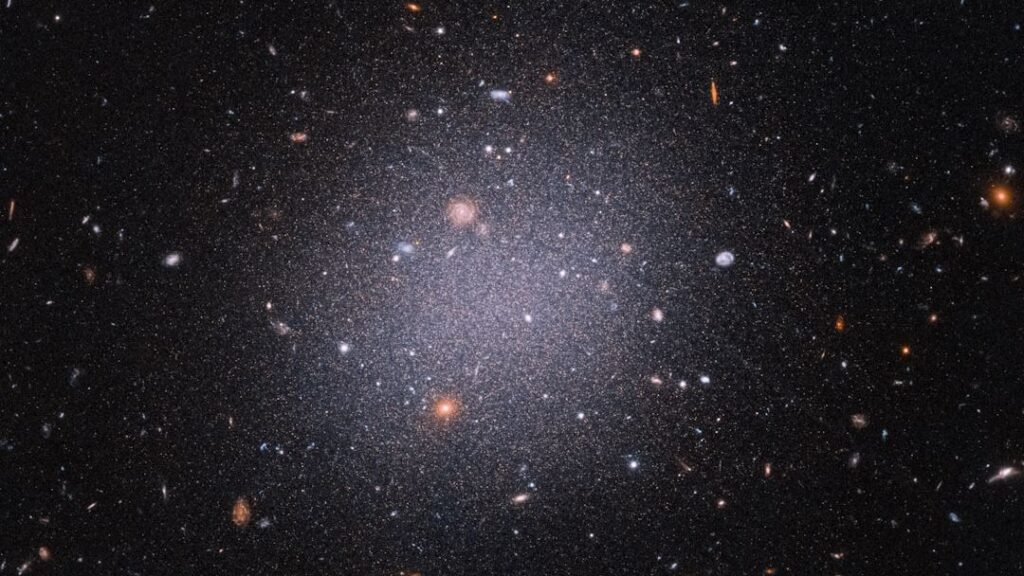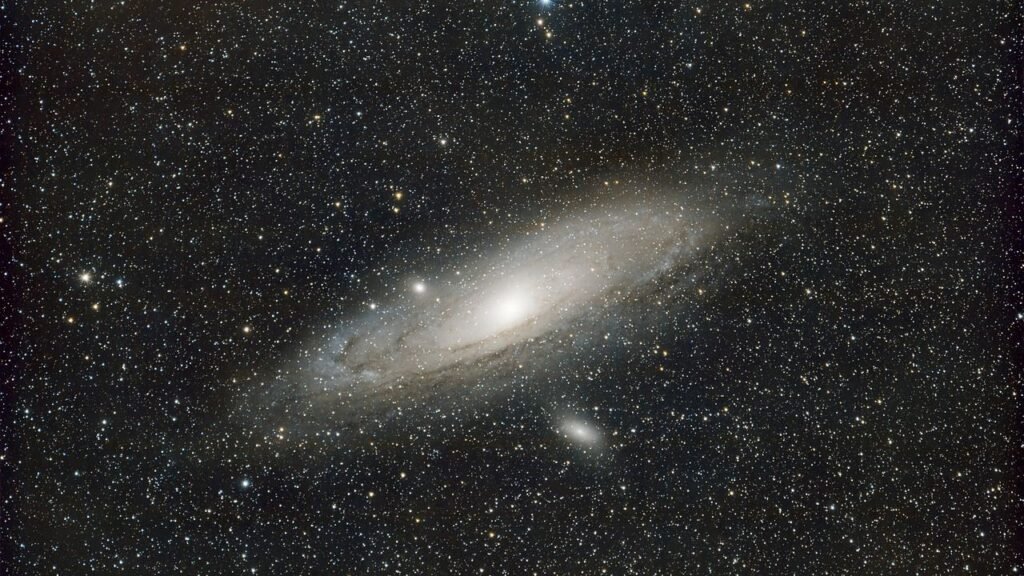

You’ve probably looked up at the night sky, counted a handful of stars, and thought you were looking at the universe. Honestly, you were barely scratching the surface. What you actually saw was a tiny pinhole in a canvas so enormous that even the most powerful telescopes we’ve ever built can only reveal a fraction of what’s out there. The cosmos is not just big. It is staggeringly, insultingly, almost offensively large.
What’s even more astonishing is that hidden within this immensity are structures, forces, and phenomena that don’t just challenge our understanding. They shatter it. From galaxy-spanning filaments to invisible matter that outweighs everything we’ve ever seen, the universe has been quietly operating on a scale that defies the full capacity of human imagination. Let’s dive into what we know, and be prepared. Some of this is wild.
Quipu: The Largest Known Thing in the Entire Universe
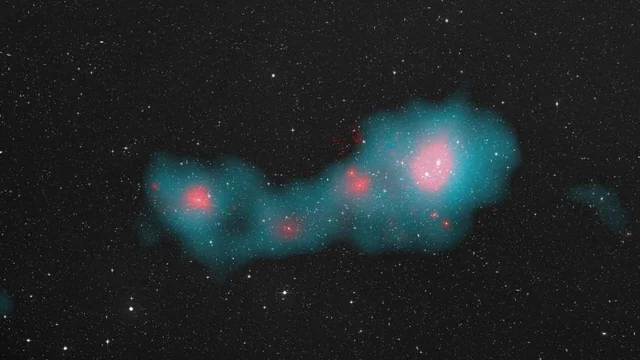
Let’s start with something so big it barely seems real. The recent discovery of the Quipu superstructure has opened a new chapter in our understanding of the universe’s vastness, stretching over 1.3 billion light-years and dwarfing anything previously identified. To put that in perspective, our entire Milky Way galaxy is roughly 100,000 light-years across. Quipu is more than 13,000 times longer than that.
Quipu stretches some 1.3 billion light-years long, containing the mass of some 200 quadrillion stars. That number, 200 quadrillion, is so astronomically large that writing it out fully would fill several lines of text. Quipu and four other similar structures encompass roughly a third of the galaxies, nearly half of all galaxy clusters, a quarter of the matter, and about thirteen percent of the overall volume of the known universe. One structure. Think about that.
Quipu takes its name from recording devices made of knotted cords used by ancient civilizations, where knots contain information based on color, order, and number, inspired by its appearance as a long filament with small side filaments. Interestingly, the Hercules Corona-Borealis Great Wall, technically ten billion light-years long, still exists as a competing candidate, though it hasn’t been confirmed as a single interconnected thing – and researchers suggest that even larger structures probably exist in deeper cosmic volumes yet to be explored.
The Cosmic Web: The Hidden Skeleton of Everything
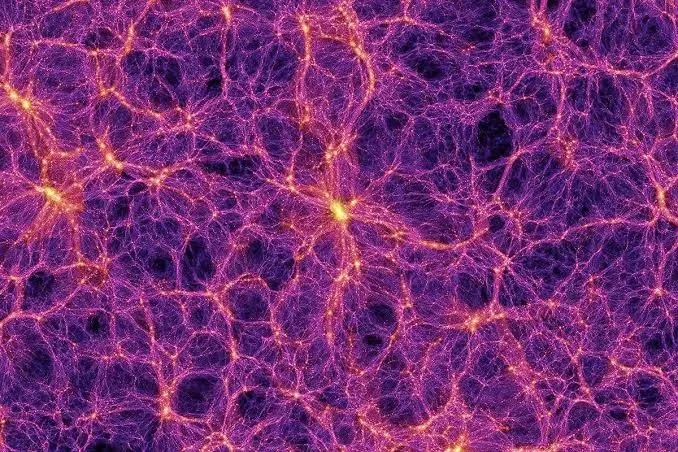
You might picture the universe as a random scattering of galaxies, like someone threw glitter into the air. In reality, the arrangement is far more structured and, frankly, more beautiful than that. Stars and planets gather in galaxies, galaxies gather in clusters, clusters gather in superclusters, and superclusters form enormous strands called galaxy filaments that together weave the cosmic web, the large-scale structure of the universe. It looks uncannily like a spider’s web, or even neural pathways in a brain.
Astronomers theorize that the early universe was very smooth, with tiny variations in density that had slightly more gravity to attract more matter – and over time, the universe evolved into a web of filaments and vast sheets, largely made of dark matter, forming the structure we observe today. Dense regions of dark matter are connected by lower-density filaments, forming this weblike structure, a pattern that appears more clearly in recent James Webb Space Telescope data than in any earlier observations. The cosmic web isn’t just a background feature. It is the architecture upon which everything exists.
Dark Matter: The Invisible Force Holding the Universe Together
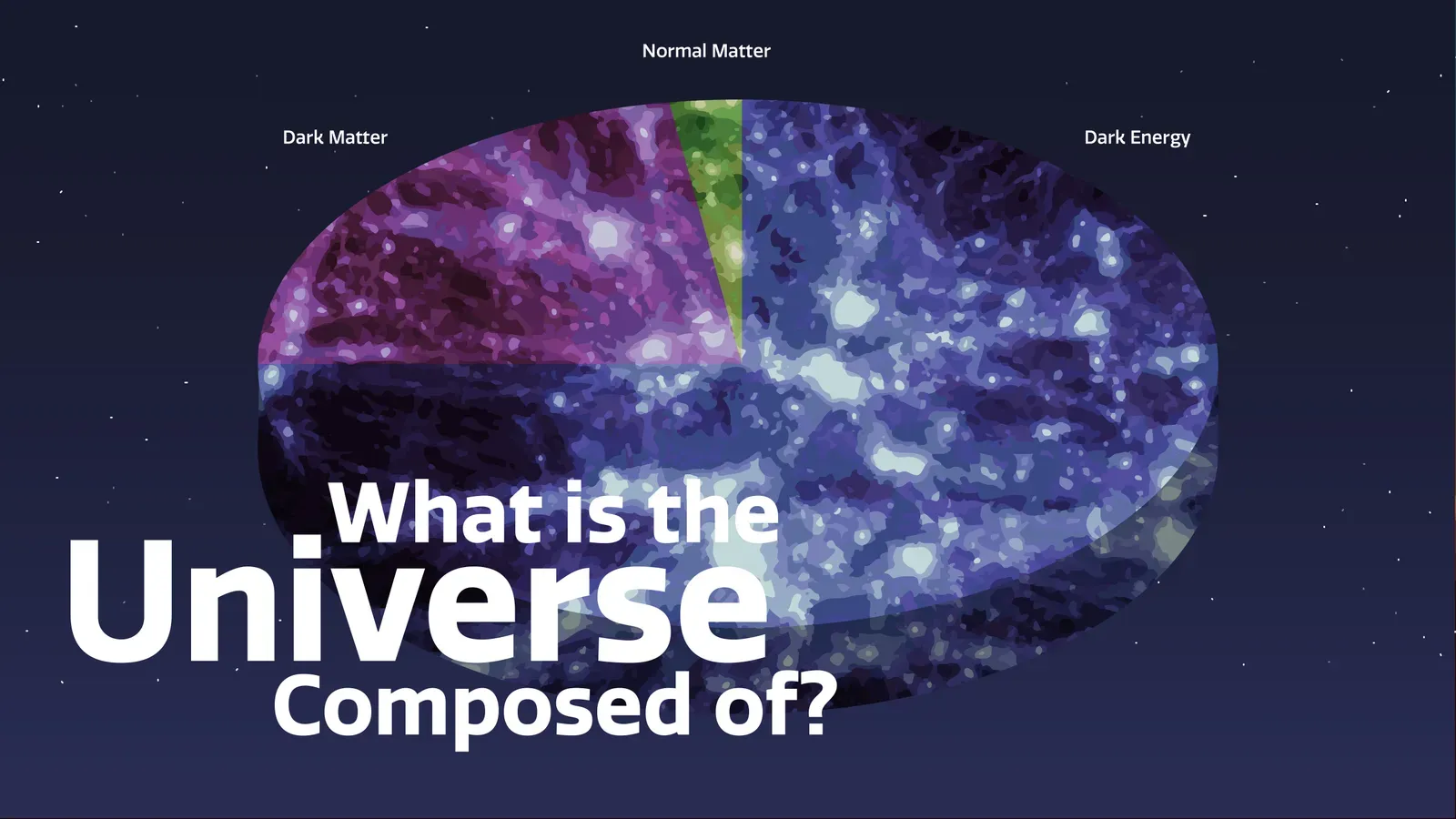
Here’s the thing. Most of the universe is made of something we can’t see, touch, or detect directly. The universe is made up of three components: normal or visible matter at roughly five percent, dark matter at roughly twenty-seven percent, and dark energy at sixty-eight percent. Everything you have ever seen, every star, planet, galaxy, and nebula, accounts for only about one in twenty parts of what actually exists. That’s humbling in the most unsettling way possible.
While dark matter interacts with ordinary matter through gravity, it does not seem to interact with the electromagnetic spectrum in any way, meaning dark matter doesn’t absorb, reflect, or emit any light. It doesn’t emit, reflect, absorb, or even block light, and it passes through regular matter like a ghost – yet it does interact through gravity, with dark matter’s pull drawing regular matter toward it throughout all of cosmic history. Without it, galaxies would quite simply fall apart. Scientists are now actively debating whether dark matter is a particle yet undiscovered, or something far more exotic.
Dark Energy: The Mysterious Force Tearing Everything Apart

If dark matter is what holds things together, dark energy is doing the opposite. It is the force responsible for ripping the universe apart at an accelerating pace, and I don’t mean that metaphorically. Since the early twentieth century, scientists have gathered convincing evidence that the universe is expanding – and that this expansion is accelerating, driven by dark energy, a mysterious property of spacetime thought to push galaxies apart. The farther away a galaxy is, the faster it is receding from us.
New supercomputer simulations now hint that dark energy might be dynamic rather than constant, subtly reshaping the universe’s structure, with findings aligning with recent observational data offering the strongest evidence yet for an evolving cosmic force. Dark energy is the name scientists have given to whatever is causing the universe to expand at an accelerating rate – and unlike dark matter, it isn’t concentrated in galaxies or clusters but is instead spread throughout the entire universe. It’s hard to say for sure what it ultimately is, and that uncertainty, honestly, is part of what makes cosmology so compelling right now.
Fast Radio Bursts: The Universe’s Most Baffling Signals
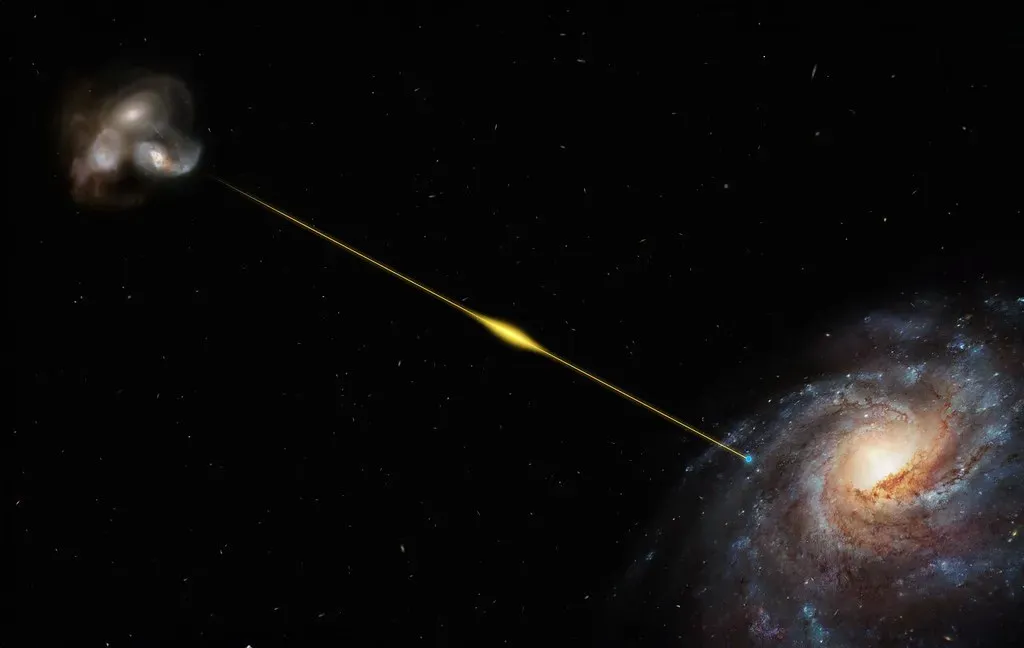
Imagine a flash of radio energy so powerful it outshines hundreds of millions of stars, and it’s all over in less than the blink of an eye. That’s a fast radio burst. A flash of radio waves lasting a few thousandths of a second, as bright as millions or billions of stars, and it’s all over – and even almost twenty years after their discovery, fast radio bursts remain one of the most mysterious phenomena in the universe. They arrive from deep space, leave no trace, and offer almost no clues as to their exact origin.
Fast Radio Bursts were first detected in 2007 and have remained one of the most mysterious astronomical phenomena ever since, with bright radio pulses generally lasting a few milliseconds and in most cases never heard from again, except in the rare case of repeating FRBs. Scientists now suspect that two colliding neutron stars, each the super-dense core of an exploded star, produced a burst of gravitational waves when they merged – and two and a half hours later produced an FRB, suggesting a possible link between these two cosmic mysteries. The universe, it seems, is sending us messages. We just haven’t figured out how to fully read them yet.
Black Holes: Singularities Where Physics Breaks Down
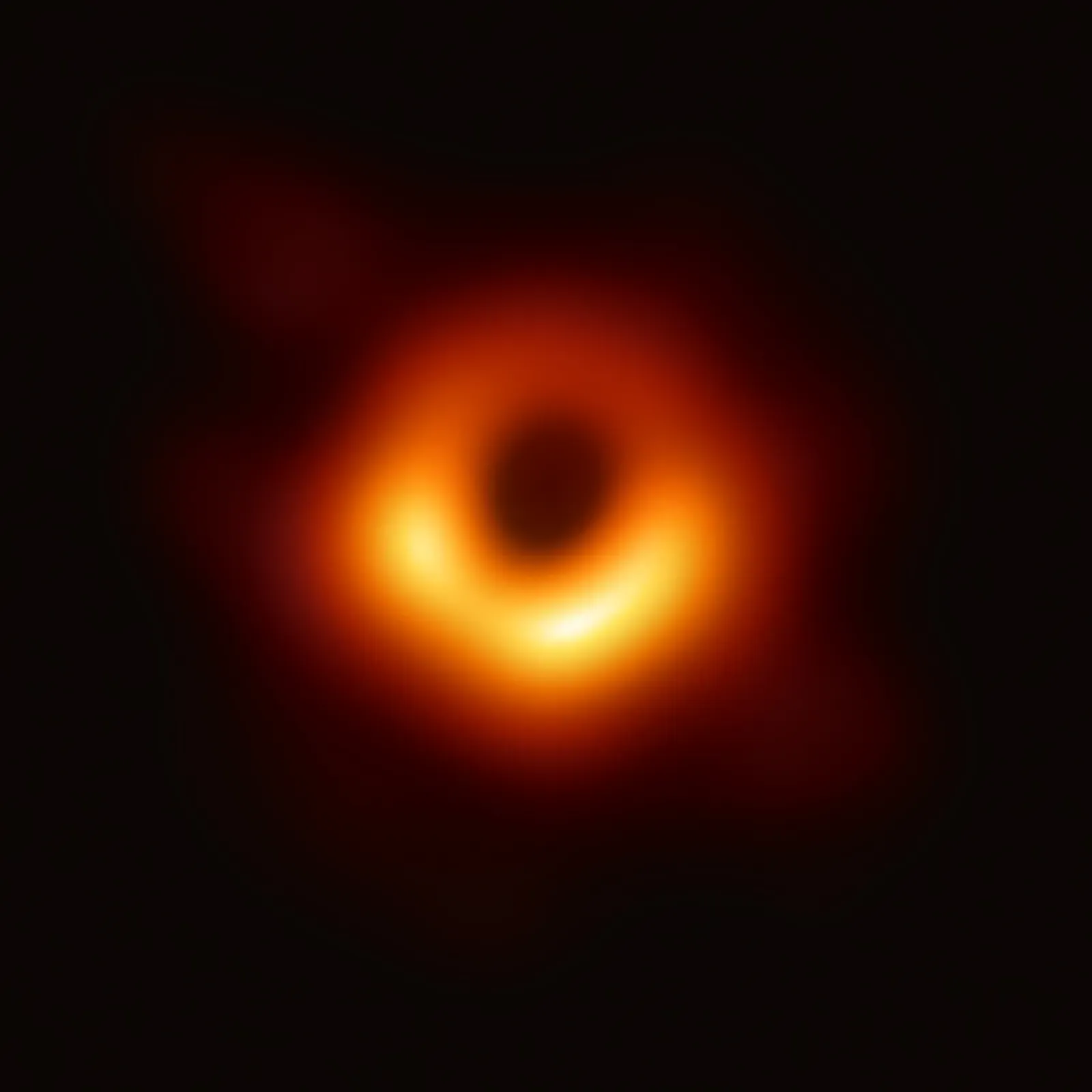
No conversation about cosmic extremes is complete without black holes. These are not merely large or dense objects. They are points where our best understanding of physics simply stops working. Stellar-mass black holes form when huge stars, far more massive than our Sun, collapse onto themselves when they run out of fuel, causing an immense explosion called a supernova, leaving behind a single point of infinite density squeezed into an infinitely small volume, a singularity.
In 2023, astronomers discovered a supermassive black hole weighing twenty million solar masses racing through intergalactic space, likely ejected from its home galaxy through a three-way gravitational dance involving multiple black holes during a galactic merger, dragging along a trail of stars stretching over 200,000 light-years. The largest black hole ever discovered is the quasar TON 618, which has a mass of about 66 billion times that of the sun. A number like that is essentially meaningless to the human brain – yet it exists, sitting there in the void, consuming everything that dares come close.
Cosmic Voids and the Boomerang Nebula: Where the Universe Gets Truly Extreme
Not everything in the universe is packed and dense. Some of the most mind-bending regions are defined by their absolute emptiness. Voids are immense spaces between galaxy filaments and other large-scale structures, technically not structures themselves but vast spaces containing very few or no galaxies, theorized to be caused by quantum fluctuations during the early formation of the universe. Some of these voids stretch hundreds of millions of light-years across, regions of near-total nothingness suspended in an otherwise tangled web of matter.
On the opposite end of the extremes, the universe also harbors places of blistering temperature and chilling cold simultaneously. The Boomerang Nebula, a cosmic cloud 5,000 light-years from Earth, is even colder than the Cosmic Microwave Background, the background glow left over from the Big Bang, which is roughly negative 270 degrees Celsius. A 1995 study discovered its temperature to be negative 272 degrees Celsius, just one degree warmer than absolute zero. The coldest place in the known universe is not some remote vacuum. It’s an exploding cloud of cosmic gas. The universe has never stopped surprising us, and something tells me it never will.
Conclusion
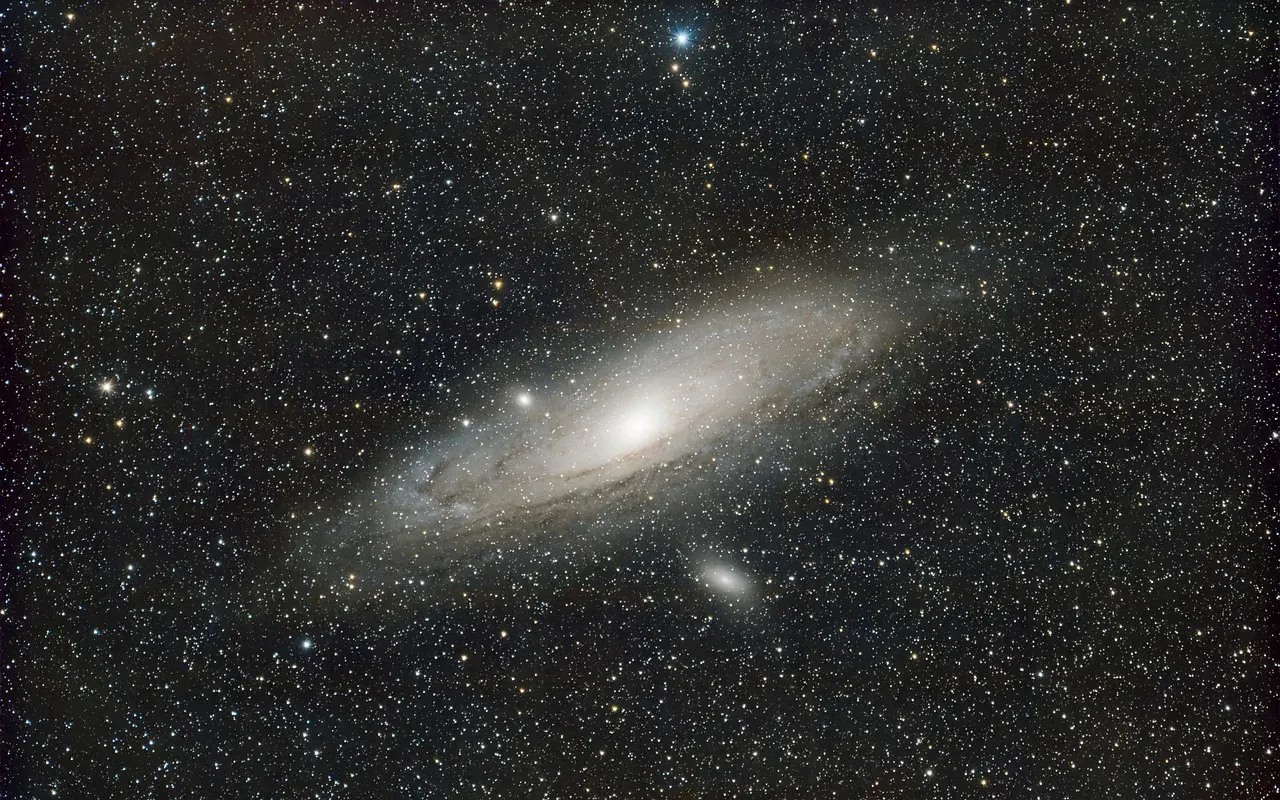
What you’ve read here is just a sliver of the truth. The universe is not a backdrop. It is an active, evolving, almost incomprehensibly enormous system of forces, structures, and events operating far beyond the reach of everyday human experience. From Quipu’s trillion-star chains to invisible dark matter threading every corner of existence, from vanishing fast radio bursts to black holes running rogue through intergalactic space, the cosmos keeps revealing that the more we learn, the more daunting the remaining questions become.
I think the most extraordinary thing about all of this is not the scale itself, but the fact that we tiny, short-lived creatures on a small planet have managed to detect and describe any of it at all. Our instruments, our mathematics, and our curiosity have opened windows onto phenomena that no human mind can fully hold. There’s a whole lot about the universe that we don’t know and can’t yet make sense of – but somewhere out there, the answers are waiting, and discoveries like these inch us ever closer to finding them.
The real question is this: with structures this immense and phenomena this extreme already confirmed, what else is out there that we haven’t even imagined yet? What do you think? Let us know in the comments below.