Space has always had a way of putting humanity’s problems in perspective. A traffic jam, a bad meeting, a broken phone – none of it matters much when you consider that somewhere out there, a rock the size of a small city might have Earth’s name on it.
Recent findings from researchers tracking near-Earth objects have reignited one of the oldest and most unsettling questions in planetary science: are we truly safe? The answers emerging from the latest data are complicated, fascinating, and honestly a little bit terrifying. Let’s dive in.
A Rock That Demands Attention
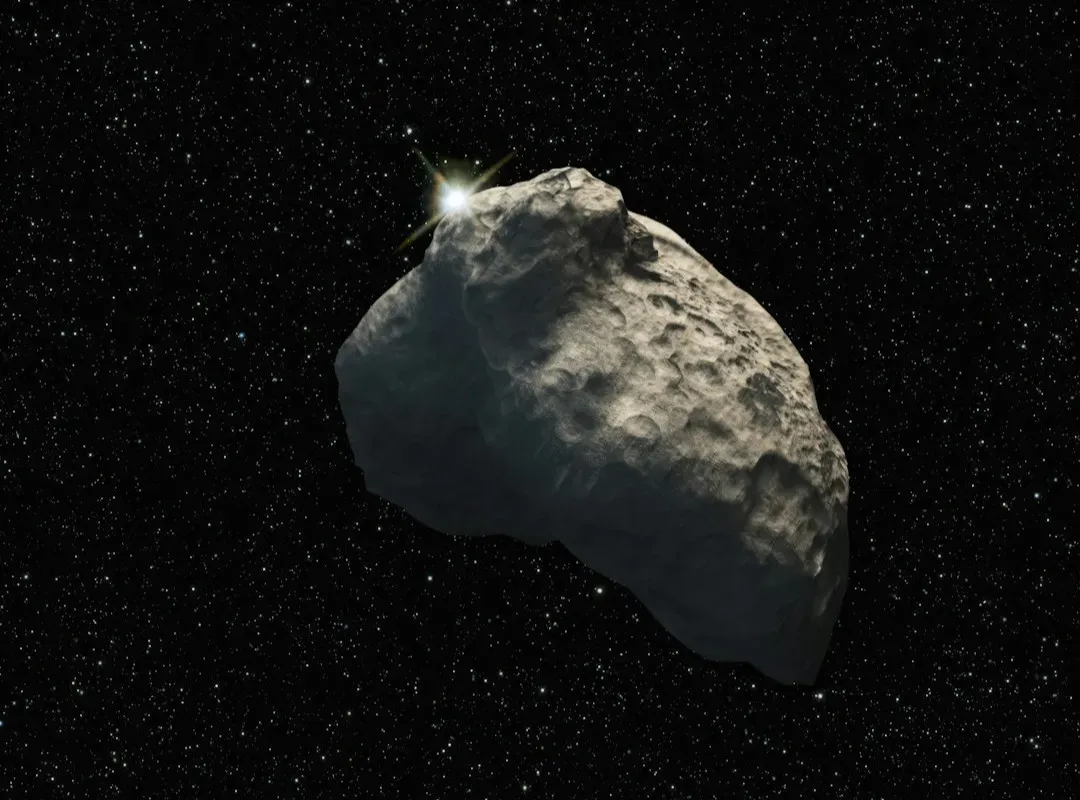
Here’s the thing about space rocks – most of them are boring. They tumble through the void, minding their own business, posing zero threat to anyone. Then there are the ones that make scientists sit up straight and start doing very serious calculations at very odd hours of the night.
The asteroid in question measures roughly five kilometers across. To put that in perspective, that’s larger than the rock believed to have triggered the mass extinction that wiped out the non-avian dinosaurs roughly 66 million years ago. That earlier impactor is estimated to have been somewhere between ten and fifteen kilometers wide, but even a fraction of that size can cause catastrophic, civilization-altering consequences.
Astronomers have flagged this object as requiring closer scrutiny due to its orbital characteristics, which place it in a trajectory that warrants continued and careful monitoring. It’s not a guaranteed collision – let’s be clear about that – but the uncertainty surrounding its future path is precisely what has researchers paying close attention.
How Scientists Actually Track These Things
Tracking a five-kilometer asteroid isn’t like following a car on GPS. These objects move across enormous distances, and their orbits are influenced by gravitational interactions with planets, solar radiation pressure, and even tiny thermal effects that accumulate over decades. It’s genuinely complex work.
Modern planetary defense relies on a global network of observatories, both ground-based and space-based, feeding data into sophisticated orbital models. Programs like NASA’s Center for Near Earth Object Studies and the European Space Agency’s Planetary Defence Office compile observations continuously, refining probability estimates as new data comes in.
What makes this particular object interesting is how the margin of uncertainty in its orbital calculation behaves over time. Small uncertainties early in tracking can translate into enormous positional ranges decades into the future. Roughly speaking, it’s like trying to predict where a billiard ball lands when you’re only allowed to see the first inch of its roll.
What a Five-Kilometer Impact Would Actually Mean
I think most people have a vague sense that a big asteroid hitting Earth would be “really bad.” That’s a profound understatement. A five-kilometer impactor striking Earth would release energy orders of magnitude beyond anything in recorded human history.
The immediate blast zone would be obliterated instantly. Beyond that, the ejecta thrown into the upper atmosphere would block sunlight globally, triggering what researchers call an impact winter. Crop failures would follow within one growing season, and the cascading effects on global food systems and ecosystems would persist for years, potentially decades.
Honestly, the scale of it is almost impossible to fully absorb. We’re not talking about a regional catastrophe. We’re talking about a fundamental disruption of life on Earth at a civilizational level. Scientists use phrases like “globally catastrophic” not for dramatic effect, but because there simply isn’t a softer way to describe what the physics would produce.
The Current Probability Estimates
Let’s be real: the probability of this particular asteroid striking Earth in the near term is assessed as low. Planetary scientists are careful to distinguish between objects that need monitoring and objects that represent an imminent confirmed threat. This falls into the former category.
However, low probability is not zero probability, and over cosmic timescales, even small chances become meaningful. The scientific community uses tools like the Torino Scale and the Palermo Technical Impact Hazard Scale to communicate risk levels in a standardized way. Most objects, even those that initially raise flags, eventually get downgraded as observations improve.
What matters here is that the orbital window during which a potential close approach could occur hasn’t been fully closed out yet. More observations are needed. That process takes time, sometimes years, before scientists can confidently rule out an impact scenario entirely. Patience and continued monitoring are the operative words right now.
Could We Actually Do Anything About It?
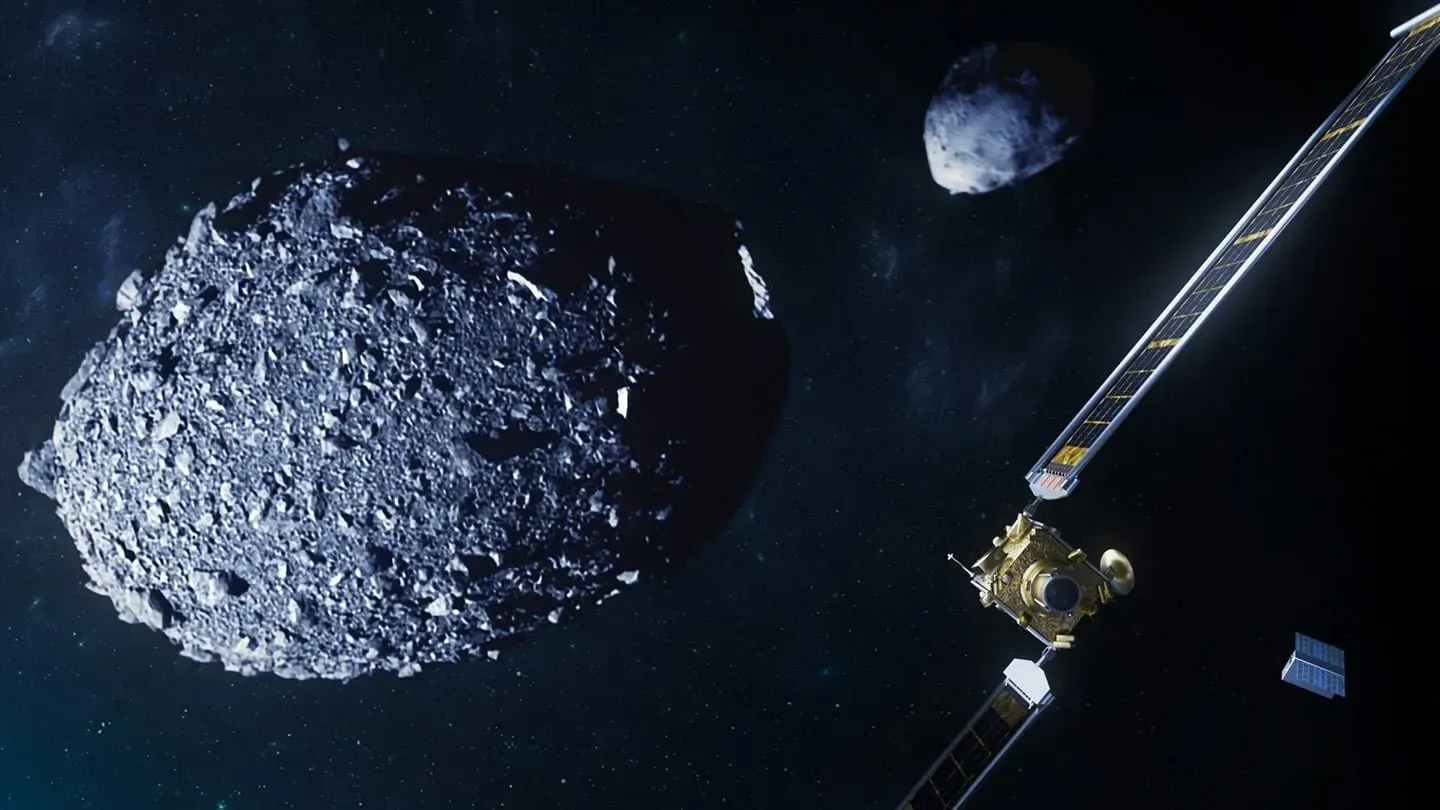
This is where the story gets more hopeful, or at least more interesting. Humanity is no longer entirely passive in the face of this kind of threat. The successful DART mission in 2022, in which NASA deliberately crashed a spacecraft into the asteroid Dimorphos and measurably altered its orbit, proved that kinetic deflection is a viable real-world option.
The key variable is lead time. The further in advance a threat is identified, the smaller the nudge required to push an asteroid off a collision course. A tiny change in velocity applied years or decades early can result in a miss by thousands of kilometers at the time of closest approach. The physics actually work in humanity’s favor, as long as we see it coming.
For an object the size of the one under discussion, a single kinetic impactor likely wouldn’t be sufficient. Researchers have modeled scenarios involving multiple spacecraft, nuclear standoff detonations, and gravity tractor concepts where a spacecraft’s gravitational pull slowly tugs an asteroid over years. None of these are science fiction at this point – they are live areas of engineering research and international policy discussion.
Why Planetary Defense Funding Matters More Than Ever
Here’s something that doesn’t get nearly enough attention in mainstream conversation: the gap between what we know about near-Earth objects and what we don’t know is still uncomfortably large. Surveys estimate that astronomers have catalogued the vast majority of kilometer-scale and larger near-Earth objects, but completeness drops significantly for smaller sizes.
A five-kilometer object is large enough that it almost certainly would have been detected well in advance of any potential impact. The more troubling scenario involves the hundreds of thousands of smaller but still highly destructive objects that remain unmapped. The 2013 Chelyabinsk meteor, which injured over a thousand people in Russia, arrived entirely undetected.
Investment in space-based survey telescopes, faster computational modeling, and international coordination frameworks represents the clearest and most cost-effective insurance policy humanity can take out. The cost of prevention, even for ambitious deflection missions, pales almost comically when measured against the consequences of an unmitigated impact. It seems like an obvious calculation, yet funding for planetary defense remains modest compared to other areas of space exploration.
What This Means for the Future of Planetary Science
Discoveries like this one serve an important function beyond the immediate risk calculus. They remind the scientific community and the public that planetary defense is not a hypothetical future concern – it is an active, ongoing responsibility. The solar system is not a static place, and Earth is not guaranteed safe passage through it.
In the coming years, missions like the NEO Surveyor space telescope, currently in development by NASA, are expected to dramatically increase detection rates for near-Earth objects. Better detection means earlier warning. Earlier warning means more options. More options mean a better chance of doing something meaningful before a threat becomes irreversible.
The story of this particular five-kilometer asteroid is still being written, literally and scientifically. Observatories will continue gathering data, orbital models will be refined, and at some point a clearer picture will emerge. What that picture shows will determine what, if anything, comes next.
A Final Thought Worth Sitting With
There’s something strangely clarifying about planetary-scale risk. It cuts through the noise of daily life and forces a kind of perspective that is genuinely hard to manufacture any other way. We are, when it comes down to it, a small civilization clinging to a planet that doesn’t offer guaranteed protection.
The scientists working on this problem aren’t alarmists. They’re pragmatists. They understand that the question isn’t whether Earth will face another serious impact threat over geological time – it will – but whether humanity will have developed the awareness and technology to respond when that moment arrives.
Honestly, the fact that we’re having this conversation at all, that we have the tools to detect a five-kilometer rock in deep space and model its trajectory decades into the future, is remarkable. We are the first species in Earth’s history capable of knowing the threat is coming. The question is whether we’ll take that capability seriously enough to act on it. What would it take to make planetary defense a genuine global priority? That might be the most important question we’re not asking loudly enough.