

We like to think science has most things figured out. We’ve mapped the human genome, landed robots on Mars, and decoded the inner workings of subatomic particles. Pretty impressive, right? Yet, there are things you do every single day – things that feel completely ordinary – that the brightest minds on the planet still cannot fully explain. Not even close.
That’s what makes this list so fascinating. It’s not about mysterious creatures in the deep ocean or quantum paradoxes in a laboratory. It’s about you, going about your Tuesday, doing things your own body doesn’t have a clean scientific manual for. Buckle up, because some of these will genuinely surprise you. Let’s dive in.
1. Why You Need to Sleep at All

Let’s be real – you’d think that after thousands of years of human existence, and decades of modern neuroscience, we’d know exactly why you sleep. Sleep is one of the most essential human activities, so essential that if you don’t get enough even for a single night, you may struggle to think, react, and otherwise make it through the day. Yet, despite its enormous importance for function and survival, scientists still don’t fully understand how sleep works. That’s not a minor gap in knowledge. That’s like not knowing why you need to eat.
Perhaps you are never fully awake or fully asleep, but always somewhere on a spectrum. Philosophers refer to such a scenario as a vagueness problem, arising when a process or a phenomenon cannot be precisely defined. Think of it like a dimmer switch instead of a simple on-off toggle. Even when you think you’re fully awake and wandering about the world, parts of your brain could be sleeping. This phenomenon, known as local sleep, is thought to occur so that overworked neurons in the brain can rest and be refreshed. In other words, your own brain could be napping right now without your permission.
2. The Mystery of Why You Dream

Dreams tell us that the sleeping brain is remarkably lively, recombining intrinsic activation patterns from a vast repertoire, freed from the requirements of ongoing behavior and cognitive control. You’ve been in that strange dream where you’re flying, or running but going nowhere, or sitting in an exam for a class you never took. It feels urgent, vivid, and entirely real – but when you wake up, it evaporates like morning fog. Why does your brain do that?
Experience can be present, in all its richness, even though you are disconnected from the environment during dreaming. This suggests that the substrate of consciousness in its current state is sufficient to specify the quality of experience in a way that is fully intrinsic, regardless of external inputs or outputs. Dreams also demonstrate that consciousness can be dissociated from metacognition and cognitive control: when you dream, you can be vividly conscious even though you are not able to reflect, direct your thoughts and actions, or exert volition. The dream world is basically you experiencing something without any of the tools you normally use to process reality. Still wild, honestly.
3. Déjà Vu: The Brain Glitch Nobody Can Decode

Psychologists have studied déjà vu for decades to understand why a situation can feel intensely familiar despite the individual knowing they have never encountered it before. You walk into a new restaurant in a city you’ve never visited, and somehow, you feel like you’ve stood exactly there before. It’s fleeting, a little eerie, and then it’s gone. This sensation occurs in roughly six to nine out of every ten people at least once in their lives and is typically sudden and fleeting, making it extremely challenging to study.
There is no universally agreed upon scientific theory that explains the mechanism behind déjà vu. More research is needed to explain this mysterious sensation. Some researchers point to memory misfires. In people without any identifiable neurological conditions, déjà vu may result from similar but transient disruptions of neural circuits. A spontaneous, localized activation of the rhinal cortex could generate an incorrect feeling of familiarity. These mild anomalies are more likely in states of stress, fatigue, or cognitive overload, transiently disturbing the balance between the familiarity and novelty signals produced by the hippocampus and the rhinal cortex. Your brain, essentially, convinces itself it has been somewhere it hasn’t. Honestly, that’s unsettling in the best way possible.
4. The Placebo Effect: Your Belief Can Heal You

The placebo effect is a well-documented phenomenon where a person’s health improves after taking a fake treatment, simply because they believe it’s real. Scientists know it’s a powerful demonstration of the mind-body connection, involving neurotransmitters like endorphins. However, the precise mechanisms that allow belief to create tangible, physical changes are still not fully understood. Think about that for a second. A sugar pill that does nothing pharmacologically can genuinely reduce your pain because your brain decided it would.
The placebo effect is actually more puzzling than you might expect. Recent work has shown, for example, that it even works when participants are told they are taking a sugar pill. You can know the pill is fake and still feel better. While we know the placebo effect exists, the precise mechanisms that drive it are still unclear. Researchers believe it involves the release of endorphins, the activation of reward pathways in the brain, and changes in immune function. Understanding the intricate pathways that connect your beliefs and expectations to your physical health could revolutionize medicine, but much remains to be discovered. The mind is apparently a more powerful pharmacist than we ever imagined.
5. Why Yawning Is Contagious

You’re probably yawning right now. Or at least thinking about it. That’s the bizarre magic of the yawn, and honestly, science is still deeply confused about it. Modern science is still on the lookout for a complete explanation of the mechanisms and the purpose which yawning accomplishes, and the debate about its usefulness is still ongoing. You’d think something this universal would have a clean answer by now. It doesn’t.
The leading theory used to be that yawning helps bring more oxygen into the brain, but that idea has been largely debunked. Today, some scientists believe it helps regulate brain temperature, cooling it down like a biological fan, but there’s still no solid consensus on its primary purpose. As for why yawning is contagious? Contagious yawning is triggered by seeing, hearing, or even thinking about another person yawning. This phenomenon is believed to be linked to social and communicative functions, demonstrating empathy and social bonding. So when you yawn at your coworker across the meeting table, you might be displaying deep empathy. Or you might just be bored. Scientists aren’t entirely sure which one it is.
6. Consciousness: The “Hard Problem” That Keeps Philosophers Up at Night
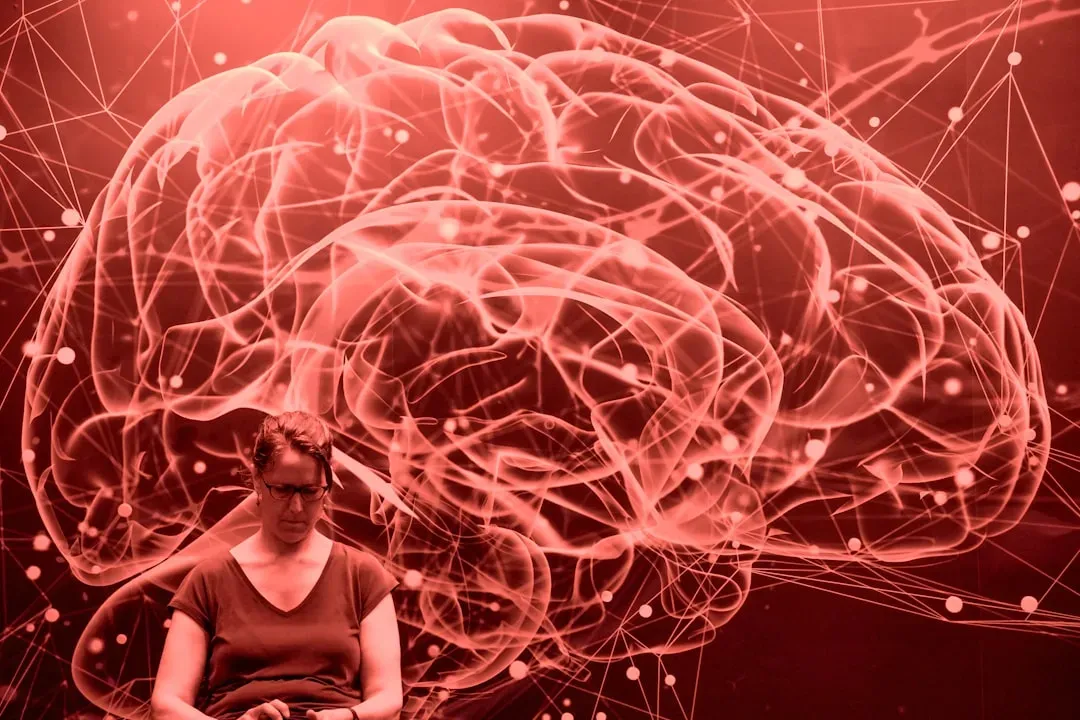
Here’s the big one. The fact that you are aware you are reading this sentence right now, that there is a subjective experience of being you, is something science genuinely cannot explain. Scientists call that subjective sense of self consciousness, and understanding what consciousness is, how it functions, and where it lives in the brain has plagued researchers for generations. It’s not a lack of trying. Brilliant minds have spent entire careers on this question and come away with more confusion than clarity.
Neuroscientists largely agree that consciousness must be a result of brain activity, but who knows what activity? The problem is that no one has made great progress in figuring out exactly what consciousness is. I think the humbling part is this: even Francis Crick, the Nobel Prize-winning biologist who co-discovered the structure of DNA, devoted the final years of his life to understanding consciousness and ultimately had to scale back his ambitions considerably. He ended up settling for outlining a blueprint for how to examine consciousness and proposing a model of how one portion of it, awareness of a visual scene, might be realized in the brain. Even legends hit a wall with this one.
7. Goosebumps from Music: A Beautiful Mystery

You know that feeling. A song hits a particular note, or a melody builds to that moment, and suddenly your skin erupts in tiny bumps and a shiver travels up your spine. It’s involuntary, deeply personal, and oddly moving. Getting chills from music is not as common as you might think. Researchers from USC released a study suggesting that only about half of people feel things like shivers, a lump in their throat, and goosebumps when they listen to music. What’s more, those people might have very different brains than those who don’t experience those feelings.
Their brains turned out to have a much higher volume of fibers connecting the auditory cortex to the areas that process emotion. More fibers mean that those two areas of the brain can communicate much more effectively. It also means that, because their emotional processing centers are more developed, those people are more able to experience extreme emotions. This phenomenon is called frisson, and while we understand a little about its wiring, even if we know the actual mechanism that causes frisson, a close connection to the emotional processing center, we don’t know what purpose it could serve us. It’s beautiful, it’s mysterious, and it’s entirely yours.
8. Why You Cry Emotional Tears

Your eyes produce tears to keep themselves lubricated and to flush out irritants – that part is well understood. But why do you cry when you’re overwhelmed with grief, or when a movie ending catches you completely off guard? Crying is a uniquely human behavior. You cry when you’re sad, happy, frustrated, or overwhelmed. But why do you cry? Tears lubricate your eyes, but emotional tears have a different chemical composition than tears produced in response to irritants. That difference in composition hints at something deeper going on, but science hasn’t pinned it down yet.
Think about what crying actually does from an evolutionary standpoint. It blurs your vision, signals vulnerability to others, and can make you look, frankly, a mess. So why would that behavior persist? Some evolutionary biologists have claimed that emotional behavior might have contributed to social cohesion, and since this would increase the chances of group survival, it meant such a behavior would be passed on to the next generation. The idea is appealing – crying as a kind of social glue. It’s hard to say for sure, but it feels right on some human level, doesn’t it?
9. Laughter: Why This Strange Sound?

Laughter is a fundamental part of human social interaction, yet its origins are murky. It’s not just about finding something funny; you often laugh in awkward or tense situations. While it’s clear that laughter strengthens social bonds, science can’t explain why this specific, strange vocalization evolved to be our primary signal of amusement and connection. Think about how weird laughter actually is when you strip away its familiarity. It’s a series of repetitive, exhaled vocalizations that seem to signal joy, but also appear when you’re nervous, embarrassed, or scared.
While the reasons for laughter can vary greatly from culture to culture, there’s still no single scientific theory on why we do it. Since it’s so common, you might think experts would have found some unifying explanation for why humor happens, but the opposite is true. New research suggests humor stems from the violation of a physical or social norm, yet not to such an extent that it would result in a fear struggle. In other words, laughter might be your brain’s way of saying, “That was surprising, but I’m okay.” Somehow, that makes it feel even more human.
10. Hypnagogic Hallucinations: Seeing Things While Falling Asleep

You’re drifting off to sleep, that soft, floaty moment just before you fully cross over, and suddenly you see a face, hear your name called, or feel like you’re falling. Welcome to the world of hypnagogic hallucinations. These are fleeting perceptual experiences that occur during the transition from wakefulness to sleep. They are involuntary, spontaneous, of varying emotionality, and are found in up to roughly seven out of ten people in the general population. So if this has happened to you, you’re far from alone.
Visual phenomena make up the vast majority of these experiences, and typically consist of kaleidoscopically changing phenomena such as geometric patterns, shapes, and light flashes. Images involving animals, people and faces, and full scenes also occur and are described as lifelike, highly detailed, and colorful. Despite how common they are, both hypnagogic phenomena and related experiences are non-veridical perceptions that share some phenomenological and neural similarities, but insufficient evidence exists to fully explain the majority of these hallucinations or their dependence on REM processes. You are essentially hallucinating in the liminal space between waking and sleep, and your brain is completely at peace with that.
A Final Thought
Science is extraordinary. It has given us vaccines, satellites, and smartphones. Yet every single day, you yawn without anyone knowing exactly why, you dream without a clear explanation for what purpose it serves, and you feel a shiver from a song that defies complete scientific description. The human body and mind remain, in many ways, the final frontier.
There’s something genuinely comforting about that. Not every mystery needs to be solved immediately. Some of them remind you that being human is still a deeply strange, wondrous, and not-fully-understood experience. The next time déjà vu washes over you or a melody gives you goosebumps, take a moment to appreciate it. Your brain is doing something remarkable that even the best scientists in the world haven’t fully cracked yet.
Which of these ten mysteries surprised you the most? Drop your thoughts in the comments below.