
What if everything you were ever taught about the mind was incomplete? Most of us grew up with a pretty simple assumption: your brain produces your thoughts, your feelings, your sense of being alive, and when the brain stops, so does “you.” Clean. Tidy. Scientific.
Except the science is no longer so clean. A growing wave of philosophers, neuroscientists, and physicists are now seriously questioning whether consciousness is something the brain produces at all – or whether it might be something far more vast, something the universe itself participates in. This is not mysticism dressed up in academic language. These are credentialed researchers publishing in peer-reviewed journals, presenting at top institutions, and genuinely rattling the foundations of how we understand reality.
So let’s dive in. What follows may shift the way you think about your own mind – permanently.
The “Hard Problem” That Science Cannot Crack
Here’s the thing that doesn’t get enough attention in mainstream conversation: science has spectacularly failed at one of its most fundamental challenges. You can map every neuron in the brain. You can track electrical signals, measure blood flow, and identify which region lights up when you see the color red. But you still cannot explain why seeing red feels like anything at all.
The central dilemma, dubbed the “hard problem” of consciousness by philosopher David Chalmers, is the question of how the physical tissue of the brain produces the vivid, private movie of subjective experience – the red of a rose, the pain of a burn, the feeling of love. This is not just a gap in our data. It is a conceptual chasm. Think of it like this: you could perfectly describe every chemical reaction that happens when sugar dissolves in water, but that description tells you absolutely nothing about what sweetness feels like on your tongue.
Neuroscientists can identify brain regions that light up during these experiences, but they cannot explain how electrical impulses transform into the “wine of consciousness.” Philosopher Hedda Hassel Mørch points out the clear explanatory gap: knowing every physical detail of a brain does not tell you what it feels like to be that person. This gap suggests that physical facts alone may be insufficient to account for the reality of our inner lives.
What Is Panpsychism – And Why Is It Back?
The radical idea that consciousness is not confined to brains but permeates all matter has a name: panpsychism. The word comes from the Greek “pan” meaning “all” and “psyche” meaning “soul” or “mind.” At its core, panpsychism is the belief that everything in the universe, from electrons to galaxies, possesses some form of consciousness, however faint or primitive. Honestly, I know it sounds crazy – but stay with it for a moment.
Panpsychism has been ascribed, in some form, to philosophers including Thales, Plato, Spinoza, Leibniz, Schopenhauer, and William James. In the 19th century, panpsychism was the default philosophy of mind in Western thought, but it saw a decline in the mid-20th century with the rise of logical positivism. Recent interest in the hard problem of consciousness and developments in neuroscience, psychology, and quantum mechanics have revived interest in panpsychism in the 21st century. Its return is not nostalgia. It is a direct response to the failure of the purely materialist account.
Consciousness as a Fundamental Property of the Universe
Panpsychism flips the usual script. Instead of treating consciousness as something rare that appears only when matter organizes in elaborate structures, panpsychism proposes that consciousness is fundamental. It is not an emergent property but a basic ingredient of reality, as fundamental as space, time, or mass. Think of it the way you’d think of gravity: you don’t manufacture gravity in a lab, it is simply there, woven into the structure of the cosmos. Panpsychists argue consciousness works the same way.
From this perspective, even the smallest particles – electrons, quarks, photons – have some rudimentary form of experience. Not humanlike thoughts, of course, nor emotions or self-reflection, but a glimmer of subjectivity, a proto-consciousness. When these tiny conscious entities combine, more complex forms of consciousness emerge, culminating in beings like humans with rich inner lives. Philosophers Bertrand Russell and Arthur Eddington argued that physics describes matter’s behavior but fails to capture its intrinsic nature. By proposing that consciousness might be this intrinsic quality, panpsychism offers a potential bridge between subjective experience and scientific understanding.
Cosmopsychism: When the Universe Itself Is the Conscious Entity
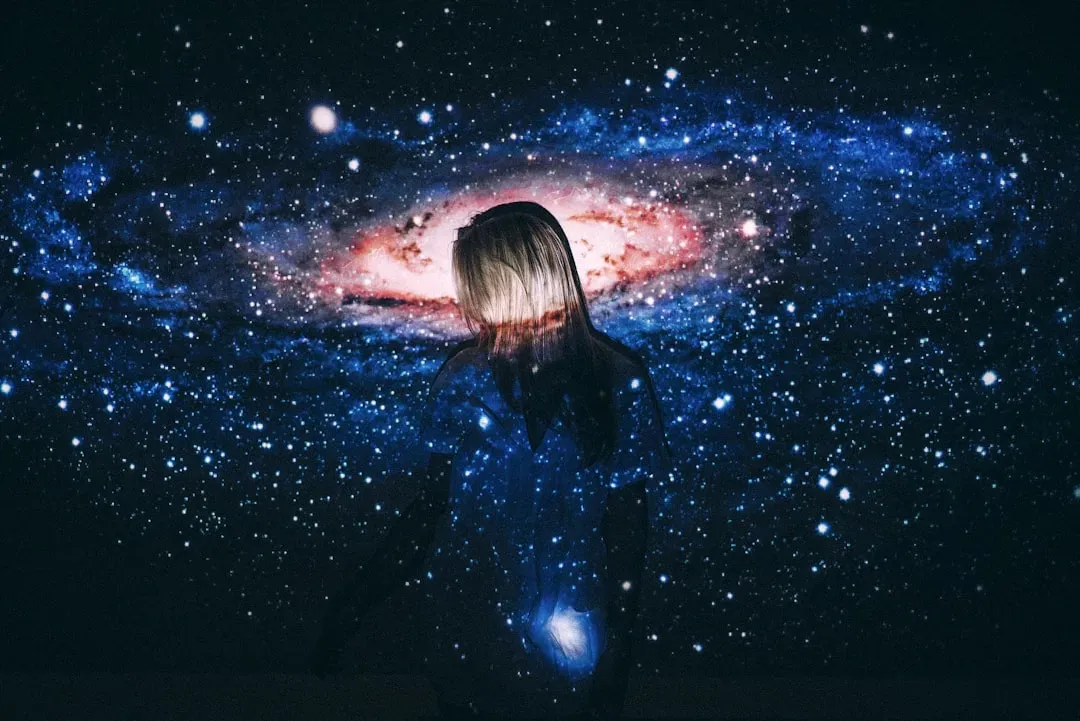
The universe itself might be conscious, with human consciousness emerging as a small part of this larger cosmic awareness. This view, called cosmopsychism, takes the idea even further by suggesting that the universe’s consciousness came first, and our individual awareness stems from it. Imagine a vast ocean of awareness, and each human mind is just one wave within it – distinct in shape, but never truly separate from the water.
Cosmopsychism hypothesizes that the cosmos is a unified object that is ontologically prior to its parts. It has been described as an alternative to panpsychism, or as a form of panpsychism. Proponents of cosmopsychism claim that the cosmos as a whole is the fundamental level of reality and that it instantiates consciousness. They differ from panpsychists, who usually claim that the smallest level of reality is fundamental and instantiates consciousness. Accordingly, human consciousness merely derives from a larger cosmic consciousness. In 2025, this idea reached a new level of academic credibility when physicist Maria Strømme of Uppsala University published a formal theoretical model in which consciousness is not viewed as a byproduct of brain activity, but as a fundamental field underlying everything we experience – matter, space, time, and life itself.
Quantum Physics and the Mind: A Strange Intersection
This is where things get genuinely wild. Deep down, your brain is an ensemble of the smallest bits of matter in the universe. These subatomic particles don’t play by the rules of the everyday world. They obey quantum physics – the mind-bending theory that posits objects can exist in multiple states at once and entangled atoms can instantaneously interact across vast distances. Some researchers believe this strange quantum layer may be directly linked to conscious experience.
Quantum panprotopsychism could provide a framework for understanding the intrinsic nature of reality by linking the phenomenal properties we access through subjective experience to their physical counterparts. Meanwhile, Hartmut Neven, a physicist and computational neuroscientist leading Google’s Quantum Artificial Intelligence Lab, believes quantum computing could help explore consciousness. Neven outlined experiments and theories suggesting consciousness might emerge from quantum phenomena such as entanglement and superposition within the human brain. He proposes leveraging quantum computers to test these ideas, potentially expanding our understanding of how the mind interacts with the physical world. It’s hard to say for sure whether this line of research will succeed, but the fact that Google is behind it signals that this is no longer just philosophical speculation.
Integrated Information Theory: Measuring Consciousness Like a Physical Quantity
Integrated Information Theory (IIT) offers an explanation for the nature and source of consciousness. Initially proposed by Giulio Tononi in 2004, it claims that consciousness is identical to a certain kind of information, the realization of which requires physical, not merely functional, integration, and which can be measured mathematically according to the phi metric. Think of it like a thermometer, but instead of measuring temperature, you are measuring the degree of inner experience present in any system.
The Integrated Information Theory of consciousness (IIT), proposed by Giulio Tononi in 2004 and since adopted by other neuroscientists such as Christof Koch, postulates that consciousness is widespread and can be found even in some simple systems. According to IIT, consciousness is linked to integrated information, which can be represented by a precise mathematical quantity called Phi. In late 2025, Tononi himself emphasized IIT’s “consciousness-first” approach to what exists, arguing that consciousness demonstrates to each of us that something exists – experience – and reveals its essential properties, formulating these operationally as the postulates of physical existence.
The Critics Are Loud – and They Have a Point
Let’s be real – this entire conversation invites serious pushback, and some of that pushback is worth taking seriously. A frequent philosophical charge is that panpsychism does not solve the hard problem or explain consciousness – it merely redefines the problem. Critics also argue that panpsychism waters down the concept of consciousness to the point of triviality. If everything is conscious in some sense, one might ask, what distinction is left to mark out the presence of consciousness? The worry is that by stretching “consciousness” to cover the entire range of physical reality, the term loses any useful meaning.
Panpsychists present their view as a serious, if revolutionary, synthesis: it treats consciousness as a fundamental feature of the universe (like mass or charge), thus purportedly solving the hard problem at a stroke. The balanced verdict on panpsychism must appreciate these self-defenses – it is not a naive idea but a carefully considered position that remains on the table in philosophy of mind. Whether it will ultimately be vindicated or refuted is, as of 2025, an open question. And honestly, that open-endedness is part of what makes this one of the most thrilling areas of inquiry in all of science right now.
Conclusion: The Most Important Question You Have Ever Asked
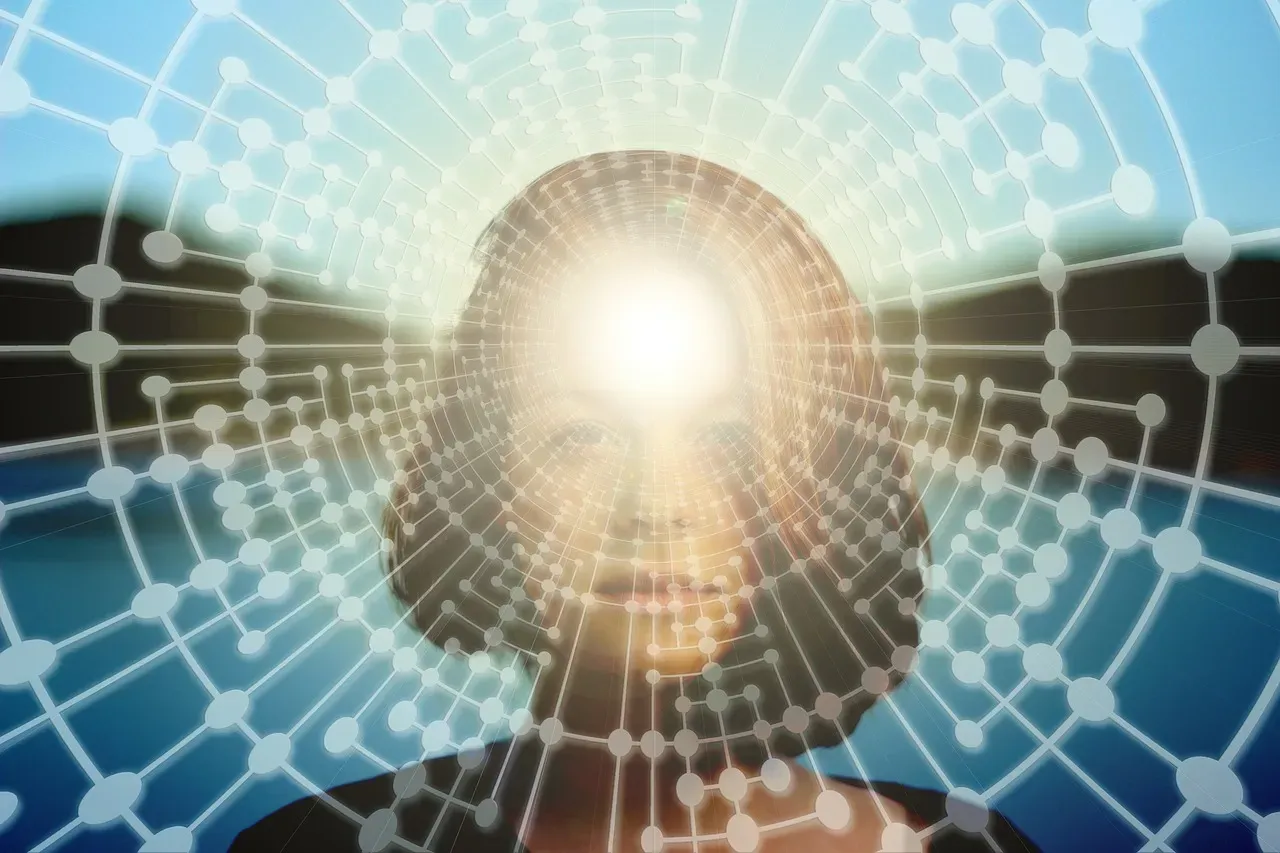
You are not just a body with a brain generating private thoughts in a silent skull. At least, that may not be the full story. A growing group of philosophers and scientists are challenging the core tenets of materialist science, arguing that the very fabric of reality is woven with threads of awareness. This isn’t mystical speculation – it is a scientific rebellion with the power to reshape our understanding of everything from the nature of life to the ethics of how we treat other beings.
What makes this moment so extraordinary is that science is being forced to ask questions it once dismissed as unscientific. The hard problem of consciousness has become the hardest wall in all of modern thought – and the ideas gathering on the other side of it are electrifying. One emerging theory is based on the idea that consciousness constitutes the fundamental element of reality, and that individual consciousnesses are parts of a larger, interconnected field. In this model, phenomena now perceived as “mysterious” can be explained as natural consequences of a shared field of consciousness.
Maybe your awareness right now is not just yours. Maybe it is the universe becoming briefly conscious of itself through you. If that doesn’t make you stop and stare at the ceiling for a moment, nothing will. So here’s a question worth sitting with: if consciousness was here before brains were, what does that say about who – or what – you actually are?