Nature is one of those things that keeps humbling you just when you think you understand it. Every time science gets comfortable with its own rules, something crawls out from a mossy rock or the depths of the ocean and completely rewrites the manual. These are not mythical beasts conjured by folklore. They are real, living, breathing, freezing, regenerating, and occasionally immortal creatures sharing this planet with you right now.
What makes these animals so jaw-dropping is not just that they are unusual. It is that they challenge the very biological principles we have spent centuries building. Prepare to question everything you thought you knew about life, death, and survival. Let’s dive in.
1. The Tardigrade: Nature’s Most Indestructible Creature
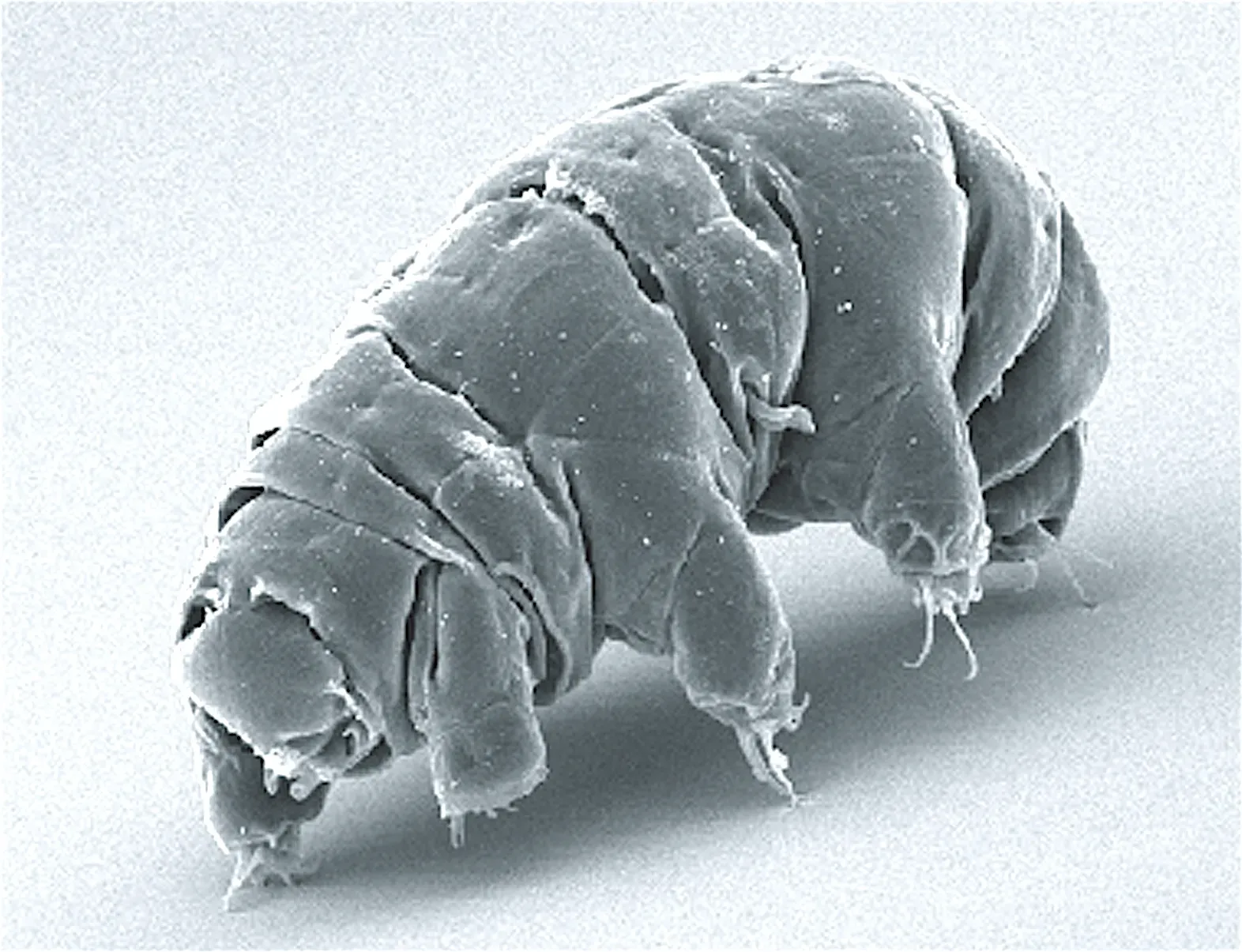
Imagine something smaller than a grain of sand that can survive conditions that would instantly obliterate every other form of life on Earth. Measuring less than half a millimeter long, tardigrades can survive being completely dried out, frozen to just above absolute zero, heated to more than 300 degrees Fahrenheit, irradiated several thousand times beyond what a human could withstand, and even the vacuum of outer space. Honestly, calling them “tough” feels like a dramatic understatement, the way calling the ocean “a bit damp” is an understatement.
Their secret weapon is a process called cryptobiosis. In this state, tardigrades completely slow down their metabolism to almost undetectable levels, less than 0.01% of normal, and their levels of water drop to around 1%. These robust little creatures have been on Earth for about 600 million years, preceding the dinosaurs by about 400 million years. In fact, tardigrades have survived all five mass extinction events, and it is thought they could be around long after humanity has died out. You have to admire something that stubborn.
2. The Immortal Jellyfish: The Ocean’s Benjamin Button
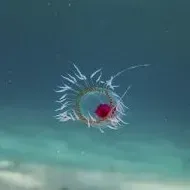
Here is the thing most people cannot fully wrap their head around: there is an animal that can biologically reverse its own aging and start its life over from scratch. Only one animal is known to have this remarkable ability, a species of jellyfish called Turritopsis dohrnii, first discovered in the 1880s in the Mediterranean Sea. Turritopsis dohrnii can hit the reset button and revert to an earlier developmental stage if it is injured or otherwise threatened. Think of it like a butterfly that can turn itself back into a caterpillar whenever life gets too difficult.
When faced with stress, injury, or starvation, the immortal jellyfish has the ability to revert back into a polyp. Through a process known as transdifferentiation, it is essentially resetting its biological clock to cheat death. The reincarnated polyp eventually produces new medusae that are genetically identical to the previous version of the immortal jellyfish. The capability of biological immortality with no maximum lifespan makes Turritopsis dohrnii an important target of basic biological aging and pharmaceutical research. Scientists are now studying whether this process could one day inform how we treat aging in humans. I know it sounds crazy, but the fountain of youth might literally be floating in the Mediterranean.
3. The Wood Frog: The Creature That Freezes to Death and Lives Again
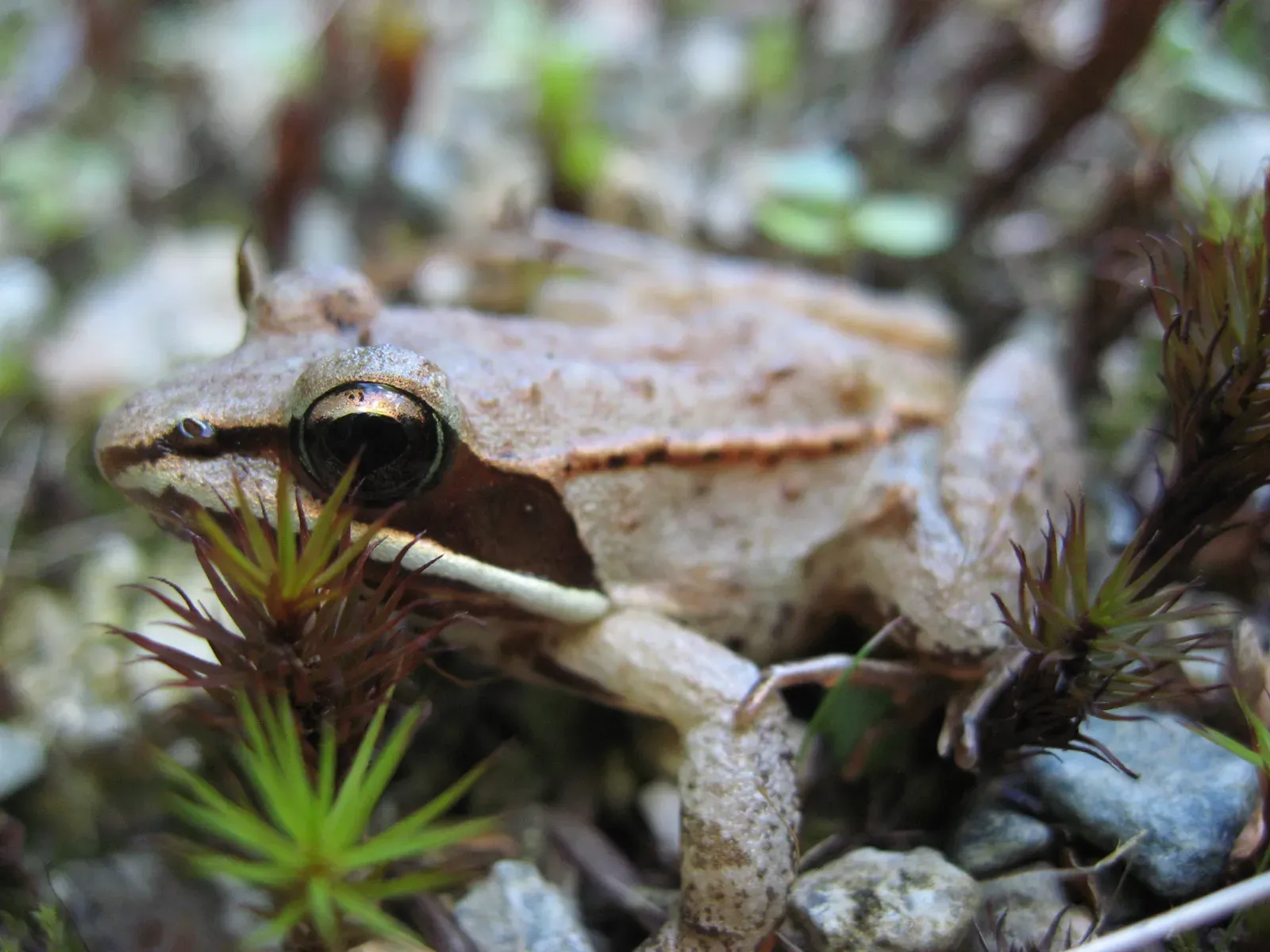
Picture this. A frog sits in the leaf litter as winter temperatures plunge. Its eyes glaze over. Its heart stops completely. Its blood crystallizes. It is, by every measurable definition, dead. Then spring arrives, and it hops away like nothing happened. Only the wood frog can freeze solid in winter, its heart and brain stopping completely, then thaw and come back to life in the spring. It is the only frog, and indeed the only amphibian, to live north of the Arctic Circle, capable of doing so because of its ability to survive being frozen solid during winter.
The mechanism behind this feat is extraordinary. As temperatures drop, the wood frog’s liver converts glycogen to glucose, a sugar syrup, and floods the frog’s system. Meanwhile, nucleating proteins push water from the frog’s cells. Glucose replaces the water, which keeps the cells from freezing. Outside the cells, the water does freeze, which stops the frog’s metabolism, including its brain and heart, and preserves its tissues. Researchers are now trying to do the same with human organs harvested for transplant. Organs currently remain viable for only a few hours outside the body. If glucose could replace the water within them, perhaps they too could be frozen solid and later reanimated, greatly prolonging transplant time. A small frog from the forest floor could one day help save thousands of human lives.
4. The Naked Mole Rat: The Rodent That Refuses to Get Cancer or Age
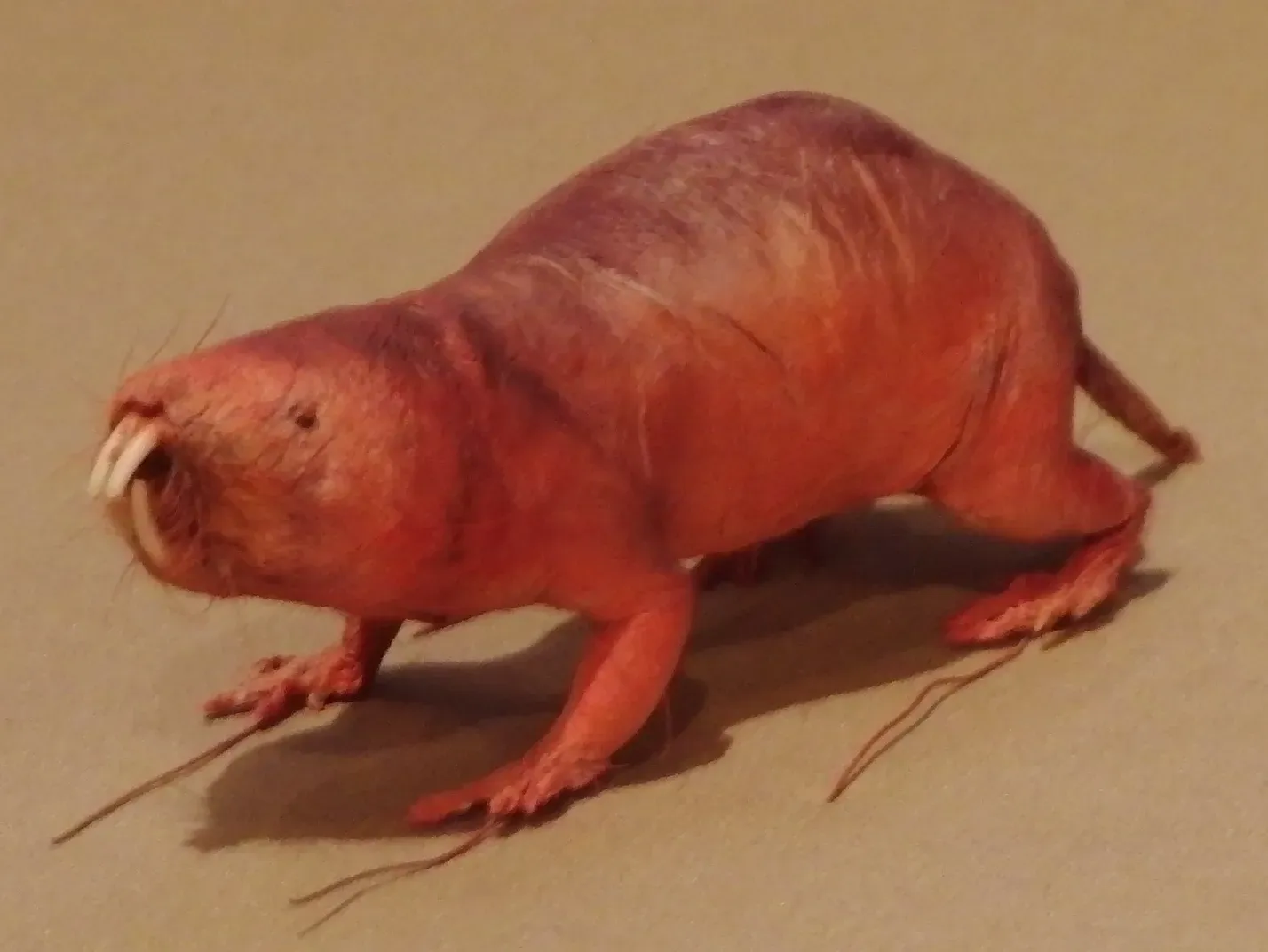
Let’s be real, the naked mole rat is not winning any beauty contests. But what it lacks in looks, it more than makes up for in raw biological defiance. The wrinkly rodent barely seems to age and appears almost impervious to cancer, heart disease, and mental decline. Compared to other rodents of similar size, which typically live just a few years, the naked mole rat has been known to live for more than three decades, a biological record that leaves scientists genuinely puzzled.
Naked mole-rats’ exceptional resistance to cancer is thanks to unique conditions in their bodies that stop cancer cells from multiplying, according to research. Naked mole rats don’t seem to die from old age or develop cancer, they can hold their breath for 18 minutes, and do not feel pain like other mammals do. It is hard to say for sure how evolution produced something this extreme, but scientists are intensely focused on the naked mole rat as a living key to unlocking the mechanisms of human aging and cancer prevention. A creature this ugly is doing genuinely beautiful work for science.
5. The Axolotl: The Master of Regeneration
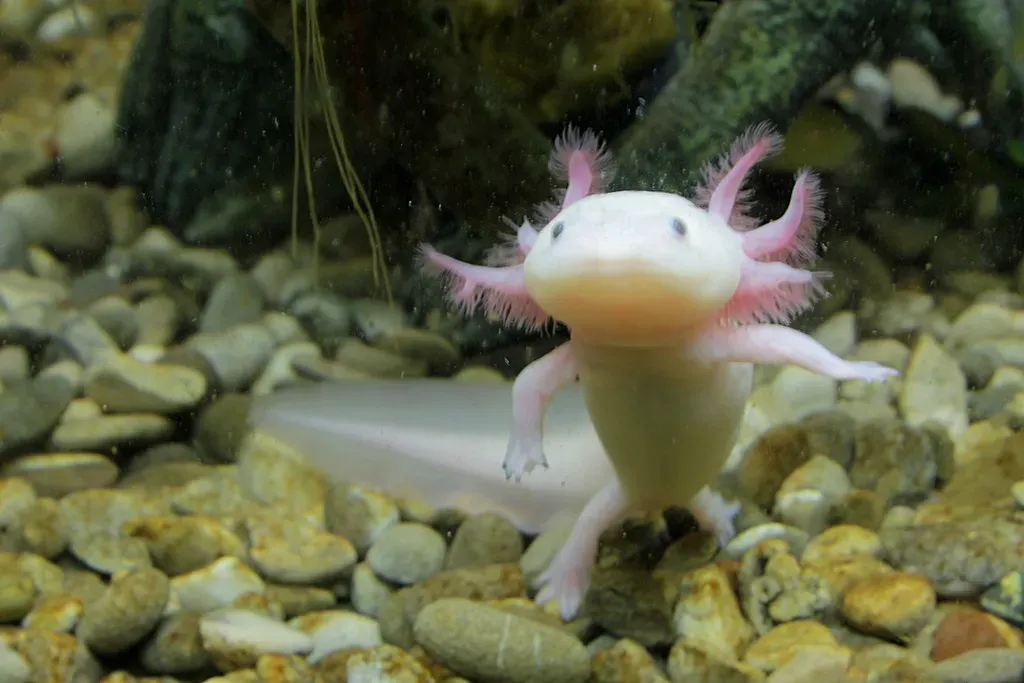
Most animals, including humans, deal with serious physical injuries in a frustratingly permanent way. Lose a limb, lose it forever. The axolotl, a remarkable Mexican salamander, did not get that memo. The axolotl can regenerate perfectly from nearly any damage to its body, including its spine, heart, and brain. Crush its spine, remove spinal segments, cut off any limb at any level, and new tissue, nerves, and veins appear. This is not a metaphor or an exaggeration. It is literal biological regeneration happening on a scale that no other vertebrate can match.
For over a century, scientists have been studying the famous Mexican salamander, trying to parse the secrets behind its peculiar smile, like the Mona Lisa of amphibians. What makes this even more fascinating is the precision involved. What truly puzzles researchers is how axolotls avoid uncontrolled, cancer-like growth and manage to recreate complex tissues with such precision. Deciphering these secrets could one day transform regenerative medicine. Think of the axolotl less as a salamander and more as a walking blueprint for the future of human healthcare.
6. Turritopsis dohrnii’s Cousin in Resilience: The Bombardier Beetle’s Chemical Superpower
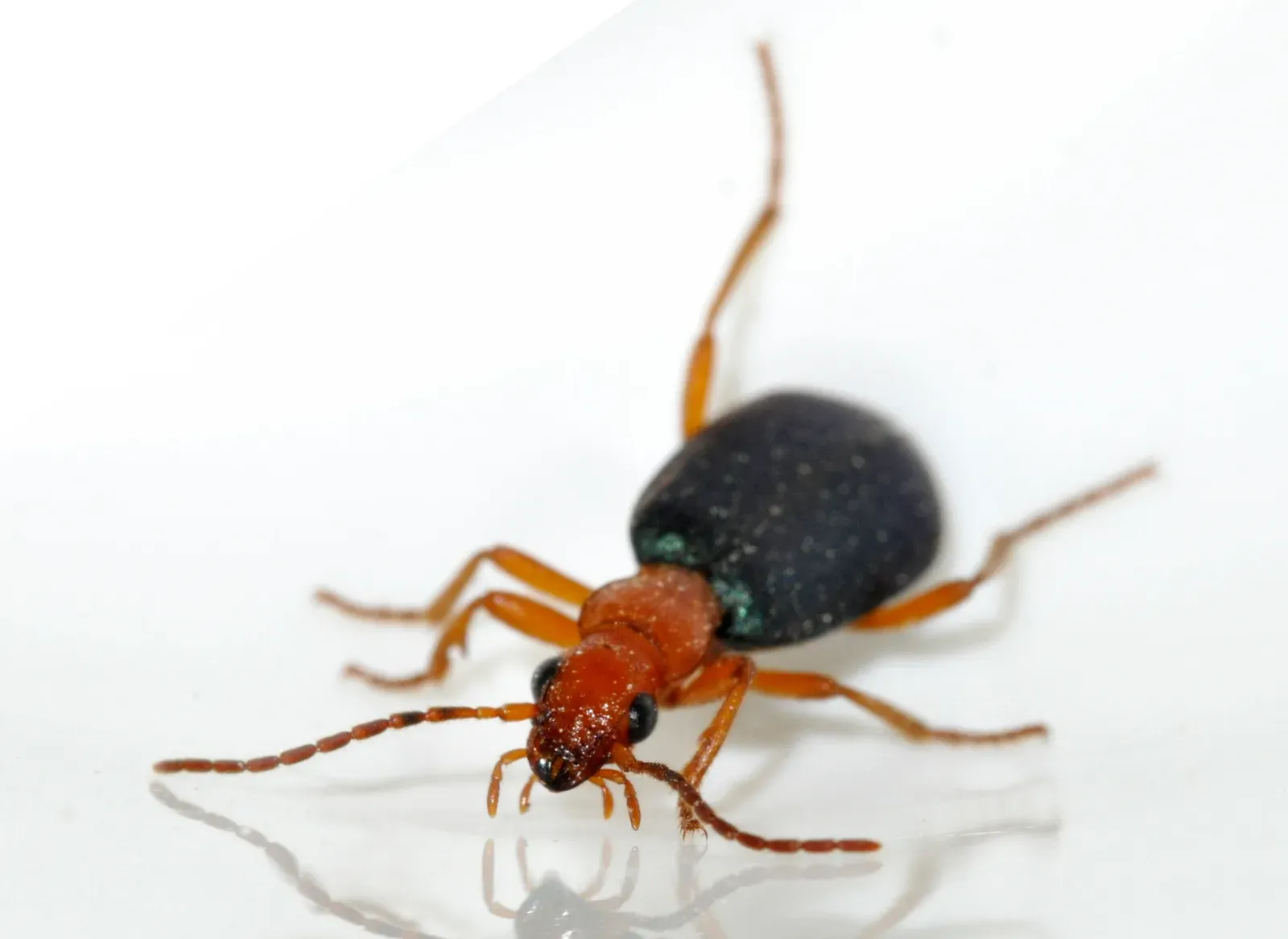
While some creatures defy nature through biology, the bombardier beetle does it through something that looks startlingly close to chemistry class gone violently wrong. The bombardier beetle has developed a jaw-dropping defense by ejecting a scalding, noxious spray to deter predators. This chemical blast is produced through a precisely controlled reaction inside its abdomen, involving two separate chambers and an explosive mix of enzymes and chemicals. How such a complex system evolved and how beetles maintain such tight control over the reaction remains a mystery, making this adaptation a true marvel of nature.
To put this into perspective, imagine your body having a built-in chemical weapon that fires boiling, toxic liquid at a precise target without ever burning you in the process. The stinging mechanism of jellyfish, for comparison, explodes with a force five million times the acceleration due to gravity, but the bombardier beetle takes chemical warfare to an entirely different level using internal biological engineering so precise that human chemists are still reverse-engineering it. The fact that this tiny insect has solved a problem that challenges our best scientists tells you everything about just how wildly creative evolution can be.
7. The Platypus: Evolution’s Most Confusing Prank
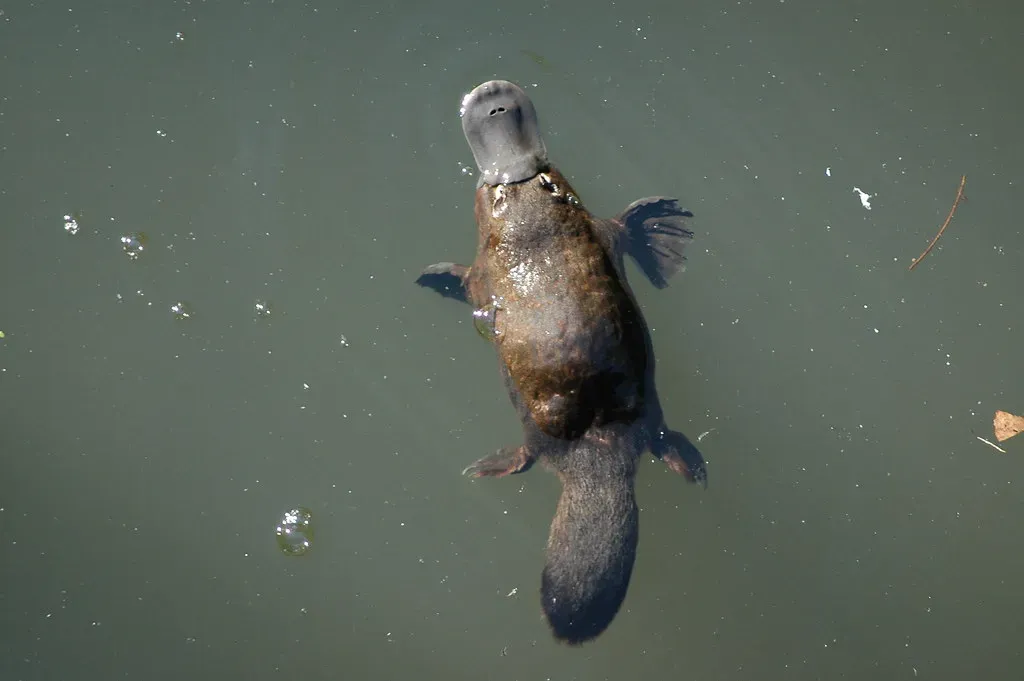
If you showed someone an image of a platypus without telling them what it was, they would assume it was a prank. A mammal with a duck bill. Webbed feet. It lays eggs. The male has venomous ankle spurs. It hunts using electroreception, meaning it detects the electric fields generated by its prey’s muscle contractions. The platypus is a bizarre yet intriguing creature that leaves scientists baffled. Found in eastern Australia, this egg-laying mammal possesses traits typically associated with birds and reptiles, such as webbed feet and a bill similar to that of a duck. Moreover, the male platypus has venomous spurs on its hind legs, a rare feature among mammals.
The platypus is not just an oddity, it is an evolutionary outlier that breaks multiple biological categories simultaneously. It is warm-blooded yet lays eggs. It produces venom yet is classified as a mammal. It navigates underwater with its eyes shut, relying entirely on electrical signals to find food. These remarkable creatures demonstrate that evolution is not a straightforward process but instead a complex tapestry of adaptations that often defy expectations. By studying these extraordinary animals, scientists gain invaluable insights into biology’s innovative processes, offering endless inspiration and uncovering potential applications for human advancement. The platypus is living proof that nature sometimes just does whatever it wants and dares you to explain it.
Conclusion: Nature Has No Limits
If these seven creatures teach you one thing, let it be this: the natural world is far stranger, more creative, and more resilient than anything the human imagination has ever produced. From a microscopic water bear that survives the vacuum of space to a tiny jellyfish that rewinds its own age like rewinding a cassette tape, these animals do not just push the boundaries of biology. They erase them entirely.
The most humbling part? Scientists are still uncovering new truths about each of these species every single year. Every discovery reshapes what we thought we knew, and every creature on this list holds potential answers to some of humanity’s most profound medical challenges, from cancer research to organ preservation to regenerative medicine. Nature has been running experiments far longer than we have, and these seven creatures are among its most astonishing results.
So the next time you feel like you have a solid grip on how the world works, just remember: somewhere out there, a frog is freezing its heart solid and planning its spring comeback. Which of these seven creatures shocked you the most? Tell us in the comments.