Science has never been a straight road. It twists, doubles back on itself, and sometimes drives straight off a cliff before someone comes along and says, “Wait, actually – we had it completely wrong.” Throughout history, some of the most transformative ideas in human knowledge were met not with curiosity, but with outright mockery, institutional rejection, and in a few chilling cases, personal ruin for the people brave enough to propose them.
You might be surprised to learn that many things you take for granted today – things you learned in a basic school classroom – were once considered so absurd that their proponents were laughed out of lecture halls or, worse, committed to asylums. The story of science is as much about human stubbornness as it is about human brilliance. So buckle up, because what you’re about to read will make you rethink just how confident we should ever be in the “obvious.” Let’s dive in.
1. Continental Drift: The Earth Moves Under Your Feet

This was once considered a fringe science, so wild it was often mocked by peers. Today, it is a basic concept in geology, sitting right alongside the topic of tectonic plates. Picture someone telling a room full of geologists that the massive continents – the solid land masses you live on – are slowly sliding around the planet like croutons floating in a soup bowl. That’s essentially what Alfred Wegener did in 1912, and the response was ferocious.
On January 6, 1912, the 32-year-old German geophysicist and meteorologist proposed an extraordinary idea. Based on his observations, Earth’s continents had once been a single landmass that had drifted apart. He noticed that the continents could be more or less fit together, like a puzzle, and that there were fossil plants and animals that spanned multiple continents. A fatal weakness in Wegener’s theory was that it could not satisfactorily answer the most fundamental question raised by his critics: what kind of forces could be strong enough to move such large masses of solid rock over such great distances? Wegener never lived to see his theory accepted – he died at the age of 50 while on an expedition in Greenland. Only decades later, in the 1960s, did the idea of continental drift resurface.
That revival came thanks to technologies adapted from warfare that made it possible to more thoroughly study the Earth. Those advances included seismometers used to monitor ground shaking caused by nuclear testing, and magnetometers to detect submarines. With seismometers, researchers discovered that earthquakes tended to occur in specific places rather than equally all over the Earth. Scientists studying the seafloor with magnetometers found evidence of surprising magnetic variations near undersea ridges. The vindication, though tragic in its timing for Wegener, was total. Plate tectonics has proven to be as important to the earth sciences as the discovery of the structure of the atom was to physics and chemistry, and the theory of evolution was to the life sciences.
2. Heliocentrism: You Are Not the Center of Everything
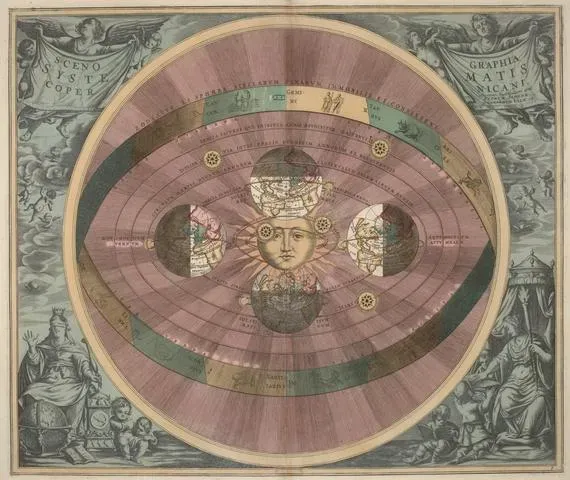
Here’s a thought that seems obvious now: the Earth goes around the Sun, not the other way around. Simple, right? Well, it was considered a heretical idea, since Christians were firmly convinced that the Earth was at the center. The concept reappeared with a bang when Renaissance astronomer Nicolaus Copernicus put it forward in the first half of the 16th century. It was met with scholarly interest, but it wasn’t long before religious leaders such as Martin Luther and the Catholic Sacred Congregation began criticising the work.
A century later, when Galileo Galilei used his telescope to find evidence supporting Copernicus – observing the moons of Jupiter and the phases of Venus – he was met with fierce opposition. The scientific establishment scoffed, and the Catholic Church, viewing the theory as a direct contradiction of scripture, condemned him as a heretic and placed him under house arrest for the rest of his life. Honestly, think about that for a moment. Galileo was punished for correctly observing reality. Placing the Sun at the center solved major orbital puzzles and is now considered common sense. Once upon a time, though, you could be executed for believing in heliocentrism.
3. Germ Theory: Invisible Killers Nobody Believed In

Let’s be real – the idea that microscopic, invisible organisms floating around in the air and on your hands could actually kill you sounds almost laughable if you’ve never heard it before. Before the late 19th century, the medical community believed that diseases like cholera and the plague were caused by “miasma,” or bad air rising from rotting organic matter. Similarly, Louis Pasteur’s work showing that microorganisms caused fermentation and disease was met with deep skepticism. Doctors couldn’t see the germs, so they didn’t believe in them.
Ignaz Semmelweis, a Hungarian obstetrician working at the Vienna General Hospital in 1847, noticed the dramatically high maternal mortality from puerperal fever following births assisted by doctors and medical students – while those attended by midwives were relatively safe. Investigating further, he made the connection that physicians had usually come directly from autopsies. He made doctors wash their hands with chlorinated lime water before examining pregnant women, and documented a sudden reduction in the mortality rate from roughly one in five deaths down to just over two percent in a year. Despite this evidence, he and his theories were rejected by most of the contemporary medical establishment. In 1865, the increasingly outspoken Semmelweis was committed to an asylum by his colleagues. In the asylum, he was beaten by the guards. He died 14 days later from a gangrenous wound. A man who saved lives through hand-washing was killed, in effect, for the idea. The simple act of washing hands, once considered the bizarre obsession of a madman, is now understood as one of the most critical practices in all of modern medicine.
4. Darwin’s Evolution by Natural Selection: We Share a Common Ancestor
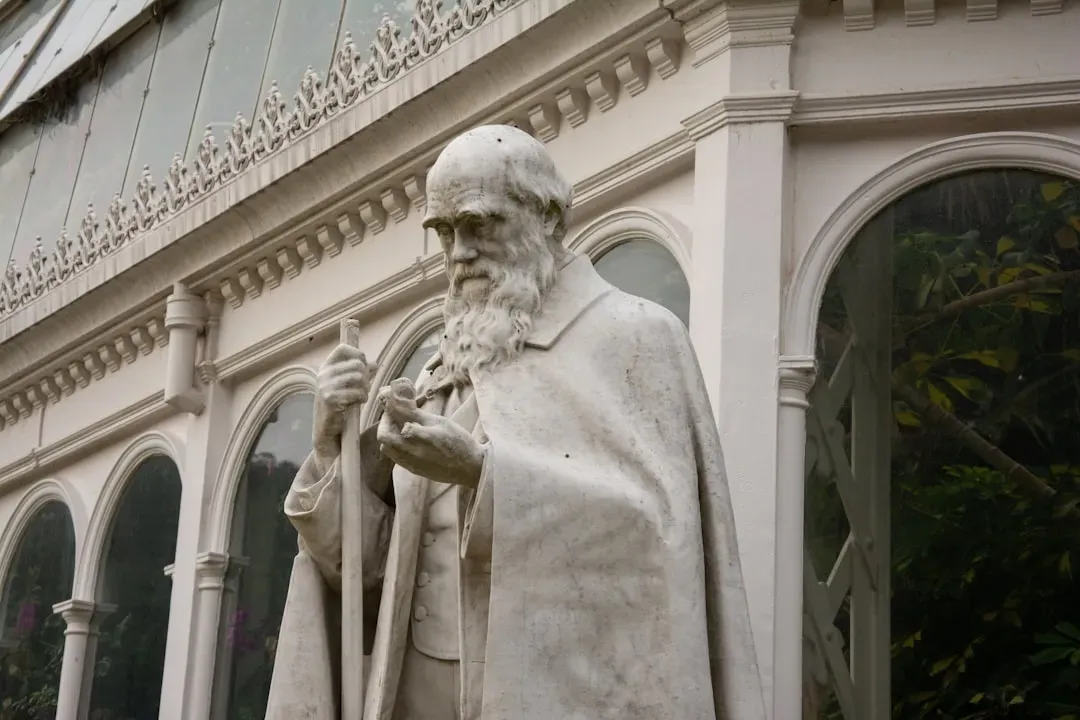
Few scientific theories have caused a greater uproar than Charles Darwin’s theory of evolution by natural selection. When he published On the Origin of Species in 1859, he wasn’t just presenting a scientific hypothesis – he was challenging the very foundation of humanity’s self-perception. The prevailing view, rooted in religious doctrine, was that humans were a special creation, fundamentally separate from the animal kingdom. Darwin’s proposal seemed preposterous – that life had common ancestors, and that evolution was a process of slow change due to the passing down of heritable traits that adapted the species for survival.
The idea was met with public outrage and scientific scorn. It was seen as a direct attack on God and a demotion of humanity to the level of apes. Famous debates, like the 1860 Oxford evolution debate, highlighted the fierce opposition from both the religious and scientific establishments. Yet the evidence was simply too overwhelming to ignore. By the 1870s, evolution was accepted as mainstream in scientific circles. Natural selection took a little longer, but now we can literally see it in action. Today, virtually every branch of biology, medicine, and genetics rests on evolutionary theory as its foundation. It’s hard to overstate just how completely the scientific consensus has shifted.
5. Quantum Entanglement: Spooky Action That Einstein Hated
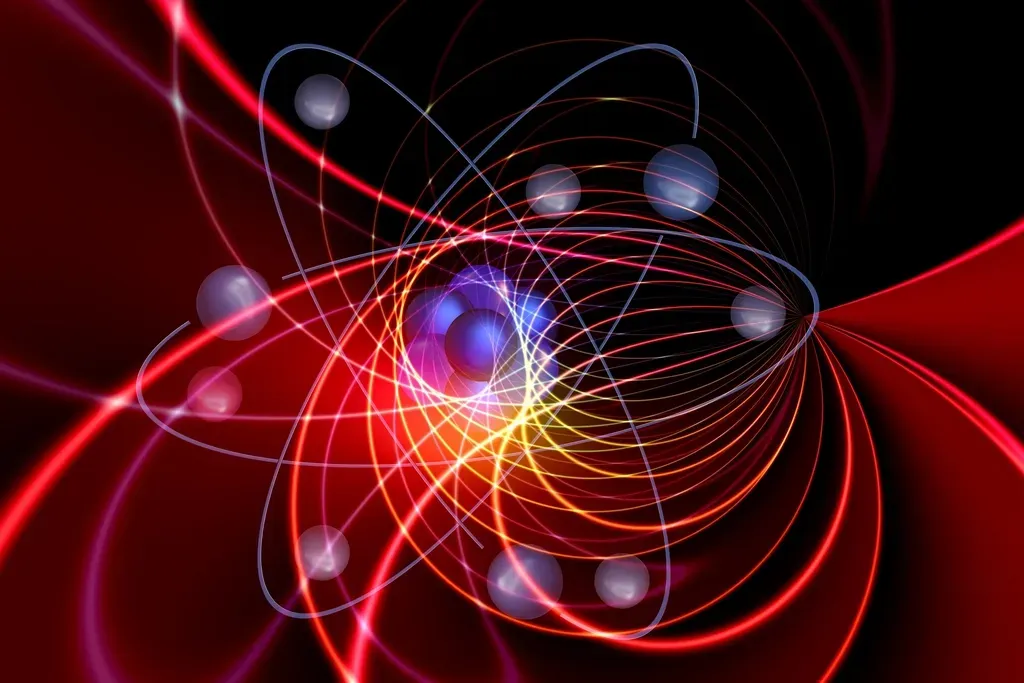
If you think the previous theories were hard to swallow, prepare yourself. In the simplest terms, quantum entanglement means that aspects of one particle of an entangled pair depend on aspects of the other particle, no matter how far apart they are or what lies between them. Imagine twins separated at birth on opposite sides of the universe who still somehow feel each other’s pain at the exact same instant. That’s roughly the kind of territory we’re in here. In 1935, Albert Einstein and colleagues first pointed out the “spooky” action of quantum entanglement. However, it appeared to conflict with Einstein’s theory of special relativity, which postulates that nothing can travel faster than the speed of light.
Einstein and others considered such behavior impossible, as it violated the local realism view of causality, and argued that the accepted formulation of quantum mechanics must therefore be incomplete. Even until the 1970s, researchers were still divided over whether quantum entanglement was a real phenomenon. The vindication came dramatically. The 2022 Nobel Prize in Physics recognized three scientists who made groundbreaking contributions in understanding one of the most mysterious of all natural phenomena: quantum entanglement. Its verification through rigorous experiments has not only deepened our understanding of the quantum world but also unlocked transformative technologies. As research progresses, entanglement promises to be at the forefront of innovations that could reshape computing, communication, and our grasp of the universe’s fundamental workings.
6. The Endosymbiotic Theory: Your Cells Are a Biological Merger

Here’s something genuinely mind-bending. The tiny structures inside your cells – the mitochondria that produce your energy, and the chloroplasts in plant cells that capture sunlight – were once entirely separate, free-living bacteria that got absorbed by larger cells billions of years ago. Rather than being digested, they formed a permanent partnership. The theory of endosymbiosis was met with universal scorn when it was proposed. It was rejected by more than a dozen scientific journals and was widely considered a fantasy. The established view was that cells evolved through gradual mutations, not through such radical, symbiotic mergers.
The scientist behind this extraordinary idea was Lynn Margulis, who persisted for decades in the face of dismissal. Margulis persisted, and the evidence eventually became undeniable. Both mitochondria and chloroplasts have their own separate DNA, which is remarkably similar to bacterial DNA, providing a “smoking gun” that proved her once-heretical idea correct. Think of it this way: every time you take a breath and feel your body convert food to energy, you’re experiencing the legacy of a bacterial merger that happened roughly two billion years ago. The cells that power you were once strangers. That’s not fringe science anymore – it’s absolute, settled biology.
7. The Expanding Universe: Everything Is Flying Away from Everything Else
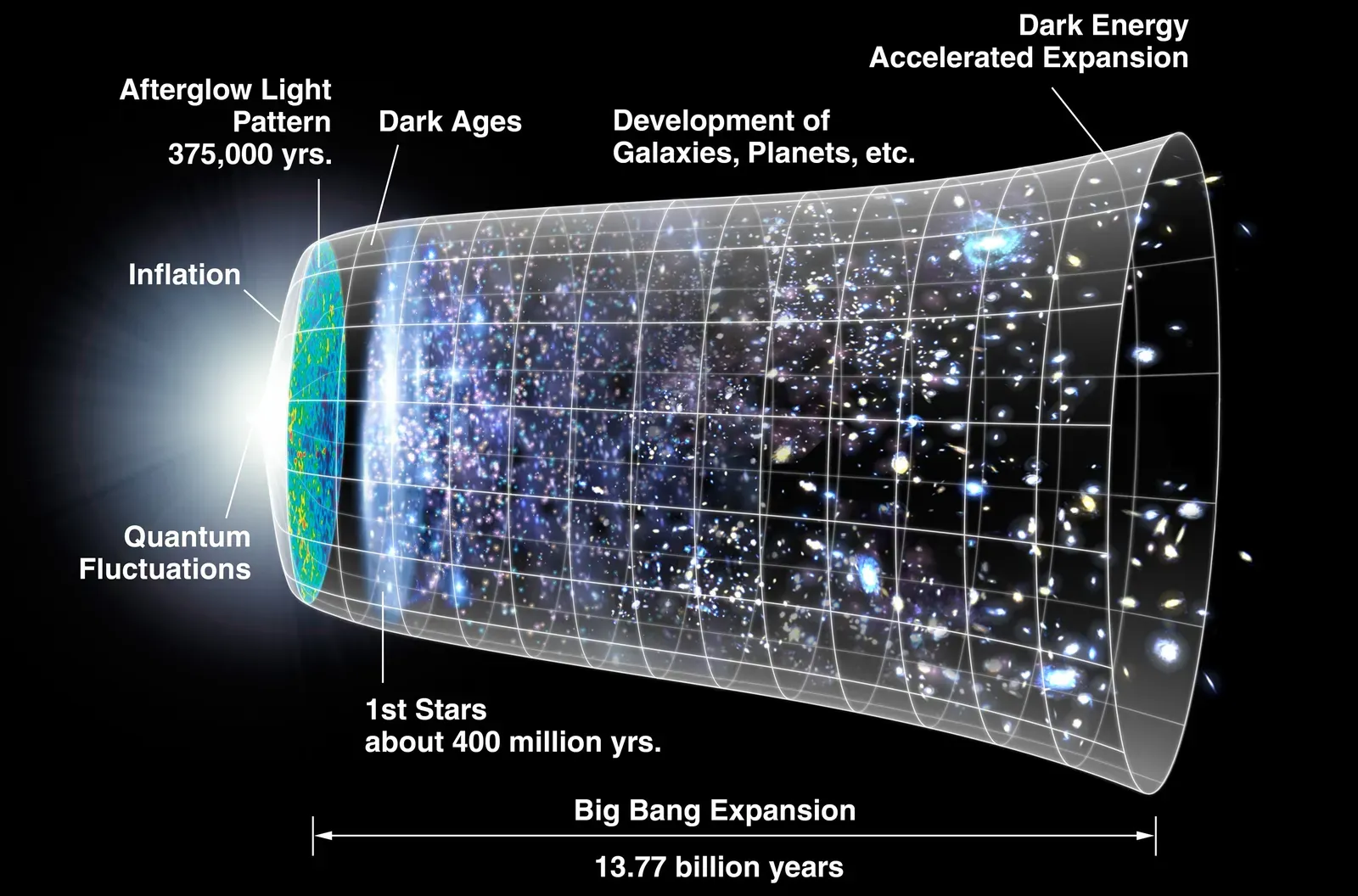
For most of human history, the universe was assumed to be static – an eternal, unchanging backdrop to human life. Even Albert Einstein, when his own equations of general relativity predicted a dynamic, expanding universe, added a correction term specifically to keep the math “stable.” He would later call this his greatest blunder. After Albert Einstein published his theory of gravity, researchers realized that it predicted that the universe should be expanding – a finding confirmed by observations. Astronomer Edwin Hubble made those critical observations in 1929, demonstrating that galaxies were receding from us in all directions, and the farther away they were, the faster they moved.
The implications are staggering. If everything is moving apart, that means that in reverse, everything was once compressed into a single unimaginably dense point. This became the foundation of the Big Bang theory. According to astrophysicists, dark energy makes up an estimated vast majority of all the energy in the entire universe and holds the secrets to many of the unexplainable peculiarities we see in deep space. Not only is the universe expanding – the rate of expansion is actually accelerating. Scientists discovered this shocking fact in 1998, and it won its discoverers the Nobel Prize. The universe isn’t just growing; it’s growing faster and faster, pulled apart by a mysterious force we call dark energy that we still don’t fully understand.
8. The Atomic Theory: Matter Is Made of Tiny, Invisible Particles
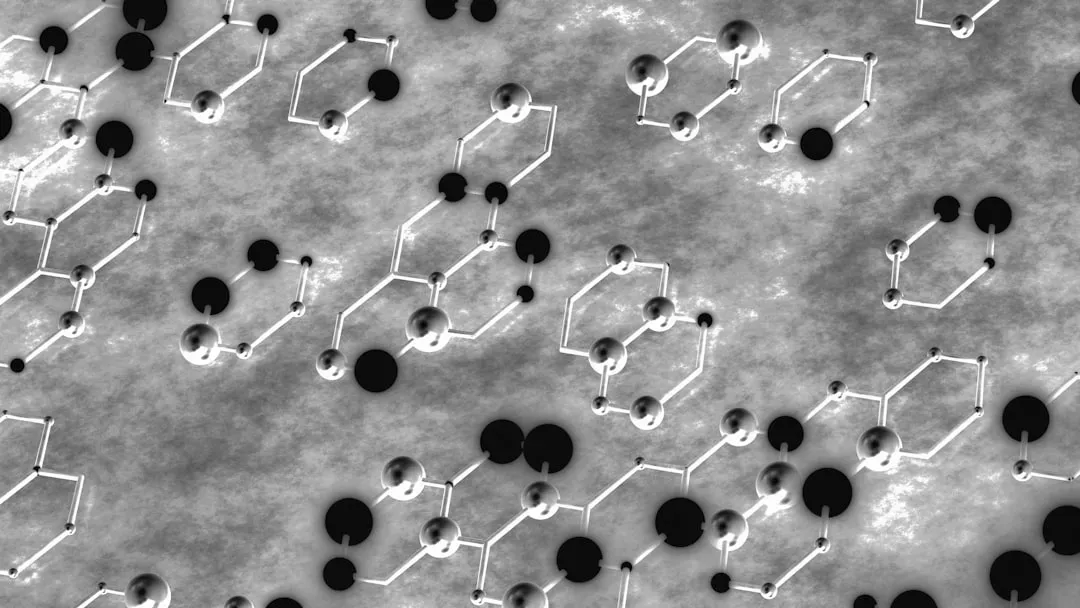
The idea that all matter is composed of tiny, indivisible particles called atoms seems so fundamental today that it’s taught to children in early school years. Yet for centuries, the notion was either ridiculed or flatly ignored by the scientific mainstream. Energeticism was an entire competing theory that attempted to reinterpret all of chemistry in terms of energy, rejecting the concept of atoms altogether. That wasn’t a fringe position – it had serious scientific backers well into the 19th century. Prominent physicists argued that atoms were merely a useful mathematical fiction, not real objects.
The definitive proof came through the early 20th century, when experiments by figures like Ernest Rutherford revealed the structure of the atom in extraordinary detail, showing a dense nucleus surrounded by electrons. Today we know that electrons don’t really orbit the nucleus at all. Scientists working in the early 20th century thought of electrons as very tiny balls, and assumed their motion would be comparable with the motion of actual balls. Even our earliest confirmed atomic models were oversimplified. The reality of the atom is far stranger than anyone initially imagined – a mostly empty space, governed by probability clouds rather than neat orbits. Yet without atomic theory, there would be no chemistry, no medicine, and no modern technology as you know it.
9. Spontaneous Generation Was Debunked, and Germ Theory Replaced It
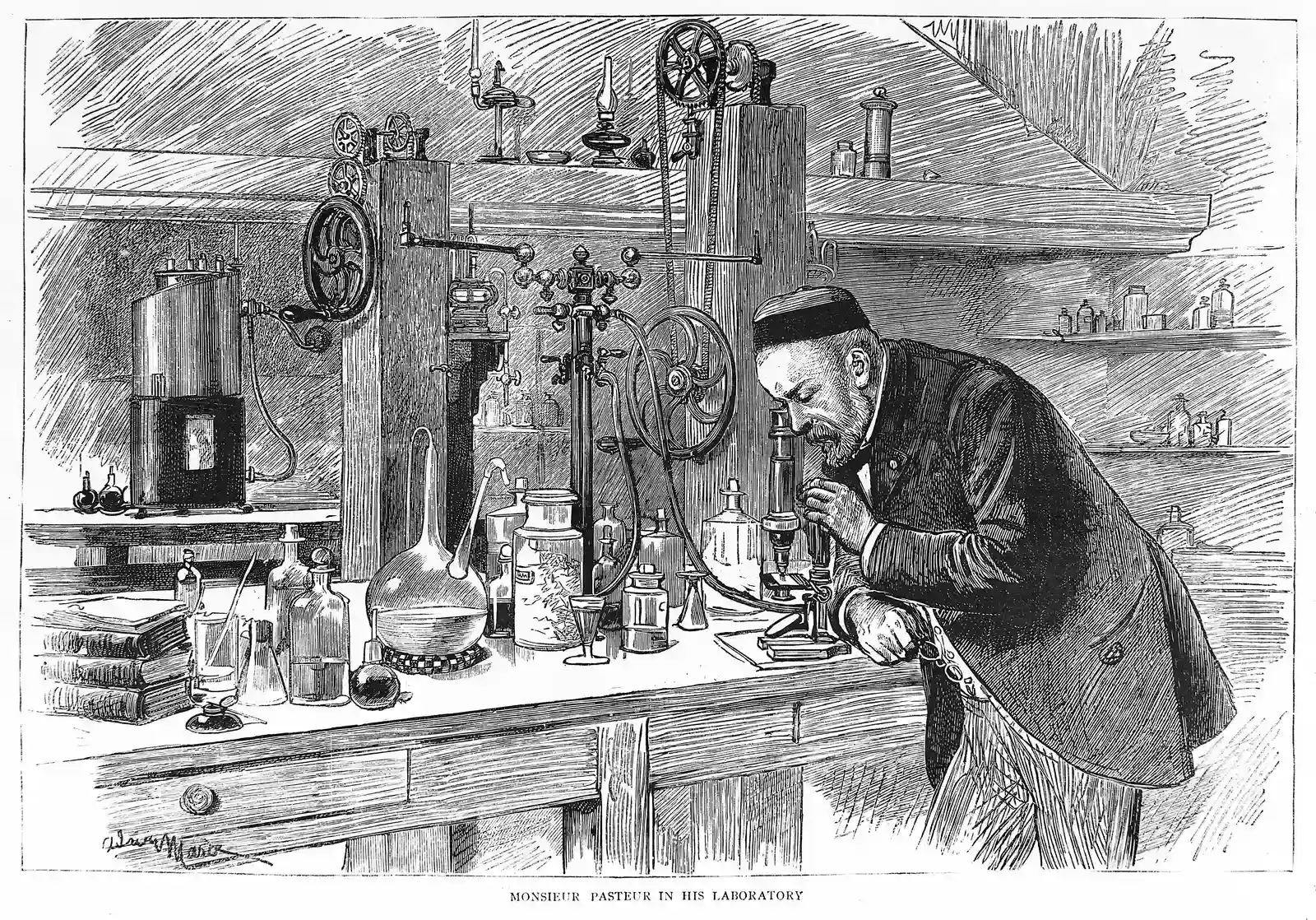
For two thousand years, people genuinely believed that life could arise spontaneously from non-living matter. Mice from grain, flies from rotting meat, maggots from mud. This wasn’t a wild folk belief – it was accepted scientific doctrine stretching back to Aristotle. It was only with the adoption of the scientific method that many of the classical theories like spontaneous generation began to be tested. Once they were, they quickly crumbled. Famed scientist Louis Pasteur showed that maggots would not appear on meat kept in a sealed container, and the invention of the microscope helped to show that these insects were formed not by spontaneous generation but by airborne microorganisms.
Pasteur’s work on the emerging germ theory disproved the earlier theory of spontaneous generation. His experiments, especially those concerning fermentation of alcohol, established the biological underpinning of spoilage and disease. Regarded as one of the most important discoveries in the history of medicine, germ theory challenged the medical profession to reevaluate how disease was thought about, offered possibilities for both the prevention and treatment of disease, as well as the discovery and implementation of new technologies to combat disease. Confirmation of bacteria as the cause of disease transformed the practice of medicine, and by early in the twentieth century, practical extension of the germ theory led to many improved public health sanitation practices like water treatment and sewage disposal. Everything from modern surgery to your local water supply is a direct consequence of an idea that was once unthinkable.
10. Dark Matter: The Invisible Scaffolding of the Universe
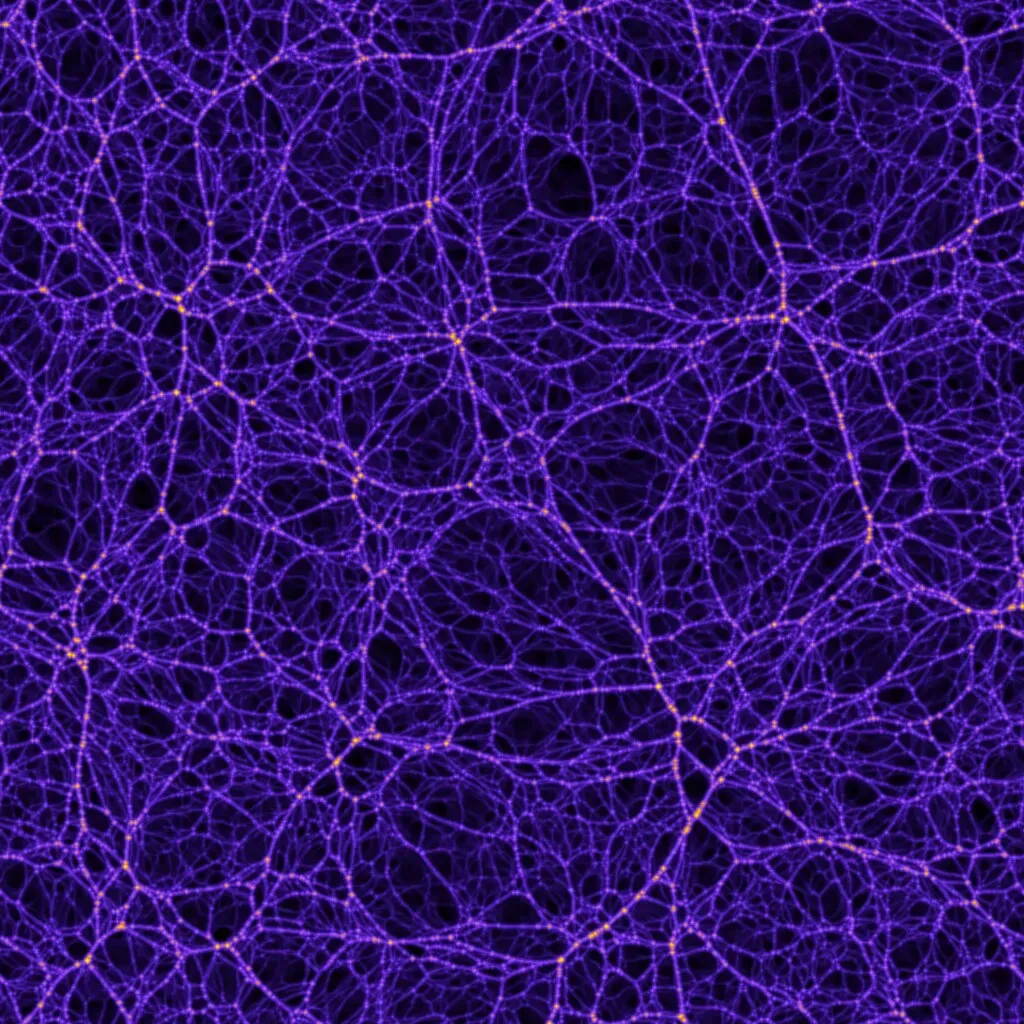
In the late 20th century, astronomers like Vera Rubin noticed that galaxies were spinning so fast that, according to our understanding of gravity, they should be flying apart. The math simply didn’t work. The visible stars and gas in galaxies couldn’t provide enough gravitational pull to hold them together at those speeds. There had to be something else – something massive, invisible, and utterly unknown. There’s a lot we don’t know about our universe – in fact, roughly 95 percent of it remains a mystery to us. Dark matter is estimated to make up the overwhelming bulk of all the matter in the cosmos, yet it emits no light, reflects no light, and interacts with ordinary matter only through gravity.
When Rubin and others first proposed this invisible mass, the response was deeply skeptical. The idea that most of the universe could be made of something completely undetectable by any instrument struck many physicists as absurd, almost metaphysical. Quantum science continues to explore and help explain some of the strangest phenomena in the universe, even shedding light on the mystery of dark matter and dark energy. Today, dark matter is not only accepted as real – it’s considered the structural scaffolding of the entire universe. Without it, galaxies couldn’t form, stars couldn’t cluster, and the universe as you experience it simply could not exist. We’ve confirmed it through multiple independent lines of evidence, even though no one has ever directly “seen” it. It’s one of the greatest accepted mysteries in all of science.
Conclusion: The Pattern Science Keeps Repeating

These theories often expressed ideas that were just too abstract or staggering to be accepted by the larger scientific community at the time, but over the years, as more discoveries were made and certain pieces fell into place, sometimes even the wildest theories have been proven right all along. That’s the beautiful and humbling pattern threaded through all ten of these stories. The ideas that once seemed most ridiculous – invisible germs, drifting continents, particles that communicate across galaxies – turned out to be the truest descriptions of reality we have ever found.
It’s worth sitting with that discomfort for a moment. Many discarded explanations were once supported by a scientific consensus, but were replaced after more empirical information became available that identified flaws and prompted new theories which better explained the available data. Science is not a collection of permanent truths – it’s the best current map of a territory we’re still exploring. Some of what feels certain today will likely look as outdated as miasma theory in another century. So the next time someone presents you with a strange, uncomfortable idea, it might be worth pausing before you laugh. History has a long, very clear track record of the laughers being wrong.
Which of these theories surprised you the most? Drop your thoughts in the comments – the conversation is only getting started.