
Science is supposed to have answers. That’s literally its job. Yet here we are, decades into the age of satellites, supercomputers, and quantum physics, and the natural world keeps shrugging at our best theories. Some of the most jaw-dropping events on Earth and in the cosmos above it remain stubbornly, gloriously unexplained.
You might think the big mysteries were solved long ago. Think again. From ghostly lights hovering over Norwegian valleys to invisible cosmic forces that make up nearly the entire universe, nature is still pulling tricks on the world’s brightest minds. So let’s dive in, because what you’re about to discover might permanently change how you look at the world around you.
Ball Lightning: The Floating Fire That Defies Physics
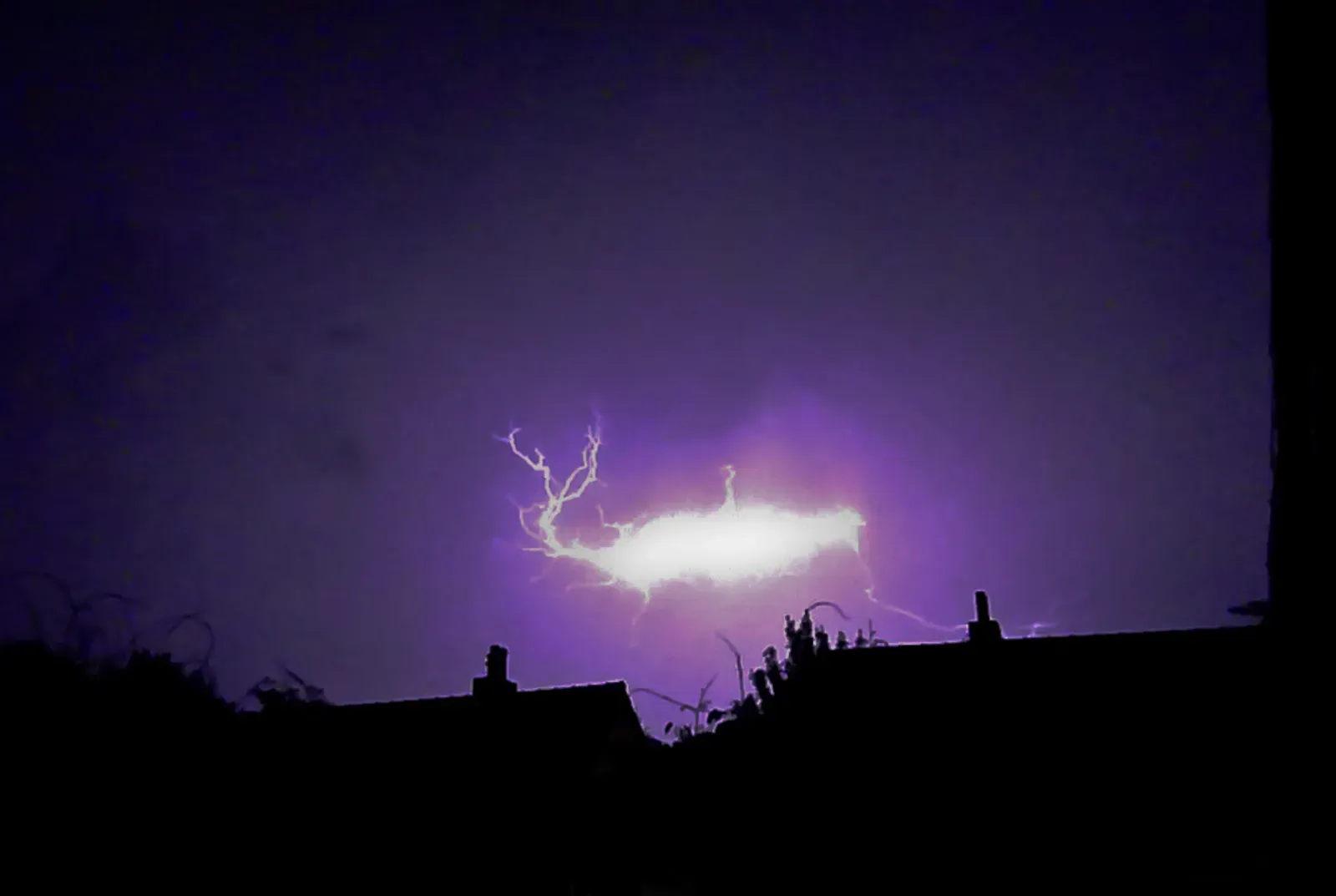
Picture a calm evening suddenly interrupted by a glowing sphere drifting eerily across your room, the size of a beach ball, humming faintly, and then vanishing in a blink. That’s ball lightning. That’s ball lightning, an elusive weather phenomenon that has puzzled scientists for centuries, with witnesses describing a floating orb of light varying in size from a golf ball to a beach ball, sometimes accompanied by a hissing noise. Honestly, if someone told me they saw one, I’d believe them completely, and that says a lot.
Some theories suggest ball lightning is plasma held together by magnetic fields, while others propose it is the result of chemical reactions involving vaporized silicon after a lightning strike. In recent years, high-speed cameras and accidental laboratory recreations have offered tantalizing evidence, but the mystery remains unsolved. The maddening part is that its fleeting, unpredictable nature makes it nearly impossible to study in a controlled environment, leaving scientists with little more than fascinating eyewitness accounts and competing guesses.
The Hessdalen Lights: Norway’s Nightly Light Show With No Explanation
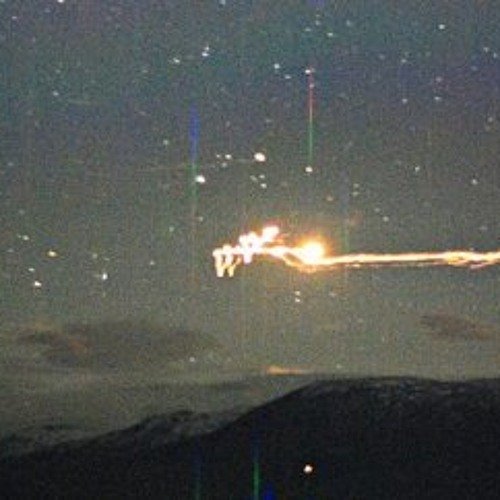
In Norway’s Hessdalen Valley, people see bright, colorful lights in the sky, white, yellow, or red. These orbs float, dart around, or hover, sometimes appearing every night. They’ve been spotted since the 1980s and are so regular that scientists set up a permanent observatory there. Let’s be real, when the scientific community builds a permanent station just to stare at something baffling, you know it’s serious.
Some researchers speculate that the lights result from ionized gas or plasma interacting with atmospheric elements, but no definitive explanation has been established. The lights have attracted global attention, with scientists and tourists flocking to Hessdalen in hopes of witnessing the spectacle. For researchers, the lights present an ongoing scientific puzzle, a challenge that underscores the complexities of our natural world. A 2021 study used light analysis to find chemical clues, but no one can fully explain why the lights appear or how they move. The case, decades later, remains wide open.
Dark Matter and Dark Energy: The Universe Is Mostly Missing
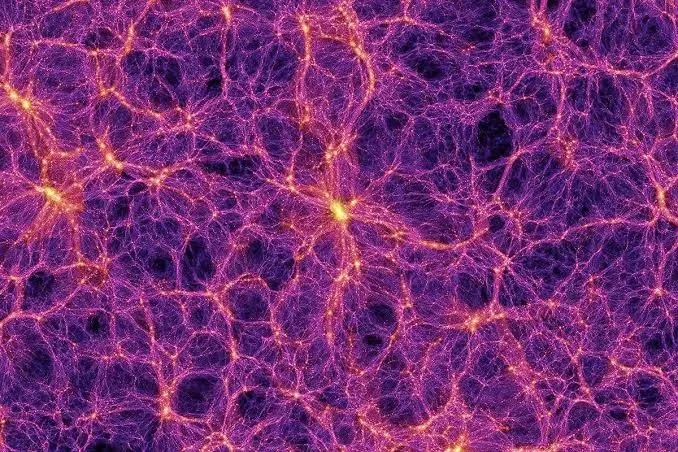
Here’s something that should stop you cold. Everything you can see, every star, planet, galaxy, and grain of cosmic dust, makes up only a tiny fraction of what actually exists. The composition of our universe presents one of the most profound enigmas in modern cosmology. Current evidence suggests that ordinary baryonic matter, the substance of stars, planets, and all visible cosmic structures, constitutes a mere five percent of the universe’s total content. The remaining ninety-five percent comprises two elusive components: dark matter and dark energy. Despite their dominance in cosmic composition, these components remain largely mysterious, detectable primarily through their gravitational effects.
Dark matter and dark energy are named for what scientists do not yet know about them. Dark matter makes up most of the mass found in galaxies and galaxy clusters, playing a major role in shaping their structure across vast cosmic distances. Dark energy refers to the force behind the universe’s accelerating expansion. Put simply, dark matter acts like cosmic glue, while dark energy drives space itself to expand faster and faster. Although both are abundant, neither dark matter nor dark energy gives off, absorbs, or reflects light, which makes direct observation extremely difficult. As of early 2026, even with major breakthroughs being attempted, the core mystery is still very much alive.
Rogue Waves: Walls of Water That Shouldn’t Exist

Imagine a seemingly calm sea suddenly giving rise to a towering wave, seemingly out of nowhere. These are rogue waves, colossal oceanic phenomena that can reach heights of one hundred feet or more. For centuries, sailors who reported these monsters were dismissed as hysterical or exaggerating. Turns out they were telling the truth all along.
A study by the European Space Agency utilized satellite radar to capture these waves, validating the accounts of sailors who had encountered them. Still, what causes rogue waves to form remains a contentious topic, with theories ranging from constructive interference to ocean current dynamics. Their unpredictable nature poses a significant challenge to marine navigation and safety. Recognizing and understanding rogue waves is crucial, as they represent the ocean’s wild side, defying expectations and demanding respect. Think of the ocean like a crowd at a concert where everyone randomly jumps at different times, and occasionally, a perfect collision of jumps creates one monstrous surge nobody planned for.
The Taos Hum: A Sound Only Some People Can Hear

In the small town of Taos, New Mexico, a strange phenomenon has puzzled residents and scientists alike: a low-frequency hum that only some people can hear. Often described as a distant engine or a faint droning noise, the Taos Hum is not recorded by microphones and seems to exist only in human perception. Similar hums have been reported in other parts of the world, including the UK, Canada, and Australia. It’s the kind of thing that would make you question your own sanity.
A study into the Taos Hum in the early 1990s in Taos, New Mexico, indicated that at least two percent could hear it, each hearer at a different frequency between thirty-two and eighty hertz, modulated from zero point five to two hertz. Investigations have ruled out common culprits such as industrial equipment, power lines, and seismic activity. Theories abound, ranging from the plausible, such as tinnitus or other auditory disorders in the hearers, to the more exotic, including secret military experiments and unusual geological phenomena. As of today, no single cause has ever been confirmed. The hum keeps humming.
The Sailing Stones of Death Valley: Rocks That Move Themselves

Racetrack Playa is a dry, flat lakebed in California that is littered with hundreds of mysterious, moving rocks. Also known as the sailing stones, these rocks leave tracks stretching up to one thousand five hundred feet long as they drift across the surface seemingly without cause. The sailing stones have puzzled researchers since the mid-1900s, but until 2013, no one had actually seen or recorded the rocks moving. It was clear, however, that they periodically changed location, because they left grooves in the ground behind them. Remarkably, some of these rocks weigh several hundred pounds.
The mystery captured imaginations for decades until technology finally intervened. The study revealed that the sailing stones move when a thin, lubricating “windowpane” layer of ice forms on the playa at night after rainfall. The morning sun warms and melts the ice, forming floating panels that shove several rocks along at once in a direction and at speeds determined by the wind. It’s an amazingly fickle process: if the winds are too strong, the ice will break against the rocks rather than pushing them; if the sun is too warm, the ice will melt before it can move the stones. Even when the mechanism is understood, the rarity and precision of conditions required still feels like something out of a magician’s playbook.
The Wow! Signal: A Message From the Cosmos That Never Repeated
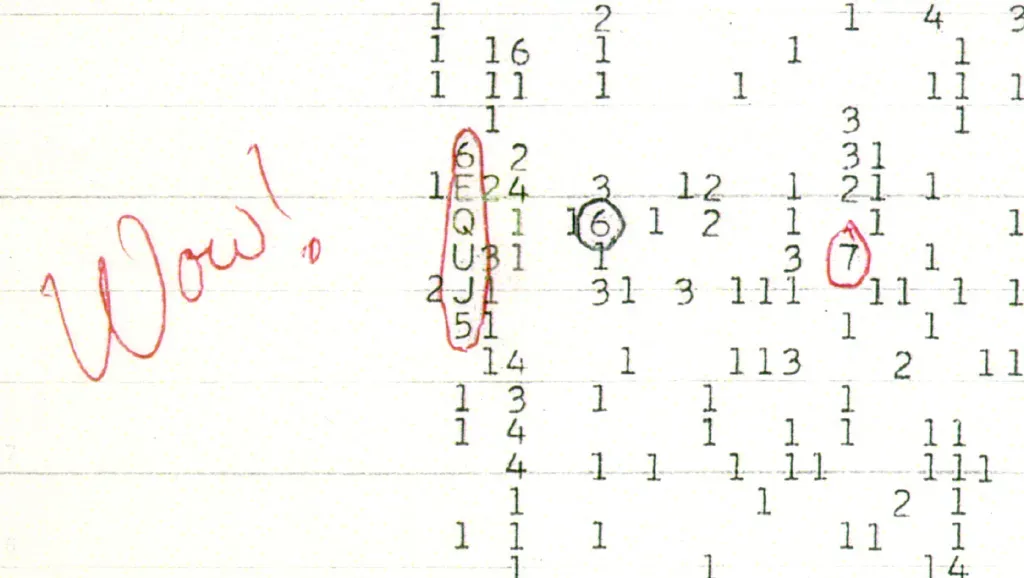
On August 15, 1977, a radio telescope in Ohio picked up an unexpectedly powerful signal from deep space. A researcher who noticed it was so stunned he wrote “Wow!” in the margins of the printout, and the name stuck forever. Despite extensive efforts to locate the source of the signal, it has never been detected again. Some speculate that the signal could have been a transmission from an extraterrestrial civilization, while others suggest it may have been caused by natural cosmic phenomena. The Wow! Signal remains one of the most intriguing unsolved mysteries in the search for extraterrestrial intelligence.
In 2017, some researchers said two comets might have caused it, but the signal’s strength didn’t quite match. In 2025, astronomers are still debating whether it was a cosmic fluke or something more exciting, like a sign of alien life. It’s hard to say for sure, but the signal was so strong and so perfectly targeted that even the skeptics haven’t been able to completely rule anything out. Every year the silence around it grows deeper, and somehow, more haunting.
Earthquake Lights: Glowing Skies Before the Ground Shakes

Imagine watching the sky glow, shimmer, and flash in the days before a devastating earthquake strikes, with no storm anywhere in sight. These mysterious luminescent phenomena have been reported to sometimes occur before or during an earthquake. They typically appear as bright flashes in the sky and, in some cases, have been observed weeks ahead of the actual earthquakes. For centuries, these lights have confounded scientists, but one possible explanation is that they are caused by earthquake-induced stress, which releases electrical charges from certain types of rocks. These charges then travel up into the atmosphere, where they interact with the air and produce light.
One prominent theory suggests that the immense stress on rocks deep within the Earth’s crust before an earthquake generates an electrical charge. This charge could then travel to the surface and ionize the air, creating a light-emitting plasma. Another hypothesis proposes that the friction between shifting rock masses creates intense heat, leading to the vaporization of water and other materials, which then glow. While these and other theories offer potential explanations, a definitive understanding of what causes these spectral displays remains elusive. The connection between deep earth mechanics and lights in the sky is genuinely mind-bending to consider.
Animal Rain: When Fish and Frogs Fall From the Sky

I know it sounds crazy, but it’s real and documented across multiple continents. Sometimes, animals like fish, frogs, or even birds fall from the sky like rain. This has happened in places like Australia, where fish rained in 2010, and Japan, where frogs fell in 2009. These animals are usually small, and some even survive the fall. The image alone is something out of a surrealist painting, and yet it’s happened enough times that scientists can’t brush it off.
Such occurrences have actually been documented worldwide, involving various creatures such as fish, frogs, and spiders. This rain of animals typically occurs during storms or tornadoes, leading to theories of strong winds or waterspouts lifting the animals from one location and depositing them elsewhere. But why only certain animals? And how do some survive such a wild ride? A 2023 event in Australia puzzled scientists because no major storm was reported nearby. The waterspout explanation covers most cases, but it definitely doesn’t cover all of them, and that gap is where the real mystery lives.
The Origin of Life: Earth’s Greatest Unsolved Question

This is arguably the biggest one. Not a mysterious sound, not a drifting rock, but the fundamental question of how life itself ignited on a barren, chemical-soaked young Earth. Perhaps the most profound and fundamental mystery that science has yet to fully unravel is the question of how life on Earth began. We know that life emerged on our planet around three point eight billion years ago, but the precise steps that led from a lifeless primordial soup of chemicals to the first self-replicating organisms remain a subject of intense scientific inquiry and debate.
Think of it like trying to figure out how a library wrote itself from scattered alphabet letters blown around by the wind. Scientists call this puzzle abiogenesis, the leap from chemistry to life. Perhaps the most profound and fundamental mystery that science has yet to fully unravel is the question of how life on Earth began. We know that life emerged on our planet around 3.8 billion years ago, but the precise steps that led from a lifeless primordial soup of chemicals to the first self-replicating organisms remain a subject of intense scientific inquiry and debate. This is the grand puzzle of abiogenesis, the process by which life arises from non-living matter. Every theory proposed so far explains some of it. None explains all of it. The very fact that you’re reading this right now is built on a foundation no one fully understands.
Conclusion
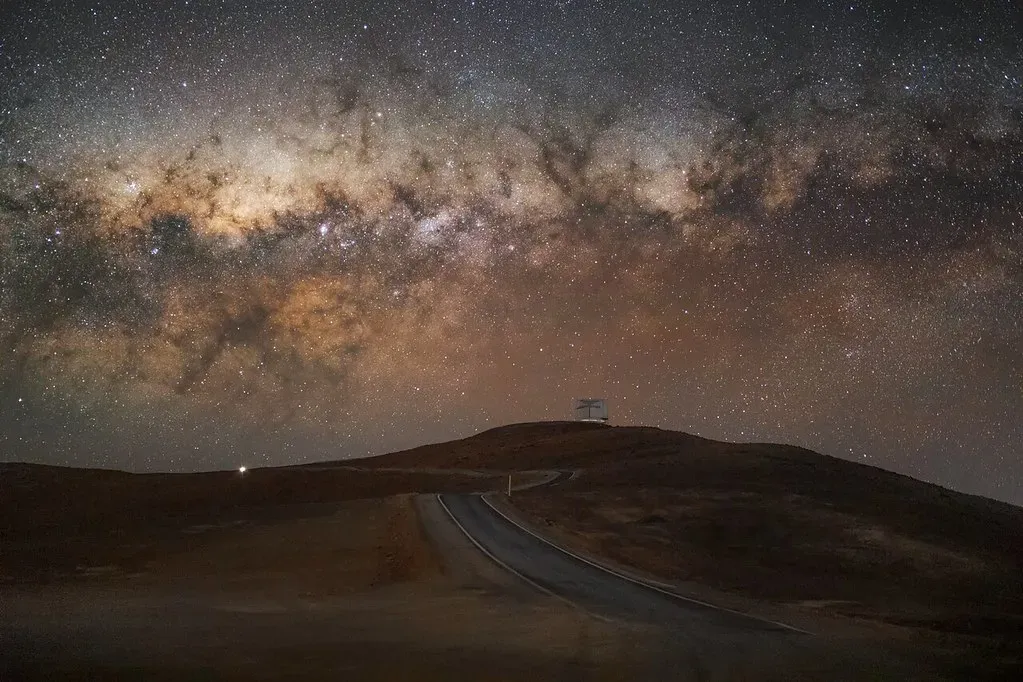
What strikes you most, when you look at all ten of these phenomena together, is not how far science still has to go. It’s how beautifully strange the universe is willing to be. From rocks sliding across a desert in the dead of night to an invisible force that makes up roughly seven-tenths of everything in existence, nature seems almost playfully committed to keeping its deepest secrets. The tools available to scientists in 2026 are more powerful than anything previous generations could have dreamed of, and yet the mysteries keep multiplying.
Maybe that’s the point. Every answer tears open a new question. Every solved puzzle reveals a deeper corridor of unknowns. From the strange lights of ball lightning to the deep puzzles of dark energy and consciousness, these mysteries reveal how much we still don’t know about the universe and ourselves. They are not failures of science but frontiers of discovery, open doors waiting for answers. Every unsolved question is a reminder that science is a journey, not a destination. Which of these ten phenomena leaves you most unsettled? That feeling of wonder mixed with uncertainty is probably the most honest response anyone can have to a universe this magnificently unfinished. What would you have guessed?