
Ideal Conditions Fuel Rapid Intensification (Image Credits: Cdn.mos.cms.futurecdn.net)
Northeast U.S. – A ferocious bomb cyclone slammed the region with blizzard conditions, heavy snowfall, and unusual lightning, offering scientists a clear view from space as the storm unfolded.
Ideal Conditions Fuel Rapid Intensification
Meteorologists described the event as a textbook “Goldilocks” storm, where temperatures hovered in just the right range to maximize snowfall.[1]
Not too warm to turn precipitation to rain, yet not so frigid as to stifle moisture intake, the system drew warm, humid air from the Atlantic while cold continental air plunged southward from a stretched polar vortex. This clash powered a dramatic pressure plunge of 39 millibars over 24 hours, surpassing the 24-millibar threshold for bombogenesis and earning the “bomb cyclone” label.[1]
The central pressure dipped to 966 millibars, rivaling a Category 2 hurricane. Winds roared to 84 miles per hour at Montauk Point, New York, and 83 miles per hour on Nantucket, Massachusetts. Such rapid strengthening marked it as one of the most potent nor’easters in a decade.
Orbital Observers Capture the Chaos
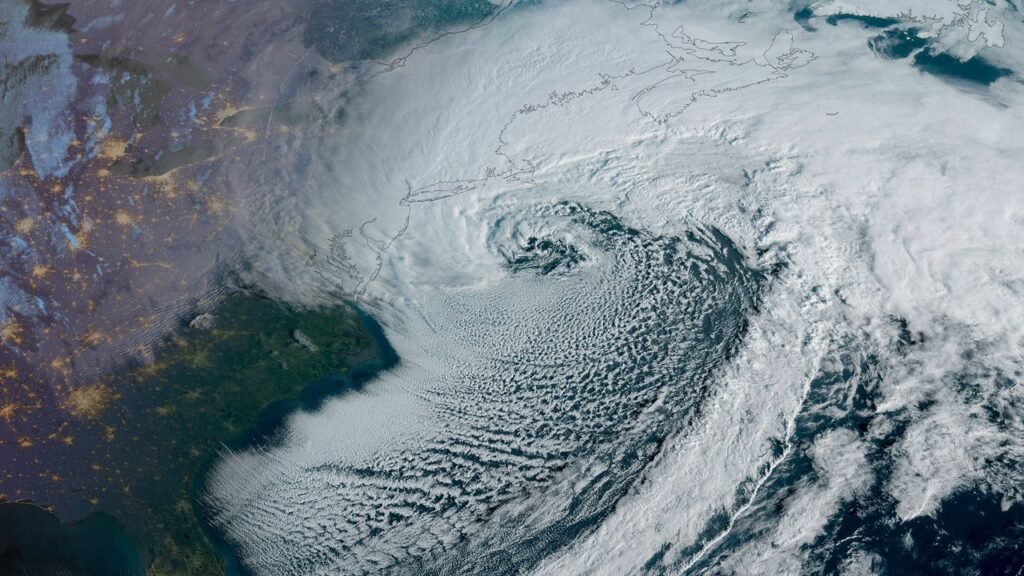
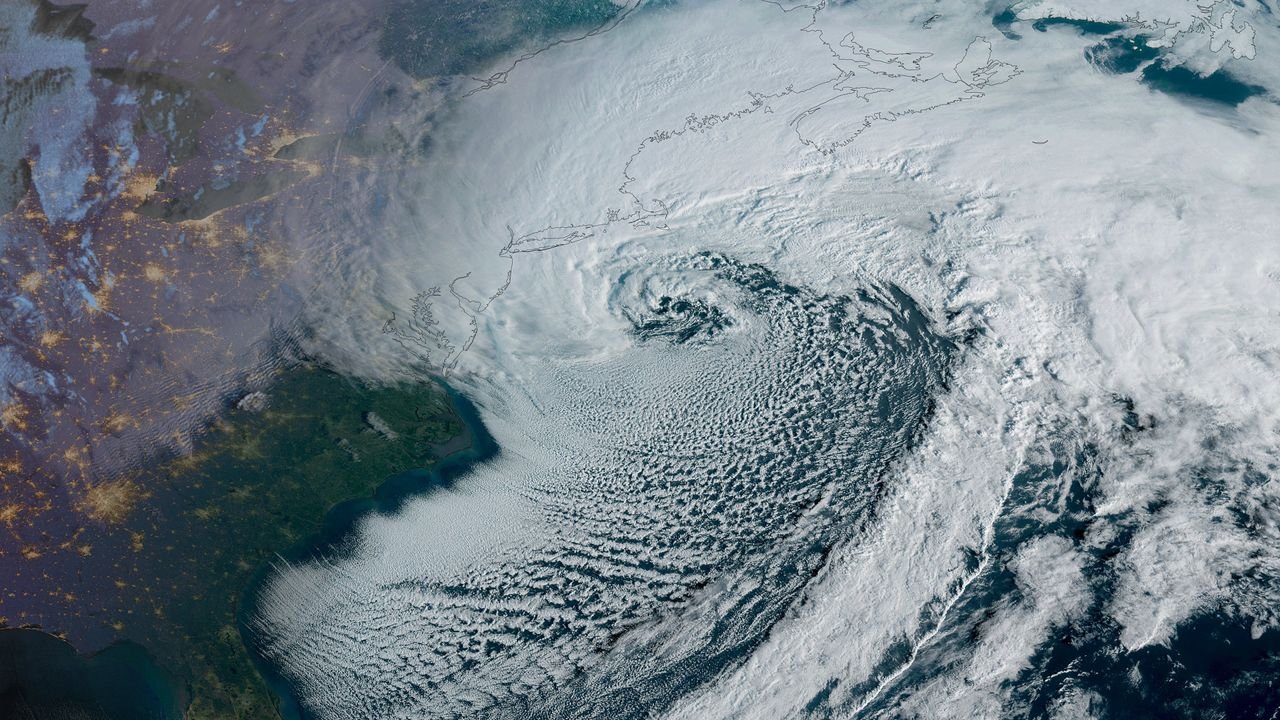
NOAA’s GOES-East and GOES-19 satellites delivered real-time glimpses of the cyclone’s comma-shaped cloud mass churning off the Northeast coast.[2][3]
Imagery from early Monday, February 23, revealed the storm’s well-defined spin as it intensified over the Atlantic, with the sun rising over the battered East Coast. Instruments detected lightning flashes embedded within the swirling system, a hallmark of extreme atmospheric instability. These overhead perspectives highlighted the blizzard’s vast reach from the Mid-Atlantic to New England.
The views underscored the storm’s hurricane-like structure, complete with a tight center of circulation. Such satellite data proved invaluable for forecasters tracking the system’s evolution since Sunday evening, February 22.
Record Snow and Widespread Disruption
Snowfall totals shattered records across multiple sites. Providence, Rhode Island, logged 33.5 inches, eclipsing its previous mark from 1978, while Warwick there hit 36.2 inches.[1]
Central Park in New York City measured 19.1 inches, Swansea, Massachusetts, reached 26.5 inches, and at least 19 stations in five states exceeded two feet. Blizzard warnings blanketed nearly 60 million people, with New York City facing its first in nine years.[2]
- Power outages affected over 650,000 customers, peaking at 282,000 in Massachusetts alone.
- More than 9,900 flights canceled nationwide since the storm began.
- Governors in seven states declared emergencies; travel bans hit New York City and coastal Massachusetts.
- At least two fatalities occurred, including a crash in Maryland from a falling snow-laden tree.[4]
Roads turned treacherous with whiteouts and drifts, stranding vehicles and prompting school closures from Philadelphia to Boston.
Thundersnow Adds Rare Drama
Lightning pierced the blizzard in spectacular fashion, a phenomenon known as thundersnow that demands intense updrafts amid heavy snow.[1]
Strikes illuminated skies over Scituate and Plymouth, Massachusetts, zapped a New York City skyscraper, and even hit offshore wind turbines. Forecasters marveled at the rarity, with one calling it a repeat thrill from years past. This blend of winter fury and summertime electricity electrified viewers and experts alike.
Key Takeaways
- Bomb cyclones form via explosive pressure drops, often yielding hurricane-force impacts in winter.
- Satellites like GOES provide critical early warnings by revealing storm structure from afar.
- Thundersnow signals extreme instability, amplifying a blizzard’s dangers.
As Winter Storm Hernando eased its grip on February 24, communities faced days of cleanup amid icy roads and lingering outages. This event reminded residents of nature’s raw power – and the vital role of space-based vigilance in mitigation. What experiences did you have with the storm? Share in the comments.