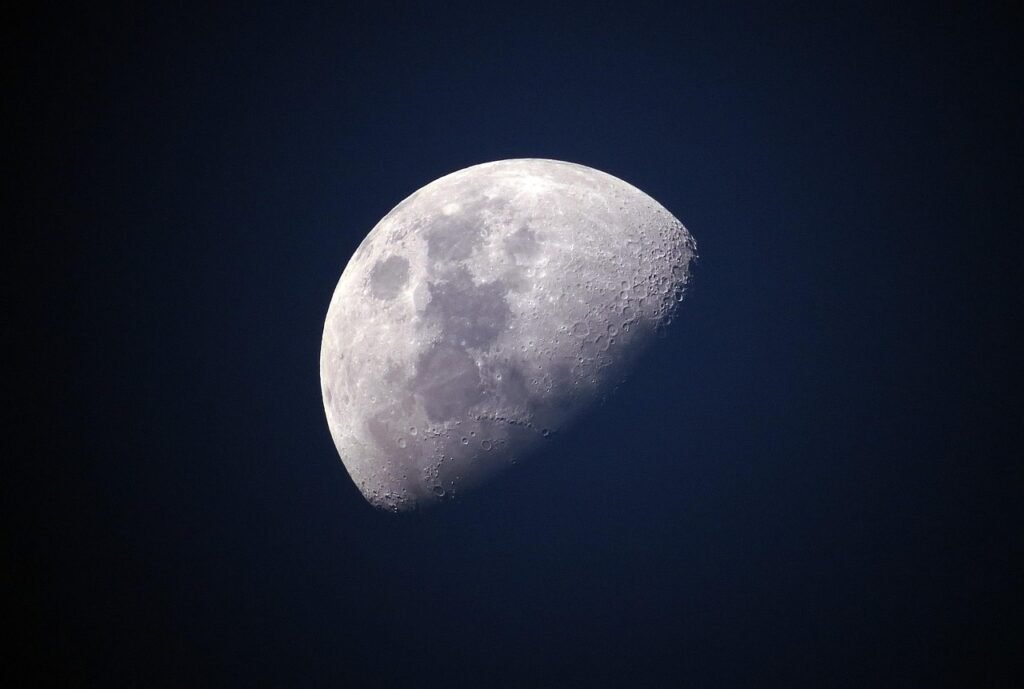

Artemis II Revives Deep-Space Human Flight (Image Credits: Pixabay)
Cape Canaveral – NASA’s Artemis II mission stands poised to mark humanity’s return to deep space after more than five decades, thrusting the United States into a high-stakes lunar contest with China and Elon Musk’s SpaceX.[1][2]
Artemis II Revives Deep-Space Human Flight
The mission will send four astronauts on a 10-day journey around the Moon’s far side using a free-return trajectory. Commander Reid Wiseman, pilot Victor Glover, mission specialist Christina Koch, and Canadian Space Agency astronaut Jeremy Hansen will fly aboard the Orion spacecraft atop the Space Launch System rocket. This flight represents the first crewed deep-space venture since Apollo 17 in 1972.[1]
Although no landing occurs, the voyage demonstrates critical capabilities in communications, navigation, and life support over lunar distances. NASA recently pushed the launch target to no earlier than March 6, 2026, following fueling tests. Success here will capture global attention and affirm U.S. prowess in cislunar operations.
China Builds a Steady Path to Lunar Boots
Beijing pursues a crewed Moon landing by 2030 through a deliberate, multi-launch strategy. The Long March 10 rocket will first place the uncrewed Lanyue lander in lunar orbit, followed by the Mengzhou crew vehicle for rendezvous and docking roughly 380,000 kilometers from Earth. Ground tests continue for both vehicles, drawing on experience from Chang’e robotic missions.[1]
This architecture avoids complex in-space refueling and leverages China’s strengths in launchers and docking. Prototypes remain in development, with infrastructure still under construction. While methodical, the timeline leaves little margin for acceleration amid external pressures.
Musk Shifts Gears Toward a Lunar Metropolis
Elon Musk recently announced SpaceX’s focus on constructing a “self-growing city” on the Moon, achievable in under a decade. Frequent launch opportunities – every 10 days – enable rapid iteration, unlike Mars windows every 26 months. This pivot aligns with NASA’s contract for Starship as the human landing system for Artemis III, targeting a surface mission in 2028 or 2029.[1][3]
The change also supports U.S. goals outlined in a 2025 executive order for a permanent lunar outpost by 2030. SpaceX positions Starship as key to a U.S.-led cislunar economy, blending federal contracts with commercial potential.
Timelines and Strategic Flashpoints
| Program | Key Milestone | Target Date |
|---|---|---|
| Artemis II | Crewed lunar flyby | March 2026 |
| Artemis III | U.S. lunar landing | 2028-2029 |
| China Crewed | Taikonaut landing | 2030 |
| SpaceX Lunar City | Self-sustaining outpost | Before 2036 |
These overlapping schedules heighten tensions. The U.S. builds coalitions via Artemis Accords for resource norms and interoperability. China advances its International Lunar Research Station, courting non-Western partners. Both frame efforts as development, yet perception battles rage in headlines and budgets.[1]
- U.S. emphasizes alliances and rapid returns.
- China prioritizes independent, low-risk architecture.
- SpaceX drives reusability and scale.
- Lunar south pole water ice fuels long-term bases.
- National security justifies rising investments.
Key Takeaways
- Artemis II prioritizes narrative wins over landings.
- China’s 2030 goal tests U.S. momentum.
- Musk’s Moon focus boosts SpaceX’s strategic value.
The Moon emerges not just as exploration turf but as cislunar high ground, where first-mover optics shape policies and markets for decades. As rockets fuel and rhetoric sharpens, this race blends prestige, security, and commerce – what role will it play in humanity’s off-world future? Share your thoughts in the comments.