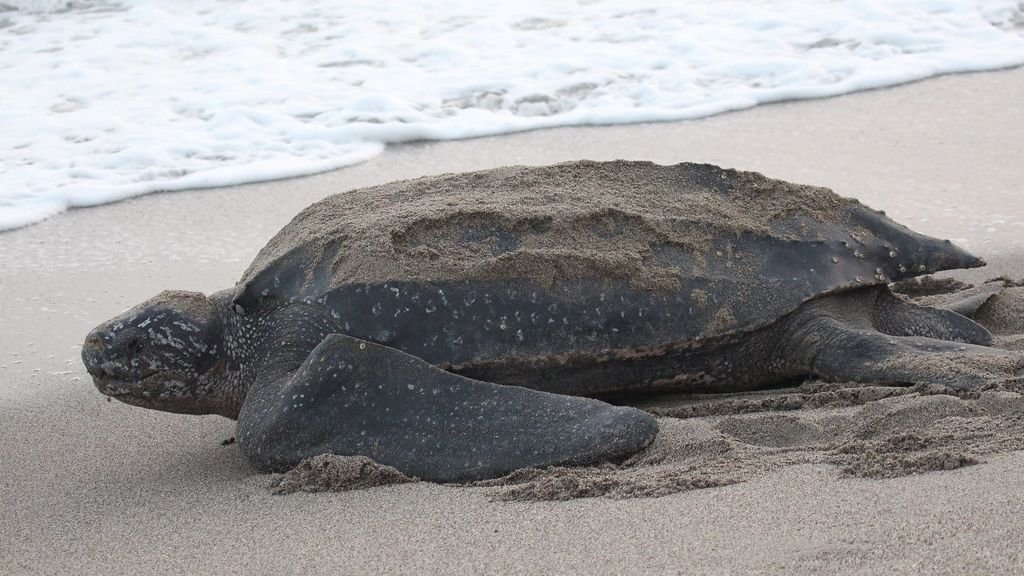

Picture yourself standing on a moonlit beach as one of the ocean’s most ancient creatures crawls onto the sand. These massive reptiles have survived since the time of dinosaurs, yet today, they’re fighting for their future. While leatherback turtles roam vast expanses of ocean, only a handful of US states can claim significant populations of these remarkable giants. Some places host thousands of nests each year, while others see only occasional visitors.
The distribution of leatherback turtles across American states is far from even, creating unique conservation challenges and opportunities. Let’s dive in and discover which states these magnificent turtles call home.
Florida Dominates as the Leatherback Capital
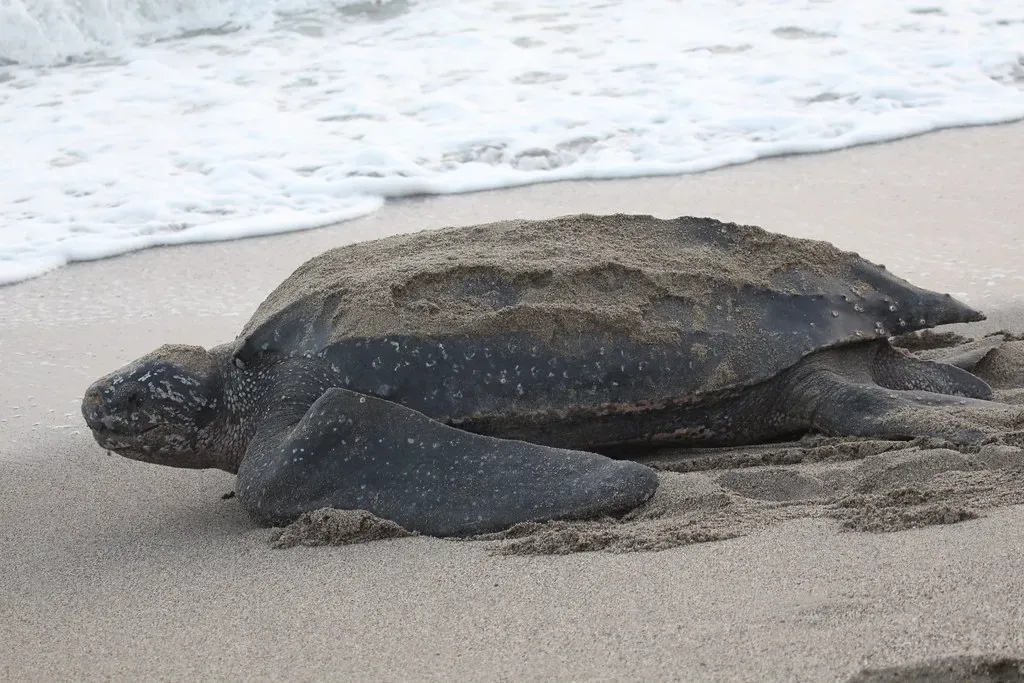
Within the United States, the majority of leatherback nesting occurs in Florida, Puerto Rico, and the U.S. Virgin Islands. When it comes to sheer numbers, Florida stands in a category all its own. FWC reports leatherback turtles set a new statewide record with 2,012 nests, surpassing the previous high set in 2022. This 2025 milestone represents years of conservation work finally bearing fruit. The Sunshine State’s coastline provides the perfect combination of sandy beaches, warm waters, and protective regulations that leatherbacks need for successful nesting.
With the exception of a few nests on the west coast, leatherbacks nest almost exclusively on the east coast of Florida. In fact, about 50 percent of leatherback nesting occurs in Palm Beach County. Think about that for a moment. Roughly half of all Florida’s leatherback activity happens in just one county. Palm Beach County beaches account for ~30% of leatherback nests laid in the state of Florida, making these beaches crucial nesting habitat for leatherback turtles. The beaches from Brevard County down to Broward County create a vital corridor for these ancient mariners.
Puerto Rico’s Critical Caribbean Stronghold
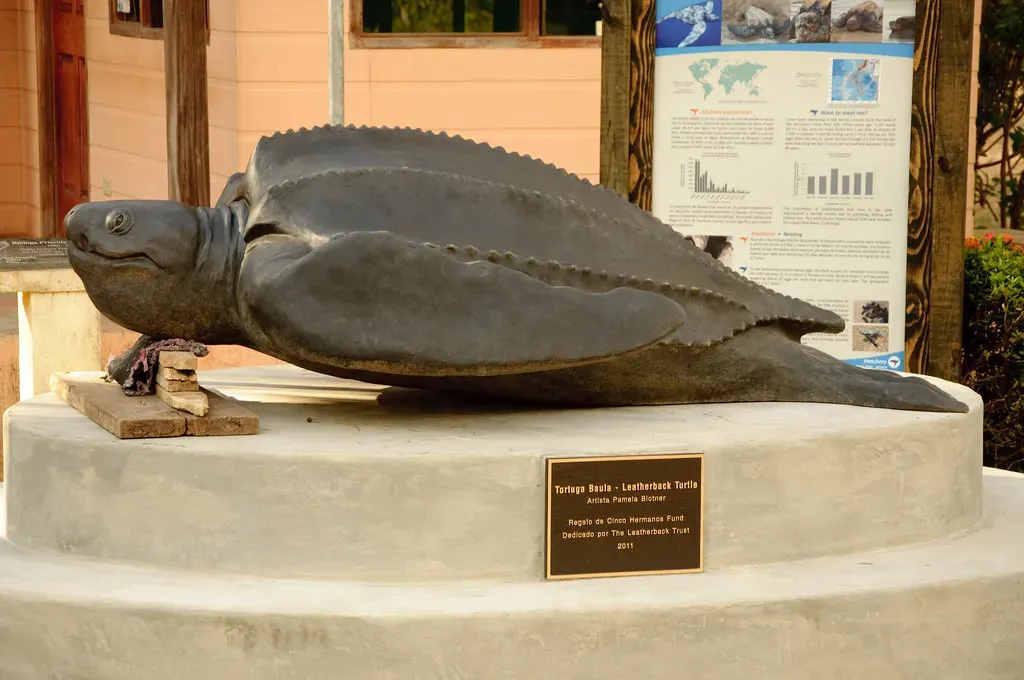
Puerto Rico represents an important stronghold of nesting activity for leatherbacks in the Caribbean and the Northwest Atlantic sub-population. The island’s beaches provide essential nesting grounds that help sustain the entire Atlantic population. The revised habitat would protect three important leatherback nesting beaches in Puerto Rico and may also include several other beaches on the island. Friday’s decision, known as a 90-day finding, is the first procedural step toward protecting leatherback nesting beaches on Puerto Rico’s California Beach, Maunabo; Tres Hermanos Beach, Añasco; and Grande Beach, Arecibo.
Conservation groups have been pushing hard for increased protections here, recognizing that every nest matters. Local organizations have been monitoring these beaches for decades, working tirelessly through the night during nesting season. The work is paying off slowly, with some beaches showing signs of recovery despite ongoing threats from coastal development and human activity.
The US Virgin Islands’ Singular Sanctuary
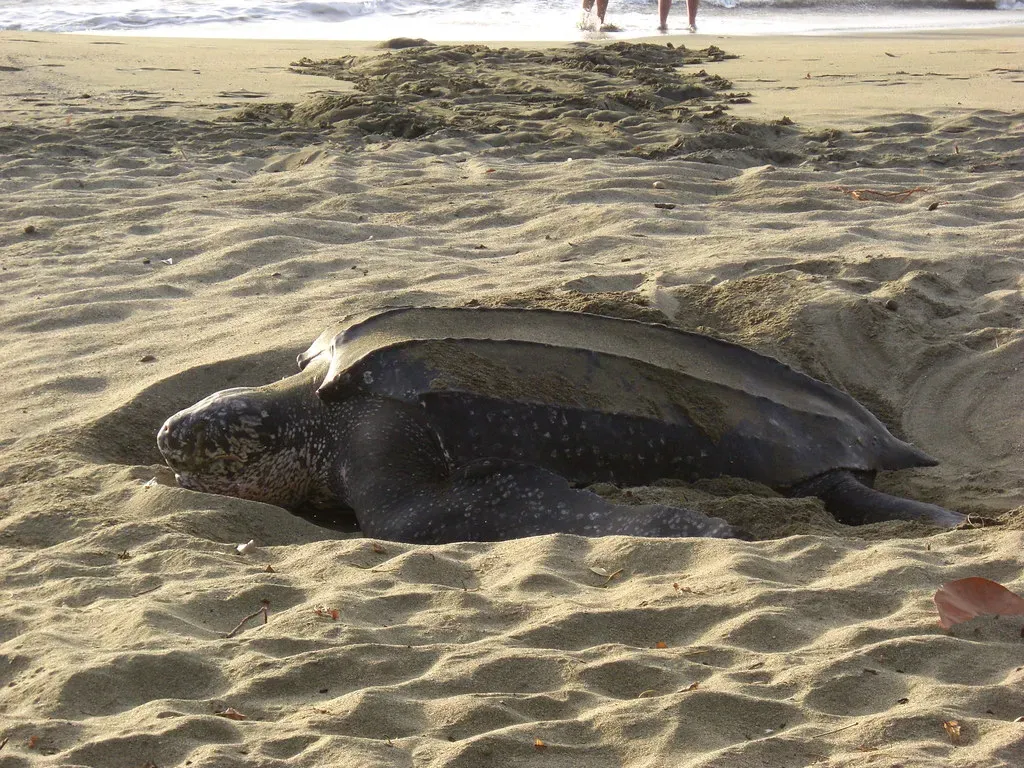
The leatherback sea turtle currently has terrestrial critical habitat on just one stretch of beach at Sandy Point, St. Croix, in the U.S. Virgin Islands, and marine critical habitat in waters off Sandy Point in the North Atlantic Ocean. Sandy Point represents one of the most protected leatherback nesting sites in American territory. The beach received federal protection decades ago, becoming a National Wildlife Refuge specifically for these endangered turtles.
What makes this location particularly important is its concentrated protection efforts. Every nest gets monitored, every hatchling gets counted, and the data collected here helps inform conservation strategies across the Caribbean. The Virgin Islands might not have the sheer numbers of Florida, but their dedication to protecting what they have is unmatched.
California’s Pacific Feeding Grounds
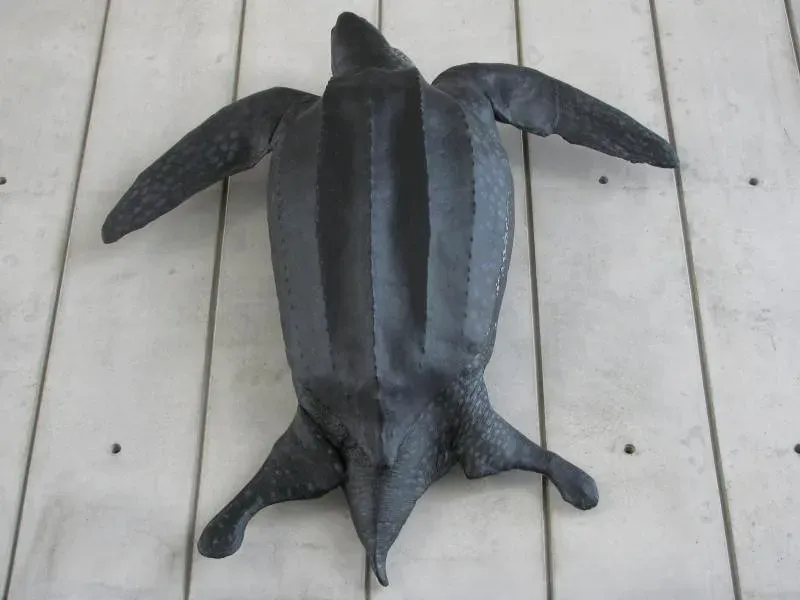
The continental United States offers two major Pacific leatherback feeding areas. One well-studied area is just off the northwestern coast near the mouth of the Columbia River. The other American area is located in California. While California doesn’t host nesting leatherbacks, the state plays a crucial role as a major foraging destination. Pacific leatherbacks migrate about 6,000 mi (9,700 km) across the Pacific from their nesting sites in Indonesia to eat California jellyfish.
In the Pacific, a leatherback conservation area was established off the coast of California in 2001 that prohibits drift gillnet fishing from August 15 to November 15 in 213,000 square miles of the Exclusive Economic Zone. The state’s cold, nutrient-rich waters attract leatherbacks from across the Pacific Ocean. These turtles don’t come to nest but to feast on the abundant jellyfish populations that thrive in California’s coastal ecosystems.
Hawaii’s Rare Oceanic Visitors
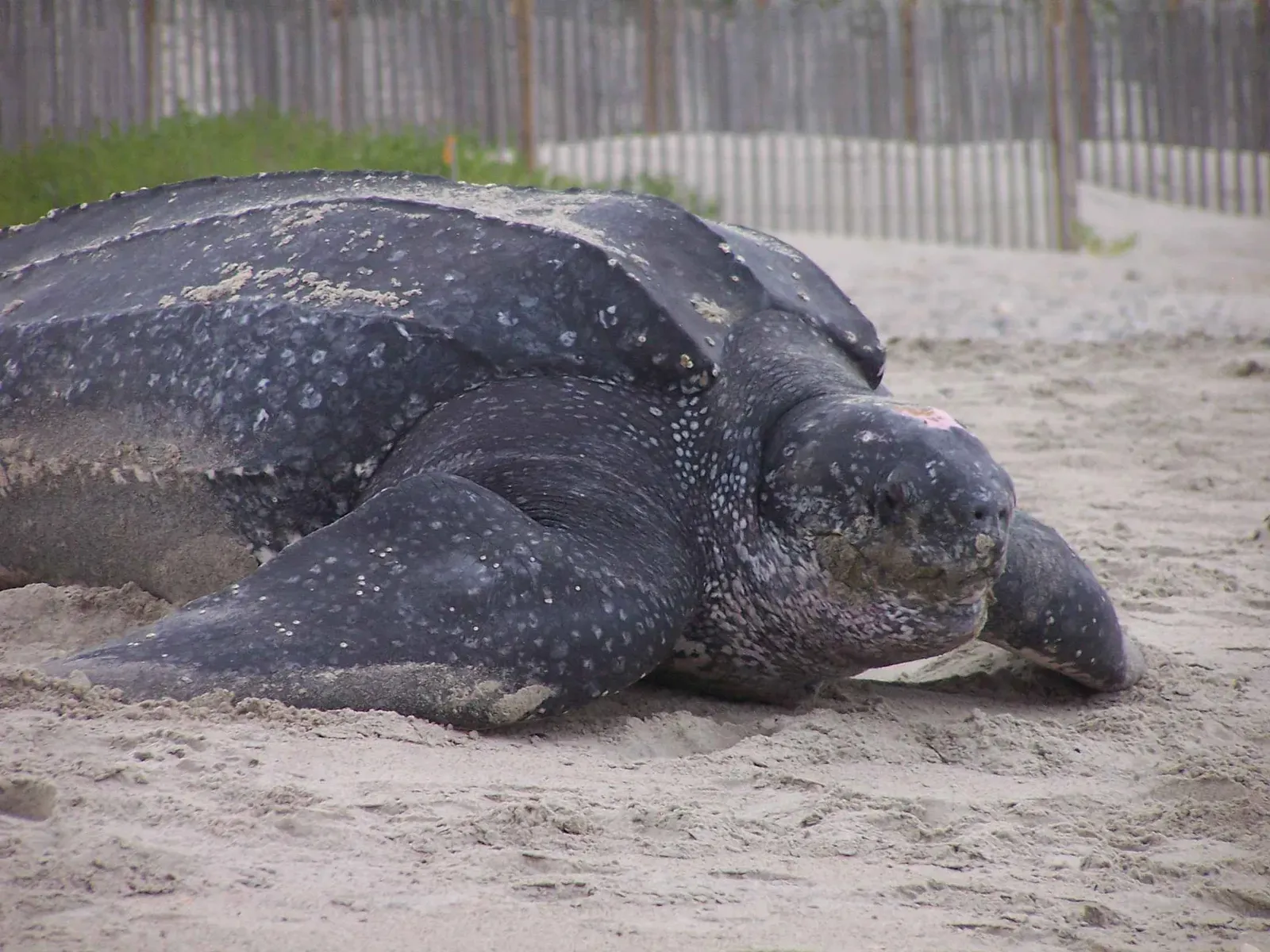
Five of these sea turtle species inhabit Hawaiian waters: the green (honu, or Chelonia mydas), hawksbill (honu’ea, ʻea or Eretmochelys imbricata), leatherback (Dermochelys coriacea), loggerhead (Caretta caretta), and olive ridley (Lepidochelys olivacea). Leatherbacks, loggerheads, and olive ridley sea turtles are rarely seen in the nearshore coastal waters, but they may be seen further offshore in pelagic waters. Hawaii doesn’t rank high in leatherback numbers, but these magnificent creatures do pass through Hawaiian waters during their epic migrations.
Most sightings happen far offshore where leatherbacks are hunting in the deep, open ocean. Rare in Hawai’i. In the Pacific Ocean, the annual number of breeding females is around 3,000 with declining nesting population trends noted at most breeding locations. The Pacific leatherback population faces severe challenges, making every sighting in Hawaiian waters a reminder of what’s at stake for this species.
States With Coastal Encounters
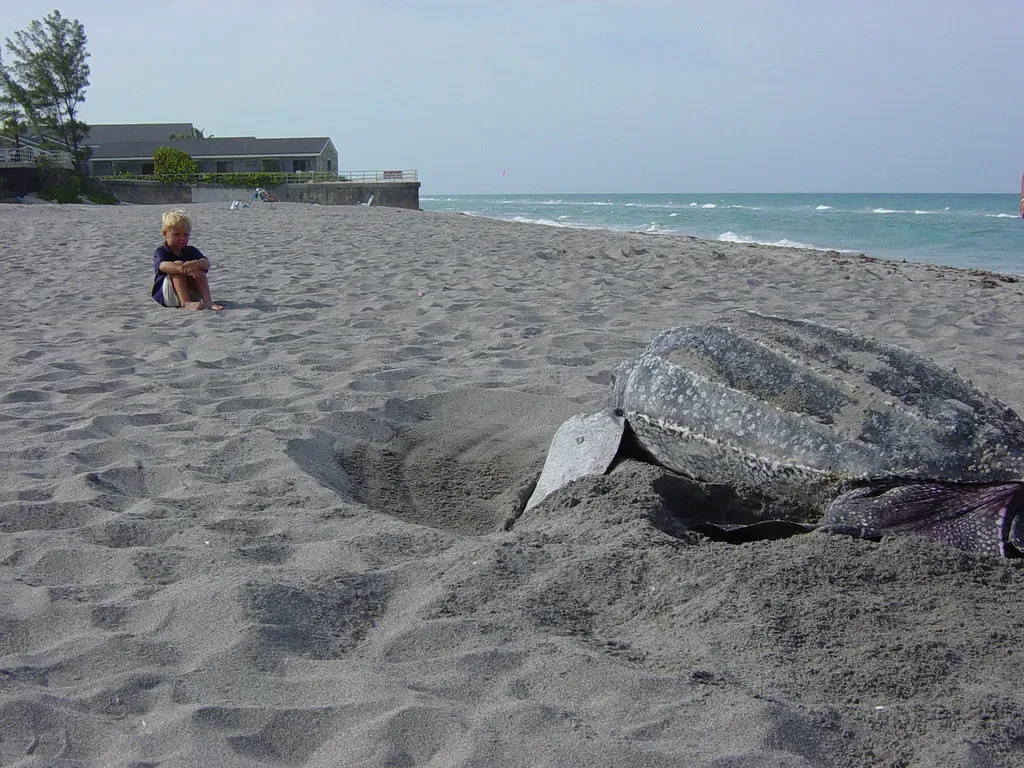
Atlantic leatherbacks nest between February and July from South Carolina in the United States to the United States Virgin Islands in the Caribbean and to Suriname and Guyana. States like South Carolina, Georgia, and North Carolina occasionally host leatherback nests, though in much smaller numbers than Florida. Leatherbacks nest regularly in the southeastern U.S., particularly Florida where nesting has been increasing over the last decade. Very few nests have been confirmed in Georgia although a consistent pattern of low annual nesting (<10 nests) has emerged since 2000. These northern Atlantic states also see leatherbacks passing through coastal waters during migration seasons. The turtles travel north following warm currents and abundant jellyfish populations during spring and summer months. States like Massachusetts and New York report strandings and sightings, though these encounters are far less common than in the primary nesting states. Every encounter matters for tracking population health and movement patterns.
The Conservation Picture Moving Forward
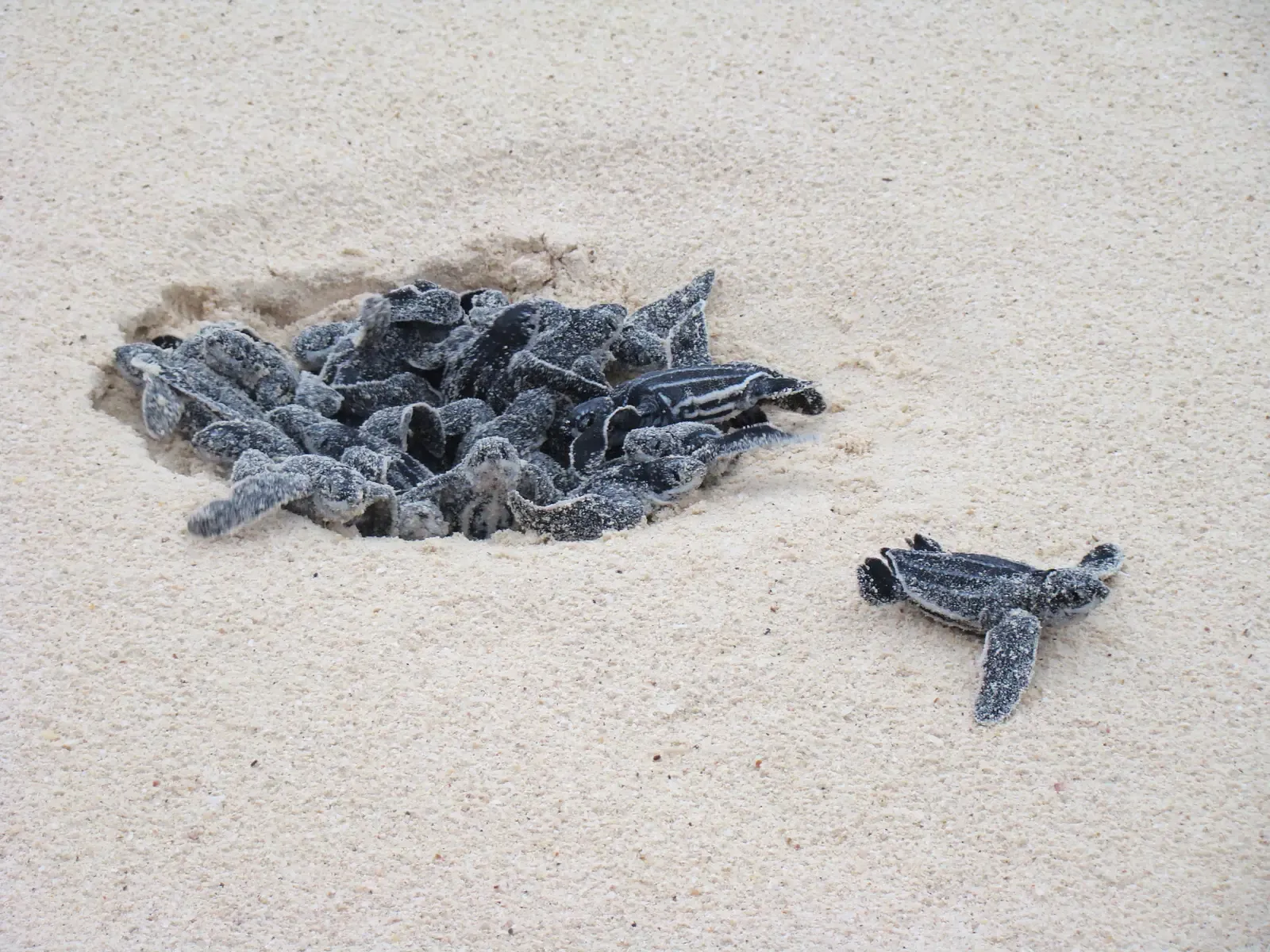
The Conservation Picture Moving Forward (Image Credits: Wikimedia)
Florida is the only state in the continental U.S. where leatherback turtles regularly nest and 1,389 clutches have been laid annually in the last five years (2018-2022). Like nest counts for green turtles, leatherback nest counts have been increasing over the period of monitoring. The record-breaking 2025 nesting season gives conservationists real hope. Decades of beach protection, lighting ordinances, and public education are finally showing measurable results.
Still, challenges remain enormous. Climate change threatens nesting beaches through sea level rise and increased storm intensity. Fishing gear continues to trap and kill leatherbacks in international waters. Plastic pollution poses constant danger as turtles mistake bags for jellyfish. The states with significant leatherback populations bear special responsibility for protecting these ancient survivors. Your awareness matters too. Supporting beach conservation efforts, reducing plastic use, and respecting nesting areas during turtle season all contribute to keeping leatherbacks around for future generations. After all these millions of years, shouldn’t we ensure they survive ours?