
Picture this. You’re hiking through the misty mountains of Appalachia, flipping over a rotting log, and suddenly you spot a creature that exists in this exact location and absolutely nowhere else on the entire planet. Sounds like something out of a fantasy novel, right? Yet this scenario plays out countless times across these ancient peaks, where salamanders have carved out their own private kingdoms in ways that continue to astound scientists.
The region boasts the most endemic species – species found here and nowhere else – on the planet. We’re talking about tiny amphibians that have spent millions of years adapting to specific mountaintops, creek beds, and rock outcroppings. The sheer diversity is staggering, honestly. While you might think tropical rainforests would hold this title, it’s these weathered Appalachian slopes that wear the crown when it comes to salamander endemism.
The Salamander Capital of the World
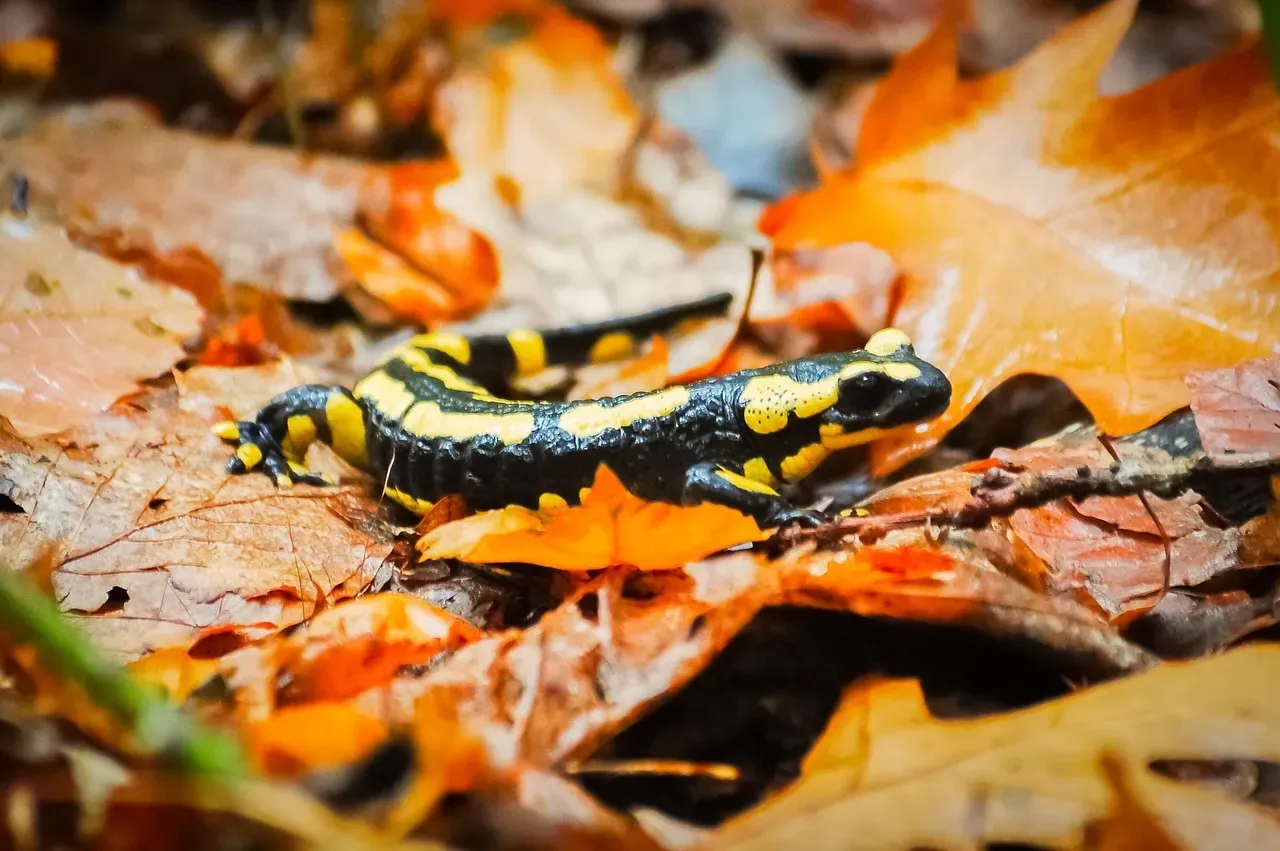
Let’s be real here. The Great Smoky Mountains and surrounding areas have more salamander species than anywhere else on the planet, with one-third of the world’s more than 700 identified salamander species living on the North American continent, and 80 percent of those found in this region. That’s not just impressive, it’s mind-blowing.
Of the 550 known salamander species in the world, 77 can be found in this mountainous area, more than any other one region in the world. Think about that for a moment. These mountains, which formed roughly 480 million years ago, have become an evolutionary laboratory where salamanders have diversified into forms found nowhere else. The density is equally incredible. The populations of these small amphibians are so dense that there are estimated to be two salamanders per 10 square feet.
Microendemics Living on Single Mountains
Here’s where things get really wild. Many of the salamander species found in the Appalachians have small ranges that are restricted to a handful of nearby mountains or even to just a single mountain. Take the Pigeon Mountain Salamander, for example. All known populations in the entire world occur only on the eastern slope of Pigeon Mountain in Georgia.
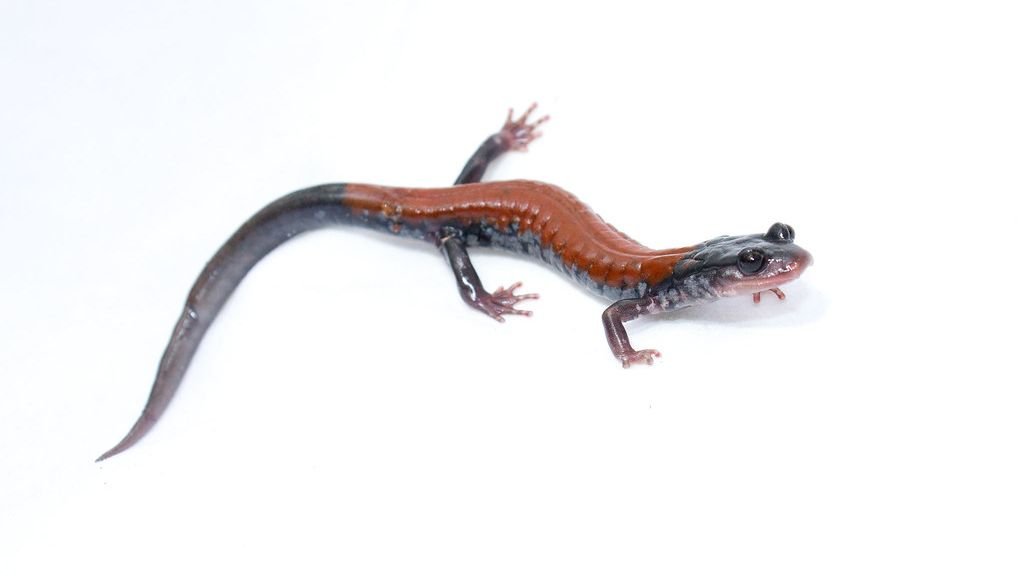
Imagine being a species confined to one mountainside. The Red-legged Salamander is found only in the Unicoi and Nantahala mountains in North Carolina. These aren’t sprawling ranges we’re discussing. We’re talking about creatures whose entire existence is tied to remarkably small patches of earth. Salamanders don’t travel very far, so two neighboring mountaintops might have completely different species. This isolation has created what scientists call microendemics, species so localized that their entire global population could fit within a few square miles.
The Newly Discovered and Recently Described
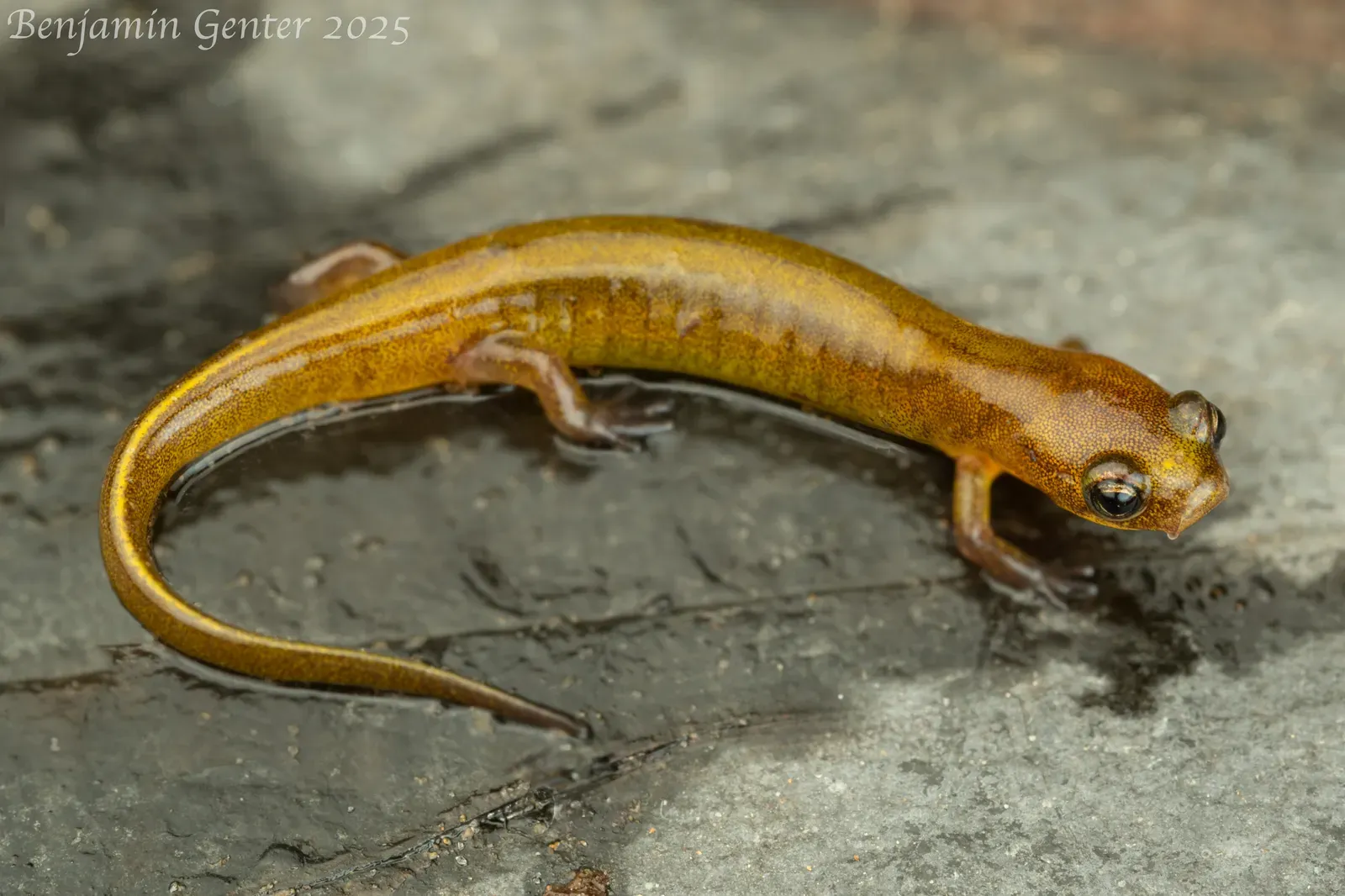
You’d think by now we’d have found every salamander species in these well-studied mountains. You’d be wrong. New salamander species are still being described in this region, both using modern genetic analyses and from chance encounters with previously unknown species. It’s hard to say for sure, but this speaks to just how complex and understudied these ecosystems remain.
The Patch-nosed Salamander (Urspelerpes brucei) is one of the rarest salamanders in the entire Appalachians, described just 10 years ago as the first completely new genus of amphibian described in the United States in almost 50 years, with adults growing to just over 1 inch and the total known range covering approximately 15 square miles. Finding this species required incredible luck and persistence. Meanwhile, Scientists discovered Aneides caryaensis, a new species restricted to a narrow geographic distribution in western North Carolina that faces pressing conservation threats due to rapid real estate and tourism development in the area.
Why Appalachia Became a Salamander Paradise
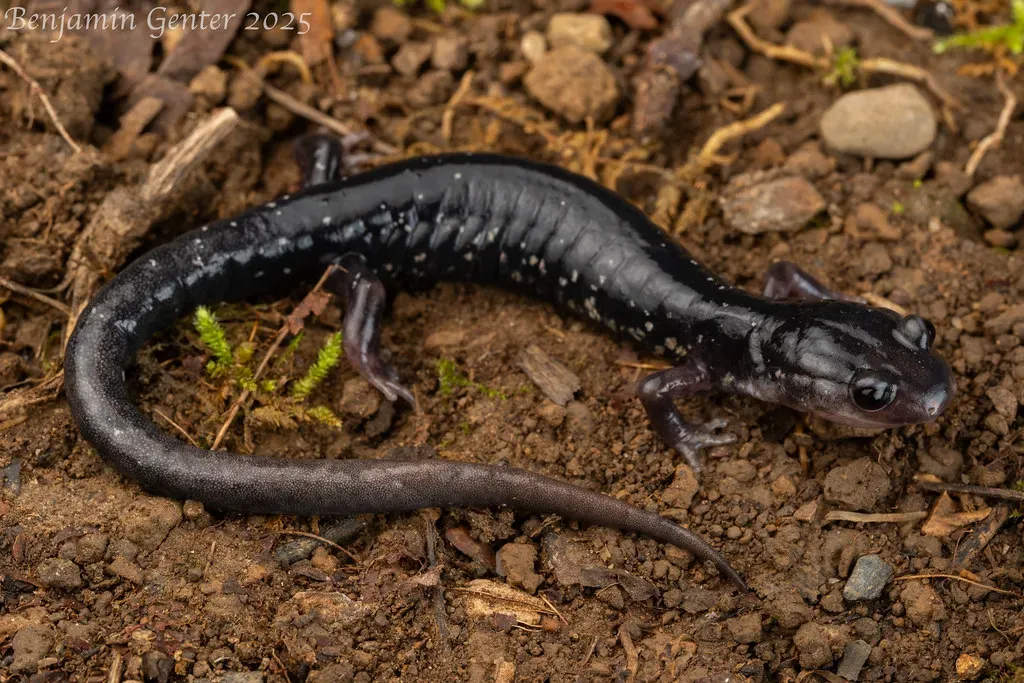
The question everyone asks is why here? What makes these mountains so special? The answer involves both geography and climate working in perfect harmony. The cool high-elevation environments of Appalachia represent ideal habitats for a family of salamanders called Plethodontidae, species in this diverse group lacking lungs and breathing through their moist, permeable skin.
When the planet was cooler, ideal climatic conditions were prevalent at many of the lower elevations throughout the Southern Appalachian Mountains and salamanders were widespread, but as the planet warmed, salamander populations moved upward on mountain peaks to remain in their ideal temperature and moisture preferences, and as populations continued to climb peaks, salamanders could no longer move between peaks and populations became isolated, leading salamanders to only breed with others on the same peak and these populations experienced speciation that led to the incredible diversity currently found. It’s like each peak became its own evolutionary island in the sky.
Lungless Wonders and Unique Adaptations
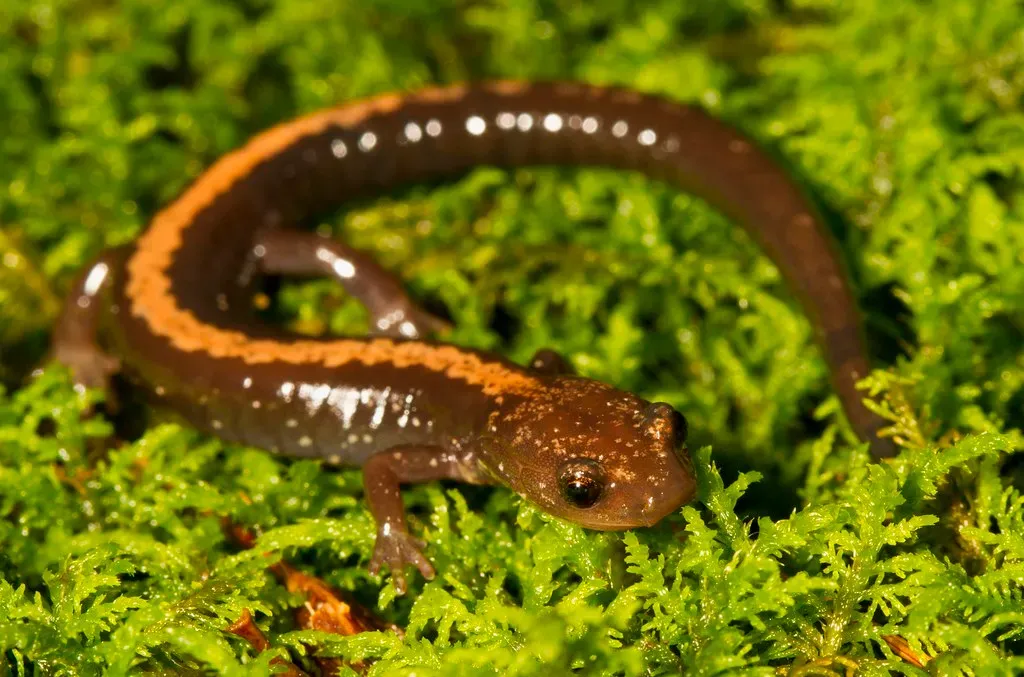
Most Appalachian salamanders belong to the family Plethodontidae, and they’ve ditched their lungs entirely. Most Southern Appalachian salamanders are lungless and breathe through their skin. This might sound like a disadvantage, yet it’s actually allowed them to thrive in these cool, moist environments where oxygen can diffuse directly through their permeable skin.
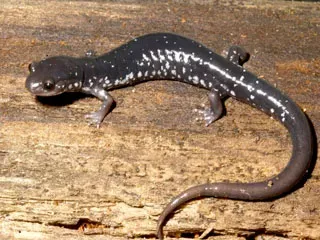
The Southern Appalachian Salamander offers a fascinating case study. This large black salamander has very small dorsal white spots and larger lateral white spots, and can reach sizes between 7 and 17 cm. Some species have developed even more specialized features. Green salamanders possess prehensile tails and squared toe-pads for climbing rock faces. Their adaptability, along with their resilience to threats like logging and habitat disturbances, helps them survive in changing conditions as they forage and reproduce on the forest floor before seeking refuge in moist microhabitats, cover objects, or retreat holes once dehydration starts.
The Threats Closing In
I know it sounds crazy, but these ancient survivors face modern challenges that could wipe out species before we even fully document them. Habitat destruction and alteration, including the impacts of mining, human development, and forestry, are widespread, which reduces the habitat quality for salamanders and other species, and furthermore, many mountaintop species depend on cool, damp environments that are now threatened by a warming climate.
The yellow-spotted woodland salamander exemplifies the crisis. Only a few hundred of these salamanders remain, and three populations have already been wiped out by mining and road construction in the past decade. These sites are targeted by mountaintop removal mining, which uses explosives that blast apart mountains to access coal seams, and more than 500 mountains and 1.4 million acres of forest in Appalachia have been destroyed by mountaintop removal mining over the past 40 years. When your entire species lives on one mountainside and someone literally blows up that mountain, extinction becomes terrifyingly real.
A Future Hanging in the Balance
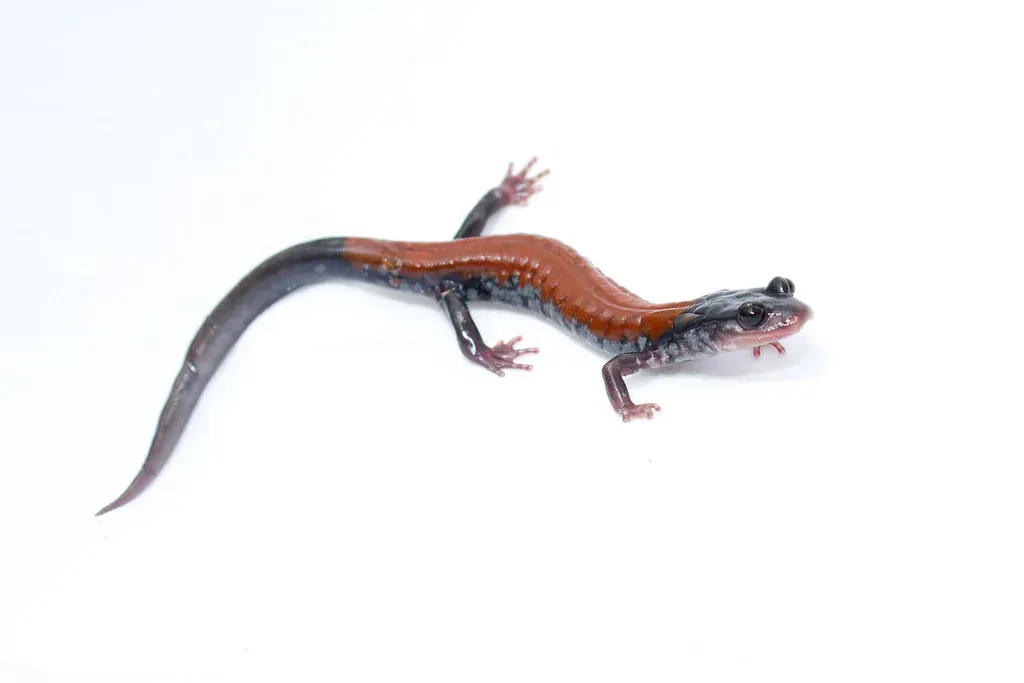
Climate change presents perhaps the most insidious threat. Some populations are restricted to the upper 200 feet of mountain tops leaving little room to escape predicted warming. Where do you go when you’re already at the summit? The peaks aren’t getting any taller. Nearly half of all salamander species are listed as threatened or endangered and populations are already declining for unknown reasons.
The conservation picture requires urgent attention. Appalachia is a global biodiversity hotspot for salamanders, with more salamander species than anywhere else in the world, yet today 60% of salamander species are threatened with extinction. Scientists are working to protect critical habitats, restore damaged ecosystems, and study population changes before it’s too late. These efforts include everything from planting native spruce trees to creating protected corridors between isolated populations.
The salamanders of Appalachia represent millions of years of evolutionary experimentation packed into these misty mountains. They’re living fossils, evolutionary marvels, and indicators of ecosystem health all rolled into creatures small enough to sit on your thumb. Losing them would mean erasing entire branches of the tree of life that exist nowhere else in the universe. What do you think about these hidden treasures of Appalachia? Tell us in the comments.
Hi, I’m Andrew, and I come from India. Experienced content specialist with a passion for writing. My forte includes health and wellness, Travel, Animals, and Nature. A nature nomad, I am obsessed with mountains and love high-altitude trekking. I have been on several Himalayan treks in India including the Everest Base Camp in Nepal, a profound experience.