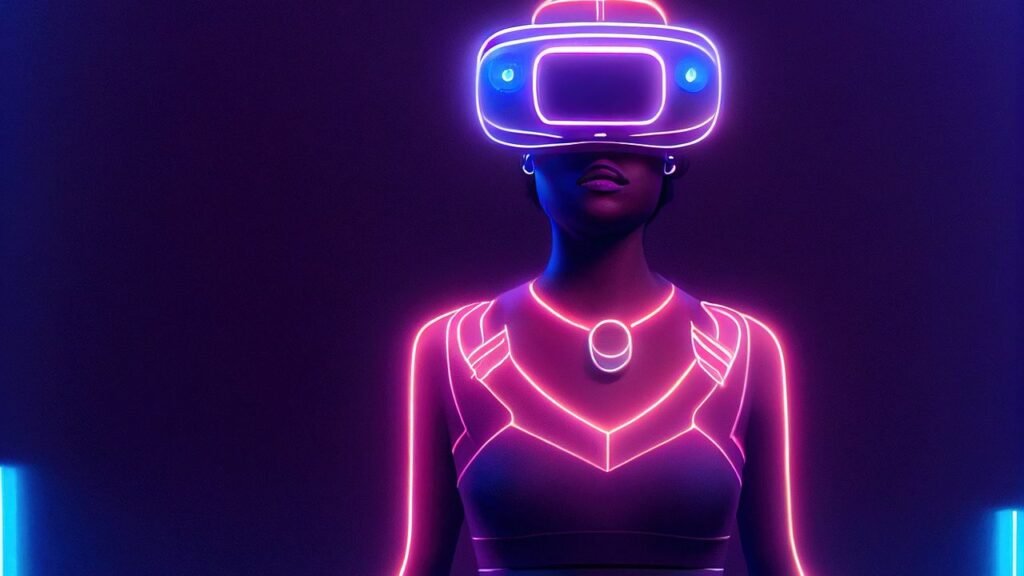

Imagine waking up tomorrow and discovering that everything you’ve ever known – your memories, your relationships, the entire universe – is running on some unimaginably advanced computer. Not a spiritual revelation, not a dream, but a technical fact. The simulation hypothesis dares to suggest exactly that: our reality might be nothing more than code, pixels at the deepest level instead of particles.
I remember the first time I heard this idea, I actually felt a bit dizzy, like the floor had shifted under me. It’s unsettling, sure, but also strangely liberating. If our world might be simulated, then questions we usually file under “philosophy” suddenly feel like engineering problems: Who built it? Why? Can it be hacked? Let’s walk through this strange possibility step by step – and see how far the idea really goes when we look at physics, computing, and consciousness with 2026 eyes.
The Core Idea: What Is the Simulation Hypothesis Really Saying?

At its heart, the simulation hypothesis is surprisingly simple: a civilization with enough computing power could simulate conscious beings who don’t realize they’re in a simulation, and we might be those beings. It doesn’t necessarily say who the simulators are – future humans, alien civilizations, or something we don’t have words for yet – it just argues that simulated realities are technically possible and could vastly outnumber “base” realities. If that’s the case, then the odds that we’re in the one original reality may be smaller than we like to think.
In more everyday terms, it’s like imagining a video game so detailed that every character in it thinks they’re real and has no way to see the screen or the console. Right now, our games are crude by comparison, but they’ve evolved from blocky pixels to ultra-realistic worlds in just a few decades. The simulation hypothesis simply pushes that curve forward to its logical extreme and asks: what happens when the difference between “game” and “reality” vanishes from the inside?
From Philosophy to Physics: Why This Idea Won’t Go Away

People have played with versions of this idea for centuries, long before computers – think of ancient illusions, or the famous thought of not knowing if you’re dreaming or awake. But in the last couple of decades, physics has added a weird twist. At very small scales, reality behaves in ways that look disturbingly like information processing: quantized energy levels, discrete bits of action, and hard limits on how precisely things can be known. Some researchers have even explored whether the universe might have a kind of “pixel size” built into spacetime itself.
None of this proves anything, but it keeps the hypothesis in the conversation. If the universe has a finite resolution and finite information capacity, that sounds more like a computer than an infinitely smooth continuum. Add in strange phenomena like quantum entanglement and the role of observation in measurement, and you get a world that feels less like solid stone and more like a mysterious software engine whose source code we haven’t seen yet.
The Tech Trajectory: Are We Actually Moving Toward Building Simulated Worlds?
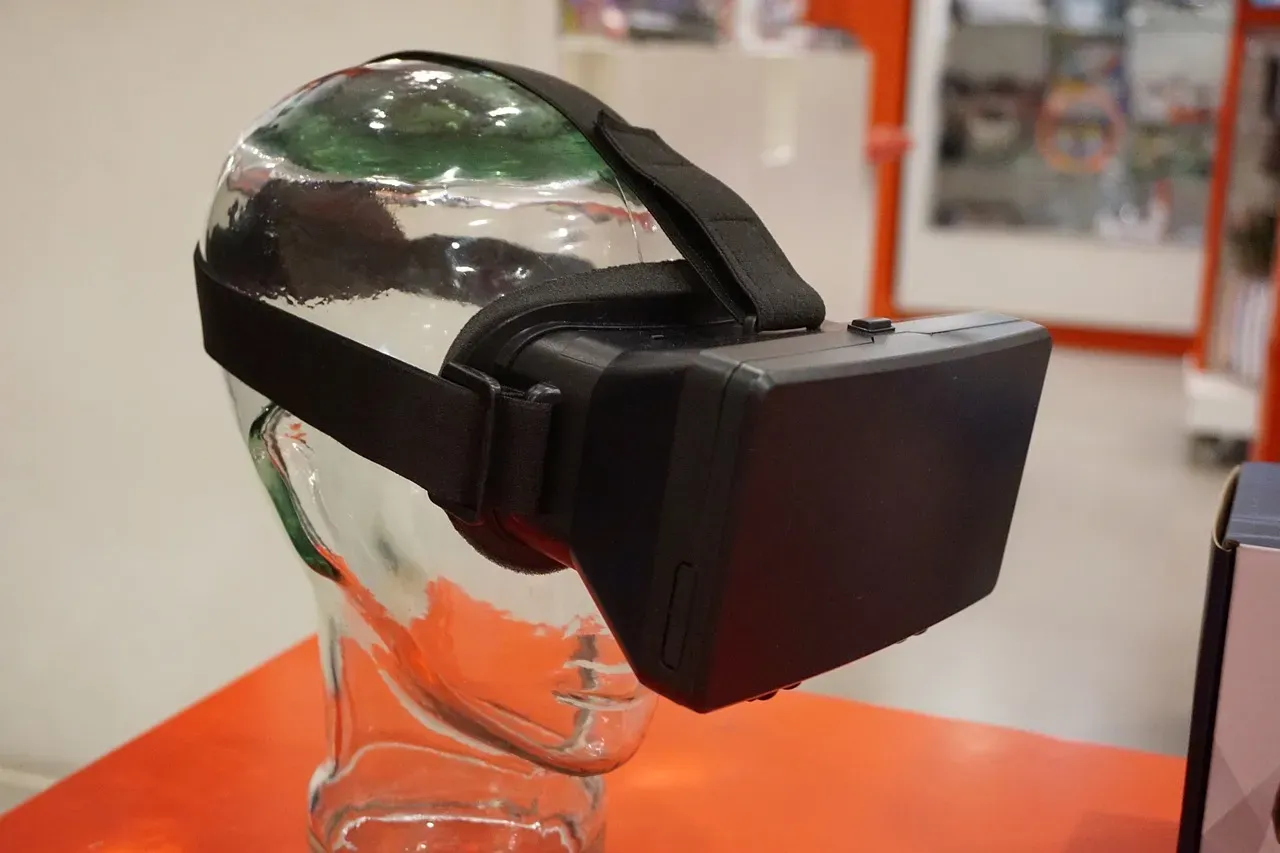
One of the most unsettling parts of this discussion is that our own technology is racing toward the kind of power the hypothesis requires. In a single lifetime, we’ve gone from simple text-based games to photorealistic virtual reality on consumer headsets. AI models now generate images, voices, and entire virtual characters that feel eerily convincing, even if they’re still far from human in many ways. If you extend that progress not just for decades, but for thousands or millions of years, the idea of simulating entire civilizations stops feeling impossible and starts feeling almost inevitable.
Some projections in computer science suggest that if energy and hardware efficiency keep improving, future systems could simulate billions of agents with internal histories in astonishing detail. Entire planets – maybe even entire universes – could be recreated with enough fidelity that the simulated beings would experience them as fully real. If even a small fraction of advanced civilizations choose to create such simulations, then the number of simulated minds could dwarf the number of biological ones. That possibility is what gives the simulation hypothesis its philosophical bite.
Glitches in the Matrix: Are There Any Signs Our World Might Be Simulated?
People love the idea of “glitches in the Matrix” – sudden coincidences, déjà vu, or odd anomalies that hint at bugs in the code. Most of these are probably just our brains being pattern-hungry storytellers, not evidence of a cosmic software error. Still, some scientists have asked more serious questions: if the universe were simulated, would there be detectable limits, like maximum processing speeds, artificial constraints on energy, or subtle artifacts in cosmic radiation? There have been studies exploring whether the structure of high-energy cosmic rays might reveal a kind of underlying grid, like a digital lattice.
So far, nothing concrete has turned up that demands a simulation explanation, and mainstream physics does not rely on this idea. The strange behavior of quantum systems, the cosmic speed limit set by the speed of light, and even the apparent fine-tuning of physical constants can all be discussed without invoking a programmer. But the fact that these features can also be described in computational language keeps the door open. The universe looks suspiciously like a system obeying rules and limits – exactly what you’d expect from a well-designed simulation, but also what you’d expect from a consistent physical reality.
Consciousness in Code: Could a Simulated Mind Really Be “Real”?

For many people, the sticking point is consciousness. Even if we could simulate brain activity in extreme detail, would that really produce a conscious being, or just a lifeless imitation? Neuroscience keeps tightening the link between brain processes and conscious experience, mapping how patterns of neurons line up with thoughts, feelings, memories, and sense of self. If consciousness emerges from specific kinds of information processing, as some theories suggest, then in principle there’s nothing sacred about neurons – they’re just one possible substrate.
That idea is both hopeful and disturbing. It means that a simulated person, running on a powerful enough computer with the right architecture, might genuinely feel pain, joy, love, and loss. They wouldn’t just be hollow puppets; they would be subjects of experience, like you reading this right now. When I think about that, the simulation hypothesis stops being an abstract puzzle and starts raising ethical questions: If someone built such a world, how much moral responsibility would they have toward the beings inside it?
Why Would Anyone Run a Simulation of Us?

Assuming someone has the power to simulate entire civilizations, the obvious question is: why bother? One possibility is scientific curiosity. Future humans, or other advanced beings, might simulate past eras to study history in detail, replaying branching timelines to see how small decisions change the future. Others imagine simulations used for training – testing policies, technologies, or even moral systems in safe environments before applying them to “base reality.” In that picture, we might be part of someone’s research project, like a long, incredibly elaborate experiment.
There’s also a more unsettling option: entertainment. Just as we watch historical dramas or play strategy games set in imaginary or real pasts, advanced beings might run entire worlds for their own enjoyment. That sounds harsh, but from the inside, the story would still feel real to us. Of course, there’s a quieter, almost comforting angle too: maybe the simulators care about what happens here. Maybe we’re more like characters in a novel they genuinely love, rather than disposable background NPCs in an endless game.
The Limits of the Hypothesis: What We Actually Know and Don’t Know

For all its appeal, it’s important to admit that the simulation hypothesis is not a proven theory; it’s a speculative framework built on a mix of philosophy, computer science, and a handful of physical curiosities. Right now, there’s no experiment that clearly distinguishes “simulated universe” from “non-simulated universe” in a decisive way. Many scientists and philosophers criticize the idea as unfalsifiable or at least very difficult to test, which means it sits in a strange place between science and metaphysics.
At the same time, completely dismissing it feels premature, given how fast our own technology is growing and how deeply information theory is woven into modern physics. The most honest position might be a kind of radical uncertainty: we do not know whether we’re simulated, and we may never know for sure. What we can do is use the hypothesis as a tool to sharpen questions about reality, consciousness, and ethics – without pretending we’ve already found the final answer.
If We Are Simulated, What Should We Do Differently?

Here’s the part that always brings the conversation back down to earth: even if we are in a simulation, our experiences still feel real to us. Pain hurts, love matters, and choices have consequences within the world we inhabit, whatever its ultimate nature. In that sense, the simulation hypothesis doesn’t erase meaning; it just changes the backdrop. You could even argue that if someone went to the trouble of simulating a world like ours, living well inside it might matter even more, not less.
Personally, I find it oddly motivating. If our lives are being watched, logged, or replayed by some higher-level system, then every small act of kindness or integrity becomes part of the record. And if we are not simulated, then we still only get this one shot at being human in a vast, indifferent universe. Either way, the practical takeaway is the same: take your life seriously, but not too seriously, stay curious, and keep asking hard questions about reality, even when the answers might never fully arrive.
Living Meaningfully in an Uncertain Universe
Whether the simulation hypothesis turns out to be a clever thought experiment or a literal description of our condition, it forces us to confront a simple truth: we know far less about the ultimate nature of reality than we like to pretend. The deeper we look, the more our supposedly solid world starts to look like layers of rules, information, and patterns we don’t fully understand. That can feel frightening, but it’s also exactly what makes being alive right now so fascinating.
In the end, we’re left with a strange but surprisingly grounded stance: act as if your choices matter, because they do – to you, to the people around you, and to whatever this universe ultimately is. Keep your mind open to unsettling possibilities without losing your grip on the concrete moments that make a life: a shared meal, a hard-earned success, a quiet evening that feels inexplicably meaningful. If we are living in a simulation, maybe the most human thing we can do is treat every moment as if it’s worth being simulated in the first place – what else would you do with a reality this mysterious?