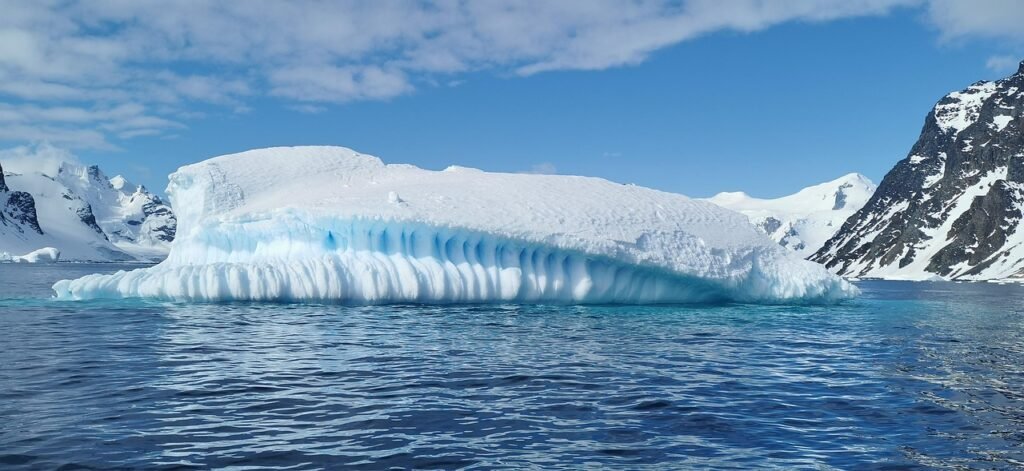

The Birth of a Global Ice Repository (Image Credits: Pixabay)
Antarctica – Scientists marked a milestone this week by opening the world’s first dedicated repository for mountain ice cores, a natural vault designed to shield invaluable climate records from the accelerating thaw of global glaciers.
The Birth of a Global Ice Repository
Researchers gathered at the remote Concordia research station on the Antarctic Plateau to inaugurate the facility on January 14, 2026. The site features a specially carved snow cave that maintains temperatures near -52 degrees Celsius without any energy input, ensuring the long-term stability of its contents. This passive preservation method relies on Antarctica’s extreme cold to keep samples intact for centuries.
The Ice Memory Foundation, a collaboration of European institutions including CNRS and IRD, spearheaded the project. Launched in 2015, the initiative addresses the urgent threat posed by global warming to glaciers worldwide. Already, teams have extracted cores from 10 sites, with plans to expand significantly in the coming years.
Unveiling the Past Through Ice Layers
Ice cores serve as frozen snapshots of Earth’s atmospheric history, trapping air bubbles, dust, and chemical traces that reveal shifts in climate over hundreds or thousands of years. Each layer corresponds to a specific time period, offering data on temperature fluctuations, pollution levels, and environmental changes that shaped the planet.
By analyzing these archives, scientists gain insights into how human activities have altered the atmosphere since the Industrial Revolution. The repository at Concordia will store cores primarily from mountain glaciers, which are melting faster than polar ice sheets in many regions. This collection becomes crucial as original sites disappear, preventing the loss of irreplaceable evidence.
The foundation’s work highlights the fragility of these natural records. Glaciers in the Alps and other areas have lost significant volume in recent decades, underscoring the need for immediate action.
A Race Against Rising Temperatures
Global warming has intensified glacier retreat, with some ice fields shrinking at rates that outpace predictions. Scientists estimate that without intervention, many mid-latitude glaciers could vanish entirely within decades, erasing their historical data forever. The Antarctic sanctuary provides a secure alternative, recognized under the Antarctic Treaty System for its ethical and scientific value.
Transportation of the first heritage cores to the site represented a logistical triumph, involving careful handling to avoid contamination or damage. Future drills will target endangered glaciers, prioritizing those at risk from warming trends. The project emphasizes international cooperation, inviting contributions from nations and research bodies worldwide.
Charting the Path Forward
The Ice Memory Foundation outlined an ambitious roadmap during the inauguration, aiming to sample 20 glaciers over the next two decades. This timeline reflects the narrowing window for collection as melt rates accelerate. Partners from France, Italy, Switzerland, and beyond committed to supporting drilling campaigns and funding efforts.
Anne-Catherine Ohlmann, director of the foundation, stressed the broader implications in her remarks. “We are the last generation who can act,” she said. “It’s a responsibility we all share. Saving these ice archives is not only a scientific responsibility – it is a legacy for humanity.”
- Alpine glaciers in Europe, providing records of industrial-era pollution.
- High-altitude sites in the Andes, capturing tropical climate variations.
- Asian mountain ranges, documenting monsoon patterns and volcanic influences.
- African peaks like Kilimanjaro, revealing equatorial environmental shifts.
- Remote Arctic and subpolar locations, offering comparative data on polar melt.
Key Takeaways
- The Concordia repository ensures ice cores remain preserved naturally at -52°C for centuries.
- Over 10 sites have been sampled so far, with a goal of 20 more in 20 years.
- This effort safeguards atmospheric history against irreversible glacier loss from warming.
As the sanctuary takes shape, it stands as a testament to human ingenuity in the face of environmental crisis, preserving Earth’s story for those who follow. What steps can we take to support such vital preservation work? Share your thoughts in the comments.