
You’ve probably felt it before. That sudden jolt when something dangerous lurks nearby, the automatic way you pull your hand from a hot surface, or even the inexplicable urge to protect someone you care about. These aren’t choices you consciously make. They happen before you can even think about them. It’s almost as if your body knows something your mind hasn’t caught up with yet.
These reactions are instincts, the invisible hand guiding behaviors you didn’t learn from books or teachers. Yet, have you ever stopped to wonder where they come from? Why do we possess these hardwired patterns of behavior? The answers lie buried deep within our evolutionary past, stretching back hundreds of thousands of years to when survival meant something entirely different than it does today. Let’s dive into the remarkable story of why we have instincts and how they’ve shaped who we are as a species.
The Ancient Blueprint: What Evolution Left Behind
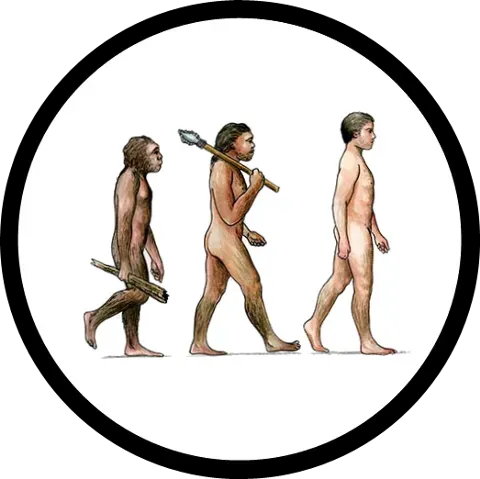
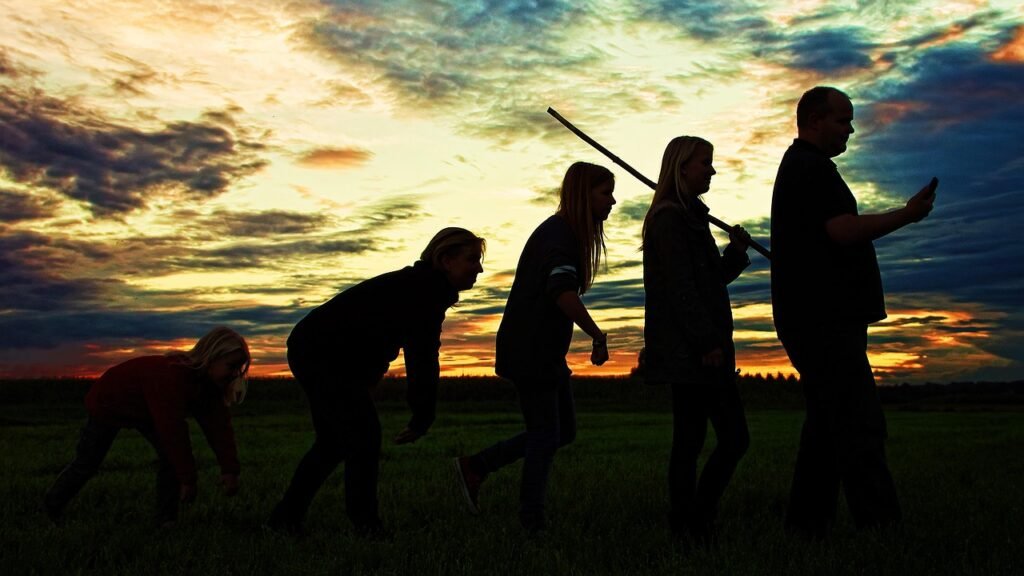
Your instincts trace back to evolution through natural selection, where early humans who responded quickly to threats like predators, fire, or environmental hazards were more likely to survive and pass on their genes. Think of it this way: those ancestors who hesitated when a predator approached didn’t live long enough to become your great-great-great-grandparents. The ones who ran first and asked questions later? They made it.
Research spanning genetics, neuropsychology, and paleobiology shows that although you inhabit a modern world of space exploration and virtual realities, you do so with the ingrained mentality of Stone Age hunter-gatherers, still seeking those traits that made survival possible roughly 200,000 years ago. Your brain hasn’t received the memo that you’re no longer on the savannah. It’s still operating with software designed for a world that no longer exists, which explains a lot about why you sometimes feel the way you do in completely safe situations.
The Survival Circuit: How Your Brain Processes Threats
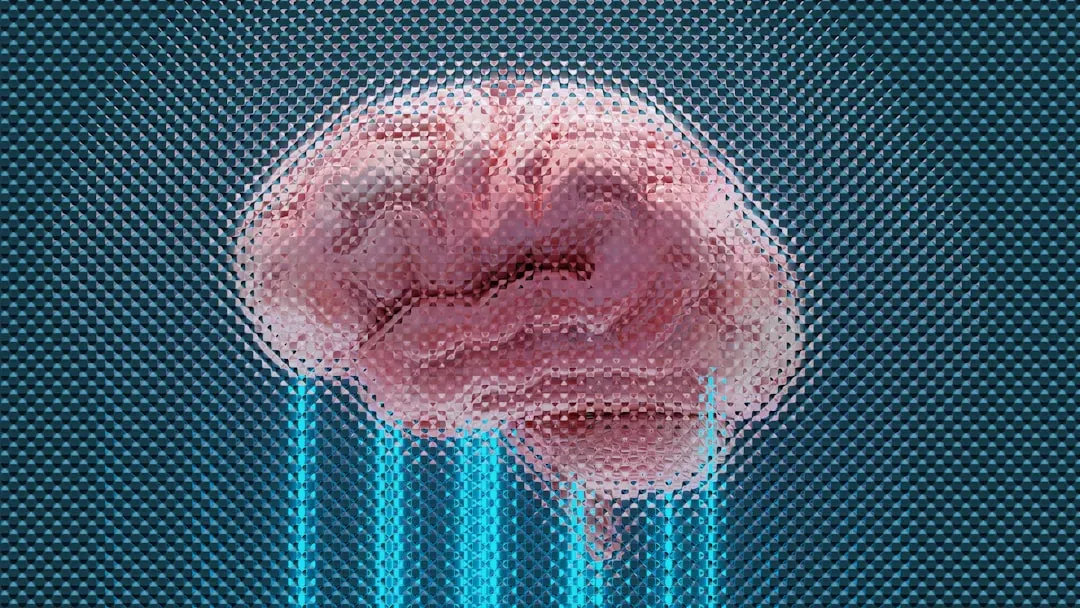
Modern neuroscience locates instinctual behavior in the limbic system and the amygdala, which processes threat and triggers immediate reactions; these brain structures evolved long before rational thought developed in the neocortex, which is why instinct often feels faster than logic. It’s like having two different computers running simultaneously in your head. One is ancient, lightning-fast, and brutally efficient. The other is newer, slower, but far more sophisticated.
When you sense danger, this isn’t a gentle suggestion from your nervous system. Your brain activates an automatic chain reaction involving increased heart rate, sharper senses, and faster breathing before you even realize why. Honestly, it’s remarkable when you think about it. Your body mobilizes an entire defensive army without waiting for permission from your conscious mind. That’s millions of years of evolution working exactly as intended.
Fixed Versus Flexible: The Two Faces of Instinctual Responses
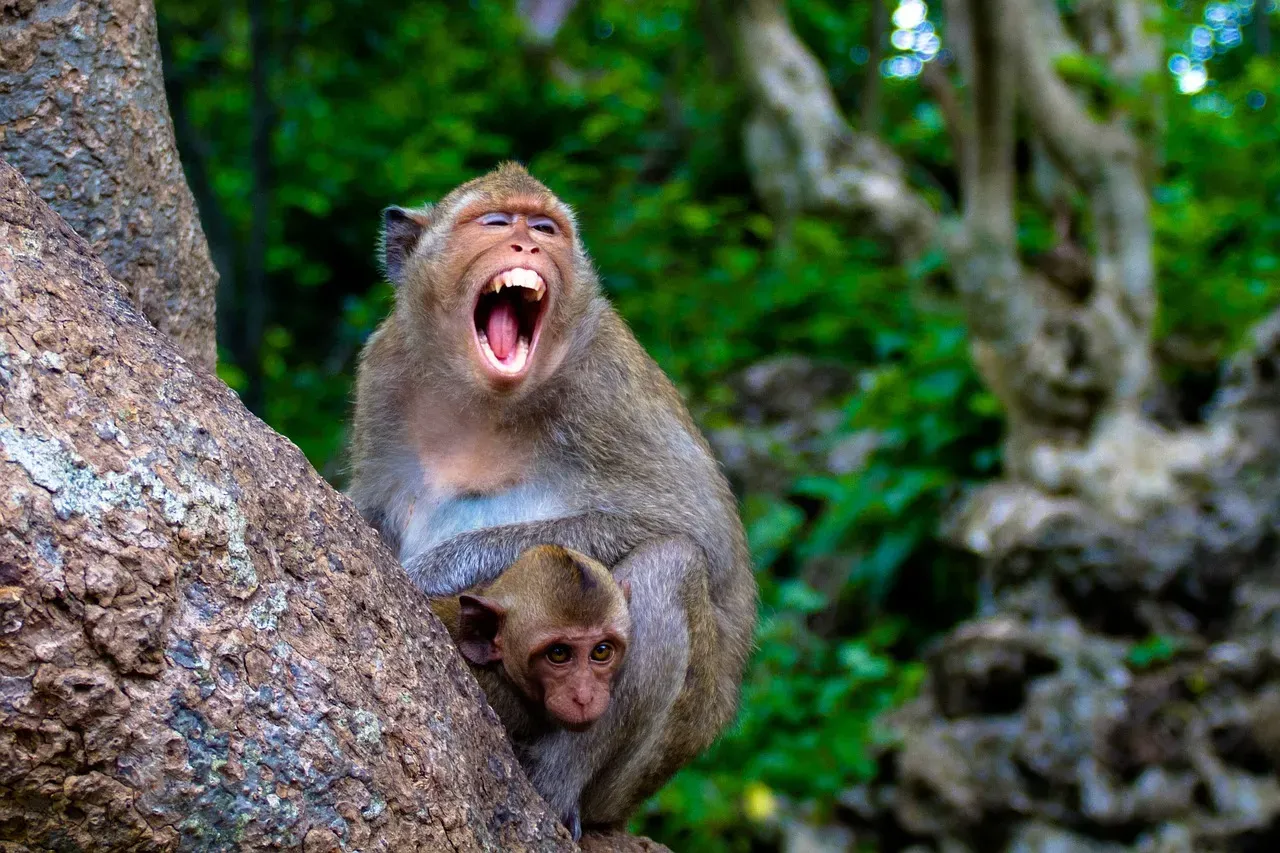
Responses to predatory threat depend on both flexible and fixed behavioral traits, with fixed traits implying that predatory threat has been pervasive across a species’ evolutionary time, developed through gradualism or other evolutionary methods particular to the species. Some instincts are like stone tablets, unchanging across generations. Others bend and adapt based on what you experience in your lifetime.
Fixed traits are innate, evolutionarily stable strategies widely prevalent across mammals, including passive responses like freezing and active defenses such as fight or flight; freezing reduces motion and visibility, facilitating information gathering and increasing the possibility of disengaging a distant predator’s attention. This explains why you might suddenly feel paralyzed when frightened. It’s not weakness; it’s an ancient survival strategy that once kept your ancestors alive when movement meant detection. Sometimes the smartest thing to do is absolutely nothing at all.
Beyond Survival: Social Instincts That Built Civilizations

Here’s where it gets fascinating. Social instincts such as cooperation and empathy improved group survival, forming the foundation of human civilization. You’re not just hardwired to survive as an individual. You’re programmed to thrive as part of a group, which makes perfect sense when you consider how vulnerable humans are on their own compared to other apex predators.
While self-preservation is traditionally viewed as the drive to protect one’s life, this instinct has evolved to encompass the protection of others, especially those within one’s social or familial circle; under extreme circumstances, individuals may act against their immediate self-interest to ensure the survival of their group. This is why you might jump in front of danger to protect a loved one without thinking. Your genes don’t care about you specifically; they care about their continuation, and sometimes that means sacrificing the individual for the collective. It’s brutal math, but it works.
The Paradox of Modern Life: Ancient Instincts in a New World

Although our environments have changed, our biology hasn’t; the same instincts that once told us to hide from predators now manifest as gut feelings, intuitive warnings, or sudden bursts of energy during crisis, yet in today’s highly structured and technology-reliant world, we’ve learned to override or ignore these signals. You’ve probably experienced this disconnect. Your body screams danger when you’re about to give a presentation, even though nobody is going to eat you in the conference room.
The survival instinct that worked for our primitive ancestors doesn’t necessarily work in the 21st century. Your stress response doesn’t distinguish between a charging lion and an angry email from your boss. Both trigger roughly the same cascade of hormones and physiological changes. Let’s be real: that’s exhausting and often entirely inappropriate for the actual level of threat you’re facing. Yet evolution moves slowly, and your nervous system hasn’t caught up with modern stressors.
The Development Debate: Are Instincts Truly Hard-Wired?

A closer look reveals that instincts are not satisfactorily described as inborn, pre-programmed, hardwired, or genetically determined; rather, research teaches us that species-typical behaviors develop in every individual under the guidance of species-typical experiences occurring within reliable ecological contexts. This challenges the old-school view that instincts are purely genetic scripts playing out automatically. It’s more nuanced than that.
Think of instincts less like computer programs and more like recipes. Innate and learned behaviors are now recognized as highly synergistic, with nearly every behavior having both innate and learned components. The ingredients are provided by your genes, but the final dish depends on the environment where you’re raised, the experiences you have, and countless other factors. You’re born with potential patterns, but they need the right conditions to fully emerge and develop properly.
Instincts Across the Animal Kingdom: Universal Yet Unique

Sea turtles newly hatched on a beach instinctively move toward the ocean, a marsupial climbs into its mother’s pouch upon being born, and other examples include animal fighting, animal courtship behavior, internal escape functions, and nest building. Every species has its own set of instinctual behaviors perfectly tailored to its ecological niche. What works for a sea turtle would be useless for a bird, and vice versa.
Each species, with its own unique genetic makeup, has an evolved brain structure and functional organization that determines its innate psychological nature; wolves have an innate wolf nature, lions have an innate lion nature, hawks have an innate hawk nature. You have a human nature, shaped by the specific challenges your ancestors faced over millennia. It’s hard to say for sure, but this might be why certain things feel universally human regardless of culture or upbringing – the echoes of shared evolutionary pressures.
The Future of Our Instinctual Selves

Evolution can begin right now; relying on the survival of the fittest maxim, those who respond with old-school fight or flight today will not likely survive and pass on their outmoded genes, while those who learn to control and direct those primitive instinctive reactions will survive and their genes will begin the inevitable march toward a new and more adaptive response. We’re not done evolving. The story of human instincts is still being written with every generation that survives and reproduces in our increasingly complex world.
While the survival instinct remains crucial, its expressions may not always align with modern societal challenges, leading to potentially maladaptive stress responses in everyday life. Perhaps the next phase of human evolution involves better calibration of these ancient systems. Maybe future humans will possess instincts better suited to digital dangers and social complexities rather than physical predators. Evolution moves at a glacial pace compared to technological change, though, so don’t expect that upgrade anytime soon. For now, you’re stuck with a Stone Age brain trying to navigate a Space Age world.
Conclusion
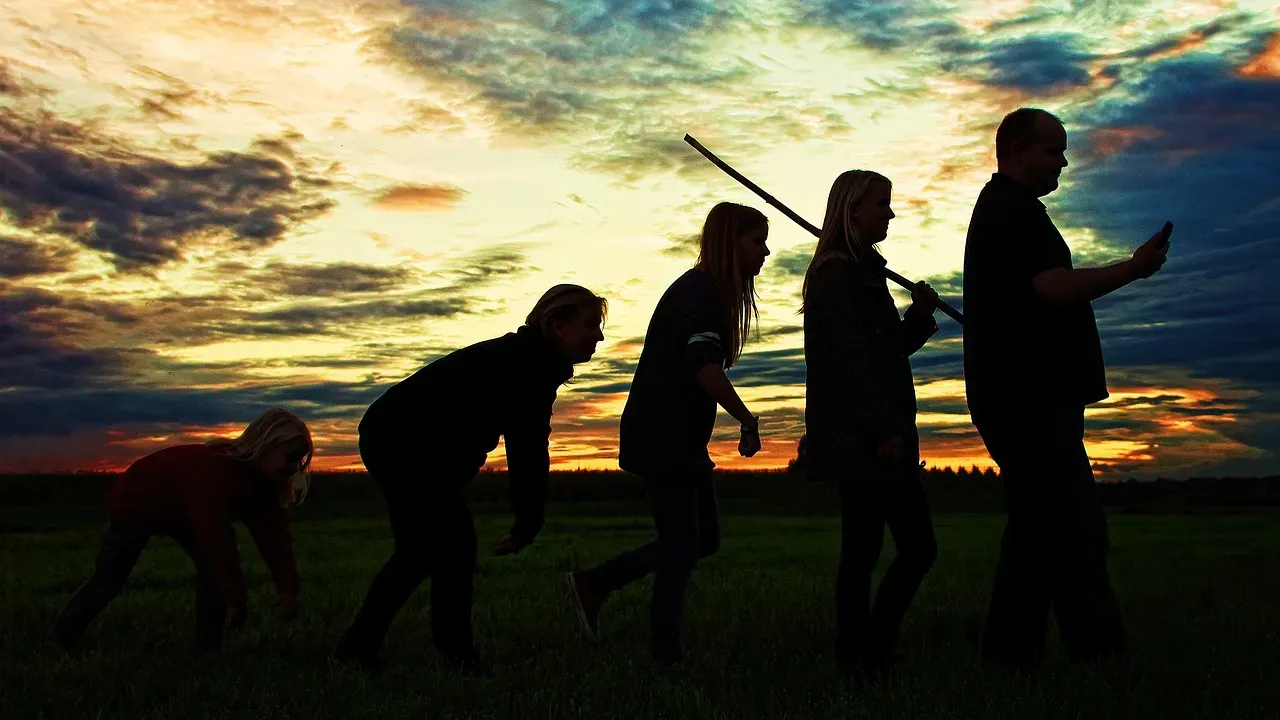
Your instincts are far more than random quirks or outdated reflexes. They’re the accumulated wisdom of countless generations who survived against staggering odds, encoded into the very architecture of your nervous system. From the instant freeze response when startled to the fierce protectiveness you feel toward loved ones, these behaviors emerged because they worked – they kept your ancestors alive long enough to eventually produce you.
Yet understanding instincts also means recognizing their limitations. The same circuits that once saved lives can now trigger unnecessary anxiety or inappropriate reactions in modern contexts. We exist in this fascinating tension between honoring these ancient gifts and learning to modulate them for a world our ancestors couldn’t have imagined.
What do you think about the instincts driving your own behavior? Can you identify moments when your Stone Age brain takes over in your thoroughly modern life? The more you understand these evolutionary roots, the better equipped you become to work with your instincts rather than against them.