Picture a dusty, unpaved road stretching into the horizon, lined with colossal trees that look like they’ve been planted upside down. Their massive trunks rise toward the sky like ancient pillars, holding court over a landscape that has changed dramatically around them. This is the Avenue of the Baobabs, one of Madagascar’s most photographed and visited natural wonders.
These trees preserve the remnants of an ancient tropical forest that once blanketed Madagascar. What you see today is merely a shadow of what once was, yet these towering giants continue to captivate travelers from across the globe, standing as both a testament to nature’s resilience and a warning of what can be lost.
The Solitary Giants That Once Lived in a Crowd
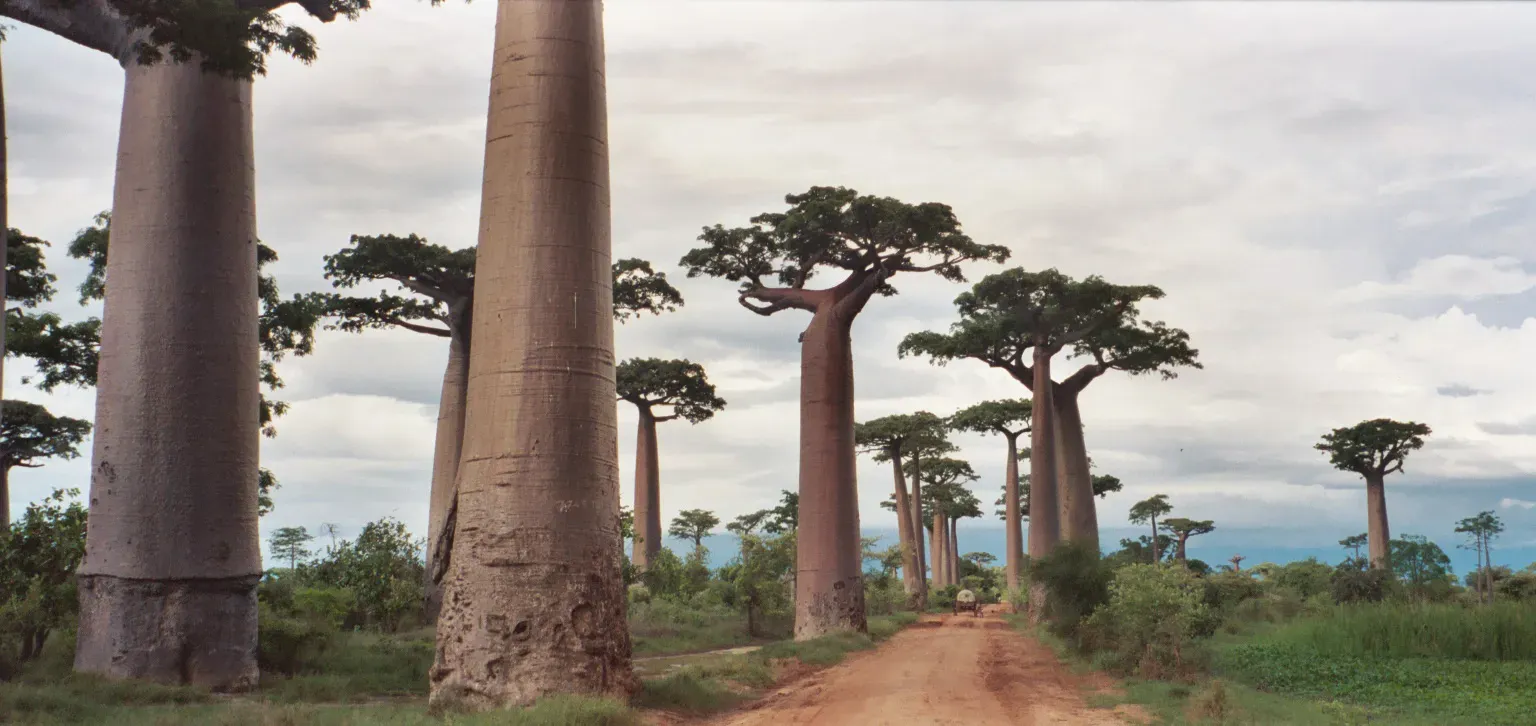
Known locally as renala or reniala, meaning “mother of the forest,” these baobabs are a legacy of dense tropical forests that once thrived on Madagascar, and they did not originally tower in isolation over the landscape but stood in dense forest. Imagine that for a moment. These trees weren’t meant to be alone.
As Madagascar’s population grew over the years, forests were cleared for agriculture, leaving only the baobab trees, which locals preserved for their value as a food source and building material. What remains is roughly two dozen trees along a specific stretch of road, monuments to a vanished ecosystem. Many of these trees are more than 800 years old with trunks that are over 150 feet around, meaning they’ve witnessed centuries of transformation.
Where Exactly Are These Colossal Trees
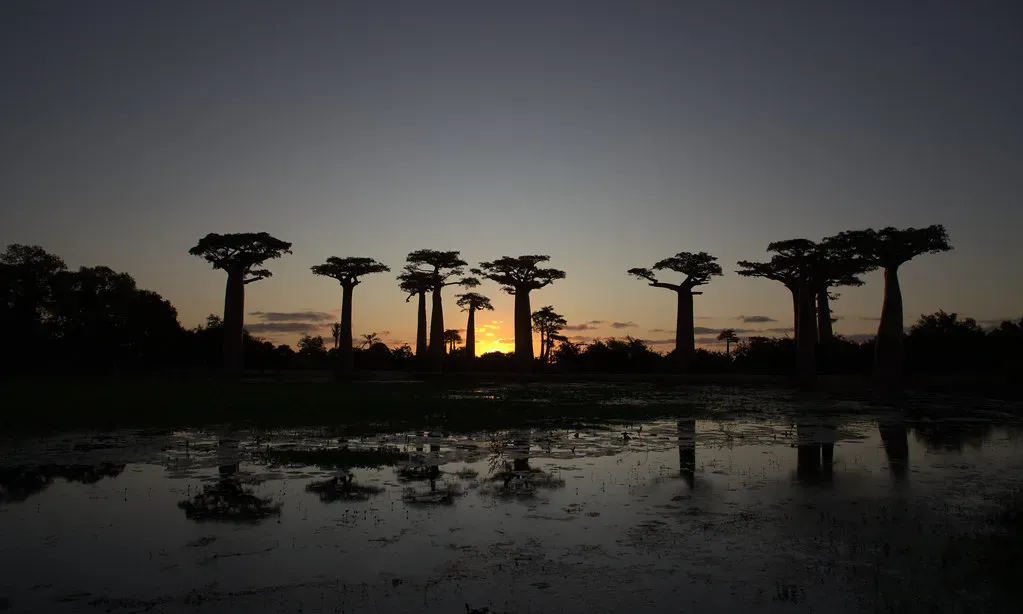
The Avenue of the Baobabs is a prominent group of Grandidier’s baobabs lining the unpaved Road No.8 between Morondava and Belon’i Tsiribihina in the Menabe region of western Madagascar. It’s not some remote, inaccessible wilderness. The trees literally line a public road that people use daily.
Along a 260 meter stretch of the road is a grove of 20 to 25 Adansonia grandidieri baobabs, with an additional 25 or so trees of this species growing over nearby rice paddies and meadows. The trees, which are endemic to Madagascar, are about 30 meters in height. Standing beneath them feels like being in the presence of living skyscrapers, their thick trunks and sprawling canopies creating an otherworldly atmosphere, especially at sunrise and sunset when the light transforms them into silhouettes.
The Secret to Their Survival in a Harsh Climate
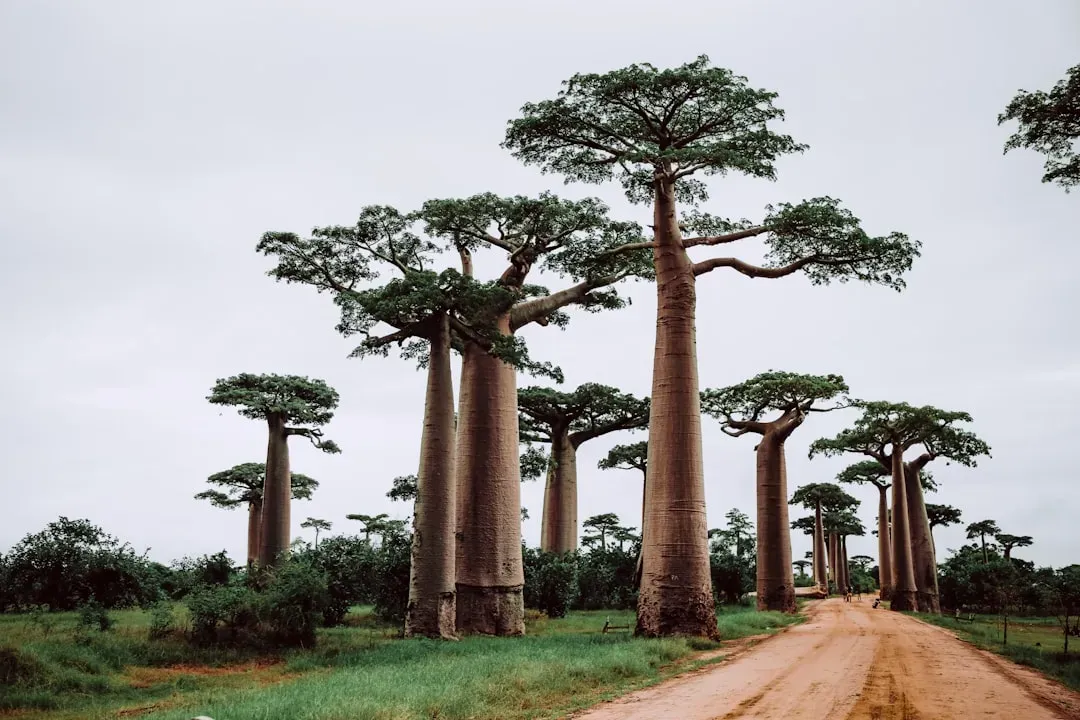
Let’s be real here: Madagascar’s western region isn’t exactly known for abundant rainfall. So how do these enormous trees thrive in such conditions? Grandidier’s baobabs have such huge trunks because they store water.
Think of them as nature’s water towers. The trunks of Grandidier’s baobabs typically grow around 80 feet tall and 10 feet wide, but the biggest specimen ever recorded was a 98 foot giant with a diameter of 36 feet. That’s not just impressive size for show. The fibrous wood inside can hold massive quantities of water, allowing these trees to survive long dry seasons when other plants would wither away. It’s hard to say for sure, but this adaptation might be exactly why locals chose to preserve them while clearing other trees.
A Forest That Rose and Fell With the Sea
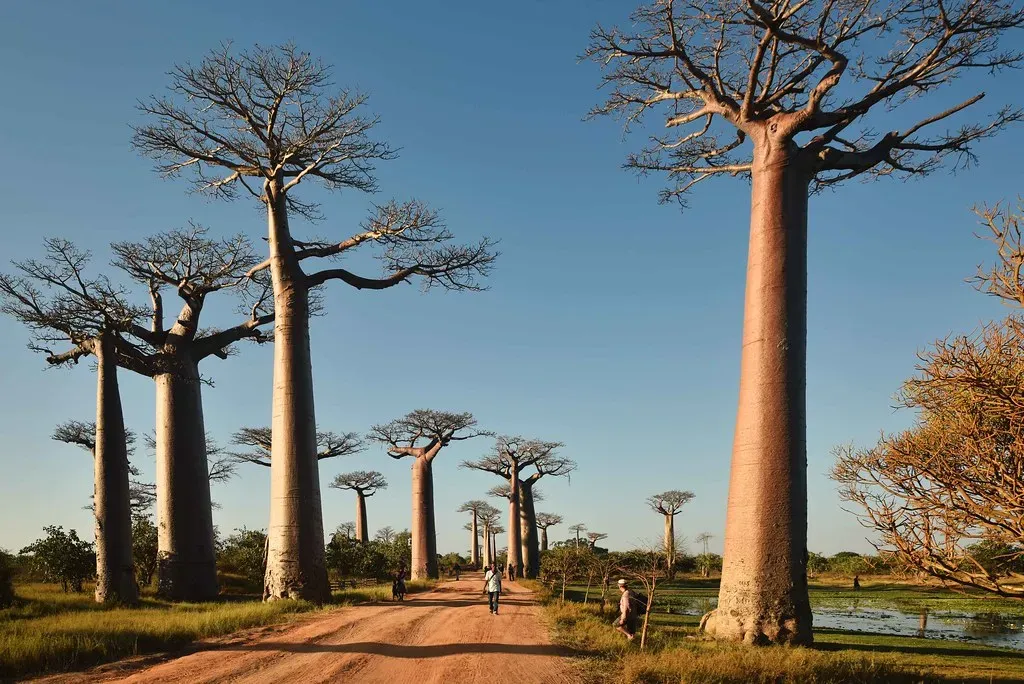
Recent scientific research has uncovered something fascinating about baobabs. Researchers sequenced genomes of all eight extant baobab species and argue that Madagascar should be considered the centre of origin for the extant lineages. These trees didn’t just randomly appear on the island.
Past population dynamics of Malagasy baobabs may have been influenced by both interspecific competition and the geological history of the island, especially changes in local sea levels. When sea levels were lower millions of years ago, baobabs had more space to expand. Higher sea levels led to fragmentation and isolation. The trees originated in Madagascar 21 million years ago but later traveled long distances by way of ocean currents, eventually reaching Africa and even Australia. The baobabs you see today along that dusty Malagasy road are the direct descendants of an ancient lineage that has survived ice ages, volcanic eruptions, and dramatic climatic shifts.
Sacred Trees With Spiritual Powers and Practical Uses
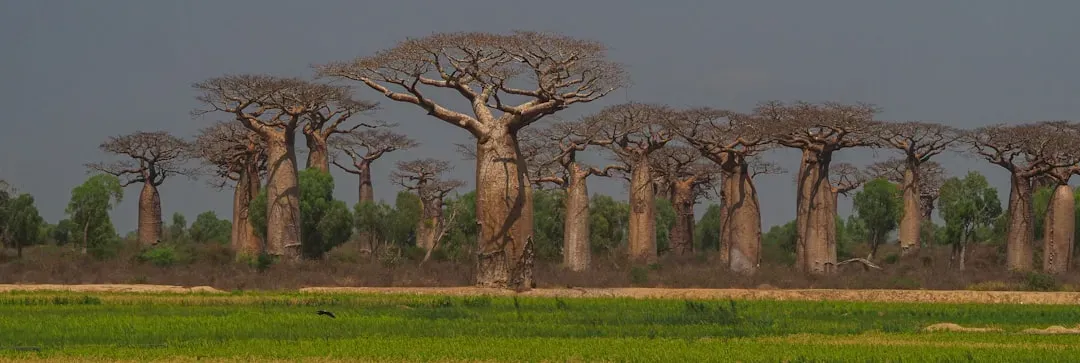
The Avenue of the Baobabs has been a sacred site for the local population for centuries, with the trees believed to have spiritual powers and often visited by locals seeking blessings or guidance. This isn’t just folklore or tourist talk. These trees genuinely hold deep cultural significance.
Baobabs are incredibly useful plants: their trunks are harmlessly tapped for water during the dry season and have even been lived in, young leaves are eaten as a salad vegetable, and the nutritious sour brown pulp of the hard-shelled fruits is made into a pleasant summertime beverage. Honestly, it’s remarkable how versatile they are. They provide food, water, shelter, and medicine. The trees play a central role in Malagasy culture, featuring in local legends such as that of the “Baobab Amoureux,” two intertwined trees said to embody star-crossed young lovers who were forced to marry other people.
The Threats Looming Over These Ancient Survivors
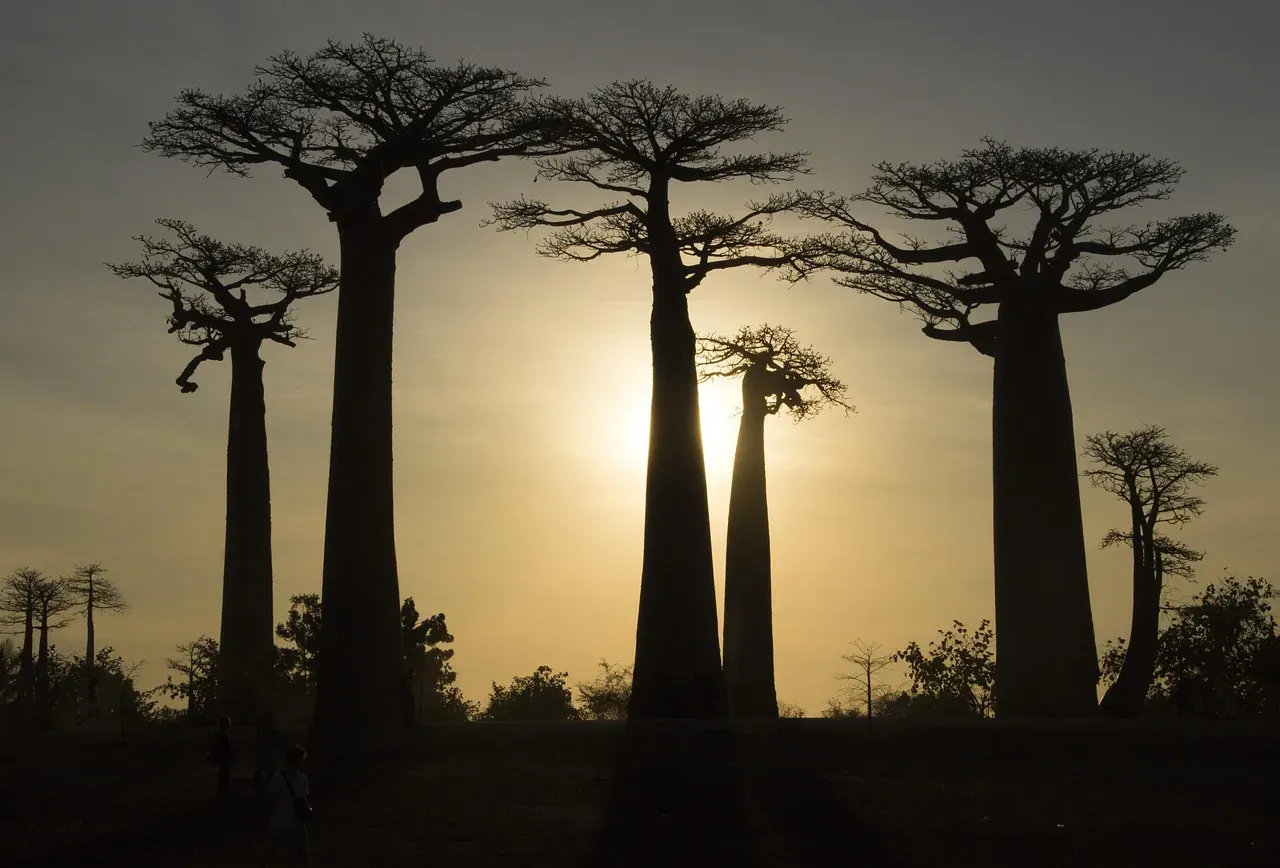
Here’s the thing that many visitors don’t realize when they arrive to snap photos at sunset. The area is a natural monument under conservation since July 2015, but the trees are still threatened by further deforestation, effluents from encroaching paddy fields, bushfires, and forest fires.
Grandidier’s baobab is classified as endangered, and although it is the most heavily exploited of all the Malagasy baobabs, the greatest threat is the transformation of its forest habitat into agricultural land. Within these disturbed habitats, there is a noticeable lack of young trees, as fires, seed predation, competition from weeds, and an altered physical environment might be affecting the ability of the baobab to reproduce. The vast majority of what you see are old trees. The next generation? That’s uncertain. Climate change adds another layer of danger, with rising sea levels potentially limiting the areas where baobabs can thrive.
A Natural Monument With No Gate Fees
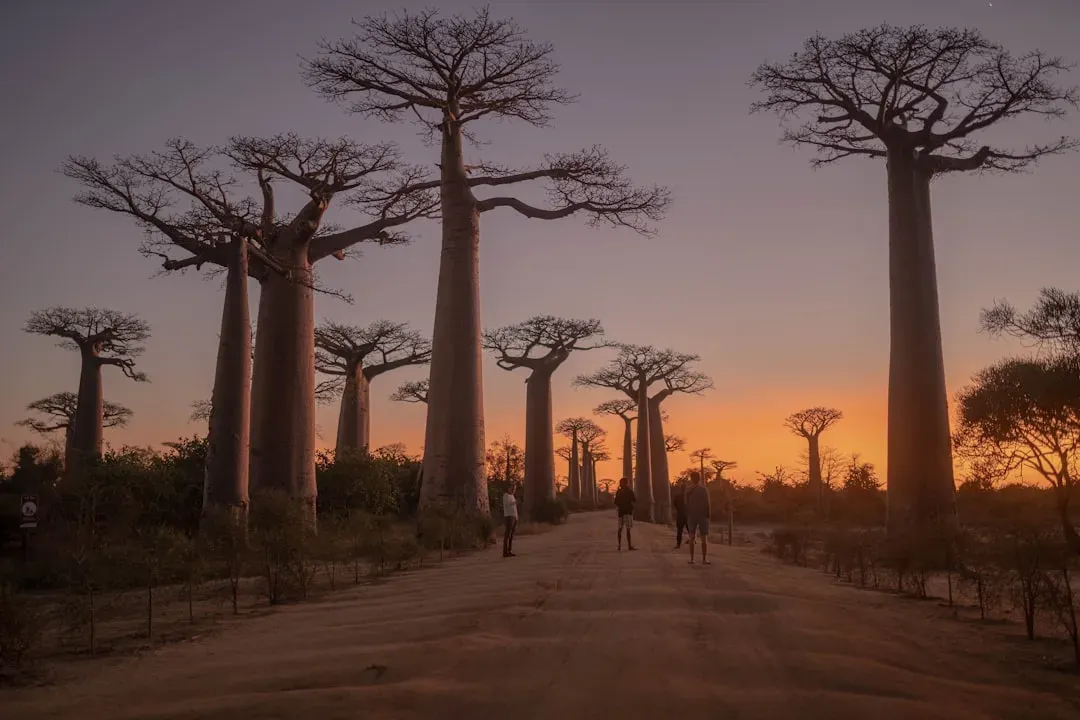
Despite its popularity as a tourist destination, the area has no visitor center or gate fees, and local residents receive little income from tourism. There’s something both beautiful and troubling about that fact. You can visit one of the most iconic natural sites in Madagascar without paying a single admission fee.
The Ministry of Environment, Water, and Forests declared it a temporary protected area in July 2007, and in July 2015, the site was designated a national monument, the first in Madagascar. Conservation organizations have stepped in to help protect the avenue, working with local communities to ensure these trees survive. The government and local communities hope the tree can survive for additional 800 years. Whether that hope becomes reality depends entirely on the actions taken now. If you visit, consider supporting local conservation efforts or purchasing from community vendors near the site.
Standing beneath the Avenue of the Baobabs at dusk, watching the sun sink behind those ancient trunks, you can’t help but feel small. These trees have outlasted empires, weathered countless storms, and survived the loss of the forest that once surrounded them. They’ve become icons precisely because they endure. The question now is whether we’ll do enough to ensure they continue standing for centuries to come. What do you think it would take to truly protect these ancient survivors? Tell us in the comments.