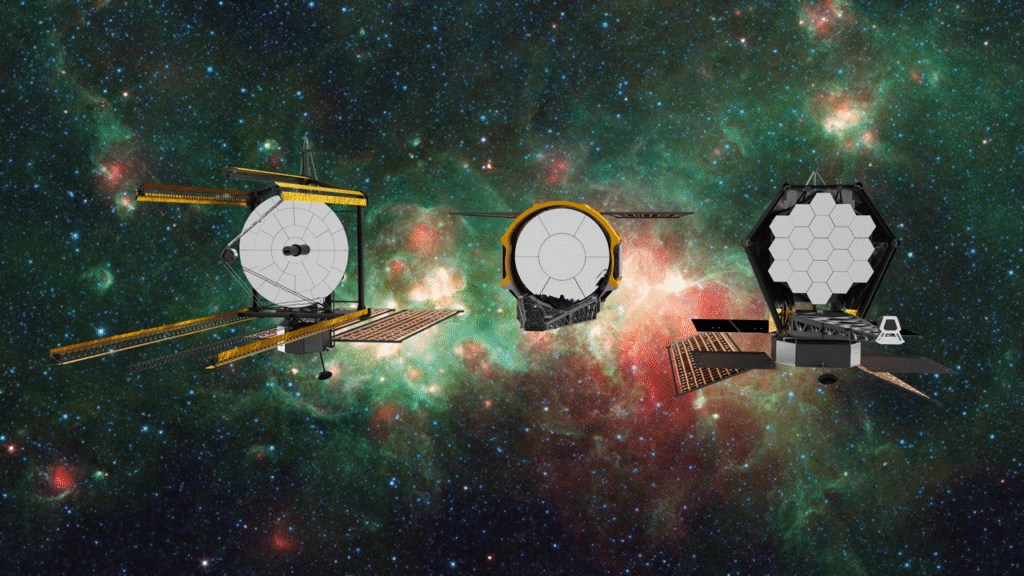
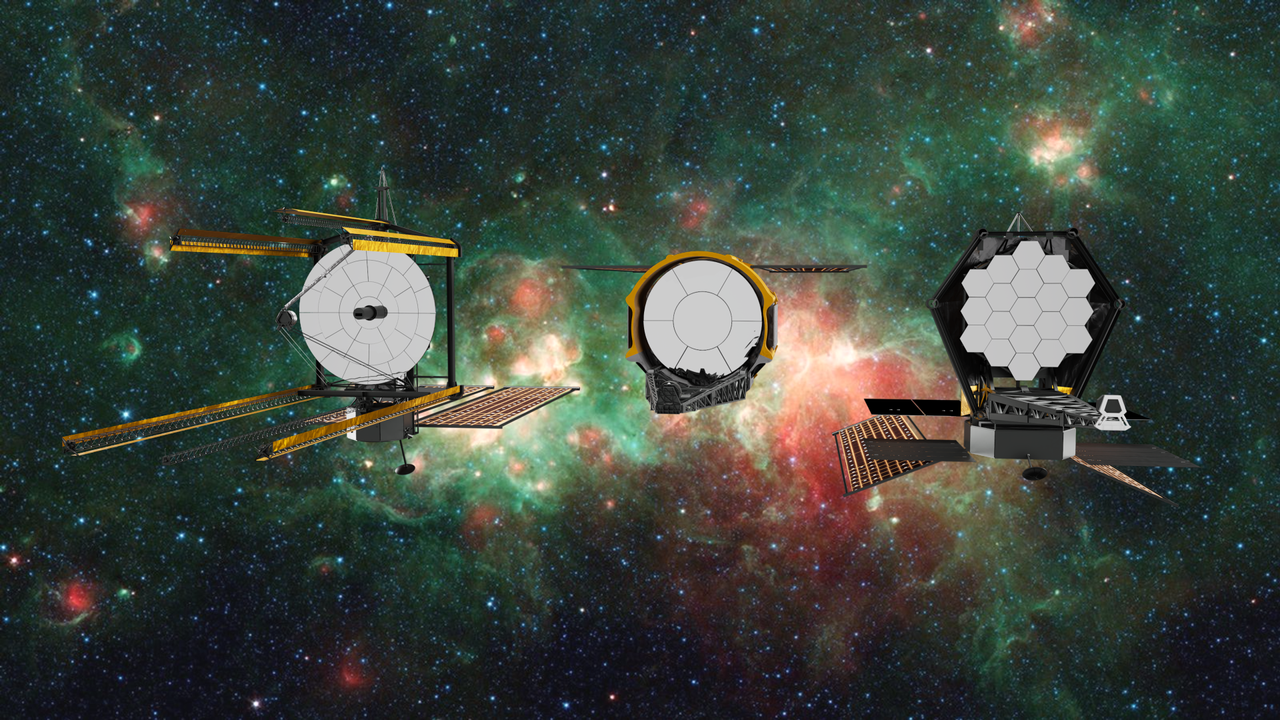
A New Era in Cosmic Exploration (Image Credits: Cdn.mos.cms.futurecdn.net)
NASA has taken a significant step forward in its quest to detect signs of life beyond Earth by funding innovative technologies for a next-generation space telescope.
A New Era in Cosmic Exploration
The Habitable Worlds Observatory represents NASA’s ambitious flagship mission designed to revolutionize our understanding of exoplanets. This telescope, often dubbed the ‘Super Hubble’ for its advanced capabilities, aims to directly image Earth-like worlds in habitable zones around distant stars. Officials emphasized the need for rapid progress during the announcement of the funding selections.
With a planned launch in the 2040s, the observatory will build on the legacy of the Hubble Space Telescope while surpassing it in sensitivity and scope. It promises to analyze atmospheres for biosignatures, such as oxygen or methane, that could indicate biological activity. The initiative underscores NASA’s commitment to addressing one of humanity’s greatest questions: Are we alone in the universe?
Funding Seven Key Technology Proposals
NASA selected proposals from seven companies to develop critical components for the observatory. These efforts focus on enhancing light-gathering power, starlight suppression, and high-resolution imaging essential for studying faint exoplanets. The agency allocated resources to ensure these technologies mature quickly, aligning with broader astrophysics goals.
Each project addresses specific challenges in space-based observation. For instance, innovations in coronagraphs will help block the overwhelming light from host stars, allowing clearer views of orbiting planets. This collaborative approach involves industry leaders, fostering breakthroughs that could extend to other missions. The selections highlight a strategic push to integrate cutting-edge engineering with scientific priorities.
Overcoming Hurdles in Exoplanet Detection
Detecting life on distant worlds requires overcoming formidable technical barriers, including the vast distances and dim signals involved. The Habitable Worlds Observatory will employ a large mirror, potentially six meters across, to capture more light than previous telescopes. NASA officials noted that the selected technologies will refine adaptive optics and spectrometer designs for precise atmospheric analysis.
Recent advancements in materials science and computational modeling play a pivotal role. These tools enable simulations of planetary environments before launch, reducing risks during development. The urgency stems from the growing catalog of exoplanet discoveries by telescopes like James Webb, which have identified promising candidates but lack the resolution for detailed life searches. By 2026, NASA has boosted funding to $150 million for fiscal year preparations, signaling strong momentum.
- Direct imaging of rocky exoplanets in habitable zones.
- Analysis of atmospheric compositions for potential biosignatures.
- Integration of AI-driven data processing for real-time insights.
- Collaboration with international partners for shared resources.
- Long-term monitoring of dynamic planetary systems.
The Broader Impact on Astrobiology
This investment not only advances telescope technology but also fuels interdisciplinary research in astrobiology. Scientists anticipate that the observatory could confirm the presence of water vapor or organic molecules on dozens of worlds. Such findings would reshape theories on planetary formation and the prevalence of habitable environments across the galaxy.
Moreover, the mission aligns with NASA’s decadal survey recommendations, prioritizing the search for life as a cornerstone of space science. As development progresses, public engagement through educational outreach will keep the excitement alive. The project’s success could inspire future generations to pursue careers in STEM fields tied to space exploration.
Key Takeaways
- NASA’s funding targets seven companies to develop core technologies for the Habitable Worlds Observatory.
- The telescope aims to image Earth-like exoplanets and detect biosignatures, building on Hubble’s legacy.
- With an emphasis on urgency, the mission sets the stage for groundbreaking discoveries in the 2040s.
As NASA propels this visionary project forward, the possibility of uncovering extraterrestrial life draws ever closer, challenging our place in the cosmos. What implications do you see for humanity’s future explorations? Share your thoughts in the comments below.