Seen through the camera of a deep-sea robot, Earth can suddenly look like someone changed the channel to a sci‑fi movie. Limbs become filaments, heads turn transparent, jaws unhinge in impossible ways, and bodies glow in colors that never reach the surface. Yet every one of these apparitions is as real and biological as a backyard sparrow. In the last few decades, remotely operated vehicles and deep-diving submersibles have finally started to reveal these animals in their own realm instead of as crushed remains dragged up in nets, and that has changed how scientists think about life on our planet. What follows is not a list of movie monsters, but nine very real species that show just how alien evolution can look when it is pushed to the limits in the deep sea.
The Barreleye Fish With a Transparent, Cockpit-Like Head
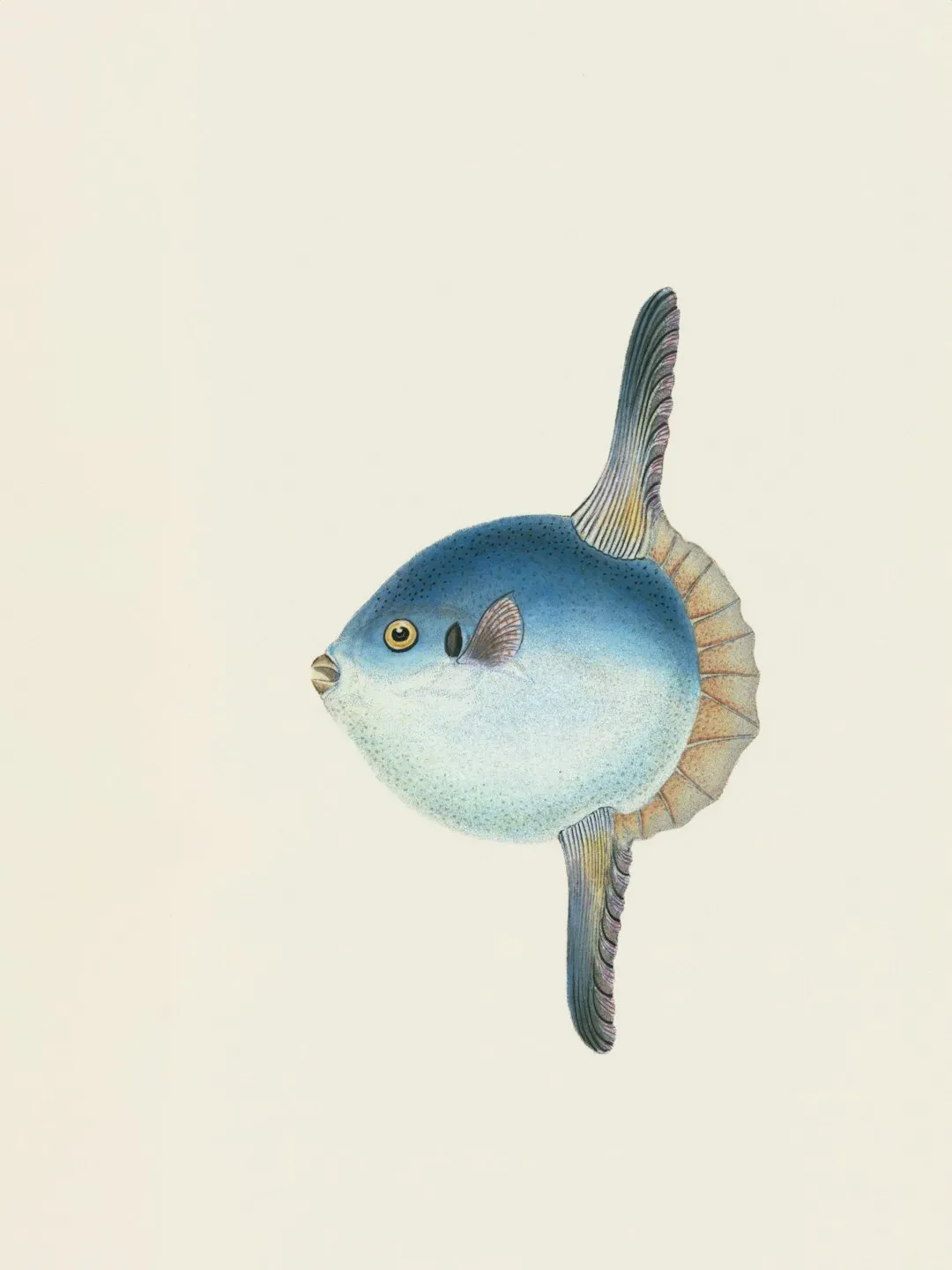
Imagine staring into a fish’s skull and realizing you can see its eyes and brain moving inside, all wrapped in a clear, fluid-filled dome like the canopy of a fighter jet. That is the Pacific barreleye, Macropinna microstoma, a small North Pacific fish whose tubular green eyes sit inside a see‑through head. For decades, researchers only saw barreleyes as mangled specimens hauled up from depths of around a thousand meters, with the delicate dome destroyed, so the species seemed odd but not outrageous. It was only when a deep-sea robot filmed a living animal off California that scientists realized its head is literally transparent and the “eye spots” on its face are actually nostrils.
The truly alien twist is functional, not just cosmetic: those eyes can rotate within the skull, pointing straight up to scan for the silhouettes of prey against the faint glow of the surface, then swing forward when the fish moves in to feed. The dome acts as a kind of biological windscreen, protecting the sensitive retinas from the stinging tentacles of siphonophores, jelly-like drifters the barreleye often raids for captured prey. To me, it feels like a perfect example of evolution going somewhere no human engineer would dare suggest in a design meeting, yet it works so well that the fish survives in one of the harshest habitats on Earth. Once you have seen a barreleye, it is very hard to keep calling any sci‑fi alien “unrealistic.”
Vampire Squid From Hell, Built for a World With Almost No Oxygen
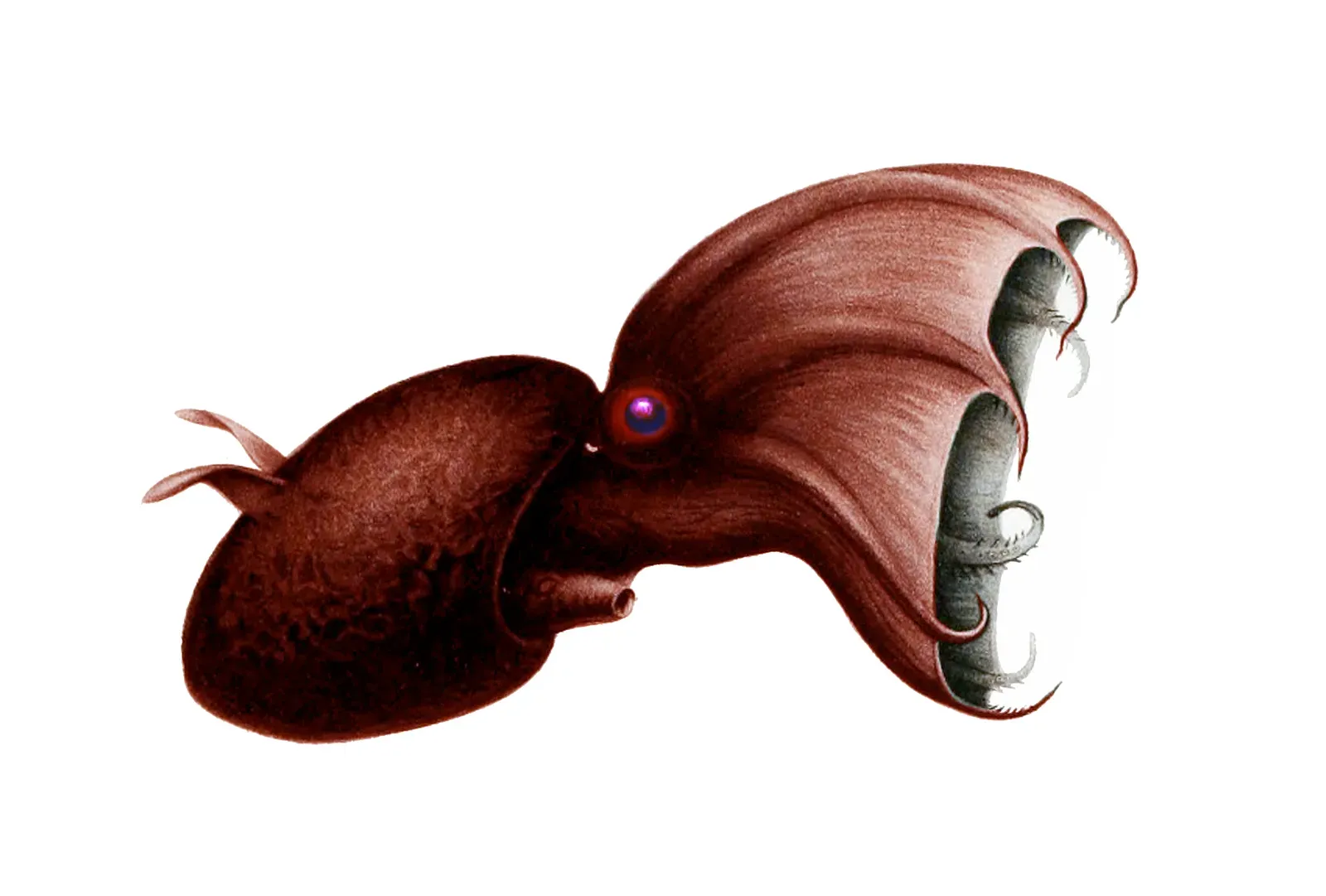
With webbed arms, inky black skin and red eyes, the vampire squid looks like a costume designer’s sketch for a deep-sea demon. Its scientific name, Vampyroteuthis infernalis, literally translates to “vampire squid from hell,” which might be the most honest Latin name biology has ever produced. But this animal is neither a true squid nor anything like the blood-sucking predator its nickname suggests. Genetically, it sits on its own branch, closer to octopuses but still carrying ancient features that have earned it the label of a living fossil.
The vampire squid spends its life in the oxygen minimum zone, drifting at depths where the water is cold, dark, and holds less oxygen than most fish can tolerate. It survives there with an extremely low metabolic rate, jelly-like body tissue, and blood pigments tuned to grab what little oxygen is available. Instead of spraying ink to escape, it unfurls glowing clouds of bioluminescent particles that hang in the water like a galaxy of stars, confusing would‑be predators. The most surprising part is its diet: rather than attacking large prey, it uses thin, retractable filaments to harvest sinking “marine snow” and tiny animals, behaving more like a gentle garbage collector than a horror-movie villain. If anything, the vampire squid is a reminder that the strangest-looking animals are often quietly doing some of the most unglamorous, essential work in the deep sea.
Anglerfish With Living Lures and Parasitic Partners
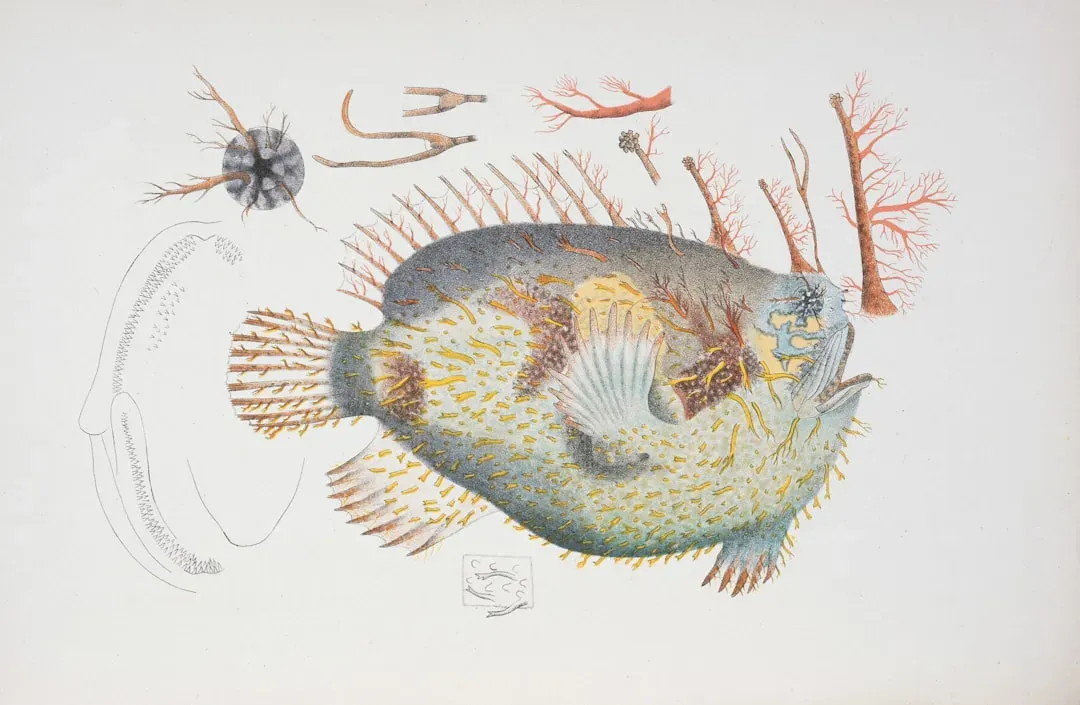
If any deep-sea animal has earned a starring role in nightmares, it is the anglerfish, with its oversized jaws, needle teeth and glowing lure dangling from its forehead. Female deep-sea anglerfish carry a modified fin ray that acts like a fishing rod, tipped with a fleshy bulb packed with light-producing bacteria. In the ink-black depths, that shimmering speck is one of the few visible signals, and small fish or squid that come close enough to investigate find themselves snapped up in a single gulp. Seen on camera, an anglerfish hanging motionless in the dark looks uncannily like a biological land mine waiting to detonate.
The way some anglerfish reproduce is even more alien than their appearance. In several species, males are tiny compared with females and spend their lives searching for a partner in the dark ocean. When a male finds a female, he bites onto her body and literally fuses with her tissues, eventually sharing a blood supply and shrinking into what amounts to a permanent, living sperm factory attached to her flank. A single female can carry multiple fused males, turning one body into a strange communal organism. It is hard not to see echoes of body-horror fiction here, except this system evolved because it solves a brutal problem: in the vast deep sea, encounters with mates are so rare that once you find one, you cannot afford to let go.
Gulper Eel With a Head That Turns Into a Living Net
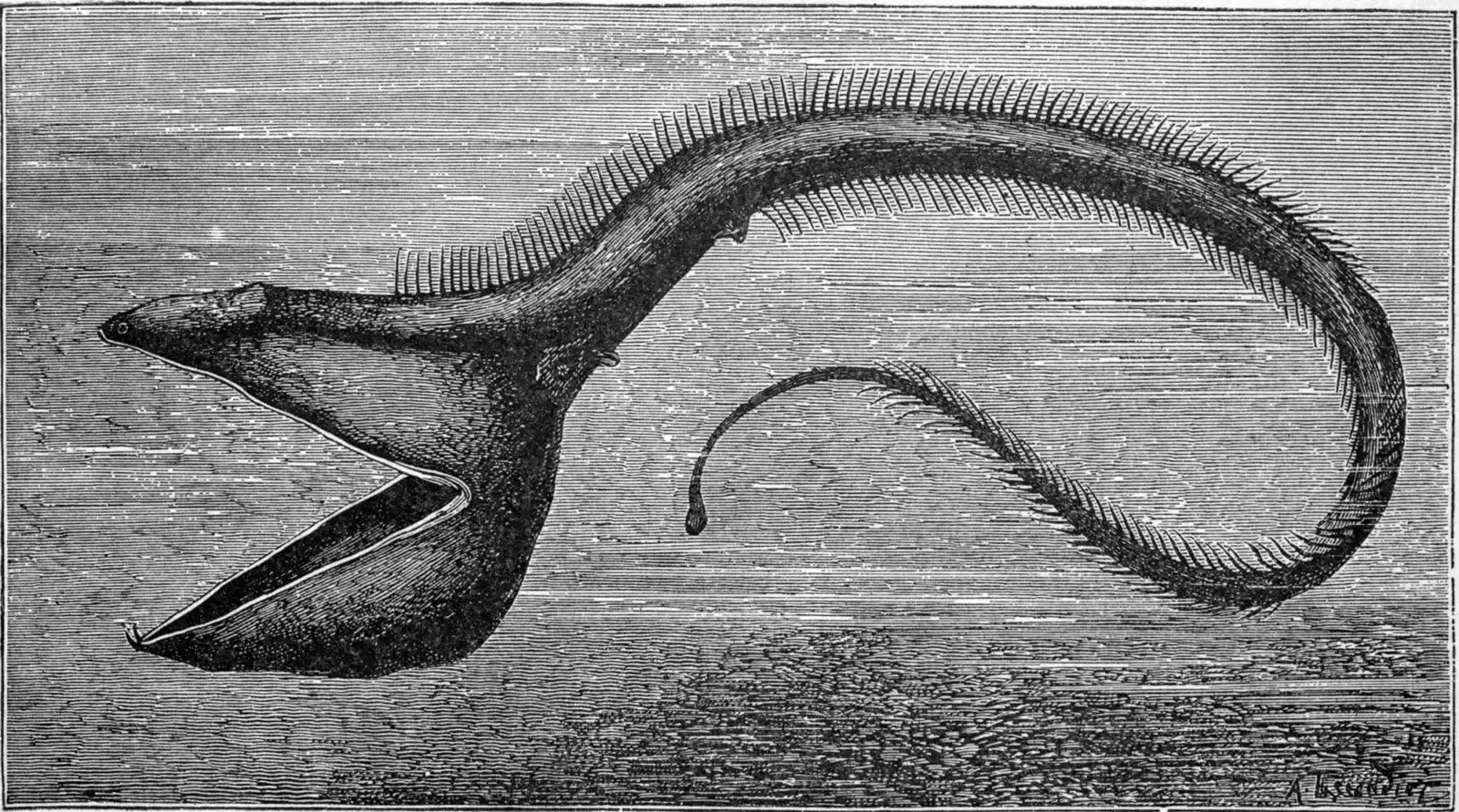
The gulper eel, or pelican eel, looks like someone stitched the wrong head onto the wrong body. It has a long, whiplike tail and a relatively thin body, but the front end is dominated by a gigantic, hinged mouth and a stretchy lower jaw that can balloon outward like a dark parachute. At depths of roughly half a kilometer to three kilometers, where food can be scarce and unpredictable, that bizarre mouth is a survival strategy. Instead of chasing specific targets, the eel can open wide, rush forward, and engulf a whole swarm of crustaceans or fish in one sudden strike.
Its skull is lightly built, its teeth are tiny, and its stomach can stretch to accommodate prey larger than the eel itself, turning the animal into a kind of living trawl net. A small light-producing organ at the tip of its tail may act as a lure, drawing curious animals into the danger zone without the eel needing to spend much energy. Watching footage of a gulper eel inflating its head feels almost comical at first, like an animated character from a surreal cartoon, until you remember that this is a genuine vertebrate built from the same kinds of tissues as any familiar fish. For scientists, gulper eels are a case study in how extreme body shapes emerge when energy efficiency matters more than elegance.
Giant Isopod, the Deep Sea’s Armored “Pill Bug”
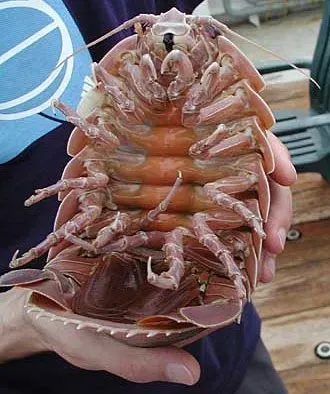
The first time I saw a giant isopod in an aquarium, I did a double take because it looked exactly like a garden pill bug that had been scaled up to the size of a house cat. These relatives of shallow-water crustaceans live on the deep seafloor, often several hundred meters down or more, where they trundle along on multiple legs under a segmented, armored shell. Their compound eyes, spiky antennae, and pale, almost plastic-looking exoskeleton combine to give them a distinctly robotic presence. Yet they are highly successful scavengers, cleaning up carcasses that fall from surface waters.
In a world where food can be rare and unpredictable, giant isopods have slow metabolisms and can go long stretches without eating, then gorge when they encounter a rich food source like a dead fish or whale bone. Aquarists have documented individuals that refused food for months and still survived, which feels almost supernatural compared with the needs of most land animals. The alien impression comes not from some exotic biochemistry, but from the unsettling familiarity of the body plan twisted by scale and context. Hold your hand over a photo to hide the size reference and you could be looking at a tiny backyard creature; remove your hand and the illusion shatters, leaving you face to face with a deep-sea tank on legs.
Comb Jellies That Glow Like Living Neon Spacecraft
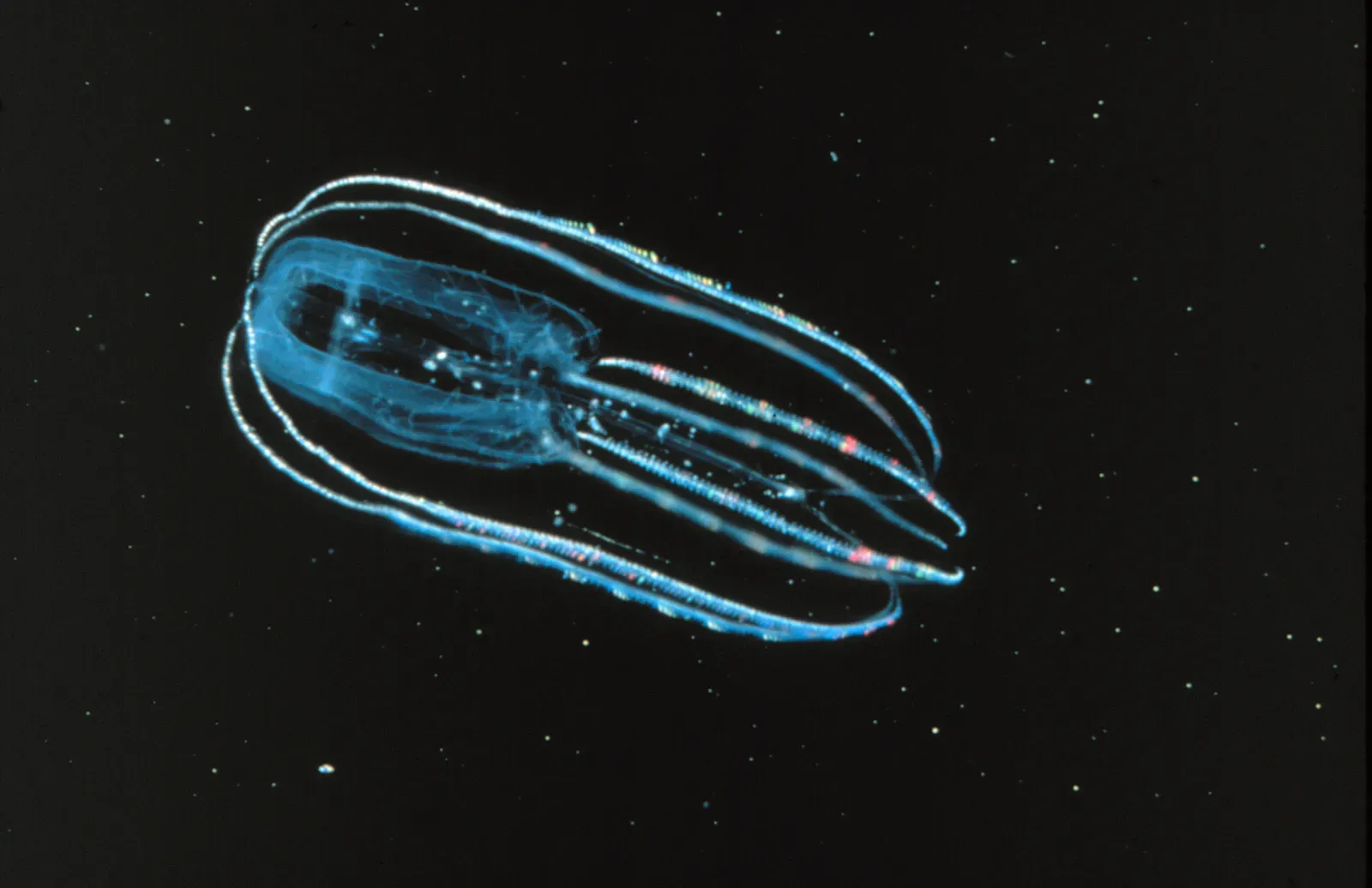
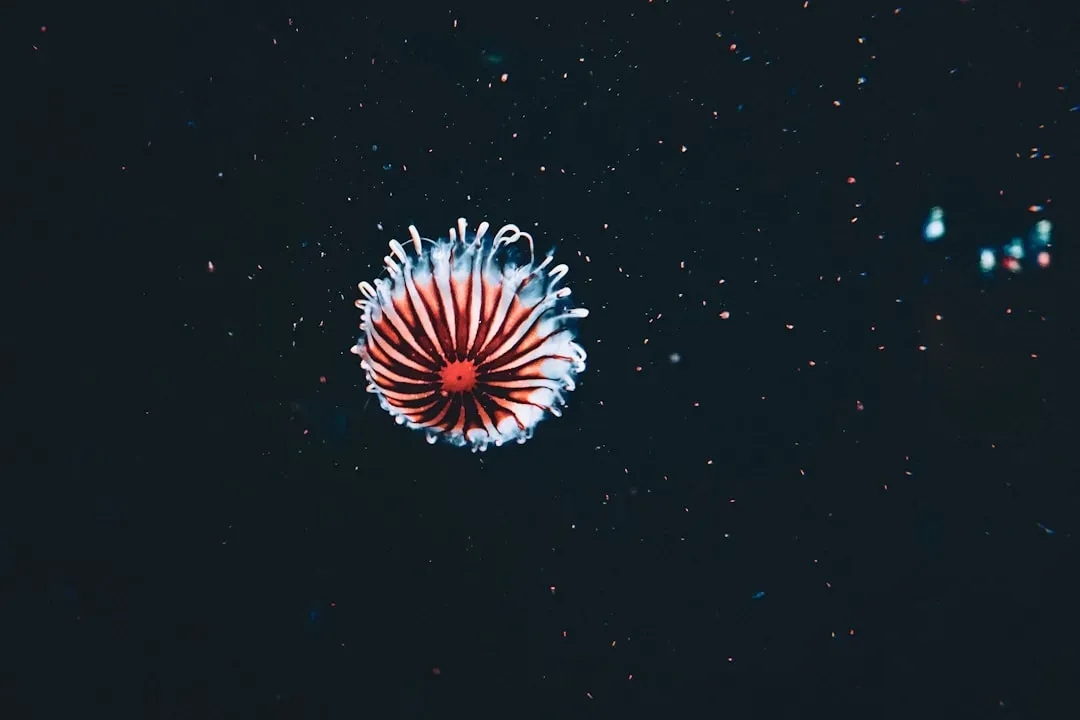
Comb jellies, or ctenophores, are so ethereal that it is tempting to assume they are computer graphics the first time you see one in high definition. Their bodies are often transparent or delicately tinted, shaped like ovals, ribbons, or bells, and lined with rows of tiny beating cilia that act like paddles. When white light hits those rows, it splits into shimmering rainbows that ripple along the creature’s body, creating the illusion of LED strips running down a ghostly hull. In the deep sea, many comb jellies also produce their own blue or green bioluminescent light, so they can look like slow-moving lanterns drifting through an endless night.
Some deep-dwelling species trail long, sticky tentacles to snare prey, while others use lobes to engulf smaller animals whole. Scientists are still debating where comb jellies sit on the animal family tree, and some genetic studies have suggested they might even have branched off before sponges, reshaping theories about the earliest nervous systems. What fascinates me most is how these animals manage complex behaviors – swimming, hunting, responding to touch – with bodies that are mostly water and jelly. Compared with chunky vertebrates, comb jellies feel like a message from an alternate version of evolution that prioritized translucence, light, and delicacy over bones and bulk.
Dumbo Octopus With Ear-Like Fins and Parachute Arms
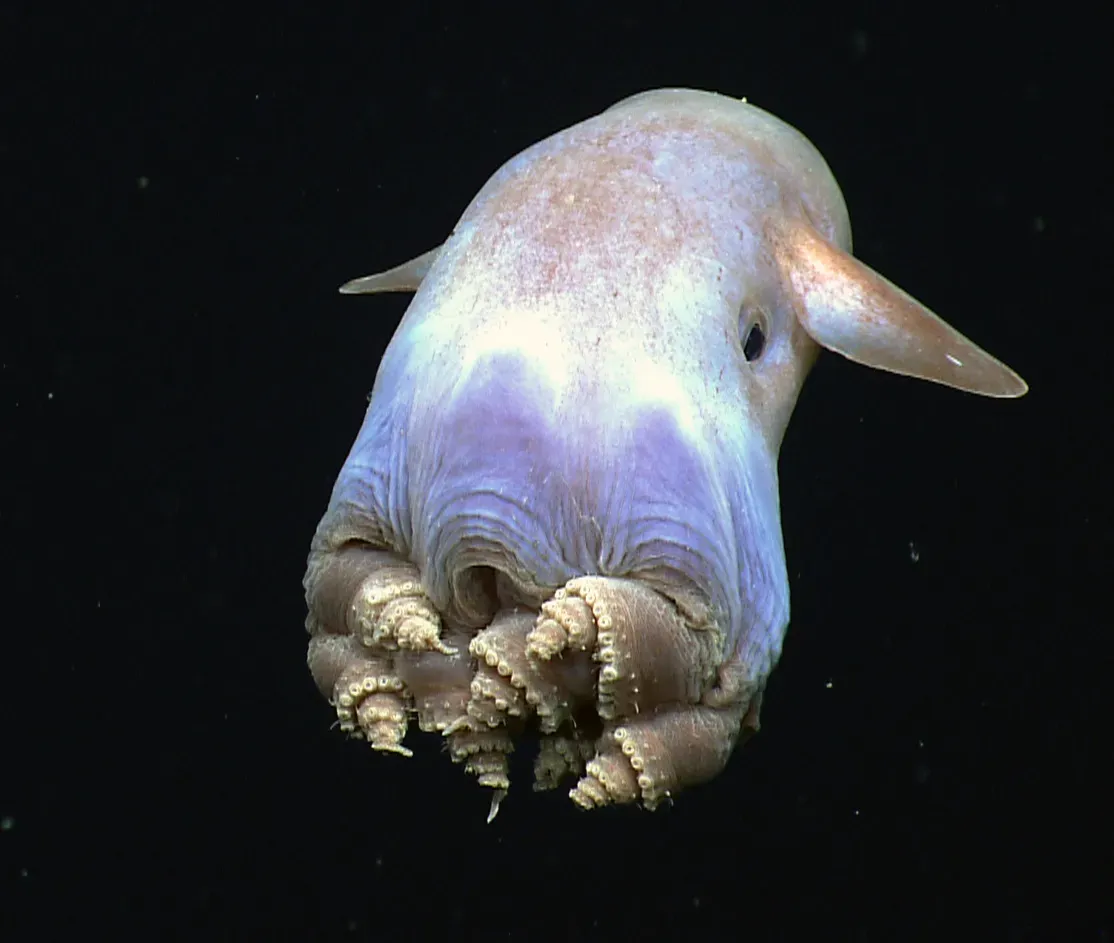
The dumbo octopus might be the most disarming creature on this list, but its cuteness is almost uncanny. Named for the ear-like fins that flap above its head, this group of deep-living octopuses swims by gently pulsing those fins and steering with its webbed arms, more like a hovering spacecraft than a jet-propelled squid. They are usually found far below typical scuba range, on or above the seafloor at depths where the pressure would crush a human sub without careful engineering. Unlike shallow-water octopuses that dart and squeeze through tight crevices, dumbo octopuses move with unhurried, hovering grace.
Many species have a loose web of skin connecting their arms, so when they spread out, they form a kind of living parachute, drifting just above the sediment as they search for worms and small crustaceans. Their gelatinous bodies, soft textures, and simple, rounded outlines all look like something designed to be non-threatening, yet that appearance is the result of life in a world with few solid structures and very little light. Scientists were once surprised to discover that deep-sea octopuses like these can lay fewer, larger eggs that develop slowly but hatch as relatively well-formed juveniles, a strategy that makes sense where survival is a long game. Watching a dumbo octopus on video, you almost forget you are looking at an animal from the same planet as a house cat or crow.
Goblin Shark With a Projectile Jaw and Pink, Flabby Skin
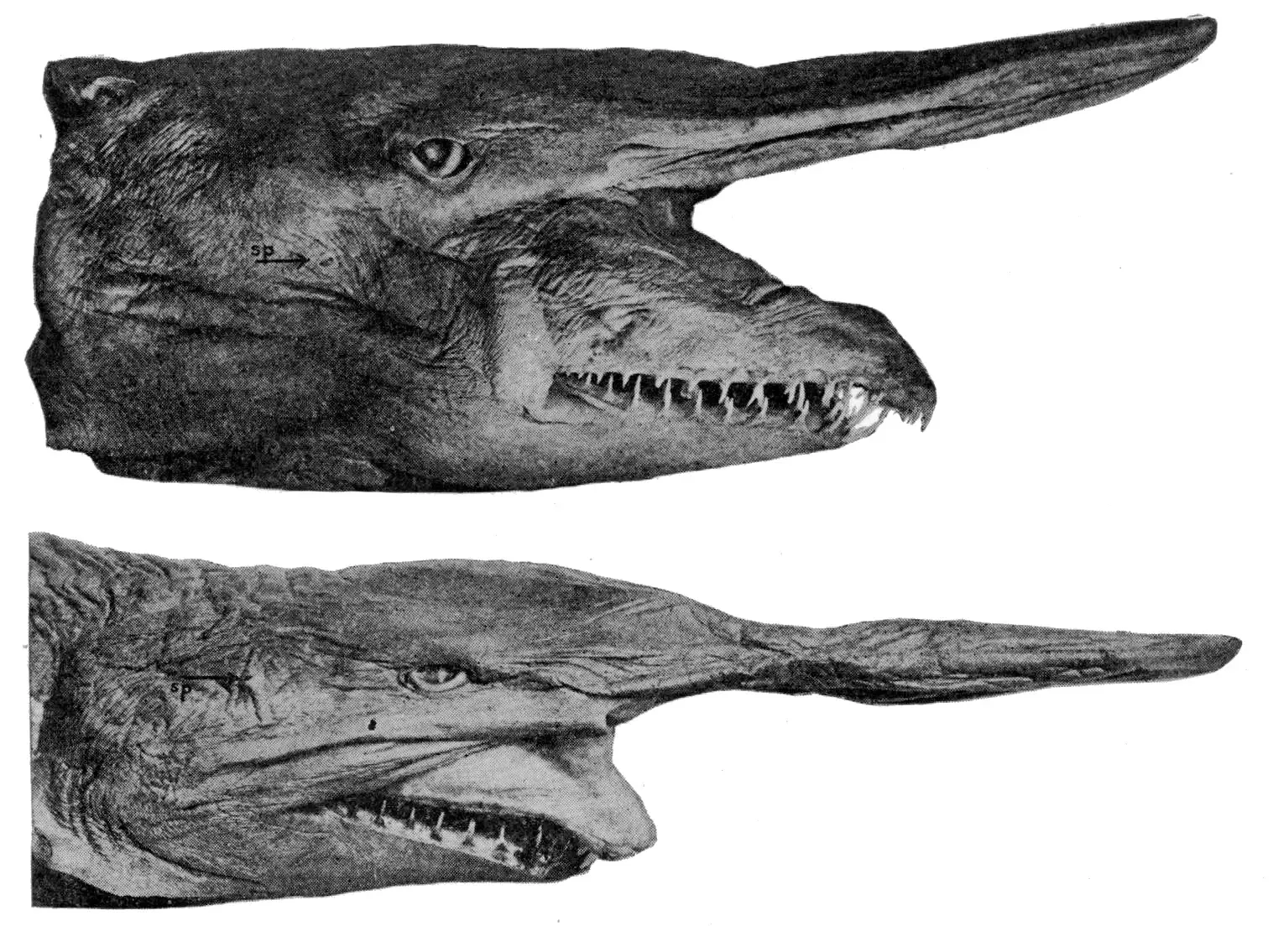
Where most sharks are streamlined, muscular, and instantly recognizable, the goblin shark looks like an anatomical experiment that escaped the lab. Its skin is often described as pinkish or gray, because the blood vessels show through a semi-translucent layer, and its long, flattened snout juts out like a mis-sized blade. The true shock comes when it feeds: high-speed footage has revealed that the goblin shark’s jaws can sling forward from the skull in a sudden, snapping projection. In that moment, its mouth becomes a separate, lunging structure packed with slender, nail-like teeth.
This extreme jaw mobility is powered by elastic ligaments and specialized joints that allow the whole apparatus to fire forward and then retract, a bit like a biological spring-loaded trap. Goblin sharks are rarely seen alive; most are caught accidentally in deep nets, so much of what we know comes from scattered encounters and a handful of camera recordings. That patchy record only adds to their alien mystique, leaving large gaps around basic questions like how often they feed and how widely they roam. When people ask whether real sharks ever resemble the monsters in movies, the goblin shark is usually the specimen scientists point to as proof that reality can out-weird fiction.
Yeti Crab Farming Bacteria on Hairy Arms Near Hydrothermal Vents
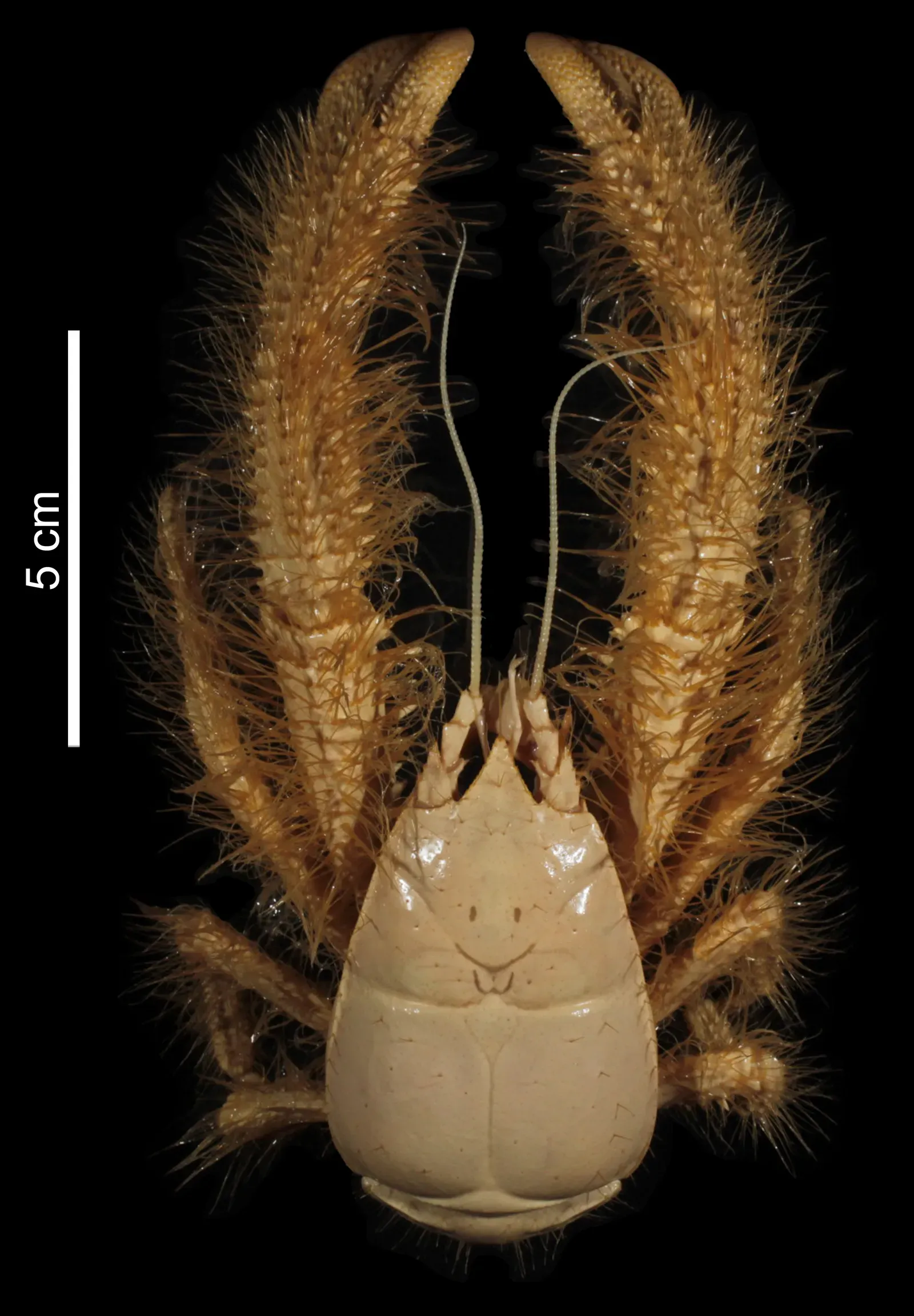
The yeti crab, discovered in the mid‑2000s on a hydrothermal vent in the South Pacific, looks like a cross between a ghost and a mythological creature. Its body is pale and nearly pigmentless, and its claws and legs are covered in long, silky setae that resemble fur, inspiring the common name. These animals live around 2,000 meters deep or more, huddled near vents that spew hot, mineral-rich fluids out of the seafloor. To most ocean life, that environment would be instantly lethal, but microbes thrive there, using chemical energy instead of sunlight, and the yeti crab has turned those microbes into a personal food supply.
By rhythmically waving its hairy arms in the vent fluid, the crab encourages dense mats of bacteria to grow on the setae, essentially farming them. It then scrapes and eats this microbial crop, embodying one of the strangest versions of agriculture on Earth. Vent communities like this rely on chemosynthesis, not photosynthesis, meaning they are powered by reactions between seawater and hot rocks rather than by the sun. To me, the yeti crab is one of the strongest real-world arguments that alien life could flourish on icy moons with subsurface oceans, because it shows that animal ecosystems can be completely decoupled from starlight and still support complex bodies and behaviors.
Why These “Aliens” Matter for Science on Earth and Beyond
It is tempting to treat these creatures as curiosities, the biological equivalent of optical illusions, but they are far more than that. Each extreme body plan is a data point in how life solves recurring problems: finding or saving energy, reproducing when mates are scarce, protecting sensory organs, or turning unpredictable food sources into reliable meals. Barreleye eyes under a transparent dome show one solution to the challenge of seeing upward in dim light without sacrificing protection, just as goblin shark jaws show an answer to snatching fast-moving prey in slow-motion surroundings. Vampire squid blood chemistry demonstrates how an animal can thrive in water with oxygen levels that would suffocate most fish, and comb jellies test our assumptions about what a nervous system can look like.
Together, these species help biologists refine models of evolution under constraints that are hard to replicate in the lab, from crushing pressure to permanent darkness. They also shape how astrobiologists think about the possibilities for life elsewhere, especially in deep oceans isolated from starlight, like those suspected on Europa or Enceladus. When you see that Earth’s own biosphere includes transparent heads, detachable males, living lures, and bacteria-farming crabs, it becomes much harder to argue that extraterrestrial life would necessarily look like us. In a way, the deep sea is our closest analogue to an alien world, and its residents are quietly rewriting our expectations of what “normal” biology can be.
Looking Down Instead of Up: How Readers Can Stay Connected to the Deep
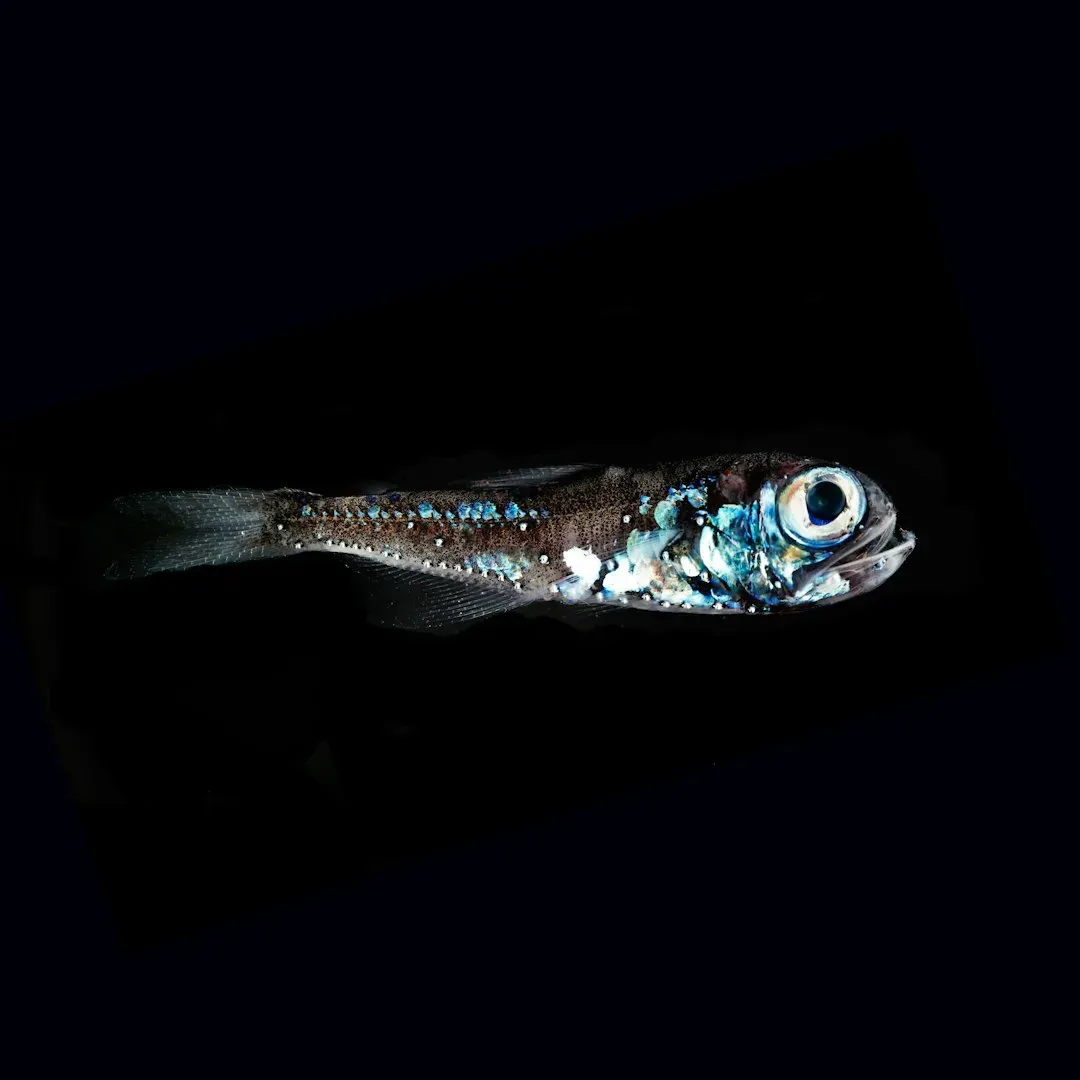
Most of us will never ride in a deep-diving submersible or peer out a porthole into the midnight zone, but that does not mean we are cut off from it. Publicly funded oceanographic institutions and aquariums now share high-definition deep-sea footage online, sometimes streaming ROV dives in real time, so you can watch a dumbo octopus drift past or a gulper eel inflate its jaw from your couch. Supporting these organizations, whether through memberships, donations, or simply paying attention to their work, helps sustain the expensive, risky expeditions that bring these creatures into view. Even something as simple as watching responsibly curated videos instead of sensationalized clips can shift attention toward science rather than shallow shock value.
There is also a quieter, less glamorous way to stay connected: paying attention to policies and news about deep-sea mining, climate change, and high-seas protection. Many of the animals described here may be vulnerable to disturbances we are only beginning to understand, from warming waters that shift oxygen minimum zones to sediment plumes stirred up by industrial activity on the seafloor. By voting, speaking up, and backing evidence-based conservation, ordinary readers help decide whether these “alien” species remain obscure footnotes or continue to thrive, largely unseen, in the darkness below. In the end, the deep sea is not some separate, distant planet; it is the majority of our own world. The real question is whether we are willing to treat its alien-looking residents as part of our shared home.
Suhail Ahmed is a passionate digital professional and nature enthusiast with over 8 years of experience in content strategy, SEO, web development, and digital operations. Alongside his freelance journey, Suhail actively contributes to nature and wildlife platforms like Discover Wildlife, where he channels his curiosity for the planet into engaging, educational storytelling.
With a strong background in managing digital ecosystems — from ecommerce stores and WordPress websites to social media and automation — Suhail merges technical precision with creative insight. His content reflects a rare balance: SEO-friendly yet deeply human, data-informed yet emotionally resonant.
Driven by a love for discovery and storytelling, Suhail believes in using digital platforms to amplify causes that matter — especially those protecting Earth’s biodiversity and inspiring sustainable living. Whether he’s managing online projects or crafting wildlife content, his goal remains the same: to inform, inspire, and leave a positive digital footprint.