There’s a reason you click on the strange headline, try the unfamiliar café, or feel a jolt of excitement when a flight deal to somewhere you can barely pronounce pops up in your feed. Something in us leans toward the new, even when the familiar is safer, cheaper, or easier. For decades, psychologists called this simply a “need for novelty,” but in the last few years, neuroscientists, evolutionary biologists, and AI researchers have begun to map it as a measurable, adaptive force. Novelty turns out to be more than a personality quirk – it is wired deep into our brains and, quite possibly, into the way complex systems learn. Understanding why we chase the unknown might change how we think about mental health, education, and even the future of intelligent machines.
The Hidden Clues in the Brain’s Reward Circuits
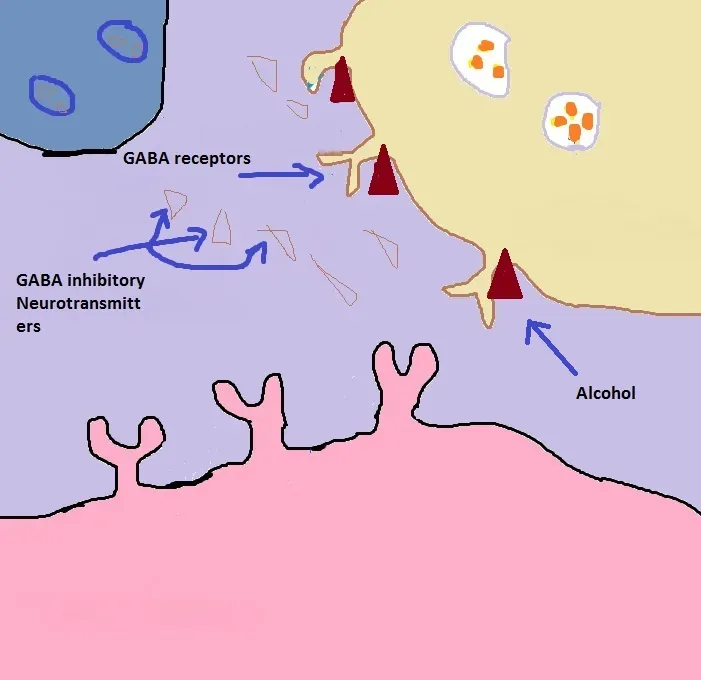
Walk into an unfamiliar street market in a foreign city and your brain lights up like a switchboard. Functional MRI studies show that when people encounter something new – an unfamiliar face, a strange object, a novel sound – activity spikes in the hippocampus, a region crucial for memory, and in the midbrain’s dopamine-rich areas. These are the same networks that respond to rewards like food, social approval, and success, suggesting that novelty is inherently rewarding, not just incidental. Researchers have found that when volunteers explore new options rather than sticking with a known safe choice, they get a distinctive dopamine “teaching signal” that helps the brain update what it knows about the world.
In plain terms, the brain treats new information a bit like a potential jackpot: uncertain, sometimes risky, but worth the gamble. Some experiments even show that people will sacrifice small amounts of money or comfort simply to reveal what’s behind the metaphorical “mystery door.” That willingness to pay for information, even when it has no immediate use, is a key hallmark of curiosity-driven behavior. It hints that we are not only reward-seeking creatures, but also explanation-seeking ones, tuning our actions to reduce uncertainty and expand our mental map of reality. The hidden clue in all this: novelty is not a distraction from learning – it is one of learning’s primary engines.
From Survival Instinct to Exploration Drive

To understand why novelty has such a grip on us, you have to rewind far beyond smartphones and streaming platforms. For early humans, curiosity about new territories, food sources, and tools could mean the difference between extinction and survival. Anthropologists point to our species’ rapid spread across the globe as indirect evidence of an unusually strong exploratory drive compared to other primates. Groups unwilling to test new plants, new routes, or new strategies would be outcompeted by those more willing to experiment, even if some experiments went badly wrong. Over many generations, the genes that made individuals more curious likely had a better chance of being passed on.
That ancient calculus hasn’t entirely left us, even if the “savanna” is now a supermarket aisle or an app store. A taste for novelty pushed our ancestors to tinker with stone tools, then fire, agriculture, and trade, each step compounding into civilizations that transformed landscapes and climates. At the same time, too much novelty-seeking – reckless explorations or impulsive risk-taking – would have come with serious costs. This helps explain why human populations show a spectrum: some people crave constant change, while others prefer minor variations within a stable routine. The tension between these tendencies runs through our history, shaping migrations, innovations, and sometimes catastrophes.
Personality, Genes, and the Spectrum of Curiosity
If novelty is so powerful, why are some people content to return to the same vacation spot every year while others dream of one-way tickets? Psychologists talk about “novelty seeking” as a personality trait, and several long-term studies suggest it is moderately heritable. Variations in genes linked to dopamine and serotonin systems appear to correlate with how strongly people pursue new sensations, experiences, or ideas. This doesn’t mean any single “curiosity gene” exists; instead, many small genetic differences nudge people toward either more exploratory or more cautious strategies. Early childhood environments and culture then amplify or soften those tendencies.
In personality research, novelty seeking overlaps with traits like openness to experience and sensation-seeking but is not identical to them. Someone can be deeply curious about abstract ideas and yet dislike physical risks, while another person may chase adrenaline-fueled experiences but avoid intellectual challenges. What makes this especially interesting is how these traits interact with modern life. Societies that reward rapid innovation, job-hopping, and constant reinvention often valorize high novelty seekers. Yet clinical data also show higher novelty seeking can be linked to vulnerability to addiction or impulsive behavior when not balanced by self-regulation. The same drive that fuels scientific discovery or creative breakthroughs can, without guardrails, veer into self-destructive loops.
The Dopamine Myth: Pleasure, Prediction, and Learning
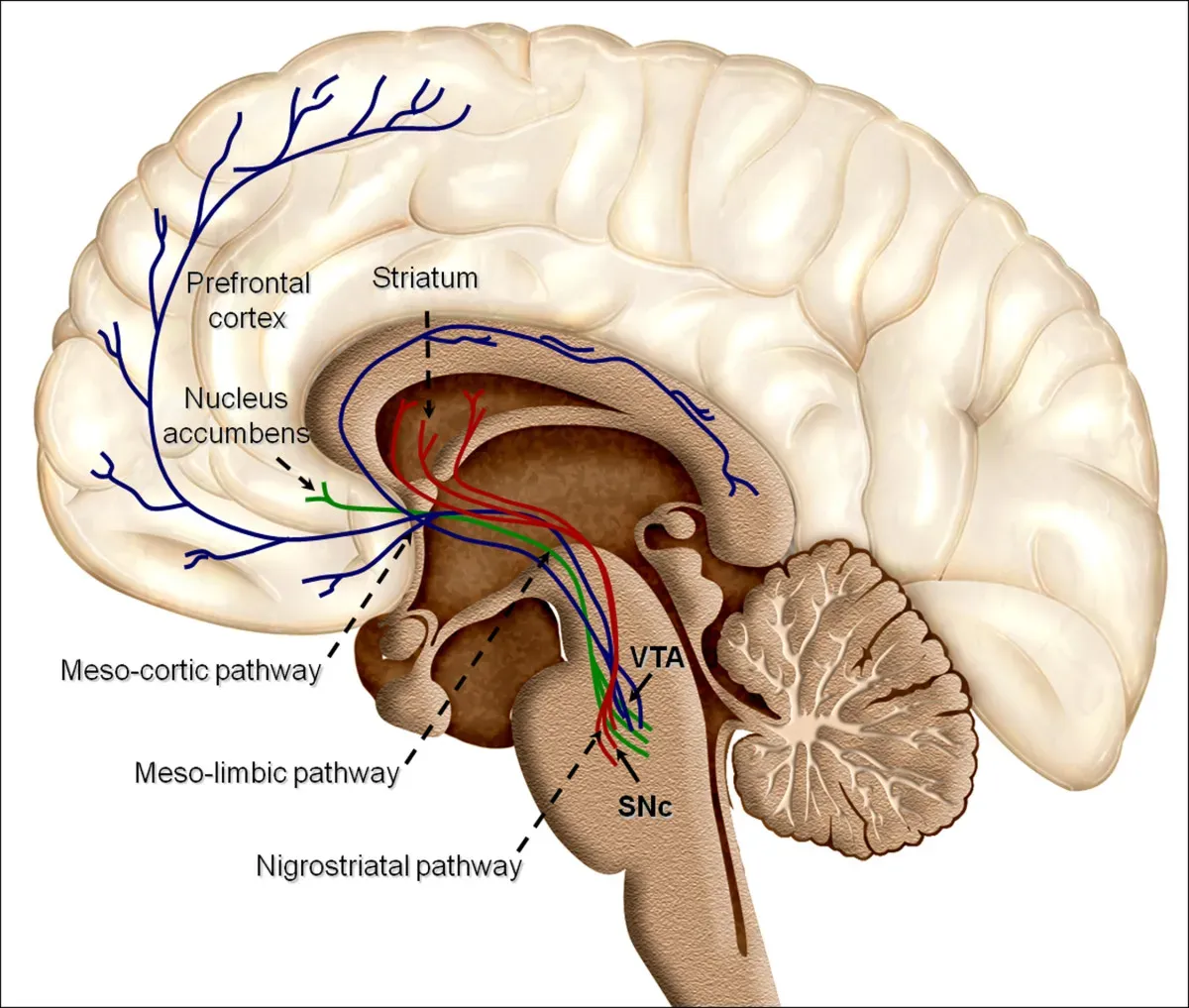
It’s tempting to reduce all of this to a simple slogan: we seek novelty because dopamine makes it feel good. The real story is more subtle – and more fascinating. Dopamine neurons fire not only when we receive a reward but when the world violates our expectations in informative ways. In other words, they encode prediction error: the gap between what we thought would happen and what actually did. New experiences naturally produce more prediction errors, because our brain’s models are less finely tuned there. That makes novel situations a rich training ground for learning.
Recent experiments have shown that novelty itself can boost memory, even for information that is only loosely related to the new experience. For instance, if you learn something in an unusual environment or just after encountering something unexpected, you are more likely to remember it later. This suggests that the brain uses novelty as a kind of “save point” signal, flagging moments as especially worth encoding. The dopamine myth, then, gives way to a more nuanced picture: dopamine doesn’t simply shout “this feels good,” it whispers “pay attention, update your world model, something important may be happening.” We chase novelty partly because it is where our models are weakest – and where improvement is fastest.
Why It Matters: Mental Health, Education, and a World of Endless Feeds
In an age of bottomless news feeds and algorithmically curated surprises, our built-in hunger for novelty has become a design target. Platforms subtly exploit the same brain circuits that evolved to help us learn from changing environments, serving up a constant drip of the unexpected. That can create the feeling of being informed and engaged while leaving us mentally scattered, never dwelling long enough with any one idea to deeply understand it. When novelty is reduced to microbursts of distraction, it can actually undermine the deeper curiosity it mimics. Some mental health researchers now argue that chronic overstimulation may blunt our sensitivity to more meaningful forms of newness.
On the other hand, carefully harnessed novelty can be a powerful ally. In education, introducing new contexts, problems, or perspectives can revive fading attention and anchor concepts in memory. Therapists sometimes encourage patients with depression or anxiety to take small “novelty steps” – a new route to work, a different meal, a fresh social activity – as a way to gently disrupt rigid thought patterns. The key distinction is between shallow novelty, which numbs us with constant change, and rich novelty, which opens doors to growth, insight, or connection. In that sense, why we seek novelty becomes a question of how we choose to feed that drive: with empty calories or with something that truly nourishes our curiosity.
Global Perspectives on the New and the Unknown

Although the urge to explore seems universal, cultures differ dramatically in how they frame and channel novelty. Some societies traditionally emphasize continuity, reverence for ancestors, and tried-and-true practices, treating the new with skepticism unless it has proven itself over time. Others prize innovation and disruption, celebrating those who challenge old ways and chase what has never been done before. These differences show up in everything from school systems to urban design, where some cities constantly reconstruct neighborhoods while others preserve long-standing patterns. Yet even in the most tradition-bound communities, small-scale experimentation – new crops, new tools, new alliances – still quietly shapes daily life.
Globalization and digital connectivity have scrambled these patterns, exposing billions of people to a firehose of unfamiliar images, ideas, and lifestyles. For many, this is exhilarating, expanding their sense of what is possible. For others, it feels destabilizing or threatening, fueling backlash movements that call for a return to the familiar. In my own experience reporting in different countries, I’ve met people who light up at the idea of moving abroad and people who find that prospect almost unthinkable, even if they are equally intelligent and capable. The same human drive can manifest as curiosity about a neighboring village’s customs or as fascination with distant galaxies revealed by space telescopes. Underneath, though, the pattern is the same: we probe the edges of our known world, then argue about how far and how fast to push them.
Machines That Crave Novelty: AI, Exploration, and the Future

One of the most striking developments of the last decade is that artificial intelligence researchers have begun deliberately building curiosity into machines. In complex environments – like video games or simulations of the real world – algorithms that only chase external rewards can get stuck repeating the same easy strategies. To solve this, scientists design “intrinsic motivation” signals that reward an AI for exploring unfamiliar states or reducing its own prediction errors. This is eerily parallel to how human brains respond to novelty, and not by accident: our curiosity is a working blueprint for efficient learning systems. Some cutting-edge models now balance exploitation of known strategies with exploration of new ones using formulas that read like mathematical versions of curiosity.
This raises both exciting and unsettling possibilities. AI systems that seek novelty could become far better at scientific discovery, materials design, or drug development, roaming through virtual possibility spaces faster than any human team could. At the same time, a machine optimized for relentless exploration in the real world might pursue actions humans find wasteful, risky, or ethically fraught. Unlike us, it wouldn’t get bored, tired, or socially shamed into slowing down. The question of how much “curiosity” to endow future systems with is quietly becoming a major design and governance challenge. Our own tangled relationship with novelty may end up being one of the most important guides we have for building machines that explore without running amok.
Living with Our Restless Minds: A Practical Call to Action

Understanding why we seek novelty is more than a fun bit of brain trivia; it can help us steer our lives in a world that constantly pokes at our curiosity. One simple step is to pause and ask, before clicking or scrolling, whether the novelty in front of us is likely to deepen our understanding or simply jolt our attention. Choosing a long-form article over a fragmented feed, a new skill over yet another notification, leans into the same circuitry but with a different payoff. We can treat our curiosity like a budget: limited, valuable, and worth spending intentionally rather than impulsively. In education and parenting, that can mean designing environments where safe exploration is encouraged but not drowned in noise.
On a broader scale, supporting research into curiosity, learning, and mental health can help societies build systems that align with our brains instead of fighting them. That might look like funding interdisciplinary labs, backing public-interest technology design, or advocating for policies that limit the most exploitative uses of attention-hacking. You do not have to become a neuroscientist or programmer to take part; even small choices – picking a book from a field you know nothing about, trying a new trail, joining a citizen science project – feed the part of you that evolution honed for exploration. In the end, the question is not whether we will seek novelty, but which kinds we will allow to shape us. The next time you feel that tug toward the unknown, what will you decide to explore?