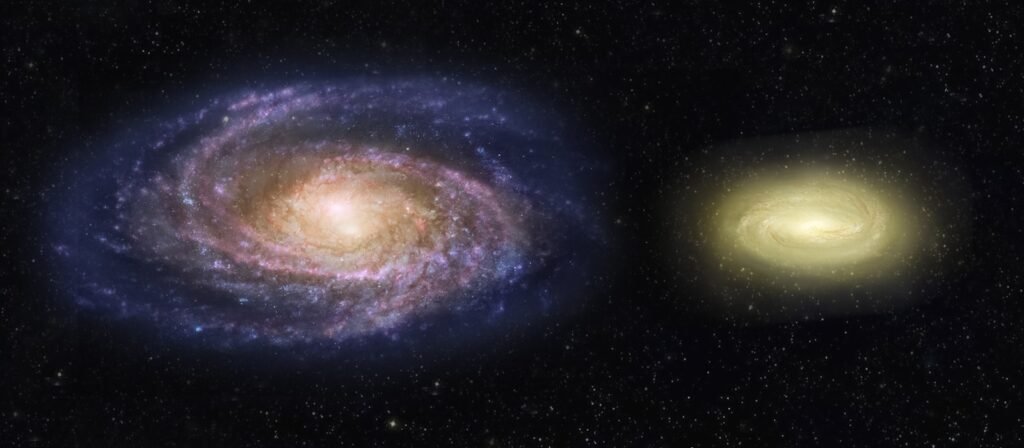

On the grandest scales, the universe looks less like a random scatter of galaxies and more like a ghostly spiderweb stretching across unimaginable distances. For decades, astronomers suspected there was an underlying pattern, but only in recent years have powerful telescopes and supercomputers begun to reveal its full, intricate geometry. This so‑called cosmic web is not just a pretty structure; it shapes how galaxies are born, how they grow, and even how they die. Hidden in its filaments are clues to dark matter, dark energy, and the ultimate fate of everything we see. Understanding that web is like finally turning on the lights in a room we’ve been stumbling through for generations.
The Hidden Clues: A Universe That Refuses to Be Random
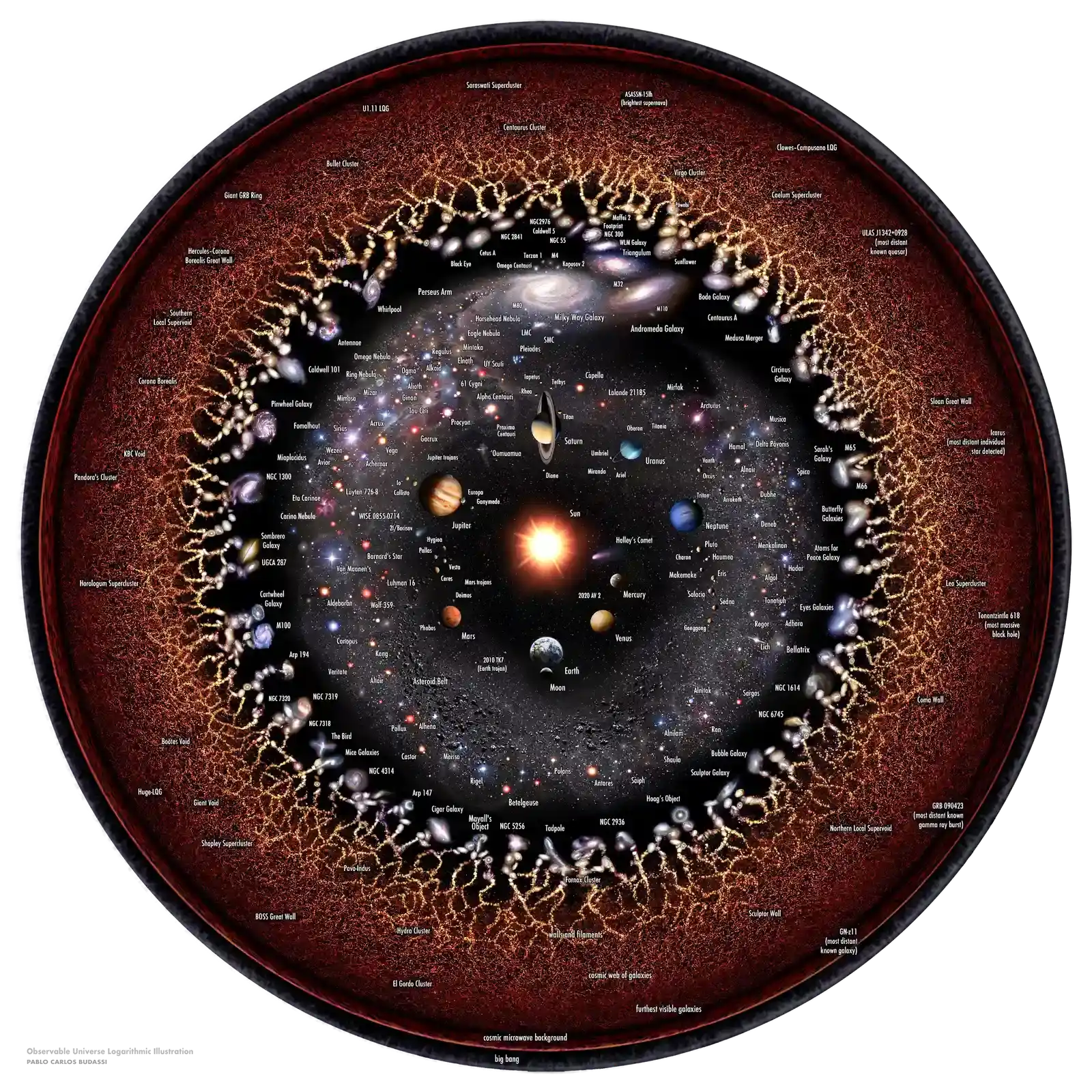
It is tempting to imagine galaxies sprinkled through space like grains of sugar on a table, but the real universe stubbornly refuses to be so simple. When astronomers began mapping galaxy positions in three dimensions, they saw clusters, walls, and long threads separated by enormous, nearly empty voids. These patterns were not subtle; they showed up again and again in independent sky surveys, hinting that gravity had been drawing matter into invisible scaffolding over billions of years. The first time you see a modern 3D map of galaxies, it looks almost biological, like neurons in a brain rather than cold, lifeless space. That resemblance is exactly what set cosmologists on a decades‑long hunt for the hidden structure beneath it all.
The cosmic web emerged as the leading explanation: a vast network of filaments made mostly of dark matter, with ordinary matter and galaxies tracing its shape like dew on spider silk. Where filaments intersect, gravity piles up matter into galaxy clusters, some of the most massive structures in the universe. Along the filaments themselves, smaller groups and individual galaxies form, migrate, and sometimes collide. The voids between these filaments can span hundreds of millions of light‑years, containing only a sprinkling of lonely galaxies. The pattern is so striking that once you’ve seen it, the idea of a random universe feels almost impossible to believe.
From Ancient Patterns to High-Tech Sky Maps
Humans have been looking for patterns in the night sky for as long as there have been humans, but for most of history those patterns were made up of lines we imagined between stars. Constellations are charming, but they are strictly two‑dimensional illusions painted onto the celestial dome. The real revolution started when astronomers began measuring galaxy distances, turning flat sky pictures into genuine 3D maps. Suddenly, things that once looked like a smooth glow of light broke up into knots, tendrils, and cavernous gaps. It was as if the universe had been hiding its blueprint behind a curtain, and we had finally tugged one corner aside.
Surveys like the Sloan Digital Sky Survey and more recent projects using instruments in Chile, Hawaii, and space have systematically charted millions of galaxies across vast regions of the sky. With these catalogs, computers can reconstruct the large‑scale structure of the cosmos with increasing precision. A few key takeaways from these maps stand out:
- Galaxies cluster along interconnected filaments and sheets rather than in isolation.
- Huge voids, almost empty of galaxies, occupy much of the universe’s volume.
- The patterns seen in observations closely match those predicted by simulations that include dark matter and dark energy.
The match between simulation and observation is not perfect, but it is close enough to convince most cosmologists that the cosmic web is real and that our basic picture of how it formed is on the right track.
Gravity’s Blueprint: How the Cosmic Web Took Shape
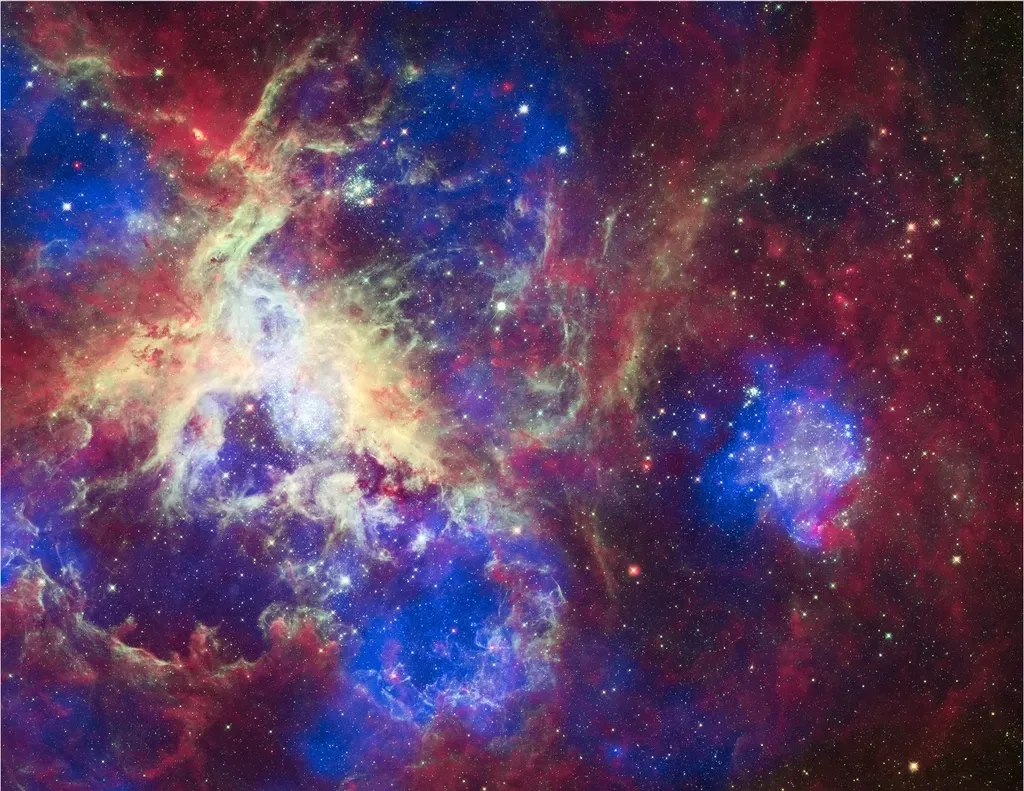
To understand how galaxies form within the cosmic web, you have to start back when the universe was young, hot, and surprisingly uniform. Just after the Big Bang, matter and radiation were spread out almost evenly, with only tiny ripples in density – slight overdensities here, slight underdensities there. Those small ripples were enough for gravity to gain a foothold, slowly amplifying them over hundreds of millions of years. Where there was a bit more matter, gravity pulled in more, and over time, those regions stretched out into the filaments and nodes we see today. Think of it like yeast in dough: tiny fluctuations that, given time, swell into full structures.
Dark matter plays the starring role in this story. Unlike ordinary matter, dark matter does not interact with light, but it does feel and exert gravity. It collapsed first into a foamy network, providing the skeleton on which normal gas could collect. As gas flowed along these dark matter filaments, it cooled, condensed, and eventually ignited into stars, building the galaxies we now observe. Without dark matter, the universe would not have had enough gravitational pull to form complex structures so quickly. The cosmic web, in a sense, is the visible shadow of an invisible architecture laid down in the universe’s first few hundred thousand years.
Galaxies on the Threads: Life Inside the Cosmic Web
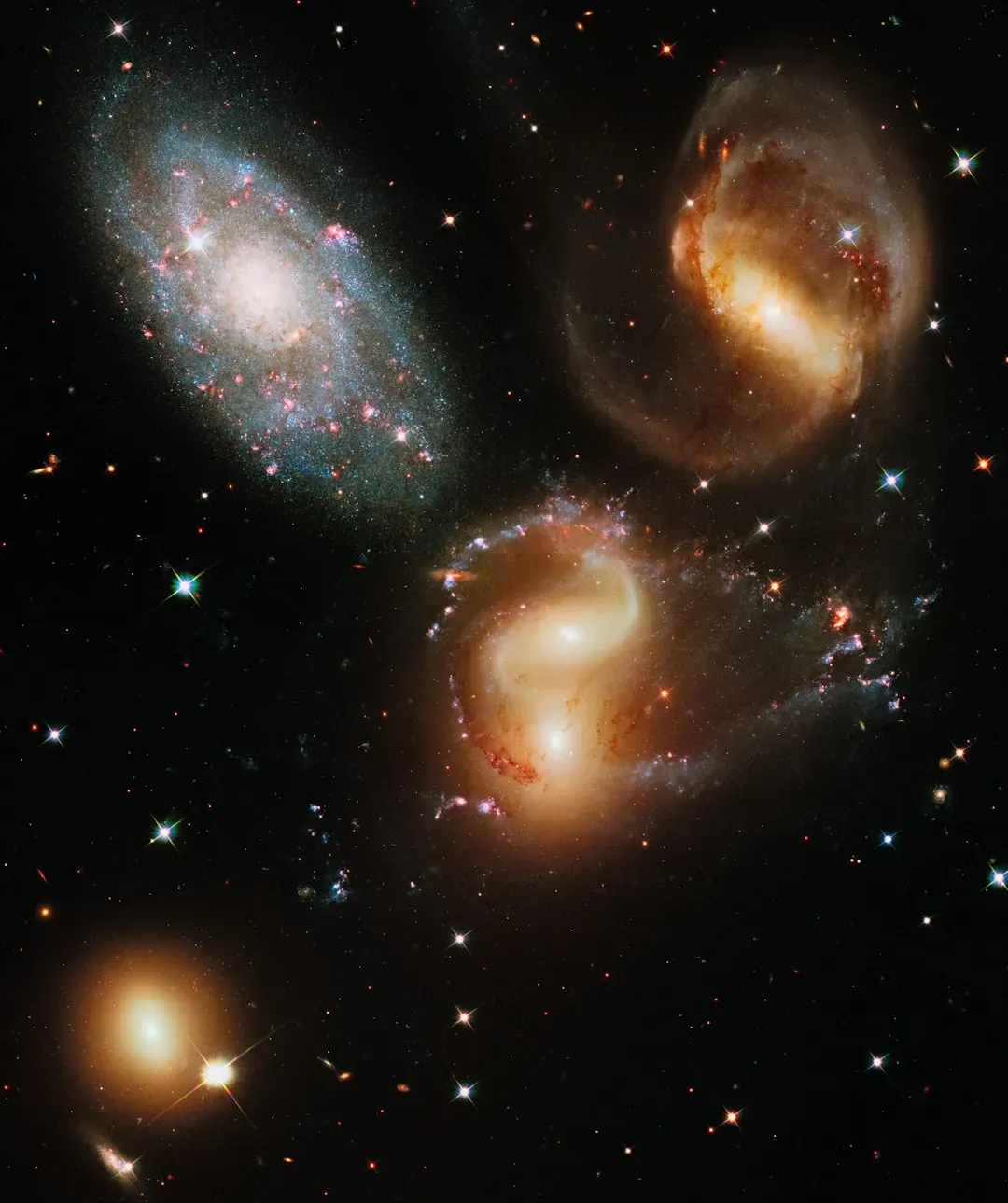
Once you realize galaxies live on the strands of the cosmic web, questions about their behavior start to sound different. A galaxy in a dense filament surrounded by neighbors has a very different life than one drifting near the edge of a void. In crowded regions, galaxies collide and merge more often, can be stripped of their gas, and may stop forming new stars earlier. In quieter areas, galaxies can keep their gas reservoirs longer, slowly building up spiral disks and extended star‑forming regions. Location in the web is a bit like growing up in a busy downtown versus a remote rural town; the environment shapes your history.
Observations back this up. Galaxies in the nodes of the web – those massive clusters at filament intersections – tend to be older, redder, and less active in forming new stars. They are often elliptical in shape, the aftermath of countless mergers and interactions. Along filaments, astronomers see a mix of galaxy types, including still‑vigorous spirals and irregulars, suggesting a more varied and ongoing evolutionary process. At the edges of voids, galaxies can be oddly pristine, with abundant gas and relatively undisturbed structures. The cosmic web is not just a backdrop; it is a dynamic ecosystem, and galaxies are its inhabitants responding to local conditions.
Collisions, Flows, and Cosmic Traffic Jams
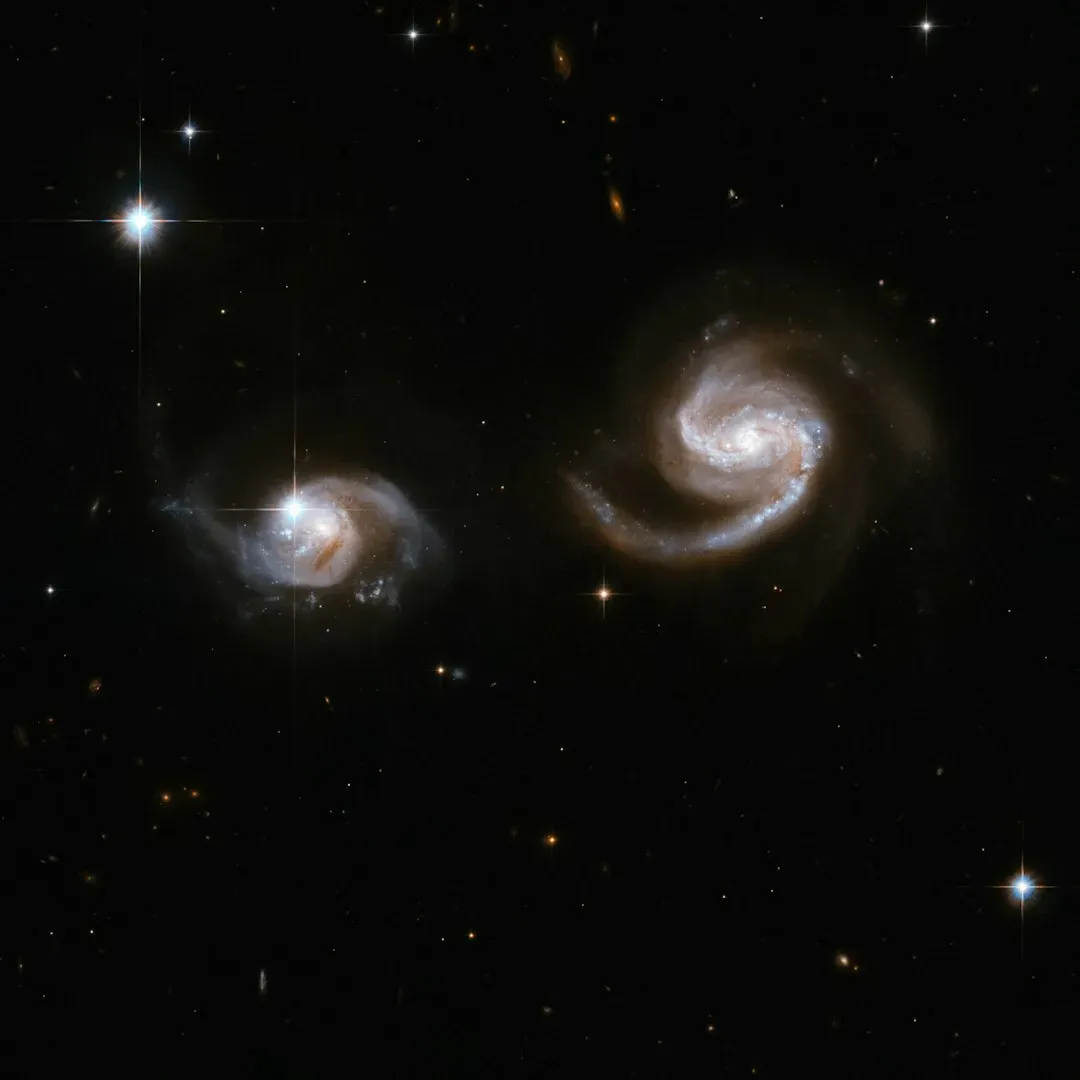
The cosmic web also dictates how material moves through space, and that motion drives some of the most dramatic events in galaxy evolution. Gas does not simply sit still; it streams along filaments toward the deep gravitational wells at their intersections. As it flows, it can feed galaxies, fueling bursts of star formation and sometimes the growth of supermassive black holes at their centers. When multiple flows converge, you can get cosmic traffic jams: dense regions where galaxies are forced into close encounters and mergers. These violent meetings can scramble galactic shapes, ignite new stars, or, ironically, blow out the very gas they need to keep forming stars.
On smaller scales, astronomers now talk about “cosmic feeding” and “cosmic strangulation” to describe how the web sustains or starves galaxies. A galaxy with steady access to fresh gas along a filament can keep its stellar nurseries active for billions of years. Another, falling into a massive cluster, may have its gas stripped away by hot plasma or gravitational tides, quenching star formation. Over cosmic time, these processes sculpt the population of galaxies we see today: some still vibrant and blue, others faded and red, many transformed beyond recognition by journeys along the web. It is a deeply physical, almost choreographed dance, even if the dancers are hundreds of thousands of light‑years across.
Why It Matters: A New Map for Our Place in the Cosmos
At first glance, the cosmic web might seem like a purely abstract concern, the kind of thing that matters mostly to cosmologists and their simulations. But understanding this structure reshapes some very basic questions: Where did our galaxy come from? Why does the universe look the way it does on every scale we can observe? By studying how galaxies live inside filaments and nodes, astronomers test fundamental ideas about gravity, dark matter, and dark energy. If the patterns in the web did not line up with predictions, it would be a strong sign that our current theories are missing something big. The fact that they mostly do match is reassuring – but the small mismatches may be where the next breakthroughs hide.
There is also a quieter, more philosophical reason this matters. The Milky Way is not just floating in space; it is part of a filament in a structure called the Laniakea Supercluster, itself woven into the larger cosmic web. When I first learned that, it shifted my sense of cosmic address from a simple “we live in a galaxy” to “we live on a thread of an ancient, evolving web.” That perspective invites comparisons to other pattern‑finding efforts in science, from mapping Earth’s climate systems to charting neural networks in the brain. In each case, the big structures are more than the sum of their parts, and seeing the pattern changes what questions we even know how to ask.
The Future Landscape: Next-Generation Telescopes and Simulations
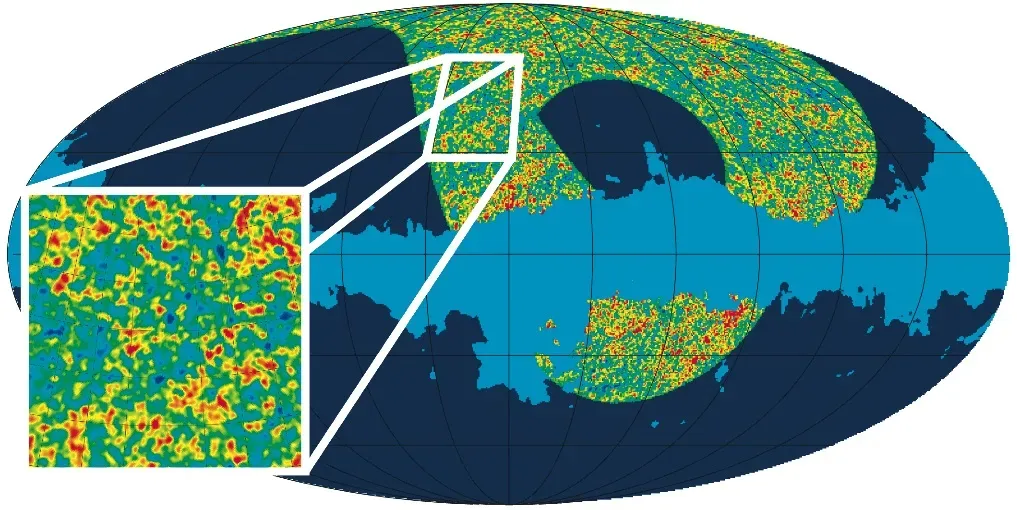
We are still in the early days of truly charting the cosmic web, and the next generation of instruments promises to fill in a lot of missing detail. New wide‑field surveys from space telescopes and ground‑based observatories will map the positions and motions of tens of millions of galaxies with unprecedented precision. Radio telescopes are tracking the faint glow of hydrogen gas that traces filaments even where few bright galaxies exist. On the theoretical side, cosmological simulations are growing in both scale and realism, modeling how dark matter, gas, stars, and black holes interact within the web. Together, these tools will let scientists zoom from the grand architecture down to the specific neighborhoods where galaxies like ours formed.
There are real challenges ahead. Dark matter remains elusive in the lab, despite decades of searches, and dark energy – driving the accelerated expansion of the universe – is even more mysterious. Subtle discrepancies between observed structure on certain scales and simulated predictions have led some researchers to wonder if the laws of gravity might need tweaking in extreme conditions. At the same time, better data can easily overturn apparent anomalies, reminding us not to jump too fast to exotic explanations. The next decade is likely to be a tension between consolidation and revolution: either the cosmic web will cement our current cosmological model, or it will point squarely at the places where that model breaks.
How You Can Connect: Following, Supporting, and Imagining the Cosmic Web
Most of us will never time‑share a supercomputer or spend nights at a mountain‑top observatory, but there are simple ways to plug into this unfolding story. Many sky surveys release stunning visualizations and interactive maps online, letting you fly through the cosmic web from your own screen. Some projects invite citizen scientists to help classify galaxy shapes or spot unusual systems that automated algorithms might miss. Watching these efforts, you realize that mapping the universe is not just a task for specialists; it is a collective attempt to understand where we are.
If you want to go a step further, you can support organizations that fund basic research in astronomy, advocate for dark‑sky initiatives that protect our view of the stars, or simply share high‑quality science reporting with friends who think cosmology is too abstract to matter. I’ve found that hearing someone gasp at their first glimpse of a 3D cosmic web map can be as satisfying as seeing a comet through a telescope. Our everyday lives may be anchored to Earth, but our curiosity clearly is not. The more people feel that this immense, delicate structure is part of their story too, the richer our culture’s relationship with the universe will become.
Suhail Ahmed is a passionate digital professional and nature enthusiast with over 8 years of experience in content strategy, SEO, web development, and digital operations. Alongside his freelance journey, Suhail actively contributes to nature and wildlife platforms like Discover Wildlife, where he channels his curiosity for the planet into engaging, educational storytelling.
With a strong background in managing digital ecosystems — from ecommerce stores and WordPress websites to social media and automation — Suhail merges technical precision with creative insight. His content reflects a rare balance: SEO-friendly yet deeply human, data-informed yet emotionally resonant.
Driven by a love for discovery and storytelling, Suhail believes in using digital platforms to amplify causes that matter — especially those protecting Earth’s biodiversity and inspiring sustainable living. Whether he’s managing online projects or crafting wildlife content, his goal remains the same: to inform, inspire, and leave a positive digital footprint.