


Time travel has long lived in the realm of starships, paradoxes, and improbable movie plots, but over the last few decades something quietly radical has happened: the science has started to catch up with the stories. Physicists are no longer asking only whether time travel makes good fiction; they are also asking what the equations of nature actually allow. In lab after lab, from cryogenic quantum chips to spinning neutron stars in distant galaxies, researchers keep stumbling on clues that time is far stranger – and more flexible – than our everyday lives suggest. None of these discoveries amounts to a finished time machine, but together they sketch a surprising picture: our universe might be far more open to time-bending tricks than common sense would ever allow.
The Hidden Clues in Einstein’s Equations: Time as a Flexible Dimension
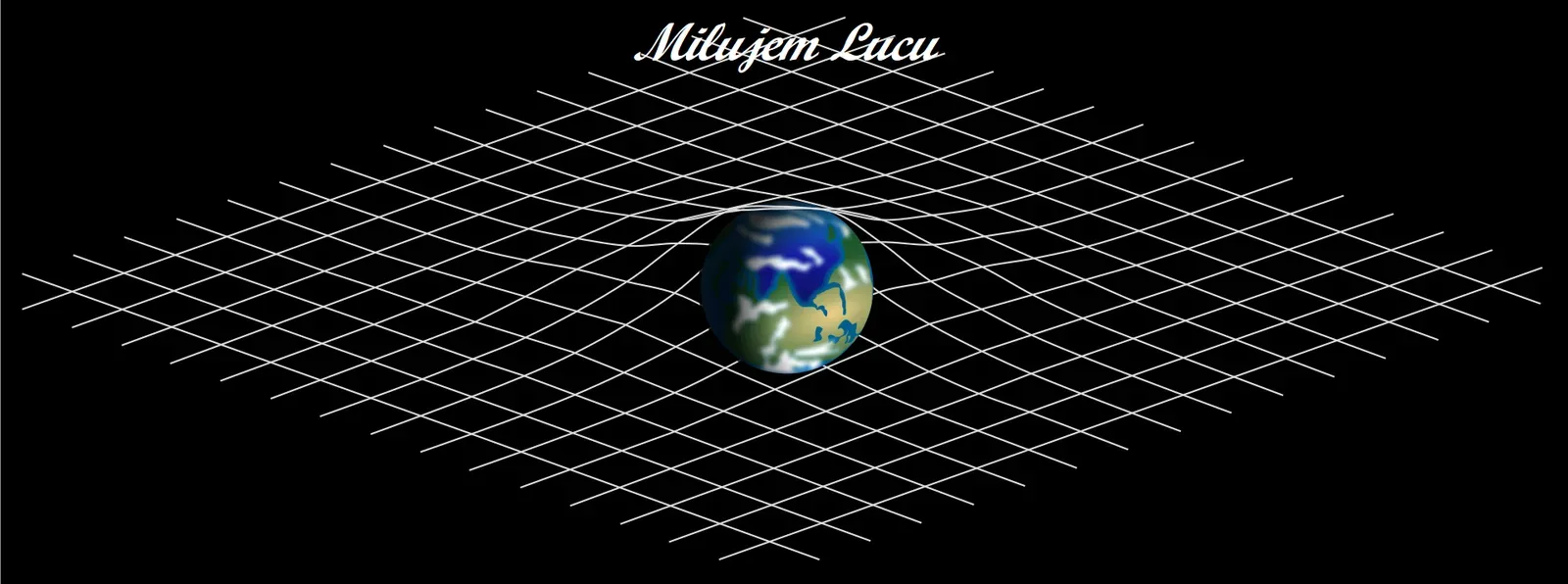
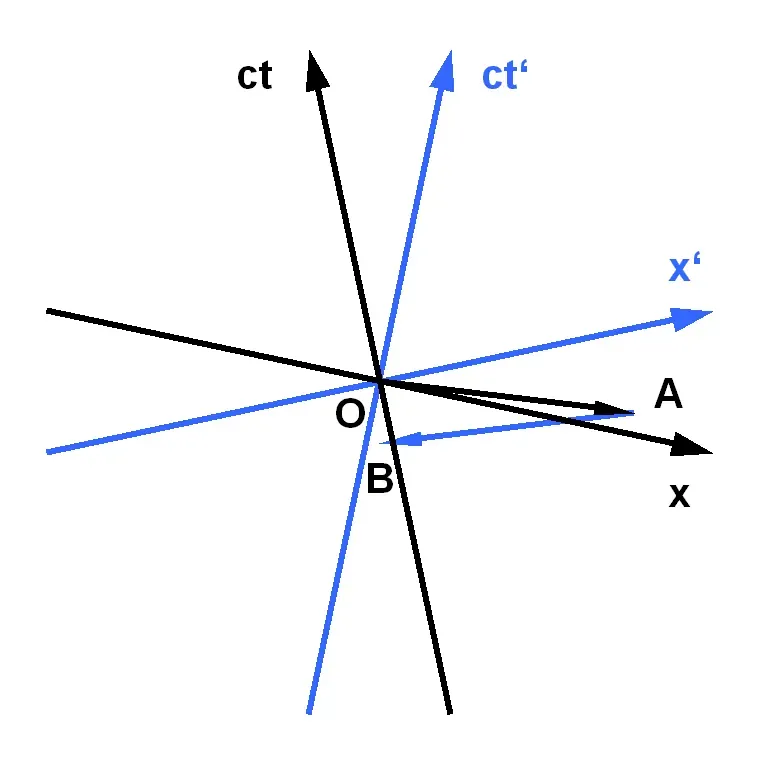
More than a century ago, Albert Einstein rewrote our understanding of time, and scientists are still unpacking the consequences. In his theory of general relativity, time is not a rigid backdrop but a dimension woven together with space, forming a pliable fabric that can stretch, curve, and twist. Massive objects like stars and black holes dent that fabric, slowing time down relative to regions with weaker gravity, while high-speed motion can also make clocks tick differently. This idea used to sound like pure abstraction, the kind of thing that stayed in chalk dust on blackboards rather than turning into real-world effects. Yet modern measurements have shown that Einstein’s time distortions are not just real, they’re measurable – even across the height of a building.
These built‑in flex points in spacetime are the first strong hint that time is not a universal metronome that beats the same for everyone. If time can be slowed in one region and sped up in another, then, in principle, the door opens a crack to scenarios where different paths through spacetime reunite at different “times.” The same equations that let scientists accurately predict GPS satellite behavior also admit bizarre solutions like closed timelike curves, where a path through spacetime could loop back to its own past. Most physicists think nature has ways to prevent the worst paradoxes, but they also acknowledge something uncomfortable: the laws themselves do not slam the door shut on time travel nearly as firmly as we once assumed.
Time Dilation You Can Hold in Your Hand: Clocks That Age at Different Speeds
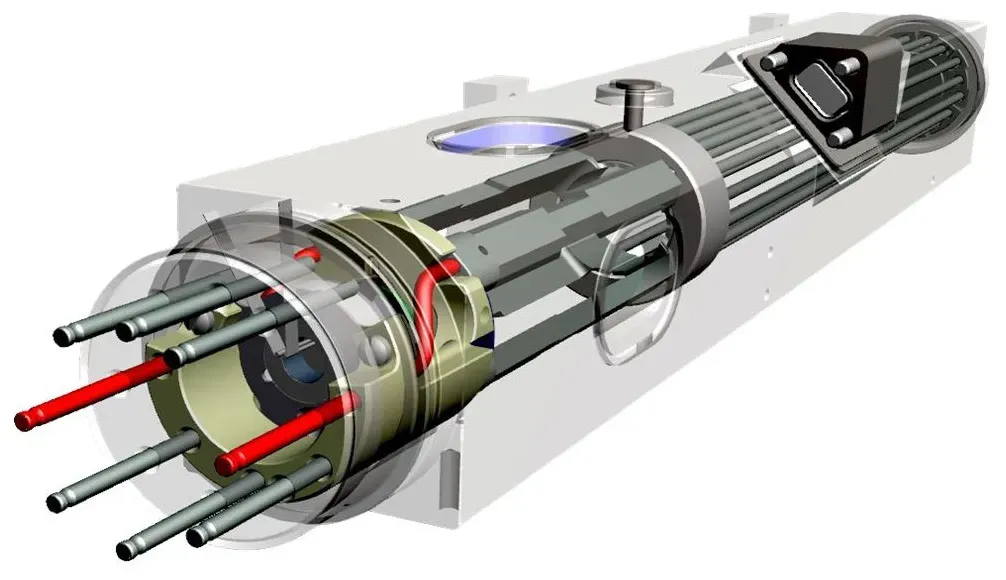
One of the most striking discoveries about time is that you do not need a black hole or a warp drive to see it misbehave – you just need two very precise clocks and a change in height or speed. Physicists have flown atomic clocks on airplanes and compared them to identical clocks left on the ground, finding that the traveling clocks return ever so slightly out of sync. More recently, ultra-precise optical lattice clocks have become so sensitive that researchers can detect a measurable difference in tick rate between two clocks separated by only a few dozen centimeters in height. In other words, your head literally ages a tiny bit faster than your feet due to the weaker gravity higher up.
These are not vague theoretical claims; they are carefully verified experiments that keep matching Einstein’s predictions with incredible accuracy. In practice, this means astronauts who spend months on the International Space Station come back to Earth fractionally younger than their twins on the ground. This “one‑way time travel to the future” is tiny for everyday speeds, but the principle is clear: changing your motion or your gravitational environment changes how much time you experience. Scale that up to near‑light speeds or extreme gravity, and the difference can become dramatic, giving science fiction’s time‑dilated voyages a surprisingly firm scientific foundation.
Quantum Entanglement and Retrocausal Whispers: When the Future Seems to Touch the Past
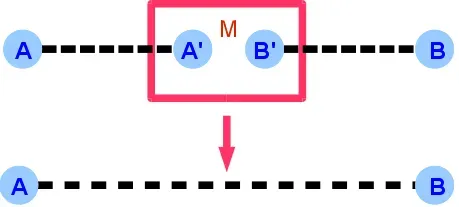
Zoom in to the quantum world and time starts to look even less straightforward. In quantum experiments, particles can become entangled so that measuring one instantly affects the description of its partner, no matter how far apart they are. Some researchers have explored “delayed‑choice” experiments, where a decision made about how to measure a particle appears to influence how its past behavior must be described. The data do not allow information to flow backward in time in any simple, signal‑like way, but they do force physicists to confront a deeply unsettling possibility: the future measurement choices we make can shape the story we tell about what the particle “did” before we looked.
Interpretations differ, but one camp seriously entertains models known as retrocausal theories, where events in the future help determine outcomes in the past, all while staying within the overarching rules of relativity and quantum mechanics. To a non‑physicist, this sounds suspiciously close to time travel, even if it is limited to subtle correlations rather than messages in a mailbox. The key point is that quantum theory does not always insist on a clean, one‑directional flow of cause and effect. Instead, it allows the present and future to be interwoven in non‑classical ways, hinting that a full understanding of time may require rethinking what “before” and “after” even mean.
Closed Timelike Curves: Mathematical Blueprints for Loops in Time
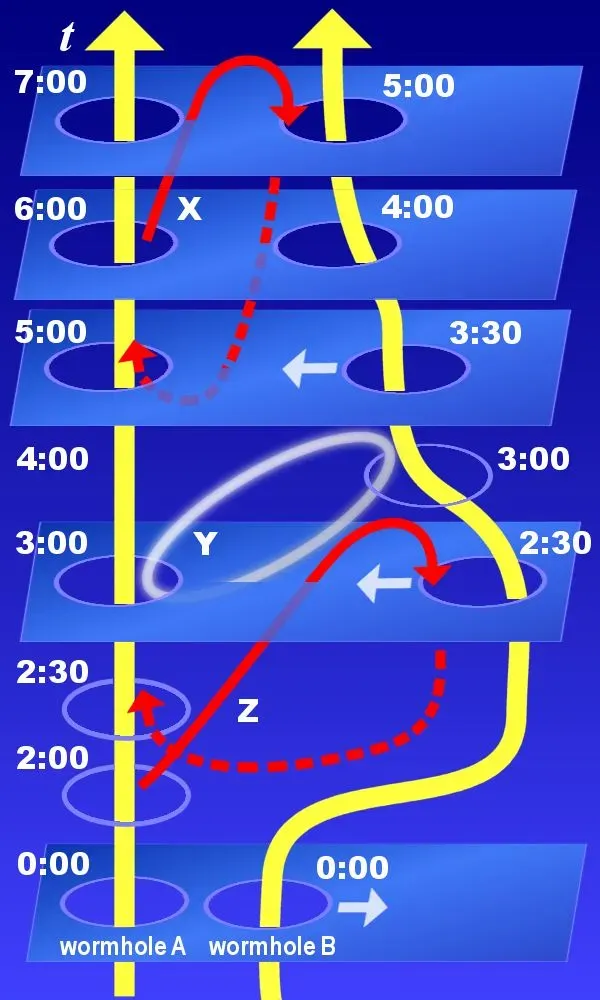
Hidden inside Einstein’s equations are some of the most audacious theoretical discoveries in modern physics: complete space‑time geometries that contain built‑in time loops. These structures, known as closed timelike curves, describe paths that an object could follow while always moving forward in its own local time, yet end up arriving back at an earlier moment in the larger universe’s timeline. Certain solutions involving rapidly spinning masses, exotic matter, or wormholes allow such loops to appear in the math. They are not science fiction add‑ons; they fall out of the same equations used to calculate planetary orbits and gravitational waves.
Of course, having a mathematical blueprint is not the same as having the materials and tools to build the device. Many of these time‑looping solutions require conditions that are wildly beyond anything we can engineer, such as negative energy densities or perfectly stable cosmic strings stretching across the universe. Still, they establish something crucial: the fundamental laws, as we currently write them, do not automatically forbid trajectories that bend back toward the past. Instead of an outright ban, the universe seems to operate more like a stern but permissive referee, offering tantalizing glimpses of what might be possible at the most extreme edges of physics.
Simulated Time Travel in Quantum Computers: Teleporting States Across Timelines
While we cannot send a human back to shake their own hand – yet – physicists have started to simulate versions of time travel inside quantum devices. In carefully designed experiments, researchers program quantum circuits to behave as if information passes through a closed timelike curve, then study how the system evolves. Some of these studies explore how quantum states might travel along hypothetical paths that loop in time, testing ideas about whether paradoxes would arise and how quantum mechanics might smooth them out. Others use entanglement and teleportation protocols to mimic the effect of sending a quantum state “back” into the earlier part of a computation.
These simulations are not just philosophical toys; they probe whether the combination of relativity and quantum theory naturally protects consistency. In several cases, the math suggests that quantum rules effectively censor paradoxical outcomes, nudging the system toward self‑consistent histories. That is a remarkable hint about how a real time machine, if ever built, might behave: you could still loop through time, but the universe would quietly conspire to avoid logical contradictions. By turning time travel from a thought experiment into a programmable scenario on quantum chips, scientists are moving the conversation from speculation to testable, if still highly abstract, physics.
Why It Matters: Time Travel as a Stress Test for the Laws of Nature
At first glance, asking whether time travel is possible can sound like an indulgent distraction, the kind of thing you argue about after watching a blockbuster movie. But in physics, extreme questions often reveal hidden cracks – or hidden strengths – in our best theories. Time travel forces scientists to push general relativity and quantum mechanics to their limits, asking whether they can coexist without blowing up into contradictions. When a proposed time‑loop scenario breaks the rules, researchers learn something important about where the theories need reinforcement or revision. When the scenario survives the mathematical stress test, that is even more unsettling, because it suggests our universe might quietly allow stranger behavior than we experience day to day.
There is also a practical edge to this seemingly wild topic. Ideas connected to time manipulation show up in technologies that already shape our lives, from GPS systems that correct for time dilation to quantum communication schemes that exploit entanglement. Probing the boundaries of what time allows can reveal new ways to compute, to secure information, or even to probe the earliest moments after the Big Bang. In this sense, time travel is less a fantasy goal and more a powerful lens: by trying to break the laws of physics with clever paradoxes, scientists get a clearer view of what those laws truly say – and what future technologies might one day hack.
The Future Landscape: From Time‑Warped Navigation to Chronology Protection
Looking ahead, the frontier of time‑bending research will likely be dominated less by gleaming, cinematic machines and more by increasingly subtle control over clocks, quantum systems, and gravitational fields. Next‑generation atomic clocks are poised to be so accurate that they can sense tiny variations in Earth’s gravity, effectively turning time into a tool for mapping our planet and perhaps detecting underground structures or shifting tectonic plates. Some researchers speculate that with enough precision, we might use time dilation in engineered environments to give certain processes a head start, such as accelerated testing of materials or long‑running computations. At the same time, astronomers will keep using distant cosmic laboratories – like merging neutron stars and black holes – to test whether nature ever arranges itself into time‑looping configurations.
On the theoretical side, many physicists suspect that a full theory of quantum gravity will include what has been nicknamed a “chronology protection” principle, a built‑in safeguard that prevents large‑scale violations of cause and effect. If that idea holds up, it could mean that while local time tricks and extreme dilations are fair game, full‑blown travel to the past will remain out of reach. Yet science has a habit of turning today’s impossibilities into tomorrow’s engineering challenges. Just as harnessing electricity once sounded like wizardry, manipulating time may slowly slide from fantasy toward a very strange kind of technology. Whether humanity ever steps through a literal time machine or not, our growing command of clocks and quantum systems will change how we navigate, communicate, and perhaps even think about our own histories.
How You Can Engage With the Science of Time
Most of us will never design a quantum experiment or climb inside a particle accelerator, but that does not mean we are locked out of the time conversation. One of the simplest ways to engage is to follow the real research instead of only the movie versions, seeking out explainers, lectures, and trustworthy reporting that unpack new discoveries in plain language. Supporting public science institutions – through memberships, donations, or simply visiting – helps sustain the labs and telescopes where time’s secrets are being pried open. Even choosing to learn how your phone’s navigation relies on relativity, or how quantum technologies are being developed, turns abstract physics into something personal and tangible.
If you are curious and hands‑on, you can explore citizen‑science projects that analyze data from space observatories or gravitational‑wave detectors, indirectly helping test theories about spacetime. Educators and parents can nurture this curiosity early by treating questions about time not as distractions, but as gateways into deeper thinking about cause, effect, and evidence. In a world where wild claims about time travel can spread faster than any experiment, being an informed, skeptical, but open‑minded reader is itself a meaningful contribution. After all, the path from science fiction to science fact is paved by people willing to ask hard questions and demand solid answers, even when the subject is as slippery and strange as time itself.
Suhail Ahmed is a passionate digital professional and nature enthusiast with over 8 years of experience in content strategy, SEO, web development, and digital operations. Alongside his freelance journey, Suhail actively contributes to nature and wildlife platforms like Discover Wildlife, where he channels his curiosity for the planet into engaging, educational storytelling.
With a strong background in managing digital ecosystems — from ecommerce stores and WordPress websites to social media and automation — Suhail merges technical precision with creative insight. His content reflects a rare balance: SEO-friendly yet deeply human, data-informed yet emotionally resonant.
Driven by a love for discovery and storytelling, Suhail believes in using digital platforms to amplify causes that matter — especially those protecting Earth’s biodiversity and inspiring sustainable living. Whether he’s managing online projects or crafting wildlife content, his goal remains the same: to inform, inspire, and leave a positive digital footprint.


