Walk onto a major construction site in 2025 and you’ll see laser scanners, drone surveys, and AI-driven simulations – yet some of the most baffling feats of engineering still belong to builders who worked with stone, wood, and human muscle thousands of years ago. From impossible monoliths to cities that float on swamp and saltwater, ancient engineers solved problems that still keep modern designers awake at night. The deeper researchers look, the more they find quiet but profound innovations hidden inside old stones and soil layers. These are not just pretty ruins; they are working laboratories that continue to shape how we think about resilience, sustainability, and extreme design. The real surprise is how often today’s smartest ideas turn out to be rediscoveries of solutions that ancient civilizations already tested at full scale.
The Great Pyramid of Giza: Precision at Monumental Scale

Stand at the base of the Great Pyramid and the first shock is not its height, but its accuracy. Built more than four thousand years ago, its sides are aligned astonishingly close to the cardinal directions, with deviations so small that surveyors still use it as a calibration puzzle. Modern engineers are fascinated by how builders achieved this with simple sighting tools, likely reading the sky with a level of observational precision that would humble many of us armed with GPS. The base is remarkably level across an area larger than several football fields, an achievement that would challenge even a contemporary construction team without heavy machinery. When I first read that its orientation error is less than what many modern buildings achieve, it quietly rewired how I thought about “progress.”
Underneath the polished grandeur is a masterclass in load management. The pyramid’s interior uses relieving chambers and staggered stone layers to redirect forces away from vulnerable cavities, much like the stress-dissipating strategies you see in high-rise cores today. Massive granite beams over the King’s Chamber act as sacrificial elements, cracking in controlled ways to protect the room below. Engineers studying the structure talk less about mystical energies and more about practical lessons in redundancy, overdesign, and safety margins. In a world racing to build taller and faster, the Great Pyramid remains a reminder that patience, tolerance for overengineering, and obsessive surveying can produce structures that outlast empires.
Roman Aqueducts: Gravity-Driven Infrastructure That Refuses to Die
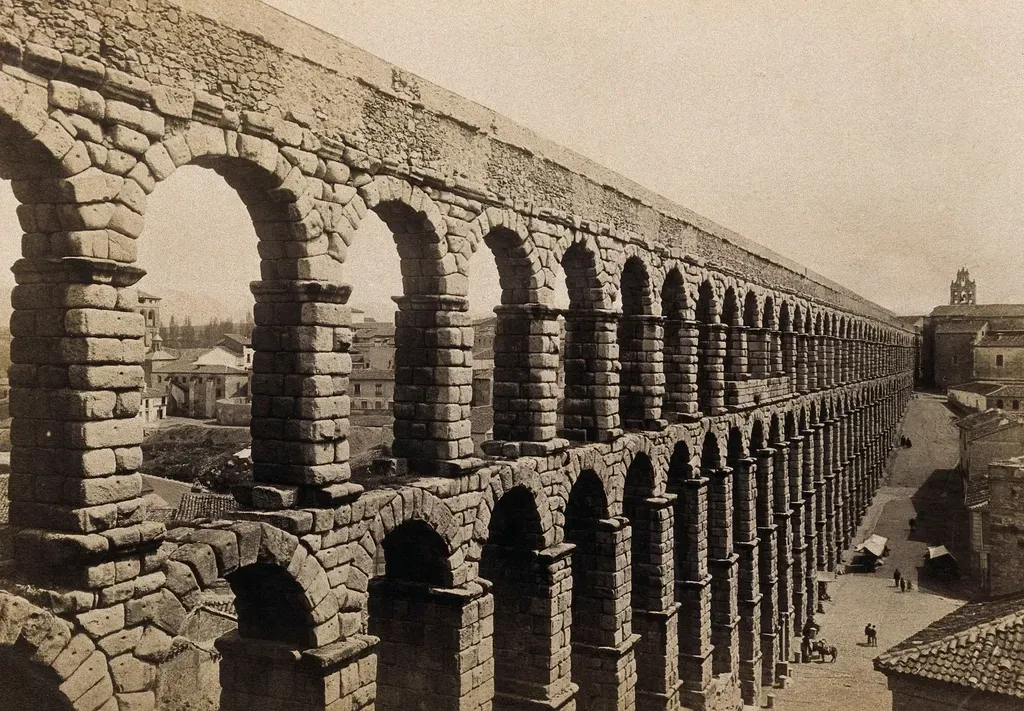
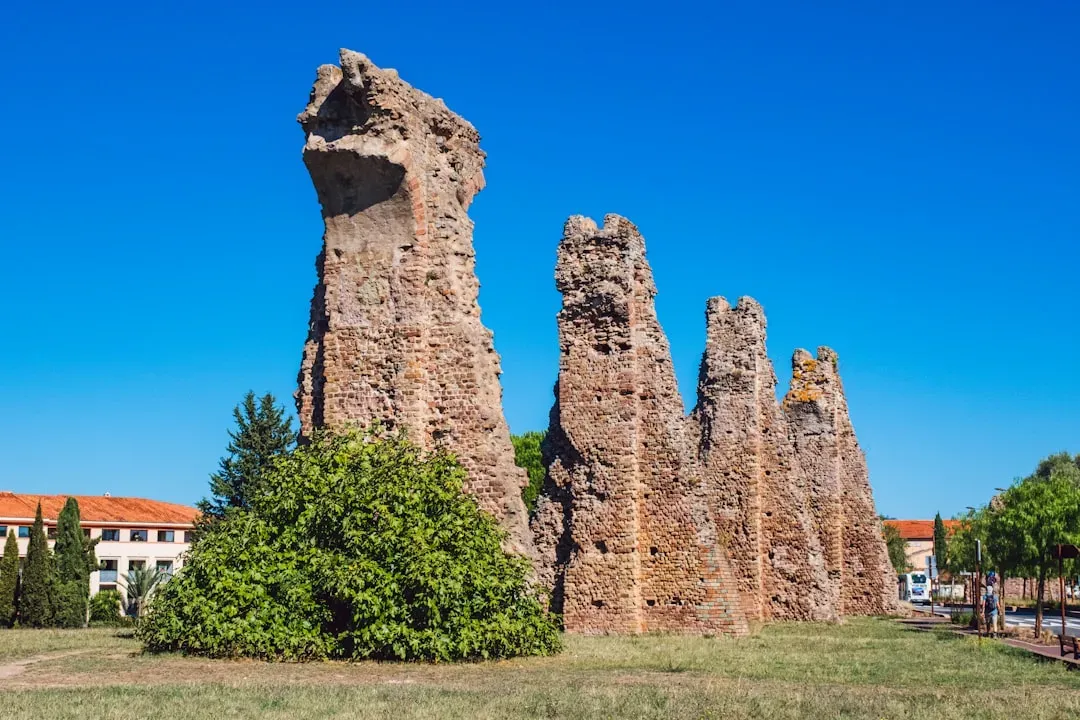
In an age when cities panic over failing water mains, the Roman aqueduct system reads like a quiet rebuke from the past. Without pumps or electricity, Roman engineers delivered constant, flowing water over tens of miles simply by exploiting gravity and extremely gentle slopes. In some channels, the gradient falls by just a handful of centimeters over many meters, yet flows remained steady enough to feed public baths, fountains, and households for centuries. That level of control required meticulous surveying and an almost obsessive feel for landscape. Imagine reading a rolling valley like a finely tuned instrument – and being right for generations.
What continues to impress modern civil engineers is less the arches we photograph and more the system thinking behind them. Aqueducts used settling tanks to filter sediment, inspection shafts for maintenance, and cleverly designed distribution networks to balance flow. Some segments still function today, which is a humbling metric when you consider that many modern pipes need replacement within a few decades. In a time of climate stress and failing infrastructure, the Roman model of low-energy, gravity-fed systems is resurfacing as a serious inspiration. It suggests that sometimes the most advanced solution is not the one with the most technology, but the one that locks into natural forces and lets physics do the heavy lifting.
Machu Picchu: Mountain Architecture That Outsmarted Landslides
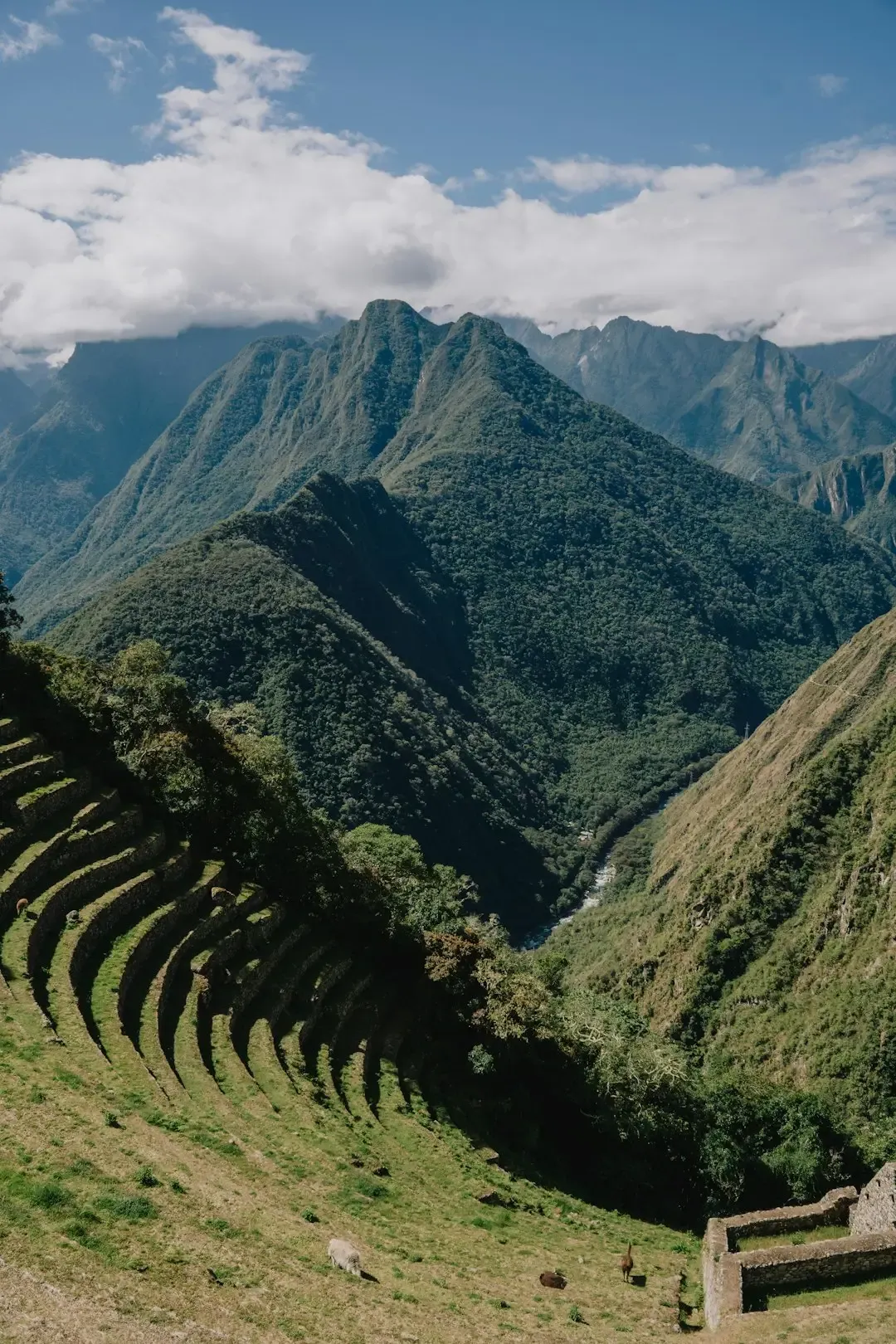
Perched high in the Peruvian Andes, Machu Picchu looks like a postcard, but its true genius is mostly underground. Inca builders turned a precarious mountain ridge into a stable platform by carving terraces that act as giant retaining walls and drainage systems. Beneath those postcard-perfect green steps lies a layered mix of gravel, sand, and soil that channels water away from foundations, preventing the kind of saturation that causes modern hillside homes to fail. When geotechnical engineers mapped these subsurface layers, many admitted they would happily sign off on such a design today. It is a rare case where archaeology and slope stability analysis tell the same admiring story.
What sets Machu Picchu apart is how it transforms risk into an advantage. The steep terrain that makes access difficult also enhances drainage and structural interlocking, turning rock faces into anchor points rather than threats. Walls are built with carefully fitted stones that can flex slightly during earthquakes, dissipating energy instead of cracking apart. Modern earthquake engineers see something close to an early form of performance-based design hiding in these stones. As landslides and heavy rains increasingly threaten mountain cities worldwide, Machu Picchu is shifting from mystical icon to hard-nosed case study in resilient, nature-integrated construction.
The Roman Pantheon: A Concrete Dome That Defies Time
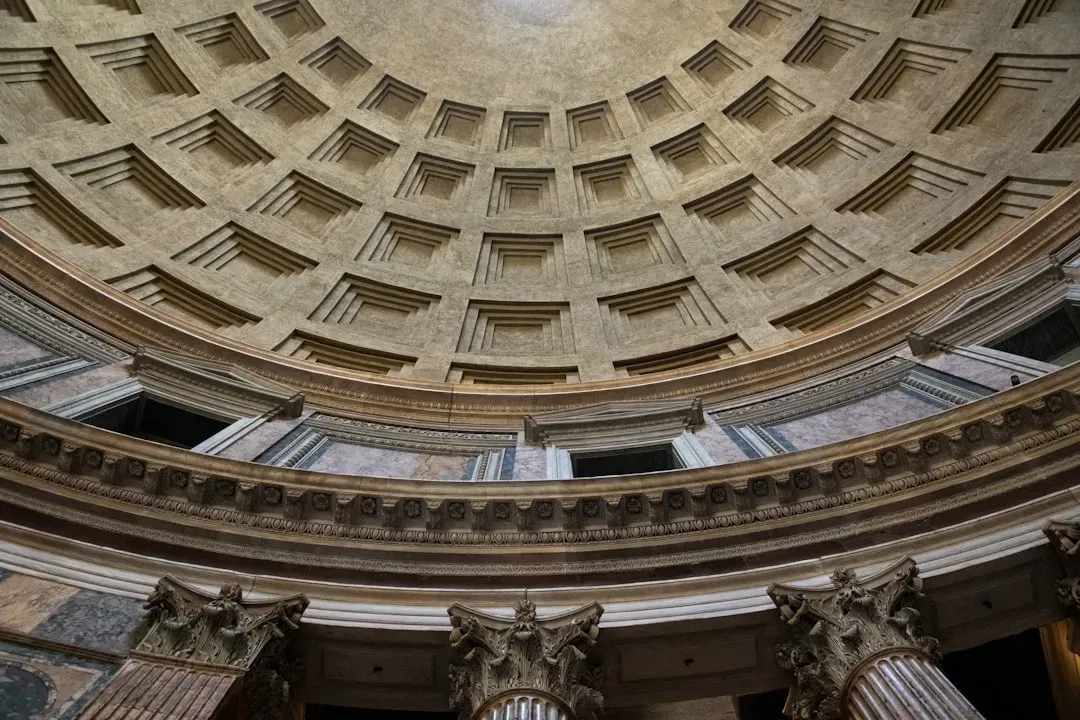
Walk into the Pantheon in Rome and it feels like stepping under a stone sky frozen in mid-collapse, yet it has held for nearly two thousand years. The unreinforced concrete dome, still the largest of its kind, remains one of the most studied structural shells in the world. Roman builders pulled off this feat without steel rebar, using a gradient of concrete mixes that become lighter toward the top by swapping in volcanic pumice. This clever tuning of density reduces weight and internal stresses, a strategy eerily similar to modern lightweight concrete and graded materials. Engineers today still run computer models trying to fully understand the stress paths that keep the dome standing.
The Pantheon is equally important for what it helped rediscover: the lost art of durable concrete. Roman concrete in many harbor structures has been found to gain strength over time, as volcanic ash reacts with seawater to form binding minerals. By contrast, many modern concretes degrade, especially in coastal environments, leading to expensive repairs and failures. Recent research into ancient recipes is already informing more sustainable, longer-lived cement blends that could cut emissions and extend infrastructure lifespans. In a climate-constrained world where cement production is a major carbon source, the Pantheon is no longer just a marvel; it is a prototype for greener, tougher materials.
Angkor’s Hydraulic City: Water Engineering in a Monsoon World
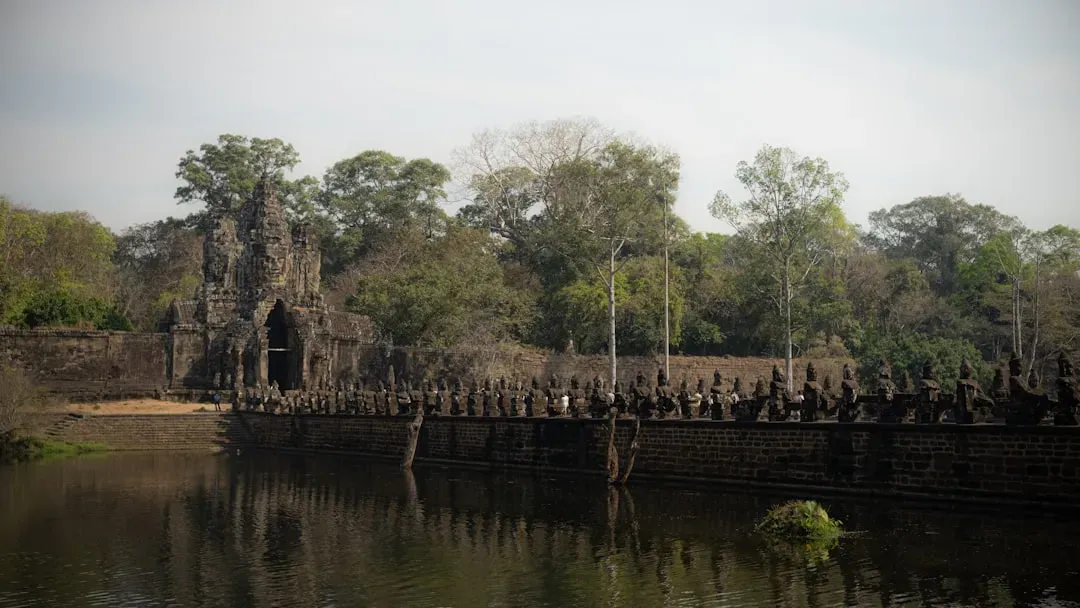
Hidden in the forests of Cambodia, the Khmer capital of Angkor was once the heart of a vast hydraulic civilization, stitched together by reservoirs, canals, and embankments. Lidar surveys over the last decade revealed an engineered landscape that extends far beyond the famous temples, with an intricate grid of waterworks designed to tame brutal monsoon swings. Rather than fighting seasonal floods and droughts, Angkor’s engineers built massive baray reservoirs to store wet-season surpluses and feed rice fields during dry months. It was, in effect, an early climate adaptation network, built with earth, stone, and a deep understanding of seasonal rhythms. Many hydrologists now see it as one of the world’s earliest experiments in large-scale water governance.
Of course, the story carries a warning too. There is growing evidence that environmental strain and shifting monsoon patterns contributed to Angkor’s eventual decline, overwhelming even its advanced system. That dual legacy is what fascinates modern planners: here is a society that both brilliantly adapted to water variability and ultimately was vulnerable to larger climatic and social shocks. When contemporary cities design stormwater systems, floodable parks, and managed wetlands, they echo some of Angkor’s logic – spread risk, slow water, store wisely. Yet Angkor also reminds us that no infrastructure is invincible in the face of deeper environmental change. It pushes a harder question: are we building water systems that can evolve, or ones that will quietly crack under pressure?
Teotihuacan and the Art of Thermal Comfort Without Power
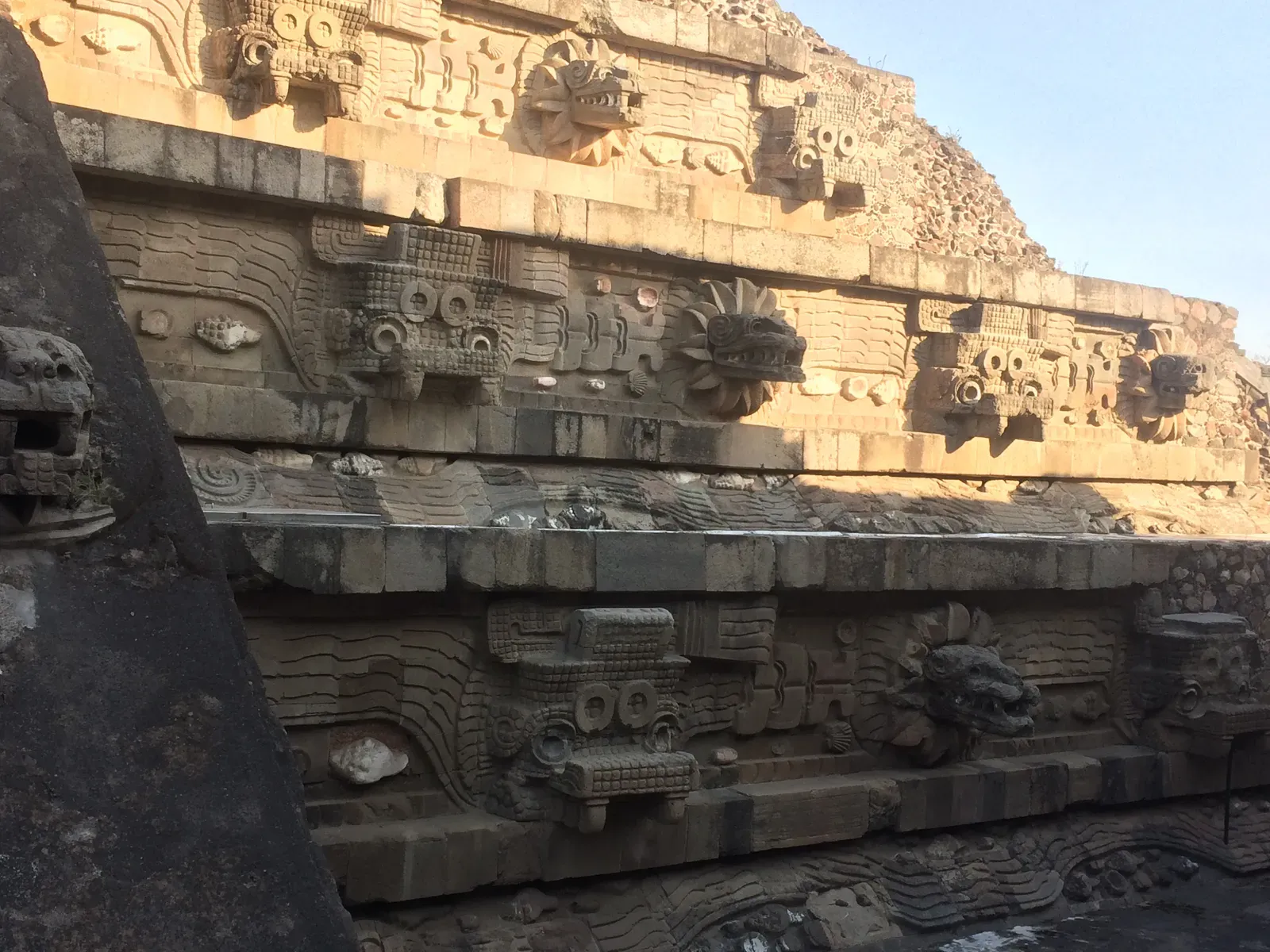
North of today’s Mexico City, the ancient metropolis of Teotihuacan shows that comfort is not just a modern obsession. Its builders oriented major avenues and pyramids with both astronomical and environmental considerations in mind, shaping airflow and shading patterns across plazas and residential compounds. Many apartment-style complexes used thick masonry walls, interior courtyards, and limited exterior openings to stabilize temperatures in a highland climate that swings sharply between day and night. In effect, they built what architects now call passive design, long before air conditioning units hummed in windows. Walking through reconstructions, you feel that they were manipulating sun and wind with a craftsman’s intuition.
Modern building scientists are taking a more quantitative look. Simulations of solar exposure and airflow suggest that Teotihuacan’s layout likely reduced overheating in hot seasons and retained warmth during cool nights. Features such as shaded porticoes and water basins would have further modulated microclimates. The payoff today is not just historical curiosity. As cities search for ways to cool streets and homes without driving up energy demand, Teotihuacan’s strategies point toward low-tech, layout-based solutions that scale at the urban level. It is a quiet but powerful reminder that city planning itself can be a form of climate technology.
From Ancient Tools to Modern Science: What Engineers Are Learning
For a long time, ancient engineering was framed as a set of charming curiosities, impressive but largely surpassed. That view is eroding quickly as more disciplines bring hard data to old sites: laser scanning, ground-penetrating radar, microscopic materials analysis, and climate modeling. When structural engineers plug the Pantheon or Machu Picchu into finite element software, they are often startled by how neatly these designs manage stress, vibration, and failure modes. Geologists studying Roman harbor concrete see complex mineral growth that modern chemistry only recently learned to mimic. The story that emerges is not of naive stone-stackers, but of empiricists running long, brutal experiments in full-scale environments.
There is also a methodological lesson here. Ancient builders did not have formal equations or digital tools, but they had feedback loops spanning generations, where designs that failed catastrophically were abandoned and those that quietly endured became new templates. In some ways, this looks a lot like iterative design and field testing – only the timescales were centuries instead of funding cycles. Modern science brings theory and speed, but it can still benefit from that long-view humility. When we treat ruins as data-rich prototypes rather than relics, we tap into a library of stress tests that no modern lab could afford to run. That shift is turning archaeology into a partner discipline for engineering, rather than just its nostalgic backdrop.
Why It Matters: Resilience, Sustainability, and Respect
At first glance, studying ancient engineering might look like an indulgence in nostalgia while modern infrastructure strains under present-day crises. But these old works directly confront two of our biggest challenges: how to build systems that last, and how to do it without wrecking the planet. Many of the marvels above rely on low-energy processes, local materials, and designs that align with, rather than overpower, natural forces. They show that durability and sustainability are not opposing goals but can reinforce each other when structures are tuned to their environments. In an era where some bridges and buildings are failing long before their expected lifespans, that message lands with uncomfortable force.
There is also a cultural dimension that often goes unspoken. When modern builders finally acknowledge the sophistication of Inca terrace design or Khmer waterworks, they chip away at old hierarchies that quietly treated non-Western knowledge as lesser. Elevating these systems from curiosities to case studies is an act of intellectual respect, and it broadens the pool of ideas we consider when designing for a volatile future. The stakes are not just academic pride; they are the safety of coastal cities, the stability of mountain communities, and the reliability of water and food systems. Ancient engineering matters because it widens our imagination of what is technically possible and ethically responsible. Ignoring it would not just be arrogant – it would be dangerously short-sighted.
The Future Landscape: Reinventing Tomorrow with Yesterday’s Insights
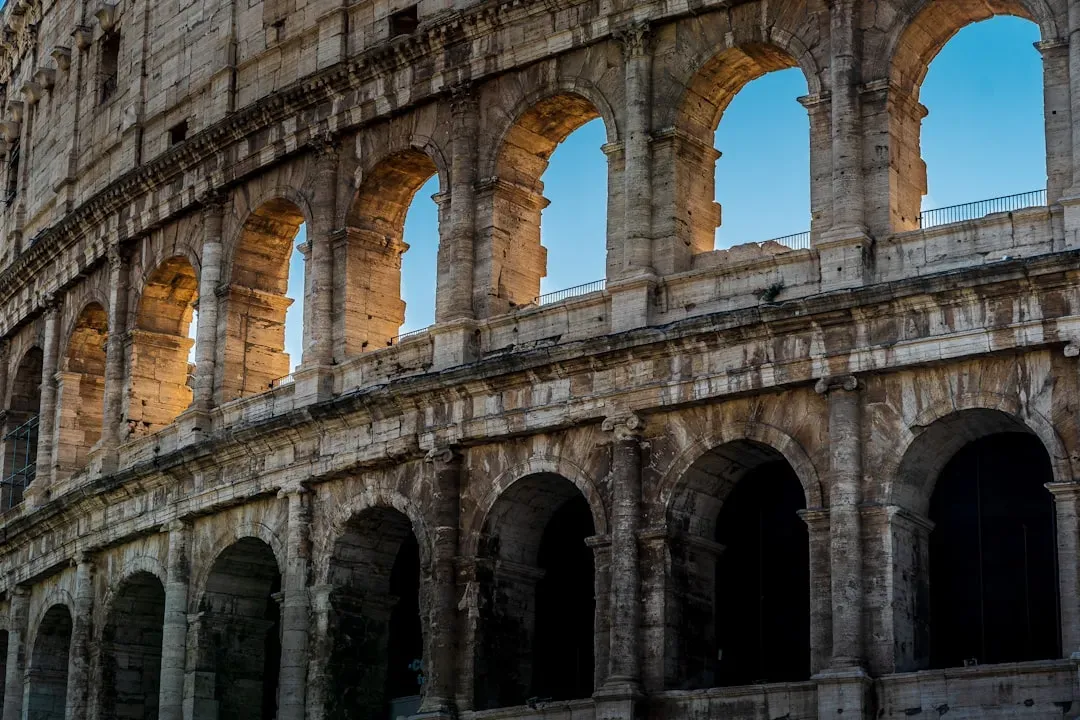
Looking ahead, some of the most promising engineering innovations are explicitly reaching backward. Researchers are experimenting with modern versions of Roman-style low-clinker concretes that incorporate volcanic or industrial byproducts to cut emissions and extend durability. Urban planners are weaving Inca-like terraces and Angkor-inspired wetlands into designs for flood-resilient, hillside, and delta cities. Architects are reviving principles seen at Teotihuacan and in other ancient settlements: orienting streets for airflow, using mass and shade to regulate temperature, and designing neighborhoods that function as climatic systems rather than isolated boxes. What once sat in archaeology journals is now showing up in design briefs and building codes.
Yet there are real challenges in translating ancient insights into present-day conditions. Modern cities are larger, denser, and entangled with complex economic pressures that do not always reward long-term thinking. Materials are different, regulatory frameworks are rigid, and land is contested in ways that ancient planners did not face. The hard work will be in adapting principles rather than copying forms – using the logic behind Khmer hydraulic grids or Roman gradients, not just their visual signatures. Still, there is a quiet optimism in seeing a bridge form between deep time and imminent futures. It suggests that the story of engineering is less a straight line of progress and more a dialogue between eras, with forgotten voices suddenly becoming timely again.
Call to Action: How Readers Can Keep These Wonders Alive and Relevant
Most of us will never design a dome or a dam, but that does not mean these ancient marvels are out of our hands. Public attention, tourism choices, and even casual conversations help determine which sites receive funding, protection, and serious research. Something as simple as supporting museums, reading up on the engineering behind famous ruins, or choosing tours that respect local communities can tilt the balance. Sharing the science – why Machu Picchu’s drainage matters, or how Angkor’s waterworks relate to modern flooding – turns old stones into living case studies rather than backdrops for photos. Curiosity here is not idle; it becomes a form of advocacy.
If you want to go a step further, you can: support organizations that safeguard cultural heritage, back initiatives that fund research into ancient materials and climate adaptation, and push for city plans that integrate lessons from long-lived structures. Even in everyday life, asking questions about how long something is designed to last, or how it interacts with local climate, nudges builders and policymakers toward more thoughtful choices. The key is to see ancient engineering not as distant magic, but as part of the same human problem-solving arc we’re living in now. Once you do, every stone terrace, hidden canal, and silent dome becomes an invitation to think differently about how we build. Which ancient solution are you most curious to see reimagined for the world ahead?