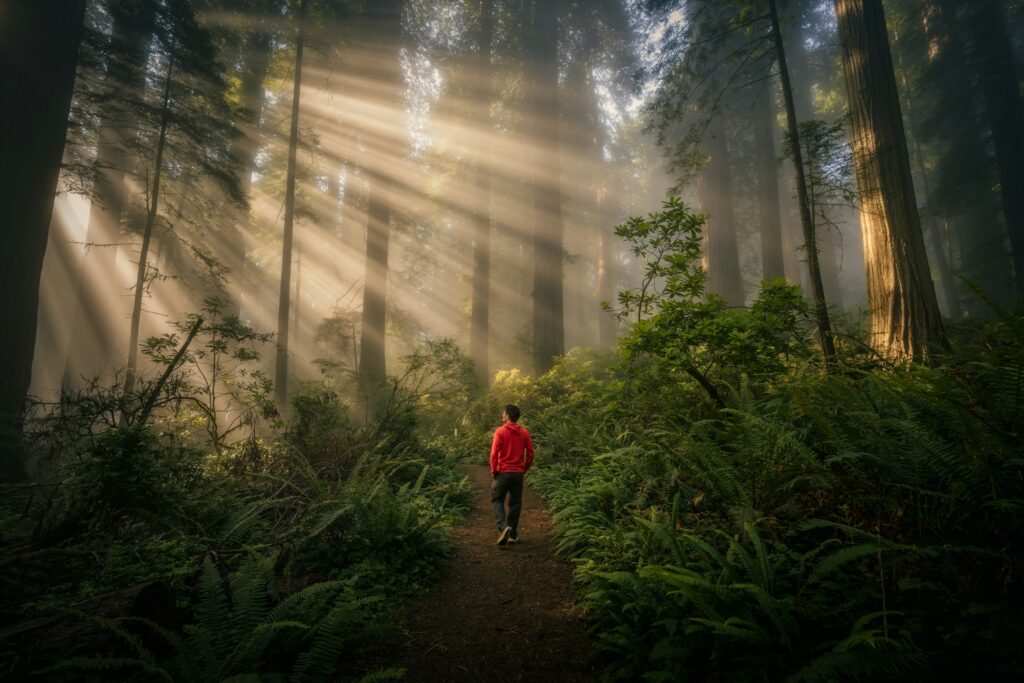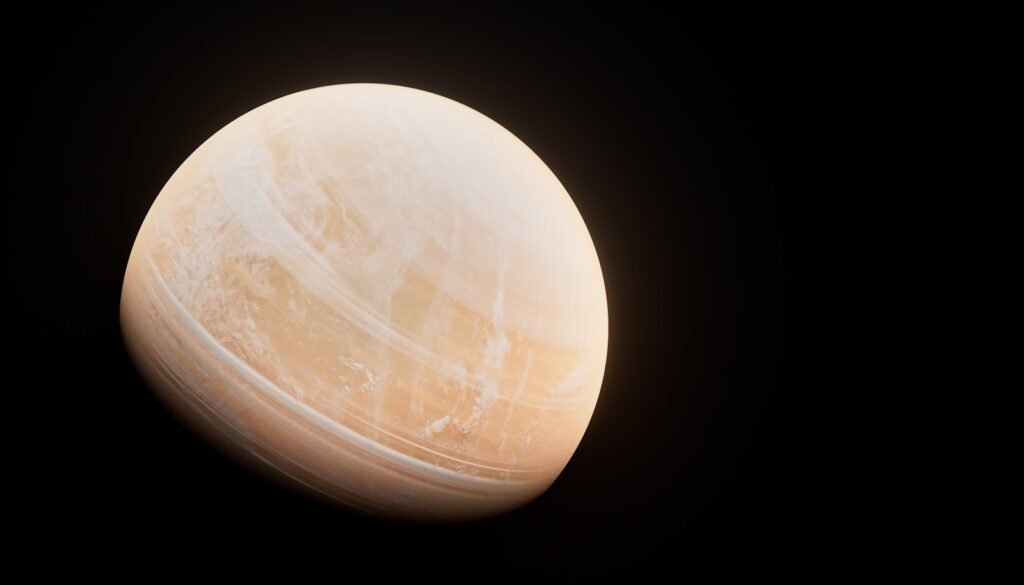

From a distance, Venus and Earth look like cosmic twins: two rocky worlds, similar in size, orbiting the same star in the same neighborhood of space. But up close, the resemblance collapses into something almost nightmarish. One is wrapped in storms, lava, and air hot enough to melt lead; the other is draped in oceans, forests, and breathable skies. For decades, scientists asked a simple but unsettling question: how did two twins end up with such opposite fates? The answer is turning out to be a mix of runaway physics, subtle chemistry, and a few strokes of planetary luck that feel almost uncomfortably personal for anyone living on the “lucky” one.
The Hidden Clues in Venus’s Shimmering Clouds
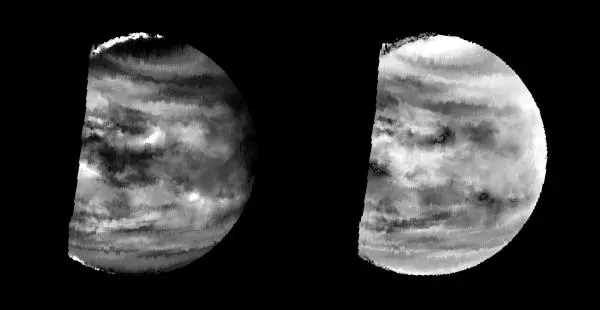
Look at Venus through a backyard telescope and it seems serene, a pale, smooth crescent gliding across the night sky, but that calm face hides a brutal secret. Its clouds are not the playful cotton of Earth but dense sheets of sulfuric acid, stacked in a smothering atmosphere more than ninety times heavier than our own air. The surface pressure there is like being nearly a kilometer under Earth’s ocean, and the temperature hovers around the heat of a pizza oven running on high, day and night, pole to pole. That combination turns the entire planet into a kind of industrial pressure cooker, where rocks behave more like wax than stone.
Those shimmering clouds act like a one-way mirror for heat, trapping infrared radiation in a runaway greenhouse effect that never let up. Sunlight punches in, gets absorbed by the surface, and the heat that tries to escape is bounced back again and again by carbon-dioxide-rich air and reflective aerosols. Unlike Earth’s clouds, which can cool the surface by bouncing sunlight away, Venus’s thick coat works mostly as insulation, locking in warmth over geological timescales. The real shock for researchers in the past decade has been the growing suspicion that Venus might not have always been this way. Some climate models suggest that, early on, Venus may have had shallow oceans and a milder sky before its atmosphere spiraled out of control.
From Ancient Tools to Modern Spacecraft

Humans first tried to make sense of Venus with nothing more than naked eyes, star charts, and a talent for pattern spotting. Ancient observers tracked its path as the bright “morning star” and “evening star,” weaving its motions into myths about love, war, and destiny. For centuries, the planet’s glaring brightness and featureless disk mocked early telescopes, refusing to reveal mountains, seas, or even a hint of what lay beneath the glare. It was the ultimate astronomical tease: close enough to fascinate, stubborn enough to mystify.
The metal age of exploration finally cracked that secrecy. In the 1960s and 1970s, Soviet Venera landers plunged through Venus’s atmosphere, survived the inferno for minutes to a couple of hours, and transmitted the first fractured images of a tortured, rock-strewn landscape. Radar-mapping missions later swept away the cloud cover by bouncing radio waves off the surface, building global maps of volcanoes, vast lava plains, and mountains crushed under the weight of the sky. Today, new spacecraft like NASA’s upcoming VERITAS and DAVINCI missions and Europe’s EnVision probe are designed to read the planet’s rocks like a crime scene log. They will look for signs of ancient oceans, track how the atmosphere evolved, and test whether Venus still has active volcanoes reshaping its surface in real time.
How a Runaway Greenhouse Turned a Twin into a Furnace
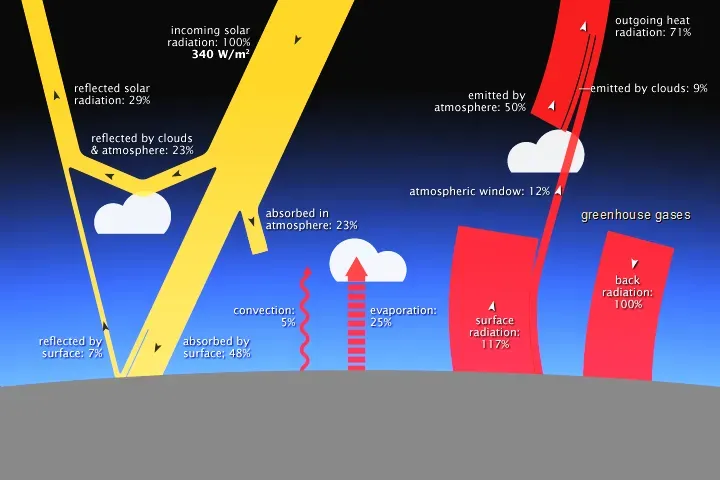
The core scientific mystery boils down to this: why did Venus’s climate tip into permanent catastrophe while Earth’s stabilized? Both worlds started with similar raw ingredients – rock, metals, water-bearing minerals, and plenty of carbon dioxide – but they processed those ingredients in radically different ways. On Earth, oceans and rocks work together as a giant thermostat, locking CO₂ into carbonates and shells, then burying that carbon in the crust through plate tectonics. Over millions of years, that slow-motion carbon shuffle prevents most of the gas from building up in the atmosphere where it would trap heat.
On Venus, the thermostat seems to have broken early. The planet likely received slightly more sunlight from the young Sun, enough to slowly evaporate its surface water, if it ever had oceans at all. Once water vapor – already a powerful greenhouse gas – built up, it amplified the heating, which released more CO₂ from rocks and possibly from volcanic eruptions. Without stable oceans to absorb that carbon and without plate tectonics to bury it, the greenhouse effect ran away like a microphone feeding back on a speaker, each loop making the system hotter and louder. The end state is a world where the air itself is mostly carbon dioxide, the clouds are acid, and the idea of liquid water on the surface is as impossible as ice on a red-hot stove.
Why Earth Stayed an Eden (So Far)
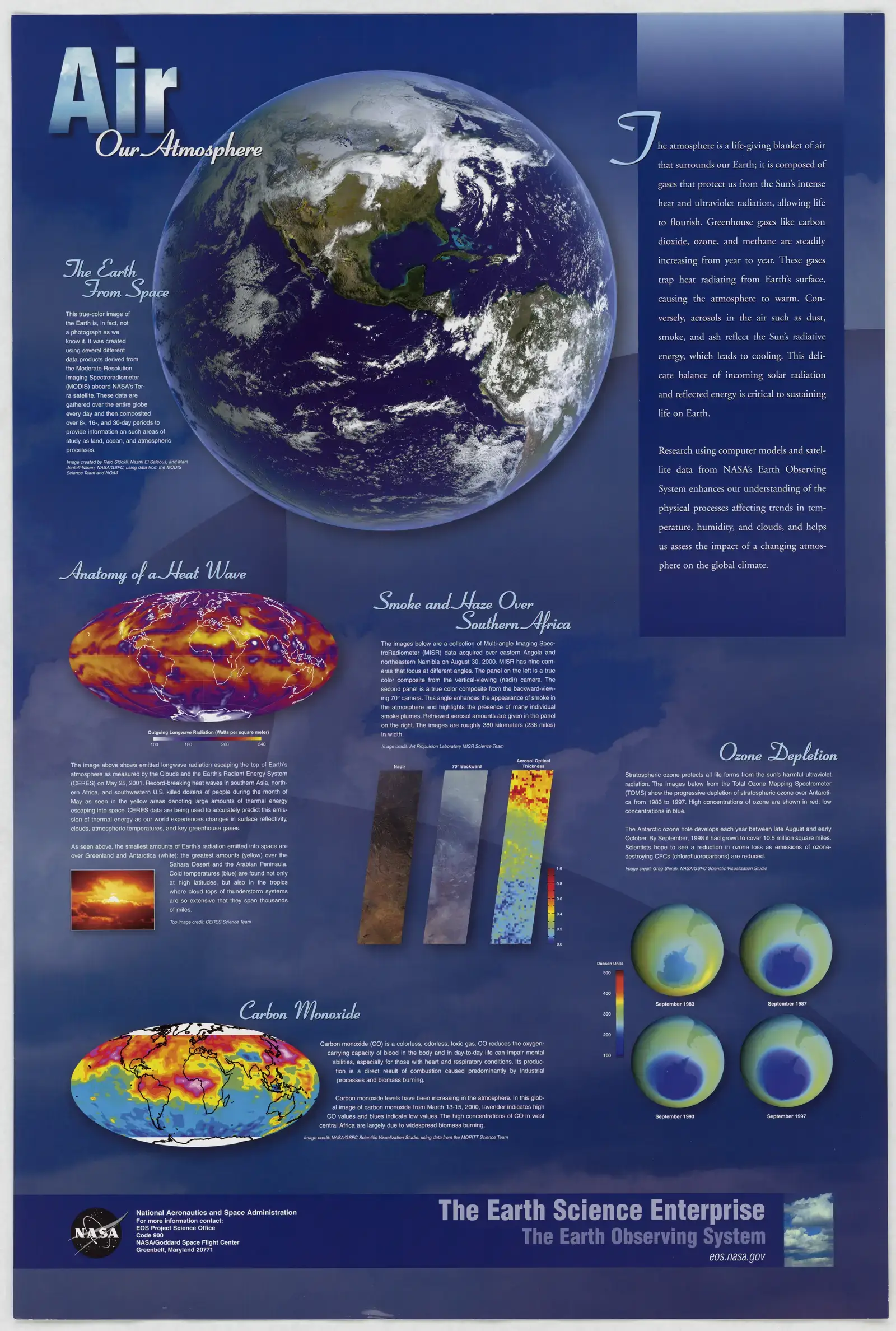
If Venus illustrates how bad things can get, Earth shows how delicate a long-term balance must be. Our planet orbits just far enough from the Sun that water can stay liquid over much of the surface, forming oceans that act like an enormous heat sink and chemical buffer. Life itself then joins the climate orchestra: plants, plankton, and microbes capture carbon, release oxygen, and gradually rework the atmosphere into something far more breathable than the early, choking mix. Even the presence of continents matters, because exposed rock reacts with CO₂ and rainwater, locking carbon away in minerals that later sink into the mantle.
The difference is not just distance; it is also timing, internal geology, and maybe a bit of cosmic luck. Earth’s strong magnetic field helps shield its atmosphere from relentless solar wind stripping, something Venus lacks in the same way, leaving the smaller planet more exposed. Plate tectonics constantly recycles the crust, venting and absorbing greenhouse gases over deep time instead of letting them pile up unchecked. That dynamic system means Earth can wobble and shift – through ice ages, supervolcanoes, and asteroid impacts – without flipping irreversibly into a Venus-style hothouse. When climate scientists warn about tampering with that balance through rapid fossil-fuel burning, they are not being abstract; they are looking at a real-world cautionary tale glowing in the evening sky.
Why It Matters: A Nearby Warning Signal
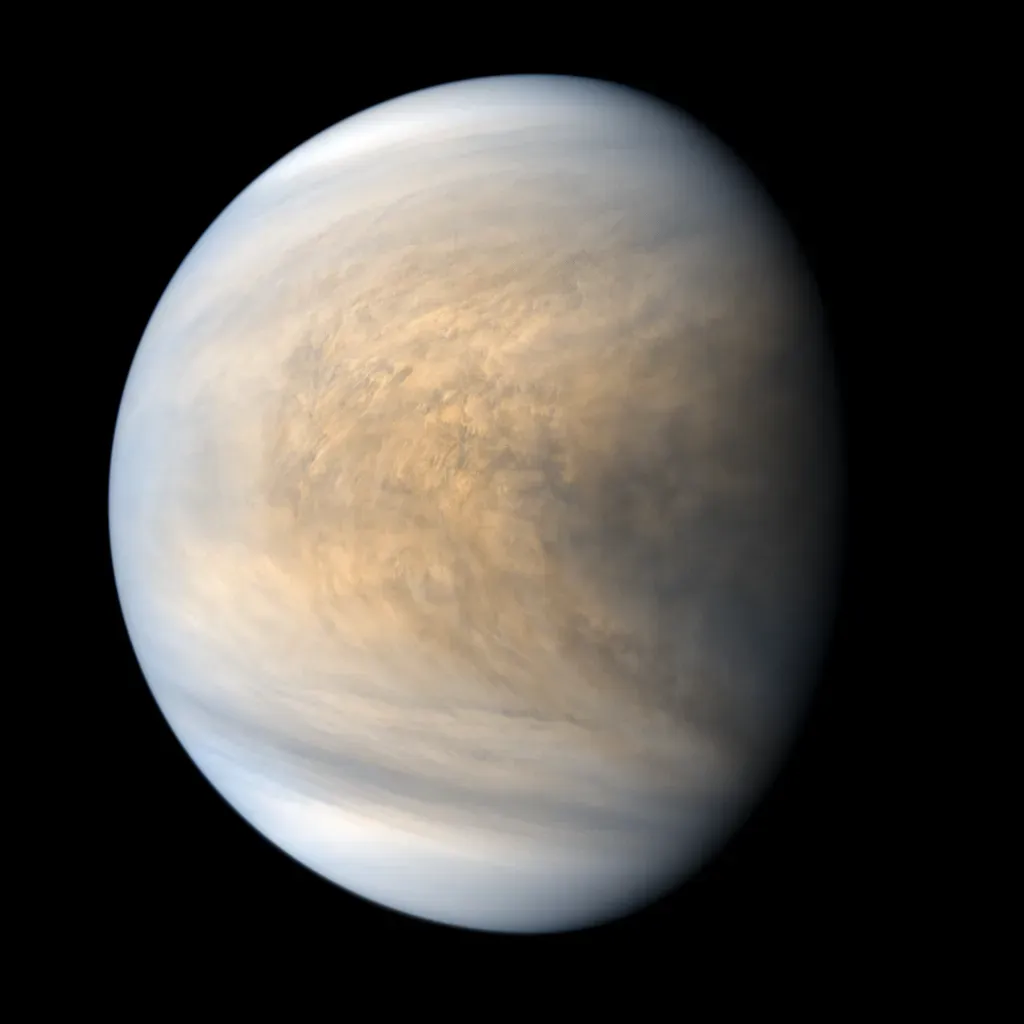
Venus is not just a curiosity for planetary scientists; it is a stark example of how climate physics can go horribly, irreversibly wrong. When computer models of future Earth climates are pushed to extreme scenarios, many of them end up looking disturbingly Venus-like, with oceans boiled away and thick atmospheres of CO₂ and water vapor. We are nowhere near that point now, but the underlying feedbacks – more heat leading to more greenhouse gases, which lead to more heat – are not science fiction. By studying how Venus crossed a series of tipping points, researchers hope to sharpen their understanding of the thresholds we must avoid on Earth.
There is also a sobering psychological effect that is hard to ignore. Knowing that our closest planetary neighbor is a dead, suffocating furnace turns the idea of “habitability” from an abstract concept into a visceral image. The contrast drives home how dependent we are on subtle balances we rarely see in daily life: the right mix of gases, the quiet churn of plate tectonics, the resilience of ecosystems that trap and store carbon. Compared with elaborate computer simulations and graphs, Venus is a blunt, visual reminder of the stakes. When people ask whether it really matters if Earth warms by a few degrees, scientists can point not just to charts but to a whole planet that illustrates what happens when warming never stops.
Global Perspectives: From Exoplanets to Everyday Weather
Understanding why Venus is hellish and Earth is habitable does more than satisfy local curiosity; it rewrites how we search for life across the galaxy. Astronomers now spot rocky exoplanets by the thousands, many roughly Earth-sized and parked at distances from their stars that look promising on paper. But “Earth-sized” and “in the right orbit” no longer guarantee a blue, life-friendly world; some of those planets may be Venuses in disguise. When telescopes analyze the atmospheres of these distant worlds, the fingerprints of gases like carbon dioxide, sulfur compounds, and water vapor will be interpreted through lessons learned from our own two-neighbor experiment.
Closer to home, Venus research feeds directly into the models that guide our understanding of weather and climate on Earth. The same equations that describe how heat moves through Venus’s dense air help refine how we simulate hurricanes, jet streams, and heat waves here. Planetary science also widens the cultural conversation around climate, reminding people that climate change is not just politics but a branch of physics that plays out on any world wrapped in gas. The fact that our daily forecasts and future climate projections share a kinship with Venus mission data is a powerful example of how “space science” and “everyday life” are more entangled than they look at first glance.
The Future Landscape: New Missions, New Risks, New Insights
The coming decade is poised to be a renaissance for Venus exploration after many quiet years focused on Mars. New orbiters will carry high-resolution radar systems to map the surface in unprecedented detail, searching for fresh lava flows, shifting slopes, or signs of tectonic motion that hint at a still-living interior. Atmospheric probes will drop through the clouds, tasting layers of gases, tracing how sunlight and chemistry interact, and measuring how fast the planet is losing particles to space. Each of these tools is aimed at a single overarching question: is Venus’s hellscape completely frozen in place, or is it still evolving in ways we can watch in real time?
At the same time, engineers and climate scientists are floating ideas that would have sounded outlandish a generation ago. Some speculate about far-future technologies to cool or partially shade a Venus-like world, primarily as thought experiments to test the limits of geoengineering. Others are more grounded, using Venus as a stress test for the models that might one day guide decisions about managing Earth’s climate. There are also technological spinoffs: designing electronics and materials that can survive Venus’s pressure and heat forces advances in extreme-environment hardware, from deep-sea sensors to high-temperature turbines. In a roundabout way, trying to understand a planet that tried to kill every probe we have sent has the potential to make tools that help protect the only one we can currently live on.
What We Can Do: Seeing Our Own Planet with New Eyes
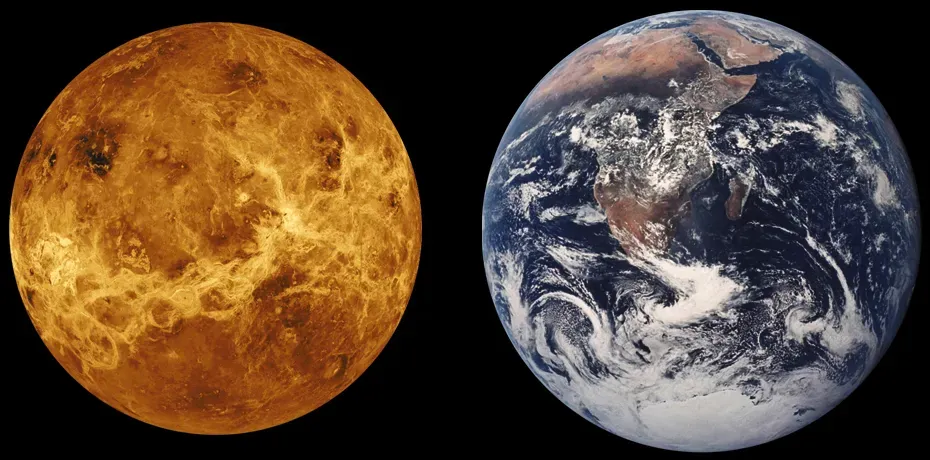
Most of us will never watch a Venus sunrise from inside a titanium lander, but the story of our two neighboring worlds still offers a personal call to action. First, it urges us to pay attention when scientists talk about tipping points, feedback loops, and long-term climate risks, even when they seem abstract or far away. If a whole planet can be transformed by unbalanced greenhouse gases, then the choices we make about emissions and energy use are more than just economic or political – they are planetary engineering decisions, whether we admit it or not. Staying informed, supporting evidence-based climate policy, and pushing leaders to respect scientific findings are small but real levers ordinary people can pull.
There are also simpler, quieter ways to respond that start much closer to home. Spending time outside, watching clouds, following seasonal changes, or even tracking local air-quality reports can reconnect abstract climate science to lived experience. Supporting organizations that fund Earth and planetary research, from space agencies to university labs, helps ensure we keep learning from our celestial neighbors instead of ignoring them. I still remember, as a kid, seeing a photo of Venus’s rocky surface and feeling a chill at how alien and familiar it looked at the same time; that feeling made me care more, not just about space, but about this planet’s fragile comfort. The more people feel that same jolt of recognition, the harder it becomes to take Earth’s relative Eden for granted.
Suhail Ahmed is a passionate digital professional and nature enthusiast with over 8 years of experience in content strategy, SEO, web development, and digital operations. Alongside his freelance journey, Suhail actively contributes to nature and wildlife platforms like Discover Wildlife, where he channels his curiosity for the planet into engaging, educational storytelling.
With a strong background in managing digital ecosystems — from ecommerce stores and WordPress websites to social media and automation — Suhail merges technical precision with creative insight. His content reflects a rare balance: SEO-friendly yet deeply human, data-informed yet emotionally resonant.
Driven by a love for discovery and storytelling, Suhail believes in using digital platforms to amplify causes that matter — especially those protecting Earth’s biodiversity and inspiring sustainable living. Whether he’s managing online projects or crafting wildlife content, his goal remains the same: to inform, inspire, and leave a positive digital footprint.