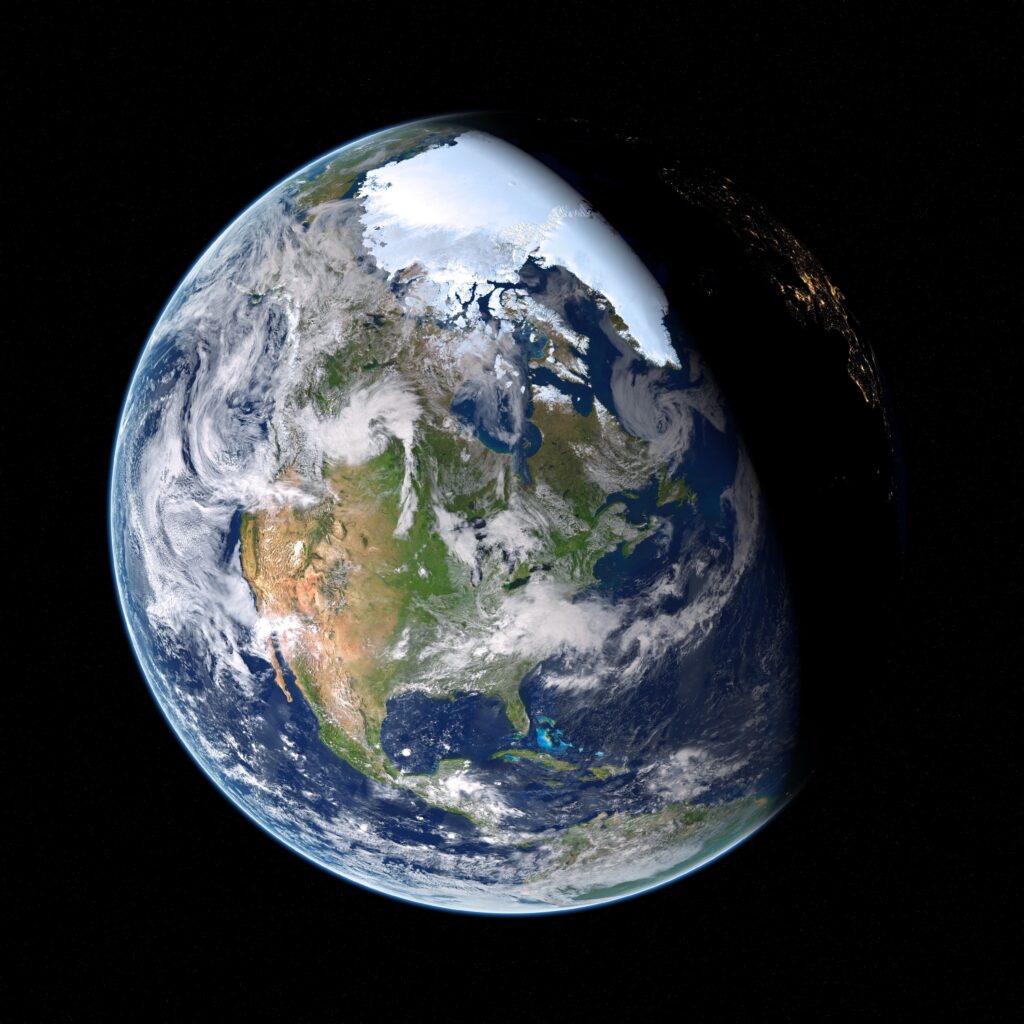
For more than a century, quantum physics has quietly rewritten the rulebook of reality, yet most of us still live as if the everyday world is all there is. We picture planets circling stars and galaxies drifting through space, but beneath that grand cosmic stage lies a hidden script of probabilities, entanglements, and fluctuations that defy common sense. In 2025, with quantum computers edging out of the lab and space telescopes probing the earliest moments after the Big Bang, those strange rules are no longer an abstract curiosity. They are starting to shape technology, challenge our ideas of causality, and even force us to ask what we really mean by “real.” The quantum universe is not just tiny; it is unsettling, beautiful, and very much in charge.
The Quantum Vacuum Is Not Empty At All
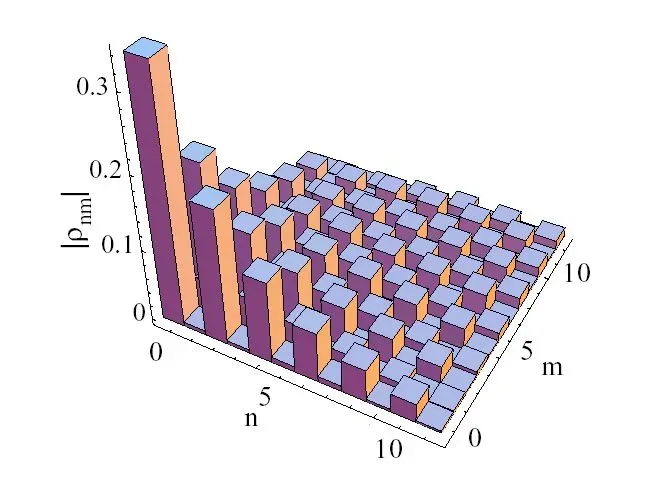
The biggest shock in modern physics might be that “nothing” is incredibly busy. What we call empty space is actually a seething sea of quantum fields, constantly bubbling with particles that flicker into existence and vanish again in unimaginably short timescales. This restless background is not just a mathematical trick to keep theorists entertained; it has been measured in precision experiments, such as tiny shifts in atomic energy levels and subtle forces between metal plates. When I first learned that the vacuum could push objects together, it felt like discovering the air in a quiet room was secretly roaring.
In the cosmos, this quantum vacuum may be doing something even more dramatic: it might be driving the accelerated expansion of the universe, a mysterious phenomenon we label dark energy because we still do not fully understand its origin. Space itself seems to store energy, and as the universe grows, that energy may be stretching it faster and faster. Some researchers argue that the vacuum energy predicted by quantum theory is staggeringly larger than what astronomers observe, which is one of the biggest unresolved mismatches in physics. The upshot is unnerving but thrilling: the baseline of reality is not a calm void, but a dynamic, active background that shapes the fate of the cosmos.
Particles Can Be In Several Places At Once
One of the most mind-twisting results from quantum physics is that a single particle does not have to choose just one location. In carefully controlled experiments, electrons, photons, and even large molecules behave like smeared-out waves, taking multiple paths through a device at the same time and interfering with themselves. When we finally measure them, we see a single, definite outcome, but the pattern of many repeated measurements reveals that the particle was genuinely exploring several possibilities in parallel. It is not that we simply do not know where it was; the rules say it really did not have one specific place until the moment of detection.
This strange behavior is not limited to obscure lab tricks. The electronics inside your smartphone, laptop, and GPS receiver rely on quantum wave behavior in semiconductors to function correctly. The same principle underpins quantum computers, whose basic units, qubits, can encode a blend of “zero” and “one” simultaneously. That ability to occupy many states at once lets them, in principle, explore huge swaths of mathematical possibilities far more efficiently than classical machines. Superposition is not a metaphor; it is a working resource that engineers are learning to harness, even if our everyday language still struggles to describe it.
Quantum Entanglement Links Objects Across Vast Distances
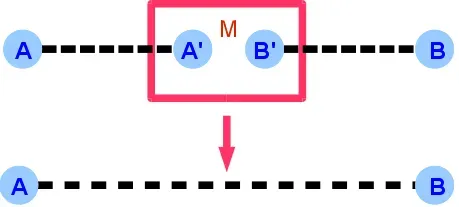
Entanglement is the part of quantum theory that still feels like science fiction, even to many physicists. When two particles become entangled, their properties are correlated so strongly that measuring one appears to instantly affect the other, no matter how far apart they are. Experiments have separated entangled photons by tens or even hundreds of kilometers, yet their shared quantum “coin flip” results stay perfectly locked together. This behavior does not allow faster-than-light messaging, but it does expose a deep tension between our notions of locality and what the quantum world actually does.
In the last decade, researchers have built prototype quantum communication networks that use entanglement to share encryption keys across cities and, with satellites, between ground stations on different continents. Governments and tech companies see this as the foundation for ultra-secure communication systems where any eavesdropping attempt leaves a clear quantum fingerprint. Some theorists also suspect that entanglement is woven into the fabric of spacetime itself, helping glue together regions of the universe and perhaps even shaping black holes. What once looked like a minor theoretical quirk now appears to be a central ingredient in both quantum technology and the large-scale structure of reality.
The Universe May Be Quantum All The Way Up
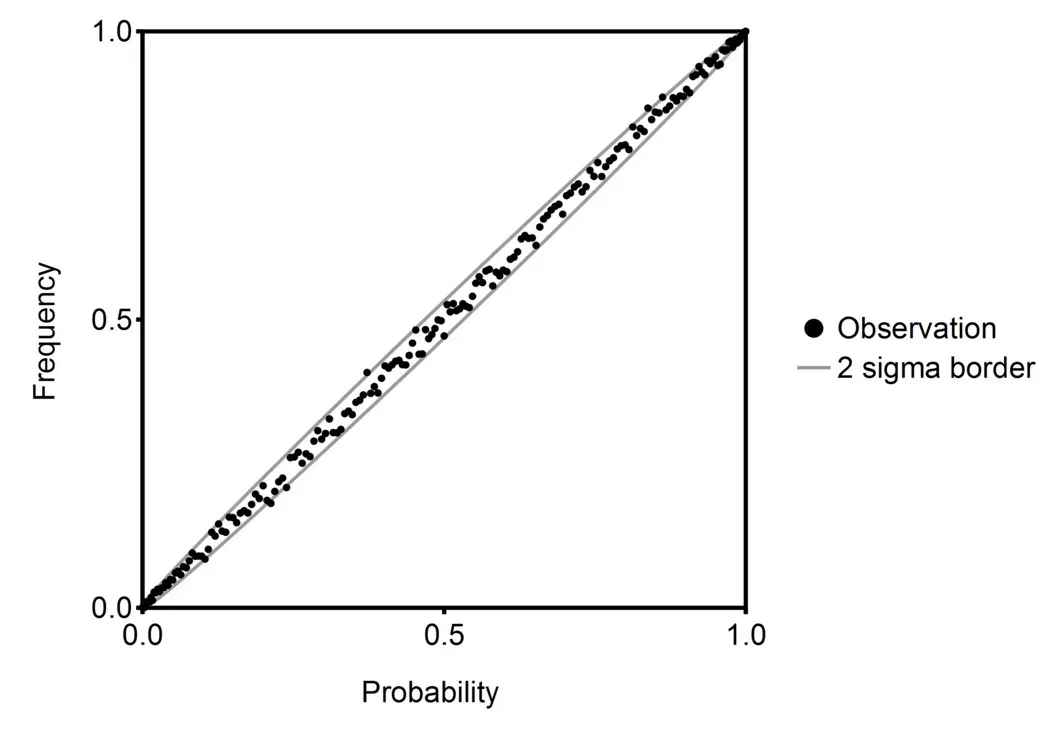
We often talk about the quantum world as if it is confined to the microscopic, safely tucked away at scales we never directly see. But more and more evidence suggests that quantum rules influence things far beyond atoms and molecules. Physicists have coaxed clouds of thousands or millions of atoms into behaving as a single quantum wave, producing exotic states of matter known as Bose–Einstein condensates. In some experiments, tiny mechanical drums, visible under a microscope, have been placed into superpositions of motion, blurring the line between the classical objects we can see and the quantum states we associate with the very small.
On the cosmic side, the leading models of the early universe propose that quantum fluctuations in a primordial field were stretched by rapid inflation, seeding the clumps of matter that later became galaxies. The faint afterglow of the Big Bang, mapped by satellites, carries patterns that match this quantum origin story. That means the grandest structures in the sky may trace back to jitter in quantum fields at unimaginably small scales. The idea that your favorite galaxy photo is, in a sense, a fossil record of quantum noise is one of the most humbling insights in modern cosmology.
Time And Causality Get Weird At The Quantum Frontier
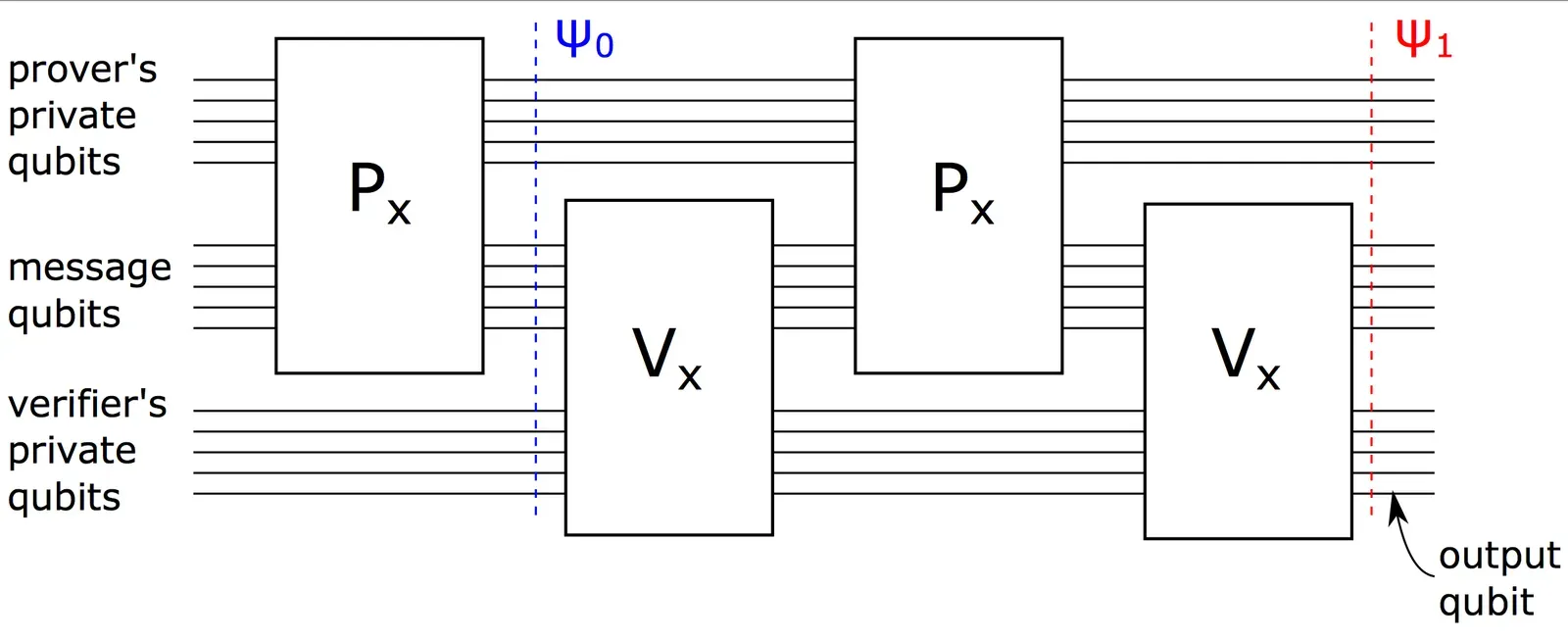
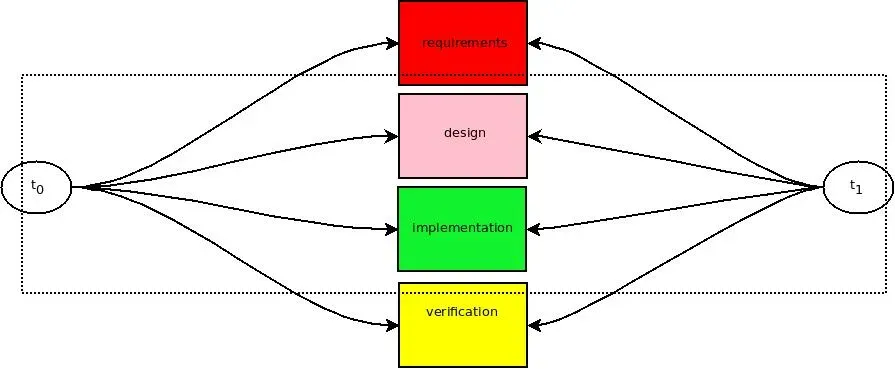
We like to imagine time as a clear arrow: cause first, effect later, neat and orderly. Quantum mechanics, combined with relativity, cracks that tidy picture in surprising ways. In some cutting-edge experiments, physicists have devised setups where the order of events becomes fuzzy, so that asking which action came “first” does not always have a well-defined answer. In these so-called indefinite causal order scenarios, the operations on quantum systems can be superposed, creating processes that have no classical counterpart. It is not just that we are confused about the sequence; the theory says the sequence itself can be fundamentally undetermined.
There are also thought experiments and real protocols in which decisions made in the present appear to influence how we describe a quantum particle’s past path. While this does not violate causality in a way that lets you send messages to your earlier self, it does force us to rethink what we mean by a trajectory or a history. Some researchers frame these results as evidence that space and time emerge from a deeper quantum information structure, rather than existing as rigid backdrops. If that is right, our everyday sense of “before and after” may be more like a convenient story than an absolute feature of the universe.
Why It Matters: Quantum Ideas Are Reshaping Science And Technology

It is tempting to shrug off quantum strangeness as mere philosophical decoration, something that matters only to theorists arguing over equations. But ignoring it would be like ignoring electricity in the nineteenth century: you can do it, but you will miss the future. Quantum mechanics is already behind lasers, magnetic resonance imaging, solar cells, and the microchips that power global communication. The difference now is that we are entering what researchers call the second quantum revolution, in which we are not just using quantum effects indirectly but actively designing around them. That shift is as profound as moving from stumbling across fire to deliberately engineering a power plant.
Compared with traditional technologies that rely on bulk materials and classical signals, quantum devices promise capabilities that simply cannot be mimicked by scaling up older methods. Potential advantages include: – Ultra-precise clocks and sensors that could map underground water or detect subtle changes in Earth’s gravity field. – Quantum computers that might solve specific optimization and chemistry problems far faster than any classical supercomputer. – Communication systems where security is guaranteed by the laws of physics rather than by assumptions about hackers’ computing limits. These are not guaranteed outcomes, and hype sometimes runs ahead of reality, but the trajectory is clear: quantum thinking is moving from textbooks into infrastructure.
The Quantum Universe Challenges Our Notion Of Reality Itself
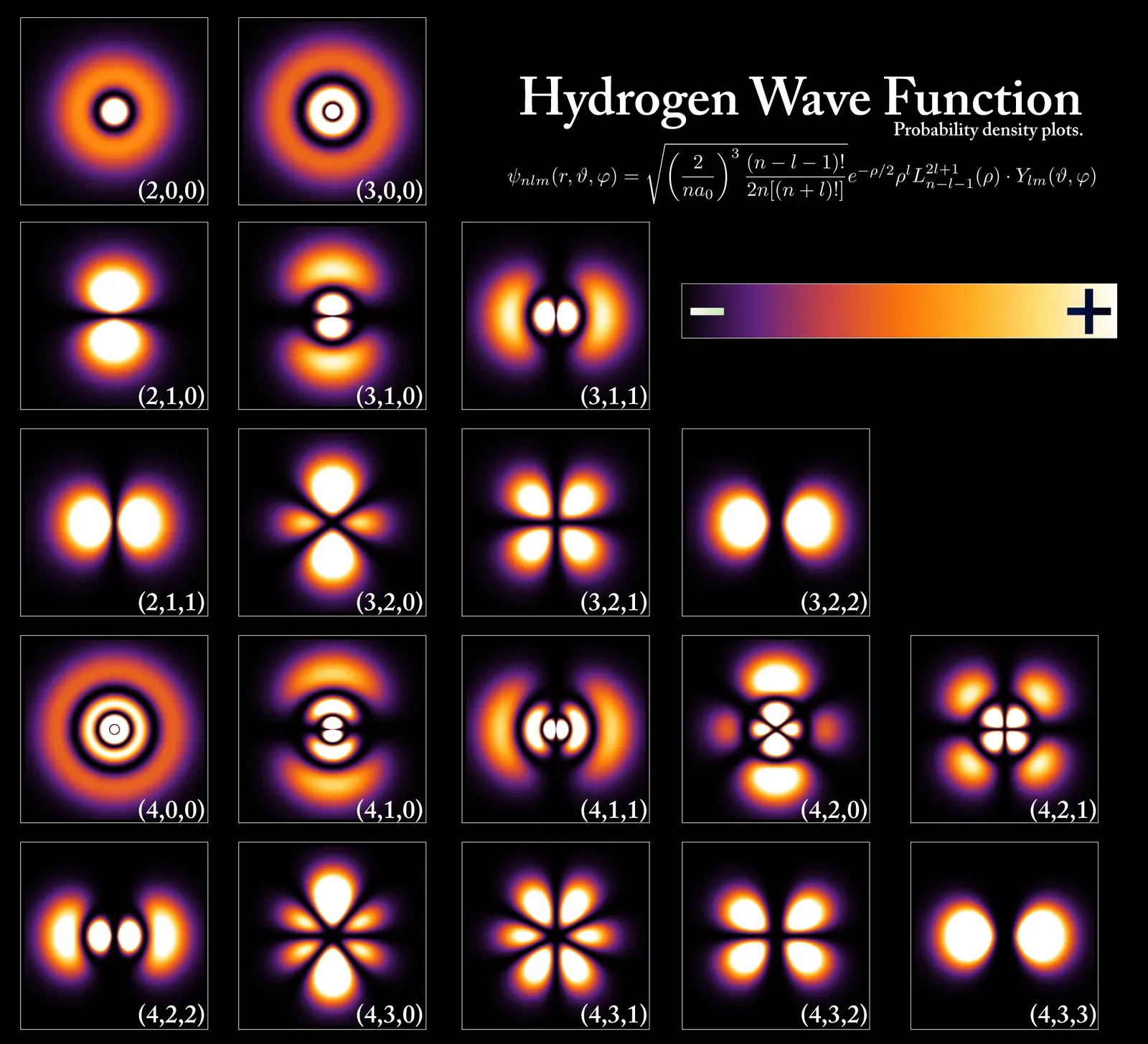
Beyond the gadgets and data, quantum theory hits us where it hurts: in our sense of what is real. If particles do not have definite positions until measured, and if entanglement connects distant systems in a way that seems to ignore ordinary space, then the comfortable picture of little billiard balls moving through a fixed arena starts to crumble. Different interpretations of quantum mechanics offer clashing stories, from branching universes of parallel outcomes to more modest ideas in which probabilities simply reflect limits on what we can ever know. None of these stories feels completely satisfying, and that persistent discomfort is part of the field’s strange allure.
What makes this especially powerful is that the equations work astonishingly well, even as our intuitions fail. Quantum theory predicts experimental outcomes with uncanny accuracy across a wide range of systems, from atoms in magnetic traps to photons in orbit around Earth on satellites. The tension between that success and our murky understanding has led some scientists to ask whether “reality” is best thought of as information, relationships, or processes rather than solid objects. While those debates can sound abstract, they filter into how we think about consciousness, free will, and the meaning of observation. The quantum universe is not just out there; it is entangled with our deepest philosophical questions.
The Future Landscape: Quantum Tech, Cosmic Tests, And New Mysteries

Looking ahead, the next few decades will likely bring a wave of quantum experiments that make today’s results look like the warm-up act. Engineers are racing to scale up quantum processors from dozens or hundreds of qubits to many thousands, while also battling noise and errors that threaten to overwhelm fragile quantum states. At the same time, astronomers and cosmologists are designing space missions to test whether subtle quantum signatures can be seen in gravitational waves, black hole shadows, or the polarization of ancient light. These efforts are not isolated; they are part of a coordinated push to probe quantum behavior from the lab bench to the edge of the observable universe.
With that expansion come hard questions. Who controls powerful quantum computers if they achieve an advantage in code-breaking or in optimizing logistics and finance? How do we build international norms around quantum communication satellites and global quantum networks, so that the benefits do not concentrate in only a few countries? Some researchers worry that flawed but impressive demonstrations could trigger a “quantum bubble,” where investment outpaces realistic progress and public trust takes a hit when promises fall short. Others see this period as a necessary stage of exploration, where bold claims motivate the slow, careful work that real breakthroughs demand. Either way, the quantum future will not be abstract; it will be negotiated in labs, legislatures, and living rooms.
How You Can Engage With The Quantum World
It is easy to feel that quantum physics lives in a remote tower of equations, out of reach from ordinary life. But engaging with it does not require a PhD or a particle accelerator in your garage. You can start by treating quantum stories not as magic tricks but as invitations to rethink your assumptions about how nature works. Many universities, museums, and science centers now offer public lectures, online courses, and interactive exhibits that explore quantum ideas through visuals and hands-on demonstrations. Spending an evening watching a good explainer on quantum entanglement can be as eye-opening as any blockbuster movie, and usually more honest about the plot twists.
If you want to go a step further, you can support organizations that promote open scientific research, fund basic physics, or bring cutting-edge science education to under-resourced communities. Some citizen science projects even let you contribute to quantum research by helping optimize experiments or analyze data through game-like apps. Talking about quantum topics with friends and family, even if you are all a bit confused, helps normalize curiosity and keeps these ideas from being locked away as elitist knowledge. In a world increasingly shaped by technologies rooted in quantum effects, asking good questions is a form of participation. The quantum universe is already shaping your reality; the real choice is whether you watch from the sidelines or lean in and learn more.
Suhail Ahmed is a passionate digital professional and nature enthusiast with over 8 years of experience in content strategy, SEO, web development, and digital operations. Alongside his freelance journey, Suhail actively contributes to nature and wildlife platforms like Discover Wildlife, where he channels his curiosity for the planet into engaging, educational storytelling.
With a strong background in managing digital ecosystems — from ecommerce stores and WordPress websites to social media and automation — Suhail merges technical precision with creative insight. His content reflects a rare balance: SEO-friendly yet deeply human, data-informed yet emotionally resonant.
Driven by a love for discovery and storytelling, Suhail believes in using digital platforms to amplify causes that matter — especially those protecting Earth’s biodiversity and inspiring sustainable living. Whether he’s managing online projects or crafting wildlife content, his goal remains the same: to inform, inspire, and leave a positive digital footprint.