
A Rare Cosmic Traveler Arrives (Image Credits: Cdn.mos.cms.futurecdn.net)
In the vast emptiness of space, a faint glow traces the path of an unexpected guest hurtling through our solar system.
A Rare Cosmic Traveler Arrives
Imagine something from another star system zipping past our neighborhood planets. That’s exactly what 3I/ATLAS is doing right now. This interstellar comet, the third confirmed one to visit us, has astronomers buzzing with excitement.
Discovered earlier this year, it’s not your typical icy rock from our own backyard. Instead, it carries clues from a distant stellar nursery, offering a peek into how worlds form far beyond the sun’s reach. Recent observations show it’s holding up well as it swings closer to Earth.
These new captures from space-based eyes remind us how dynamic our cosmic neighborhood can be, even with visitors from afar.
Hubble’s Sharp Gaze on the Comet
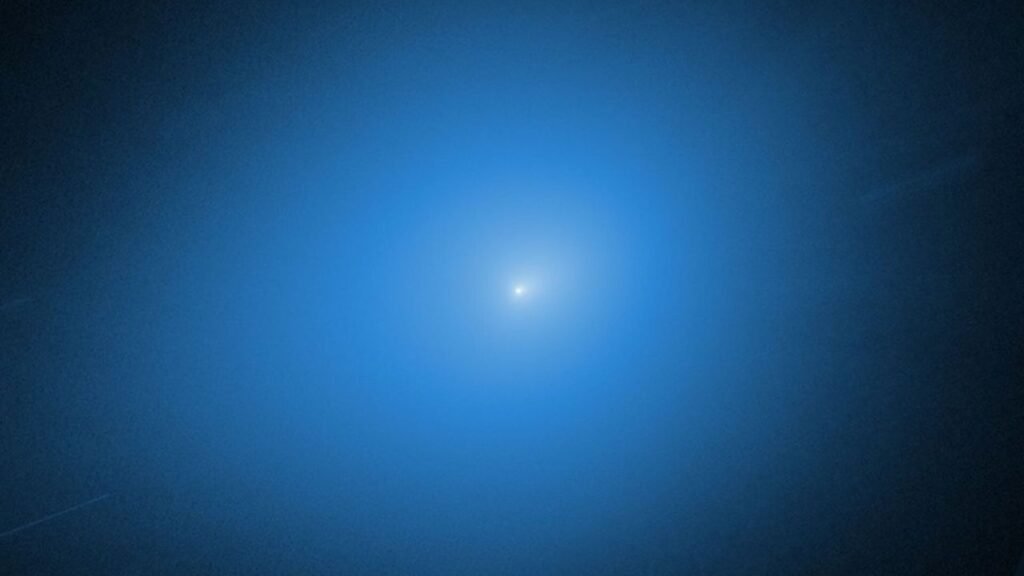
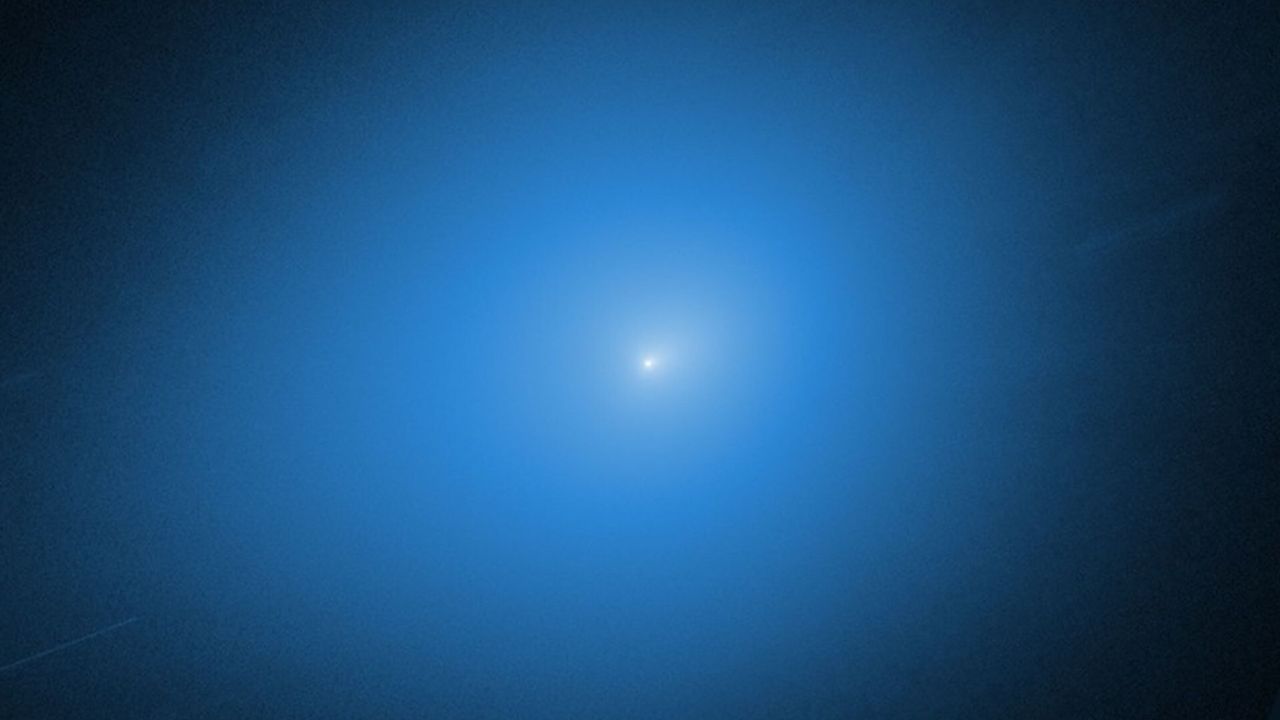
Hubble Space Telescope has a knack for spotting the subtle details that ground telescopes miss. In late November, it turned its powerful instruments toward 3I/ATLAS, revealing a coma that’s both familiar and oddly unique.
The images highlight a teardrop shape around the nucleus, with dust and gas creating a hazy envelope. Scientists note the faint anti-tail pointing sunward, a quirky feature caused by solar winds pushing particles against the flow.
This isn’t just pretty scenery. Hubble’s data helps measure the comet’s size and activity, painting a picture of an object that’s survived a long interstellar trek.
JUICE Joins the Observation Party
While en route to Jupiter, ESA’s JUICE probe got a chance to play cosmic photographer. From its vantage point millions of kilometers away, it snapped 3I/ATLAS during a flyby opportunity in November.
The probe’s images complement Hubble’s by showing the comet from a different angle, emphasizing its tail structure against the starry backdrop. JUICE’s instruments picked up signs of the comet’s composition, hinting at carbon-rich materials unusual for inner solar system visitors.
It’s a bonus for the mission team, who weren’t planning a comet hunt but ended up with valuable practice for upcoming Jupiter encounters.
Unusual Chemistry Brewing Inside
What really sets 3I/ATLAS apart is its makeup. Early analysis from these images suggests a high ratio of carbon dioxide to water ice, something rarely seen in comets this far from the sun.
This could mean the comet formed in a colder, more primitive environment elsewhere in the galaxy. NASA teams tracking it with multiple telescopes have confirmed building blocks for life in its outgassing, sparking talks about panspermia theories.
Though still preliminary, these findings challenge what we know about comet formation and evolution.
Tracking the Path Ahead
3I/ATLAS won’t stick around forever. It’s set for a close Earth pass soon, then a loop toward the outer planets before slingshotting out again.
Here’s a quick rundown of its key milestones:
- Discovery: October 2025 by ATLAS survey.
- Hubble imaging: November 30, 2025.
- JUICE capture: Mid-November 2025.
- Earth closest approach: December 2025.
- Exit from solar system: Early 2026.
Multiple missions like SOHO and STEREO are keeping tabs, ensuring we squeeze every bit of science from this fleeting visit.
Why These Images Change Everything
Interstellar objects like 3I/ATLAS are time capsules from other stars. By studying them, we learn about the galaxy’s building materials without leaving home.
These Hubble and JUICE views add to a growing gallery from NASA and ESA, showing the comet’s evolving tail and brightness. It’s not just about one object; it’s expanding our understanding of how solar systems connect across space.
Experts predict more surprises as data pours in, potentially rewriting comet lore.
Key Takeaways
- 3I/ATLAS boasts unusual CO2 levels, suggesting an alien origin.
- Hubble reveals detailed coma structure; JUICE adds wide-angle context.
- This visit highlights the value of multi-mission teamwork in astronomy.
As 3I/ATLAS fades into the cosmic distance, it leaves us wondering about the untold stories hidden in the stars. These images are a reminder that the universe is full of surprises waiting to be uncovered. What do you think this comet tells us about life beyond our solar system? Share your thoughts in the comments.
Jan loves Wildlife and Animals and is one of the founders of Animals Around The Globe. He holds an MSc in Finance & Economics and is a passionate PADI Open Water Diver. His favorite animals are Mountain Gorillas, Tigers, and Great White Sharks. He lived in South Africa, Germany, the USA, Ireland, Italy, China, and Australia. Before AATG, Jan worked for Google, Axel Springer, BMW and others.