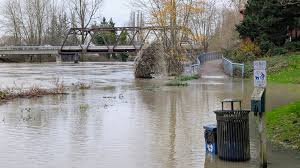

Washington state – relentless sheets of rain have turned quiet river valleys into churning torrents, leaving communities on edge as water levels climb higher by the hour.
The Fury of an Atmospheric River Unleashed
Imagine a sky-high pipeline dumping water nonstop over the Pacific Northwest. That’s essentially what’s happening with this atmospheric river, a massive plume of moisture slamming into the region since Monday. It’s not just rain; it’s a deluge that could rival some of the worst floods in decades, pushing rivers like the Skagit toward record crests.
Officials are calling it catastrophic. Up to 100,000 people might soon get evacuation orders, a number that underscores how widespread the threat has become. Homes, farms, and roads sit in the path, with no sign of the downpour letting up just yet.
This isn’t hyperbole. Early Thursday, parts of western Washington were already underwater, forcing quick action from local teams.
Communities on High Alert
In Skagit County, the orders hit hard and fast. All residents in the 100-year floodplain along the Skagit River got the urgent call to leave immediately. It’s a stark reminder of how quickly things can escalate when saturated soils can’t soak up another drop.
Southeast of Tacoma, the Puyallup River is swelling too, mirroring the chaos. Evacuations there are pulling families from low-lying spots, with sandbag stations seeing long lines as people scramble to protect what they can. British Columbia isn’t spared either; the storm’s reach crosses borders, closing roads and prompting similar alerts.
The human side tugs at you. Folks are packing up essentials, wading through inches of water just to reach higher ground. It’s a scramble born of necessity.
Why This Storm Feels So Intense
Atmospheric rivers aren’t new, but this one’s packing extra punch. Over a foot of rain has hammered the Cascade and Olympic mountains since the event kicked off, way more than the usual monthly total for some spots. Seattle’s seen about three inches, but those peaks act like sponges, wringing out even heavier loads.
Climate patterns play a role here. Warmer air holds more moisture, turning what might have been a steady rain into a biblical flood. Add in already wet ground from recent storms, and you’ve got a perfect setup for overflow.
Experts from the National Weather Service in Seattle warn it’s historic. Rivers could hit levels not seen in years, testing infrastructure that’s held up through milder events before.
Roads Closed and Rescues Ramp Up
Travel’s a nightmare across the state. Major routes like parts of I-5 are shut down due to slides and flooding, stranding drivers and complicating escapes. Smaller roads in Whatcom and Snohomish counties are underwater or buried in debris, isolating neighborhoods.
Rescue crews are out in force. Water rescues have pulled people from cars and homes, with boats and helicopters standing by for worse. One resident near the Green River described the current ripping away woods around their property – a scary sign of the river’s raw power.
Governor Bob Ferguson declared a statewide emergency to marshal resources. It’s all hands on deck, from state agencies to volunteers filling sandbags late into the night.
Staying Safe Amid the Chaos
If you’re in the flood zone, every minute counts. Head to higher ground right away, and don’t wait for the water to knock on your door. Pack a go-bag with meds, documents, and a few days’ worth of clothes – basics that could make a huge difference.
Authorities stress avoiding flooded roads; just six inches of moving water can sweep away a vehicle. Tune into local alerts via radio or apps for the latest. And if you’re helping out, steer clear unless you’re trained – well-meaning aid can turn risky fast.
Here’s a quick checklist to guide you:
- Monitor river levels through official apps or websites.
- Secure outdoor items that could float away and block drains.
- Know your evacuation route and a nearby shelter spot.
- Charge devices and have cash on hand for emergencies.
- Check on neighbors, especially the elderly or those with pets.
When Will the Waters Recede?
Forecasts show the heaviest rain easing by late Thursday, but rivers will keep rising into Friday. Cleanup could stretch weeks, with potential for mudslides adding another layer of worry. The state is gearing up for recovery, but the immediate focus stays on lives first.
Looking broader, events like this highlight the need for tougher infrastructure. Dikes and levees are straining, and communities are talking resilience in the face of more frequent storms.
Key Takeaways
- This atmospheric river has dumped over a foot of rain in Washington’s mountains, fueling record river rises.
- Evacuations target up to 100,000 people, mainly along the Skagit and Puyallup Rivers.
- Stay informed via local news and official alerts to navigate the ongoing threat safely.
As the rain pounds on, one thing’s clear: Washington’s facing a test of grit, but pulling together could see folks through. What steps are you taking if floods hit your area? Share in the comments below.
Jan loves Wildlife and Animals and is one of the founders of Animals Around The Globe. He holds an MSc in Finance & Economics and is a passionate PADI Open Water Diver. His favorite animals are Mountain Gorillas, Tigers, and Great White Sharks. He lived in South Africa, Germany, the USA, Ireland, Italy, China, and Australia. Before AATG, Jan worked for Google, Axel Springer, BMW and others.