We like to think our five senses give us a pretty good handle on reality, but the animal kingdom keeps proving that our experience of the world is just a narrow slice of what’s really out there. From sharks that can feel the electricity of a heartbeat to birds that sense the planet’s magnetic field, evolution has quietly equipped other species with abilities that read like science fiction. Researchers are now not just cataloging these powers but trying to understand the physics and biology behind them in microscopic detail. That shift – from wonder and myth to data and mechanisms – is rewriting how we think about perception itself. And the more we learn, the clearer it becomes: to truly grasp nature, we have to let go of the idea that human senses are the gold standard.
The Electroreceptive Sixth Sense of Sharks
The first time I watched a shark veer toward a fish hidden under sand on a research video, it looked almost supernatural, as if it were following an invisible thread. In a way, it was. Sharks, rays, and some other cartilaginous fishes are equipped with tiny gel-filled organs called the ampullae of Lorenzini that can detect minuscule electric fields produced by muscle contractions and nerve impulses. These structures line their snouts like a delicate sensor array, allowing them to hone in on prey buried out of sight or lurking in murky waters. Experiments have shown that some sharks can respond to electric field strengths thousands of times weaker than what standard lab equipment easily picks up.
This electroreception does more than just guide sharks to dinner. There is evidence that some species may use Earth’s own electric and magnetic signatures as navigational cues during long migrations, essentially reading the planet’s geophysical fingerprint. For humans, building instruments that can reliably sense such weak fields typically demands careful shielding and sophisticated electronics, yet sharks carry a biological version on their faces. That contrast has driven engineers to study these animals when designing undersea sensors and even new materials for bioinspired detectors. What looks terrifying in a nature documentary is, in the lab, a masterclass in quiet, high-resolution sensing.
Bats and Their Precision Sonar in the Dark
Imagine flying at highway speeds through a cluttered forest at night and never hitting a single branch; for bats, that is just the nightly commute. Their secret is echolocation, a kind of biological sonar in which they emit high-frequency calls and then analyze the returning echoes with astonishing precision. Some species can resolve objects thinner than a human hair and distinguish between a moth and a leaf in midair purely from how echoes bounce back. Neural recordings show that bat brains devote substantial processing power to timing and pitch changes in these echoes, far beyond what our hearing can do.
What fascinates researchers is how bats keep this system stable while everything is moving – wings, ears, prey, and even the air itself. They constantly adjust the intensity and frequency of their calls, turning the volume down as they approach a target to prevent self-deafening, a bit like automatically riding the gain knob on a microphone. This dynamic control has inspired advances in robotics and autonomous vehicles, where real-time sensing in complex environments remains a major technical hurdle. When we talk about self-driving cars “seeing” the road with LIDAR or radar, we are essentially trying to replicate, with lasers and chips, what bats do naturally with their voices and tiny skulls.
Mantis Shrimp: Masters of Impossible Color
If there were an Olympic event for outrageous vision, mantis shrimp would probably win by a ridiculous margin. While humans rely on three types of color receptors in our eyes, many mantis shrimp species carry a dozen or more, giving them access to parts of the spectrum we can only describe mathematically. Some can see deep into ultraviolet, others detect polarized light patterns that are completely invisible to us. Instead of slowly comparing signals from a few receptor types the way our brains do, these crustaceans appear to use a more direct, almost “look-up table” strategy for recognizing colors and patterns.
One of the wildest findings is that mantis shrimp use polarized light both as a private communication channel and as a way to spot hidden objects, such as prey that blends into coral when viewed with ordinary color vision. Their eyes even contain microscopic structures that act like built-in optical filters and wave plates, manipulating light in ways that are only now being replicated in advanced cameras. Engineers studying mantis shrimp vision have begun developing polarization-sensitive imaging systems that could enhance underwater exploration, medical imaging, and security screening. The next generation of cameras that see what human eyes cannot may owe a quiet debt to a small, pugnacious crustacean known more for its punch than its perceptual genius.
Snakes That See Heat Like a Ghostly Second Image
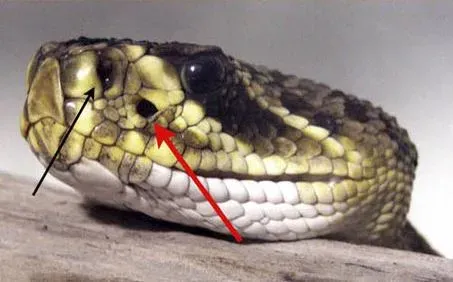
For many snakes, especially pit vipers, the world is not just light and shadow but also a landscape of heat. They possess specialized pit organs on their faces that can sense the infrared radiation emitted by warm objects, effectively overlaying a thermal image on top of their standard vision. Behavioral experiments suggest that these snakes can detect temperature differences of less than a degree between prey and background. In total darkness, that means a mouse is not a vague sound in the grass but a glowing presence outlined in heat.
What makes this sense so intriguing is that it sits at the intersection of physics, neurobiology, and evolution. The pit membrane is packed with ion channels that respond to subtle heating, converting photons of infrared light into electrical signals far more sensitively than most man-made sensors can without active cooling. The brain then fuses this input with visual information to create a composite picture of the world, giving snakes a powerful advantage in hunting and defense. Infrared cameras used by firefighters, police, and search-and-rescue teams are in some ways clumsy mechanical cousins to these organs. As we refine our own thermal imaging technologies, scientists keep circling back to snakes as proof that passive, high-resolution heat sensing is not just possible – it has been perfected in the wild for millions of years.
Birds That Read the Planet’s Magnetic Map
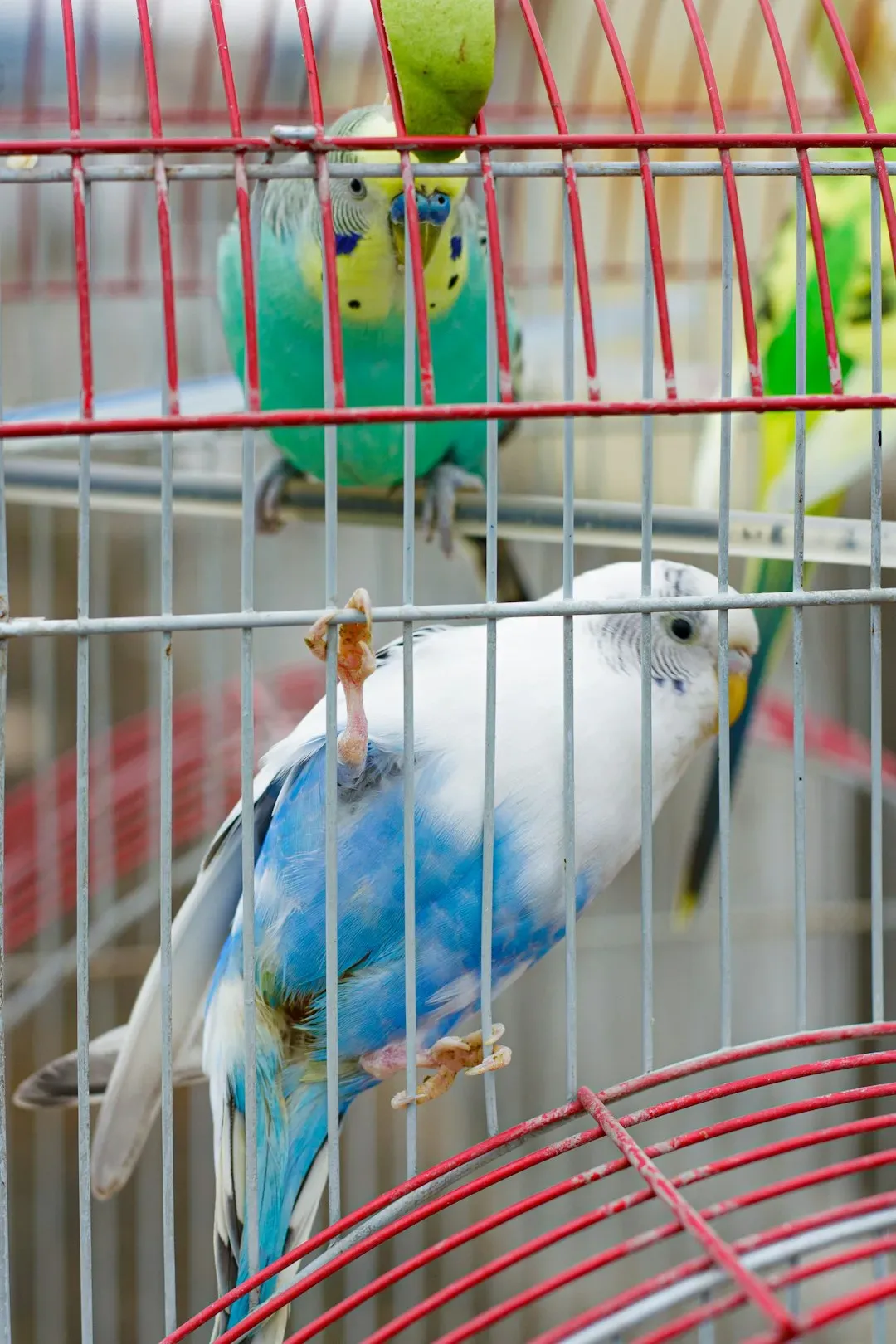
The idea that birds might feel Earth’s magnetic field sounds like a mystical claim from an old sailor’s tale, yet the evidence for avian magnetoreception has become increasingly hard to ignore. Long-distance migrants, such as European robins and certain warblers, consistently orient themselves along routes that make sense only if they are tapping into a global directional cue. Experiments in controlled magnetic fields show that when researchers subtly alter the ambient field, these birds alter their headings accordingly. They are not just following the sun or the stars – they appear to be reading a hidden compass built into the planet itself.
The mechanisms behind this sense are still being pieced together, but current research points toward specialized light-sensitive molecules in the eye that may form quantum-sensitive reaction pairs. That means the birds’ magnetic compass could literally be a quantum effect unfolding in living tissue, influenced by the angle and intensity of the magnetic field. At the same time, iron-rich structures in the beak and inner ear may act as additional magnetic sensors, giving birds both a compass and a kind of map. This dual system would help explain how they not only know which way is north, but also recognize familiar magnetic “landmarks” during migration. For humans still trying to keep GPS signals stable in dense cities or solar storms, the idea that a small songbird may quietly outperform our navigation tools is both humbling and motivating.
Dolphins and the X-Ray Power of Echolocation
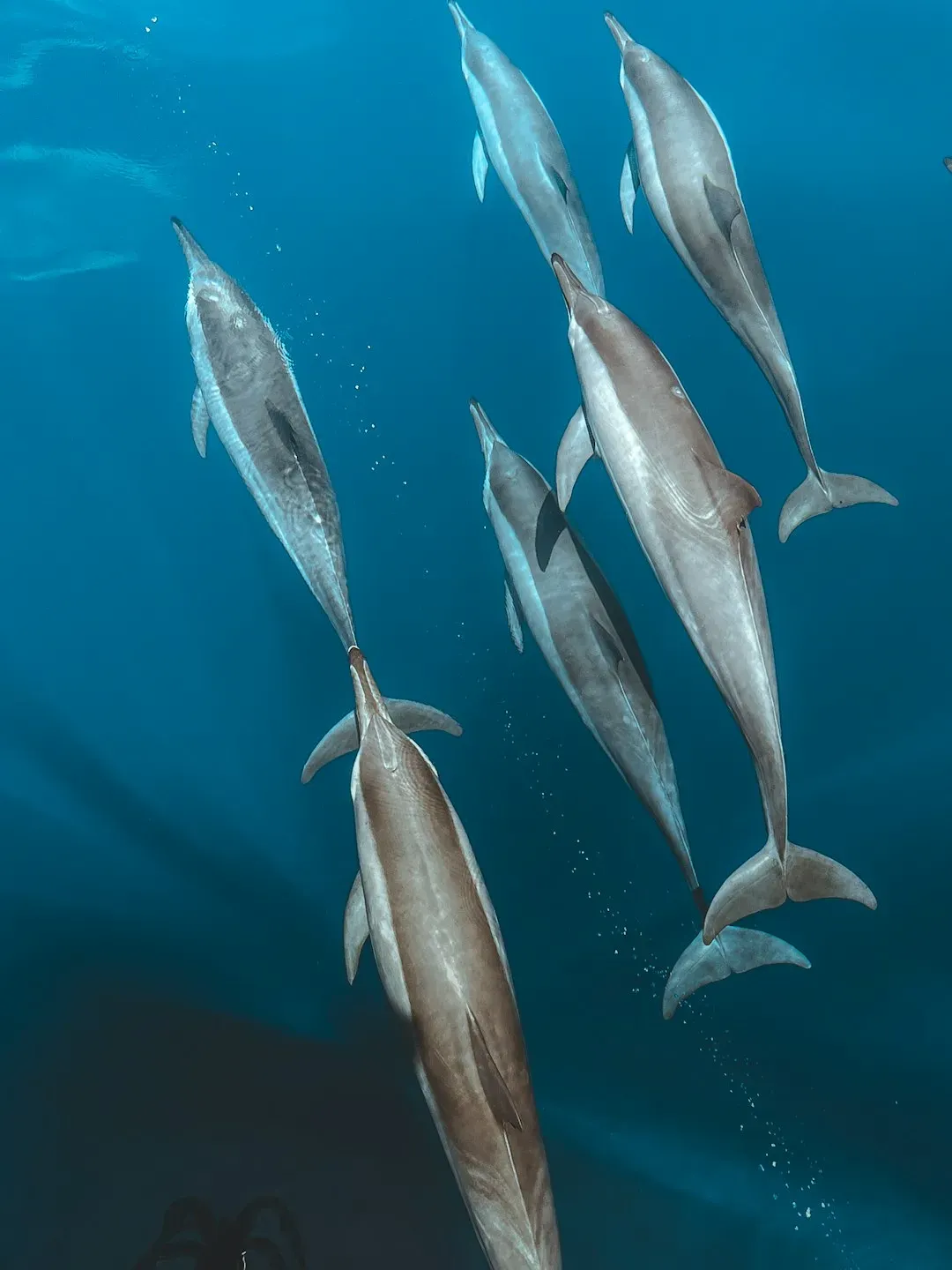
If sharks are the silent detectives of the sea, dolphins are the ocean’s acoustic engineers. Using bursts of high-frequency clicks, they build detailed mental images of their surroundings based on echo timing and intensity. Laboratory work has shown that dolphins can distinguish between objects of similar size but different internal structures, such as a hollow ball versus a solid one, just by listening. In some cases, they seem to pick up details that rival what medical ultrasound machines can resolve.
Researchers studying captive dolphins have documented how they modulate their click patterns depending on the task in front of them, tightening the spacing when they need more detail and relaxing it when they are simply scanning the environment. This flexible control over their sonar system is something roboticists still struggle to replicate in underwater drones. A few key takeaways regularly cited by marine scientists and engineers include: – Dolphins adjust click rate to trade off between range and resolution. – They appear to form multi-sensory “images,” combining sound, sight, and touch. – Their echolocation works well even in turbid, low-visibility water where cameras fail. In an age when undersea cables, offshore wind farms, and shipping are filling the oceans with noise, understanding how dolphins hear and communicate has also become an urgent conservation priority.
Why These Super Senses Matter to Us

It is tempting to treat animal super senses as fun trivia, the sort of thing you pull out at a dinner party to impress friends. But for scientists and engineers, these abilities are more like a library of field-tested solutions to problems we are still wrestling with. Traditional human-designed sensors often specialize narrowly: one device for heat, another for magnetic fields, a third for chemicals. By contrast, many animals integrate multiple sensory channels in a single, robust package – think of snakes fusing heat and vision, or birds merging magnetic cues with celestial ones. That integration lets them operate reliably in noisy, unpredictable environments where our instruments often falter.
There is also a deeper philosophical shift at play. For decades, our baseline assumptions in neuroscience and psychology were built around human perception, treating our senses as the default template. The more we discover about sharks, mantis shrimp, bats, and birds, the clearer it becomes that we were studying only one local variation in a much larger design space. Recognizing that opens doors to fresh questions: What other physical phenomena could living systems be sensing that we have not yet noticed? How might our own technology change if we stop assuming that cameras and microphones are the only viable paths to information? In that sense, animal super senses are not just curiosities; they are challenges to our imagination.
Where These Discoveries Could Take Future Technology
When you look at the trajectory of bioinspired engineering over the past few decades, it is hard not to see animal senses as a foundation for the next wave of innovation. Engineers studying shark electroreception and fish lateral lines are already prototyping underwater robots that navigate and detect obstacles using electric and pressure cues instead of just cameras. Mantis-shrimp-inspired polarization cameras are being developed to improve contrast in hazy underwater scenes and even to spot stress patterns in materials that ordinary lenses miss. Bat and dolphin echolocation have influenced better signal processing algorithms for radar and sonar, from medical imaging to geological surveys.
The future challenges are as much ethical and ecological as they are technical. As we deploy more sensory devices into oceans, forests, and skies, we risk drowning out or disrupting the very signals animals rely on to survive. There is growing concern about acoustic pollution in the oceans, artificial light at night that confuses migrating birds, and electromagnetic noise from urban infrastructure that may interfere with animal navigation. A thoughtful path forward will likely involve: – Designing quieter, less intrusive sensing systems. – Mapping and protecting critical “sensory habitats” for key species. – Using animal-inspired sensors to monitor and mitigate human impacts. If we do it right, learning from super senses could help us build technologies that are not just powerful, but also more in tune with the living systems around us.
How Readers Can Engage With the Hidden World of Animal Senses
You do not need to be a neuroscientist or engineer to step into this expanded sensory universe; it starts with paying closer attention to the animals around you. Watching birds navigate your neighborhood, bats hunting at dusk, or even your dog pausing to sniff what looks like empty air can be a reminder that other creatures are reading layers of information you simply cannot see. Supporting local wildlife organizations and marine conservation groups helps protect the habitats where these super senses evolved, from coral reefs to wetlands and forests. Citizen science projects that track bird migrations, document urban bat populations, or monitor coastal dolphins often rely on volunteers who bring curiosity more than formal training.
There are also direct ways to reduce the sensory stress we impose on wildlife. Simple steps such as minimizing unnecessary outdoor lighting at night, reducing noise pollution where possible, and being cautious about using powerful sonar or bright lights on boats can make real differences for sensitive species. When you donate to research institutions or conservation initiatives, look for programs that explicitly consider animal communication and sensory ecology, not just population counts. In a world increasingly saturated with human-made signals, choosing to respect and protect the invisible channels other species depend on is a quiet but powerful act. The next time you see a bird turn mid-flight, a fish dart away, or a bat loop overhead, it is worth asking: what invisible world did they just sense that we could not?
Suhail Ahmed is a passionate digital professional and nature enthusiast with over 8 years of experience in content strategy, SEO, web development, and digital operations. Alongside his freelance journey, Suhail actively contributes to nature and wildlife platforms like Discover Wildlife, where he channels his curiosity for the planet into engaging, educational storytelling.
With a strong background in managing digital ecosystems — from ecommerce stores and WordPress websites to social media and automation — Suhail merges technical precision with creative insight. His content reflects a rare balance: SEO-friendly yet deeply human, data-informed yet emotionally resonant.
Driven by a love for discovery and storytelling, Suhail believes in using digital platforms to amplify causes that matter — especially those protecting Earth’s biodiversity and inspiring sustainable living. Whether he’s managing online projects or crafting wildlife content, his goal remains the same: to inform, inspire, and leave a positive digital footprint.