Stand on the rusty surface of Mars in your imagination for a moment: the sky is butterscotch, the air is razor-thin, and the cold could snap steel. It feels impossibly hostile, yet for decades scientists and dreamers have wondered whether we could bend this alien world toward something like home. Terraforming – remaking an entire planet’s environment – is one of the boldest ideas humans have ever entertained. It blends hard physics with what-if wonder, and the stakes are nothing less than the long-term survival of our species. The real question is not just whether we could terraform Mars, but whether we should, and what it would actually take to turn red dust into a second cradle for life.
The Harsh Truth: Why Mars Tries to Kill You
Here’s the first shocking reality check: Mars isn’t just a little uncomfortable, it is lethally unwelcoming in almost every way that matters to human biology. The Martian atmosphere is less than one percent as thick as Earth’s at sea level and made mostly of carbon dioxide, with only a trace of the oxygen we depend on. Step outside without a pressure suit, and you would lose consciousness within seconds; your blood would start to boil long before you froze. On top of that, the average surface temperature hovers far below freezing, reaching extreme cold temperatures, though not as cold as Antarctica’s record lows. Radiation from the Sun and deep space, mostly blocked by Earth’s magnetic field, bombards the Martian surface nearly unfiltered, steadily damaging DNA.
When people talk casually about “moving to Mars,” these details are often smoothed over, like skipping straight to the finale of a movie and ignoring the brutal middle act. Daily Martian life, with current technology, would mean living permanently inside sealed, pressurized habitats, growing food in controlled environments, and treating the outside world more like the deep ocean than a backyard. In a way, Mars is a mirror that shows us how incredibly fine-tuned Earth really is for life, from its breathable air to its protective magnetic cocoon. Terraforming is essentially the proposal to rebuild those blessings from scratch – using physics instead of miracles. That is why the idea is as terrifying as it is inspiring.
The Physics of a Planet Makeover
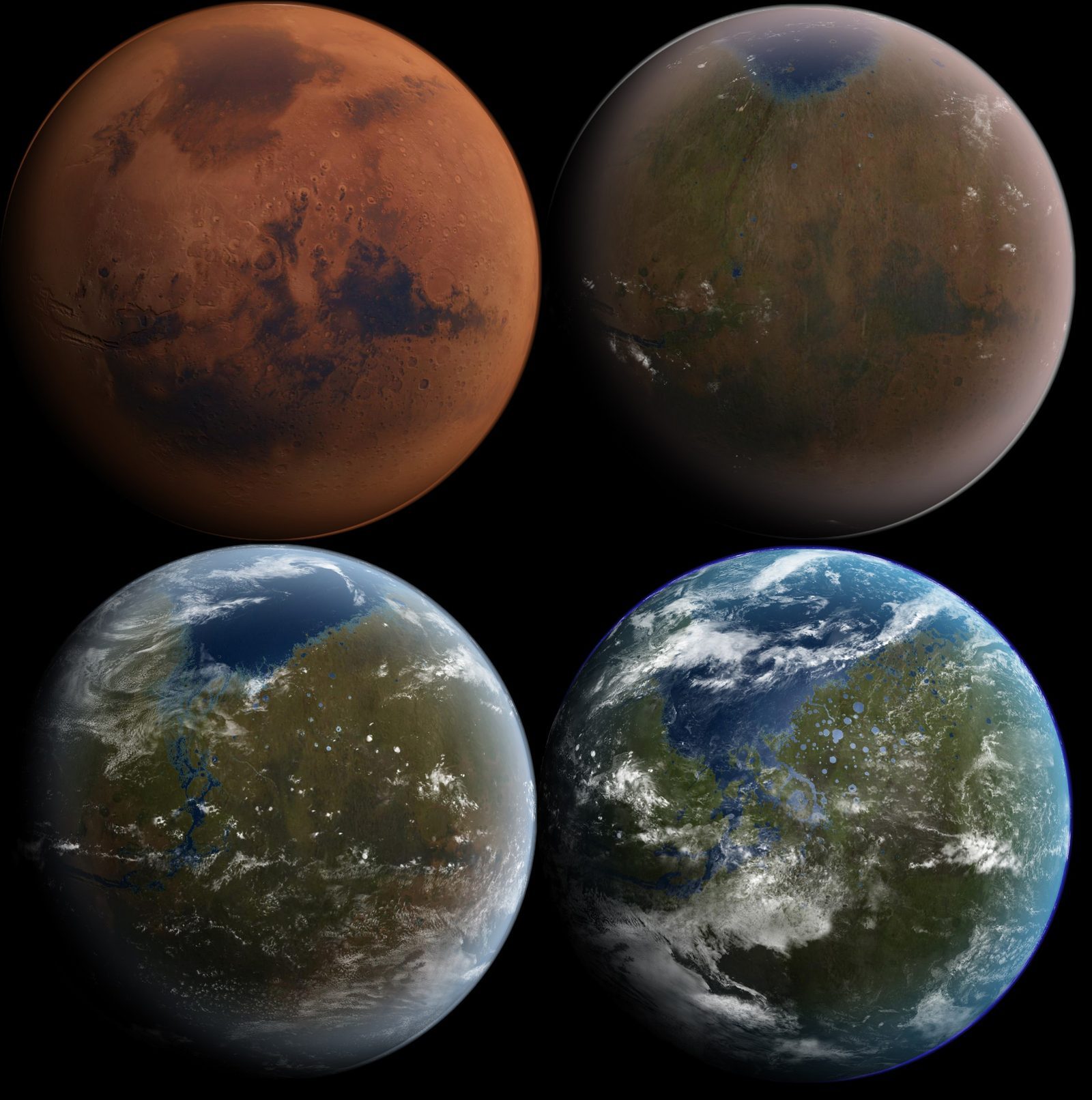
Terraforming sounds like a fantasy until you start breaking it into very physical, measurable steps, and that is where things become both more plausible and more daunting. To make Mars even marginally Earth-like, you would need to do at least three big things: thicken the atmosphere, warm the planet, and protect future inhabitants from radiation. The atmosphere might be boosted by releasing gases trapped in Martian ice and rock, such as carbon dioxide locked in polar caps or regolith minerals. This denser air would trap more heat, potentially kicking off a greenhouse effect that could raise temperatures enough to allow liquid water to persist in some regions. It is a planetary-scale version of putting a cold greenhouse under glass and waiting for sunlight to do the rest.
But Mars comes with built-in limits that no amount of optimism can erase. The planet’s weaker gravity makes it harder to hold onto a thick atmosphere over hundreds of millions of years, and its lack of a global magnetic field means the solar wind has a free hand in stripping away gases. Studies over the past decade suggest that even if we liberated all the easily accessible carbon dioxide on Mars, the resulting atmosphere might still be far too thin to be comfortably breathable or warm enough. Terraforming, in other words, is not like flipping a switch; it is more like pushing a boulder up a hill that keeps sliding backward. The physics does not rule it out, but it insists on a bill far higher than early enthusiasts hoped.
The Hidden Clues in Mars’ Ancient Past
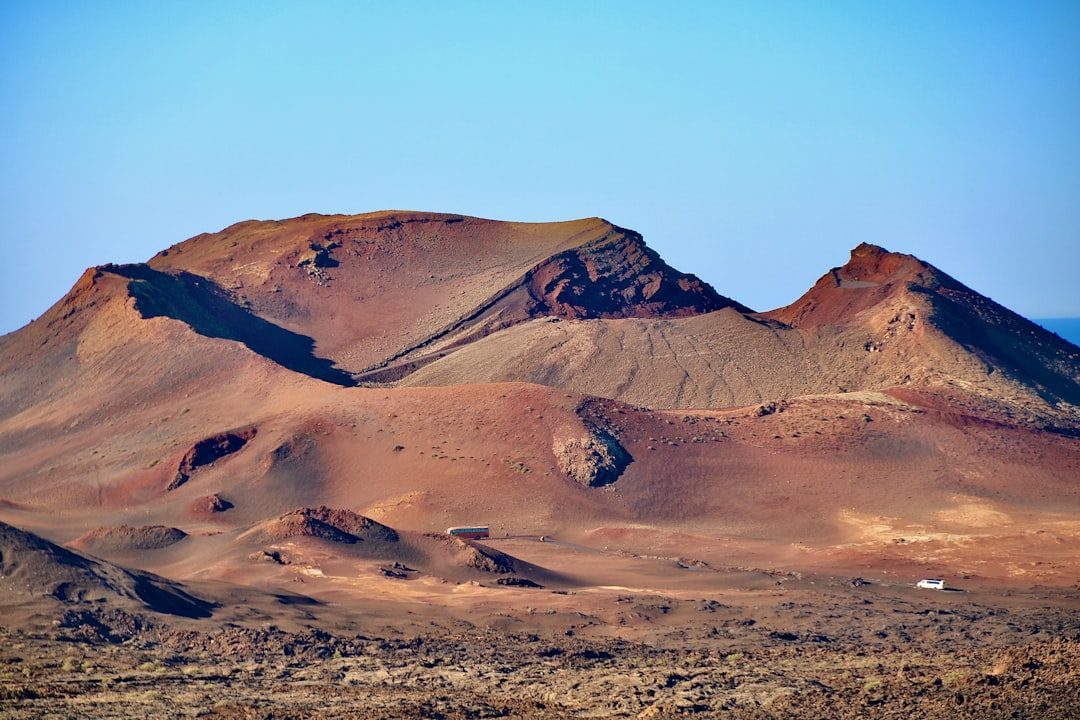
If Mars seems hopelessly barren now, its deep history tells a more complicated story that keeps scientists hooked. Orbital imagery and rover missions have revealed dried riverbeds, delta fans, and minerals that form only in liquid water, all pointing to a time billions of years ago when Mars was warmer and wetter. This hints that the planet once had a thicker atmosphere and a climate that might have supported lakes or even shallow seas. In a sense, Mars is a fossil world – a snapshot of a failed Earth-like experiment that did not quite make it. That fossil status is precisely why the idea of resurrecting a more habitable Mars tugs on the imagination.
Those ancient clues also act like a rough blueprint: if nature once managed to keep Mars relatively warm and wet, maybe we can coax it partway back. Scientists study Martian craters, sediment layers, and mineral compositions the way detectives study crime scenes, looking for temperature and atmospheric fingerprints. They model how volcanic eruptions, changes in Mars’ tilt, and long-term loss of its atmosphere to space shaped its climate swing from semi-friendly to brutally cold and dry. The more we understand that natural transformation, the better we can judge which aspects we might realistically reverse. Terraforming talk is not entirely wishful thinking; it is also a response to the story Mars already wrote in its rocks.
Terraforming Proposals: From Giant Mirrors to Engineered Microbes
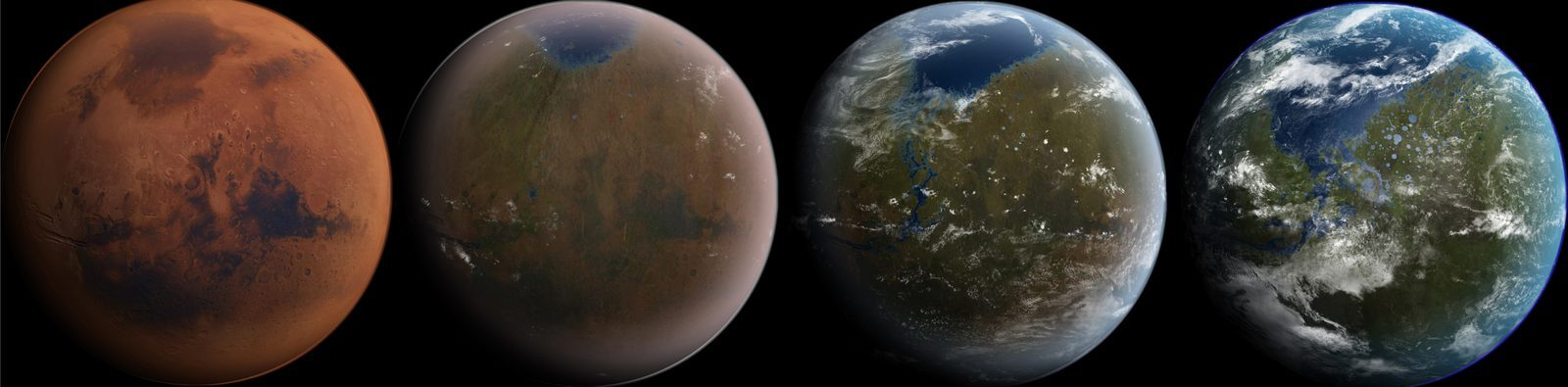
Some of the proposed methods for terraforming Mars sound like science fiction set pieces, but they are at least grounded in physics and engineering. One concept involves placing enormous mirrors in orbit to reflect extra sunlight onto the Martian poles, gradually sublimating frozen carbon dioxide and thickening the atmosphere. Another idea is to deliberately release powerful greenhouse gases, such as engineered fluorine-based molecules, to supercharge warming in a way that nature never did. Still others imagine redirecting icy comets to crash into Mars, delivering both water and energy, though the risks are every bit as dramatic as they sound. Each scheme is a trade-off between feasibility, timescale, cost, and ethical risk.
Biology enters the picture, too, in the form of extremophile microbes and future synthetic organisms designed to survive Mars’ harsh conditions. These life forms might help produce oxygen, fix nitrogen, or darken icy surfaces so they absorb more heat, becoming living tools for planetary engineering. Yet introducing Earth life intentionally to another world crosses a major ethical line, especially when we still do not know whether Mars ever evolved its own native biology. The long-term outcomes would be extremely hard to predict, like releasing an invasive species into a fragile ecosystem we have barely begun to understand. In the end, many of the most dramatic proposals remind us that we are not just talking about engineering, we are talking about rewriting an entire planet’s biography.
Why It Matters: Mars vs. Earth and the Survival Question
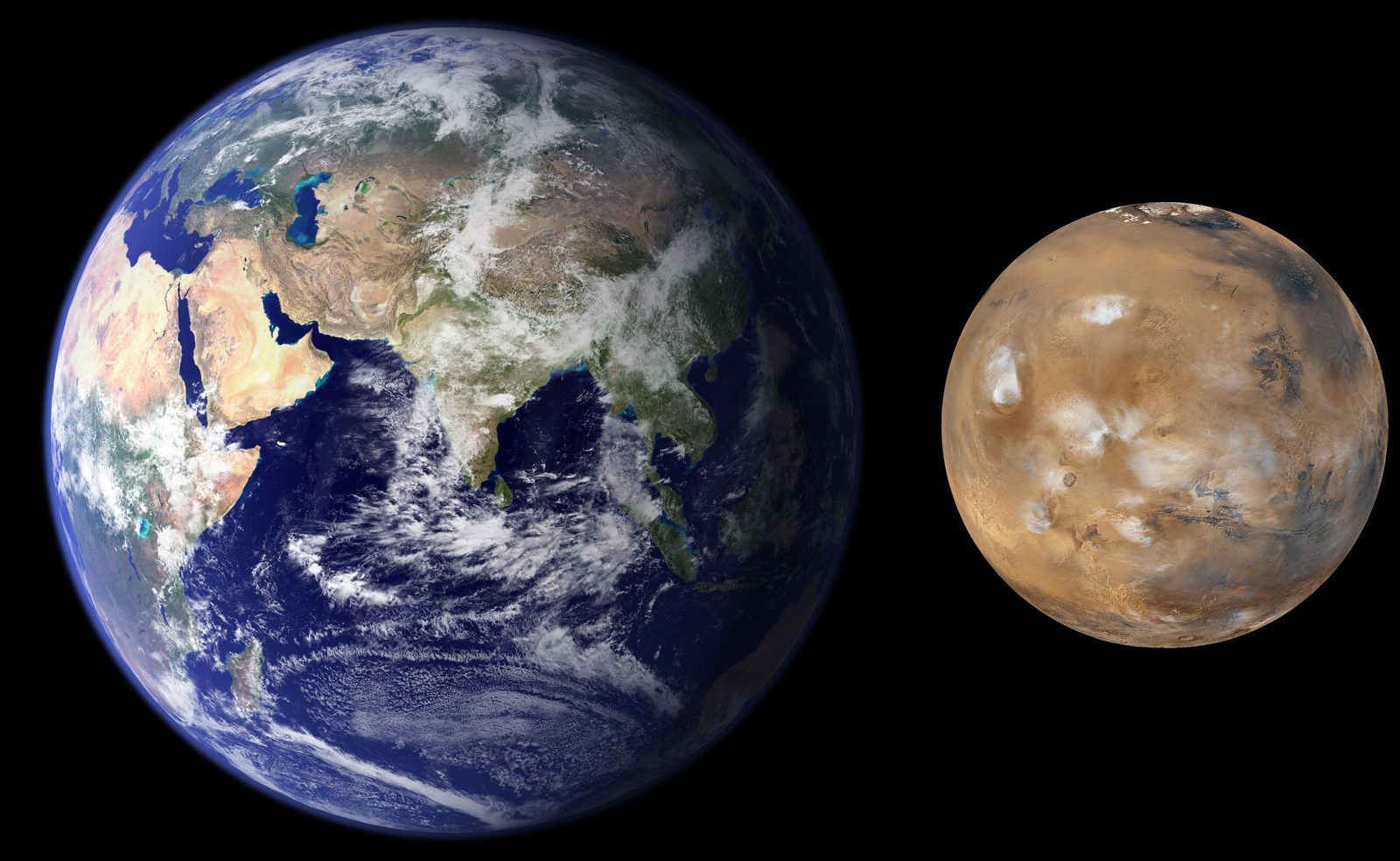
It is fair to ask why any of this matters when Earth is already struggling under climate change, biodiversity loss, and rising sea levels. One blunt answer is that, in the very long term, no planet stays hospitable forever; stars evolve, impacts happen, and geological cycles change. Terraforming is often framed as a kind of planetary insurance policy, a way to spread human civilization beyond a single fragile world. Compared with traditional space exploration, which mostly gathers data and samples, terraforming talks about reshaping the stage itself. It reframes humanity as a geological force, not only on Earth but potentially on another planet entirely.
At the same time, the comparison to our own climate crisis is impossible to ignore. We are already unintentionally terraforming Earth through greenhouse gas emissions, and we are discovering just how complex and messy that really is. That makes the idea of intentionally terraforming Mars feel like an advanced exam when we are still failing the practice test at home. From a scientific perspective, the study of Mars’ past and potential future climate helps us calibrate our models and test our ideas about how atmospheres evolve. From a moral perspective, it forces us to ask whether we should learn to be good planetary stewards here before trying to play cosmic gardeners elsewhere.
Ethics, Ownership, and the Question of Martian Life
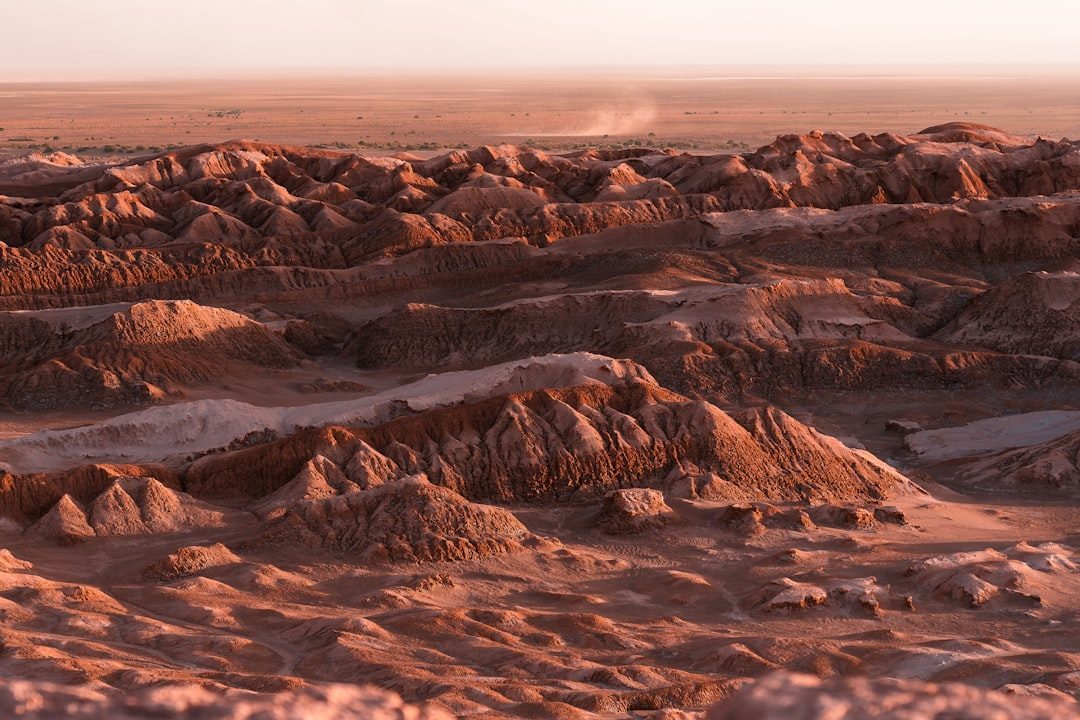
There is another layer to the terraforming debate that has nothing to do with rockets or mirrors and everything to do with responsibility. International space treaties already insist that we avoid contaminating other worlds with Earth life as much as possible, partly to preserve the scientific search for alien biology. If Mars harbors even simple microbial life underground today, terraforming could erase or overwhelm it, wiping out an entire branch of the cosmic family tree. That is not just a scientific loss; it is a profound ethical choice about whose interests matter in the universe. Turning Mars into a second Earth might mean sacrificing the only Mars that ever existed.
Ownership and access also become knotty questions once you imagine a partially terraformed Mars. Who gets to decide how far to go, or who is allowed to live there, or what resources can be mined and sold? Unlike building a single research base, terraforming implies permanent, large-scale human presence and economic use. Some critics argue that the language of “frontiers” and “new worlds” risks replaying the worst parts of human colonial history on a planetary stage. Supporters counter that with careful governance and global cooperation, Mars could be a shared project rather than a private prize. Either way, the ethics of terraforming force us to examine what kind of species we want to be as we step off our home world.
The Future Landscape: Realistic Timelines and Technological Hurdles
If you strip away the hype, the near-term future of Mars looks far more modest than glossy illustrations of blue oceans under pink skies. Over the next few decades, the most likely path involves small, tightly controlled habitats that rely on local resources – using Martian water ice, regolith, and sunlight to support human outposts. Experiments in making bricks from Martian soil simulants, extracting oxygen from carbon dioxide, and growing crops in low-pressure greenhouses are already under way on Earth and in orbit. These are not terraforming in the grand sense, but they are the building blocks of long-term presence. Think of it as learning to camp in a hostile wilderness before you even dream of building cities there.
On longer timescales, spanning centuries or more, breakthroughs in energy generation, materials science, biotechnology, and climate engineering could change the game. The idea of placing sunshades or mirrors in space, engineering microbes for Martian soil, or building powerful magnetic shields to reduce radiation might inch from speculation toward engineering projects. However, every serious assessment so far suggests that full-scale terraforming would be incredibly resource-intensive, slow, and uncertain in its results. For now, the realistic future landscape is one of careful, incremental steps, with constant feedback from science and constant reassessment of costs and benefits. The fantasy of a quick planetary makeover is giving way to a more sober vision: Mars as a long-term laboratory in learning how to live gently on alien ground.
How You Can Engage with the Mars Question

Even if you never strap into a rocket or control a rover from mission control, you are not entirely on the sidelines of the Mars and terraforming story. Public interest shapes space agency budgets, guides which missions get funded, and influences how much oversight we demand over private ventures targeting other worlds. Following missions closely, supporting science communication, and engaging with the ethical debates about planetary protection all have real impact. You can think of it as voting with your attention and your voice for the kind of spacefaring future you want to see. The more informed the public conversation, the harder it becomes for simplistic or reckless visions to dominate.
There is also a subtle but powerful feedback loop between how we treat Mars and how we treat Earth. By learning to value Mars as a place worth studying carefully rather than simply exploiting, we practice the mindset of stewardship instead of entitlement. Supporting climate science, conservation efforts, and sustainable technologies here at home is, in a sense, the first step in any responsible terraforming conversation. After all, if we cannot protect the only truly blue planet we know, what business do we have trying to repaint a red one? In the end, the question of whether terraforming can help humans live on Mars is inseparable from a deeper question: can we learn to live wisely on any world at all?
Suhail Ahmed is a passionate digital professional and nature enthusiast with over 8 years of experience in content strategy, SEO, web development, and digital operations. Alongside his freelance journey, Suhail actively contributes to nature and wildlife platforms like Discover Wildlife, where he channels his curiosity for the planet into engaging, educational storytelling.
With a strong background in managing digital ecosystems — from ecommerce stores and WordPress websites to social media and automation — Suhail merges technical precision with creative insight. His content reflects a rare balance: SEO-friendly yet deeply human, data-informed yet emotionally resonant.
Driven by a love for discovery and storytelling, Suhail believes in using digital platforms to amplify causes that matter — especially those protecting Earth’s biodiversity and inspiring sustainable living. Whether he’s managing online projects or crafting wildlife content, his goal remains the same: to inform, inspire, and leave a positive digital footprint.