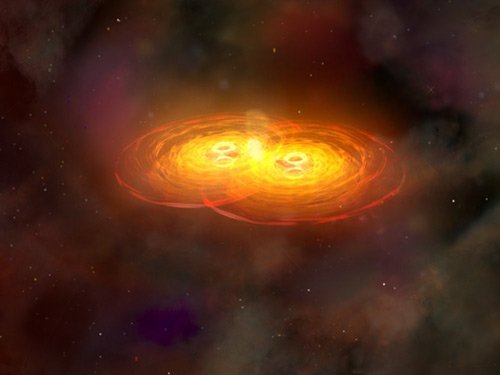
Picture this: somewhere in the vast darkness of space, two cosmic monsters are locked in a death spiral. These aren’t your average black holes – they’re giants, each containing the mass of dozens or even hundreds of suns. They’ve been orbiting each other for millions of years, slowly drawing closer. What happens next is one of the most violent events in the known universe.
When two black holes finally collide, they create ripples in the very fabric of space and time itself. These cosmic crashes don’t just merge two objects – they literally shake the universe, sending gravitational waves racing across billions of light-years. Scientists have only recently begun to understand these incredible phenomena, thanks to groundbreaking observations from LIGO and the James Webb Space Telescope.
The Dance Before Death
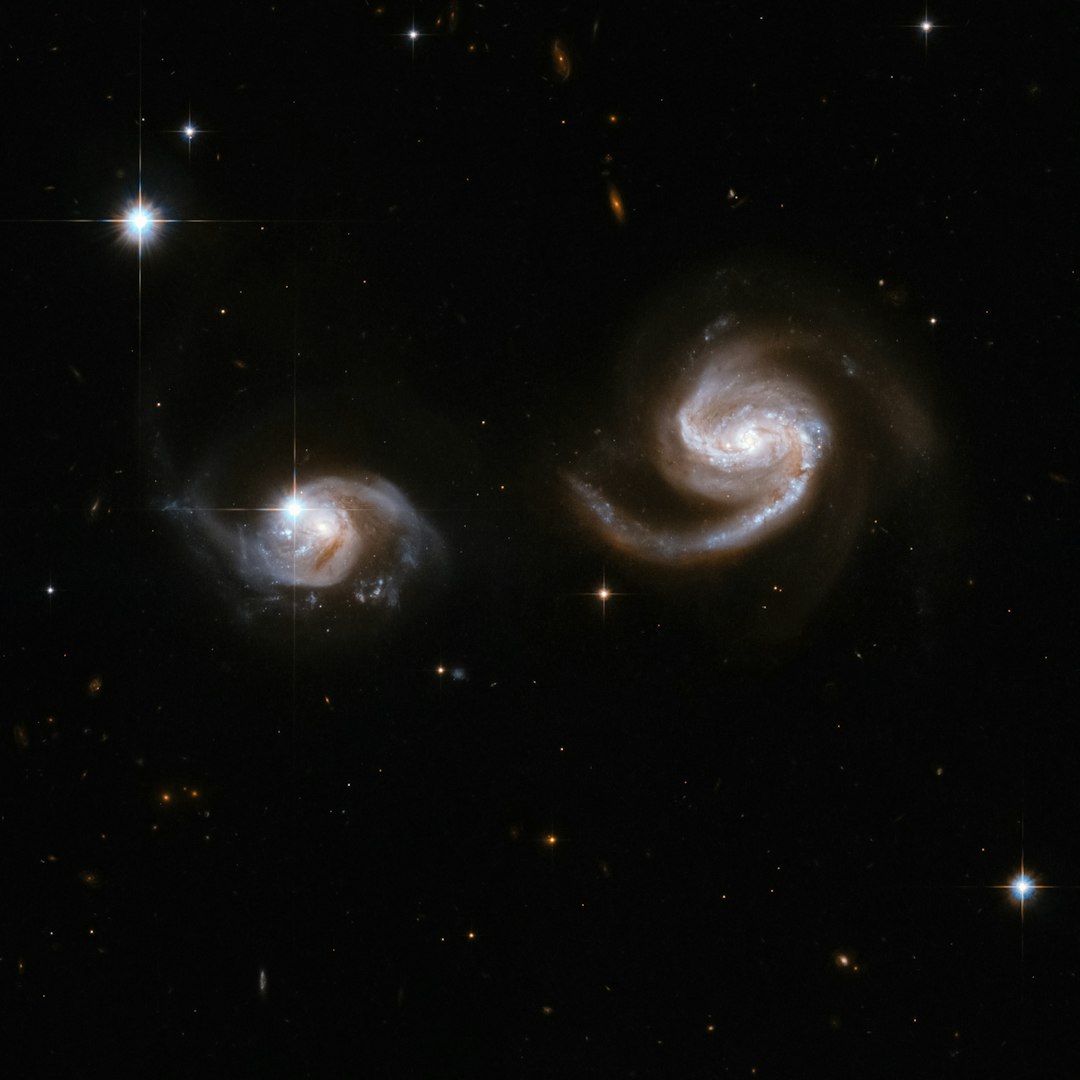
Black hole mergers don’t happen overnight. These cosmic titans typically form when galaxies collide, bringing their central supermassive black holes into proximity, where they begin orbiting each other in an increasingly tight spiral. Think of it like two whirlpools in a bathtub slowly getting closer.
Over millions of years, this orbital dance tightens as gas and stars pass between the black holes, stealing energy from their orbit. The process is incredibly slow at first. However, as they get closer, something fascinating happens.
When the black holes reach a separation of roughly 0.01 to 0.001 parsec, gravitational waves begin causing significant loss of orbital energy. This is when things start moving fast – cosmically speaking.
The Moment of Contact
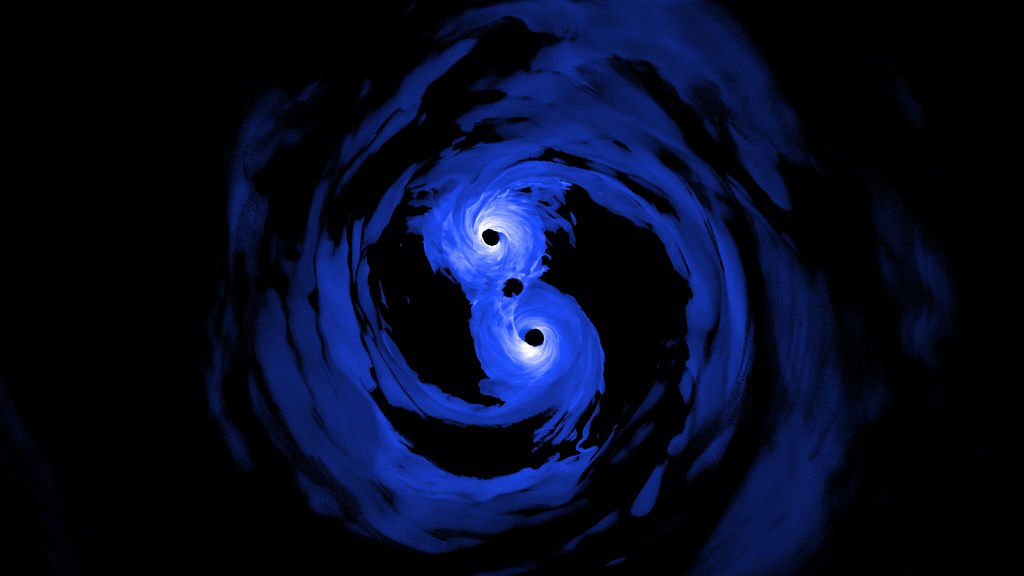
When two black holes finally merge, the universe trembles. In the final 20 milliseconds of spiraling inward and merging, events like GW150914 release around 3 solar masses as gravitational energy, peaking at a rate more than the combined power of all light radiated by all stars in the observable universe. That’s mind-boggling power concentrated into a fraction of a second.
Recent massive mergers have released roughly eight times more energy than that contained within our sun’s atoms in just a fraction of a second – equivalent to setting off more than a million billion atomic bombs every second for 13.8 billion years. The sheer scale defies human comprehension.
The collision itself creates something entirely new. Where once there were two separate black holes, now there’s a single, more massive one – but the story doesn’t end there.
Gravitational Waves: Ripples in Reality
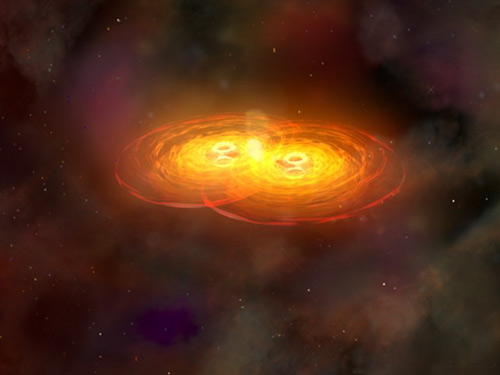
When black holes collide, the impact sends ripples through spacetime itself, creating what scientists call gravitational waves. These aren’t sound waves or light waves – they’re actual distortions in the geometry of space and time.
Like other waves, gravitational waves carry energy, momentum, and angular momentum away from their source, causing binary systems to lose angular momentum as orbiting objects spiral toward each other. This energy loss is what drives the final merger.
Gravitational-wave detectors such as LIGO, Virgo, and KAGRA are designed to measure minute distortions in space-time caused by violent cosmic events. The precision required is staggering – these instruments can detect changes smaller than a fraction of an atomic radius across distances of several kilometers.
Record-Breaking Cosmic Collisions
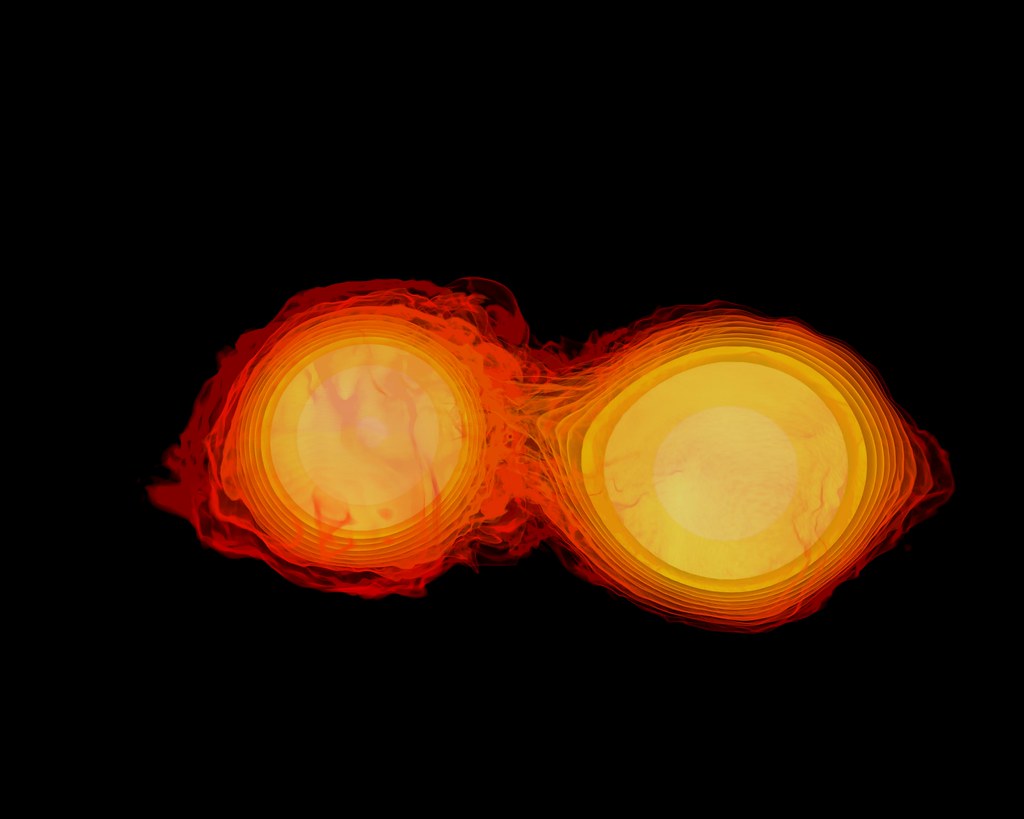
Recent observations have shattered our understanding of what’s possible. The LIGO-Virgo-KAGRA Collaboration detected the merger of the most massive black holes ever observed, with some of the most massive black holes detected reaching over 100 solar masses.
In this massive event, recent massive mergers have involved black holes of approximately 65-85 solar masses, with both progenitors rapidly spinning. This discovery challenges everything scientists thought they knew about black hole formation.
Scientists describe this as “the most massive black hole binary we’ve observed through gravitational waves,” presenting “a real challenge to our understanding of black hole formation” because “black holes this massive are forbidden through standard stellar evolution models”. The only explanation might be that these giants formed through earlier mergers of smaller black holes.
The Incredible Energy Release
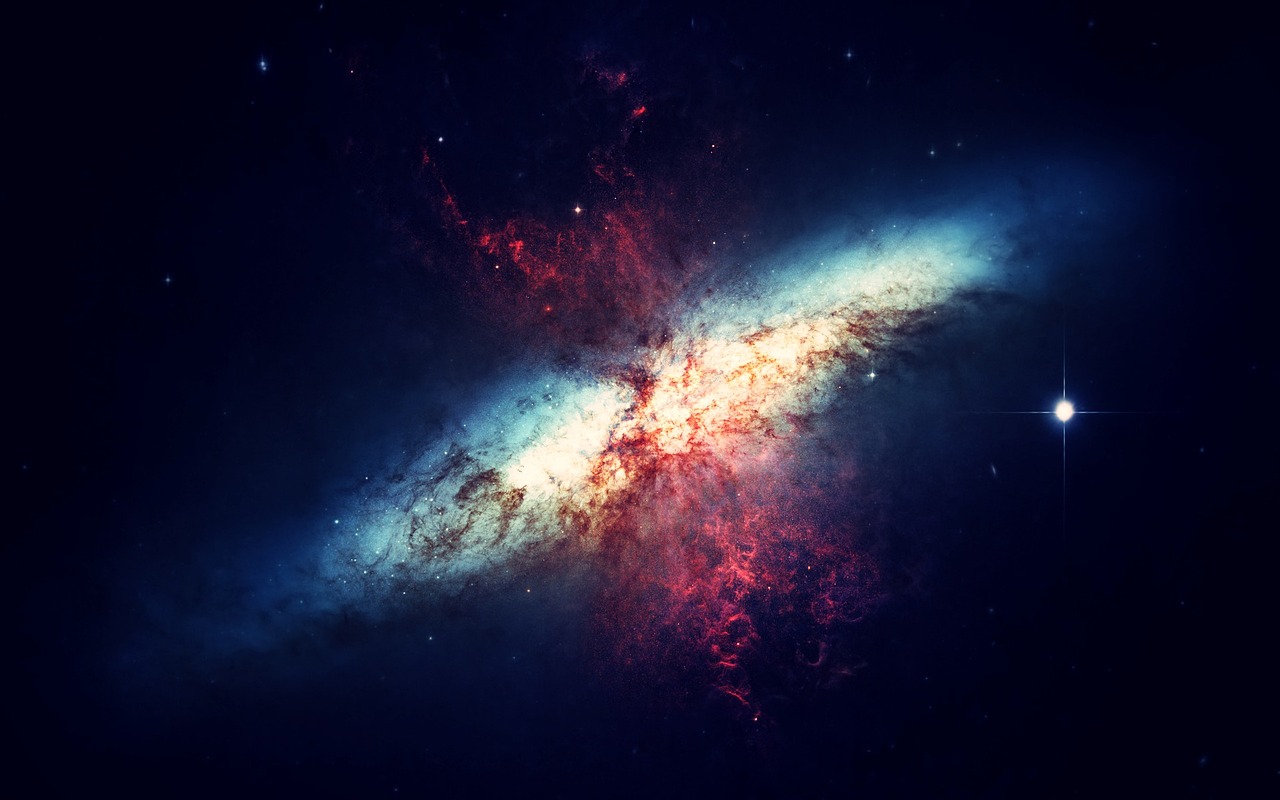
The amount of energy released during black hole collisions is almost incomprehensible. Events like the collision detected in 2015 apparently exceeded the combined energy of all stars in the observable universe – though this refers to the instantaneous power output rather than total energy.
Measurements show energy releases of approximately 1-3 solar masses worth of energy converted directly into gravitational waves. To put this in perspective, that’s like converting the entire mass of over two suns into pure energy in less than a second.
This energy doesn’t just disappear – it races outward as gravitational waves at the speed of light. These waves interact with each other as they propagate, with each wave causing others to change slightly and creating new types of waves with independent frequencies.
Galaxy-Shaking Consequences
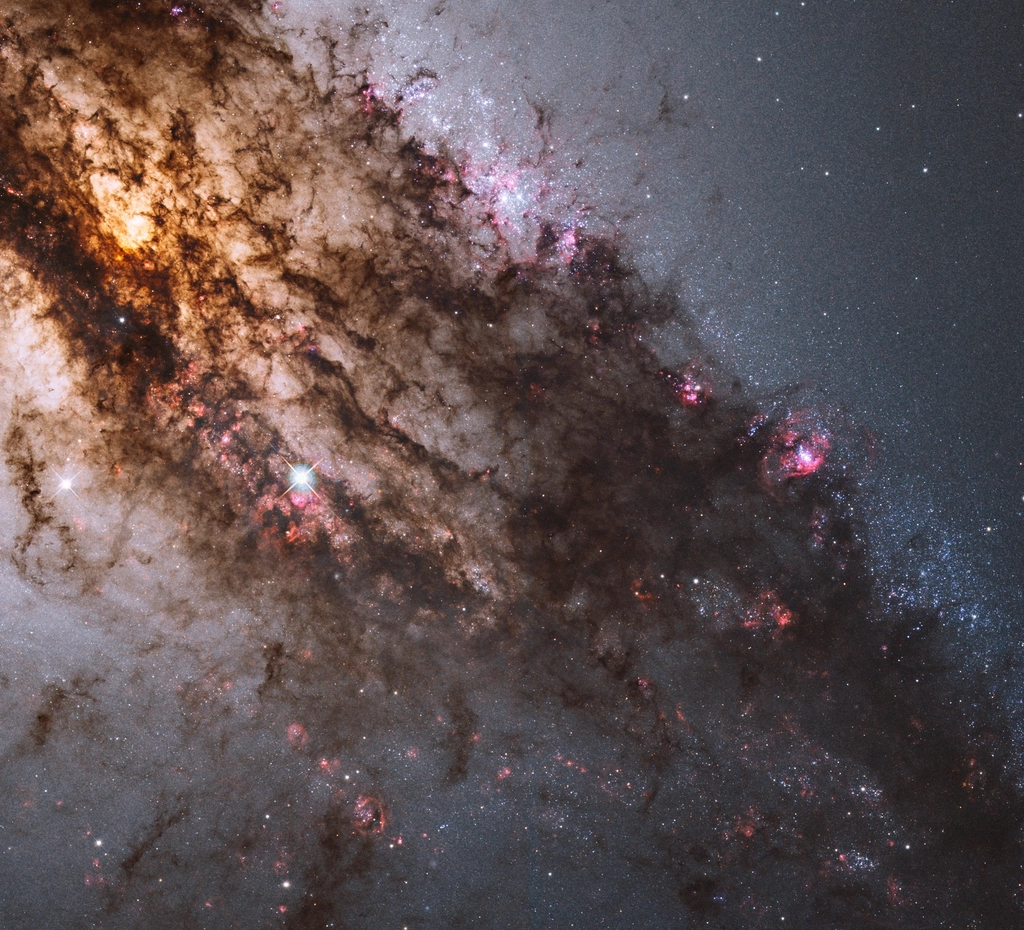
Black hole mergers don’t just affect the merging objects – they can reshape entire galaxies. After two supermassive black holes coalesce, emission of linear momentum can produce a “kick” with amplitude as large as 4000 km/s, fast enough to eject the merged black hole completely from its host galaxy.
Researchers estimate that it takes the equivalent energy of 100 million supernovas exploding simultaneously to jettison a black hole, with the most plausible explanation being a kick from gravitational waves unleashed by the merger. Imagine a black hole – millions of times more massive than our sun – getting kicked out of its home galaxy like a cosmic soccer ball.
Even if the kick isn’t strong enough for complete ejection, it can still dramatically affect the galaxy. The merged black hole can be removed temporarily from the galaxy’s nucleus, oscillating about the center before eventually coming to rest.
LIGO’s Revolutionary Discoveries
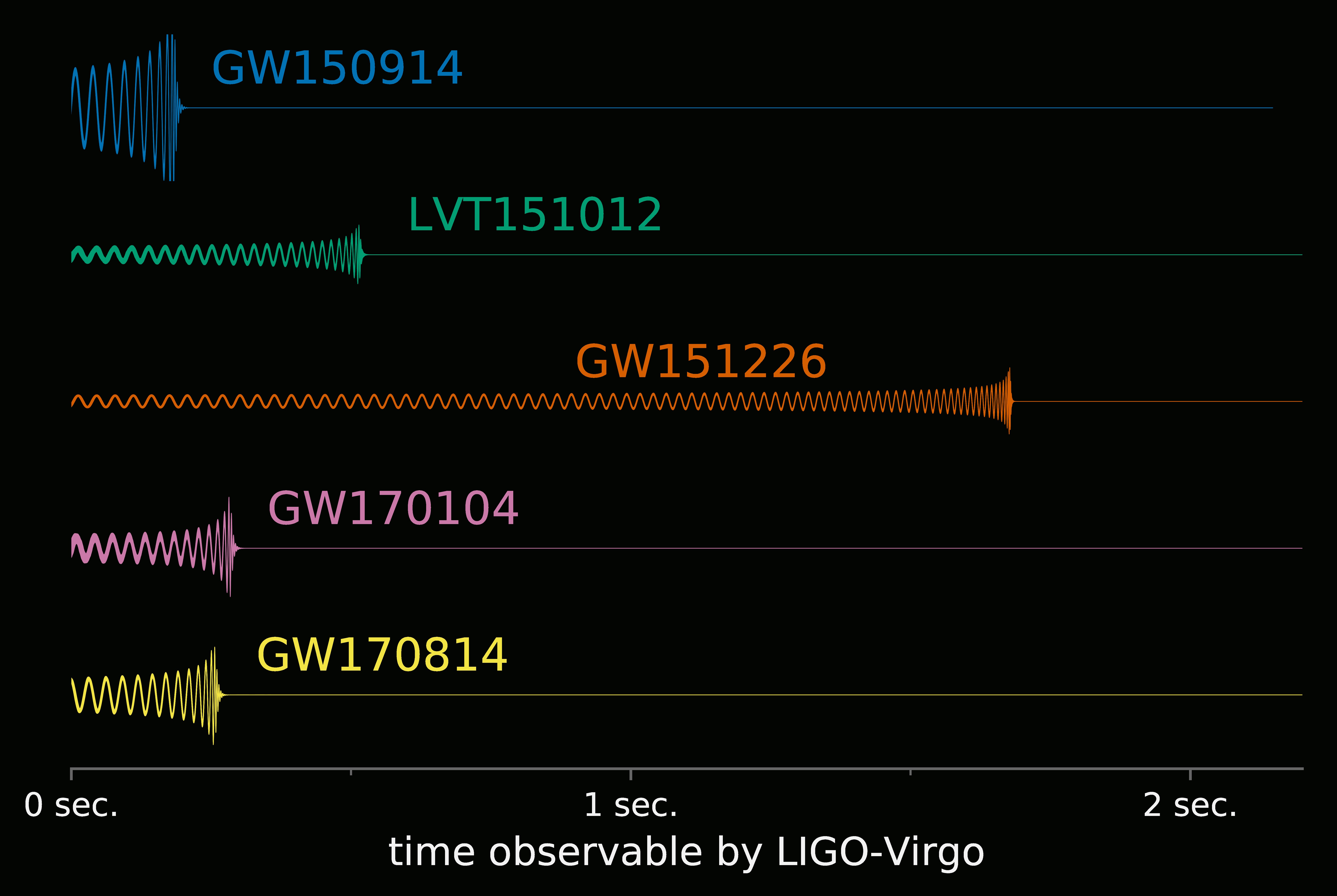
LIGO made history in 2015 with the first-ever direct detection of gravitational waves from a black hole merger that resulted in a final black hole 62 times the mass of our Sun. This wasn’t just a scientific achievement – it opened an entirely new way of observing the universe.
Since 2015, LIGO and its partners have detected dozens of black hole mergers, with over 90 confirmed gravitational wave events. Each detection provides new insights into these cosmic phenomena.
Recent observations have achieved improved signal-to-noise ratios, much cleaner than the SNR of 26 from the first gravitational wave observation a decade earlier, allowing scientists to distinguish details previously impossible to detect. This improved precision is revealing new aspects of Einstein’s predictions about black holes.
James Webb’s Distant Discoveries
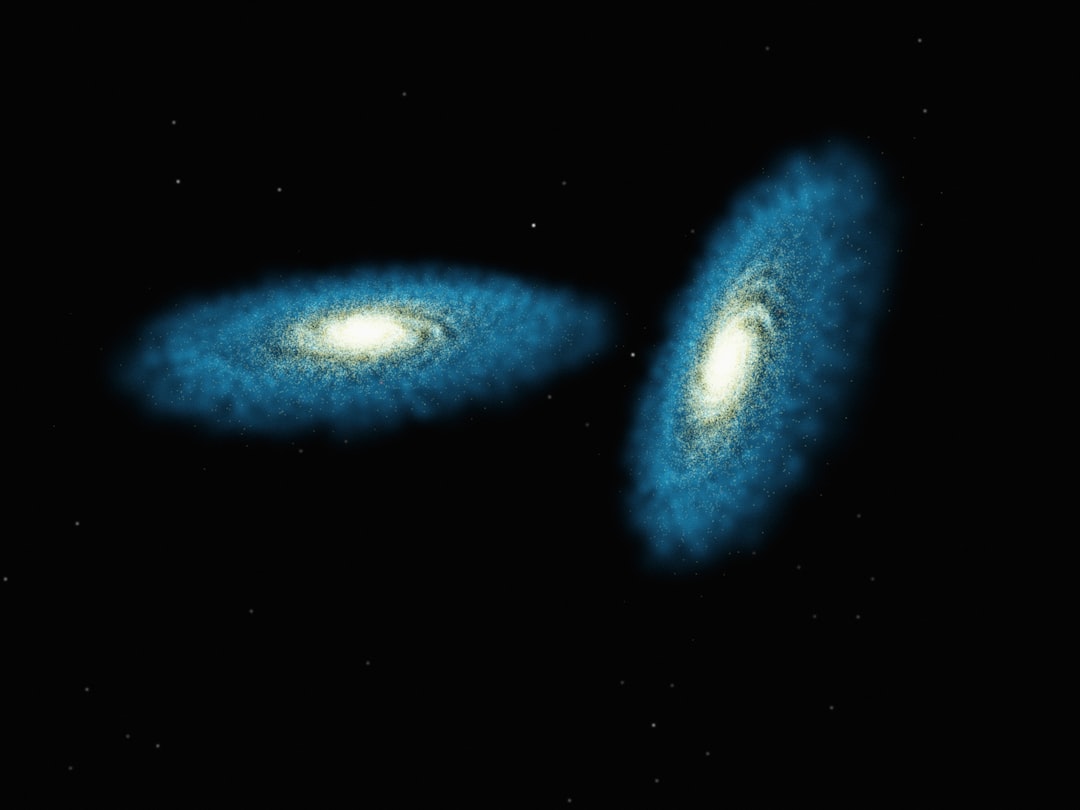
While LIGO detects stellar-mass black hole mergers, the James Webb Space Telescope has made remarkable discoveries about supermassive black hole collisions in the early universe. Webb has provided evidence for an ongoing merger of two galaxies and their massive black holes when the universe was just 740 million years old, marking the most distant detection of a black hole merger ever obtained.
One of the black holes in this ancient system has a mass 50 million times that of our Sun, with the other possibly around the same size but harder to measure due to surrounding dense gas. This discovery challenges our understanding of how such massive objects formed so early in cosmic history.
These findings further challenge leading theories of cosmology, which fail to explain how objects in the universe’s infancy could grow so large, so fast, with researchers suggesting that “merging is an important route through which black holes can rapidly grow, even at cosmic dawn”.
The Physics of Spacetime Distortion
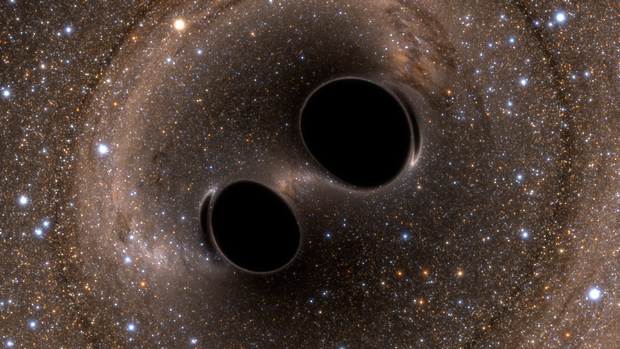
Understanding how gravitational waves work requires grappling with Einstein’s most mind-bending concepts. Gravitational waves are ripples in the shape of space and flow of time, with space around each black hole bending downward in a funnel shape due to the black hole’s huge mass.
Far from the merging holes, gravitational waves are produced by the black holes’ orbital movement and collision, with our universe’s space being dragged into motion by the orbital movement, gravity, and spins of the black holes. It’s like the universe itself becomes a moving, breathing entity during these events.
LIGO can detect deformation in the fabric of space caused by gravitational waves even when the deformation is a fraction of an atomic radius, though this “small” deformation is due to the relatively large distance from the collision to Earth. The sensitivity required is almost beyond belief.
Future Discoveries and Implications
The field of gravitational wave astronomy is just getting started. Future missions like the European Space Agency’s Laser Interferometer Space Antenna (LISA) will be the first space-based observatory dedicated to studying gravitational waves, consisting of a trio of spacecraft.
Researchers are looking forward to instruments such as the Cosmic Explorer and Einstein Telescope, expected to be operational in the mid-2030s or 40s, which will be able to see black hole mergers from much earlier in the universe’s history and provide insights into how central black holes became so gargantuan.
Better models of these collisions can help scientists determine if general relativity is the right theory to explain what happens in black holes, as how well Einstein’s famous theory applies to the strange properties of black holes is still being determined. Each new detection brings us closer to understanding the fundamental nature of reality itself.
Conclusion
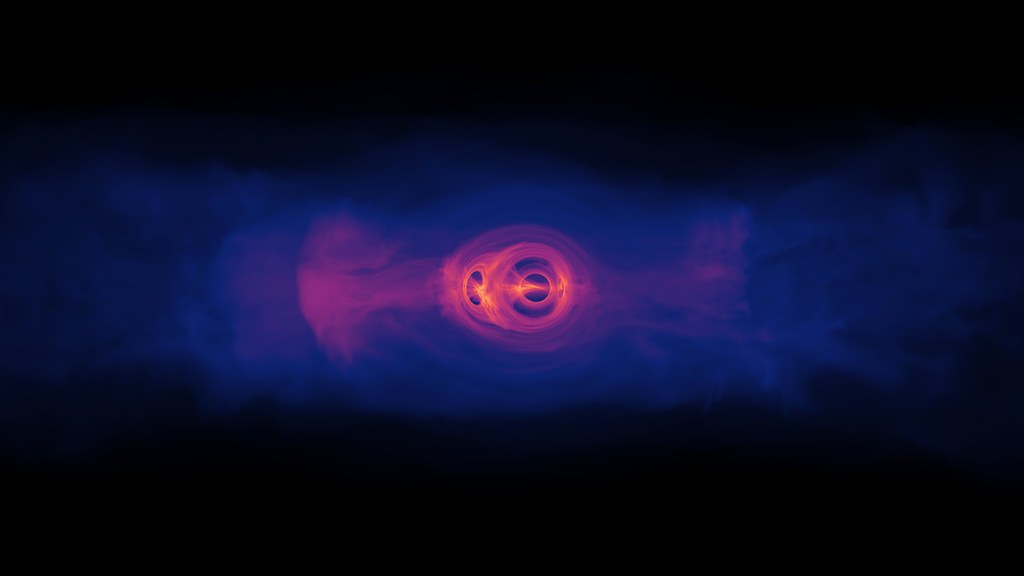
When two black holes collide inside a galaxy, they create one of the most spectacular and violent events in the universe. These cosmic crashes release unimaginable amounts of energy, shake the very fabric of spacetime, and can even kick the resulting merged black hole clean out of its home galaxy. Through LIGO’s detection of gravitational waves and JWST’s observations of ancient mergers, we’re witnessing these incredible phenomena across both space and time.
The universe is far more dynamic and violent than we ever imagined. These collisions are constantly reshaping galaxies, creating new black holes, and sending ripples through spacetime that we can detect billions of years later. What fascinates you most about these cosmic collisions? Tell us in the comments.